

What do you think?

Death Letter: God, Sex, & War
“Everyone writes one. At least, everyone who fights in a war does.” These are the first lines of Army chaplain David W. Peters’ genre-defying book, Death God, Sex, and War. Written in the dark days immediately following his deployment to Iraq, Death Letter is part memoir, part comic lament, on his relationship with the three great subjects of our mythic imagination.
- GenresNonfictionMemoir
122 pages, Kindle Edition
First published July 14, 2014
About the author
David W. Peters
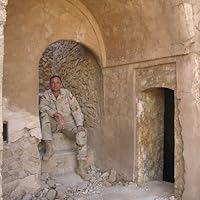
8 books28 followersDavid W. Peters enlisted in the Marine Corps the day after his high school graduation. After his enlistment, he attended theological seminary and worked as a youth minister. Shortly after the invasion of Iraq in 2003, he was commissioned as a chaplain in the US Army. He served as the battalion chaplain for the 62nd Engineer Combat Battalion (Heavy) at Fort Hood, Texas, 2004-2007, which included his deployment to Iraq in 2006. After Iraq he also served as a chaplain clinician in the amputee, orthopedic, neuroscience, and psychological wards at Walter Reed. His essay, "A Spiritual War: Crises of Faith in Combat Chaplains from Iraq and Afghanistan" was included in the volume titled *Listening on the Edge: Oral History in the Aftermath of Crisis (Oxford University Press, 2014). David has written for the Huffington Post and is a priest in The Episcopal Church. He lives with his wife in Austin, TX.
Ratings & Reviews
Friends & Following
Create a free account to discover what your friends think of this book!
Community Reviews
Displaying 1 - 18 of 18 reviews

Read
November 24, 2014First, a couple of caveats: Dave (the author) is a friend of mine, and the entire read was colored by that fact. I think that had these been the words of a stranger, they would have been much easier to read. As it is, knowing that these experiences are those of a friend proved a more difficult hurdle than I anticipated.
Second, once a friend of yours who's written a book says that he's looking forward to reading your review, you will find yourself sitting in front of the computer staring at the five little stars and wondering how to put a star rating on a friend's honest telling of his life experiences. Not giving five stars would make me feel like a jerk. Giving five stars would also feel wrong, because I give star ratings based solely on gut reactions, and to be honest, my gut reactions were all over the place on this one. So in case you're wondering, I decided not to assign a star rating at all, because it felt weird and strangely judgmental for such a book as this--"Your life experiences are worth three stars! No, wait, four! No, wait..."
That said, this was a difficult and upsetting read. I don't mean difficult because of the writing itself, which is a clean, readable style (and downright poetic at times: "the Russian steppes of my loneliness"). I mean because of the nature of the issues discussed, and the dark, hopeless tone that is completely at odds with the Dave of my memories. Honestly, if it weren't for the Epilogue, I would have despaired entirely. But then came the Epilogue, like a cooling balm, and I breathed a bit easier.
Speaking of the Epilogue, therein lies my strongest criticism. I would have liked to see more from it, perhaps expanding on the whys and the hows of the author's return to faith after his long stretch in the dark. I know that this book is meant to offer a window into the mind of a troubled vet, and as someone who has a few other vet friends, I can appreciate the helpfulness of this; but as someone who also believes in the hope of the Gospel and the restorative power its message, I would have liked to see this stated more explicitly, so that other troubled vets who might pick up this book could find the same grace and healing that Dave and millions of other troubled souls across history have found.
Second, once a friend of yours who's written a book says that he's looking forward to reading your review, you will find yourself sitting in front of the computer staring at the five little stars and wondering how to put a star rating on a friend's honest telling of his life experiences. Not giving five stars would make me feel like a jerk. Giving five stars would also feel wrong, because I give star ratings based solely on gut reactions, and to be honest, my gut reactions were all over the place on this one. So in case you're wondering, I decided not to assign a star rating at all, because it felt weird and strangely judgmental for such a book as this--"Your life experiences are worth three stars! No, wait, four! No, wait..."
That said, this was a difficult and upsetting read. I don't mean difficult because of the writing itself, which is a clean, readable style (and downright poetic at times: "the Russian steppes of my loneliness"). I mean because of the nature of the issues discussed, and the dark, hopeless tone that is completely at odds with the Dave of my memories. Honestly, if it weren't for the Epilogue, I would have despaired entirely. But then came the Epilogue, like a cooling balm, and I breathed a bit easier.
Speaking of the Epilogue, therein lies my strongest criticism. I would have liked to see more from it, perhaps expanding on the whys and the hows of the author's return to faith after his long stretch in the dark. I know that this book is meant to offer a window into the mind of a troubled vet, and as someone who has a few other vet friends, I can appreciate the helpfulness of this; but as someone who also believes in the hope of the Gospel and the restorative power its message, I would have liked to see this stated more explicitly, so that other troubled vets who might pick up this book could find the same grace and healing that Dave and millions of other troubled souls across history have found.

January 22, 2017
Rarely, if even once in a generation, will someone of the clergy write the memoir of their own graphic and gruesome spiritual road to redemption. Maybe that’s a good thing for some but equally good for those who serve the Warriors of their generation, incurring all the moral injuries their spirits can absorb. David Peters reminds his fellow spiritual caregivers they are not alone if they have physically returned from the battle to face a fiercer foe in their minds and hearts. Well aware many of his would-be readers would not willingly comprehend the depths of his despair, Peters offers a warning label to his snapshot of spiritual injury. That being stated at the start, Peters’ readers who prefer their clergy remaining untainted from the very same experiences of those they serve, might consider moving along to tamer reading. For those who are ready to understand the concept of God With Us in a startling although scandalous manner –read on! Chaplain Peter’s thesis statement; “A man who survives war has two births—one when he is born and again when he faces death” facilitates the necessary conversations for the Warrior that desires to be whole and normal but wonders if it is even possible. Thank you, Chaplain Peters, for taking us to the places in our spirits we are often afraid to go for both ourselves and our Comrades!

December 25, 2015
An excellent portrayal of what goes through a Soldier's mind on and off the battle field. I couldn't put the book down. It eerily poses the conflict that Soldiers face in time of peace, in time of war, and in time of love. Not only does it show the conflict of Soldiers, it describes the struggles of every day life for anyone, who struggles with their own existence-- their own being and the thought of a higher power, a god.
It is especially powerful to hear the stories of his struggles with God from an Army Chaplain. It is refreshing to know that we are not alone in this world. Regardless of your personal religious beliefs, we have all struggled with the ultimate question-- Why are we here? Though the author doesn't answer it for us, he shows us his journey; the mountains he climbed and pitfalls he faced. It is through the words he speaks that offer a hope and an understanding of what our own personal struggles have been in life. Perhaps, they can encourage you to keep climbing, or maybe they will just be a reminder of what was behind you.
It is especially powerful to hear the stories of his struggles with God from an Army Chaplain. It is refreshing to know that we are not alone in this world. Regardless of your personal religious beliefs, we have all struggled with the ultimate question-- Why are we here? Though the author doesn't answer it for us, he shows us his journey; the mountains he climbed and pitfalls he faced. It is through the words he speaks that offer a hope and an understanding of what our own personal struggles have been in life. Perhaps, they can encourage you to keep climbing, or maybe they will just be a reminder of what was behind you.

January 26, 2015
This is hard to read because of the subject matter, but well written and sweeps you right along. It switches back and forth between before Iraq, during Iraq, and after Iraq which can be disconcerting, but probably is a good reflection of the returning vet's frame of mind. I gather from other comments that hearing this story is helpful to other vets, for which I salute the author.
Knowing that the author is now in a different place, I hope he will sometime write another chapter of his story telling how he got there.
Knowing that the author is now in a different place, I hope he will sometime write another chapter of his story telling how he got there.

September 25, 2014
By page 5 Chaplain Peters begins to tell of advice he receives from a former sailor, before leaving for Marine boot camp. The older man tries to discourage him from joining. He will be introduced to sin in the form of dirty magazines, the man warns. Peters introduces another detail, that he knows this person did not serve in the war. The narrative doesn’t specify whether he knows because of service dates, or from an intuition that belongs to veterans, but he writes of each detail with authority.
The older man’s warning, its lack of effect on the younger Peters and its recurrence in his memory underscores a truth that pops up throughout Death Letter, that religion, sex, and death combine to form a narrative that is more real in the non-linear structure than any attempt to be objective and linear. Peters travels back and forth in time in a way that teaches the reader how a soldier’s mind occupies two or more places at once – think of home in the midst of a movement, thinking of the desert in the midst of homecoming.
To paraphrase Tim O’Brien, you can sit with a silent veteran and know what he went through; you can sit by a talkative former soldier and know nothing. Peter’s story is not one of a talkative veteran glorifying his experience. It is the thoughts of a quiet vet allowing us to come along inside his thoughts.
Contradictions help bring out the reality of the redeploying soldier. Of feelings he writes about “a man so overcome with emotion he has no emotion” (14). The experience identifies what distances the veteran from those he or she returns to. Each fills shut out from the other, the vet having filed images in the back of their mind as a means of survival
Many lines resonate. Disintegrating marriage and infidelity creates a crisis during redeployment but also causes the speaker to pick up the clues from the past, revelations such as “we rarely laugh together. The work we must do on the phone is too serious . . .” (19). A statement that is true on one level and a warning sign on another.
Not every detail fits in to a logical narrative pattern which may trouble some looking for a traditional expository piece of writing. However, the realization that the author’s head hurts “every day at 5:30 am and 9:00pm” or the image of a soldier climbing back into an up-armored HMMWV donning a Kevlar smelling of “urine and Gatorade” are truer because they are the small details that emerge asymmetrically.
The painful details of encounters with women paint a picture of an author being honest without attempting to create a heroic image of himself. While Peters, along with most all chaplains and counselors, provides a service that is heroic, responding when soldiers say “get the chaplain” at all hours, most of all the speaker of the story is human – something that may create conflicted feelings from civilians, but elevate him in the eyes of the vet.
Like the title suggests, God, Sex, and War (and I’d add Love) find themselves intertwined. A telling that may rattle the reader. It may leave some wanting to return to the familiar narrative society tends to ask of all its returning war writers. However, a narrative that reads like someone else’s narrative would be a lie. If you hope to reach the end and find a happily ever after, or a one size fits all spiritual answer, well see for yourself and don’t get your hopes up. By saying that I don't want to suggest the story is not carthartic (it IS). Only that catharsis does not come framed in familiar storylines and tight endings with answers right off the cue cards.
I will say this -- a memoir dealing with war and return from war should rattle the reader or it’s not successful. This one paints a brutally honest picture. It succeeds.
The older man’s warning, its lack of effect on the younger Peters and its recurrence in his memory underscores a truth that pops up throughout Death Letter, that religion, sex, and death combine to form a narrative that is more real in the non-linear structure than any attempt to be objective and linear. Peters travels back and forth in time in a way that teaches the reader how a soldier’s mind occupies two or more places at once – think of home in the midst of a movement, thinking of the desert in the midst of homecoming.
To paraphrase Tim O’Brien, you can sit with a silent veteran and know what he went through; you can sit by a talkative former soldier and know nothing. Peter’s story is not one of a talkative veteran glorifying his experience. It is the thoughts of a quiet vet allowing us to come along inside his thoughts.
Contradictions help bring out the reality of the redeploying soldier. Of feelings he writes about “a man so overcome with emotion he has no emotion” (14). The experience identifies what distances the veteran from those he or she returns to. Each fills shut out from the other, the vet having filed images in the back of their mind as a means of survival
Many lines resonate. Disintegrating marriage and infidelity creates a crisis during redeployment but also causes the speaker to pick up the clues from the past, revelations such as “we rarely laugh together. The work we must do on the phone is too serious . . .” (19). A statement that is true on one level and a warning sign on another.
Not every detail fits in to a logical narrative pattern which may trouble some looking for a traditional expository piece of writing. However, the realization that the author’s head hurts “every day at 5:30 am and 9:00pm” or the image of a soldier climbing back into an up-armored HMMWV donning a Kevlar smelling of “urine and Gatorade” are truer because they are the small details that emerge asymmetrically.
The painful details of encounters with women paint a picture of an author being honest without attempting to create a heroic image of himself. While Peters, along with most all chaplains and counselors, provides a service that is heroic, responding when soldiers say “get the chaplain” at all hours, most of all the speaker of the story is human – something that may create conflicted feelings from civilians, but elevate him in the eyes of the vet.
Like the title suggests, God, Sex, and War (and I’d add Love) find themselves intertwined. A telling that may rattle the reader. It may leave some wanting to return to the familiar narrative society tends to ask of all its returning war writers. However, a narrative that reads like someone else’s narrative would be a lie. If you hope to reach the end and find a happily ever after, or a one size fits all spiritual answer, well see for yourself and don’t get your hopes up. By saying that I don't want to suggest the story is not carthartic (it IS). Only that catharsis does not come framed in familiar storylines and tight endings with answers right off the cue cards.
I will say this -- a memoir dealing with war and return from war should rattle the reader or it’s not successful. This one paints a brutally honest picture. It succeeds.

January 30, 2015
David Peters goes to a very dark place after his return from Iraq. Not only does he have to deal with the effects of living in a war zone, his support system is ripped out from underneath when he finds out his wife has been cheating on him. The resulting descent into sin, darkness, and hopelessness is spelled out in all its gory detail.
And this is where I struggle with how to write an honest review. I have never been to war. I have no idea what it means to suffer in this context, and to deal with the resulting, long-term effects on one's mental, emotional, and spiritual well-being. So I know I have to be careful with the distaste of what I am reading. I feel awful, and am repulsed, at the same time.
The tagline for "Death Letter: God, Sex, & War", says, "Death Letter is part memoir, part comic lament, on his relationship with the three great subjects of our mythic imagination." But there is nothing comic about it. There's nothing to laugh about, when you realize just how broken Peters is, and how deep the wounds must be. There is nothing to chuckle about when he leaves relationship after relationship in a wreck.
Peters tells us a story, but for what reason? The details are voyeuristic, and near-pornographic in detail. And I guess this is the source of some of my frustration. I just assumed from the tagline and the book blurb that there would be more balance between the three subjects. But to be clear, the memoir is 70% sex, 20% war, and about 10% God. I was hoping to hear more about his experiences during the war, and his struggles with God. But these are given scant coverage, God especially. He claims God left him in Iraq, and that’s about it. It’s almost as if, as a result, Peters can now shock us with graphic descriptions of sex, and his ability to curse like a sailor.
It is not until the Epilogue that Peters does finally mention a renewed relationship with God and the Church. The description is brief and cursory, as you might expect from an Epilogue. I wish there was more detail, more to help us bridge the gap between his darkness and his deliverance. That would give his death letter meaning. As it is, the book is just a bleak description of the awfulness of war.
Finally, as others have mentioned, his writing style is very convoluted. He jumps around chronologically to the point that I gave up trying to follow, and just read the stories as best I could. This may or may not be a problem for you.
And this is where I struggle with how to write an honest review. I have never been to war. I have no idea what it means to suffer in this context, and to deal with the resulting, long-term effects on one's mental, emotional, and spiritual well-being. So I know I have to be careful with the distaste of what I am reading. I feel awful, and am repulsed, at the same time.
The tagline for "Death Letter: God, Sex, & War", says, "Death Letter is part memoir, part comic lament, on his relationship with the three great subjects of our mythic imagination." But there is nothing comic about it. There's nothing to laugh about, when you realize just how broken Peters is, and how deep the wounds must be. There is nothing to chuckle about when he leaves relationship after relationship in a wreck.
Peters tells us a story, but for what reason? The details are voyeuristic, and near-pornographic in detail. And I guess this is the source of some of my frustration. I just assumed from the tagline and the book blurb that there would be more balance between the three subjects. But to be clear, the memoir is 70% sex, 20% war, and about 10% God. I was hoping to hear more about his experiences during the war, and his struggles with God. But these are given scant coverage, God especially. He claims God left him in Iraq, and that’s about it. It’s almost as if, as a result, Peters can now shock us with graphic descriptions of sex, and his ability to curse like a sailor.
It is not until the Epilogue that Peters does finally mention a renewed relationship with God and the Church. The description is brief and cursory, as you might expect from an Epilogue. I wish there was more detail, more to help us bridge the gap between his darkness and his deliverance. That would give his death letter meaning. As it is, the book is just a bleak description of the awfulness of war.
Finally, as others have mentioned, his writing style is very convoluted. He jumps around chronologically to the point that I gave up trying to follow, and just read the stories as best I could. This may or may not be a problem for you.

October 14, 2014
I have no immediate point of access in my life to experiences of war. My father never talked about his experiences as a medic in the Korean War; I only knew that he wouldn't visit the Amalfi-coast town of his father's parents origin because it was offshore there, on a ship, that he witnessed casualties that haunted him for the rest of his life. So the war memories in this book brought me more in contact with my sorrow over the loss of my dad in March of last year, and took me to a place of wondering about what he saw and felt and remembered and tried to bury.
Thank you, David Peters, from the bottom of my heart for your brave brave BRAVE (BRAVO!) rendering of memories and emotions. It is open, tender, and redemptive. It filled me with compassion and powerlessness, love and loss, anger and acceptance. Thank you for your courage, for telling your story, for the important work that you did in Iraq, and for the ongoing ministry and example of your life.
I hope everyone reads this book -- it is raw and inspiring. Time stopped; I couldn't and didn't put it down until it was over.
Thank you, David Peters, from the bottom of my heart for your brave brave BRAVE (BRAVO!) rendering of memories and emotions. It is open, tender, and redemptive. It filled me with compassion and powerlessness, love and loss, anger and acceptance. Thank you for your courage, for telling your story, for the important work that you did in Iraq, and for the ongoing ministry and example of your life.
I hope everyone reads this book -- it is raw and inspiring. Time stopped; I couldn't and didn't put it down until it was over.

October 17, 2014
"Everyone writes one." A death letter, that is.
This is how David W. Peters begins his story and this book, which is a series of events and his reflections on them, taking place before, during, and in the aftermath of his military service in Iraq. It is his Death Letter, which covers a dark period in his life. He writes that this book is for veterans and those who love them. After reading it, I don't think anything could be more true. Everyone should read it. Peters writes with such honesty and raw emotion that the reader can't help but be drawn into his stories, which are unique, but also no doubt similar to those belonging to the millions of veterans who have gone before him - and who will go after him.
I have to admit, I met David and got to know him before I knew he was an author. I know him as an Episcopal priest, a chaplain, and a peer. Biased as I might be, this book is still quite good. It gives and eye-opening account into the dark heart of war, and the rippling impact it has on those who fight it, and those who (attempt to) love warriors.
I look forward to reading Peters' Life Letter, in due time.
This is how David W. Peters begins his story and this book, which is a series of events and his reflections on them, taking place before, during, and in the aftermath of his military service in Iraq. It is his Death Letter, which covers a dark period in his life. He writes that this book is for veterans and those who love them. After reading it, I don't think anything could be more true. Everyone should read it. Peters writes with such honesty and raw emotion that the reader can't help but be drawn into his stories, which are unique, but also no doubt similar to those belonging to the millions of veterans who have gone before him - and who will go after him.
I have to admit, I met David and got to know him before I knew he was an author. I know him as an Episcopal priest, a chaplain, and a peer. Biased as I might be, this book is still quite good. It gives and eye-opening account into the dark heart of war, and the rippling impact it has on those who fight it, and those who (attempt to) love warriors.
I look forward to reading Peters' Life Letter, in due time.
November 7, 2014
I am a War on Terror PTSD veteran and David Peters has hit the nail on its head!
Death Letter, lets the PTSD veteran know that the haunting experiences we all go through really does become a second war on the home front. Yet this war is much worse because it is an enemy that we can't see!
This book has helped free me from the judgment that I have held on myself. David tells you exactly what a PTSD victim goes through mentally upon their return from war.
Fuck beating around the bush. David finds a way to free millions of veterans with PTSD from their shame and guilt. Being a strong Christian yet having these terrible mental and physical trials and temptations is what David uses to dispense of any shame and guilt that other veterans experience daily.
Reading Death Letter was like looking in a mirror!
Major Lazo, Benjamin D. Sr.
U.S Army Reserve
Death Letter, lets the PTSD veteran know that the haunting experiences we all go through really does become a second war on the home front. Yet this war is much worse because it is an enemy that we can't see!
This book has helped free me from the judgment that I have held on myself. David tells you exactly what a PTSD victim goes through mentally upon their return from war.
Fuck beating around the bush. David finds a way to free millions of veterans with PTSD from their shame and guilt. Being a strong Christian yet having these terrible mental and physical trials and temptations is what David uses to dispense of any shame and guilt that other veterans experience daily.
Reading Death Letter was like looking in a mirror!
Major Lazo, Benjamin D. Sr.
U.S Army Reserve

March 22, 2015
I enjoyed reading Death Letter and could not wait to hit the metro everyday so I could read it on my way to and from work. I am a new army chaplain and his book answered many questions I had and no one would really talk to me about. Also, I dated a person who was deployed 3 times and again his book helped me to understand many painful memories about the relationship.
I liked how honest the author was about his thoughts about God, Sex and War. Sometimes he told the raw truth. He showed tremendous courage in sharing and was tenacious about being healed from all the things that hurt him. Great book and a fast read. I think the book was real, revealing and restorative.
I liked how honest the author was about his thoughts about God, Sex and War. Sometimes he told the raw truth. He showed tremendous courage in sharing and was tenacious about being healed from all the things that hurt him. Great book and a fast read. I think the book was real, revealing and restorative.
March 26, 2019
This book was loaned to me by a Pastor friend who knew of my experience in Iraq.. As a chaplain who spent a year in Iraq in a Combat Support Hospital, I saw my experience of coming home in what Peter's writes. The experiences are different, but the feelings are the same, and his stories resonate with my own. Coming home from war is the untold story of war. Though it is nice to hear thank you for your service, more is needed for those who have experience war and death close up. War changes those who have experienced it.

Read
February 13, 2016This was a piquant read for me and I got real uncomfortable for a while, too, which I think was a function of the author being so effective in his intent. The book was quick and to the point. It took courage to bare his soul as he did that the reader might understand what he went through in his combat role and then comprehend the slog and the relief of his personal recovery from it.

September 23, 2014
A fascinating account of war, love, heartbreak and redemption. A great read for anyone, but I highly recommend gifting this to any returning veterans you may know. It will let them know they are not alone in their experiences. A true gift.

July 27, 2014
Quick read with a great premise, although I wanted to know more about how the chaplain actually counseled the soldiers.

May 28, 2015
Excellent book and great insight into the mind and thoughts of a veteran.

August 1, 2022
Started and finished in one evening! This is a quick read for sure. Found it on the shelf of an Austin Air Bnb which is perfect because the author lives in Austin!
This book details the intricacies and complexities of faith, war, and tragedy. The author is a chaplain during the Vietnam war and shared about his role and how it affected him in the months after his return home.
Christians often shy away from the difficult or unresolvable—this was the opposite. Refreshing.
This book details the intricacies and complexities of faith, war, and tragedy. The author is a chaplain during the Vietnam war and shared about his role and how it affected him in the months after his return home.
Christians often shy away from the difficult or unresolvable—this was the opposite. Refreshing.

January 5, 2024
While well written the subject matter is disjointed. I found it hard to keep track of the bouncing timeline and location changes. I could tell the author was trying to explain his experiences to an audience that might not understand them.

July 18, 2022
Call the @#! Chaplain
David Peters is so real in his language, faith and love of families, personal and military. As a military chaplain, I couldn't put it down.
David Peters is so real in his language, faith and love of families, personal and military. As a military chaplain, I couldn't put it down.
Displaying 1 - 18 of 18 reviews