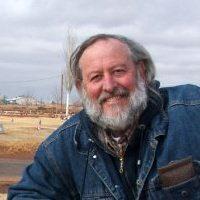
Cayce was born Sunday, 3/18/1877 at 3pm. When he was born, his mom was 21 and his dad was 23 (58). Edgar’s relative founded the town of Cayce, SC (57).
Edgar was shy and afraid of people (101), was always dreaming (18), and wanted to help people. So INF.
He was humble, never sought uniqueness or publicity, didn’t try to profit from his ability despite many people urging him to (viii, 23, 127, 132).
When he went asleep and gave readings, he talked authoritatively (16).
His power might have been inherited. His grandpa could tell farmers where to dig their wells, and possibly make brooms dance. Snakes would follow him home form the fields, but he didn’t like them (7).
Edgar was not intelligent in school (18) and came from humble origins. These were common traits among other psychics who came before him. Another psychic was Andrew Jackson Davis, who lived 8/11/1826-1910 (337). Like Edgar, hypnotism didn’t work on Andrew (338), and Andrew gave his readings twice a day (341). Like Edgar, Andrew said in a sleeping trance that his “powers were to be used to help the sick” (338). Later, Andrew got most of his info from patients by placing the tips of his fingers against the palm of the patient’s hand, which is called psychometry (340).
Many years before in France, patients under hypnosis showed clairvoyance (119). “Many somnambulists experienced this transference of the patient’s symptoms to themselves. They were termed ‘sensitive.’ Others, particularly those who went into deep trance, on awakening neither knew what they had said nor felt any ill effects. These were called ‘intuitive.’ The sensitive type suffered constantly, picking up the pains of those about them, and were in danger of temporary blindness, melancholia, and almost anything else that the person examined was enduring. The intuitive somnambulist, on the other hand, had a rather easy time of it. He went to sleep, woke up, and his work was done” (156).
Edgar learned his spelling words by sleeping on the book. He also memorized a speech of more than an hour long by his father reading it to him as he slept (56).
He had imaginary friends or little children he could see but others couldn’t. They were his size and grew as he did. They always wanted to do what he wanted to do. Their gender would vary. Another real child claimed to see and talk to them (37). She asked why they couldn’t get wet. One said “We can’t get wet. We live in the flowers, and the music. The music of everything” (38). Edgar and the girl found other little invisible people who wouldn’t play with them. When the little people stopped keeping pace with Edgar’s growth, he knew he was going to lose them (38). Edgar also saw his dead grandpa, who was sort of transparent (39).
After reading the Bible 12 times, a winged woman with a soft, clear, musical voice told him that his prayers had been heard and offered to give him what he wanted. He said he wanted to help other people, especially sick kids (45-46).
Edgar’s trance conditions: normal health, stomach done digesting, loosened collar, cuffs, shoes, and belt; gave readings no more than twice a day (10:30am, 3:30pm), woke feeling a little hungry (181, 332, 334); felt refreshed if his power was used for good, felt bad if his power was used for a bad purpose without his knowledge (247). “The two most important factors for a good reading were a genuine desire to get help on the part of the subject and an equally genuine desire to give help on Edgar’s part. Gertrude’s ideal attitude was passive, sympathetic, and receptive” (334). The ideal conductor was one who was sympathetic and close to the psychic. For giving medical readings, he would lie with his head to the south and his feet to the north, but for life readings he would lie with his head to the north and his feet to the south (269).
The conductor would say this for a physical reading as Edgar’s eyes closed: “Now the body is assuming its normal forces, and will be able, and will give, such information as is desired of it at the present time. The body physically will be perfectly normal, and will give that information now. Now you have before you the body of —-, who is located at —-. You will go over this body carefully, examine it thoroughly, and tell me the conditions you find at the present time; giving the cause of the existing conditions, also suggestions for help and relief for this body. You will speak distinctly, at a normal rate of speech. You will answer the questions I will ask” (332). For check readings, she’d say, “You will give more than one reading at this time.” For a life reading: “You will have before you [name and place of individual at birth], and you will give the relation of this entity and the Universe, and the Universal Forces, giving the conditions that are as personalities, latent and exhibited in the present life. Also the former appearances in the earth’s plane, giving time, place, and the name, and that in that life which built or retarded the development for the entity, giving the abilities of the present entity and that to which it may attain, and how. You will answer the questions which I will ask regarding this entity. You will speak distinctly, at a normal rate of speech” (333). When Edgar said “We are through for the present,” she said: “Now the body will be equalized as to overcome all those things that might hinder or prevent it from being and giving its best mental, spiritual and physical self. The body physical will create within the system those properties necessary to cause the eliminations to be so increased as to bring the best normal physical conditions for the body. The mental will so give that impression to the system as to build the best moral, mental and physical forces for this body. The circulation will be so equalized as to remove strain from all centers of the nerve system, as to allow the organs of the system to assimilate and secret properly those conditions necessary for normal conditions of this body. The nerve supplies of the whole body will assume their normal forces; the vitality will be stored in them, through the application of the physical being, as well as of the spiritual elements in the physical forces of the body. Now, perfectly normal, and perfectly balanced, you will wake up” (334).
The readings said that living near large bodies of water was good for Edgar’s health and his psychic abilities. Traveling over water was also good for the person receiving the reading (267). Interesting since water has usually been associated with intuition. It was also in water that I often got ideas or inspirations, like when doing the dishes, taking a shower, or being in the spa/pool.
“Everybody takes it for granted—even the best Christians, the ministers and missionaries—that the things that happened in the days of the Bible and the days of the saints can’t happen now” (22). I think this shows that those people don’t truly believe in the Bible.
Edgar used all schools of medicine and wasn’t loyal to any brand or manufacturer (20, 289).
“The appendix and tonsils should not be removed, because they act as focal points for poisons, gathering and sending them out through the proper channels. Only when overloaded to the point of breaking down should they be removed, and such a breaking down meant that some part of the body was overproducing waste material” (290).
“Vegetables grown in vicinity are always better for body than those grown elsewhere and shipped in” (301).
Edgar told a man to sit under a tree in a quiet spot at the same time of day every day for a week. On the fifth afternoon, the man claimed he heard the tree speak. “Edgar told the story to illustrate the truth that when any person who is habitually an objective thinker begins to experiment with subjective thinking, he sees and hears strange things and imagines he is having psychic experiences. ‘Actually, he is only meeting the reality of himself. It’s just the opposite sort of thing when a man who has been too concerned with his inner thoughts goes out into the world and mixes with other people. In each case it is new to the person just experiencing it, but common to everyone else’” (306).
“Though patience we learn to know ourselves; we learn to measure and test our ideals, to use faith, to seek understanding through virtue. All spiritual attributes are embraced in patience. In patience possess ye your soul” (331).
Edgar’s trance self said that he got his psychic power because he had once attained a great height in soul development in a past life, but slipped “downward through a series of lives until he had reached an almost opposite position of instability. The present life was a chance to atone for some of his mistakes. It was a crucial life: he had purposely been given a great temptation, balanced by an equal opportunity for good. During one of his appearances he had been wounded in a battle and left on the field for dead. He lived for several days, conscious and in extreme agony. Being unable to move or help himself in any way, he had only his mind as a weapon against pain. Just before he died he succeeded in elevating his mind beyond reach of his body and its suffering. Since no achievement, good or bad, is ever lost, the ability to subdue the body and its feelings became part of the pattern of his individuality. It was now being employed to present the test to the personality of Edgar Cayce. Used for good, it would raise him back to a portion of the spiritual estate he once possessed. Used for selfish, material purposes, it would sink him to the lower levels of humanity” (263-264).
“The Life Reading was a balance sheet, and if an asset once possessed was missing, it was something to be alarmed about. Most souls possessed greater virtue in their earlier lives than at present anyhow, but this virtue was through grace: it was the virtue of innocence. The path of the soul was downward until free will made the turn upward” (278).
Edgar thought astrology and reincarnation were wrong, but his sleeping self said otherwise (237, 247). He became convinced by the readings. He said that the fifth chapter of Matthew was in line with reincarnation, but I don’t think so. It’s about God rewarding the meek and persecuted, but it doesn’t say when their reward will be. John 9:3 was about a child born blind. “Since he was born blind, how could his own sin have caused his blindness, unless it was committed in another life? Doesn’t that indicate that the disciples were familiar with reincarnation and the law of karma” (261)? I looked up the verse. Jesus said the child was born blind so that he could use his power on him.
The book says that the underworld of other religions/mythologies is earth. Persephone being abducted by Pluto, Lord of Hades, was a metaphor for the soul of man who was taken from his true home in the heavens (362).
Only the mind is real, and thought builds the soul more than deeds (260).
As a reading once told Edgar, “Every sincere try [at helping people] is counted to you for righteousness” (349).
“It is a stern set of ethics that emerges from the readings. No lukewarm embracing of theological virtues will satisfy them. They insist on perfection as the goal, and every misstep must be retraced, every injury undone, every injustice rectified. The newer, lenient interpretations of Christianity are not tolerated. Marriage, for instance, is treated as the Roman Catholic Church treats it, though the readings give a different reason for this attitude from that of the church fathers. . . . Only in extreme circumstances, similar to those under which the Catholic Church grants annulment, do the readings advise divorce. Then one of the parties is usually hopelessly at fault, while the other is bearing an unreasonable burden. Usually the reading will say, speaking of the one who is attempting to co-operate and hold things together, ‘This has been met by the entity; the debt is paid’” (351-352). Good to know my debt’s been paid, heh. It’s reassuring that there seems to be justice in the world after all.
Arcturus is the next stop for souls leaving the solar system. Arcturus is the point of choice for the soul’s next adventure (273). This is the fourth brightest star in the night sky.
“The solar system is a cycle of experiences for the soul. It has eight dimensions, corresponding to the planets; they represent focal points for the dimensions, or environments in which the dimensions can express and materialize themselves—although materialization of each dimension is different. This is the third dimension, and it’s a sort of laboratory for the whole system, because only here is free will completely dominant. On the other planes, or dimensions, some measure of control is kept over the soul to see that i learns the proper lessons. The control is usually by the soul itself, if it has evolved sufficiently, because once the body of this dimension has been left and the consciousness of his life has been absorbed into the subconscious, the veil between the two is lifted. The subconscious, you see, is the record of all the lives of the soul, in this system and in other systems, out among the stars. it’s the record we think of as being kept by the Recording Angel. It’s the story of what we do with our spirit—the portion of God that is given to us for life, with the gift of individuality, or separate existence from God. Our problem is to perfect our individuality, and then we return to God. Our spirit and soul, or individuality, are joined to Him. . . . Our astrological influences from the planets, or dimensions, we have inhabited will be good or bad, weak or strong, according to the experiences we have had there, and how we handled our problems. For example, we react to the earth according to the manner in which we have handled the problems of earth in our other lives—brotherly love, material possessions, sex, food and drink. Sometimes we are working on an earth problem to the exclusion of any influence from the stars or planets at all. The stars represent soul patterns, not experiences. The twelve signs of the zodiac are twelve patterns from which the soul chooses when coming into the earth plane. They are like races—patterns of temperment, personality, etc. . . . It’s Hermetic, it’s Pythagorean, it’s Jewish, it’s Christian! The Egyptians put it in the pyramids, on the Emerald Tablet of Hermes, and on the Bembine Table of Isis. Pythagoras put it in numbers, and in the theorem that the square on the hypotenuse of a right triangle is equal to the sum of the squares of the other two sides. Jesus put it in the Sermon on the Mount and in the remainder of the fifth chapter of St. Matthew” (237-239, Lammers telling Cayce what he said in trance). “A body is only an objectification of the soul pattern. That’s why each one is different in build, in physiognomy, in basic health. It is a reflection of the individuality of the soul, which gives it life. The record of this particular experience, the conscious mind—that’s the personality. It’s like a day in the course of a life, compared to the actual history of the soul” (240). “The conscious mind is the record of this life. Just as an emotion is the experience of a single moment, so the conscious mind is the record of a single life. This conscious mind is located in the pituitary gland. That, at least, is its focal point—the gland has a purely physical function also. The thoughts go from the conscious to the imaginative, or introspective mind, which is seated in the pineal gland. There the thoughts are compared with all that has gone before that is in any way related to them, and when this is done, the thoughts—properly conditioned and judged—pass on to the subconscious, or soul mind, which is seated, with its spirit, just above the heart. There the thoughts are kept as a record, and as they are constructive they quicken the spirit and lower the barrier between the soul and the pure essence of life. As they are destructive they are rejected, but kept as a record, and as they are repeated they build up the barrier between the soul and the spirit and dim the radiance of the life essence that shines through the subconscious to the imaginative, and by refraction, or hunch, intuition, and yearning, into the conscious” (244-245).
“Remember what I say about the subconscious mind being the storehouse of all our experiences and thoughts, for all our lives, here and elsewhere? Well, to the degree that these experiences and thoughts have been in the right direction, a man is civilized, cultured, humane, and so forth: his past record shines through his conscious mind and present body, making the pattern of the body and the character of the person. Nothing is forgotten or lost by the subconscious” (245-246).
“They discovered, among other things, the existence of a gland unknown to science—the lydin—located above the gonads, and the point of entrance of the life force into the body” (335).
Why we can’t remember our former lives: “Because we’d never learn anything if we did. We’d carry over all our prejudices, weaknesses, strengths, likes, and dislikes, and have them in active, rather than suppressed form. They would make a mess of free will on this plane. What we have been, builds our character and intellect and makes us charming or hateful; then, with free will as the active agent, we go forth with this equipment in a world that is like a succession of laboratory tests” (248, Lammers).
Why reincarnation isn’t in Christianity: It used to be in the early days. “There was a sect of Christians called the Gnostics. The readings say they kept the line unbroken between the old religions and the new one. . . . Christ was predicted by the old religion. The people who built the great pyramid in Egypt predicted Him. . . . We found some books about it. There’s a movement in England called British Israel, that’s founded on the pyramid prophecies. . . . Just like the other old religions—they are called ‘mystery’ religions—the Jewish faith had a secret doctrine. It was called ‘cabala.’ The students who learned it were called ‘initiates,’ and these were the high priests. They learned the esoteric part of the religion, and the people were given the exoteric version: they were given the same fundamental philosophy, and the same moral code, but with a simple explantation. . . . The readings say that when the leaders of the early church decided to propagate the faith to all people, indiscriminately, they decided to drop the doctrine of reincarnation. It was difficult to explain, for one thing, and it was difficult to swallow, for another. It made life more complex. It made virtue even more necessary. A man had to be pretty brave to face the fact that one life of suffering was only a step toward heaven. On the other hand, people who didn’t examine the theory could easily say, ‘Oh, well, we have other lives to live. We won’t be sent to hell after this one. So let’s enjoy it.’ So they fought the Gnostics and won the battle. What they did was right, I suppose, because without a simplification of the faith it wouldn’t have spread. It would have remained a small sect, for intellectuals and students of metaphysics. . . . But the readings say that no sect, or schism, should ever be allowed to form around this work. They say we are merely to present what we have, to those who seek it. Truth will prove itself, in time” (257-259).
Interesting: The moon’s “influence was obvious on such things as the tides and the female cycle. Any farmer could tell you that a fence rail laid on the wane of the moon will sink into the ground, just as bacon from a hog killed on the wane of the moon will shrivel in the pan and be worthless. The fence rail has to be laid when the moon is on the increase, and the hog has to be killed at the same period” (249).