

What do you think?

My Fantoms
Romantic provocateur, flamboyant bohemian, precocious novelist, perfect poet—not to mention an inexhaustible journalist, critic, and man-about-town—Théophile Gautier is one of the major figures, and great characters, of French literature.
In My Fantoms Richard Holmes, the celebrated biographer of Shelley and Coleridge, has found a brilliantly effective new way to bring this great but too-little-known writer into English. My Fantoms assembles seven stories spanning the whole of Gautier’s career into a unified work that captures the essence of his adventurous life and subtle art. From the erotic awakening of “The Adolescent” through “The Poet,” a piercing recollection of the mad genius Gérard de Nerval, the great friend of Gautier’s youth, My Fantoms celebrates the senses and illuminates the strange disguises of the spirit, while taking readers on a tour of modernity at its most mysterious. ”What ever would the Devil find to do in Paris?” Gautier wonders. “He would meet people just as diabolical as he, and find himself taken for some naïve provincial…”
Tapestries, statues, and corpses come to life; young men dream their way into ruin; and Gautier keeps his faith in the power of imagination: “No one is truly dead, until they are no longer loved.”
Contents:
[Introduction}
- The Adolescent (Omphale, Histoire Rococo, 1834)
- The Priest (La Morte amoureuse, 1836)
- The Painter (Onuphrius Wphly, ou Les Vexations fantastiques d'un admirateur d'Hoffmann, 1832)
- The Opium Smoker (La Pipe d'opium, 1838)
- The Actor (Deux Acteurs pour un role, 1841)
- The Tourist (Arria Marcella: Souvenir de Pompei, 1852)
- The Poet (Gerard de Nerval, 1885)
[Postscript]
[Bibliographical Note]
In My Fantoms Richard Holmes, the celebrated biographer of Shelley and Coleridge, has found a brilliantly effective new way to bring this great but too-little-known writer into English. My Fantoms assembles seven stories spanning the whole of Gautier’s career into a unified work that captures the essence of his adventurous life and subtle art. From the erotic awakening of “The Adolescent” through “The Poet,” a piercing recollection of the mad genius Gérard de Nerval, the great friend of Gautier’s youth, My Fantoms celebrates the senses and illuminates the strange disguises of the spirit, while taking readers on a tour of modernity at its most mysterious. ”What ever would the Devil find to do in Paris?” Gautier wonders. “He would meet people just as diabolical as he, and find himself taken for some naïve provincial…”
Tapestries, statues, and corpses come to life; young men dream their way into ruin; and Gautier keeps his faith in the power of imagination: “No one is truly dead, until they are no longer loved.”
Contents:
[Introduction}
- The Adolescent (Omphale, Histoire Rococo, 1834)
- The Priest (La Morte amoureuse, 1836)
- The Painter (Onuphrius Wphly, ou Les Vexations fantastiques d'un admirateur d'Hoffmann, 1832)
- The Opium Smoker (La Pipe d'opium, 1838)
- The Actor (Deux Acteurs pour un role, 1841)
- The Tourist (Arria Marcella: Souvenir de Pompei, 1852)
- The Poet (Gerard de Nerval, 1885)
[Postscript]
[Bibliographical Note]
194 pages, Paperback
First published August 5, 2008
About the author
Théophile Gautier
2,364 books326 followersPierre Jules Théophile Gautier was a French poet, dramatist, novelist, journalist, and literary critic. In the 1830 Revolution, he chose to stay with friends in the Doyenné district of Paris, living a rather pleasant bohemian life. He began writing poetry as early as 1826 but the majority of his life was spent as a contributor to various journals, mainly for La Presse, which also gave him the opportunity for foreign travel and meeting many influential contacts in high society and in the world of the arts, which inspired many of his writings including Voyage en Espagne (1843), Trésors d'Art de la Russie (1858), and Voyage en Russie (1867). He was a celebrated abandonnée of the Romantic Ballet, writing several scenarios, the most famous of which is Giselle. His prestige was confirmed by his role as director of Revue de Paris from 1851-1856. During this time, he became a journalist for Le Moniteur universel, then the editorship of influential review L'Artiste in 1856. His works include: Albertus (1830), La Comédie de la Mort (1838), Une Larme du Diable (1839), Constantinople (1853) and L'Art Moderne (1856)
Ratings & Reviews
Friends & Following
Create a free account to discover what your friends think of this book!
Community Reviews
Displaying 1 - 30 of 50 reviews

August 23, 2015

Théophile Gautier (1811-1872), one of the giants of 19th century French literature, author of novels, short stories, essays, plays and poetry was also a journalist who wrote reviews on literature, theater, dance and art, especially art since in his younger years was himself a painter, a background that served him well as his writing is visually stunning. This fine collection of seven Gautier tales includes Omphale (The Adolescent), Clairmonde (The Priest) and Gérard de Nerval (The Poet); however, for the purpose of this review and in order to share a taste of Gautier, I will focus on my favorite: The Opium Smoker.
The story begins with the narrator paying a call to the home of his friend, one Alphonse Karr, who happens to be smoking a pipe of opium. Thinking nothing of the practice, the narrator accepts the pipe from Karr and, in turn, tales several puffs, inhaling the smoke into his lungs. After his brief relaxed visit with Karr, he goes home for dinner, then to the theater so he can write his obligatory newspaper review and finally returns for a well-deserved sleep.
He has some sleep but the fantastic happens and our narrator relates the details of his vivid dream: He’s back at Karr’s apartment. Karr is on his bed smoking his opium pipe and all is similar to his afternoon visit but for one exception – a decided lack of sunlight. Repeating the sequence of events as if a mirror, the narrator smokes his opium and lies down to feel the effects. We read, “I was half-immersed in a heap of cushions, and lazily stretched back my head to watch the blue smoke-rings rise swirling through the air and dissolve after a moment or two into a diffused haze of cotton-wool. By degrees my gaze shifted upwards to the ebony-black ceiling with its design of golden arabesques. As I stared up at it with that ecstatic intensity that precedes visionary experience, I had the impression that the ceiling was now blue, a deep inky blue, like a strip torn out of the night sky.” This graphic passage exemplifies Gautier’s painterly background.
He notes the ceiling’s change of color to his friend. Karr remarks such is the very nature of a ceiling, so very much like a woman, sheer caprice, wanting to change all the time. The narrator remains only half convinced by this line of reasoning and, with a tincture of unease, continues to closely observe the ceiling. As if in response to his scrutiny, the ceiling turns a deeper blue and stars began to appear, stars having delicate golden threads stretching down, filling the room with light, while, in the meantime, the entire house had become as clear and as transparent as glass.
Slightly unsettled by such mystical transformations, the narrator wonders what his childhood friend, Esquiros the Magician, would have to say about this instant shapeshifting. No sooner does he have this reflection then to his stupefaction Esquiros is standing before him. Wow, now that's magic! He asks Karr how Esquiros entered the room since the door is closed, to which Karr explains magicians always walk through closed doors. The narrator takes such a well formulated statement to be an obvious example of sound logic.
At this point, Esquiros’ eye become enormous, round and glowing and his body dissolves and turns into swirls of sparkling light, winding around the narrator’s body with a progressively tighter grip. In this restricted state, the narrator sees whiffs of rising white smoke taking humanlike form and hears a voice whisper in his ear that they are spirits. He also sees for the first time a beautiful young barefoot girl sitting up in the corner of the ceiling who tells those rising white smoke spirits that she does not want to join them but would rather live for another six months.
The young beauty explains to the narrator that if he goes into town and gives her a kiss on the lips of her dead body she will live for six more months and live for him alone. Upon hearing her promise, without the slightest hesitation, the narrator sets off in a carriage pulled by two magical black horses. During his travels, he relates, “We sped across a dark and dismal plain. There was a low leaded sky and an endless procession of small, spindly trees flying away on both sides of the road in the opposite direction to the coach, for all the world like a routed army of broomsticks. Nothing could have been more sinister than the huge, brooding greyness of that sky, scored by the black silhouettes of those skeletal flying trees.” Sidebar: this entire coach sequence has much in common with a similar opium induced coach ride in Sdegh Hedyat’s The Blind Owl.
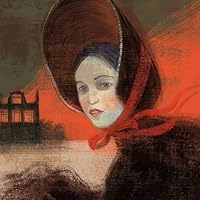
The opium dream continues, related in vintage Théophile Gautier vibrant language. And this tale is but one of seven. There is also an informative introduction by Richard Holmes, who did an excellent job translating from the French. Lastly, this New York Review Book edition has a striking detail of Théodore Chassériau’s Two Sisters on the cover. If you are a romantic at heart, this book is for you.


Read
March 22, 2019In my contrarian days, I was a subscribing member of the Committee for Scientific Investigation into Claims of the Paranormal, now known as the more temperate and less narrowly focused Committee for Skeptical Inquiry. For real. Oh, I was armed with ferocious resources to debunk commonly cherished myths like flying saucers, crop circles, psychics, and divine creation. None of which added to my already limited popularity. And I am cynical still.
But that doesn’t mean there aren’t ghosts. They just aren’t cinematic. They are the little fissures in the mind that blur, that disconnect. Except for the heavy lifting, of course. That’s when the Devil comes in.
Having cast around for a long time, the best answer he could come up with was that the whole thing was inexplicable . . . unless it was the Devil himself at work. . . . The Devil has always preyed upon mankind, and Jesus himself was not spared his wiles. The temptation of St. Anthony is well known; and Martin Luther was also tormented by Satan, so that to drive him away he was reduced to throwing the inkwell at his head. One can still see the mark of the ink on the wall of his monk’s cell.
The Devil makes a few appearances in these 19th century ghost stories, toying first with an artist and then with an actor. The actor was attempting to portray the Devil in a stage play but he wasn’t getting the Satanic laugh quite right.
Often, of course, the protagonists were confronted with feminine fantoms. Of this I know.
"I have heard serious-minded people make flippant remarks about the kind of love that is conceived for actresses and queens and lady poets and for all women who, to their way of thinking, excite a man’s imagination rather than his affections; and yet it is just this kind of mad love-affair which leads to insanity, to death, or to the unheard-of sacrifices of time or wealth or intellect. So! You think you are in love? Ah! But don’t you sometimes think you are ill? And yet: if you think you are, then, you really are.”
The final story in this collection is hardly fiction; rather, it is a meditation of sorts of the author’s friend, the poet Gérard de Nerval, who ended it all in the Rue de la Vieille Lanterne by means of a thin strap, perhaps the Queen of Sheba’s garter, attached to the bars of a wall ventilator.
I started this story just after reading a review about some Gustave Doré prints. They make an impression, to say the least. So I was startled when Gautier, when describing his friend’s suicide, took us to the very place; first to a lithograph by Célestin-François Nanteui:

And then to a drawing by Gustav Doré:

A black masterpiece, he calls it, which prompts the reflection that horror has its own beauty.
But that doesn’t mean there aren’t ghosts. They just aren’t cinematic. They are the little fissures in the mind that blur, that disconnect. Except for the heavy lifting, of course. That’s when the Devil comes in.
Having cast around for a long time, the best answer he could come up with was that the whole thing was inexplicable . . . unless it was the Devil himself at work. . . . The Devil has always preyed upon mankind, and Jesus himself was not spared his wiles. The temptation of St. Anthony is well known; and Martin Luther was also tormented by Satan, so that to drive him away he was reduced to throwing the inkwell at his head. One can still see the mark of the ink on the wall of his monk’s cell.
The Devil makes a few appearances in these 19th century ghost stories, toying first with an artist and then with an actor. The actor was attempting to portray the Devil in a stage play but he wasn’t getting the Satanic laugh quite right.
Often, of course, the protagonists were confronted with feminine fantoms. Of this I know.
"I have heard serious-minded people make flippant remarks about the kind of love that is conceived for actresses and queens and lady poets and for all women who, to their way of thinking, excite a man’s imagination rather than his affections; and yet it is just this kind of mad love-affair which leads to insanity, to death, or to the unheard-of sacrifices of time or wealth or intellect. So! You think you are in love? Ah! But don’t you sometimes think you are ill? And yet: if you think you are, then, you really are.”
The final story in this collection is hardly fiction; rather, it is a meditation of sorts of the author’s friend, the poet Gérard de Nerval, who ended it all in the Rue de la Vieille Lanterne by means of a thin strap, perhaps the Queen of Sheba’s garter, attached to the bars of a wall ventilator.
I started this story just after reading a review about some Gustave Doré prints. They make an impression, to say the least. So I was startled when Gautier, when describing his friend’s suicide, took us to the very place; first to a lithograph by Célestin-François Nanteui:
And then to a drawing by Gustav Doré:
A black masterpiece, he calls it, which prompts the reflection that horror has its own beauty.

November 5, 2013
4.5 stars
On n'est veritablement morte, que quand on n'est plus aimée
My Fantoms is a ghostly provocative selection of seven of Théophile Gautier's short stories, translated and compiled by Richard Holmes. The stories are arranged chronologically so that the reader may perceive the progression of Gautier's writing throughout the course of his professional career: the first, The Adolescent, was written when he was just twenty-one, the last in this collection The Poet was written when he was fifty-six. Gautier's more lengthy works, not presented in this selection, are more erotically imagined.
Some of the tales are sensual, seductive, gothic romances often with spectral, hypnotic, fantastic and otherworldly features. The fantômes in his stories are shadowy outlines, silhouettes, mostly feminine entities: they are "seductresses, ravishing mischief-makers, soft-hearted vampires, generous courtesans, fatal temptresses, or simply ardent thousand-year-old muses."(xxii) Symbolically, they hint at a portrait of Gautier's own personal relationships. This taken to be truth, his love life must have been quite volatile and haunting.
In The Adolescent, the main character, an "innocent with a headful of dreams and illusions," visits his uncle's summer house, a "sad relic of bygone days, as ramshackled as if it had been a thousand years old." At night in his bedroom, he witnesses the goddess Omphale, climbing out of the mythological tapestry to seduce him. The experience initially frightening, becomes so intoxicating that he obsessively anticipates these nightly apparitions. Much is alluded here to the loss of innocence.
Gautier wrote with a light tone and often with a sense of humor. He also reflected his training in the arts and his appreciation of textures, form and color in his prose. In The Painter, Onuphrius works on a portrait when it is tampered with by a diabolical spectral being.
The last tale, The Poet, is a part fiction/biography of his old friend, Gérard de Nerval who committed suicide in 1855. Nerval, whose own writings were inspired by his obsession for an actress (Jenny Colon, died 1842) was "the one person who understood Gautier" best. The Poet is a nostalgic remembrance of Nerval, illuminating some of their mutually haunted experiences. It reads like a very tragic memoir.
Gautier's macabre tales have similar gothic-romance values to those of Edgar Allan Poe. These writings are expressed with a savoir faire - a naturalness- reflecting a bohemian life and pagan musings; obsessive loves and a mild indulgence in eroticism; his view of death as an escape from the pain and suffering of life. My Fantoms is a great introduction to Gautier. Whatever else is gleaned from this compilation, it is certain that I would enjoy Théophile Gautier's lengthier fiction and poetry.
On n'est veritablement morte, que quand on n'est plus aimée
My Fantoms is a ghostly provocative selection of seven of Théophile Gautier's short stories, translated and compiled by Richard Holmes. The stories are arranged chronologically so that the reader may perceive the progression of Gautier's writing throughout the course of his professional career: the first, The Adolescent, was written when he was just twenty-one, the last in this collection The Poet was written when he was fifty-six. Gautier's more lengthy works, not presented in this selection, are more erotically imagined.
Some of the tales are sensual, seductive, gothic romances often with spectral, hypnotic, fantastic and otherworldly features. The fantômes in his stories are shadowy outlines, silhouettes, mostly feminine entities: they are "seductresses, ravishing mischief-makers, soft-hearted vampires, generous courtesans, fatal temptresses, or simply ardent thousand-year-old muses."(xxii) Symbolically, they hint at a portrait of Gautier's own personal relationships. This taken to be truth, his love life must have been quite volatile and haunting.
In The Adolescent, the main character, an "innocent with a headful of dreams and illusions," visits his uncle's summer house, a "sad relic of bygone days, as ramshackled as if it had been a thousand years old." At night in his bedroom, he witnesses the goddess Omphale, climbing out of the mythological tapestry to seduce him. The experience initially frightening, becomes so intoxicating that he obsessively anticipates these nightly apparitions. Much is alluded here to the loss of innocence.
Gautier wrote with a light tone and often with a sense of humor. He also reflected his training in the arts and his appreciation of textures, form and color in his prose. In The Painter, Onuphrius works on a portrait when it is tampered with by a diabolical spectral being.
"Onuphrius walked over to collect the canvas, leaning with its face to the wall. He put it up on the easel. Just above the line of Jacintha's delicate mouth, an unknown hand had drawn in a pair of moustaches that would have done honour to a drum-major...
For about an hour everything went well. The blood flow beneath the flesh tones, the outlines grew sharp, the forms filled out, the light values were established against the dark, and half the canvas was already alive...He was in the act of painting..the pupil when a violent blow to his elbow knocked his hand aside. The spot of white jerked onto the eyebrow, and his coat sleeve smeared across the surface of the cheek, which he had just finished and was still fresh."
The last tale, The Poet, is a part fiction/biography of his old friend, Gérard de Nerval who committed suicide in 1855. Nerval, whose own writings were inspired by his obsession for an actress (Jenny Colon, died 1842) was "the one person who understood Gautier" best. The Poet is a nostalgic remembrance of Nerval, illuminating some of their mutually haunted experiences. It reads like a very tragic memoir.
"It is now twelve years since that drear morning in January, when a sinister rumour first began to spread through Paris. In the uncertain light of that cold, grey dawn, a body had been found hanging from the bars of a wall ventilator in rue de la Vielle Lanterne, opposite the iron grille of a street sewer, halfway up a flight of steps. It was a place frequented by a familiar crow, who used to hop ominously about, seeming to croak like the raven in Edgar Allan Poe: " Never, oh! nevermore!" The body was that of my childhood friend and school-fellow, Gérard de Nerval."
Gautier's macabre tales have similar gothic-romance values to those of Edgar Allan Poe. These writings are expressed with a savoir faire - a naturalness- reflecting a bohemian life and pagan musings; obsessive loves and a mild indulgence in eroticism; his view of death as an escape from the pain and suffering of life. My Fantoms is a great introduction to Gautier. Whatever else is gleaned from this compilation, it is certain that I would enjoy Théophile Gautier's lengthier fiction and poetry.

November 1, 2009
The Hippopotamus
Gautier was a hippopotamus with a ballerina brain.
With ballerinas on his brain.
Big bosomed ballerinas in marble diabolically vivified in his imaginal life.
He was a hippopotamus who wore silk dainties under his hide, and in his dream life was turned inside out.
A hippy hippo who lived in a frothy chaotic age when aesthetics freely mingled with the truly fantastical, the magical, the wackily spiritual, and when these things could be handled with an irony that did not sacrifice the reality of the Unseen, thereby investing the ironical with substance and chills.
So these tales spiritually chill as they seduce with alluring very tangible detail sprinkled with humor, like marble breasts come to laughing life in one’s dreams, breasts large enough to blot out the everyday sun, to draw one with immense mammarian force into alternate worlds fed by erotical stars.
But beneath these laughing and living imaginary tits are the devil’s horns and hooves, so to bury one’s fun loving face in the pliant milky flesh is to feel hardness and points and consuming flames.
Gautier was a tightrope hippopotamus in a tutu. Tightropes no less real for being mental. And a hippo no less sexy for being a hippo.
His was an age when the imagination could reign supreme because the imagination was real.
It was also an age when the imagination could kill because it was real.
Nerval was Gautier’s best friend and died at the hand of his own imagination.
And the hippo lived to cry and write about it.
Theophile Gautier
The sturdy Hippopotamus
inhabits jungles Javanese
where snarl in caverns bottomless
undreamable monstrosities.
The boa hisses and unscrews;
snuffles convulse the buffalo;
the tiger caterwauls. He chews,
or slumbers, tranquillissimo.
He fears not kris nor assegai,
he looks at man and stands his ground;
he laughs, when shots from the sepoy
spatter his leather and rebound.
The hippopotamus and I
have an impenetrable hide.
In armour-plate of certainty
I roam the plains with dauntless stride.
Gautier was a hippopotamus with a ballerina brain.
With ballerinas on his brain.
Big bosomed ballerinas in marble diabolically vivified in his imaginal life.
He was a hippopotamus who wore silk dainties under his hide, and in his dream life was turned inside out.
A hippy hippo who lived in a frothy chaotic age when aesthetics freely mingled with the truly fantastical, the magical, the wackily spiritual, and when these things could be handled with an irony that did not sacrifice the reality of the Unseen, thereby investing the ironical with substance and chills.
So these tales spiritually chill as they seduce with alluring very tangible detail sprinkled with humor, like marble breasts come to laughing life in one’s dreams, breasts large enough to blot out the everyday sun, to draw one with immense mammarian force into alternate worlds fed by erotical stars.
But beneath these laughing and living imaginary tits are the devil’s horns and hooves, so to bury one’s fun loving face in the pliant milky flesh is to feel hardness and points and consuming flames.
Gautier was a tightrope hippopotamus in a tutu. Tightropes no less real for being mental. And a hippo no less sexy for being a hippo.
His was an age when the imagination could reign supreme because the imagination was real.
It was also an age when the imagination could kill because it was real.
Nerval was Gautier’s best friend and died at the hand of his own imagination.
And the hippo lived to cry and write about it.
Nothing, in fact, actually dies: everything goes on existing, always. No power on earth can obliterate that which has once had being. Every act, every word, every form, every thought, falls into the universal ocean of things, and produces a circle on its surface that goes on enlarging beyond the furthest bounds of eternity. The material configurations only disappear from the common gaze, while the spectres that break free from them go out to people infinity.

August 12, 2009
this is an absolutely fantastic book of seven supernatural stories by theophile gautier. kudos to nyrb for putting this book out, along with the dozens of other fabulous titles they have published, many of them quite obscure.
while these aren't really ghost stories; demons , devils and spirits abound. and one of the stories, the priest, must surely be one of the first stories to mention vampires, as it was written in 1836. bram stoker's dracula, by comparison, didn't come out until 1897.
the writing is uniformly brilliant, thanks in large part to the fabulous translation by richard holmes. every sentence flows beuatifully.
if you like stories that lean toward the supernatural, or just really great writing in general, i can't recommend this book highly enough.
i also own two other books by gautier. one is a novel, and the other a memoir of his travels in italy. i can't wait to read them.
while these aren't really ghost stories; demons , devils and spirits abound. and one of the stories, the priest, must surely be one of the first stories to mention vampires, as it was written in 1836. bram stoker's dracula, by comparison, didn't come out until 1897.
the writing is uniformly brilliant, thanks in large part to the fabulous translation by richard holmes. every sentence flows beuatifully.
if you like stories that lean toward the supernatural, or just really great writing in general, i can't recommend this book highly enough.
i also own two other books by gautier. one is a novel, and the other a memoir of his travels in italy. i can't wait to read them.

Read
February 8, 2021I actually just wanted to read "The Opium Smoker" from this collection, but ended up reading the entire thing. So glad I did.
more later on this one ... perfect for anyone who enjoys the weird and the strange in their reading. I did learn from this book that I need to read more ETA Hoffman.
more to come
more later on this one ... perfect for anyone who enjoys the weird and the strange in their reading. I did learn from this book that I need to read more ETA Hoffman.
more to come

November 2, 2011
I had read other books by Theophile Gautier, but nothing prepared me for this superb collection of fantasy-horror stories entitled My Fantoms, translated by the biographer Richard Holmes. To the extent that it was Holmes's contribution that made the difference, I think I'd like to see him do more translations.
The only thing that threw me for a loop was that Holmes changed the titles of the seven stories from, in some cases, their much better known original titles. It is not until the Bibliographical Note at the very end of My Fantoms that Holmes gives us the original titles. For the sake of reference, here they are:
By far the best stories are "The Priest" and "The Tourist." It is in the latter story, in which the ruins of Pompeii come back to life just so that the hero, Octavian, could live a love affair with one of the victims of Mount Vesuvius some 1,800 years before. It is in that story that Gautier's most famous quote can be found:
The only thing that threw me for a loop was that Holmes changed the titles of the seven stories from, in some cases, their much better known original titles. It is not until the Bibliographical Note at the very end of My Fantoms that Holmes gives us the original titles. For the sake of reference, here they are:
"The Adolescent" = "Omphale, Histoire Rococo"The last story does not resemble a story at all: Rather, it seems more like a commemorative essay on Gautier's dear departed best friend, Gérard de Nerval, who had hanged himself from a lamppost some years before. Then, as one reads on, the tribute is full of details that Gautier could not possibly have known and which strain the reader's credibility.
"The Priest" originally "La Morte amoureuse"
"The Painter" originally "Onuphrius Wphly, ou Les Vexations fantastiques d'un admirateur d'Hoffman"
"The Opium-Smoker" originally "La Pipe d'opium"
"The Actor" originally "Deux Acteurs pour un rôle"
"The Tourist" originally "Arria Marcella: Souvenir de Pompéi"
"The Poet" originally "Gérard de Nerval"
By far the best stories are "The Priest" and "The Tourist." It is in the latter story, in which the ruins of Pompeii come back to life just so that the hero, Octavian, could live a love affair with one of the victims of Mount Vesuvius some 1,800 years before. It is in that story that Gautier's most famous quote can be found:
Nothing, in fact, actually dies: everything goes on existing always. No power on earth can obliterate that which has once had being. Every act, every word, every form, every thought, falls into the universal ocean of things, and produces a circle on its surface that goes on enlarging beyond the furthest bounds of eternity.If you ever find yourself reading the journals of the Goncourt brothers, who knew Gautier well, you would find in him a somewhat bizarre but appealing figure -- one that I hope to know better after reading more of his work.
July 18, 2020
A middling collection, nothing fancy-pants, but nothing awful, either. Gautier might put you in mind of Lefanu or other mid-century "nouveau-gothicists" or whatever you want to call them. Gautier's supernaturality comes from the omnipresent, titular ghosts in the stories collected here. The first batch seem to be almost a keen symbol for repressed sexuality or some weird masturbatory referent (adolescent images beautiful ghost; priest sees beautiful specter, etc). Difficult to say, though you can tell Gautier loves both the spirit world and beautiful young women, so the stories are haunted by both in a harmless way. That's a good word for this collection: harmless.

January 23, 2009
It's funny, because after reading descriptions of Gautier in the Goncourt journals and other books, these are exactly the kind of short stories I thought he might write. Kind of a Gallic Poe, if you substituted Poe's high Gothic style with a sort of otherworldly eroticism. Very unique, and there were some beautiful passages, such as this description of The Painter at work:
"The blood began to flow beneath the flesh tones, the outlines grew sharp, the forms filled out, the light values were established against the dark, and half the canvas was already alive. The eyes were particularly successful. The curve of the eyebrows was faultlessly indicated, and melted softly into the temples in a velvety transposition of blue. The shading beneath the eyelashes fell upon the white brilliance of the cornea with a marvelous muting effect, the gaze was firmly placed, and the painting of the iris and pupil left nothing to be desired. The only thing missing was the tiny diamond of light, that spangle of sunshine, which painters call the sight-spot."
"The blood began to flow beneath the flesh tones, the outlines grew sharp, the forms filled out, the light values were established against the dark, and half the canvas was already alive. The eyes were particularly successful. The curve of the eyebrows was faultlessly indicated, and melted softly into the temples in a velvety transposition of blue. The shading beneath the eyelashes fell upon the white brilliance of the cornea with a marvelous muting effect, the gaze was firmly placed, and the painting of the iris and pupil left nothing to be desired. The only thing missing was the tiny diamond of light, that spangle of sunshine, which painters call the sight-spot."
October 15, 2014
Wonderful stories! Superb writing! Phantasmagoria Fantastique. I loved each one of these, even the one that is more about Nerval his friend, and poet than a fictional story. I really enjoyed this collection. This went on my best reads pile. I was sad when I had blazed through the whole thing and it ended. Highly recommend to fans of the more gothic phantasmagoric type stories.

Read
May 29, 2023an unreasonably good collection of Gautier's (autobiographical-ish?) short stories, from The Adolescent through to The Poet. Preposterously horny at times. but so daring too! & Inventive ! The Opium Smoker is a new favourite piece of writing about hallucinogenic experiences. The devil romps everywhere, in the incredibly Bulgakovian fashion, especially in The Painter and The Actor which I WOULD recommend to whoever
also The Tourist is legitimately an early-19th century time travel narrative to Pompeii (when u do time travel to a doomed city because you're just that horny for a petrified corpse , mwah)
also The Tourist is legitimately an early-19th century time travel narrative to Pompeii (when u do time travel to a doomed city because you're just that horny for a petrified corpse , mwah)

January 17, 2019
charming, beautiful ghost stories that absolutely did not speak to me

November 10, 2024
Started this NYRB collection a few days before Halloween 2024 and what an apt choice! These tales are otherworldly, subversive, and erotically-charged delights. Supernatural creatures, specters, reanimated long-dead corpses, time travel, drug-induced hallucinations... all of this in the early 1800s! I saw Gautier noted as the "Gallic Poe" and that's right on in mood and setting, perhaps Gautier with an extra shot of the fantastical.
Seven stories represented here - "The Adolescent" written when he was just past this stage at 21, and the final "The Poet" written as 56, according to the Postscript - each with fantastic set-ups and details.
My 3 favorites among the 7:
- "The Adolescent"
A young man stays with his uncle in a lavishly decorated Parisian apartment. His room includes a detailed tapestry of Hercules and the princess Omphale. He adores the beautiful woman and that night (and many nights after), she steps down from the tapestry to visit him...
**** 4 stars
-"The Priest"
Ooh, a subversive delight! A young novitiate, just minutes before he takes his final vows of celibacy and service, sees a woman in the cathedral and falls madly in love... he continues to take his vows, but for years is wracked by lust and doubt until she comes back into his life.
***** 5 stars
-"The Tourist"
Three friends are on holiday in Italy after graduation from university. They visit a museum with artifacts excavated from Pompeii and Herculaneum. One of the young men becomes enamored with the remains of a young woman and her "shapely form" and jewelry that were left behind. When he and his friends later visit Pompeii, he is transported back to 79 AD, just days before the Vesuvius eruption.
***** 5 stars
These short stories would make such an entertaining limited series on television or film!
Seven stories represented here - "The Adolescent" written when he was just past this stage at 21, and the final "The Poet" written as 56, according to the Postscript - each with fantastic set-ups and details.
My 3 favorites among the 7:
- "The Adolescent"
A young man stays with his uncle in a lavishly decorated Parisian apartment. His room includes a detailed tapestry of Hercules and the princess Omphale. He adores the beautiful woman and that night (and many nights after), she steps down from the tapestry to visit him...
**** 4 stars
-"The Priest"
Ooh, a subversive delight! A young novitiate, just minutes before he takes his final vows of celibacy and service, sees a woman in the cathedral and falls madly in love... he continues to take his vows, but for years is wracked by lust and doubt until she comes back into his life.
***** 5 stars
-"The Tourist"
Three friends are on holiday in Italy after graduation from university. They visit a museum with artifacts excavated from Pompeii and Herculaneum. One of the young men becomes enamored with the remains of a young woman and her "shapely form" and jewelry that were left behind. When he and his friends later visit Pompeii, he is transported back to 79 AD, just days before the Vesuvius eruption.
***** 5 stars
These short stories would make such an entertaining limited series on television or film!
Read
August 31, 2026I’ve been wanting to explore Theophile Gautier’s other works ever since i read his short story Clarimonde/La Morte Amoureuse/The Dead Woman in Love which is one of the earliest female vampire in a prose form and even predated Carmilla by 36 years. Naturally it hadn’t made it into the definitive list of classic gothic literature because historically it belonged to French Romanticism that borders on supernatural horror (which they termed as Fantastique) but it slowly getting the recognition it deserves as part of the broader European gothic fiction that extends beyond the British classics. Alas, after reading Gautier’s My Fantoms i don’t think French Romanticism is my cup of tea or romanticism movement as a whole for that matter maybe? and honestly none of the stories in My Fantoms are as impressive (and as romantic) as Clarimonde for me

March 2, 2011
I have some thoughts on this book, but I'm not sure I have them in order here, so I'll just start.
I like the similarities in the titles of these stories. They're all connected thematically, and the simple titles, "The Poet," "The Priest," etc. fit with that.
The writing style is pleasant to read, very poetic but with some quite direct humor mixed in. I love the ending of "The Painter," where the narrator declares, "The reader will think, no doubt, that this is a very commonplace ending to a very unusual story. But he must take it or leave it. I would not utter a single false word. I would rather cut my throat."
There's another line that made me laugh, but I can't recall which story it was from. It's a line regarding a dog, whose sole purpose in life was to provide a shaggy black foreground over a green background.
Many (or all) of these seven stories deal with madness, insanity, and the possibility of supernatural interference of a romantic nature. I feel like with a couple of the stories, rational explanations might be acceptable, and in the others there are most certainly supernatural things going on.
"The Adolescent." There's less discussion in this one about the possibility of hallucination or madness, and it's told more directly, a woman climbs out of a painting, to come to the narrator.
"The Priest." Here the storyteller says quite plainly that he is unsure whether the events he describes happened in a dream or real life. But it seems more like he's saying that as a last-ditch sort of effort to deny what's happened. Because even his superior by the end believes he's been courting a demon.
"The Opium Smoker." I take this one as simply a drug-induced hallucination.
"The Actor." In this story, the Devil himself is involved, and there isn't much discussion about the reality of events.
"The Tourist." This one could go either way. And lastly, "The Poet"--this story threw me off a little bit. It seems less like the others. I'm only halfway through Richard Holmes' introduction (I wanted to save that for after reading the stories, as sometimes the intros in these collections give away more than I want to know prior to reading), but I saw in there that this one is nonfiction?
reply | editLoading-trans | deleteLoading-trans | flag *
message 2: by Michael, Werewolfman
Mar 08, 2011 08:39am
42934 I agree. The thematic connections between the pieces seem to be twofold. First, each, with the possible exception of "The Poet," deals with the dark power of desire. Secondly, there is a supernatural element that is questionably created by the arousal of the protagonist. I was never sure whether Gautier meant his fantoms to be anything more than the manifestation of his desire for women.
Even the Devil in "The Actor" seems like just an extension of the narrators strange uncontrollable utterances. It's almost as if he's created the devil to explain his own devilish behavior. In "The Priest" I never thought of the demon woman as an actual spirit, but only as demonic in the eyes of a holy and celibate priest. Her retinue is described in a supernatural way, but I think the priest is just seeing Africans for the first time and thinking they are the demon's otherworldly helpers.
While Gautier has a fun, relaxed way of telling a story, I thought many of the stories lacked a compelling resolution. This must have been a great lead up to modernism, where the plot is not necessarily integral to the success of the story, but here I was expecting more of a satisfying development of each story. He brings his characters to life in such a vivid way and then lets them drop at the end like puppets who've been abandoned in mid-line.
"The Poet" is not strictly non-fiction. I think it's something like a fictionalized eulogy for his poet body Nerval. In this respect, the piece reminds me of Borges in its radical blending of reality and fiction. Its really meant to be read as truth, and reminds us that in order to enjoy any piece of literature we have to suspend our disbelief and live in the world of the story.
I like the similarities in the titles of these stories. They're all connected thematically, and the simple titles, "The Poet," "The Priest," etc. fit with that.
The writing style is pleasant to read, very poetic but with some quite direct humor mixed in. I love the ending of "The Painter," where the narrator declares, "The reader will think, no doubt, that this is a very commonplace ending to a very unusual story. But he must take it or leave it. I would not utter a single false word. I would rather cut my throat."
There's another line that made me laugh, but I can't recall which story it was from. It's a line regarding a dog, whose sole purpose in life was to provide a shaggy black foreground over a green background.
Many (or all) of these seven stories deal with madness, insanity, and the possibility of supernatural interference of a romantic nature. I feel like with a couple of the stories, rational explanations might be acceptable, and in the others there are most certainly supernatural things going on.
"The Adolescent." There's less discussion in this one about the possibility of hallucination or madness, and it's told more directly, a woman climbs out of a painting, to come to the narrator.
"The Priest." Here the storyteller says quite plainly that he is unsure whether the events he describes happened in a dream or real life. But it seems more like he's saying that as a last-ditch sort of effort to deny what's happened. Because even his superior by the end believes he's been courting a demon.
"The Opium Smoker." I take this one as simply a drug-induced hallucination.
"The Actor." In this story, the Devil himself is involved, and there isn't much discussion about the reality of events.
"The Tourist." This one could go either way. And lastly, "The Poet"--this story threw me off a little bit. It seems less like the others. I'm only halfway through Richard Holmes' introduction (I wanted to save that for after reading the stories, as sometimes the intros in these collections give away more than I want to know prior to reading), but I saw in there that this one is nonfiction?
reply | editLoading-trans | deleteLoading-trans | flag *
message 2: by Michael, Werewolfman
Mar 08, 2011 08:39am
42934 I agree. The thematic connections between the pieces seem to be twofold. First, each, with the possible exception of "The Poet," deals with the dark power of desire. Secondly, there is a supernatural element that is questionably created by the arousal of the protagonist. I was never sure whether Gautier meant his fantoms to be anything more than the manifestation of his desire for women.
Even the Devil in "The Actor" seems like just an extension of the narrators strange uncontrollable utterances. It's almost as if he's created the devil to explain his own devilish behavior. In "The Priest" I never thought of the demon woman as an actual spirit, but only as demonic in the eyes of a holy and celibate priest. Her retinue is described in a supernatural way, but I think the priest is just seeing Africans for the first time and thinking they are the demon's otherworldly helpers.
While Gautier has a fun, relaxed way of telling a story, I thought many of the stories lacked a compelling resolution. This must have been a great lead up to modernism, where the plot is not necessarily integral to the success of the story, but here I was expecting more of a satisfying development of each story. He brings his characters to life in such a vivid way and then lets them drop at the end like puppets who've been abandoned in mid-line.
"The Poet" is not strictly non-fiction. I think it's something like a fictionalized eulogy for his poet body Nerval. In this respect, the piece reminds me of Borges in its radical blending of reality and fiction. Its really meant to be read as truth, and reminds us that in order to enjoy any piece of literature we have to suspend our disbelief and live in the world of the story.

March 8, 2018
4 stars!
- Richard Holmes does an excellent job of translating. The language is beautiful and flows naturally
- Gautier experiments with three main themes in these seven stories: the supernatural, the surreal, and the erotic. There's a sense of extravagance and distinct otherwordly-ness that reminds of H.P. Lovecraft for some reason. The combination of the prose and these themes gave off a this lush yet unnerving reading experience
- The only gripe that I had with this collection is that stories became repetitive, due to several repeating elements
It's a shame that this collection and Gautier himself aren't really known. While a lot of short story compilations are a mixed bag for me, this one was definitely one of the better ones. If you happen to come upon this and, are interested in the theme previously mentioned go ahead and pick this up!
Favorite stories: The Adolescent and The Painter
Least Favorite story: The Poet
- Richard Holmes does an excellent job of translating. The language is beautiful and flows naturally
- Gautier experiments with three main themes in these seven stories: the supernatural, the surreal, and the erotic. There's a sense of extravagance and distinct otherwordly-ness that reminds of H.P. Lovecraft for some reason. The combination of the prose and these themes gave off a this lush yet unnerving reading experience
- The only gripe that I had with this collection is that stories became repetitive, due to several repeating elements
It's a shame that this collection and Gautier himself aren't really known. While a lot of short story compilations are a mixed bag for me, this one was definitely one of the better ones. If you happen to come upon this and, are interested in the theme previously mentioned go ahead and pick this up!
Favorite stories: The Adolescent and The Painter
Least Favorite story: The Poet

July 27, 2012
My review written for the TLS:
"Les goûts et les couleurs ne se discutent pas", and perhaps literary translations should join the list: in the search for balance between access and fidelity, someone will find the results too literal, or else not literal enough. Perhaps it is because Richard Holmes is the prize-winning biographer of Shelley and Coleridge, among others, that he leaves so few grounds for complaint: by a neat trick of timbre and the use of some simple archaic vocabulary (“to sup”) he encourages an atmosphere that respects readability but preserves Gautier’s filigreed tone.
And yet just this tone makes it unlikely Holmes’s plea for a re-evaluation will be answered as a result of this book (he argues in both his forword and postscript that Gautier is underappreciated). Stories not of plot but of mood, the tales in My Fantoms nevertheless lack the psychological depth that makes Henry James’s “Owen Wingrave”, for example, so gripping. James may often have culled plots from dinner conversation, but his writing is never conversational."
"Les goûts et les couleurs ne se discutent pas", and perhaps literary translations should join the list: in the search for balance between access and fidelity, someone will find the results too literal, or else not literal enough. Perhaps it is because Richard Holmes is the prize-winning biographer of Shelley and Coleridge, among others, that he leaves so few grounds for complaint: by a neat trick of timbre and the use of some simple archaic vocabulary (“to sup”) he encourages an atmosphere that respects readability but preserves Gautier’s filigreed tone.
And yet just this tone makes it unlikely Holmes’s plea for a re-evaluation will be answered as a result of this book (he argues in both his forword and postscript that Gautier is underappreciated). Stories not of plot but of mood, the tales in My Fantoms nevertheless lack the psychological depth that makes Henry James’s “Owen Wingrave”, for example, so gripping. James may often have culled plots from dinner conversation, but his writing is never conversational."

September 23, 2018
A great string of grande phantasmic passions: Gautier writes with a delicate pen and supernatural ink. There's a cloud of opium smoke that listlessly drifts across each page, turning each word into the eager ramblings of a somnolent madman. It drifts about in a world of apparitions. Loose laced cloth gently swayed by a moonlight breeze by an open window. Tempting whispers promising the fleshly demise through unending pleasure and titillation. The hedonism of deeply held desire made manifest through the architecture of dream, and stamped by the Royal Crest of nightmares. Candles burn faintly if only to allude at how much darker the night is and how much deeper pleasure can go. It will devour you, and you quite willingly will stumble drunkenly into its chaws. It's warmest in the inferno and these lonely nights get one feeling so very cold...

October 9, 2018
" At last Serapion's mattock jarred against the coffin, and the planks resounded with a dull and sonorous sound, the terrible sound that oblivion gives back when the living knock against it."

April 3, 2020
Gautier is like reading the imagination of the Russian masters of unease (Gogol, Dostoyevsky) combined with Poe all whilst locked in an asylum!
Gautier is masterful in creating a terrible sense of foreboding and the impression that someone's mind is about to unravel, or the world with which we're familiar is about to erode and decompose!
A common theme of his stories is beautiful siren-like women, beckoning from whence no man should venture! Or the Devil! Weaving his spell and enticing unwitting victims into his traps!
A fantastic set of stories told chronologically (starts with one he wrote in his twenties and carries on up until one he wrote in his fifties maybe). Ironically, I think the earlier ones where his writing hasn't matured, are the best of the bunch.
Well worth a look if you're a fan of the "haunted man" type tale.
Gautier is masterful in creating a terrible sense of foreboding and the impression that someone's mind is about to unravel, or the world with which we're familiar is about to erode and decompose!
A common theme of his stories is beautiful siren-like women, beckoning from whence no man should venture! Or the Devil! Weaving his spell and enticing unwitting victims into his traps!
A fantastic set of stories told chronologically (starts with one he wrote in his twenties and carries on up until one he wrote in his fifties maybe). Ironically, I think the earlier ones where his writing hasn't matured, are the best of the bunch.
Well worth a look if you're a fan of the "haunted man" type tale.
July 12, 2024
thoroughly enjoyable, chilling stories;
& the orientalism may very cautiously be not resented on account of the prose
& the orientalism may very cautiously be not resented on account of the prose

March 13, 2010
My Fantoms – Theophile Gautier (translated Richard Holmes)
Details, A Very Close Look / “The Actor” & “The Opium Smoker”
Details, readily transporting the images and emotions of the piece, and yet, if the writer is not effective in the details, the work fails. In the writings of Gautier, details is one component of his craft that works.
How to write in details, without sounding like a list or a work for a business endeavor? Gautier wrote in poetry/prose, actually. His writings are fluid, are transformative and knowing how to structure the piece without the effort showing is a skill well worth the effort.
“….and a sharp breeze whirled among the saffron yellow leaves, blackened at the edges by the first nip of early frost. The rose-bushes along the flowerbeds were twisted and broken by the wind, their long stems left trailing disconsolately through the mud; but the main alley, with its graveled surface, still remained passably dry.” The Actor P.101.
The short stories in the anthology are phenomenally close up and detailed. The use of description and language that closes us in and around and very engaged is how the narratives are related and communicated. Why are all stories not as perfect? How does Gautier keep the pace and not bore the reader?
“Altogether it would have been the ideal place for a poet to have turned his meditative steps. Indeed at that very moment a young man was pacing up and down the central avenue, though with every visible sing of impatience. His dress was elegant to the point of theatricality, consisting of a black velvet frock-coat with gold military frog-ging and collar trimmed with fur, tight-fitting grey wool trousers, and a pair of soft leather boots reaching to the knee and decorated with tassels.” P.101. The Actor. Fabulous use of language and movement, of fluidity and a graceful introduction to the narration is the process that catches ones breathe as we read on.
The details in both stories enhance and develop the characters. How much more of a visual is portrayed in each story, than with the adjectives and phrases to describe all of it.
“Without hesitation I replied that her name was Carlotta (which was true). She then told me that she had been a singer, and that she had died so young she had never tasted any of the pleasures of existence.” P. 99. The Opium Smoker.
How does the flow of language and detail enhance the work without bearing down on it? When does Gautier realize that the phrase, the sentence, the thought have enough detail? Gautier was a critic and wrote in various genres, including short essays. The sense of use of space and the constraints of a short story or essay may allow Gautier only a few concise ways to articulate and to narrate, which is perhaps the best use of language and poetic word choices.
Works Cited:
Gautier, Theophile. My Fantoms. Translated – Richard Holmes. New York Review Books.NYC, NY. 1976.
Details, A Very Close Look / “The Actor” & “The Opium Smoker”
Details, readily transporting the images and emotions of the piece, and yet, if the writer is not effective in the details, the work fails. In the writings of Gautier, details is one component of his craft that works.
How to write in details, without sounding like a list or a work for a business endeavor? Gautier wrote in poetry/prose, actually. His writings are fluid, are transformative and knowing how to structure the piece without the effort showing is a skill well worth the effort.
“….and a sharp breeze whirled among the saffron yellow leaves, blackened at the edges by the first nip of early frost. The rose-bushes along the flowerbeds were twisted and broken by the wind, their long stems left trailing disconsolately through the mud; but the main alley, with its graveled surface, still remained passably dry.” The Actor P.101.
The short stories in the anthology are phenomenally close up and detailed. The use of description and language that closes us in and around and very engaged is how the narratives are related and communicated. Why are all stories not as perfect? How does Gautier keep the pace and not bore the reader?
“Altogether it would have been the ideal place for a poet to have turned his meditative steps. Indeed at that very moment a young man was pacing up and down the central avenue, though with every visible sing of impatience. His dress was elegant to the point of theatricality, consisting of a black velvet frock-coat with gold military frog-ging and collar trimmed with fur, tight-fitting grey wool trousers, and a pair of soft leather boots reaching to the knee and decorated with tassels.” P.101. The Actor. Fabulous use of language and movement, of fluidity and a graceful introduction to the narration is the process that catches ones breathe as we read on.
The details in both stories enhance and develop the characters. How much more of a visual is portrayed in each story, than with the adjectives and phrases to describe all of it.
“Without hesitation I replied that her name was Carlotta (which was true). She then told me that she had been a singer, and that she had died so young she had never tasted any of the pleasures of existence.” P. 99. The Opium Smoker.
How does the flow of language and detail enhance the work without bearing down on it? When does Gautier realize that the phrase, the sentence, the thought have enough detail? Gautier was a critic and wrote in various genres, including short essays. The sense of use of space and the constraints of a short story or essay may allow Gautier only a few concise ways to articulate and to narrate, which is perhaps the best use of language and poetic word choices.
Works Cited:
Gautier, Theophile. My Fantoms. Translated – Richard Holmes. New York Review Books.NYC, NY. 1976.

January 26, 2011
I have to not only give this book a 5 star rating but also recommend this book to anyone who loves stories that touch on the supernatural. This book has stories that will often be classified as gothic but these stories as well as their author aren't like any other gothic works or authors, he mixes an inescapably enthralling mix of sensuality and the macabre with such beautiful detail it almost feels as if you were there first hand to witness them. For me this book started off slow with the first story but both "The Priest" and "The Painter" more than made up for it i would have bought this book solely for one of those two they just perfectly encapsulate the style and ability of the genius that is Gautier. I can not to any length describe how beautifully constructed and brilliantly tailored these short stories are and to the extent that these will forever be emblazoned on your mind.

December 28, 2012
Gautier's contribution to mid-19th-century French literature was apparently that of joining traditional fables of the morbid with the erotic. Although neither the introduction nor the postscript to this collection of six stories and one essay (on Gerard de Nerval) mention a kinship with Poe, Gautier does in his ode to his friend Nerval. Gautier's characters, unlike Poe's, actually enjoy their trysts with the dead, so there is never a sense of rotting corruption in Gautier as there is with Poe, and the beauty of Gautier's descriptions prevent his tales from acquiring the suffocating effect of Poe's more macabre writing.

July 19, 2011
Individual stories here are great, I particularly enjoyed "The Priest." However, as a volume, the stories too often follow nearly the same plot line: Young man defined mostly by his profession or creative pursuit falls into a situation where his dream life becomes confused with reality. Somewhere along the line a beautiful woman becomes involved. The central character's life is changed forever as a result of this experience. Got dull after a while. I blame this on the editor, not the author.

August 28, 2009
It is not really surprising that I liked this collection of stories. I have been a life long fan of ETA Hoffman, and these stories seem crafted in a similar vein. Certainly, some have more of a psychological basis than Hoffman's 'Grusel' stories, but Gautier's pieces are wonderful to read and discover. My favorite one is probably 'The Priest', but there are a few little gems hidden in this book.

Read
August 4, 201119th century collection of short stories that encompass the struggle between the fantoms of love and the fantoms of death. There are many odd encounters, the past returns to present, art becomes truth, and reality is only in the peripheral. A weird collection.

August 1, 2012
Funny and proto-surreal, Gautier's stories each focus on a Frenchman whose sense of reality is sorely or ple challenged, usually by or involving a woman (i.e., a Muse in some guise); except the last, which is a portrait of his tragic friend, poet Gerard de Nerval.

June 7, 2021
Average collection. Too repetitive: every story follows the same formula. Might make more of an impression if you don't read them back to back. That said, beautifully translated. There are some gorgeous passages in there.

June 2, 2008
Despite his fancy French name and Bohemian cred, I was not taken at all with this collection.
Displaying 1 - 30 of 50 reviews