

What do you think?

L'ospite
Ryu Yo-Sop, pastore protestante, dopo un lungo esilio negli USA, è "invitato" dalle autorità della Corea del Nord, suo paese d'origine, a rientrare in patria. Rivedrà luoghi mai dimenticati, incontrerà amici e parenti, ormai quasi perfetti sconosciuti, ma anche le sue emozioni saranno sottoposte dal regime a una stretta sorveglianza. Si sentirà un ospite straniero. Ma "l'ospite" è anche il nome che nelle campagne veniva dato al vaiolo, metafora del flagello che arriva da fuori e porta con sé la morte nei villaggi: ed è proprio al rito sciamano che si praticava per scacciarlo che il romanzo si ispira, riprendendone la struttura.
279 pages, Paperback
First published January 1, 2005
About the author
Hwang Sok-yong
84 books350 followersHwang Sok-yong (황석영) was born in Hsinking (today Changchun), Manchukuo, during the period of Japanese rule. His family returned to Korea after liberation in 1945. He later obtained a bachelor's degree in philosophy from Dongguk University (동국대학교).
In 1964 he was jailed for political reasons and met labor activists. Upon his release he worked at a cigarette factory and at several construction sites around the country.
In 1966–1969 he was part of Korea's military corps during the Vietnam War, reluctantly fighting for the American cause that he saw as an attack on a liberation struggle.
In 1964 he was jailed for political reasons and met labor activists. Upon his release he worked at a cigarette factory and at several construction sites around the country.
In 1966–1969 he was part of Korea's military corps during the Vietnam War, reluctantly fighting for the American cause that he saw as an attack on a liberation struggle.
Ratings & Reviews
Friends & Following
Create a free account to discover what your friends think of this book!
Community Reviews
Displaying 1 - 30 of 62 reviews
September 10, 2013
Many times, after a kill, the young men stand together in a circle to pray together.Every so often I run across a book I have to give full marks to because of how pitch perfect the author is in everything they do. It has a lot to do with how aware the book is of itself in terms of content, and context, and the writer writing in an effort beyond literary prizes or commercial deadlines or seeing how far they can push the rape/gore/abuse porn button with the audiences who will always lap those "just stories" up. The titillation. The apolitical. The works of authors who will never try to sew up the disembowelments of history because, really, why should they? Why should they have to, or even think to try.
Save for very, very, very special occasions, I won't be reading white people talking about nonwhite people anymore. That goes for nonfictional tracts, genre prize traps, US soldiers fighting in non-US lands, all that weekend vacation mentality that's already littered my holistic awareness with far too many holes through standardized textbooks. Before Novel Without a Name, I had 'Apocalypse Now', memorials, Agent Orange making my food, no one that had to live before and after to whom this 'war' was a sliver of the matter. Before The Guest, I had gigantic Korean churches in my hometown, Gangnam Style, the market of US mockery of North Korea, my grandfather's fighting in the Korean War more often met with "So what?" within the family. If it wasn't World War II, it wasn't important.
It is unnecessary for me to read all that, when enough have done so to imprint my country's public conscience with the assumptions, the close cut corners, the lies.
These holes both trivialize and sensationalize, putting paid to a country as a magical wonderland of disparate oddities rather than a history of culture colonized, converted, politicized, the same olds of Christianity and Communism facing off under dissimilar skies, all too familiar strains of heritage, poverty, the mouths that fed and the mouths that feed. Too 'political' for all that insist on separating their reading from reality, but hey. Don't you want to find out about a particular atrocity that the US actually isn't responsible for? Well, not entirely, at any rate. You can thank the missionaries and the broader turning tide of "The Americans are coming!" for Korea's Crusaders.
In short, here are the wounds. Here is how they escalated, here is how they are dealt with on the individual level the world over, and here is how they are wielded as a unifying mechanism today in all manner of degrees and disturbances. Times are changing, people are passing, and eventually the ghosts will come to outnumber the dead. Socialism and religion keep on turning, and every so often someone tries to take on the DMZ through the power of literature. I doubt I'll live to see the work that succeeds, but if that effort isn't a powerful breed of hope, I don't know what is.
It was this land, this land where our mothers buried our umbilical cords–this very same land that we dyed red with blood, transformed into a place we can never, ever go back to, not even in our dreams. And that was just the beginning–of the next fifty years.
March 17, 2024
This book is the kind of book I think of as a disruptor. The kind of book that intrudes on life and the reading of other books with a force that can’t be ignored. It tells of a morbid tale, and one that’s too ancient and has repeated itself with such maddening ubiquity. That of humans, who for their varying beliefs, ideologies, wants, selfishness, sense of righteousness, the reasons and justifications never ending, take it upon themselves to kill others. It is a story that one hears quite a few times growing up, if one happens to have been a refugee who could have suffered the same fate of suffering and death that so many have suffered for millennia. It’s an exhaustingly painful and familiar story.
Ryu Yosop immigrated to the United States of America from Korea. For decades he has lived without returning to his homeland, made a life for himself in Brooklyn, New York, and is a pastor of a church. His brother, Yohan, lives in New Jersey, and both are Christians, and both suppress memories of a war they witnessed and partook in in different ways. Yosop finally decides to return to Korea and contend with the past. This is a bold and courageous book that seeks to understand those who suffer heinous acts of war, and those who commit them.
After the end of Japanese imperialism with the end of the second world war, Korea, which suffered its share of tragedies in this period, finds itself yet again in the face of tragedy. Communism has taken root in the country. The landed, mostly Christian, who now have to acquiesce parts of land and contend with new rules and laws either move South or begrudgingly continue living tense lives. When the various Christian youth groups sense the possibility of taking back power, with the support of the American army, begin killing and butchering. It’s a stark story that’s difficult to summarize, yet Sok-Yong tells it with such simplicity and seamlessness.
Among the similar features of the familiar stories I grew up with of war and the ones in this tale is what’s termed as intimate killing. When those who grew up together, and know each other intimately, decide to take up arms and kill those who they know. It is a more sinister affair than that of strangers killing another, even if the means and ends are the same.
“The place was full of familiar faces, especially for those of us from the same villages. We knew all about each other's family situations, everything down to the littlest details, like who'd been beaten up by whom and who teased whom when we were kids.”
This book particularly reminded me of my grandmother. She lost those close to her in various ways that war kills: her husband, whom she’d been separated from when they fled to different parts of the country, died when the medicine used to treat his chronic ailments was no longer available to him; her daughter, who was killed by soldiers at the very end of the war, which must have been a different kind of pain, to be so close to the end and to lose a loved one; her son who had been killed by the men he lived and grew up with on the same street, those he had played with as a child and known, and how they had returned to the same street and lived there, life continuing, I presume, as it usually does even after tragedy.
I tried understanding such grief and pain and loss and tragedy, and I can never quite wrap my head around it, even now that I’m no longer a child, and the stories have worn out in parts with time. Hwang Sok-Yong, however, plunges right into the grime, the pain, the despair, the horrors. Not with the aim of sensationalizing, as I’ve had problems with books that tell of horrors sometimes do, but with a great effort of understanding.
Ryu Yosop immigrated to the United States of America from Korea. For decades he has lived without returning to his homeland, made a life for himself in Brooklyn, New York, and is a pastor of a church. His brother, Yohan, lives in New Jersey, and both are Christians, and both suppress memories of a war they witnessed and partook in in different ways. Yosop finally decides to return to Korea and contend with the past. This is a bold and courageous book that seeks to understand those who suffer heinous acts of war, and those who commit them.
After the end of Japanese imperialism with the end of the second world war, Korea, which suffered its share of tragedies in this period, finds itself yet again in the face of tragedy. Communism has taken root in the country. The landed, mostly Christian, who now have to acquiesce parts of land and contend with new rules and laws either move South or begrudgingly continue living tense lives. When the various Christian youth groups sense the possibility of taking back power, with the support of the American army, begin killing and butchering. It’s a stark story that’s difficult to summarize, yet Sok-Yong tells it with such simplicity and seamlessness.
Among the similar features of the familiar stories I grew up with of war and the ones in this tale is what’s termed as intimate killing. When those who grew up together, and know each other intimately, decide to take up arms and kill those who they know. It is a more sinister affair than that of strangers killing another, even if the means and ends are the same.
“The place was full of familiar faces, especially for those of us from the same villages. We knew all about each other's family situations, everything down to the littlest details, like who'd been beaten up by whom and who teased whom when we were kids.”
This book particularly reminded me of my grandmother. She lost those close to her in various ways that war kills: her husband, whom she’d been separated from when they fled to different parts of the country, died when the medicine used to treat his chronic ailments was no longer available to him; her daughter, who was killed by soldiers at the very end of the war, which must have been a different kind of pain, to be so close to the end and to lose a loved one; her son who had been killed by the men he lived and grew up with on the same street, those he had played with as a child and known, and how they had returned to the same street and lived there, life continuing, I presume, as it usually does even after tragedy.
I tried understanding such grief and pain and loss and tragedy, and I can never quite wrap my head around it, even now that I’m no longer a child, and the stories have worn out in parts with time. Hwang Sok-Yong, however, plunges right into the grime, the pain, the despair, the horrors. Not with the aim of sensationalizing, as I’ve had problems with books that tell of horrors sometimes do, but with a great effort of understanding.

August 6, 2022
Not much to say about this one. It follows Reverend Ryu, a Korean man born in the North who then moved to the US and started a parish. He is going back to North Korea with a tour group that is intended for people who left to reunited with their families, some sort of separated families reunion only for Koreans in the US and Canada.
Anyways, the whole bit about traveling to North Korea, Ryu trying to hide his identity because he was wary of the regime, and stuff like that was interesting. I liked how Hwang portrayed the North Korean guides as following the rules and loving the regime, but also making them very human.
Other than that, it talks about the 'guests' aka smallpox, Korean war crimes and how it can devastate a person (and a family, and a nation), and Christianity in North Korea.
This was my third attempt at Hwang's fiction and whilst I loved his memoir The Prisoner, I'm still not enjoying it big time. His writing seems to have many layers and I do find myself thinking of the books (especially Familiar Things for whatever reason, because that one I disliked), but I don't find them enjoyable. Will I give it a new try later on? Mayhaps.
Anyways, the whole bit about traveling to North Korea, Ryu trying to hide his identity because he was wary of the regime, and stuff like that was interesting. I liked how Hwang portrayed the North Korean guides as following the rules and loving the regime, but also making them very human.
Other than that, it talks about the 'guests' aka smallpox, Korean war crimes and how it can devastate a person (and a family, and a nation), and Christianity in North Korea.
This was my third attempt at Hwang's fiction and whilst I loved his memoir The Prisoner, I'm still not enjoying it big time. His writing seems to have many layers and I do find myself thinking of the books (especially Familiar Things for whatever reason, because that one I disliked), but I don't find them enjoyable. Will I give it a new try later on? Mayhaps.

Read
June 22, 2016There's this fundamental discord present in Korean media. On the one hand, they send their hyperactive pop music all over Asia, and the fashion exported with it is all lace and frills. Their soap operas, again played all over Asia, are stories of eternal romance, weepy-eyed heroines underneath wax snowflakes.
Then consider that this is a country split right down the middle, flattened twice in a row after a period of truly brutal Japanese colonial rule, which then underwent the shock of several nasty dictators, a heroic labor resistance movement, and an almost unprecedented wave of economic growth as the country's society was pushed to the limits. Needless to say, there's some scar tissue. The Guest shows what happens when revolution and counter-revolution intersect, when collective memory and individual memory part ways, and people become lost in their ideologies, whether that ideology is that of Kim Il Sung or Evangelical Protestantism.
Then consider that this is a country split right down the middle, flattened twice in a row after a period of truly brutal Japanese colonial rule, which then underwent the shock of several nasty dictators, a heroic labor resistance movement, and an almost unprecedented wave of economic growth as the country's society was pushed to the limits. Needless to say, there's some scar tissue. The Guest shows what happens when revolution and counter-revolution intersect, when collective memory and individual memory part ways, and people become lost in their ideologies, whether that ideology is that of Kim Il Sung or Evangelical Protestantism.

September 16, 2019
לסקירה מפורטת בעברית, קישור לבלוג שלי -
https://sivi-the-avid-reader.com/האורח/
https://sivi-the-avid-reader.com/האורח/

June 3, 2019
I was pretty young when I realized that countries have the tendency of seeing bad things as originating outside of their borders. In England, we have such things as German measles, and Hong Kong flu. In Korea, it was smallpox that was called ‘the Guest’ , not something that could possibly originate in that country, but something that must have come from abroad. And so the novel deals with a 52 day massacre that occurred in Hwanghae Province during the Korean War. It has always been blamed on the Americans, but Hwang Sok Yong’s novel suggests a greater involvement of the Korean Communists and Christians. It didn’t apparently go down well in his homeland, but I guess my suggestion that we should rename our illnesses as English measles and English flu will most likely fail to impress my fellow English.
August 19, 2014
Watch my review on YouTube here - https://youtu.be/QvQQ1qSEWAs?si=9soHH...
Read my review on Substack here - https://open.substack.com/pub/barrywe...
Read my review on Substack here - https://open.substack.com/pub/barrywe...
July 22, 2012
This book is very detailed and it takes a while to engage,
especially if you don't have some background on what happened
in North Korea during the war. It also blends reality with fantasy
in a fluid and sometimes ambiguous way. It's a very powerful story
that shows how people in the same community can be driven to tear
each other apart based solely on ideology. Highly recommended,
but not a quick, easy read by any means.
especially if you don't have some background on what happened
in North Korea during the war. It also blends reality with fantasy
in a fluid and sometimes ambiguous way. It's a very powerful story
that shows how people in the same community can be driven to tear
each other apart based solely on ideology. Highly recommended,
but not a quick, easy read by any means.

January 7, 2019
The read for the World Literature group I'm in on Goodreads, this was the first of Hwang's novels to be published in English. The title, The Guest (Sonnim in Korean) is the name that was given to smallpox, a disease which was introduced from the west and reached epidemic proportions after the country was "opened" to western trade and exploitation. Hwang explains in the preface that he chose it to refer to Christianity and Marxism, the foreign ideologies which have divided Koreans from one another. I do have problems with his calling the Stalinist ideology of North Korea Marxist, and even more to his equating it with Christianity -- although I suppose it could be argued that modern Christianity, or at least the Korean version of Christianity, is equally distorted; unlike the situation with Marx, we don't have any idea what Jesus actually stood for. In any case, the forms in which these two western beliefs reached Korea were certainly both disastrous for the people of the penninsula. (I would also note, however, that the religion and culture they displaced were also largely a foreign import, derived from China.) Actually the novel itself does not treat the two sides as completely equal -- while there was overreaction on both sides, the guilt is clearly placed on the Christians, and the way the book is structured, it is largely about the repentance of the Christian characters.
This theme is not what made the novel so controversial; rather, it's that the book offers a revisionist view of the Sinchon massacre. Rather than simply present the novel as a fictional speculation, Hwang made the claim that he was revealing the real truth about the massacre. He apparently based his view on two alleged eye-witnesses, a minister who is the original of Reverend Ryu, the main character of the novel (and who according to some posters on the internet later said he was misinterpreted), and an anonymous person in North Korea. This hardly seems like conclusive evidence, and without questioning Hwang's honesty or sincerity -- it's obvious from his other novels that he is hardly an apologist for the United States or the South Korean government; The Shadow of Arms has a graphic description of My Lai -- I think it is better to treat the book as a fictional possibility rather than as a factual historical novel.
The official North Korean version of what took place at Sinchon is that there was a systematic massacre of almost forty thousand civilians by U.S. troops over a period of forty to fifty days. This certainly seems implausible to me; the two documented massacres by American troops, the 1950 massacre at No gun ri in Korea and the later more famous one at My Lai in Vietnam, were both carried out in a short time by small units and there were in both cases soldiers who refused to join in and eventually broke through the attempted cover-up. That a major operation against civilians was carried out by U.S. combat troops and no one ever spoke out about it, even after they had left the military, doesn't fit in with what I know about the mostly working class American citizen-soldiers -- only a highly professional elite corps like the European colonial armies or a highly fanatical military group like the SS could do something like this. On the other hand, despite U.S. and South Korean claims that it never happened, there seems to be real evidence of some sort of mass killing. That the U.S. military "advisors" may have participated in or even directed a massacre by the South Koreans is far more plausible, and would fit in with the atrocities in Vietnam carried out by Vietnamese troops under the supervision of the CIA in the "strategic hamlet" program. Another possibility of course is a right-wing paramilitary group of some sort, and this is essentially what Hwang is claiming -- an armed Christian youth group animated by religious and political fanaticism.
As presented in the novel, the underlying dynamic was one of class rather than religion, or rather the religious difference was the form taken by the class antagonism. The Christians according to the narrative were the more affluent farmers and petty bourgeois layers (the actual large landlords having already fled to the South), who had become wealthy through collaboration with the Japanese occupation; the Communists and their supporters were mainly among the tenant farmers, and the Christians were opposing the land reform which was giving the former tenants ownership of the land they had been working for the benefit of the landlords and the Japanese corporations. A violent opposition group made up of young Christians had fled to the hills after carrying out acts of terrorism, and armed themselves with the support of various groups such as the Anticommunist Youth Corps in the South; they returned ahead of the American invasion force and decided to exterminate the Communists and their families as agents of Satan. The returning Northern army troops then re-entered the area and suppressed the revolt, of course in turn going too far and killing many uninvolved Christians. The account seems quite familiar to anyone who has read about the alternating massacres of Christians and Moslems from Bosnia through the Middle East and into much of Africa, for example, or much of the violence in the former USSR after the collapse of the Stalinist regime. Some of the Christians at least belonged to a group called the Unification Corps; I couldn't help being reminded of the right-wing Unification Church of Rev. Moon, although I don't know if there is any direct connection between the two.
Leaving the historical controversy aside, the book has an unusual style, being based on the stages of a rite of exorcism; ghosts appear to the main characters throughout the book, and much of what we learn about the massacre is revealed supernaturally. The novel begins with the visit of the protagonist, Reverend Ryu Yosŏp, to North Korea after a lifetime in exile in the United States, and three days after the death of his older brother Yohan, an actor in the massacre. Apart from the ghosts, the narrative is made up of flashbacks and memories as in The Old Garden, but with many more characters' points of view; sometimes it is not immediately apparent whose memories are being given. There is much explicitly described brutality and this is a book that many people would have difficulty getting through. Despite putting the blame for the massacre on the Christians, the book seems very religious, being largely presented through the consciousness of the Reverend and concerned with repentance and forgiveness. There is much praying and many Bible quotations throughout. I have a problem with that whole theme too. It seems that from the original Athenian Amnesty to the recent Commissions on Truth and Reconciliation, the side of the rich and powerful always gets the benefit of any amnesty while the revolutionaries are always persecuted relentlessly. There isn't always forgiveness, of course, and one could point to many "red terrors", but if there is an amnesty it's always one-sided. Compare the treatment of the Shah of Iran or General Pinochet who tortured and murdered tens of thousands of innocent people with the treatment of say Leonard Peltier, convicted after a questionable trial of killing two armed FBI agents coming after him. I'm not for vengeance as such, particularly when the Stalinists punish people for their own and even their parents' and grandparents' class position, but when it comes to atrocities such as Hwang depicts (leaving aside whether events happened the way he depicts, I'm discussing this as a fictional narrative) there comes a point when one must ask, as one recent book on the Holocaust did, whether the living have the right to forgive crimes against the dead.
Although this is probably Hwang's most famous book, at least outside Korea, perhaps due to the controversies, I have to say that I thought the previous novel was better.
This theme is not what made the novel so controversial; rather, it's that the book offers a revisionist view of the Sinchon massacre. Rather than simply present the novel as a fictional speculation, Hwang made the claim that he was revealing the real truth about the massacre. He apparently based his view on two alleged eye-witnesses, a minister who is the original of Reverend Ryu, the main character of the novel (and who according to some posters on the internet later said he was misinterpreted), and an anonymous person in North Korea. This hardly seems like conclusive evidence, and without questioning Hwang's honesty or sincerity -- it's obvious from his other novels that he is hardly an apologist for the United States or the South Korean government; The Shadow of Arms has a graphic description of My Lai -- I think it is better to treat the book as a fictional possibility rather than as a factual historical novel.
The official North Korean version of what took place at Sinchon is that there was a systematic massacre of almost forty thousand civilians by U.S. troops over a period of forty to fifty days. This certainly seems implausible to me; the two documented massacres by American troops, the 1950 massacre at No gun ri in Korea and the later more famous one at My Lai in Vietnam, were both carried out in a short time by small units and there were in both cases soldiers who refused to join in and eventually broke through the attempted cover-up. That a major operation against civilians was carried out by U.S. combat troops and no one ever spoke out about it, even after they had left the military, doesn't fit in with what I know about the mostly working class American citizen-soldiers -- only a highly professional elite corps like the European colonial armies or a highly fanatical military group like the SS could do something like this. On the other hand, despite U.S. and South Korean claims that it never happened, there seems to be real evidence of some sort of mass killing. That the U.S. military "advisors" may have participated in or even directed a massacre by the South Koreans is far more plausible, and would fit in with the atrocities in Vietnam carried out by Vietnamese troops under the supervision of the CIA in the "strategic hamlet" program. Another possibility of course is a right-wing paramilitary group of some sort, and this is essentially what Hwang is claiming -- an armed Christian youth group animated by religious and political fanaticism.
As presented in the novel, the underlying dynamic was one of class rather than religion, or rather the religious difference was the form taken by the class antagonism. The Christians according to the narrative were the more affluent farmers and petty bourgeois layers (the actual large landlords having already fled to the South), who had become wealthy through collaboration with the Japanese occupation; the Communists and their supporters were mainly among the tenant farmers, and the Christians were opposing the land reform which was giving the former tenants ownership of the land they had been working for the benefit of the landlords and the Japanese corporations. A violent opposition group made up of young Christians had fled to the hills after carrying out acts of terrorism, and armed themselves with the support of various groups such as the Anticommunist Youth Corps in the South; they returned ahead of the American invasion force and decided to exterminate the Communists and their families as agents of Satan. The returning Northern army troops then re-entered the area and suppressed the revolt, of course in turn going too far and killing many uninvolved Christians. The account seems quite familiar to anyone who has read about the alternating massacres of Christians and Moslems from Bosnia through the Middle East and into much of Africa, for example, or much of the violence in the former USSR after the collapse of the Stalinist regime. Some of the Christians at least belonged to a group called the Unification Corps; I couldn't help being reminded of the right-wing Unification Church of Rev. Moon, although I don't know if there is any direct connection between the two.
Leaving the historical controversy aside, the book has an unusual style, being based on the stages of a rite of exorcism; ghosts appear to the main characters throughout the book, and much of what we learn about the massacre is revealed supernaturally. The novel begins with the visit of the protagonist, Reverend Ryu Yosŏp, to North Korea after a lifetime in exile in the United States, and three days after the death of his older brother Yohan, an actor in the massacre. Apart from the ghosts, the narrative is made up of flashbacks and memories as in The Old Garden, but with many more characters' points of view; sometimes it is not immediately apparent whose memories are being given. There is much explicitly described brutality and this is a book that many people would have difficulty getting through. Despite putting the blame for the massacre on the Christians, the book seems very religious, being largely presented through the consciousness of the Reverend and concerned with repentance and forgiveness. There is much praying and many Bible quotations throughout. I have a problem with that whole theme too. It seems that from the original Athenian Amnesty to the recent Commissions on Truth and Reconciliation, the side of the rich and powerful always gets the benefit of any amnesty while the revolutionaries are always persecuted relentlessly. There isn't always forgiveness, of course, and one could point to many "red terrors", but if there is an amnesty it's always one-sided. Compare the treatment of the Shah of Iran or General Pinochet who tortured and murdered tens of thousands of innocent people with the treatment of say Leonard Peltier, convicted after a questionable trial of killing two armed FBI agents coming after him. I'm not for vengeance as such, particularly when the Stalinists punish people for their own and even their parents' and grandparents' class position, but when it comes to atrocities such as Hwang depicts (leaving aside whether events happened the way he depicts, I'm discussing this as a fictional narrative) there comes a point when one must ask, as one recent book on the Holocaust did, whether the living have the right to forgive crimes against the dead.
Although this is probably Hwang's most famous book, at least outside Korea, perhaps due to the controversies, I have to say that I thought the previous novel was better.
March 26, 2022
Questo libro lascia il segno per la sua forte denuncia sociale, raccontando gli orrori della guerra.
Hwang Sok-Yong li ha vissuti sulla stessa pelle quei momenti tragici e devastanti, quindi, riesce perfettamente a ricostruire e a delineare la storia di una guerra, che ha diviso la Corea da almeno cinquant'anni. Questo romanzo ci appare sfortunatamente attualissimo, a causa del periodo che stiamo vivendo.
Mi è piaciuto molto, perché
Hwang Sok-Yong non risparmia nessuno, in tutta la sua crudezza e atrocità, ci fa capire che le ideologie, la religione e gli interessi non portano altro che morte e distruzione fra gli uomini.
Alla fine, non esiste più nulla di giusto e sbagliato di fronte la guerra, e questo scrittore a cuore aperto lo ribadisce più volte. Molto spesso non si capisce chi uccida chi, ma in fondo, questa confusione è chiaramente voluta perché gli assassini in una guerra diventano tutti, contro tutti. Coreani che prima si scambiavano i saluti e le cortesie del buon vicinato, dopo finiscono per trucidarsi tra loro, in nome di un' ideologia differente, dicevano in nome del bene comune, e chi in nome di una religione cristiana e altri shintoista. Tuttavia, in nome di qualsiasi religione, interesse o ideologia hanno tutti prodotto lo stesso medesimo risultato, la violenza, lo strupro e lo sterminio di quasi un' intera popolazione. Questo libro è agghiacciante, offre delle immagini molto forti e scioccanti, che scuotono ripetutamente la sensibilità del lettore.
Hwang Sok-Yong non ci risparmia assolutamente nulla, ci mostra la crudeltà disumana e innacettabile della guerra in tutte le sue aberranti sfaccettature.
Certe immagini di efferata violenza, non me le toglierò più dalla testa, sono rimasta scolpite indelebilmente nella mia mente.
Un libro da leggere assolutamente, ora più che mai, perché in qualsiasi parte del mondo siamo, la guerra non cambia, ovunque scoppia e per qualsiasi motivo esploda porta solo morte e distruzione. Nessuna ragione sarà mai abbastanza valida e sufficiente per giustificare le atrocità di una guerra.
Hwang Sok-Yong li ha vissuti sulla stessa pelle quei momenti tragici e devastanti, quindi, riesce perfettamente a ricostruire e a delineare la storia di una guerra, che ha diviso la Corea da almeno cinquant'anni. Questo romanzo ci appare sfortunatamente attualissimo, a causa del periodo che stiamo vivendo.
Mi è piaciuto molto, perché
Hwang Sok-Yong non risparmia nessuno, in tutta la sua crudezza e atrocità, ci fa capire che le ideologie, la religione e gli interessi non portano altro che morte e distruzione fra gli uomini.
Alla fine, non esiste più nulla di giusto e sbagliato di fronte la guerra, e questo scrittore a cuore aperto lo ribadisce più volte. Molto spesso non si capisce chi uccida chi, ma in fondo, questa confusione è chiaramente voluta perché gli assassini in una guerra diventano tutti, contro tutti. Coreani che prima si scambiavano i saluti e le cortesie del buon vicinato, dopo finiscono per trucidarsi tra loro, in nome di un' ideologia differente, dicevano in nome del bene comune, e chi in nome di una religione cristiana e altri shintoista. Tuttavia, in nome di qualsiasi religione, interesse o ideologia hanno tutti prodotto lo stesso medesimo risultato, la violenza, lo strupro e lo sterminio di quasi un' intera popolazione. Questo libro è agghiacciante, offre delle immagini molto forti e scioccanti, che scuotono ripetutamente la sensibilità del lettore.
Hwang Sok-Yong non ci risparmia assolutamente nulla, ci mostra la crudeltà disumana e innacettabile della guerra in tutte le sue aberranti sfaccettature.
Certe immagini di efferata violenza, non me le toglierò più dalla testa, sono rimasta scolpite indelebilmente nella mia mente.
Un libro da leggere assolutamente, ora più che mai, perché in qualsiasi parte del mondo siamo, la guerra non cambia, ovunque scoppia e per qualsiasi motivo esploda porta solo morte e distruzione. Nessuna ragione sarà mai abbastanza valida e sufficiente per giustificare le atrocità di una guerra.
January 16, 2019
The story is said to be an 'exorcism' of memories about fifty-two days in 1950 North Korea. After Japan left that country independent in 1945, various social and religious groups emerged with political purposes. A hostile division opened between young Christians (church) and Communists (state) that gained steam fueled by resentment over the redistribution of farmland, the place of religion in a People's (Marxist) government, the newly given power to once lowly community members, and revenge for wrongs. Young people desirous of impressing peers committed unspeakable acts of carnage to families held hostage and innocents gathered up.
The exorcism is carried out with magic realism. The main character Reverend Ryu Yosŏp, who was fourteen at the time of those events, lives in New York fifty years later. He takes the opportunity to return to North Korea with a Homeland Tourist Agency to bring closure to the bad memories carried by his infamous, just deceased older brother Yohan. Under the supervision of strict tour guides who question his whereabouts and arrange his private meetings with surviving relatives, Yosŏp succeeds in his mission. His brother's sliver of bone and a birthing cloth of his nephew Daniel get buried only after the phantoms of killers and killed accompany him with their stories. An exquisite ending is an epilogue, a poem portraying ghosts feasting their fill before winding 'without end' and without "old hatred and resentment" through the 'lavender' mountains to 'heaven.'
The exorcism is carried out with magic realism. The main character Reverend Ryu Yosŏp, who was fourteen at the time of those events, lives in New York fifty years later. He takes the opportunity to return to North Korea with a Homeland Tourist Agency to bring closure to the bad memories carried by his infamous, just deceased older brother Yohan. Under the supervision of strict tour guides who question his whereabouts and arrange his private meetings with surviving relatives, Yosŏp succeeds in his mission. His brother's sliver of bone and a birthing cloth of his nephew Daniel get buried only after the phantoms of killers and killed accompany him with their stories. An exquisite ending is an epilogue, a poem portraying ghosts feasting their fill before winding 'without end' and without "old hatred and resentment" through the 'lavender' mountains to 'heaven.'

March 27, 2020
A perfect book, and I cannot stress its importance enough. I think everyone should read this at some point in their lives. Tough and heartbreaking. I would compare it less to Faulkner than to George Saunders, and the persistence of the murdered ghosts is the best possible way to frame this story and its continually unfolding themes. The book also works as a historical account of the Korean War and partitioning, humanizing the conflict in a rare way. One critic's review said something about Hwang not flinching from trauma, and I think that's exactly right: he doesn't avoid, minimize, or sensationalize trauma, but examines it and dissects it in order to process, expiate, and heal. This book of course won't fix the trauma of the 20th century, but it at least provides an appropriate account for those of us not immediately aware of it.

November 28, 2024
Creo que no puedo dar una reseña justa porque la traducción, a menos con la que cuento, es muy mala. Hay fallas ortográficas en todas partes, saltos de narracion de un personaje a otro que cuesta mucho seguir porque suceden de forma demasiada imprevista. Está la necesidad de releer algo que tendría que ser muy fácil de entender y hay que analizar cada oración para entender lo básico.
Dejando de lado esto creo que el libro es bueno, trata un tema muy interesante como lo es la guerra y pone sobra la mesa la perspectiva y el sentir de ambos bandos. Te muestra como ambos tratan de justificar sus actos atroces porque sufrieron a causa del otro, pero al poner ambas perspectivas puedes entender cómo es que la guerra afecta la vida para siempre de las personas y cómo el significado de "lo bueno" y "lo malo" pierde todo sentido en momentos de sufrimiento. Esto te hace preguntarte qué es lo bueno en la guerra y si de verdad se puede tomar partido en uno de los lados que conforman un conflicto.
Dejando de lado esto creo que el libro es bueno, trata un tema muy interesante como lo es la guerra y pone sobra la mesa la perspectiva y el sentir de ambos bandos. Te muestra como ambos tratan de justificar sus actos atroces porque sufrieron a causa del otro, pero al poner ambas perspectivas puedes entender cómo es que la guerra afecta la vida para siempre de las personas y cómo el significado de "lo bueno" y "lo malo" pierde todo sentido en momentos de sufrimiento. Esto te hace preguntarte qué es lo bueno en la guerra y si de verdad se puede tomar partido en uno de los lados que conforman un conflicto.

June 15, 2017
This is a book about ghosts. This is a novel about ghosts from the past and how you can't escape them. Reverend Yusop visits his hometown in North Korea after an absence of 40 years and is confronted with the memories of the crimes his brother and his relatives / friends / neighbours have committed in the name of the revolution. Christians vs. Communists. Despite all the North Korea progaganda we soon realise that the ones to commit atrocities against Koreans were their own people. A brilliantly written book that follows the structure of a Catholic exorcism: possession, clarification, birth of a new life, etc. There was something missing though. Wish I could give it 4.5 stars.
August 7, 2018
This book invites us to confront evil in a way that neither takes lightly the horrors of massacring one's neighbors nor loses sight of the remnant of humanity in the perpetrators. The way that Christian rhetoric was used to spur on these mass killings in war-time Korea is a warning to us in the present. As the book suggests, maybe now is the time for us to face these ghosts.
November 9, 2025
"But you and I, we weren't to blame, were we?"
Suddenly slamming his thick palm down on the table, he shouted, "Show me one soul who wasn't to blame!"
—> left me with more questions than answers. but i was disturbed by the complacency most of us live in even with knowledge of others’ suffering
Suddenly slamming his thick palm down on the table, he shouted, "Show me one soul who wasn't to blame!"
—> left me with more questions than answers. but i was disturbed by the complacency most of us live in even with knowledge of others’ suffering

Did Not Finish
January 5, 2025dnf bc i'm not mentally well enough rn to read about warcrimes (on children) :)

November 26, 2010
The Guest isn't an easy book, especially for those who are not very familiar with recent Korean history. Even to those who are familiar with it, it will be a challenging read, as it contains an uncommon overview on the history of Korea. The novel is divided into twelve chapters, that correspond to ritual steps of an exorcism, the stages of a trip towards purification that both the living and the dead exposed to the same historical events are bound to complete in order to free themselves from the overwhelming burden of the past, a past made of the betrayal of the basic principles of neighborly respect, made of unthinkable violence and its consequent sufferings. In each chapter the voices of the several characters are tightly intertwined, sometimes making it very hard for the reader to tell whose experience is the one to be relived and narrated. Though hard to get used to, the result of this narration is effective to deliver rather unsettingly but with much poignancy the general message of the book: in very dramatic situations and circumstances, like in war, there are no sides, there's no right or wrong, everybody has a motive, and cruelty is cruelty however you look at it, whatever the reasons to commit it. There are no Crusades to be fought, once a man's heart becomes twisted it can carry out the inconceivable. The depiction of human bestiality, both in cases of political or religious motivation, is totally stark and doesn't leave much to hopefulness. But as brutal as reality can get, there's always some chance for humankind to be reunited and find at least some peace.
Merged review:
The Guest isn't an easy book, especially for those who are not very familiar with recent and past Korean history. Even to those who are familiar with it, it will be a challenging read, as it contains an uncommon overview on the history of Korea. The novel is divided into twelve chapters, that correspond to ritual steps of an exorcism, the stages of a trip towards purification that both the living and the dead exposed to the same historical events are bound to complete in order to free themselves from the overwhelming burden of the past, a past made of the betrayal of the basic principles of neighborly respect, made of unthinkable violence and its consequent sufferings. In each chapter the voices of the several characters are tightly intertwined, sometimes making it very hard for the reader to tell whose experience is the one to be relived and narrated. Though hard to get used to, the result of this narration is effective to deliver rather unsettingly but with much poignancy the general message of the book: in very dramatic situations and circumstances, like in war, there are no sides, there's no right or wrong, everybody has a motive, and cruelty is cruelty however you look at it, whatever the reasons to commit it. There are no Crusades to be fought, once a man's heart becomes twisted it can carry out the inconceivable. The depiction of human bestiality, both in cases of political or religious motivation, is totally stark and doesn't leave much to hopefulness. But as brutal as reality can get, there's always some chance for humankind to be reunited and find at least some peace.
Merged review:
The Guest isn't an easy book, especially for those who are not very familiar with recent and past Korean history. Even to those who are familiar with it, it will be a challenging read, as it contains an uncommon overview on the history of Korea. The novel is divided into twelve chapters, that correspond to ritual steps of an exorcism, the stages of a trip towards purification that both the living and the dead exposed to the same historical events are bound to complete in order to free themselves from the overwhelming burden of the past, a past made of the betrayal of the basic principles of neighborly respect, made of unthinkable violence and its consequent sufferings. In each chapter the voices of the several characters are tightly intertwined, sometimes making it very hard for the reader to tell whose experience is the one to be relived and narrated. Though hard to get used to, the result of this narration is effective to deliver rather unsettingly but with much poignancy the general message of the book: in very dramatic situations and circumstances, like in war, there are no sides, there's no right or wrong, everybody has a motive, and cruelty is cruelty however you look at it, whatever the reasons to commit it. There are no Crusades to be fought, once a man's heart becomes twisted it can carry out the inconceivable. The depiction of human bestiality, both in cases of political or religious motivation, is totally stark and doesn't leave much to hopefulness. But as brutal as reality can get, there's always some chance for humankind to be reunited and find at least some peace.

August 16, 2015
Many will not like this book and will abandon it early. It makes much more sense if you know a little bit about Korea and Korean culture. It is a book about fanaticism, brutality, and killing. It centers on a war within a war (the Korean War) and murder, killing and torture by 'Christians' and 'communists.' It is a nuanced book and you need to know that Shamanism is still a force to be reckoned with in Korea. It also shows the passionate, emotional, vindictive side of Korean culture. Westerners and their introduction of 'Christian' sects to Korea had a hand in this. In a small way as the killing finally is recounted in detail it reminded me of the brutality of the Holocaust or the White brutality against Indians (like General Sully's soldiers decapitating Sioux) although it is very difficult to compare these things. The book makes little attempt to explain why the killing happened, but it does detail how the killing happened. We all know that communism has had brutal internal struggles, like the Cultural Revolution in China. The Koreans, particularly the 'Christians' who were involved in this killing, were every bit as brutal as the worst Red Guards. My wife was Korean and did not have a lot of use for Korean 'Christians' ... At the risk of offending some, she called them 'Church Koreans' with just a bit of derisiveness. They tended to be very narrow minded and to accept what their 'ministers' said without question. Of course, this is not a trait unique to Koreans. This is a very dark book, not for everyone. However it is very well written and hard hitting. I've read several books about the Korean war and a fair amount of history about Korea and Korean culture. I've also spent a lot of time in the Republic of Korea, all told about a year in various places. This book fills in some very real gaps.
PS ... I was between a four and a five star rating. I went with a five in honor of my wife (who was a refugee during the Korean war), one of her brothers who was killed in that war, and another brother who disappeared during that war.
PS ... I was between a four and a five star rating. I went with a five in honor of my wife (who was a refugee during the Korean war), one of her brothers who was killed in that war, and another brother who disappeared during that war.

August 25, 2020
Nella sinossi, viene spiegato che "l'ospite" è un modo di dire in uso nelle campagne coreane per indicare il vaiolo, una malattia contagiosa che veniva spesso associata ad un male che arriva e miete vittime nei villaggi.
"L'ospite" è anche il protagonista, il pastore Ryu Yo-Sop che, dopo essere emigrato negli Stati Uniti da anni, torna nella sua madrepatria, la Corea del Nord, e la trova profondamente cambiata, anche se ancora dilaniata dai dolorosi conflitti che ne hanno distrutto villaggi, famiglie e legami.
Da questo passato doloroso, Ryu Yo-Sop vuole affrancarsi.
La sua stessa famiglia ha avuto parte, vittima e carnefice, nel massacro da cui è fuggito con il fratello Ryu Yo-Han. Yo-Sop torna nella sua Corea accompagnato dai fantasmi di un passato che vuole essere dimenticato, ma fin troppo vivido.
"L'ospite" è un cammino di purificazione che segue tappe precise, come in un rito sciamanico, qualcosa che Yo-Sop aveva rinnegato, convinto nella sua fede cristiana, e che ora ripercorre, ritornando nei suoi posti natii, ormai completamente cambiati, reicontrando la famiglia che, al contrario suo e di suo fratello, è rimasta, si è adattata al nuovo regime, si è abituata a quell'occhio vigile che segue i loro movimenti. Qualcosa che Yo-Sop, abituato agli Stati Uniti, fa fatica ad accettare.
Un libro doloroso, a tratti crudo, ma testimonianza dei 52 giorni di massacro nel Sinchon avvenuti nel 1950 spesso taciuti, ha tuttavia uno stile un po' difficile da seguire. Richiede un po' di conoscenza del background (che io non conoscevo) e il continuo cambio di punti di vista fa perdere un po' di "grip" alla narrazione, confondendo il lettore.
Resta comunque un ottimo libro, il mio primo libro ambientato in Corea e di questo autore, ma di certo non l'ultimo!
"L'ospite" è anche il protagonista, il pastore Ryu Yo-Sop che, dopo essere emigrato negli Stati Uniti da anni, torna nella sua madrepatria, la Corea del Nord, e la trova profondamente cambiata, anche se ancora dilaniata dai dolorosi conflitti che ne hanno distrutto villaggi, famiglie e legami.
Da questo passato doloroso, Ryu Yo-Sop vuole affrancarsi.
La sua stessa famiglia ha avuto parte, vittima e carnefice, nel massacro da cui è fuggito con il fratello Ryu Yo-Han. Yo-Sop torna nella sua Corea accompagnato dai fantasmi di un passato che vuole essere dimenticato, ma fin troppo vivido.
"L'ospite" è un cammino di purificazione che segue tappe precise, come in un rito sciamanico, qualcosa che Yo-Sop aveva rinnegato, convinto nella sua fede cristiana, e che ora ripercorre, ritornando nei suoi posti natii, ormai completamente cambiati, reicontrando la famiglia che, al contrario suo e di suo fratello, è rimasta, si è adattata al nuovo regime, si è abituata a quell'occhio vigile che segue i loro movimenti. Qualcosa che Yo-Sop, abituato agli Stati Uniti, fa fatica ad accettare.
Un libro doloroso, a tratti crudo, ma testimonianza dei 52 giorni di massacro nel Sinchon avvenuti nel 1950 spesso taciuti, ha tuttavia uno stile un po' difficile da seguire. Richiede un po' di conoscenza del background (che io non conoscevo) e il continuo cambio di punti di vista fa perdere un po' di "grip" alla narrazione, confondendo il lettore.
Resta comunque un ottimo libro, il mio primo libro ambientato in Corea e di questo autore, ma di certo non l'ultimo!
March 21, 2017
"The Guest" is a reference to smallpox, a Western disease that can wreaked havoc around the world. However in the context of this story it represents the ideas of other countries, namely Christianity and Marxism, which, for those unfamiliar with Korean history, played a large role in the division of the country into north and south.
The "guest" of this story could also refer to the main character of the novel, Ryu Yosop, a minister living in America who has decided to return to his hometown in North Korea with the remains of his recently deceased older brother, Yohan, who was infamous for his role in atrocities that occurred in his hometown during the war.
This story is about a man haunted by past demons and his homecoming to a country trapped in time, where families have been broken apart and divided along with the country itself. It's a story about how a Christian minister attempts to excoriate his demons, along with the ghosts of his former family which haunt him throughout the pages of this fascinating book.
As a novel, it starts out slow, but around page 100 (in my edition) I found I couldn't put it down. I'll definitely consider reading another book by Hwang Sok-Young.
The "guest" of this story could also refer to the main character of the novel, Ryu Yosop, a minister living in America who has decided to return to his hometown in North Korea with the remains of his recently deceased older brother, Yohan, who was infamous for his role in atrocities that occurred in his hometown during the war.
This story is about a man haunted by past demons and his homecoming to a country trapped in time, where families have been broken apart and divided along with the country itself. It's a story about how a Christian minister attempts to excoriate his demons, along with the ghosts of his former family which haunt him throughout the pages of this fascinating book.
As a novel, it starts out slow, but around page 100 (in my edition) I found I couldn't put it down. I'll definitely consider reading another book by Hwang Sok-Young.
June 5, 2016
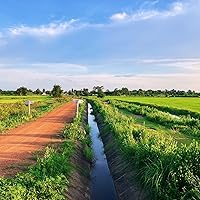
Literally haunting. If you have visited Shinchon, where the very real atrocities fictionalised in The Guest took place, the novel is especially so. While the exact details of what exactly happened on this sleepy agricultural plain - who did what and to whom- are disputed, it was no doubt horrific. Hwang's novel gives a plausible description of how communities, families, and individuals turned on each other amid chaos and war.
There are some small factual errors about North Korea throughout the book which shouldn't bother most readers. To those more familiar with the country these will only add to the chilling feeling that things are not completely as they seem- after all, throughout the novel the ghosts of the past make themselves heard to both the living and the dead.
For anyone interested in reading more fiction about this period of Korean history, I would recommend Han Sun Won's The Descendants of Cain.
There are some small factual errors about North Korea throughout the book which shouldn't bother most readers. To those more familiar with the country these will only add to the chilling feeling that things are not completely as they seem- after all, throughout the novel the ghosts of the past make themselves heard to both the living and the dead.
For anyone interested in reading more fiction about this period of Korean history, I would recommend Han Sun Won's The Descendants of Cain.
August 13, 2021
It is definitely not an entertaining novel to read because its narrative is based on the aftermath of the early events of the Korean conflict, basically just before the United States entered the conflict. The sad side to the plot is the way people who had been neighbours and even close relatives were turned into vicious and barbarous haters because of this conflict. One very ugly aspect is that all the suffering and killings were being carried out in the name of Religion and in the name of an ideology. At first the narrative can be a bit confusing because of the way the writer includes the appearance of 'phantoms' from the past to interact with the post-war characters. This literary device makes the first pages of the novel look like a fantasy novel, when it is not at all the case. Basically the novel is an eye-opener to whoever thinks that ideology or Religion are good-enough reasons to foster hate and violence.

March 10, 2014
Such an honest, intimate look at the scars from the division of Korea. I knew so little about the Korea war before reading this, and as I read, as I researched further on my own, this story evolved to really clench my heart. This is a revealing unwinding story told with a little mysticism, which only seems to aid in the reality of the events.
“There is an old saying that goes 'Start by plucking a hair, end by killing a man'. It is also said, 'Two hands must meet to make a sound'. The atrocities that happened here weren't carried out by strangers - it was us, the people who'd once lived together harmoniously in the same village."
"They say it was the superstitious freaks who did it."
"No, it was Satan who did it."
"Come now, what sort of a ghost is that?"
Ryu Yosop replied, "It is the black thing that lives in the heart of every man.”
“There is an old saying that goes 'Start by plucking a hair, end by killing a man'. It is also said, 'Two hands must meet to make a sound'. The atrocities that happened here weren't carried out by strangers - it was us, the people who'd once lived together harmoniously in the same village."
"They say it was the superstitious freaks who did it."
"No, it was Satan who did it."
"Come now, what sort of a ghost is that?"
Ryu Yosop replied, "It is the black thing that lives in the heart of every man.”
November 25, 2018
A rather perfect book about the use of ideology to further power and how none of us are blameless. Fascinating, wrenching, written sparsely and beautifully. If you've been lucky by birth to have led a life without war and political conflict it is humbling to realize how many folk among us live with such a fracturing of normal life and carry it with them every day. Prescient with warnings for these times as well with left vs right rhetoric heating to boiling point.
February 6, 2013
Such a moving story of the pain caused in a war by both sides, and how it escalates beyond sides into senseless killing to try and release the built-up anger.
March 6, 2013
Definitely a difficult book to read because of the subject matter, but provides insight into the Korean War that many of us don't know about.

March 27, 2017
Read in Korean
Read
August 20, 2023Difícilmente pueda calificar a este libro de forma justa, ya que encontré muchos problemas en su traducción o, quizás, en la falta de edición final. Por ende, y para no pecar de extremista, voy por 3 estrellas, el punto medio.
Los avances en mi lectura fueron difíciles y hasta torpes, no llegando a entender completamente algunos segmentos pese a releer.
Esto fue un gran problema, teniendo en cuenta que en sí el libro es complejo: relata un lado de la historia poco abordado, desde diversos puntos de vista (cambia el narrador sin aviso previo) y con detalles de eventos muy crudos.
No lo disfruté, aunque quizás no sea por el libro en sí, sino por todo esto mencionado. Sin embargo, sí remarco la importancia de hablar de estos temas, dar visibilidad a los horrores de la guerra y el posicionamiento como "el malo" y "el "bueno" para justificar crímenes atroces. También remarco lo original e interesante de contar los sucesos desde diferentes lugares.
En conclusión, recomiendo que quien tenga la posibilidad de leerlo en su idioma original, lo haga y lo analice desde allí. A lo mejor la complejidad es propia del libro y no de la traducción.
Aclaración: no juzgo al traductor que nos alcanzó este material en español, ya que desconozco el contexto de su trabajo.
Los avances en mi lectura fueron difíciles y hasta torpes, no llegando a entender completamente algunos segmentos pese a releer.
Esto fue un gran problema, teniendo en cuenta que en sí el libro es complejo: relata un lado de la historia poco abordado, desde diversos puntos de vista (cambia el narrador sin aviso previo) y con detalles de eventos muy crudos.
No lo disfruté, aunque quizás no sea por el libro en sí, sino por todo esto mencionado. Sin embargo, sí remarco la importancia de hablar de estos temas, dar visibilidad a los horrores de la guerra y el posicionamiento como "el malo" y "el "bueno" para justificar crímenes atroces. También remarco lo original e interesante de contar los sucesos desde diferentes lugares.
En conclusión, recomiendo que quien tenga la posibilidad de leerlo en su idioma original, lo haga y lo analice desde allí. A lo mejor la complejidad es propia del libro y no de la traducción.
Aclaración: no juzgo al traductor que nos alcanzó este material en español, ya que desconozco el contexto de su trabajo.
August 16, 2026
Justo hoy el presidente de Corea del Sur le ofreció al líder supremo de Corea del Norte firmar el tratado de paz que ponga fin a una guerra que lleva décadas detenida en el paralelo 38. Como novela histórica, este libro te ayuda a entender el milagro que supondría que esa firma se llegue a concretar. Se dieron muy duro, los del Sur y los del Norte. Una de esas matanzas, la masacre de Sinchon de 1950, es retratada con toda su brutalidad. Ahora bien, esa violencia fratricida está enraizada en una violencia anterior que la novela se encarga de mostrar: la violencia colonial a la que estuvo sometida Corea por distintas potencias, religiones e ideologías. El autor, encarcelado por cinco años en la Corea del Sur por haber visitado la Corea del Norte para reencontrase con sus familiares, es un activista por la reunificación. Sorprende que decida tocar una tecla tan sensible de la memoria. Pero es justamente lo contrario: la única manera en la que los pueblos consiguen avanzar es cuando pueden mirar de frente su historia.
Puede ser un poco desafiante por su apuesta por una narración con tantos puntos de vista como personajes. Hasta los muertos hablan (se parece un poco a Actos Humanos de Han Kang en ese sentido). Pero esa apuesta formal es también una de sus grandes virtudes.
Puede ser un poco desafiante por su apuesta por una narración con tantos puntos de vista como personajes. Hasta los muertos hablan (se parece un poco a Actos Humanos de Han Kang en ese sentido). Pero esa apuesta formal es también una de sus grandes virtudes.
Displaying 1 - 30 of 62 reviews