

What do you think?

Of Wolves and Stags
Dalia Arrowood is a Crystalline. A living weapon created by brutal elven experiments. For ten years now, she has kept a promise to her sister: to stay hidden and to never use her powers, in order to stay safe. But safety has a way of feeling like a cage, and when she finds a human resistance fighter dying on the shores of her village, she makes the choice to break her promise. This choice not only exposes her to the world but allows her to join his ragtag group in their fight to find the only hope the humans have of winning their freedom—the last cache of magical crystals. The race to this goal will not be easy, as a shadowy figure from Dalia’s past hunts them and she must learn to navigate a world set to see her as either one of two things: a weapon to be used or a monster to be feared.
360 pages, Paperback
First published March 25, 2025
About the author
Ria Parisi
2 books67 followersRia Parisi is a YA Fantasy author who found her footing in fanfiction and roleplaying before taking the jump into writing her own work. Her debut novel, OF WOLVES AND STAGS, comes out March 25th with Inked in Gray Press. It is very important to her to write stories with the representation she wished she had growing up. When not writing she can be found playing video games with her partner, being a parent, or costuming. She greatly enjoys cosplaying for a good cause and often will dress up for charity events with groups such as the Rebel Legion. You can find her on Instagram and Tik Tok @riathewolfwrites.
Ratings & Reviews
Friends & Following
Create a free account to discover what your friends think of this book!
Community Reviews
Displaying 1 - 30 of 59 reviews
August 8, 2024
Hi, I wrote this book and I am so excited to finally share it with the world. This was my first time ever having the confidence to write my own characters vs playing in someone else’s sandbox with fanfics and rping and I am so proud of the little world I created. I am so thrilled to have gotten to write some of the representation I wish I’d had as a teen and I hope you all enjoy the time you spend in this story.
February 21, 2024
I had the absolute privilege of beta reading this book and Y’ALL ARE GONNA LOSE YOUR MINDS! I still think about Dalia on a weekly basis and NEED Ria to write the sequel ASAP (jk I can be patient, I know she’s writing a lot rn). Actual review to come when I’ve reread the published version but trust when I say you won’t wanna miss this if you’re fans of unique powers, characters with a mysterious past, reylo vibes, elves and incredible body positive representation!
February 12, 2025
Rating-
4/5 stars
Genre-
Fantasy
Age Rating For It-
13+ because there is some stuff in it like PTSD flashbacks, Medical experimentation, and trauma but nothing explicit in the romance area that is mostly all just kissing and some cuddling little things like that so for that it's a 13+.
Tropes-
High stakes
Treasure hunt (they get clues and stuff and use it to find something)
Found family
Revolution
Plot- 8/10
I really enjoyed the plot of the book and thought it was very unique because it wasn't just a basic fae plot. With the cruel fae rulers and the humans wanting their rule to stop, no, I felt the author took that concept and then advanced it and made it much more interesting and unique. Like, adding the crystalline and their whole backstory and way there were created just made the plot and storyline a lot more captivating than other books like this.
Romance- 3/10
I have no idea why, but I HATED, just HATED the mmc name. I honestly don’t know why, all the way, but the name Glenn was just a big no for me. I kind of disliked the guy so so fricken much, mostly just because of that, and I felt he could use some more depth too. The only reason the romance was more than a zero was because I liked how the romance turned out in the end. This may seem a bit harsh, and I honestly don’t understand why I disliked Glenn so much, but I just did so, so much and that is literally ¾ of the reason it got a 4 star.
Characters- 7/10
I really enjoyed the main character and a couple of the side character I really loved. I liked how the main character wasn’t just someone who was instantly this super confident person and just amazing at combat and everything. But, she was instead someone who had struggles and a past that made it hard for her to do a lot of the things that were asked of her, and because of that I felt it made her more relatable than some of the other characters we see in fantasy now a days.
Favorite Quotes-
“He didn’t look at her like everyone else did. Like something to be passes over, just some girl from a fishing village. No, he looked at her like she was someone.”
“We need you. I need you”
“I am her because I dream of a future where we can all be free. Elves. Humans. All of us. That is why I choose to fight.”
“I think if your laugh was the last sound I every heard, I’d die a happy man.”
“Dalia Arrowood was finally home.”
Things I loved-
The whole plot and storyline I really really enjoyed and the crystalline and how unique I felt they were in my opinion. I also really enjoyed how the book really showed how there are two sides to every story and that everything that happens and is happening, that you never know the full truth or every side of the story.
Things I didn’t like-
Glenn I cannot stress enough how much I just don’t like him for some reason I fully don’t even understand. I just hated him almost instantly like from the first time I met him, and it honestly may just be because his name was Glenn to be honest… But, I also felt some of the side characters we meet were very dry and were a little bit of a copy and past kind of thing going on but only some of them, not all, definitely but a good amount.
Would I Recommend This?-
Yes! Most definitely if I put aside the fact that the mmc was named Glenn and that some of the characters were a little dry than this book would be a total 5-star! And I’m sure it is a 5-star for a lot of people that don’t have some random hatred of the name Glenn or disagreed with my thinking of other stuff. So all in all, l I would absolutely recommend you check this book out and read it or at it to your tbr!
Overall-
So all in, this was a great and unique book (except for Glenn) and I would totally recommend everyone check out and read!
And thanks so much to NetGalley and Ria Parisi for sending this book for review consideration. All opinions are my own.
4/5 stars
Genre-
Fantasy
Age Rating For It-
13+ because there is some stuff in it like PTSD flashbacks, Medical experimentation, and trauma but nothing explicit in the romance area that is mostly all just kissing and some cuddling little things like that so for that it's a 13+.
Tropes-
High stakes
Treasure hunt (they get clues and stuff and use it to find something)
Found family
Revolution
Plot- 8/10
I really enjoyed the plot of the book and thought it was very unique because it wasn't just a basic fae plot. With the cruel fae rulers and the humans wanting their rule to stop, no, I felt the author took that concept and then advanced it and made it much more interesting and unique. Like, adding the crystalline and their whole backstory and way there were created just made the plot and storyline a lot more captivating than other books like this.
Romance- 3/10
I have no idea why, but I HATED, just HATED the mmc name. I honestly don’t know why, all the way, but the name Glenn was just a big no for me. I kind of disliked the guy so so fricken much, mostly just because of that, and I felt he could use some more depth too. The only reason the romance was more than a zero was because I liked how the romance turned out in the end. This may seem a bit harsh, and I honestly don’t understand why I disliked Glenn so much, but I just did so, so much and that is literally ¾ of the reason it got a 4 star.
Characters- 7/10
I really enjoyed the main character and a couple of the side character I really loved. I liked how the main character wasn’t just someone who was instantly this super confident person and just amazing at combat and everything. But, she was instead someone who had struggles and a past that made it hard for her to do a lot of the things that were asked of her, and because of that I felt it made her more relatable than some of the other characters we see in fantasy now a days.
Favorite Quotes-
“He didn’t look at her like everyone else did. Like something to be passes over, just some girl from a fishing village. No, he looked at her like she was someone.”
“We need you. I need you”
“I am her because I dream of a future where we can all be free. Elves. Humans. All of us. That is why I choose to fight.”
“I think if your laugh was the last sound I every heard, I’d die a happy man.”
“Dalia Arrowood was finally home.”
Things I loved-
The whole plot and storyline I really really enjoyed and the crystalline and how unique I felt they were in my opinion. I also really enjoyed how the book really showed how there are two sides to every story and that everything that happens and is happening, that you never know the full truth or every side of the story.
Things I didn’t like-
Glenn I cannot stress enough how much I just don’t like him for some reason I fully don’t even understand. I just hated him almost instantly like from the first time I met him, and it honestly may just be because his name was Glenn to be honest… But, I also felt some of the side characters we meet were very dry and were a little bit of a copy and past kind of thing going on but only some of them, not all, definitely but a good amount.
Would I Recommend This?-
Yes! Most definitely if I put aside the fact that the mmc was named Glenn and that some of the characters were a little dry than this book would be a total 5-star! And I’m sure it is a 5-star for a lot of people that don’t have some random hatred of the name Glenn or disagreed with my thinking of other stuff. So all in all, l I would absolutely recommend you check this book out and read it or at it to your tbr!
Overall-
So all in, this was a great and unique book (except for Glenn) and I would totally recommend everyone check out and read!
And thanks so much to NetGalley and Ria Parisi for sending this book for review consideration. All opinions are my own.
February 17, 2025
Of Wolves and Stags follow Dalia as she hides in a small northern village while she waits for her sister to rescue her. Dalia has magic through elven experimentation and must stay hidden or risk the elves coming after her. But she’s tired of hiding and waiting after a long decade. When Glenn washes on her shoes, fatally wounded, she uses her magic to heal him and nurse him back to health. When she discovers he’s part of the rebellion resistance to the elves, she leaves her village with him to take control of her life. But betrayal and danger lurks around every corner and Dalia must figure out who to trust.
This was a really interesting, unique debut fantasy! The world the author created is full of life and so expansive—I’m hoping we get a sequel! The prose is lovely. The descriptions were gorgeous. The plot was very gripping, and I was hooked quite easily. And there’s a twist I didn’t see coming. I love when that happens, and it was a great twist imo. Loved the magic system and the reasoning behind why they have it. I also love Dalia’s magic and how she used it. The ending was so satisfying!!
I adored Dalia. She’s such a strong, relatable main character with a great arc. She goes through a lot in this novel and grows so much. It was very satisfying to see where she started to where she ended up. It was so nice to see her find true friends after sheltering herself for so long. The characters are all so distinct and complex and I really hope we get a sequel and get to see more of them. There’s also such great representation in this novel—such a joy to read about! Also loved the direction of the romance!
Overall, this is an excellent debut fantasy perfect for fans of magic, quests, and relatable, complex main characters!
Thank you to Inked in Gray Press and Netgalley for the arc in exchange for an honest review.
This was a really interesting, unique debut fantasy! The world the author created is full of life and so expansive—I’m hoping we get a sequel! The prose is lovely. The descriptions were gorgeous. The plot was very gripping, and I was hooked quite easily. And there’s a twist I didn’t see coming. I love when that happens, and it was a great twist imo. Loved the magic system and the reasoning behind why they have it. I also love Dalia’s magic and how she used it. The ending was so satisfying!!
I adored Dalia. She’s such a strong, relatable main character with a great arc. She goes through a lot in this novel and grows so much. It was very satisfying to see where she started to where she ended up. It was so nice to see her find true friends after sheltering herself for so long. The characters are all so distinct and complex and I really hope we get a sequel and get to see more of them. There’s also such great representation in this novel—such a joy to read about! Also loved the direction of the romance!
Overall, this is an excellent debut fantasy perfect for fans of magic, quests, and relatable, complex main characters!
Thank you to Inked in Gray Press and Netgalley for the arc in exchange for an honest review.
February 12, 2025
It all started from a promise betwen two frightened sisters, to a journey that led Dalia through more than she ever thought possible.
Separated from her sister when she was only seven, Dalia was forced to flee and hide in Tidesend. Never to use her power, for she would be seen as a monster by humans, turned into a weapon by elves.
She spent all her life hiding and waiting, until one day a boy washed ashore, at the brink of death, unless Dalia used her healing ability. It could be the thing that save her or the beginning of her doom, depending on how you look at it.
The problem with her is she trusts people easily every single time and it irritates me. Other than that, I don't have much complain. The book is entertaining.
It's about finding purpose, a place to belong. I like the writing and I'm excited to see more works from the author.
Thank you Inked in Gray Press for the ARC in exchange of honest review!
Separated from her sister when she was only seven, Dalia was forced to flee and hide in Tidesend. Never to use her power, for she would be seen as a monster by humans, turned into a weapon by elves.
She spent all her life hiding and waiting, until one day a boy washed ashore, at the brink of death, unless Dalia used her healing ability. It could be the thing that save her or the beginning of her doom, depending on how you look at it.
The problem with her is she trusts people easily every single time and it irritates me. Other than that, I don't have much complain. The book is entertaining.
It's about finding purpose, a place to belong. I like the writing and I'm excited to see more works from the author.
Thank you Inked in Gray Press for the ARC in exchange of honest review!
February 16, 2025
Of Wolves and Stags is the kind of book I would have absolutely adored as a young teenager. Fast-paced, full of action, and with twists that feel fully emotionally wrought and resonant, I found this book quite enjoyable. I would say, without a doubt, that this book is best enjoyed by younger YA readers (at the time of posting, this is tagged as YA in NetGalley but Adult in Goodreads); the language used is simple, the plot relatively uncomplicated, the twists spelled out, and the romantic subplots most similar to middle-grade books that I have read. It’s the sort of book I wish I had read when I was in my early teens: body-positive, inclusive, and deeply humanizing.
This book follows Dalia, an older teenage orphan residing in a small northern fishing village. Much of her past is lost to her, blocked in her memories, but she knows a few things: she is a Crystalline, a magic user, made through abuse by the ruling Elven government for the purpose of powering weapons. She knows she escaped from the Elven camp 10 years ago and has been in hiding since. She knows her older sister, a fire user who helped her flee the camp, told her 10 years ago to wait for her on the northernmost tip of the land. She knows her sister has not appeared since. Dalia’s life changes when she finds a young man on the beach, burned and dying, and uses her magic to heal him. Thus, kicks off her adventure: of rebel camps and Elven hunts, of mysteries solved and secrets revealed.
In a lot of ways, this book feels right in line with the YA books I remember reading when I was younger. The heroine with special powers approaches a new side of the world she has never seen before and, in doing so, uncovers secrets and plot twists and the mysteries of her own past. This being a lot of the book, it’s often a pretty typical read, though a good example of these kinds of plots.
Where this book really shines is in the secrets it reveals. I can’t get into too much detail here as much of this is revealed late in the book, but I’ll do my best to explain. As Dalia gets to know the people of the Stag’s camp, she uncovers plot twists about characters’ pasts and motivations. Rather than being merely shock value, I found these plot twists to be really effective examinations of guilt, complicity, greed, and power. For example, when Dalia meets someone who sees her, a magic user, only for their utility in a greater fight, she rightfully recognizes the dehumanization at play. However, rather than stopping there, she also begins to see the way an ally is similarly objectifying her: in the way that ally will not stand up for her, in the ally’s possessiveness and overall psyche. Though things like this could read as a plot twist for the sake of a plot twist, I found it to be a really strong exploration of how marginalization can be expressed even by those who legitimately care about you. The book is full of ideas like this that I think are especially effective for a YA audience.
Where this book fell short is in the ending, as well as some of the implications of the ending. First of all, while I don’t see any evidence that this book has definite plans for a sequel, the ending needs one. So much happens at the end with a good number of threads hanging loose, but, the way the ending is written, it is unclear if the loose threads are the sign of a sequel or ideas that will never be resolved. I hope the book will get a sequel to feel fully resolved. My second issue is with the way an enemy group is handled. I don’t want to get too deep into this as I don’t want to spoil anything, but a theme of this book is understanding what makes a person deserving of forgiveness. Towards the end of the book, there is a lot of trust placed in a person or group who, as written, does not deserve even a hint of trust or mercy. This is one of the plot threads that feels loose at the end, as I wanted to see why certain choices were made in regard to this person or group. As written, it feels strange and somewhat undercuts the stronger parts of the book.
In the end, I am giving this book 4 stars. I appreciated it for what it was as an adult reader, and really see the strengths this book has to offer the right audience. I recommend this book for YA audiences as it is the kind of book I would have really enjoyed at that age.
Thank you to the publisher for providing a free eARC through NetGalley in exchange for an honest review.
This book follows Dalia, an older teenage orphan residing in a small northern fishing village. Much of her past is lost to her, blocked in her memories, but she knows a few things: she is a Crystalline, a magic user, made through abuse by the ruling Elven government for the purpose of powering weapons. She knows she escaped from the Elven camp 10 years ago and has been in hiding since. She knows her older sister, a fire user who helped her flee the camp, told her 10 years ago to wait for her on the northernmost tip of the land. She knows her sister has not appeared since. Dalia’s life changes when she finds a young man on the beach, burned and dying, and uses her magic to heal him. Thus, kicks off her adventure: of rebel camps and Elven hunts, of mysteries solved and secrets revealed.
In a lot of ways, this book feels right in line with the YA books I remember reading when I was younger. The heroine with special powers approaches a new side of the world she has never seen before and, in doing so, uncovers secrets and plot twists and the mysteries of her own past. This being a lot of the book, it’s often a pretty typical read, though a good example of these kinds of plots.
Where this book really shines is in the secrets it reveals. I can’t get into too much detail here as much of this is revealed late in the book, but I’ll do my best to explain. As Dalia gets to know the people of the Stag’s camp, she uncovers plot twists about characters’ pasts and motivations. Rather than being merely shock value, I found these plot twists to be really effective examinations of guilt, complicity, greed, and power. For example, when Dalia meets someone who sees her, a magic user, only for their utility in a greater fight, she rightfully recognizes the dehumanization at play. However, rather than stopping there, she also begins to see the way an ally is similarly objectifying her: in the way that ally will not stand up for her, in the ally’s possessiveness and overall psyche. Though things like this could read as a plot twist for the sake of a plot twist, I found it to be a really strong exploration of how marginalization can be expressed even by those who legitimately care about you. The book is full of ideas like this that I think are especially effective for a YA audience.
Where this book fell short is in the ending, as well as some of the implications of the ending. First of all, while I don’t see any evidence that this book has definite plans for a sequel, the ending needs one. So much happens at the end with a good number of threads hanging loose, but, the way the ending is written, it is unclear if the loose threads are the sign of a sequel or ideas that will never be resolved. I hope the book will get a sequel to feel fully resolved. My second issue is with the way an enemy group is handled. I don’t want to get too deep into this as I don’t want to spoil anything, but a theme of this book is understanding what makes a person deserving of forgiveness. Towards the end of the book, there is a lot of trust placed in a person or group who, as written, does not deserve even a hint of trust or mercy. This is one of the plot threads that feels loose at the end, as I wanted to see why certain choices were made in regard to this person or group. As written, it feels strange and somewhat undercuts the stronger parts of the book.
In the end, I am giving this book 4 stars. I appreciated it for what it was as an adult reader, and really see the strengths this book has to offer the right audience. I recommend this book for YA audiences as it is the kind of book I would have really enjoyed at that age.
Thank you to the publisher for providing a free eARC through NetGalley in exchange for an honest review.
March 11, 2025
I just finished the ARC of this book. It started a little slow at first but I had to manage my expectations a bit and remember it is meant to be a YA novel.
However, when the plot picked up it developed fairly well. There was an interesting world-building and I am definitely intrigued. I want to read more about Dalia and this world. I liked the reminder that things are not always as they seem.
Tween me would have loved this book. I appreciated the LGBT representation - it seemed natural rather than forced. I wish there had been more descriptions of some characters because I had trouble picturing them.
However, when the plot picked up it developed fairly well. There was an interesting world-building and I am definitely intrigued. I want to read more about Dalia and this world. I liked the reminder that things are not always as they seem.
Tween me would have loved this book. I appreciated the LGBT representation - it seemed natural rather than forced. I wish there had been more descriptions of some characters because I had trouble picturing them.
March 3, 2025
I wanted to love this book. I soooo badly wanted to love it but I just couldn’t.
A story of a naive girl who trusts people far too easily and because of it ends up being manipulated 80% of the book.
Forced romantic feelings where there was zero chemistry which soon jumps to another person almost immediately despite having not seen the other person since they were 7.
I felt there was such little growth for Dalia in the story and because of it, following her dialog and inner thoughts was frustrating. I feel like she ended the story being the same type of person she was at the start.
Their storyline held potential and the writing itself is good, just the development wasn’t there. It didn’t feel well plot out or thought through.
If there’s a sequel, it’s probably not something I’d bother to pick up.
The really only positive I loved was the representation. A nonbinary character made my heart swell. The main character is plus size though I feel it was only stated once and then quickly forgotten about.
A story of a naive girl who trusts people far too easily and because of it ends up being manipulated 80% of the book.
Forced romantic feelings where there was zero chemistry which soon jumps to another person almost immediately despite having not seen the other person since they were 7.
I felt there was such little growth for Dalia in the story and because of it, following her dialog and inner thoughts was frustrating. I feel like she ended the story being the same type of person she was at the start.
Their storyline held potential and the writing itself is good, just the development wasn’t there. It didn’t feel well plot out or thought through.
If there’s a sequel, it’s probably not something I’d bother to pick up.
The really only positive I loved was the representation. A nonbinary character made my heart swell. The main character is plus size though I feel it was only stated once and then quickly forgotten about.
February 17, 2025
"She had healed his wounds without questions, but it was not her job to mend his broken soul."
ARC copy read - This will include spoilers. ⭐ 3.75/5 ⭐
Overall I am very impressed with this novel! There are some nitpicky things grammar and style wise I have, and I didn't add too much weight to those. My overall impressions and most of this review is focused on the content, story pacing, and characters.
I am praying, Ria, that there is a sequel. Please take all the time in the world to get book two, but this cannot be the end. There are so many hanging threads I want to pull, so much growth Dalia has to do, and so much world building that was just left on the table.
While reading it was struggle to remember this is indeed a YA title, and it's a great one. It reminds me a lot of the mid grade and YA fantasies I read as as younger reader myself including Tamora Pierce and the Tortall series. it was very comforting and cozy feeling despite some of the content and themes that were beginning to be explored. Dalia is the character I wish I had a child; she is kind to a fault, self-sacrificing and people pleasing, reactive rather than active, plus size and demisexual (heavily implied). None of these are necessarily bad things, but having a real, young adult who is as traumatized as she is. Dalia has seen some of the worst things that the world has to offer and is still kind. I was all of those things and to a point still am. Seeing her being pushed and pushed but still staying kind and empathetic while still being able to draw lines in the sand and stand for what she believes in is incredibly important, even more so now for younger readers.
That said, it is important to remember that Dalia is a very traumatized, very sheltered young woman. While I do wish, as an adult, that she did have more of a back bone, it's just as important to show this for growth. The small choices she makes through the story shows growth, shows she is so close to that line of realizing it's easier to draw boundaries and stand up for what she believes in and become more active in the story. Presently I do find her a little annoying because she is reactive, but even the narrator reminds us Dalia is not a fighter, never has been and won't be in the foreseeable future. Not everyone can be the epic warrior and healer. The world still needs soft spots even in the difficult times.
As the audience was hanging off of Dalia's shoulder, we don't get to see much in the way of the side characters until they decide to break their silence around her. While a lot of motivations are pretty surface level, there are many things that we and Dalia are left in the dark on. There is so much left on the table that we're not privy too and goodlawdy do I want to know more.
Overall this was a fantastic read and I am very humbled to be able to read this early. I am very excited for more from this world (hopefully) and see Dalia grow and hopefully fix the world with her empathy (and possibly a fist or two, she deserves it as a treat).
Thank you to Ria Parisi and Inked in Gray Press for bringing this amazing story to the world and allowing me an early peek!
ARC copy read - This will include spoilers. ⭐ 3.75/5 ⭐
Overall I am very impressed with this novel! There are some nitpicky things grammar and style wise I have, and I didn't add too much weight to those. My overall impressions and most of this review is focused on the content, story pacing, and characters.
I am praying, Ria, that there is a sequel. Please take all the time in the world to get book two, but this cannot be the end. There are so many hanging threads I want to pull, so much growth Dalia has to do, and so much world building that was just left on the table.
While reading it was struggle to remember this is indeed a YA title, and it's a great one. It reminds me a lot of the mid grade and YA fantasies I read as as younger reader myself including Tamora Pierce and the Tortall series. it was very comforting and cozy feeling despite some of the content and themes that were beginning to be explored. Dalia is the character I wish I had a child; she is kind to a fault, self-sacrificing and people pleasing, reactive rather than active, plus size and demisexual (heavily implied). None of these are necessarily bad things, but having a real, young adult who is as traumatized as she is. Dalia has seen some of the worst things that the world has to offer and is still kind. I was all of those things and to a point still am. Seeing her being pushed and pushed but still staying kind and empathetic while still being able to draw lines in the sand and stand for what she believes in is incredibly important, even more so now for younger readers.
That said, it is important to remember that Dalia is a very traumatized, very sheltered young woman. While I do wish, as an adult, that she did have more of a back bone, it's just as important to show this for growth. The small choices she makes through the story shows growth, shows she is so close to that line of realizing it's easier to draw boundaries and stand up for what she believes in and become more active in the story. Presently I do find her a little annoying because she is reactive, but even the narrator reminds us Dalia is not a fighter, never has been and won't be in the foreseeable future. Not everyone can be the epic warrior and healer. The world still needs soft spots even in the difficult times.
As the audience was hanging off of Dalia's shoulder, we don't get to see much in the way of the side characters until they decide to break their silence around her. While a lot of motivations are pretty surface level, there are many things that we and Dalia are left in the dark on. There is so much left on the table that we're not privy too and goodlawdy do I want to know more.
Overall this was a fantastic read and I am very humbled to be able to read this early. I am very excited for more from this world (hopefully) and see Dalia grow and hopefully fix the world with her empathy (and possibly a fist or two, she deserves it as a treat).
Thank you to Ria Parisi and Inked in Gray Press for bringing this amazing story to the world and allowing me an early peek!
Read
March 11, 2025I requested this book based on it’s premise. I’ve been in a fantasy mood lately, and I thought the blurb on netgalley sounded so interesting! Unfortunately I didn’t end up loving this book as much as I had hoped.
What I liked about this book was the representation. There were non-binary characters, a plus-sized heroine and representation of queer relationships. None of this felt like tokenism and it fit nicely within the story. Fionn especially was such an interesting character and I would have loved to see more of them!
Unfortunately I didn’t connect with the story or our main character that much. The writing style and premise show a lot of potential, but the story feels repetitive and almost like it’s just hitting of the checks of plot points you need in a YA-fantasy. I do feel like this will find it’s audience, that audience just wasn’t me.
One other small problem I had, as someone who rides horses, I am BEGGING authors to stop putting multiple people on horses. I get that it’s the fantasy equivalent to putting two people on a bike or motorcycle and then they have to snuggle up and it’s all romantic, but there is absolutely no way a plus-sized woman and a warrior-man can fit on one horse. Having that much weight that far back might be damaging for the horses kidneys, not to mention that horses should only carry up to 20% of their own bodyweight. I get that this is a nitpickey complaint and I didn’t deduct any stars for it, but it is something that bugged me.
This is a debut novel, so I’m excited to see what this author comes up with next. I believe she has a lot of potential, and I will definitely check out her next work.
Thank you to Netgalley and Inked in Gray Press for providing me with an ARC for this book.
What I liked about this book was the representation. There were non-binary characters, a plus-sized heroine and representation of queer relationships. None of this felt like tokenism and it fit nicely within the story. Fionn especially was such an interesting character and I would have loved to see more of them!
Unfortunately I didn’t connect with the story or our main character that much. The writing style and premise show a lot of potential, but the story feels repetitive and almost like it’s just hitting of the checks of plot points you need in a YA-fantasy. I do feel like this will find it’s audience, that audience just wasn’t me.
One other small problem I had, as someone who rides horses, I am BEGGING authors to stop putting multiple people on horses. I get that it’s the fantasy equivalent to putting two people on a bike or motorcycle and then they have to snuggle up and it’s all romantic, but there is absolutely no way a plus-sized woman and a warrior-man can fit on one horse. Having that much weight that far back might be damaging for the horses kidneys, not to mention that horses should only carry up to 20% of their own bodyweight. I get that this is a nitpickey complaint and I didn’t deduct any stars for it, but it is something that bugged me.
This is a debut novel, so I’m excited to see what this author comes up with next. I believe she has a lot of potential, and I will definitely check out her next work.
Thank you to Netgalley and Inked in Gray Press for providing me with an ARC for this book.
February 25, 2025
4.5/5 Stars
I want to thank Netgally and Inked in Grey Press for the ARC copy.
I've been following Ria for years on Instgram through the Star Wars community and I got to see her work on this book through posts, I was super excited for it and as a debut it's wonderful! The story flows and can serve as a standalone but I do hope there is more in this universe.
Dalia is our FMC and in this world magic is something that is used as a weapon so slightly different from most YA fantasy, she find Glenn washed up and has to use her magic to save him thus setting off change of events.
Glenn serves as the somewhat primary romance but the romance isn't what fuels the story, the trying to stop the evil Elves is.
Ria includes some LGBTQ+ characters, a non binary elf that is in a relationship with a woman, even Dalia falls under the ACE spectrum (demisexual) due to her having no interest in getting into relationships but forming a connection with Glenn over time. Dalia is also plus sized. I feel any other author or in other fantasy stories when they try to involve LGBTQ+ characters makes it feel too modern or forced but this book really integrates that stuff really well that it feels like these things are an everyday ok thing in this world.
I would have loved to give this book 5 stars but unfortunately it does fall into stereotypes. Glenn ends up being a not great guy, he views what Dalia is the same way as most as a weapon that if needed needs to be taken out, I've seen this happen in a few other stories of the seemingly good guy end up being the bad guy and swears he sees her differently only to come back in the second book more evil. Dalia also lets him off the hook twice way too easily, I know these characters are 17-19 it just felt like she wouldn't have done that.
Overall this book was a great read, I finished it in maybe 3 hours, I trucked through it and finished it around 12:30am because I needed to see how it finished. I would definitely recommend this to others and I do hope we see more of this world or of Ria as an author.
I want to thank Netgally and Inked in Grey Press for the ARC copy.
I've been following Ria for years on Instgram through the Star Wars community and I got to see her work on this book through posts, I was super excited for it and as a debut it's wonderful! The story flows and can serve as a standalone but I do hope there is more in this universe.
Dalia is our FMC and in this world magic is something that is used as a weapon so slightly different from most YA fantasy, she find Glenn washed up and has to use her magic to save him thus setting off change of events.
Glenn serves as the somewhat primary romance but the romance isn't what fuels the story, the trying to stop the evil Elves is.
Ria includes some LGBTQ+ characters, a non binary elf that is in a relationship with a woman, even Dalia falls under the ACE spectrum (demisexual) due to her having no interest in getting into relationships but forming a connection with Glenn over time. Dalia is also plus sized. I feel any other author or in other fantasy stories when they try to involve LGBTQ+ characters makes it feel too modern or forced but this book really integrates that stuff really well that it feels like these things are an everyday ok thing in this world.
I would have loved to give this book 5 stars but unfortunately it does fall into stereotypes. Glenn ends up being a not great guy, he views what Dalia is the same way as most as a weapon that if needed needs to be taken out, I've seen this happen in a few other stories of the seemingly good guy end up being the bad guy and swears he sees her differently only to come back in the second book more evil. Dalia also lets him off the hook twice way too easily, I know these characters are 17-19 it just felt like she wouldn't have done that.
Overall this book was a great read, I finished it in maybe 3 hours, I trucked through it and finished it around 12:30am because I needed to see how it finished. I would definitely recommend this to others and I do hope we see more of this world or of Ria as an author.
This entire review has been hidden because of spoilers.

March 8, 2025
I voluntarily read and reviewed an advanced copy of this book. All thoughts and opinions are my own. Thank you to NetGalley, Victory Editing and Ria Parisi for this ARC.
Dalia is an orphan who waiting for her sister to find her, as she promised. But when she gets a chance to use her special powers as a Crystalline to save an innocent man, she uses them despite the danger to herself.
This book started off a little slow for me but as I read on, it was difficult to put down. I felt like Dalia was very trusting of everyone she met which was a little annoying. It felt like there will be a sequel as there were a couple loose ends at the end as well.
Dalia is an orphan who waiting for her sister to find her, as she promised. But when she gets a chance to use her special powers as a Crystalline to save an innocent man, she uses them despite the danger to herself.
This book started off a little slow for me but as I read on, it was difficult to put down. I felt like Dalia was very trusting of everyone she met which was a little annoying. It felt like there will be a sequel as there were a couple loose ends at the end as well.

March 11, 2025
Wow, this YA romantasy really blew me away. Ria’s prose is lovely, and the story caught my attention right away. Dalia’s character was so relatable to me, and she now holds a very special place in my heart.
Great world building, unique fantasy elements, a love triangle that has me craving a sequel, well-done PTSD representation, cool fight scenes - all around a phenomenal novel.
Thank you Ria & Inked In Gray Press for the ARC!
Great world building, unique fantasy elements, a love triangle that has me craving a sequel, well-done PTSD representation, cool fight scenes - all around a phenomenal novel.
Thank you Ria & Inked In Gray Press for the ARC!
August 1, 2026
🔥🧝👯♀️
Easy fantasy story about belonging and self-discovery. Loved the diverse representation!
Easy fantasy story about belonging and self-discovery. Loved the diverse representation!
February 21, 2025
The premise of this book had me itching to be approved for the ARC! Of Wolves and Stags was a good book. It wasn't great, but it was really good! The magic system was so interesting with the crystals! The world building was a tad bit complicated but by the end I understood everything. The character depth/development, to me, was on point. I loved how there were humans, elves, and crystallines. Not a concept many authors would choose. I've seen sooooooo many "fey vs human" but not a combo like this one. The body positivity and LGBTQ+ rep was wonderful. I definitely handed out some extra brownie points for those! The pacing was a little weird at times, but it didn't take away from the story for me. Just a teensy bit annoying. I am curious as to the fact that I've seen it described as YA (which I felt it was) and as Adult. The "marketing team" for this book needs to figure that out before pub date for sure. Lastly, I've not seen anything about this being a standalone, or a series, but this should very much at LEAST be a duology. There's gotta be more for these characters! Pub date is March 25th so in a little over a month this baby will be out in the world and I must say I HIGHLY RECCOMEND IT! OH! And the cover is STUNNING! Definitely a book that will be front facing on my shelves!
I received an Advanced Reader's Copy of this book from NetGalley. This review is honest, unbiased, and completely my own.
I received an Advanced Reader's Copy of this book from NetGalley. This review is honest, unbiased, and completely my own.
February 24, 2025
4.25 / 5 ⭐
Spice Level: ❤️
Of Wolves and Stags follows the journey of Dalia as she tries to find her sister while hiding her true nature. This debut novel from author Ria Parisi was highly engaging and kept me reading.
Like any good romantasy book, we have a morally grey main love interest. For most of the book I went back and forth on my feelings about him. While I wasn't always sure about the love interests, I adored Dalia immediately. She's witty and truly comes into her own and she strengthens herself and becomes more confident.
The pacing was fast without rushing and while some of the twists I was able to predict, there were a few that caught me off guard. The side characters were really likable and I hope to see more of them in the future.
I really enjoyed this novel and can't wait to jump back into the world of Wolves and Stags.
Spice Level: ❤️
Of Wolves and Stags follows the journey of Dalia as she tries to find her sister while hiding her true nature. This debut novel from author Ria Parisi was highly engaging and kept me reading.
Like any good romantasy book, we have a morally grey main love interest. For most of the book I went back and forth on my feelings about him. While I wasn't always sure about the love interests, I adored Dalia immediately. She's witty and truly comes into her own and she strengthens herself and becomes more confident.
"I was looking for you. For So Long."
The pacing was fast without rushing and while some of the twists I was able to predict, there were a few that caught me off guard. The side characters were really likable and I hope to see more of them in the future.
I really enjoyed this novel and can't wait to jump back into the world of Wolves and Stags.
February 15, 2025
This book was captivating from start to finish! There was no unnecessary fluff- it was all action. I devoured this book so quickly as it never felt boring. Each page was filled with more and more information and interest.
The only downside was that I had hoped there would be an epilogue (Yes, I am greedy for more), just so we could see how Dalia adapts, and if anything becomes of the Wolves. What would an alliance entail?
My mind is left with 2 questions:
Who are the elves really?
Where did Fionn and Beth end up?
More importantly I couldn't help but draw a direct comparison to today's world of different races, hierachy, and prejudices we hold against each other. But once one accepts the other for who they truly are, and not based upon preconceived notions that are engrained upon us, so much goodness can come from it.
It also brings up the fact that, if something seems to be too good to be true, it probably is. Finally it touches on leadership always having hidden agendas and being self serving. One person can corrupt many under the guise of being good. Others will follow until it is too late for them to realise how far down along the wrong path they have gone.
This book teaches us to be open to new people and experiences, but to remain questioning of authority and those in power. All hidden behind a fast paced, action packed story. It also shows that in the end true love prevails.
The only downside was that I had hoped there would be an epilogue (Yes, I am greedy for more), just so we could see how Dalia adapts, and if anything becomes of the Wolves. What would an alliance entail?
My mind is left with 2 questions:
Who are the elves really?
Where did Fionn and Beth end up?
More importantly I couldn't help but draw a direct comparison to today's world of different races, hierachy, and prejudices we hold against each other. But once one accepts the other for who they truly are, and not based upon preconceived notions that are engrained upon us, so much goodness can come from it.
It also brings up the fact that, if something seems to be too good to be true, it probably is. Finally it touches on leadership always having hidden agendas and being self serving. One person can corrupt many under the guise of being good. Others will follow until it is too late for them to realise how far down along the wrong path they have gone.
This book teaches us to be open to new people and experiences, but to remain questioning of authority and those in power. All hidden behind a fast paced, action packed story. It also shows that in the end true love prevails.
February 19, 2025
Dalia is the Soft yet Strong FMC that I've been needing. She's genuine, sweet, and dreams of connection in a way that she's missed out on her whole life, and she deserves the world. I devoured this book, especially once I reached the halfway point. I couldn't go a moment longer without knowing what happened next, and while I don't regret that, I do wish that I'd savored it (though I promise you I will be doing a reread at some point because how could I not??). Now I'm left with a book hangover that only more Dalia and friends can fix......

featured
September 23, 2025Dalia Arrowood from Of Wolves and Stags is demisexual!
https://www.tumblr.com/aspeccharacter...
https://www.tumblr.com/aspeccharacter...
February 16, 2025
Thank you to NetGalley, Ria Parisi, and Inked in Gray Press for allowing me access to the e-arc.
Overall, I enjoyed this book. I loved how kind Dalia, the FMC, was. That isn’t a trait you see in a lot of Romantasys. She is overly trusting, which can be a little frustrating to read. I also enjoyed the twists that I didn’t see coming. I thought the world was unique and interesting. It features crystallines, elves, and humans. Crystalines and elves are fighting to get access to the special crystals. Of course, they all want to use Dalia.
I would recommend it!
✨ Plus Size FMC
✨ Found Family
✨ Love Triangle
Overall, I enjoyed this book. I loved how kind Dalia, the FMC, was. That isn’t a trait you see in a lot of Romantasys. She is overly trusting, which can be a little frustrating to read. I also enjoyed the twists that I didn’t see coming. I thought the world was unique and interesting. It features crystallines, elves, and humans. Crystalines and elves are fighting to get access to the special crystals. Of course, they all want to use Dalia.
I would recommend it!
✨ Plus Size FMC
✨ Found Family
✨ Love Triangle

March 23, 2025
Ok. So. I was expecting Reylo vibes (and this book had that in *spades*), but I was not expecting that reveal. Like, get ready to have your mind utterly blown.
The main cast was fantastic. The characters were distinct and unique. I loved how the story unraveled. But I especially loved the romantic progressions.
The ending was very well done and satisfying. I was left feeling like how the ending of Eragon made me feel, which is not a feeling I've gotten from an ending in a while.
The FMC was perfectly flawed and comfortable in her own body, which, halle-freaking-lujah. It's about time there was a book with a plus sized protagonist that felt confident in who she was! I just loved her personal journey and growth from beginning to end of this book.
I am really curious about where this story will go next and cannot wait to read the next book in the future!
Content: horse is unalived during battle sequence
Thank you to the publisher and NetGalley for the advanced reader copy of this book!
The main cast was fantastic. The characters were distinct and unique. I loved how the story unraveled. But I especially loved the romantic progressions.
The ending was very well done and satisfying. I was left feeling like how the ending of Eragon made me feel, which is not a feeling I've gotten from an ending in a while.
The FMC was perfectly flawed and comfortable in her own body, which, halle-freaking-lujah. It's about time there was a book with a plus sized protagonist that felt confident in who she was! I just loved her personal journey and growth from beginning to end of this book.
I am really curious about where this story will go next and cannot wait to read the next book in the future!
Content: horse is unalived during battle sequence
Thank you to the publisher and NetGalley for the advanced reader copy of this book!
March 16, 2025
Thank you to the author, Inked in Gray Press, and Netgalley for an Advanced Reader Copy of this book.
I absolutely loved this book from start to end and no notes! Dalia Arrowood is young woman who has magic that was forced upon her through a brutal process which made her a Crystalline. She escaped the torment when she was 7 years old and has been keeping a promise to her sister to remain hidden and keep her talents to herself for 10 years. That is, until she finds a man washed up on the shores near her village and she feels compelled to use her abilities to save him. This sets her on a path far from the safety of her hidden existence, for better or worse. Dalia joins the White Stags, a resistance group established to fight back against the oppressive elves, the ones responsible for making her a Crystalline. But of course, a shadowing figure from her past is hot on their trail as she joins the resistance group to fight for freedom and to keep the elves from finding the last cache of crystals needed to create more Crystalline, the living weapons the elves cherish so much.
Dalia is an amazing main character and I loved learning about the world she found herself in and the friends (and foes) she met along the way through her eyes. Ria did an amazing job of creating a unique fantasy world - of course it's going to share similarities with other fantasy worlds, but I personally have not read anything with a magic system like hers! I love that the magic in this world is based on crystals that were then used to create magical beings, but I hate the process that the elves went through to create humans with magical abilities! Dalia is a strong, plus size female main character. She spends her entire journey with people viewing her as a monster, a tool, and a weapon - but we can see from the first moment we really get a glimpse into her true nature that she's none of those things and is so much more than almost everyone sees her as. It's a truly emotional journey and I loved every second of it! They way Dalia comes into her own and accepts who she is and how she got there, along with those who have both helped and hindered her along the way is truly amazing. She is such a well thought out and rounded character.
This was a fairly fast paced story - I never felt like things drug on too long or that things were skipped over or sped past, it was truly perfect pacing for this book and this story. I do not want to spoil any of this book, but it's so hard to talk about without going into spoilers so I will just leave with saying - every single character we meet is interesting and as you learn more and more about what is going on in the story and what happened in the past the more I appreciate how well thought out this story was. Truly an amazing debut novel and if you enjoy romantasy books at all then this is one you need to check out! And I definitely would devour any continuation of this adventure and this world that Ria has built!
I absolutely loved this book from start to end and no notes! Dalia Arrowood is young woman who has magic that was forced upon her through a brutal process which made her a Crystalline. She escaped the torment when she was 7 years old and has been keeping a promise to her sister to remain hidden and keep her talents to herself for 10 years. That is, until she finds a man washed up on the shores near her village and she feels compelled to use her abilities to save him. This sets her on a path far from the safety of her hidden existence, for better or worse. Dalia joins the White Stags, a resistance group established to fight back against the oppressive elves, the ones responsible for making her a Crystalline. But of course, a shadowing figure from her past is hot on their trail as she joins the resistance group to fight for freedom and to keep the elves from finding the last cache of crystals needed to create more Crystalline, the living weapons the elves cherish so much.
Dalia is an amazing main character and I loved learning about the world she found herself in and the friends (and foes) she met along the way through her eyes. Ria did an amazing job of creating a unique fantasy world - of course it's going to share similarities with other fantasy worlds, but I personally have not read anything with a magic system like hers! I love that the magic in this world is based on crystals that were then used to create magical beings, but I hate the process that the elves went through to create humans with magical abilities! Dalia is a strong, plus size female main character. She spends her entire journey with people viewing her as a monster, a tool, and a weapon - but we can see from the first moment we really get a glimpse into her true nature that she's none of those things and is so much more than almost everyone sees her as. It's a truly emotional journey and I loved every second of it! They way Dalia comes into her own and accepts who she is and how she got there, along with those who have both helped and hindered her along the way is truly amazing. She is such a well thought out and rounded character.
This was a fairly fast paced story - I never felt like things drug on too long or that things were skipped over or sped past, it was truly perfect pacing for this book and this story. I do not want to spoil any of this book, but it's so hard to talk about without going into spoilers so I will just leave with saying - every single character we meet is interesting and as you learn more and more about what is going on in the story and what happened in the past the more I appreciate how well thought out this story was. Truly an amazing debut novel and if you enjoy romantasy books at all then this is one you need to check out! And I definitely would devour any continuation of this adventure and this world that Ria has built!
April 2, 2025
A plus-size female lead, prioritizing healing over fighting, and complicated character layers? What a wild ride!
Plot
This fantasy book is about a teenage girl who, while aiming to reunite with her sister, becomes entangled in a large struggle between elves, humans, and powerful beings like her (called Crystallines). Crystallines are feared and abused due to their powers, hence why Dalia (main character) hides her healing capabilities while living in a human town. When a nearly-dead stranger appears on her town's shore, she risks exposure by healing him. From there, she learns how much hope her existence can provide. While Dalia steps up in her admired role among the human resistance, she also finds that there is always more to learn about people and her role in the conflict.
Characters
I love how every character has layers of positive and negative traits (that have consequences on the story and relationships). Some characters put in the work to atone for their mistakes; some continue making mistakes for what they think is the greater good. Everyone tries to do what they think is right, but their versions of "right" conflict. I was always excited to read the next chapter for Dalia's character growth and new reveals on where everyone stands with each other.
Representation
I appreciated the casual representation of LGBT+ and POC characters, as well as characters with different body types. For example, Beth is a Black warrior who loves Fionn, a nonbinary elf. I might've sensed a bit of graysexuality from Dalia's descriptions of her emotions as well. Of course, Dalia being a plus-size girl being a main character of a fantasy story was particularly great. Dalia's training scenes with Beth reinforce healthy mindsets about weight, such as how it takes time for anyone to learn swordfighting and Dalia doesn't need to be thinner to learn. Also, I love the realism of Dalia learning a few weeks of swordfighting and NOT suddenly being able to take down a well-trained foe who trained for years.
Worldbuilding
The setting descriptions feel vivid enough for me to visualize the scenery without holding back the plot's action. The various parts of the fantasy world fit together well while leaving some room to potentially explore more in a future book. I appreciate that the conflict is more complicated than one side being clearly in the right. The magical elements are understandable, and each revealed piece of the worldbuilding fits with what was already established.
Overall, I quite enjoyed the book! I hope there will be more books to explore Dalia's journey even more.
Plot
This fantasy book is about a teenage girl who, while aiming to reunite with her sister, becomes entangled in a large struggle between elves, humans, and powerful beings like her (called Crystallines). Crystallines are feared and abused due to their powers, hence why Dalia (main character) hides her healing capabilities while living in a human town. When a nearly-dead stranger appears on her town's shore, she risks exposure by healing him. From there, she learns how much hope her existence can provide. While Dalia steps up in her admired role among the human resistance, she also finds that there is always more to learn about people and her role in the conflict.
Characters
I love how every character has layers of positive and negative traits (that have consequences on the story and relationships). Some characters put in the work to atone for their mistakes; some continue making mistakes for what they think is the greater good. Everyone tries to do what they think is right, but their versions of "right" conflict. I was always excited to read the next chapter for Dalia's character growth and new reveals on where everyone stands with each other.
Representation
I appreciated the casual representation of LGBT+ and POC characters, as well as characters with different body types. For example, Beth is a Black warrior who loves Fionn, a nonbinary elf. I might've sensed a bit of graysexuality from Dalia's descriptions of her emotions as well. Of course, Dalia being a plus-size girl being a main character of a fantasy story was particularly great. Dalia's training scenes with Beth reinforce healthy mindsets about weight, such as how it takes time for anyone to learn swordfighting and Dalia doesn't need to be thinner to learn. Also, I love the realism of Dalia learning a few weeks of swordfighting and NOT suddenly being able to take down a well-trained foe who trained for years.
Worldbuilding
The setting descriptions feel vivid enough for me to visualize the scenery without holding back the plot's action. The various parts of the fantasy world fit together well while leaving some room to potentially explore more in a future book. I appreciate that the conflict is more complicated than one side being clearly in the right. The magical elements are understandable, and each revealed piece of the worldbuilding fits with what was already established.
Overall, I quite enjoyed the book! I hope there will be more books to explore Dalia's journey even more.
April 7, 2025
I received this as an ARC from NetGalley but my thoughts and feelings are my own.
Rating 3.5 star rounded up to 4
Plot: Dalia Arrowood is a crystalline, a human that has received special abilities due to abuse from the elves that serve as the villains in this story.
What I loved:
I loved the LGBTQIA+ representation and what in this world would be the equivalence of an interracial relationship (non-binary elf and human).
I loved how realistic Dalia is as a main character. Unlike many of her counterparts in fantasy novels, she struggles and has to learn to defended herself. She doesn’t suddenly become so good she can take down entire armies overnight. The support she gets from Beth is unmatched because Beth believes in her and works her through her physical and mental struggles with learning to fight.
Lastly, I loved the magic system. The crystalline reminded me in some ways of a fantasy version of the X-Men in that people were experimented on and tested to their limits through torture and abuse to activate a power they had. The main difference here is that it is an entirely different race subjecting humans to the testing.
Things that could be improved:
Though the plot was interesting for the most part, there were some times where it was really hard for me to get through some chapters. The pacing dropped off quite drastically once Dalia makes her way with Glenn to their camp and it felt like a lot trudging through it.
Dalia, though interesting overall, had some glaring character flaws. I liked that she had them in general because it made her more interesting but there were times where I was like “girl come on.” She just blindly believed people too often, at times felt very self-deprecating (to the point of annoyance), and just allowed people to lie to her. She never questioned anything and just went along with what she was told though there was some glaringly obvious half-truths being told to her for over half the book.
The fact that she very clearly just wanted to believe a person she was interested in and never thought to question his motives or thoughts made it real suspicious. Plus when another of his group referred to a human being as an asset and she didn’t clock he was the same way bothered me. She did demand respect, which I loved especially in that moment but she should have also demanded the truth. Unfortunately this came quite a bit later.
Overall the book was an entertaining read and I would pick up the next one if there is one.
Rating 3.5 star rounded up to 4
Plot: Dalia Arrowood is a crystalline, a human that has received special abilities due to abuse from the elves that serve as the villains in this story.
What I loved:
I loved the LGBTQIA+ representation and what in this world would be the equivalence of an interracial relationship (non-binary elf and human).
I loved how realistic Dalia is as a main character. Unlike many of her counterparts in fantasy novels, she struggles and has to learn to defended herself. She doesn’t suddenly become so good she can take down entire armies overnight. The support she gets from Beth is unmatched because Beth believes in her and works her through her physical and mental struggles with learning to fight.
Lastly, I loved the magic system. The crystalline reminded me in some ways of a fantasy version of the X-Men in that people were experimented on and tested to their limits through torture and abuse to activate a power they had. The main difference here is that it is an entirely different race subjecting humans to the testing.
Things that could be improved:
Though the plot was interesting for the most part, there were some times where it was really hard for me to get through some chapters. The pacing dropped off quite drastically once Dalia makes her way with Glenn to their camp and it felt like a lot trudging through it.
Dalia, though interesting overall, had some glaring character flaws. I liked that she had them in general because it made her more interesting but there were times where I was like “girl come on.” She just blindly believed people too often, at times felt very self-deprecating (to the point of annoyance), and just allowed people to lie to her. She never questioned anything and just went along with what she was told though there was some glaringly obvious half-truths being told to her for over half the book.
The fact that she very clearly just wanted to believe a person she was interested in and never thought to question his motives or thoughts made it real suspicious. Plus when another of his group referred to a human being as an asset and she didn’t clock he was the same way bothered me. She did demand respect, which I loved especially in that moment but she should have also demanded the truth. Unfortunately this came quite a bit later.
Overall the book was an entertaining read and I would pick up the next one if there is one.
This entire review has been hidden because of spoilers.
September 17, 2025
Dalia, a teenage girl with a secret past, lives in Tidesend, a quaint village at the edge of the map that calls to rocky beach towns along New England's coast. I loved the world-building elements Parisi dives into here, somewhat familiar with new twists. From the very first chapter, the mystery begins and there's just enough world-building to intrigue and keep readers turning pages.
Dalia isn't the typical YA fantasy FMC who has it all together because of a mysterious power that allows her to save the world. She's special, sure--she's "crystalline", a human born with special powers and thus hunted by elves--but she's also so much more accessible than the FMCs of the past. She's vulnerable and cautious, she isn't great at everything, and she has struggles from her past that impact her present. Her naivety got to be a *little* much from time to time, but I kept reminding myself that a YA book perhaps needed the extra characterization.
Unfortunately, I didn't wholeheartedly connect with the writing style, and felt like much of the story dragged once Dalia made it to the camp (until after the midpoint, I'd say). That's when the story should've gotten exciting (!!) so that was a bummer to trudge through. I also just couldn't connect with the romance. Glenn. IDK. Is it the name??? I didn't buy the chemistry, and I don't think it's just because this is a YA romance. Predictable "twists" furthered my feelings about these two.
I loved the diverse representation in this book, from body types to gender identity and beyond. These aspects of characters' identities aren't treated like a big deal to the plot, either. They're just a part of everyday life. Natural, not extraordinary. Progress!
As Parisi's debut YA novel, this is a promising start. I had some issues with the pacing of the book and character development, but I wouldn't hesitate to read more of this author's writing... maybe a sequel as there are lots of threads left to be explored in this world!
Thanks to Netgalley and Inked in Gray Press for the ARC! These thoughts are, as always, all mine.
Dalia isn't the typical YA fantasy FMC who has it all together because of a mysterious power that allows her to save the world. She's special, sure--she's "crystalline", a human born with special powers and thus hunted by elves--but she's also so much more accessible than the FMCs of the past. She's vulnerable and cautious, she isn't great at everything, and she has struggles from her past that impact her present. Her naivety got to be a *little* much from time to time, but I kept reminding myself that a YA book perhaps needed the extra characterization.
Unfortunately, I didn't wholeheartedly connect with the writing style, and felt like much of the story dragged once Dalia made it to the camp (until after the midpoint, I'd say). That's when the story should've gotten exciting (!!) so that was a bummer to trudge through. I also just couldn't connect with the romance. Glenn. IDK. Is it the name??? I didn't buy the chemistry, and I don't think it's just because this is a YA romance. Predictable "twists" furthered my feelings about these two.
I loved the diverse representation in this book, from body types to gender identity and beyond. These aspects of characters' identities aren't treated like a big deal to the plot, either. They're just a part of everyday life. Natural, not extraordinary. Progress!
As Parisi's debut YA novel, this is a promising start. I had some issues with the pacing of the book and character development, but I wouldn't hesitate to read more of this author's writing... maybe a sequel as there are lots of threads left to be explored in this world!
Thanks to Netgalley and Inked in Gray Press for the ARC! These thoughts are, as always, all mine.

April 19, 2026
The elves are the bad guys? I found this a delightful twist and am glad trolls, ogres and their ilk get some relief from their evil persona (they are not even mentioned in the book). One of the most fun characters IS an elf and is NOT evil. They are also a scientist, and having an evil scientist elf would be a little on the nose, I think. It was pleasant to read that even though their (they are nonbinary) race is doing exceedingly dastardly deeds, they stand on higher moral ground and seek justice and compassion for the humans their race is exterminating. I don't know if this was meant to be allegorical, but allegory is personal and one can draw their own conclusions.
The FMC is young, inexperienced, plus-size and very likable. Her early childhood has been torture, and by that I mean actual torture by elves. Escaping that life she finds an adoptive home in which she must accept a stern and staid life while hiding who she, and what she, actually is...a monster to be feared, as all her kind are judged to be.
For those readers who are tired of FMCs to hate, I have good news. Now you have an MMC who can be hated. At times roguish, at other times a coward, and ambiguous in his feelings toward the FMC, I was actually hoping that he would find an early demise, or at least an exit from the story. Luckily he stays, and this gives readers a unique look into the character of the FMC that made me love her more.
This book has a unique magic system that I don't recall seeing before. The elves exploit it and the humans are trying to destroy it. No spoilers, but the FMC is a part of that magic system. The story revolves around this, and the quest becomes a race between the elves, the Wolves, and the humans, the Stags. This is the kind of book that the further you read the more the action and intensity increases, making it a page-turner.
Note: There is child torture that occurs off-page and I did find this troubling, but it is the basis of the story. There are also elements of horror although they are not graphic. I'm not sure I would categorize this as Young Adult Fantasy (it's borderline for me), but it is fantasy suitable for young adults in my opinion.
The FMC is young, inexperienced, plus-size and very likable. Her early childhood has been torture, and by that I mean actual torture by elves. Escaping that life she finds an adoptive home in which she must accept a stern and staid life while hiding who she, and what she, actually is...a monster to be feared, as all her kind are judged to be.
For those readers who are tired of FMCs to hate, I have good news. Now you have an MMC who can be hated. At times roguish, at other times a coward, and ambiguous in his feelings toward the FMC, I was actually hoping that he would find an early demise, or at least an exit from the story. Luckily he stays, and this gives readers a unique look into the character of the FMC that made me love her more.
This book has a unique magic system that I don't recall seeing before. The elves exploit it and the humans are trying to destroy it. No spoilers, but the FMC is a part of that magic system. The story revolves around this, and the quest becomes a race between the elves, the Wolves, and the humans, the Stags. This is the kind of book that the further you read the more the action and intensity increases, making it a page-turner.
Note: There is child torture that occurs off-page and I did find this troubling, but it is the basis of the story. There are also elements of horror although they are not graphic. I'm not sure I would categorize this as Young Adult Fantasy (it's borderline for me), but it is fantasy suitable for young adults in my opinion.
March 2, 2025
Thank you to NetGalley, Ria Parisi & Inked in Gray Press for the oppurtunity to review this ARC!
Rating: ⭐️⭐️⭐️⭐️
Publication Date: March 25th, 2025
If you love:
Enemies to lovers (my FAVORITE)
Chosen One
Found family
then, Of Wolves and Stags might just be the perfect read for you!
Synopsis:
Dalia Arrowood is a Crystalline. A living weapon created by brutal elven experiments. For ten years now, she has kept a promise to her sister: to stay hidden and to never use her powers, in order to stay safe. But safety has a way of feeling like a cage, and when she finds a human resistance fighter dying on the shores of her village, she makes the choice to break her promise. This choice not only exposes her to the world but allows her to join his ragtag group in their fight to find the only hope the humans have of winning their freedom—the last cache of magical crystals. The race to this goal will not be easy, as a shadowy figure from Dalia’s past hunts them and she must learn to navigate a world set to see her as either one of two things: a weapon to be used or a monster to be feared.
Review:
Of Wolves and Stags is the kind of book I would have truly adored as a young teenager. It's everything I would've eaten up and asked for in a fantasy/romantasy read. It's fast-paced, full of action, and with twists that feel fully emotionally wrought and resonant, I found this book quite enjoyable and I absolutely adored Dalia. I truly wish I has a Dalia character when I was growing up. She's strong, genuine and so sweet.
I would say, without a doubt, that this book is best enjoyed by younger YA readers. Parisi does an amazing job with world building, pacing and has an undeniable gift for blending magic, romance, and heart-pounding adventure. This book could be a standalone, but I hope there's more to Dalia and friends in the future! Rai Parisi - incredible job!
Rating: ⭐️⭐️⭐️⭐️
Publication Date: March 25th, 2025
If you love:
Enemies to lovers (my FAVORITE)
Chosen One
Found family
then, Of Wolves and Stags might just be the perfect read for you!
Synopsis:
Dalia Arrowood is a Crystalline. A living weapon created by brutal elven experiments. For ten years now, she has kept a promise to her sister: to stay hidden and to never use her powers, in order to stay safe. But safety has a way of feeling like a cage, and when she finds a human resistance fighter dying on the shores of her village, she makes the choice to break her promise. This choice not only exposes her to the world but allows her to join his ragtag group in their fight to find the only hope the humans have of winning their freedom—the last cache of magical crystals. The race to this goal will not be easy, as a shadowy figure from Dalia’s past hunts them and she must learn to navigate a world set to see her as either one of two things: a weapon to be used or a monster to be feared.
Review:
Of Wolves and Stags is the kind of book I would have truly adored as a young teenager. It's everything I would've eaten up and asked for in a fantasy/romantasy read. It's fast-paced, full of action, and with twists that feel fully emotionally wrought and resonant, I found this book quite enjoyable and I absolutely adored Dalia. I truly wish I has a Dalia character when I was growing up. She's strong, genuine and so sweet.
I would say, without a doubt, that this book is best enjoyed by younger YA readers. Parisi does an amazing job with world building, pacing and has an undeniable gift for blending magic, romance, and heart-pounding adventure. This book could be a standalone, but I hope there's more to Dalia and friends in the future! Rai Parisi - incredible job!

March 12, 2025
OF WOLVES AND STAGS is a heartfelt fantasy of belonging and self-discovery. Hunted for the magic in her heart, Dalia has hidden herself away in a quiet seaside town. There she waits for her sister who sacrificed herself so Dalia could escape torture. Without any guarantee her sister survived, she waits. And waits. And becomes accostomed to the mask she wears to hide amongst humans. But a chance encounter brings the threat of discovery and capture to her dooorstep and must chose between safety and joining the fight against her oppressors.
Ria Parisi has built a fascinating world of heart and intrique. A war between elves and humans with Crystalline (magic using humans) caught in the middle. The horror of discovering the magic is imbued into them by torturous elven experimentation. The swelling hope that humans are banding together in a fight for freedom. The twisting doubt when allies and foes hold more secrets than they share truths. Dalia, a healer and empathetic soul, gives the story it's emotionality. There is no guile in how she makes attachments and forms loyalties. She's got the heart of Samwise Gamgee - there's some good in this world, and it's worth fighting for.
I'm hooked for a sequel as I have many questions after such an epic ending. I had a few theories while reading - some right and many wrong - and can't wait for the surprises Ria has in store for Dalia in the next book.
Thank you Netgalley & Inked In Gray Press for an advance copy in exchange for my honest review.
Ria Parisi has built a fascinating world of heart and intrique. A war between elves and humans with Crystalline (magic using humans) caught in the middle. The horror of discovering the magic is imbued into them by torturous elven experimentation. The swelling hope that humans are banding together in a fight for freedom. The twisting doubt when allies and foes hold more secrets than they share truths. Dalia, a healer and empathetic soul, gives the story it's emotionality. There is no guile in how she makes attachments and forms loyalties. She's got the heart of Samwise Gamgee - there's some good in this world, and it's worth fighting for.
I'm hooked for a sequel as I have many questions after such an epic ending. I had a few theories while reading - some right and many wrong - and can't wait for the surprises Ria has in store for Dalia in the next book.
Thank you Netgalley & Inked In Gray Press for an advance copy in exchange for my honest review.
March 19, 2025
*Thank you to Netgalley, the publisher, and the author for this advanced copy in exchange for an honest review*
I could feel a reading slump coming on when I started this book, so that is probably one reason I did not enjoy this book as much as I thought I was going to. And with that in mind, ignore my review if you enjoyed the book, and if you are on the fence about reading it…well, read some good reviews as well as mine to give you a better picture.
Overall, I did not love this book, it was very meh. Like I didn’t dislike it and I did finish it, it just took me ages to finish. It was extremely slow, like the beginning felt like an eternity, and even after it picked up speed towards the end, I still felt like it was pretty dull. I had some major issues the with characters, I felt like none of them were fleshed out, the FMC was sooo boring, and I didn’t really care about any of the side characters, at least no more than vague curiosity. The plot was interesting but not enough to carry the whole book. The ending was way too quick, for a book that was as slow as this one, I have no idea how the author managed to make the ending go by so fast. The revelations were kinda cool, but by that point, all I wanted was for it to end. Honestly, if I hadn’t already read a third of the book before deciding it wasn’t going to get better, I would have dnf’d it.
I could feel a reading slump coming on when I started this book, so that is probably one reason I did not enjoy this book as much as I thought I was going to. And with that in mind, ignore my review if you enjoyed the book, and if you are on the fence about reading it…well, read some good reviews as well as mine to give you a better picture.
Overall, I did not love this book, it was very meh. Like I didn’t dislike it and I did finish it, it just took me ages to finish. It was extremely slow, like the beginning felt like an eternity, and even after it picked up speed towards the end, I still felt like it was pretty dull. I had some major issues the with characters, I felt like none of them were fleshed out, the FMC was sooo boring, and I didn’t really care about any of the side characters, at least no more than vague curiosity. The plot was interesting but not enough to carry the whole book. The ending was way too quick, for a book that was as slow as this one, I have no idea how the author managed to make the ending go by so fast. The revelations were kinda cool, but by that point, all I wanted was for it to end. Honestly, if I hadn’t already read a third of the book before deciding it wasn’t going to get better, I would have dnf’d it.
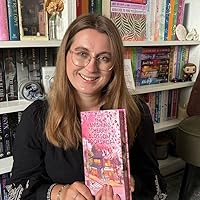
March 3, 2025
Thanks to NetGalley, Ria Parisi & Inked in Gray Press for the ARC in exchange for my honest review! ✨
Of Wolves and Stags by Ria Parisi is a captivating fantasy novel that weaves together themes of identity, freedom, and resilience. The story follows Dalia Arrowood, a Crystalline—a living weapon born from cruel elven experiments—who has spent a decade concealing her powers to honor a promise to her sister. Her life takes a dramatic turn when she rescues a human resistance fighter, propelling her into a quest alongside a diverse group aiming to secure humanity's last hope: a hidden cache of magical crystals. 💎
Parisi's world-building is both intricate and immersive, painting a vivid picture of a realm where magic and conflict intertwine. The characters are richly developed, each bringing unique perspectives and depth to the narrative. Dalia's journey from isolation to empowerment is particularly compelling, offering readers a protagonist whose struggles and growth resonate on multiple levels. 💗
The novel masterfully balances action-packed sequences with introspective moments, allowing readers to fully engage with the stakes of the resistance's mission and the personal battles each character faces. Themes of trust, sacrifice, and the search for belonging are explored thoughtfully, adding layers of meaning to the adventurous plot. 📖
Of Wolves and Stags is a testament to Parisi's storytelling prowess, delivering a tale that is both thrilling and emotionally resonant. Fantasy enthusiasts will find themselves engrossed in this richly crafted world and eagerly anticipating what lies beyond. ⭐️
Of Wolves and Stags by Ria Parisi is a captivating fantasy novel that weaves together themes of identity, freedom, and resilience. The story follows Dalia Arrowood, a Crystalline—a living weapon born from cruel elven experiments—who has spent a decade concealing her powers to honor a promise to her sister. Her life takes a dramatic turn when she rescues a human resistance fighter, propelling her into a quest alongside a diverse group aiming to secure humanity's last hope: a hidden cache of magical crystals. 💎
Parisi's world-building is both intricate and immersive, painting a vivid picture of a realm where magic and conflict intertwine. The characters are richly developed, each bringing unique perspectives and depth to the narrative. Dalia's journey from isolation to empowerment is particularly compelling, offering readers a protagonist whose struggles and growth resonate on multiple levels. 💗
The novel masterfully balances action-packed sequences with introspective moments, allowing readers to fully engage with the stakes of the resistance's mission and the personal battles each character faces. Themes of trust, sacrifice, and the search for belonging are explored thoughtfully, adding layers of meaning to the adventurous plot. 📖
Of Wolves and Stags is a testament to Parisi's storytelling prowess, delivering a tale that is both thrilling and emotionally resonant. Fantasy enthusiasts will find themselves engrossed in this richly crafted world and eagerly anticipating what lies beyond. ⭐️
Displaying 1 - 30 of 59 reviews