

What do you think?

¡No Pasarán!: Matt Christman's Spanish Civil War
¡No Pasarán! Matt Christman's Spanish Civil War is the first book by Matt Christman as a solo author. A concise and extremely readable history and analysis of the Spanish Civil War, filled with Matt's signature voice & humor.
195 pages, Hardcover
Published January 1, 2024
Ratings & Reviews
Friends & Following
Create a free account to discover what your friends think of this book!
Community Reviews
Displaying 1 - 30 of 100 reviews

Read
March 14, 2025I have read books that include the Spanish Civil War (like Aesthetics of Resistance or Homage to Catalonia) but never a book running straight through the main events. This was a lucky first book for that because it's a quick read and builds towards Christman's Marxist viewpoint. It jives with Chomsky's view that the best hope was probably deepening the social revolution but lays out the good and bad reasons that didn't happen. There is a Beckettian "we can't coordinate, we must coordinate" theme that resonates with the whole lead-up to the Second World War that is painful to consider. The book can't get too deep at this pace and has to quickly emphasize a few themes like anticlericalism and the international scene but a solid launching point onward.

February 15, 2025
truly one of the greatest minds of any generation

February 12, 2025
Really great. Doesn’t have a lot of the usual history accoutrements like the telling quote (or primary sources), but Christman understands and communicates the forces driving the conflict incredibly well. Short too!

March 22, 2025
One of the greatest humanist voices of this generation, Christman imbues the story of the Spanish Civil War with a profound pathos that really articulates why that moment in history was so contingent and is still debated to this day.
The book is far too short to be considered comprehensive, but it’s an excellent primer for the subject. It gives a brief background of the history leading up to the war, introduces all the notable persons and factions, and offers a pretty compelling analysis of why the Republic lost the war.
For anyone interested in the subject, this is a great place to start. There are more detailed studies of the war, but this book excels in arguing *why* the War was so historically significant. It was a moment where anything and everything was possible, the horizon of social revolution was here and now. Alas, the fourth and final part of this book calls itself twilight of utopia and what a twilight it was.
The book is far too short to be considered comprehensive, but it’s an excellent primer for the subject. It gives a brief background of the history leading up to the war, introduces all the notable persons and factions, and offers a pretty compelling analysis of why the Republic lost the war.
For anyone interested in the subject, this is a great place to start. There are more detailed studies of the war, but this book excels in arguing *why* the War was so historically significant. It was a moment where anything and everything was possible, the horizon of social revolution was here and now. Alas, the fourth and final part of this book calls itself twilight of utopia and what a twilight it was.

February 15, 2025
Our grillmaster hotfoots it through the Spanish Civil War, with a succinct yet detail-rich style that kept me reading quickly, without feeling like I was missing any of the key facts.
I really appreciated the distinct focus on the human experience throughout, it makes for the opposite of your typically dry (moist?) historical survey; there is space here that resonates, with the ringing shock of atrocities, the shrill whine of deflating solidarity, the laboured wheeze of hope being slowly exhausted, but also the beautiful harmony of the small victories along the way, and these weighty verses are relieved by light and impeccably timed jabs at the worst of the belligerents, Christman never failing to note the funny details as faithfully as the decisive - which are sometimes one and the same, like the Nationalist leader who brought down his own private plane with the excessive weight of his luggage, or one of Franco’s top men becoming “the first Spanish astronaut”.
I was left, in the end, with a bittersweet aftertaste, of the peace that fed the hungry workers who toiled under a startlingly unified vision; the conclusion reminds us that a desire for the collective good burns within us all, it is the pilot light that ignites the engine of progress, dimmed certainly in modern times, but inextinguishable no matter the depth of darkness we are plunged into.
I really appreciated the distinct focus on the human experience throughout, it makes for the opposite of your typically dry (moist?) historical survey; there is space here that resonates, with the ringing shock of atrocities, the shrill whine of deflating solidarity, the laboured wheeze of hope being slowly exhausted, but also the beautiful harmony of the small victories along the way, and these weighty verses are relieved by light and impeccably timed jabs at the worst of the belligerents, Christman never failing to note the funny details as faithfully as the decisive - which are sometimes one and the same, like the Nationalist leader who brought down his own private plane with the excessive weight of his luggage, or one of Franco’s top men becoming “the first Spanish astronaut”.
I was left, in the end, with a bittersweet aftertaste, of the peace that fed the hungry workers who toiled under a startlingly unified vision; the conclusion reminds us that a desire for the collective good burns within us all, it is the pilot light that ignites the engine of progress, dimmed certainly in modern times, but inextinguishable no matter the depth of darkness we are plunged into.

February 28, 2025
Not a Chapo head by any means but this is very good. It does read as something adapted from podcast scripts rather than intended to be a book all along (see: no sources) but pointing that out is kind of a “no shit,” given the Circumstances. I will absolutely be checking out Christman’s Hell on Earth series about the Thirty Years War, and I hope he’s eventually up to writing a full book on some other topic he’s passionate and knowledgeable about. The last few pages of this one offer a glimpse at a sort of radical history of WWII, which felt startlingly fresh considering how picked-over that period is. Fingers crossed for something along those lines, whether in print or audio, soon.
November 21, 2025
God I miss Matt’s thoughts. There are moments here where his voice really shines, and they’re special. Generally, it’s clear that this was adapted from a podcast script, and suffers a bit in the transition. But overall I’m very glad to have made this purchase.
November 22, 2025
I have definitely missed hearing Matt's perspective in the time since his stroke, and it's great to hear his voice again, even if only through text. Only knowing the basics coming into this I found ¡No Pasarán! very enlightening and I'm glad to have a better understanding of the events and forces surrounding the Spanish civil war. Occasionally it does come through that this was adapted from a podcast script but I don't think that's necessary to its detriment. I will just leave a passage from the last pages of the book, which I felt was some vintage Christman:
"We still live in the terminal stage of this technological matrix, the tools of counterhegemony rusted and broken at our feet. But living after the rapture still requires living, and if there's hope to be had in this existence, it's that capitalism has at least brought us together in one globalized temporality. At the end of total atomization is the pull back to community. The technology that pulls us apart will become the tools for our reacquaintance, forging trust from a common experience of alienation rather than breaking it on rocks of indifference. But even if that doesn't happen, we can still live our lives with the knowledge that the utopian horizon exists because it has been experienced, and the Spanish Civil War is proof of it. it existed in the factories of Barcelona, where workers managed their own work time and labored for the same wages but to their maximum effort. It existed in the Aragonese countryside where villages came together to bring in the harvest, requisition their first tractor, and run an economy on ration cards and currencies backed solely by mutual trust--where John D. Rockefeller couldn't buy a single cup of coffee, as a placard in one village said. It existed on the front line where Spanish workers joined with men from all over the world to risk their lives for the idea of universal brotherhood. It existed in the luxury hotels turned into communal cafeterias, around bonfires of burning banknotes, in the socialized theaters and free hospitals. These experiences weren't the whole of the experience of the Republic at war. There was corruption, sadism, defeatism, incompetence, and bad faith. But these moments and the sacrifices they inspired were part of it. The part that kept people going under tremendous suffering and overwhelming odds, more real than any dream of a perfected future. Our task is to live in such a way that affords us access to that feeling, to have our own experience of total faith in others and total faith in our own collective cause.''
"We still live in the terminal stage of this technological matrix, the tools of counterhegemony rusted and broken at our feet. But living after the rapture still requires living, and if there's hope to be had in this existence, it's that capitalism has at least brought us together in one globalized temporality. At the end of total atomization is the pull back to community. The technology that pulls us apart will become the tools for our reacquaintance, forging trust from a common experience of alienation rather than breaking it on rocks of indifference. But even if that doesn't happen, we can still live our lives with the knowledge that the utopian horizon exists because it has been experienced, and the Spanish Civil War is proof of it. it existed in the factories of Barcelona, where workers managed their own work time and labored for the same wages but to their maximum effort. It existed in the Aragonese countryside where villages came together to bring in the harvest, requisition their first tractor, and run an economy on ration cards and currencies backed solely by mutual trust--where John D. Rockefeller couldn't buy a single cup of coffee, as a placard in one village said. It existed on the front line where Spanish workers joined with men from all over the world to risk their lives for the idea of universal brotherhood. It existed in the luxury hotels turned into communal cafeterias, around bonfires of burning banknotes, in the socialized theaters and free hospitals. These experiences weren't the whole of the experience of the Republic at war. There was corruption, sadism, defeatism, incompetence, and bad faith. But these moments and the sacrifices they inspired were part of it. The part that kept people going under tremendous suffering and overwhelming odds, more real than any dream of a perfected future. Our task is to live in such a way that affords us access to that feeling, to have our own experience of total faith in others and total faith in our own collective cause.''

December 11, 2025
Much better than it has any right to be, and much more like a real book than I expected given that it’s largely the transcript of an unreleased podcast. Clean up the language a bit and add a bibliography and this becomes an all-timer. Matt Christman does a terrific job not only of laying out the forces and events of the Spanish Civil War but also of untangling the still-thorny knot of finger pointing that has dominated discourse on the fall of the republic. A perfect introduction of the conflict, and deserving of a wider release.
January 6, 2026
To rate it for what it is—the transcription of a series of podcast episodes—I'm giving it 5 stars. Any other history book like this would get a lower rating due to the lack of notes / sources. I still wish they included sources in the back. For those who don't know, the author of this book is a co-host of a popular political podcast who suffered a stroke the day he was going to record the final episode of this series. About a year later they decided to release the series as a published book instead (with each episode as one chapter) of a final episode as the author was no longer able to record.
As for the text itself, it was fantastic. A gripping narrative of a fascinating historical event I knew little about beyond the romanticized anarchist pining of the past I've seen online. Anyone who has listened to his rants, lectures, or musings should be able to hear Matt's voice (especially his humor) come through while reading ¡No Pasaran!
Matt Christman has a talent for tying historical events to a grander view of political and cultural evolution. A modern voice that, despite some of the tragic material he covers, affirms the validity and shared sentiment of your anger to the current state of affairs while also instilling hope for a peaceful and better future for all of humanity. Looking forward to any future writings from him!
As for the text itself, it was fantastic. A gripping narrative of a fascinating historical event I knew little about beyond the romanticized anarchist pining of the past I've seen online. Anyone who has listened to his rants, lectures, or musings should be able to hear Matt's voice (especially his humor) come through while reading ¡No Pasaran!
Matt Christman has a talent for tying historical events to a grander view of political and cultural evolution. A modern voice that, despite some of the tragic material he covers, affirms the validity and shared sentiment of your anger to the current state of affairs while also instilling hope for a peaceful and better future for all of humanity. Looking forward to any future writings from him!

April 15, 2025
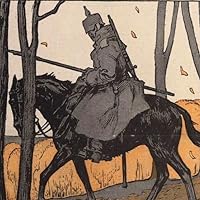
A great, concise, insightful, and entertaining history of an important but undervalued bit of history. Matt Christman has such a way with words that translates well to paper. Devoured it in a couple of days, the relaxed writing just pulls you in without leaving anything behind. Also I loved the formatting and illustrations.

February 15, 2026
A fantastic read for anyone with a deep love of history. Even as someone with a general knowledge of the Spanish Civil War already, I found No Pasaran so rich with detail that it never felt stale. Christman’s style is witty and accessible, no small feat when you consider the bewildering list of politicians, parties, unions, factions, movements, and military units that feature throughout this slim work. Matt’s wry, tongue-in-check approach to some of the more absurd episodes of the war genuinely had me laughing at certain points. The book’s latter half deals with the legacy of the anarchist movement that sprung up in Catalonia during the war years when, for a brief moment, the working class of Spain appeared to throw off their masters and organize their own lives as free men and women. While this short-lived project would meet a violent end at the hands of the Spanish Communists and the forces of fascism would eventually triumph in the war, Christman uses this tragic example to exhort the reader to imagine other possible futures that could have been and could be still. While it may seem naive to believe in such “revolutionary horizons” in our day and age, the author ultimately concludes that we know these horizons exist because they were first glimpsed, however faintly, during the Spanish Civil War.
March 14, 2025
Briskly paced and written with a grandiose style that suggests Christman's true mastery of not only this specific material, but of historical contingency and congruity as a whole. A bonafide scholar of the Spanish Civil War would surely find things to complain about, but even somebody marginally interested in the subject will find it easy to engage with this material. Easily readable and filled with incredible selection of detail that paints a startling picture and will leave breathless at times. Furthermore, Christman's trademark wit and humor breathes life into a notoriously stuffy subject. Bonus star out of support for the author.
March 2, 2025
A concise, depressing, and fascinating summary of the war between the nascent Republican Spain made up of Bolsheviks, Anarchists, and even Bourgeoisie versus the unholy alliance to restore Eternal Spain made up of the Colonial Military, Landed Aristocracy, and Falange fascists.
Matt Christian proves that not only is he capable of enthralling podcasting, but also of writing so encapsulating that maybe his calling was the pen and not the microphone.
Get well soon Matt, keep up the good work.
-NWPA
Matt Christian proves that not only is he capable of enthralling podcasting, but also of writing so encapsulating that maybe his calling was the pen and not the microphone.
Get well soon Matt, keep up the good work.
-NWPA
March 24, 2025
A nice overview of the Spanish Civil War shaded with class analysis. Christman uses his signature voice to place the conflict in the full span of history. Humour and poetic asides abound.
While not a monumental piece of history (no footnotes or new research) it offers an explicitly ideological primer on the conflict. Many historians claim and strive to be non-ideological so it’s actually refreshing to have a signature voice and transparent values. Also a great object, beautiful book with nice illustrations.
While not a monumental piece of history (no footnotes or new research) it offers an explicitly ideological primer on the conflict. Many historians claim and strive to be non-ideological so it’s actually refreshing to have a signature voice and transparent values. Also a great object, beautiful book with nice illustrations.

September 30, 2026
"So the common sailors, largely working-class and widely alienated from their commanding officers in this, the most self-consciously aristocratic of the Spanish armed forces, quickly organized resistance. On ship after ship, the [fascist] rebel officers were either arrested by their men or died fighting them. On the battleship Jaime I, the triumphant crew sent a message to the marine ministry: 'We have had serious resistance from commanders and officers on board and have subdued them by force. Urgently request instructions as to bodies.'"
March 4, 2025
Impressively succinct; the whole of the Spanish civil war in just 192 pages. Obviously there are issues with that and it's maybe not as detailed as some might want. I think it did a good job of explaining who the major players were and the significance of events. I enjoyed the references to what contemporaneous journalism was reporting at the time. It was nice to see what was thought whilst it was happening, before we knew of the world changing events that would happen directly after the war.

March 17, 2025
great analysis of the material conditions that lead to the war and the cartoonish infighting that lost it. easy to digest and understand while still being insightful.
an anecdote:
when i lived in madrid, i went to the site of the battle of jarama to see where the lincoln battalion fought. there was an energy there. these men fought and died halfway across the world for a cause that wasn’t their own because they believed in universal solidarity, the promise of a better world. the second republic was snuffed out in its crib, but that promise is still out there
an anecdote:
when i lived in madrid, i went to the site of the battle of jarama to see where the lincoln battalion fought. there was an energy there. these men fought and died halfway across the world for a cause that wasn’t their own because they believed in universal solidarity, the promise of a better world. the second republic was snuffed out in its crib, but that promise is still out there

March 20, 2025
It’s fine, but somewhat unpolished and not as narratively tight as it could have been. It provides a decent pop narrative of the Spanish Civil War and a good analysis of some of the broader themes around leftism in the early 20th century that serve as a useful intervention for people that have only been exposed to a more conventional capitalist narrative.
You might read this as an attempt at an 18th Brumaire But For The Spanish Civil War, and it mostly succeeds.
You might read this as an attempt at an 18th Brumaire But For The Spanish Civil War, and it mostly succeeds.
April 14, 2025
a readable history of the war but it doesn't quite capture matt's voice, or his ability to distill complexities. perhaps because the foreword indicates matt didn't quite "write" it.
the strongest portion is the analysis at the end, which also sounds the most like matt.
the strongest portion is the analysis at the end, which also sounds the most like matt.

May 17, 2025
Delightful vacation read from Mr. Christman. Dovetailing nicely with Andor season 2 and visiting the memorial to interned Spanish revolutionaries in Bordeaux. Another world is possible!

June 3, 2025
inspiring, funny, easy to read. just a great time

July 13, 2025
“Our task is to live in such a way that affords us access to that feeling, to have our own experience of total faith in others and in total faith in our own collective cause.”

July 28, 2025
The podcast in book form. What more do you want?

October 15, 2025
An excellent overview and introduction, eminently accessible. Podcastiness of it both a help and a hindrance.

May 18, 2025
Matt be grillin’

February 19, 2025
Matt’s voice has been so dearly missed these past 2 years. It’s a real treat to have it brought back through this book and his return to the podcast. Thank you cushbomb. Even in these dumb times he’s still giving me faith in our collective cause.

May 22, 2026
Excellent summary of the Spanish Civil War and its causes. It is excruciatingly painful to read about a moment in history with so much leverage where so much was lost, where fascism was allowed to win and where its victory was mostly preventable. I read this book on my journey to Spain, where I just spent two weeks and saw the effects of fascism still living, despite Franco’s death in 1975. I spoke to an older man in the Basque country who, with visible pain on his face, told me he couldn’t speak his native language because Franco had outlawed Basque being taught or spoken, and so the language has effectively skipped a generation of Basque people who could not learn the difficult language as children. So much pain is visible to this day, not even to speak of the countless Spaniards in the resistance who died against a wall, and the women and children who were terrorized by the fascist regime, in large part due to the refusal of the west to join with the USSR to make a united front against fascism.
I’ve only taken a star away because, due to no fault of the author, the book is a transcript of a series of podcasts that couldn’t be written properly because of the author’s health problems, which shows in the prose, but doesn’t make the book any less worthwhile to read.
I’ve only taken a star away because, due to no fault of the author, the book is a transcript of a series of podcasts that couldn’t be written properly because of the author’s health problems, which shows in the prose, but doesn’t make the book any less worthwhile to read.

March 27, 2025
A pithy and succinct re telling of the Spanish Civil War. The first half sets up the action, the second half is the action, but it really peaks in the last third of the last chapter when he ties everything together. Christman has always had an amazing ability to see the big picture and synthesize the day-to-day details into WHY people do the things they do. This book is a great example of that, and he does it in a way that we modern Oafs can understand. I wish it had one more chapter talking more about the intertwining ramifications of everything, but hey, I'll take what I can get.
May 20, 2025
Extremely digestible recounting of the civil war and the conditions that lead to it. Does not over simplify things, but I wish I could dig through some footnotes. Christman’s voice, and most importantly his optimism is the human project is there is every page. Also I really like the illustrations !!
Displaying 1 - 30 of 100 reviews