Wish you were able to have one of the world's leading museum consultants spend a couple of days with you, talking you through how to start a museum, how museums work, how to set up an exhibit, and more? If so, Museums 101 is the answer to your wishes.
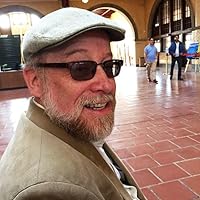
Mark Walhimer is an Industrial Design professor at Tecnológico de Monterrey and a museum consultant. Mark’s company, Museum Planning, LLC, specializes in the planning, design, and management of interactive educational experiences. Walhimer started his firm in 1999 to assist startup and expanding museums with museum master planning, exhibition design and museum project management. His firm has completed more than 40 projects worldwide for an international clientele that includes science centers, art museums, history museums, libraries, and corporations. Projects include Museo Interactivo de Economía (MIDE) in Mexico City, “Alcatraz: Life on the Rock,” traveling exhibition and Trans Studio Science Center in Bandung, Indonesia. Prior to starting his company, Walhimer held positions at Discovery Science Center in Santa Ana, California, the Children's Museum of Indianapolis, and Liberty Science Center. Mark is author of Museums 101 how-to guide for creating and organizing all varieties of museums.
Walhimer has a bachelor’s degree in studio art from Skidmore College in Saratoga Springs, New York, and a master’s degree in industrial design and exhibition design from Pratt Institute in Brooklyn, New York.
As an Iranian museum concept designer, this is a best book i read ever about museums in a simple way...of course in this book you cant find any museum designing details. but you can find all starting points of designing , A to Z and some more of course. may be writer weblog can help you as book reader to find some more details too.
"101" usually implies a basic-level introduction to a subject: Sociology 101, Math 101, etc. Other reviewers on Goodreads also refer to this as an introduction, either for themselves or for their students, and I came across it as a book being used in a Museums Studies class. As a very basic introduction to museums and museum management, this book is fine.
But, if you know nearly anything about museums, this book is not really for you, unless you just want it to skim, or maybe get a few ideas, or to have on hand to give to someone who is new to museums. If you've been around museums, you're not really going to get much out of this. (That said, there are some things I found interesting or things I didn't know or things to keep in mind for the future. But overall, eh.)
It can't hurt for seasoned professionals to read this. It does include topics like building a culture at your organization, both an internal culture and with your audience; museum feasibility studies; project management; and a questionnaire to give artifact donors. So yeah, there's probably a chance even people who work in museums will find something new or memorable in the book.
For people new to the museum field, there are other books you can read. This does have the benefit of being sort of a one-stop-shop for very basic information about running a museum, but I don't know how useful it would really be to anyone starting out in the industry, since you'll find most of this information elsewhere and the book's writing and organization seem scattered.
I would recommend checking it out from a library before purchasing it, so you know what you are (or aren't) getting if you purchase it.
Museums 101 is a great place to start for anyone interested in learning how museums operate. The book is well organized and methodical in its approach. It is easy to read, offering many examples that cover different types of museums, ranging from large to small, historical, visual, scientific and live. The book seems especially geared toward readers who intend to start new museums, and includes a reference section, Museum Toolbox. There is also a useful website associated with the book that allows the reader to explore chapter topics in greater depth.
A simple and easy to follow approach to understanding what happens in museums. A great book for new trustees or anyone interested in working at a heritage or cultural venue. Captures the basics and other areas that someone looking in may not realise the extent or reason behind why museums do these things.
After over 30 years in museums and often teaching on museums we finally have a readable yet complete text for students. I appreciated the emphasis on mission and ethics expected from practitioners. I will use it for my next museum class