

What do you think?
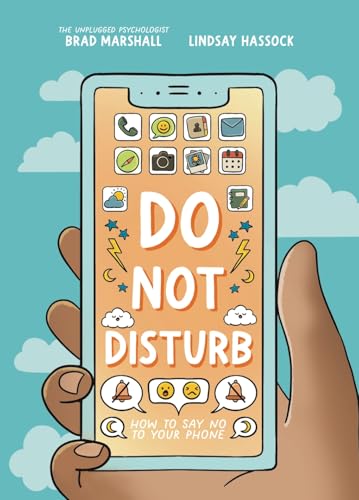
Do Not Disturb: How to Say No to Your Phone
From psychologists Brad Marshall and Lindsay Hassock, Do Not Disturb is an empowering and practical guide to help teens and kids build a healthier relationships with their phones
In Do Not Disturb, Brad Marshall and Lindsay Hassock share cutting-edge insights on how young people can unplug from their phones. Readers will discover the effects that their phone has on their brain and body. They’ll find out how to create a relationship with their phone on their terms. They’ll even establish simple, healthy screen time habits that stick. This is a must-have resource that
Ten practical steps to help teens and children unplug from their phones A toolkit at the end of each step, providing accessible, practical techniques Advice from trusted psychologists who have spent two decades working with young people Full-color illustrations by Lauriane Bohémier Additional resources at the back of the book Practical, insightful, and never preachy, this book will help readers stop doomscrolling and start unplugging!
In Do Not Disturb, Brad Marshall and Lindsay Hassock share cutting-edge insights on how young people can unplug from their phones. Readers will discover the effects that their phone has on their brain and body. They’ll find out how to create a relationship with their phone on their terms. They’ll even establish simple, healthy screen time habits that stick. This is a must-have resource that
Ten practical steps to help teens and children unplug from their phones A toolkit at the end of each step, providing accessible, practical techniques Advice from trusted psychologists who have spent two decades working with young people Full-color illustrations by Lauriane Bohémier Additional resources at the back of the book Practical, insightful, and never preachy, this book will help readers stop doomscrolling and start unplugging!
- GenresNonfictionMiddle Grade
96 pages, Hardcover
Published August 26, 2025
Ratings & Reviews
Friends & Following
Create a free account to discover what your friends think of this book!
Community Reviews
Displaying 1 - 21 of 21 reviews

November 10, 2025
I really liked the tone of this book and thought the authors did a good job not lecturing and scolding readers (it's aimed at middle schoolers) instead opening up a conversation and encouraging mindfulness around phone use. As an adult, I found some of their advice helpful as well.

September 5, 2025
If you want something to build off of Anxious Generation and is formatted for teens, give this quick read a shot. It is highly engaging, doesn't vilify technology, and helps give kids and teens the tools to take back control over how they use phones and technology. Three stars because I have no idea what sources they drew on for their information beyond their own work due to anything like a bibliography. Interestingly enough, the way the font and highlighted words work cones close to replicating how you read when using a phone or computer. I'm not sure if that is entirely a good thing as we tend to skim rather than read deeply. The book has a lot of great stuff in it. I'm just wondering if having it come close to replicating in print how we read on a screen is the best idea.

April 12, 2026
Wow! 100 pages of AWESOME!! Loved how it was written, very non threatening for any reader, loved how content was brought back over and over to be reinforced. Middle School/High School teachers, admin, and curriculum directors… this is a great read that could provide endless extensions and learning. It takes a village and this is as real as it gets, with the science and suggestions to take ownership and make positive mental changes.

January 11, 2026
I learned so much about how to put my phone down and I love that it gives ways to limit phone usage not just for yourself but for friends and family as well. I love that it appeals to teens and to everyone by using simple words and pictures with small tips and resources.

September 10, 2025
In a word: Fantastic!
I think most of us can agree that we've had trouble putting down our phones at one point or another. Whether we're watching just one more reel () or waiting on that life-or-death important text () or trying to beat the next level of Tropicats (), it's easier than we'd like to admit to get hooked on our phones. Whether we want to admit it or not.
As with the characters in <i>What You Are Looking For Is in the Library</i>, I didn't realize I needed this book as much as I did when it landed on my desk along with the next Hunger Games wannabe and a couple graphic novels (Batman). I meant to stick it out with the rest of the "New" books without so much giving it a superficial glance. You know, to make sure it was physically intact and had the proper department label. But something made me pause and really look at it...and then carry it back to my desk...and read it cover-to-cover. And I enjoyed it far more than I expected to.
This book is bright and colorful and the format (no info dumps) is aimed at teens, who would rather receive their info in Tik-Tok-length soundbites rather than in lengthy text. But that doesn't mean it doesn't have a lot to say. It DOES! The book discusses phone addiction and how to break unhealthy phone/screen time habits and replace them with good ones. The best part is it does so without being preachy. Something anyone, regardless of age, can respect. In short, the book is actually very well-done. And it inspired me to wake up and honestly look at my own screen habits, which could be better. I am now on a journey to create a healthier relationship with my own phone. And I already feel better about it!
Finally, this book is something everyone should read. 100% recommended!
I think most of us can agree that we've had trouble putting down our phones at one point or another. Whether we're watching just one more reel () or waiting on that life-or-death important text () or trying to beat the next level of Tropicats (), it's easier than we'd like to admit to get hooked on our phones. Whether we want to admit it or not.
As with the characters in <i>What You Are Looking For Is in the Library</i>, I didn't realize I needed this book as much as I did when it landed on my desk along with the next Hunger Games wannabe and a couple graphic novels (Batman). I meant to stick it out with the rest of the "New" books without so much giving it a superficial glance. You know, to make sure it was physically intact and had the proper department label. But something made me pause and really look at it...and then carry it back to my desk...and read it cover-to-cover. And I enjoyed it far more than I expected to.
This book is bright and colorful and the format (no info dumps) is aimed at teens, who would rather receive their info in Tik-Tok-length soundbites rather than in lengthy text. But that doesn't mean it doesn't have a lot to say. It DOES! The book discusses phone addiction and how to break unhealthy phone/screen time habits and replace them with good ones. The best part is it does so without being preachy. Something anyone, regardless of age, can respect. In short, the book is actually very well-done. And it inspired me to wake up and honestly look at my own screen habits, which could be better. I am now on a journey to create a healthier relationship with my own phone. And I already feel better about it!
Finally, this book is something everyone should read. 100% recommended!

August 6, 2025
I loved this engaging nonfiction book about developing a healthy relationship with digital devices. The overall message of the book is that teens should not feel shame for the time they spend on their devices because they are designed to be addictive and fun. Instead, teens should recognize and accept their usage and emotions during phone usage and build healthy habits with the help of family and friends. The text is conversational and understanding with an emphasis on nonfiction elements like bolded text, occasional lists (“how to build a better relationship with your phone”), and occasional full page friendly reminders like “You don’t break a bad habit - you replace it with a good habit.” Clear, concrete steps to establish boundaries are explored along with the benefits from prioritizing in person relationships and establishing better sleep hygiene, both of which are related to high phone usage. As with the other book in the 10 Steps to Change series, the text is broken up by frequent cheery, colorful illustrations that add interest.
In the last few pages, the authors share their own personal experiences with digital media. Brad tells readers about a vacation where he was completely unplugged and how free he felt. Lindsay, on the other hand, writes about his addiction to video games and how it almost derailed his career. Both perspectives will help teenagers relate to the authors’ message. Includes a glossary and a list of recommended resources. Also in the series – How to Manage Your Eco-Anxiety (2024). Link to complete review: https://ysbookreviews.wordpress.com/2...
In the last few pages, the authors share their own personal experiences with digital media. Brad tells readers about a vacation where he was completely unplugged and how free he felt. Lindsay, on the other hand, writes about his addiction to video games and how it almost derailed his career. Both perspectives will help teenagers relate to the authors’ message. Includes a glossary and a list of recommended resources. Also in the series – How to Manage Your Eco-Anxiety (2024). Link to complete review: https://ysbookreviews.wordpress.com/2...

October 28, 2025
With tips and hints as well as many well-laid explanations, these pages take a look at the impact constant cellphone usage can have on a teen's life.
With many small and cute illustrations dancing along with the text, this book hits a serious note while keeping a light atmosphere. Each chapter is only a few pages long and addresses an issue surrounding cellphone usage. These include everything from sleep quality to mood changes to online friendships and more. The text gets right to the point and takes on a conversational tone to give it a more natural flow. With well-crafted arguments and explanations, the problems behind heavy phone usage are explained with facts and examples. But the author doesn't forget to point out that cellphones also have their benefits when not abused.
Anyone who wants to explore the problems with cellphone usage and gain insights on how they can curb the time spent on the phone will find an enjoyable resource in these pages. The tips are easy to implement and make sense. Plus, many of the arguments don't hang in the negative direction, but rather point out how life could be even better. This keeps everything more on the positive side, and while still preachy, doesn't weigh down. I was missing author information and such, since this is missing from the book, and there isn't any other hint as to where the author gets the information from. As a nonfiction read, which offers help and advice, this would be essential, I would think.
In any case, this is an enjoyable read which fulfills its purpose nicely and keeps the intended audience in mind the entire way through.
With many small and cute illustrations dancing along with the text, this book hits a serious note while keeping a light atmosphere. Each chapter is only a few pages long and addresses an issue surrounding cellphone usage. These include everything from sleep quality to mood changes to online friendships and more. The text gets right to the point and takes on a conversational tone to give it a more natural flow. With well-crafted arguments and explanations, the problems behind heavy phone usage are explained with facts and examples. But the author doesn't forget to point out that cellphones also have their benefits when not abused.
Anyone who wants to explore the problems with cellphone usage and gain insights on how they can curb the time spent on the phone will find an enjoyable resource in these pages. The tips are easy to implement and make sense. Plus, many of the arguments don't hang in the negative direction, but rather point out how life could be even better. This keeps everything more on the positive side, and while still preachy, doesn't weigh down. I was missing author information and such, since this is missing from the book, and there isn't any other hint as to where the author gets the information from. As a nonfiction read, which offers help and advice, this would be essential, I would think.
In any case, this is an enjoyable read which fulfills its purpose nicely and keeps the intended audience in mind the entire way through.

December 12, 2025
I picked up this book at the library because I honestly find myself scrolling through my phone way too often. I didn’t know what to expect. I am not the intended age group for the book (it’s for teens and young adults), but I got a ton out of it. Some of the things like setting boundaries around my phone were things I already do (albeit inconsistently). Other things were new (like putting my phone on airplane mode for a day). That’s a challenge I haven’t tried yet!
The book was accessible and didn’t talk down to its audience, which I feel is important. People, especially kids, can spot a bossy, fake adult easily. It also explained dopamine and other scientific reasons you reach for your phone and how you might achieve those dopamine hits another way. It didn’t talk about getting rid of screens (because that is impractical), but it discussed limiting time and using your phone as more of a tool to connect than just scrolling the news feed. All in all, it’s a beneficial book with colorful illustrations. Easy to read in one sitting and full of practical tips!
The book was accessible and didn’t talk down to its audience, which I feel is important. People, especially kids, can spot a bossy, fake adult easily. It also explained dopamine and other scientific reasons you reach for your phone and how you might achieve those dopamine hits another way. It didn’t talk about getting rid of screens (because that is impractical), but it discussed limiting time and using your phone as more of a tool to connect than just scrolling the news feed. All in all, it’s a beneficial book with colorful illustrations. Easy to read in one sitting and full of practical tips!
Read
February 3, 20262.3.26. 2 psychologists from Screens & Gaming Disorders Clinic in Australia. Sunny illustrations, text boxes, toolkit checklist @ end each chapter. No works cited, but does have additional resources. Also references some studies (Fogg motivation, ability, trigger cycle. dopomine. dataseeking part of brain evolved towards negative info. Starts off with, "Let's begin by calling out the elephant in the room. Phones are not all bad." Tricky parts in balance ('We hear a lot about how tech is harming mental health, but scientists have found that when young people completely cut tech out, it can actually reduce well-being.' but have kids heard about mental health?)
Table contents each being a step towards better relationship: 1.knowledge, 2.reassess relationships, 3.end doomscrolling, 4.understand emotions, 5.build new habits, 6.switch off, 7.online v. offline friendship, 8.family involved, 9.better sleep, 10.make space for joy.
Table contents each being a step towards better relationship: 1.knowledge, 2.reassess relationships, 3.end doomscrolling, 4.understand emotions, 5.build new habits, 6.switch off, 7.online v. offline friendship, 8.family involved, 9.better sleep, 10.make space for joy.

August 15, 2026
If you know me, then you would not have picked this book for me. I am not a big user of my smartphone.
This book was on display at one of my local libraries. The cover caught my eye, so I decided to take a peek at the info on the pages. Lo and behold, the first few pages caught my attention, especially the statistics on phone usage among today's youth. So, I decided to take a chance and continue reading this book. The book had an excellent layout in each chapter that is easy to read, digest, and implement. Also, I thought the advice and help in this book could even transfer over to other habits one might be trying to back away from or do less of. I would recommend this book to anyone ready to make a change in their life with the relationship they currently have with their smartphone.
This book was on display at one of my local libraries. The cover caught my eye, so I decided to take a peek at the info on the pages. Lo and behold, the first few pages caught my attention, especially the statistics on phone usage among today's youth. So, I decided to take a chance and continue reading this book. The book had an excellent layout in each chapter that is easy to read, digest, and implement. Also, I thought the advice and help in this book could even transfer over to other habits one might be trying to back away from or do less of. I would recommend this book to anyone ready to make a change in their life with the relationship they currently have with their smartphone.

February 2, 2026
Practical tips and tricks to minimize screentime. Written for middle/junior high students but applicable up to adults. The benefits of phones are recognized but the drawbacks are clearly outlined along with health implications. Family and friends are encouraged to reduce screentime with students to benefit all.

August 10, 2026
A terrific guide for teens struggling with their phone use. Based on science, written in a friendly, non- judgmental way, with an appealing style. As an adult, I learned a thing or two (the Zeigarnik effect!) and was reminded of the importance of analog hobbies. I’ll be adding this to my teen collection.
September 27, 2025
I told my family they all need to read this book, lol, instead of their phones

December 2, 2025
I ordered the wrong book figured I read it since it was under 100 pages lmao
December 6, 2025
The illustration is beautiful. The advice is easy to understand and implement.

December 8, 2025
4.5 Stars. Good ideas on how teens can reduce screen time along with explanations of how the brain works and why phones are so addicting.

January 2, 2026
A book about finding balance with your life and your phone. It’s not preachy and how ideas about how a teenager can achieve *their* goal of less dependence on the phone.
January 29, 2026
A good review of the subject for kids, but I wish it had even more tips.

April 9, 2026
Quick guide for young people about how to manage their cell phone addiction. Perfect for my high school library. The struggle is real!

December 4, 2025
A Parent’s Perspective
As a parent of four now-adult children, I bring a unique perspective to this book. When I was growing up, smartphones didn’t exist—something for which I am truly grateful. I struggled with depression and anxiety during a difficult divorce, and I know that if I had access to social media in those years, my mental health would have been much worse.
Fast forward to raising my own kids—two boys and two girls—and the smartphone revolution hit right between my oldest and second child.
My husband and I made a firm decision: no smartphones until age 18.
That choice required us to enforce strict phone boundaries, which the kids did not appreciate at the time. But now, as adults, each of my children has told me—separately—that they’re thankful we held those rules.
One of the most surprising challenges we faced was what I call “sleep texting”: group chats that buzzed nonstop throughout the night, waking kids repeatedly and keeping them texting until 2 or 3 a.m. And since sleep is absolutely crucial to teen mental health, we implemented a hard rule: all phones upstairs at 9:30 p.m. Even in high school. Exceptions were made for legitimate group projects, but the boundary was necessary.
That’s why this book matters so deeply.
Do Not Disturb shows young readers—without shame or judgment—that they can walk away from their phone and still be okay. It’s not anti-technology. It’s not anti-social media. Instead, it’s a compassionate guide to understanding screen time, building healthy habits, and reclaiming control of one’s attention and well-being.
About the Book
Do Not Disturb: How to Say No to Your Phone is an empowering, practical guide written by psychologists Brad Marshall and Lindsay Hassock, with vibrant full-color illustrations by Lauriane Bohémier.
Designed for teens and kids, this resource helps young people understand how their phones influence their brain and body—and how to create a healthier relationship with technology on their terms.
What Readers Will Find Inside
Ten practical steps to help teens and children unplug from their phones
A toolkit at the end of each step with accessible, hands-on techniques
Advice from trusted psychologists who have spent two decades working with young people
Full-color illustrations throughout, making concepts engaging and approachable
Additional resources at the back of the book
Practical, insightful, and never preachy, Do Not Disturb helps readers stop doomscrolling and start unplugging.
Why This Book Stands Out
FIRST ON THE MARKET: The first book specifically for young people exploring the mental and physical toll of smartphone overuse
TRUSTED AUTHORS: Written by two psychologists with years of experience treating phone-related stress and addiction
ACCESSIBLE STRUCTURE: Organized into 10 easy-to-implement steps, each with its own toolkit
Genre / BISAC
Young Adult Nonfiction / Health & Daily Living / Mindfulness & Meditation
Young Adult Nonfiction / Health & Daily Living / Mental Health
Young Adult Nonfiction / Technology
"Infused with warmth and optimism, this approachable, nonjudgmental work blends clinical insights with scientific evidence... Put down your phone and pick up this valuable and accessible read for everyone navigating the digital age." — Kirkus Reviews
"This serves as a tool and guide for any young person with a smartphone, helping them understand how to use them in a conscientious and healthful way." — Booklist
As a parent of four now-adult children, I bring a unique perspective to this book. When I was growing up, smartphones didn’t exist—something for which I am truly grateful. I struggled with depression and anxiety during a difficult divorce, and I know that if I had access to social media in those years, my mental health would have been much worse.
Fast forward to raising my own kids—two boys and two girls—and the smartphone revolution hit right between my oldest and second child.
My husband and I made a firm decision: no smartphones until age 18.
That choice required us to enforce strict phone boundaries, which the kids did not appreciate at the time. But now, as adults, each of my children has told me—separately—that they’re thankful we held those rules.
One of the most surprising challenges we faced was what I call “sleep texting”: group chats that buzzed nonstop throughout the night, waking kids repeatedly and keeping them texting until 2 or 3 a.m. And since sleep is absolutely crucial to teen mental health, we implemented a hard rule: all phones upstairs at 9:30 p.m. Even in high school. Exceptions were made for legitimate group projects, but the boundary was necessary.
That’s why this book matters so deeply.
Do Not Disturb shows young readers—without shame or judgment—that they can walk away from their phone and still be okay. It’s not anti-technology. It’s not anti-social media. Instead, it’s a compassionate guide to understanding screen time, building healthy habits, and reclaiming control of one’s attention and well-being.
About the Book
Do Not Disturb: How to Say No to Your Phone is an empowering, practical guide written by psychologists Brad Marshall and Lindsay Hassock, with vibrant full-color illustrations by Lauriane Bohémier.
Designed for teens and kids, this resource helps young people understand how their phones influence their brain and body—and how to create a healthier relationship with technology on their terms.
What Readers Will Find Inside
Ten practical steps to help teens and children unplug from their phones
A toolkit at the end of each step with accessible, hands-on techniques
Advice from trusted psychologists who have spent two decades working with young people
Full-color illustrations throughout, making concepts engaging and approachable
Additional resources at the back of the book
Practical, insightful, and never preachy, Do Not Disturb helps readers stop doomscrolling and start unplugging.
Why This Book Stands Out
FIRST ON THE MARKET: The first book specifically for young people exploring the mental and physical toll of smartphone overuse
TRUSTED AUTHORS: Written by two psychologists with years of experience treating phone-related stress and addiction
ACCESSIBLE STRUCTURE: Organized into 10 easy-to-implement steps, each with its own toolkit
Genre / BISAC
Young Adult Nonfiction / Health & Daily Living / Mindfulness & Meditation
Young Adult Nonfiction / Health & Daily Living / Mental Health
Young Adult Nonfiction / Technology
"Infused with warmth and optimism, this approachable, nonjudgmental work blends clinical insights with scientific evidence... Put down your phone and pick up this valuable and accessible read for everyone navigating the digital age." — Kirkus Reviews
"This serves as a tool and guide for any young person with a smartphone, helping them understand how to use them in a conscientious and healthful way." — Booklist

October 19, 2025
I found this book randomly when perusing my library’s website. It’s aimed at teens but I found it full of good reminders for myself as well. A quick but helpful read.
Displaying 1 - 21 of 21 reviews