

What do you think?

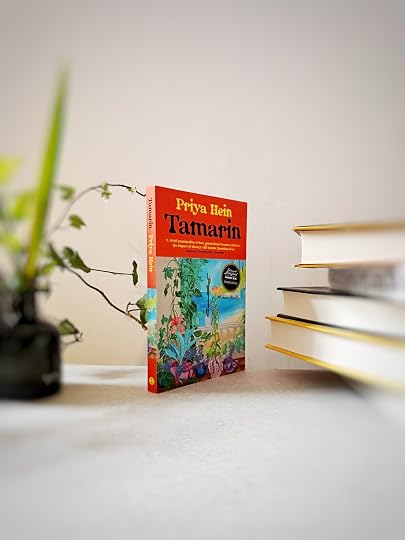
Tamarin
Tamarin Bay, Mauritius, is a travel agent’s a tropical ocean, fishermen unloading their daily catch, children building sandcastles, surfers riding giant waves.
But just along the shoreline is the beach of La Preneuse, the taker of souls. The island is haunted with tragedy and the remnants of colonial rule.
But it is also home, where Anita Ram longs to be following the collapse of her marriage. After enduring a shocking betrayal and the sexism and racism of a cold Britain in the early twenty-first century, she finds comfort in simple things; her mother’s cooking, her childhood bedroom, and a handsome architect.
Will these be enough for Anita to find happiness again, or will the ghosts of her past consume her?
Following the international success of her debut Riambel, Hein’s heart-wrenching new novel reveals the violence and beauty inherent in her native Mauritius.
But just along the shoreline is the beach of La Preneuse, the taker of souls. The island is haunted with tragedy and the remnants of colonial rule.
But it is also home, where Anita Ram longs to be following the collapse of her marriage. After enduring a shocking betrayal and the sexism and racism of a cold Britain in the early twenty-first century, she finds comfort in simple things; her mother’s cooking, her childhood bedroom, and a handsome architect.
Will these be enough for Anita to find happiness again, or will the ghosts of her past consume her?
Following the international success of her debut Riambel, Hein’s heart-wrenching new novel reveals the violence and beauty inherent in her native Mauritius.
160 pages, Paperback
First published January 27, 2026
About the author
Priya Hein
5 books28 followersPriya Hein was born in Mauritius. She has published several children's books and short stories, and has contributed to a number of anthologies. In 2017 she was nominated by the National Library of Mauritius for the Astrid Lindgren Memorial Award. She was selected for the Women's Creative Mentorship Project for the University of Iowa International Writing Program. Her debut manuscript Riambel won the 2021 Jean Fanchette Prize. Priya lives in Munich and Mauritius with her family.
Ratings & Reviews
Friends & Following
Create a free account to discover what your friends think of this book!
Community Reviews
Displaying 1 - 25 of 25 reviews

September 15, 2025
I came across this book by coincidence, and I truly enjoyed every part of it. Knowing little about Mauritius, I found it fascinating to follow the main character as her life unfolds between her beloved island and England. As an expat living abroad, I could relate to many aspects of her journey in different ways. It’s a delightful and thought-provoking read, one that stays with you and makes you question the deeply ingrained beliefs and behaviors we carry as women. Thank you, Priya Hein. One day I hope to write a book, and I can only wish it will be as precious as this one.

February 6, 2026
Writing was beautiful, ending so sad goodness me.
March 18, 2026
This was so gorgeous

February 19, 2026
I randomly picked this up from the new releases section at my library, drawn in by the beautiful & colourful cover, and it was such a wonderful read. I have never read a book by a Mauritian author or set in Mauritius but could immediately picture the island based on the descriptions. It was such an atmospheric read and a nice break from the current rainy English weather (minus the parts set in England, full of cold rainy English weather…)
Colonialism, exoticism, racism, and sexism were all central to this book and explored really well. I also enjoyed how we slowly got the full picture, bit by bit revealing what exactly went down and why Anita has returned to Mauritius from England. This structure really had me hooked because I needed to know more!
I don’t think I quite understood the ending, but it still made me very emotional and it was an interesting & fitting way to end the book
Colonialism, exoticism, racism, and sexism were all central to this book and explored really well. I also enjoyed how we slowly got the full picture, bit by bit revealing what exactly went down and why Anita has returned to Mauritius from England. This structure really had me hooked because I needed to know more!
I don’t think I quite understood the ending, but it still made me very emotional and it was an interesting & fitting way to end the book

April 30, 2026
I read Riambel last year as part of my reading around the world challenge, so I was excited to read this!
Anita’s story is devastating and I was not expecting the ending at all. I found it increasingly difficult to read as it built up to the conclusion and in many ways I would have liked to have stopped reading and stayed on the beach with Sven and Maya.
What I love especially is how author writes so beautifully and clearly about Mauritius and the level of detail that goes into describing each place Anita visits. I also felt like I learned more about the history of Mauritius, building on what I’d read already in Riambel, but the author does a good job of not overwhelming the story itself with facts.
I will definitely be reading whatever Priya Hein writes next!
Also just now rereading the blurb… very sneaky!
Anita’s story is devastating and I was not expecting the ending at all. I found it increasingly difficult to read as it built up to the conclusion and in many ways I would have liked to have stopped reading and stayed on the beach with Sven and Maya.
What I love especially is how author writes so beautifully and clearly about Mauritius and the level of detail that goes into describing each place Anita visits. I also felt like I learned more about the history of Mauritius, building on what I’d read already in Riambel, but the author does a good job of not overwhelming the story itself with facts.
I will definitely be reading whatever Priya Hein writes next!
Also just now rereading the blurb… very sneaky!
This entire review has been hidden because of spoilers.

March 5, 2026
I found this book a bit stilted in its descriptions, sometimes unnecessarily detailed, and found the conclusion disappointing. I’ve seen other reviews that found it masterful and emotive, but I did not have the same experience. It was an interesting story and I appreciated reading something set somewhere new to me, but the story fell flat for me in the end.

October 5, 2025
The novel itself follows Anita, who returns to her mother and home in Mauritius, after the breakdown of her marriage and leaving her job. We learn that she studied in England and met and married a man there, that she always wanted to be a mother and is in fact haunted by a child in her dreams or nightmares (motif) and that she hates her older sister, who was mean to her in her childhood and told her parents that she freed a sacrificial goat, which got her in a lot of trouble). We also learn that this sister has a child, which Anita does not, and that Anita loves this child and supports it as an Auntie, eventually evening inviting the young woman to London and letting her stay with her. Her Husband then ends up cheating on her with this younger woman who is also her niece, and while in Mauritius, she learns that this niece is now pregnant. Over the course of her time in Mauritius we also learn more about Anita and tha fact that she was raped by her professor while at uni. She meets a German man in Mauritius, Sven and his Daughter and forms a friendship with them. But then, Sven tries to kiss her and tries to touch her and she runs away afraid, this human connection ultimately seeing her as a piece of meat as well. The novel ends with her mother flying to England to identify her corpse, after she slit her wrists in the bath thinking of Mauritius. This is a massive shock and plot twist and likely the whole novel was in her mind, we read what she was thinking about and she never went back to her home or her mother. It’s harrowing, heavy, beautiful. I love it! Such a good story.
Here are some things, briefly, that I picked up on/enjoyed:
• Historical insertions about Mauritius
• Frequent use of similies (as and like) that compare things to the landscape, the beach, the ocean
• Evocative descriptions of settings that reflect and capture emotions
• Imagery of oceans, ghosts, blood and death throughout
—
“The day felt flat and grey, like a dead fish, when Anita boarded an early bus to the coast.”
“Like a ghost, she sat at the back of lecture halls, haunted the corridors, dragged her feet from one seminar to the next.”
“Drops kept falling, like infinitesimal mistakes gathering in a pail, a pond, a lake, an ocean.”
“The ebbing tide had formed ripples in the sand, and she enjoyed walking on the ridges that gently massaged her soles.”
Here are some things, briefly, that I picked up on/enjoyed:
• Historical insertions about Mauritius
• Frequent use of similies (as and like) that compare things to the landscape, the beach, the ocean
• Evocative descriptions of settings that reflect and capture emotions
• Imagery of oceans, ghosts, blood and death throughout
—
“The day felt flat and grey, like a dead fish, when Anita boarded an early bus to the coast.”
“Like a ghost, she sat at the back of lecture halls, haunted the corridors, dragged her feet from one seminar to the next.”
“Drops kept falling, like infinitesimal mistakes gathering in a pail, a pond, a lake, an ocean.”
“The ebbing tide had formed ripples in the sand, and she enjoyed walking on the ridges that gently massaged her soles.”
This entire review has been hidden because of spoilers.
March 8, 2026
A legacy of slavery that is present in all areas of life, that rots and eats away at its victims, its survivors. The rape of homelands and of women, from slavery to servitude to spouse, exploited in a continual ebb and flow like the waves of the Indian Ocean, Tamarin weaves narratives about the Mauritian people that are both painfully familiar and impressively new. Beautiful, and tragic, but most importantly, true… I’ll be thinking about this book for a long time.

July 1, 2026
4.5*
Novel set mainly on MAURITIUS
Shortlisted for the Edward Stanford Travel Writing Awards 2026 – Fiction With A Sense Of Place.
Anita Ram is leaving London under difficult, emotionally charged circumstances. She has clearly parted ways with her husband but as yet it is unclear why. She is returning to her home in Mauritius to be with her mother. Her father died when she was eight years old. She is clearly in some distress and longs for the comfort of her old room and the familiarity of her country.
Her family is originally from Bihar and many of their original culinary traditions and culture, which have percolated through the generations, are still very relevant. Her mother is clearly on a mission to nurture her.
As the story unfolds it becomes clear how and why she came to be in London, how she had won a scholarship and during her studies met Paul, her future husband. For various reasons, however, her time as a student was difficult but with marriage to a wonderful man, her future seemed secure. And yet here she is, curling up in the foetal position in her old bed. There also seems to be a fundamental issue between her only – and – older sister, Didi, and there are mentions of Didi’s supercilious and undermining attitude towards her younger sister.
This a gently told story of suffering and sadness, written in a cohesive and compelling style, that moves around confidently. The backdrop of Mauritius comes through strongly as the weather patterns move through their cycles, with all the sights, sounds and smells of the island stirring the reader’s senses. I felt truly drawn into both the narrative and the setting, and could really imagine Anita’s psychological journey as she navigates the island, bonding with a little girl and generally shooting the breeze in an effort to distract herself. There is also a good sense of the historical context of the island, through French and British colonisation, and of course the author touches on the consequences and experiences that someone – especially a woman – invariably has at the hands of a former colonising nation. An eloquent, powerful and poignant story.
Novel set mainly on MAURITIUS
Shortlisted for the Edward Stanford Travel Writing Awards 2026 – Fiction With A Sense Of Place.
Anita Ram is leaving London under difficult, emotionally charged circumstances. She has clearly parted ways with her husband but as yet it is unclear why. She is returning to her home in Mauritius to be with her mother. Her father died when she was eight years old. She is clearly in some distress and longs for the comfort of her old room and the familiarity of her country.
Her family is originally from Bihar and many of their original culinary traditions and culture, which have percolated through the generations, are still very relevant. Her mother is clearly on a mission to nurture her.
As the story unfolds it becomes clear how and why she came to be in London, how she had won a scholarship and during her studies met Paul, her future husband. For various reasons, however, her time as a student was difficult but with marriage to a wonderful man, her future seemed secure. And yet here she is, curling up in the foetal position in her old bed. There also seems to be a fundamental issue between her only – and – older sister, Didi, and there are mentions of Didi’s supercilious and undermining attitude towards her younger sister.
This a gently told story of suffering and sadness, written in a cohesive and compelling style, that moves around confidently. The backdrop of Mauritius comes through strongly as the weather patterns move through their cycles, with all the sights, sounds and smells of the island stirring the reader’s senses. I felt truly drawn into both the narrative and the setting, and could really imagine Anita’s psychological journey as she navigates the island, bonding with a little girl and generally shooting the breeze in an effort to distract herself. There is also a good sense of the historical context of the island, through French and British colonisation, and of course the author touches on the consequences and experiences that someone – especially a woman – invariably has at the hands of a former colonising nation. An eloquent, powerful and poignant story.

August 15, 2026
I found the writing didactic and the narrator’s moralist voice unbearable. For fiction, it overexplains ("The system did not reward troublemakers, especially if they were in the minority"). Rather than earning it, the book tells the reader how to feel about its events and characters. The moral lens through which the reader is told to judge the main character (“Young, vulnerable, defenceless”) only applies to her, while the other young, vulnerable woman in the story is painted as a villain.
The characters are one-dimensional, and while there are serious themes, their treatment is quite thin. It feels like some are there for the drama, not for the story.
In places, the Harlequinesque prose made me cringe: “His messy dark hair was streaked with silver. His eyes were the same colour as marlin fresh out of water, a combination of metallic blue and grey. He wasn’t good-looking in a classical sense, yet his face was somehow pleasing” … “His hand felt disconcertingly soft for a man’s”.
The ending uses one of the laziest narrative devices. But at least it comes by page 167.
The author's previous work has been nominated for an award for YA literature, and I'm wondering whether Tamarin is also meant for young audiences, in which case my middle-aged reader's review may be too harsh.
The characters are one-dimensional, and while there are serious themes, their treatment is quite thin. It feels like some are there for the drama, not for the story.
In places, the Harlequinesque prose made me cringe: “His messy dark hair was streaked with silver. His eyes were the same colour as marlin fresh out of water, a combination of metallic blue and grey. He wasn’t good-looking in a classical sense, yet his face was somehow pleasing” … “His hand felt disconcertingly soft for a man’s”.
The ending uses one of the laziest narrative devices. But at least it comes by page 167.
The author's previous work has been nominated for an award for YA literature, and I'm wondering whether Tamarin is also meant for young audiences, in which case my middle-aged reader's review may be too harsh.
February 14, 2026
Tamarin pulls firmly at the senses, Priya Hein's writing is exquisite and vivid, I believed I was also in Mauritius. I wanted to get on a plane and go there too. This book is heartbreaking, the paradise of Tamarin Bay is juxtaposed with the bitter cold of Britain and the history of colonial rule in Mauritius itself. Not to detract from the heaviness within this short book but there is joy in the simple things, a home cooked meal, the ocean. Tamarin captivated me, I greatly appreciate the time I had with this little book.

May 20, 2026
The writing is so good in this book. I have to admit, I've seen this book in a local bookstore and what attracted me first was really the beautiful cover. It's genuinely so beautiful. In some parts, I felt so connected to our main character, Anita, which is quite surprising considering how wildly different our lives are/were. I'm gonna be honest, the ending kinda caught me by surprise, it's not unrealistic but I was really hoping for a better ending for the main character, who I've grown extremely fond of. I'm really excited to read more from this author!
July 28, 2026
Having recently moved to London I admire how Hein evokes the restlessness and grit of the sometimes overwhelming city. This stands juxtaposed to the tranquility of Tamarin and simplicity of Quatres Bornes, towns located in the paradise Island of Mauritius. Hein’s writing is evocative, capturing the emotional landscape of Anita and her family, but also the backdrop of the Mauritian island which becomes a vivid presence through out the story. Long after having finished the book, the nostalgia of home and yearning for family lingered with me.

October 25, 2025
Pros: Brings Mauritius to life and effectively contrasts it with the UK. Credible portrayal of sexual harassment.
Cons: main character is uninspiring: she's nauseous all the time (actually could she be pregnant?) and mopes around a lot. Then ultimately accidentally kills herself. She has good reason to be suffering from grief, but her response is to mainly just mope.
Cons: main character is uninspiring: she's nauseous all the time (actually could she be pregnant?) and mopes around a lot. Then ultimately accidentally kills herself. She has good reason to be suffering from grief, but her response is to mainly just mope.

Review of advance copy received from Publisher
An engrossing, beautiful and totally devastating novel about the unspoken violences of colonialism that plague generations long after the invaders leave. The novel explores not just this legacy but what it teaches its victims — the hopelessness, helplessness and pain of exploitation they can’t seem to escape. Pessimistic, lyrical, harrowing. One that will haunt me for a long time.

October 25, 2025
A beautifully written book that is very easy to read. The personal story intertwines with the history of the island, helping the reader understand its people and their past more deeply.
I highly recommend this book!
I highly recommend this book!

February 27, 2026
A reverie in noir with all the colours of Mauritius.
I knew what was coming from the prologue but still found this one triggering.
Covers fertility issues, abuse of power, racism, suicide, sister dynamics, dreams lost.
I knew what was coming from the prologue but still found this one triggering.
Covers fertility issues, abuse of power, racism, suicide, sister dynamics, dreams lost.
This entire review has been hidden because of spoilers.

August 27, 2026
Such a moving story, exploring themes that feel so deeply rooted in Mauritian life and culture. The beautiful descriptions of Mauritius made me yearn to go back! A poignant and heartbreaking read with such a sad ending 🇲🇺💔
Review of advance copy
5/5 stars. Strongly recommend!

July 27, 2026
excellent writing and storytelling
August 31, 2026
Beautiful heart wrenching story filled with grief and nostalgia.
This entire review has been hidden because of spoilers.

October 23, 2025
Shortlisted for the 2026 Edward Stanford Travel Writing Awards - Fiction
Priya Hein’s debut novel “Riambel” – written in English, then translated into French and prize winning ahead of its actual English language publication in 2023, something which lead to some complex debates on its Booker eligibility – was set in the real life titular beach area in the South of Mauritius. Narrated by 15 year old shanty-town dwelling Noemi, the ostensibly simple (almost cliched) storyline involving a relationship with a member of a rich and racist white French-Mauritian family for which her mother cleans, was enlivened by a series of other elements (including some very effective second person sections, some rather didactic lessons on her country’s troubled past, French and Creole poems, traditional Mauritian recipes).
This her second novel also has her native Mauritian setting – this time the West Coast resort of Tamarin Beach (a coast I visited for my honeymoon, albeit further North).
The narrator Anita though starts the book in London considering (but not in the first chapter succeeding in booking) a flight back to her home of Mauritius – but the majority of the rest of the book tells the story of her difficult journey home.
Anita we find out moved to London on a University scholarship and there, after facing sexual advances from a University professor (one eventually exposed in the MeToo movement, but whose reputation was institutional unimpeachable at the time), ended in a marriage to Paul – one which to both their disappointment ended up childless and which by the time of the novel has dissolved to her despair.
In Mauritius we learn of her troubled relationship with her much older sister – and her, for many years, much closer one with that sister’s only daughter (her niece) but one which we surmise has recently turned into a form of betrayal which is associated with her current crisis.
We also learn by implication of a difficult early childhood including some other examples of abuse.
In Mauritius she attempts a tentative relationship with the German father of a young child she meets and befriends on the beach – although her difficult past complicates her attempts. She also clears up her childhood bedroom – although we sense this is more of an attempt to cleanse more figuratively her past. And the Island’s colonial past – with its history of slavery and (the reason her family came to the Island) indentured labour (as part of the Great Experiment) – forms a crucial background of exploitation.
The novel’s style does not always cleave to the “show not tell” mantra – so we are told for example that “Maya was a bubbly four-year old brimming with energy whose company Anita was beginning to enjoy. It was refreshing to see the world through the eyes of a child.” Or “Anita was starting to feel restless as the most painful memories of her former life in England flooded back to taunt her” – and can resort a little to rather obvious imagery for example “Looking at the sea spread before her, Anita suddenly felt like a grain of sand in front of its sheer immensity.”, “Staring at the vast expanse of sea ahead of her, she became acutely aware of the geographical confinement of the island, lost in the middle of the Indian Ocean.”
The novel has a signposted but still cleverly executed harrowing ending – and like its predecessor gives a fascinating insight in to a culture and perspective largely absent from literary fiction.
My thanks to Ben Reads Good and Indigo Press for a paper ARC won in a competition
What exactly was the definition of rape? Anita wondered.
Like the Dutch, French and English colonizers who had raped Mauritius so many years ago?
Again and again her island and her people had been dominated, oppressed, stripped bare, invaded by colonizers. To survive, what choice did they have but to give in and please their powerful masters? She sometimes wondered if the only way to resist was by not resisting.
The island had been desecrated by patriarchy, just as Anita had been by cousins and uncles who had inserted themselves into her childhood, erasing her innocence. As much as Anita tried to bury these memories in shallow graves, they always threatened to resurface every time a tropical cyclone loomed ahead.
Priya Hein’s debut novel “Riambel” – written in English, then translated into French and prize winning ahead of its actual English language publication in 2023, something which lead to some complex debates on its Booker eligibility – was set in the real life titular beach area in the South of Mauritius. Narrated by 15 year old shanty-town dwelling Noemi, the ostensibly simple (almost cliched) storyline involving a relationship with a member of a rich and racist white French-Mauritian family for which her mother cleans, was enlivened by a series of other elements (including some very effective second person sections, some rather didactic lessons on her country’s troubled past, French and Creole poems, traditional Mauritian recipes).
This her second novel also has her native Mauritian setting – this time the West Coast resort of Tamarin Beach (a coast I visited for my honeymoon, albeit further North).
The narrator Anita though starts the book in London considering (but not in the first chapter succeeding in booking) a flight back to her home of Mauritius – but the majority of the rest of the book tells the story of her difficult journey home.
Anita we find out moved to London on a University scholarship and there, after facing sexual advances from a University professor (one eventually exposed in the MeToo movement, but whose reputation was institutional unimpeachable at the time), ended in a marriage to Paul – one which to both their disappointment ended up childless and which by the time of the novel has dissolved to her despair.
In Mauritius we learn of her troubled relationship with her much older sister – and her, for many years, much closer one with that sister’s only daughter (her niece) but one which we surmise has recently turned into a form of betrayal which is associated with her current crisis.
We also learn by implication of a difficult early childhood including some other examples of abuse.
In Mauritius she attempts a tentative relationship with the German father of a young child she meets and befriends on the beach – although her difficult past complicates her attempts. She also clears up her childhood bedroom – although we sense this is more of an attempt to cleanse more figuratively her past. And the Island’s colonial past – with its history of slavery and (the reason her family came to the Island) indentured labour (as part of the Great Experiment) – forms a crucial background of exploitation.
The novel’s style does not always cleave to the “show not tell” mantra – so we are told for example that “Maya was a bubbly four-year old brimming with energy whose company Anita was beginning to enjoy. It was refreshing to see the world through the eyes of a child.” Or “Anita was starting to feel restless as the most painful memories of her former life in England flooded back to taunt her” – and can resort a little to rather obvious imagery for example “Looking at the sea spread before her, Anita suddenly felt like a grain of sand in front of its sheer immensity.”, “Staring at the vast expanse of sea ahead of her, she became acutely aware of the geographical confinement of the island, lost in the middle of the Indian Ocean.”
The novel has a signposted but still cleverly executed harrowing ending – and like its predecessor gives a fascinating insight in to a culture and perspective largely absent from literary fiction.
My thanks to Ben Reads Good and Indigo Press for a paper ARC won in a competition
Nobody knew her there. It was a place where she could wallow in her misery, away from judgements and questions about her failed marriage. Where she could plunge into bouts of introspection. She could let the tears mingle with seawater, every single drop a recrimination, reminding her of what she had lost: her husband, her job, her self-respect, her ability to see the future, her sanity. Her life. The last thing she wanted was for anyone to see her desolation.

November 4, 2025
I read Tamarin by the ocean, hoping to conjure the Mauritian landscape that shapes both the story and its author, but I could have read it in the middle of a snowstorm and Mauritius would still have risen from the pages.
Priya Hein has done a remarkable job, through the story of Anita Ram, of illuminating the underrepresented history of Mauritians.
Anita’s tale broke my heart in many lingering ways.
Tamarin is rich with complex characters, a compelling narrative, and a rare depth representing cultures and landscapes we don’t often see in mainstream literature.
You should definitely pick it up.
Priya Hein has done a remarkable job, through the story of Anita Ram, of illuminating the underrepresented history of Mauritians.
Anita’s tale broke my heart in many lingering ways.
Tamarin is rich with complex characters, a compelling narrative, and a rare depth representing cultures and landscapes we don’t often see in mainstream literature.
You should definitely pick it up.

April 17, 2025
I felt that while reading Tamarin, I had taken a journey from one island to another. From gloomy England and London, the city of ambition and commotion, to Mauritius, a hot, humid climate, filled with idyllic beaches such as Tamarin Bay and La Preneuse. Like the waves of the Indian ocean, glittering yet ominous, Priya Hein's writing enthralls the reader in a complexly layered melancholy. The protagonist, Anita's story, rocks between the past and the present. A story about coming home, the female student and immigrant experience, all topics that resonate with many readers (myself included). I especially appreciated the way Hein depicts Anita's attempts to relive her missed childhood by reconnecting with her mother and home through food. Don't be fooled by the lyrical writing; the stories of grief, betrayal, and multifaceted issues of identity, belonging, and reconciliation have a truly emotional effect.
Hein asks us to reflect on what we leave behind, what we return to, and how we carry our pasts with us.
Hein asks us to reflect on what we leave behind, what we return to, and how we carry our pasts with us.
April 8, 2025
I loved this book because it transports you to places that are described so vividly that you can smell, feel and taste what Anita, the main character, experiences. It is about love, intergenerational trauma and how the effects of slavery still shape the lives of Mauritians today. The characters are very well developed, the ending is truly amazing, and you'll want to read it again to grasp all the subtleties
Displaying 1 - 25 of 25 reviews