

What do you think?
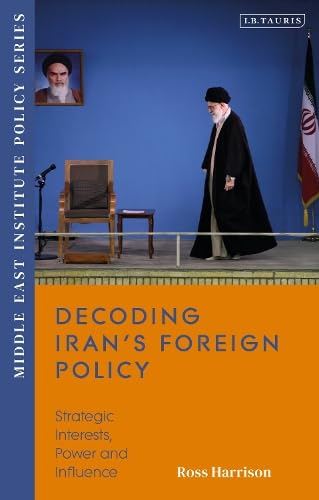
Decoding Iran’s Foreign Policy: Strategic Interests, Power and Influence
288 pages, Hardcover
Published July 3, 2025
Ratings & Reviews
Friends & Following
Create a free account to discover what your friends think of this book!
Community Reviews
Displaying 1 - 2 of 2 reviews
May 7, 2026
This book provides a fascinating look at Iranian foreign policy. The author uses process tracing to show how Iran has developed a foreign policy that adapts to changing circumstances. The main thrusts of this policy are trying to make sure that multiple Great Powers don't align against Iran, and taking advantage of regional chaos to develop proxies in weak states. He shows how these patterns go back to the time of the shahs, but have become turbo-charged in the Islamic Republic. The author looks at how Iran's domestic situation impacts its foreign policy, and ends with a chapter looking at how Iran's foreign policy might change in the future. The book was published less than a year ago, but I think it is already proving overly optimistic about prospects for stability in the Middle East. The author is also quite repetitive in places. Overall, this is a fascinating look at an important subject, that rarely gets such in depth treatment.

March 20, 2025
Read in manuscript. This is an excellent analysis of Iranian foreign policy, going back to the Safavids. It looks at the world through Iranian eyes and helps explain why Iran behaves the way it does and how that behavior is likely to continue in the future. Ideal for classroom.
Displaying 1 - 2 of 2 reviews