The ultimate guide to the worst dictators in 64 profiles by 64 different historians, politicians and journalists compiled by leading political commentator Iain Dale
Were the signs that Putin is a ruthless dictator there all along? How should we deal with President Xi of China? It is time to seek warnings, and lessons, from history.
In The Dictators, Iain Dale brings together 64 essays by historians, academics, journalists and politicians about elected and unelected dictators, wartime and peacetime dictators, those driven by ideology and those with a reputation for sheer brutality. How did these tyrants, autocrats and despots seize power - and how did they exercise it? And how did they lose it? Very few dictators die peacefully in their own beds, after all.
Only by examining these figures from the 6th century BC to the present, from ancient Greece to present day Saudi Arabia, do patterns start to emerge. We can see the shared character traits, the common conditions, the patterns of behaviour that have enabled dictators to seize power - time and time again.
The Dictators is acutely relevant to world politics it is indeed a warning from history. Will we take heed? Or will history, in fact, teach us that history teaches us nothing?
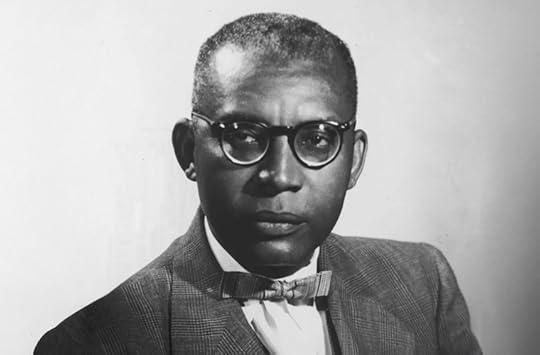
It’s difficult to see how some of these guys became dictators in the first place, the accounts of them don’t seem so scary – Papa Doc Duvalier in 1957 for instance –
Fifty years old, dressed always in black suit, hat and sunglasses, this softly spoken doctor promised peace and progress with a special concern for women’s rights
And ten years later :
The president was observed to move very slowly, speak practically in a whisper
I mean, if he was so terrible a dictator couldn’t his praetorian guards have given him the chop as they did quite regularly in imperial Rome?
I must say, by the way, that the language of these essays is not always as measured and judicious as you might be expecting :
Many have concluded that by 1959 Duvalier had already gone bananas
Some of these essays are remarkably unfocussed – the one on Gaddafi is all over the place, too much time taken up with the PanAm 103 bombing and the shooting of a policewoman in 1984 outside the Libyan embassy in London – terrible as these events were, if you only have eight pages to encapsulate the life and crimes of Gaddafi then you need to explain to me at least what kept him in power so long.
Without being very explicit about it though, it seems clear what does allow gruesome tyrants to keep control over the security forces, the army, the police and the press and tv for so long – murderous ethnic rivalry. We see this demonstrated in the Yugoslavian wars of the 1990s – it took Josip Broz Tito to hold Yugoslavia together as a dictator from 1943 to 1980; after his death it took ten short years for civil war to erupt and the one federated country to separate itself into six different countries at the cost of around 140,000 deaths. You can imagine that in many countries, especially ones who had their boundaries drawn by former colonial powers, there’s a fear of what happens after the Old Man is gone. You can see this in Zimbabwe and Zaire/Congo under Mugabe and Mobutu. So because in some magical way the dictator is able to keep the bitter rivalries balanced his cruelties and megalomania are kind of fearfully approved of.
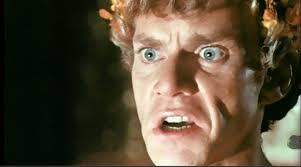
This does not cover the dictators who start off normally authoritarian and then go full-on Caligula.
LONGEST REIGNING DICTATORS OUT OF THE 64 IN THIS BOOK (SINCE NAPOLEON)
1. CASTRO (CUBA) 49 YEARS IN OFFICE 2. KIM IL-SUNG (NORTH KOREA) 45 3. GADDAFI (LIBYA) 42 4. HOXHA (ALBANIA) 40 5. FRANCO (SPAIN) 39 6. MUGABE (ZIMBABWE) 37 7. TITO (YUBOSLAVIA) 35 8. ZHIVKOV (BULGARIA) 35 9. STROESSNER (PARAGUAY) 33 10. AFWERKI (ERITREA)* 32 11. LUKASHENKO (BELARUS)* 32 12. KADAR (HUNGARY) 31 13. LEE KUAN YEW (SINGAPORE) 31 14. STALIN (USSR) 30 15. MOBUTU (ZAIRE/CONGO) 30 16. SUHARTO (INDONESIA) 30 17. ORTEGA (NICARAGUA)* 30
*still going strong
Actually you might have thought this book would have had room for Yoweri Museveni of Uganda – president for 40 years and still there; or Paul Biya of Cameroon, president for 44 years and still there, and the current champion Teodoro Obiang Nguema Mbasogo of Equatorial Guinea who’s been president for just a shade longer than Mr Biya. Iain Dale, the editor, says there are some who he regrets not including such as Teodoro above and Islam Karimov of Uzbekistan.
And he says –
I’ve included examples of leaders who many would dispute as actual dictators. Lee Kuan Yew of Singapore is a good example of an authoritarian leader who many would not class as a dictator. And they are probably right.
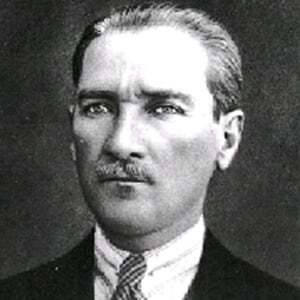
So Turkish readers of this book, if they hadn’t read the preface first, would probably be choking over their raki when they saw Mustafa Kemal Ataturk in here, the guy who founded the modern Turkish republic, who created and sustained a revolution so profound, secular and progressive that they venerate his name and image with several national holidays to this day. So yes, you can have dictatorial powers, but then you can actually do GOOD and not evil. Imagine that.
POSTER BOY
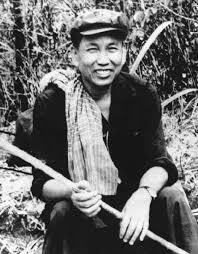
But you don’t have to rule with an iron fist for donkey’s years to become the worst dictator – much can be accomplished in only a short time – look at Pol Pot, who murdered about a third of his fellow Cambodians in only 3 years, 8 months and 21 days. Stalin took 30 years to murder all those millions, Hitler finished them off in only 12 years. It’s a matter of commitment.
You know, it’s an uncertain career, I wouldn’t recommend it. Most of them cling on to power until they die, but surprisingly some are able to retire in comfort – Salazar, Stroessner, Baby Doc Duvalier, Fidel Castro, Marcos, Mobutu, Emperor Bokassa, Idi Amin, Robert Mugabe, Pol Pot, many more. Only a few, also surprisingly, were executed – Ceausescu, Saddam Hussein, Mussolini.
ONLY 3.5, SORRY IAIN
This book is part of a series Iain Dale has edited and I am a big fan – The Prime Ministers, The Presidents and British General Election Campaigns (yes even that one) were all brilliant, wonderful stuff, historical non-fiction that had the page-turning quality of a thriller, no word of a lie. The Dictators, though, by its very nature, is not like that, it leaps all over the globe, does not tell a coherent tale and you have to admit, it’s repetitious. The brutal coup, the secret police, the disappearing opponents, the rigged elections, the siphoned-off billions - are we in Asuncion or Jakarta, Bangui or Manila.
Book Review: The Dictators by Iain Dale Rating: 6/10 Difficulty: Easy
The Dictators by Iain Dale is an ambitious compendium of 64 of world history's most infamous figures, offering concise pen portraits of some of the most notorious and evil rulers—from Alexander the Great to Vladimir Putin. It serves as an accessible introduction to the lives and legacies of these dictators, spanning a wide arc of human history.
While the book provides a broad overview of these historical figures, its formulaic structure hampers its overall impact. Each chapter follows a similar template, which makes the reading experience feel repetitive over time. Additionally, events and themes are revisited across multiple chapters, which can make the narrative feel redundant for readers already familiar with these periods of history.
The book shines most in chapters that delve into lesser-known dictators, where the reader is introduced to unfamiliar and intriguing historical contexts. However, for more widely studied figures, the brevity of the entries often leaves much to be desired, offering little new insight for those already knowledgeable on the subject.
Despite its flaws, The Dictators is a solid starting point for readers seeking a broad survey of history's tyrants. However, those looking for a deeper dive or a more nuanced analysis of these complex figures may find it lacking.
Interesting and thought provoking overview of selected dictators throughout history. The book does not include Kings and Queens but looks at individuals who came to power in political systems that were democratic to at least some extent. Perhaps unsurprisingly, there is only one woman among the 64 dictators covered by the book. Each dictator is reviewed by a different author and they do not always explicitly state the warnings from history. If there is one common thread, it is that dictators will stop at nothing to retain their position of power. Dictators, such as Hitler, won democratic elections but then retained their position as leader by removing the very mechanism that had brought them to power. For me, the key lesson is the importance of ensuring there are transparent elections on a regular basis so that populations have the opportunity to replace tyrants. On balance the book overall warrants 3 rather even though some of the chapters were worth 4 stars.
As with the previous collections in this series, this book contained some really interesting essays, and some I struggled with. Compared with pervious books in the series, the essays in this one had a much harder challenge, so the variation in quality was more extreme. Unlike with The Presidents or The Prime ministers, the leaders in this book often ruled for decades, and because the book covers dictators from across the world and a long span of history, there's isn't the same build-up of context you got on the other books. Writers in this one had ~7 pages to explain the history of the afflicted nation, the (often extreme) events of their reign, and their demise.
Like Iain Dale's The Presidents, definitely more of a launching pad for further research than a definitive work on any of the people profiled, but, what can I say, I was compelled for most of it. Would have appreciated more synthesis regarding the "warnings from history" titled and connections between some of the ancient world dictators and the more modern figures, but as I said, an interesting read nonetheless, even if some of the essays are weaker than others (and, as in The Presidents, it features at least one American-related malapropism -- it's the "Democratic National Committee," no the "Democratic National Congress").
The scope of this was enormous. Lots of the significant events in world history make it on here. It's made me want to dive more into the French and Russian Revolutions, the history of post colonial South America and Africa, the complexities of the Middle East. In fact, I bought another book covering one of those topics after reading a chapter of this in Waterstones cafe.
As usual, some chapters are better written than others and very much an overview rather than the detail, but it achieves what it sets out to very well.
Sixty-four stories about dictators written by various authors. I read this book non-sequentially and picked and chose which ones I felt like reading at the time. The dictators include many well-known suspects but also some that are less well-known to the public. Overall an interesting book with useful insights.
I was not particularly enamored with this book. It would be my personal preference to download Rand, or other think tank papers to glean lessons learned. Additionally, Samuel Huntington wrote a book titled, Political Order in Changing Societies that offers better insights into the dynamics and psychology. I do not suggest this book.
A well thought out compilation of the most infamous dictators in history. The book becomes a bit boring when going through heaps of 20th century Communists written by conservative MPs. Some personal stories by the authors makes the book special, however it is a little bit of a grind and definitely only highlights the main parts of some extremely complex people and regimes.
I like the scope of people that make it in the book. Many of whom I have not heard from before. The only thing that slightly bothers me is that there is no coherent writing style because of all authors involved.
Very very uneven..... the essayists all seem to be right wing and range from academics & journalists to a current student which is a bit bizarre plus the crook Nadhim Zahawi. The worst essays are virtually lifts straight from Wikipedia. Few insights in many chapters
It is an interesting book discussing the life of 64 dictators and the conditions that allowed them to seize power. However because it is written by 64 different authors the quality of the 64 essays is different going from very bad to excellent. The chapter on Salazar written by Thomas Gallagher is by far the worst as it doesn’t even discuss his life or how he seized power, only explaining why he was a dictator. On the other hand, the chapter on Bashar Al-Assad written by Brooks Newark was very good with personal experience meeting the dictator and witnessing his evolution from a shy ophthalmologist to a cruel dictator. However the best chapter written with emotion by someone who faced the dictator, was the one covering Idi Amin written by Yasmin Alibhai-Brown. In summary the book is an excellent overview and warning about sometimes ordinary people who become dictators. More attention should however have been put in the editing stage in order not to have useless chapters like the one on Salazar slip through.