A mind-expanding exploration of how trees learned to shape our world by manipulating the elements, plants, animals, and even humankind, possessing agency beyond anything we might have imagined
“Astounding . . . a true masterpiece . . . Rix refuses to put herself much in the picture, but through the scenes we glimpse an Indiana Jones figure who is both an eminent, travelling scientist and a born writer.”—The Telegraph
A NEW YORKER BEST BOOK OF THE YEAR
For a supposedly stationary life-form, trees have demonstrated an astonishing mastery over the environment around them. In The Genius of Trees, tree scientist Harriet Rix reveals the inventive ways trees sculpt their environment and explains the science of how they achieve these incredible feats. Taking us on an awe-inspiring journey through deep history and unseen biochemistry across the globe, Rix restores trees to their rightful station, not as victims of our negligence but as ingenious, stunningly inventive agents in a grand ecological narrative. Trees manipulate fundamental elements, plants, animals, bacteria, fungi, and even humankind to achieve their ends, as seen with oaks in Devon, England, shaping ecosystems through root networks and fungi, and in Amedi, Iraq, changing sexes as they age; laurel rainforests in the Canary Islands regulating water cycles; and metasequoias in California influencing microclimates.
Some tree species have gone to extraordinary lengths to make sure their fruits reach large primates, who can spread their seeds over vast distances, while poisoning smaller and less useful mammals. Others can split solid rock and create fertile ground in barren landscapes, effectively building entire ecosystems from scratch. And new discoveries are constantly coming to research has shown that trees have an even greater role in preventing global warming than we thought--trees, at one time thought to produce methane actually consume it. We share one world with trees and one need for survival.
This eye-opening journey into the inner lives of nature’s most powerful plant is a profoundly new and original way of understanding both the miracles trees perform and the glories of our natural world.
Cumulatively, the earth’s trees sweepingly adjust global water flow. Trees of all 73,000 species are constantly making minute adjustments, but normally the resultant changes are subtle, deniable, and easy for humans to ignore, or, as in the Amazon rainforest, on a scale too enormous to be easily comprehended. I had gone to La Gomera because the dramatic change from desert to cloud forest is heightened by the extreme lengths to which the trees have gone, and continue to go, to maintain their clouds.
You can see the water pouring off their branches, smell the terpenes seeding the cloud, and in the tangle of dark-green leaf shapes above your head it is obvious that you are looking at cloud catchers, branches designed to scoop out the belly of a cloud. What you can’t see is the effect of transpiration—water molecules sucked up by the tree’s roots hustling minerals through the trunk, up to the furthest leaves 100 feet above, and then with a final puff of energy evaporating off and out into the air. You can, however, feel it in the cool under the trees as heat departs with the water molecules that are heading up to swell the clouds.
Excellent nature writing, really descriptive and detailed and told from a viewpoint of deep time which is such a source of wonder to me. I found myself looking up so many of the trees and plants she describes and marveling at them. I am not usually jealous of a person’s job even when filled with travel, but I think I am of this author, I would like to travel to look at some trees, too. Practical and engaging, but without the deeper side I like to see in my nature writing that approaches transcendence, but I understand its not that kind of book. Just really good storytelling and science.
In every square foot of tree you are seeing over a half pound of carbon dioxide: a world of 3D carbon in forests and woods. Millions of trees have been using sunlight over millions of years to solidify the air, and the result has been a rollercoaster of oxygen levels throughout deep time, affecting everything from the rate at which iron rusts to the size animals can grow. From a very low start point oxygen concentrations have occasionally become very high, sometimes to the point that trees themselves have had to adapt to survive by altering the very structure of their proteins and leaves.
One of the last areas of old-growth forest in the US is the Yaak old-growth forest, a soaring community of western red cedar, giant hemlock, shaggy sharp-needled spruce, western larch, lodgepole, and ponderosa pines reaching up to the sky and connecting to the 2.2 million–acre Kootenai forest. Three hundred thousand acres of this are now being logged, with the stated objective to “reduce catastrophic wildfire risk and improve forest health.”
Most eloquent is Rick Bass, who lives in the Yaak Valley and advocates for its protection as a landscape that has experienced minimal human interference. “This larch is not only meant to survive fire,” he says, “it’s meant to prosper from it. These attributes, the species diversity here, the structural diversity of the forest—they need to be studied, not clear-cut. But the forest service says that by clear-cutting a nearly 1,000-year-old forest, they’ll teach it to be resilient?”
Why did trees evolve to grow into the rock and turn it to dust? As tree roots start to grow and digest the rock that they move through, suddenly minerals are available to them that are essential for their growth (notably phosphate), for DNA, for cell membranes, and for moving energy around the plant easily. A feedback loop ensues, in which the top of the tree supplies the bottom with energy from the sun, and the bottom uses it to grind through the rock and supply the top with phosphate, which in turn helps the tree grow. Root hairs also provide a vast surface area for the osmosis of other mineral salts. Iron, zinc, magnesium, copper, cobalt, and potassium all cross from rock into the organic realm in this way.
When modern humans evolved about 40,000 years ago, there were an estimated 6 trillion trees on the planet. By the time we appeared on the scene, trees had already altered the planet’s air, changed the flow of water, used fire as a tool, and built relationships with the plants and animals around them. For almost 400 million years, trees have been some of the largest organisms on dry land, physically blocking airflows with their branches, channeling waterflows with their roots, and acting as architects for other segments of nature—a mosaic of microhabitats. We can see this above the ground when we take the time to observe closely: a tree or leaf is a condensation of the place it comes from and bears the marks of its experiences. The leaf of a ginkgo, for example, has veins optimized 385 million years ago, a broad fan-shape that nearly led to its extinction, and the pigments of a changing ozone layer. It is harder to imagine the complexity of a tree below ground, where trees are blind explorers, guided by fungi and bacteria but vulnerable to them, carrying an internal compass of gravity-sensing proteins, their only lodestar the center of the earth.
It’s not just imagination that makes angiosperms look more youthful and less staid than gymnosperms. Giant sequoias and other gymnosperms often have burls, huge shoots waiting to spring up if they hit the ground, and it is supposed that these are an adaptation to the trees being knocked over by dinosaurs. By contrast, an angiosperm will root in a thousand places—even a 100-year-old beech tree can send up shoots from its trunk if it falls over, and becomes a phoenix tree. Genetically too, angiosperms tend to be more flexible, happily duplicating their DNA and experimenting with new chemical compounds. The ability to produce flowers and fruit, as well as shorter timescales of reproduction, meant that angiosperms shaped biotic factors—bacteria, fungi, plants, animals, and probably also humans—more than gymnosperms.
The period laurels developed into is broadly known as the Tertiary, and the trees that survived the droughts and subsequent glaciation are, like the spouses of a dead climate, sometimes known by the Dickensian term the Tertiary Relicts. About 15 million years ago, monteverde forests, the green, tropical or subtropical montane cloud forests, were widespread across Europe and North Africa, the vegetation of the Mediterranean before the ice age and subsequent onset of the hot Mediterranean summers. But as ice spread across the northern hemisphere and locked up water, the climate became drier and most of the laurel forest died off, leaving tiny reminders of itself around the shores of the Mediterranean: the fragrant bay laurel of Italy used in osso bucco, the warty Zelkova of the rain-catching White Mountains of Crete, and the maple-leaved liquidambars of humid coastal Lycia, perfume-bottles of the ancient world.
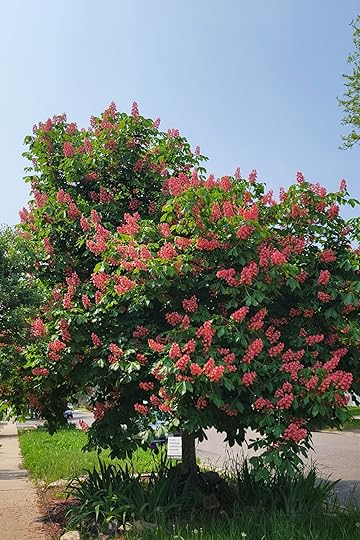
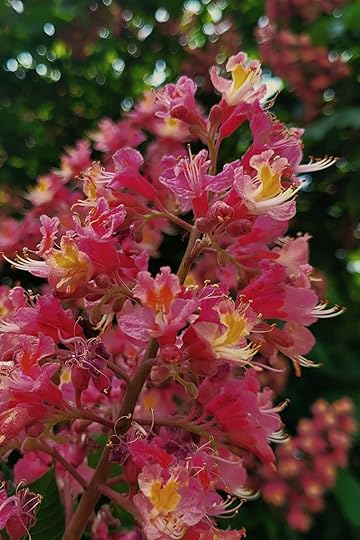
Where humans see the white candles of horse chestnuts standing out against the light green, with closer, subtle specks of yellow or red, bees see an additional dimension. The large white signal of the flowers on the valley side turns, on closer inspection, into a dazzling strobe show, with patterns of UV lights reflected from the stamens and anthers glowing deep like a pile of gold into the middle of the yellow-centered flowers. The red-centered flowers, on the other hand, will have just a small strobe on the anthers—the center of the flower—and to a bee the nectaries will be a dead black. The strobe show of a flowering horse chestnut is created by esculin, a fluorescent molecule, and the same molecule, when used as a poison, is responsible for another dimension of horse chestnut survival in which horse chestnuts manipulate animals to move on their behalf.
Postscript: I have lived in Denver for almost 25 years, and am a home visiting nurse, so I get to go to ever nook and cranny of it, but imagine my surprise for the first time ever, to encounter a brilliantly blooming tree like the red horse chestnut randomly across the street from a public library in a fairly impoverished neighborhood. I got all the feels, all the awe, couldn’t talk or move standing under this tree resplendent with pink and red candles and I swear I could see like a bee, I saw glitter, twinkle, glow standing there. I took photos, I wrote a poem with it in it, I associate it with a baby in my care who had been diagnosed as blind, it is connected to me now. I felt moved by the tree, manipulated to feel awe so I could protect it, and hope that others can do so also, this is what we need in our world we are killing. A few shots from that moment:
The Genius of Trees by Harriet Rix tells the scientific story of how trees came to be, developed, evolved and influenced the spaces and creatures around them.
In this fascinating look, Rix covers how trees-- through interactions at the atomic level, tree structure and engineering, to growth patterns—are able to draw water to themselves and support optimal moisture levels. Roots crunch through rocks developing soil for themselves, purify air through chemicals that are released, and get animals to spread their seeds so that they can develop a wider growing area. There is quite a bit beyond average science description and content. For example: “Let’s follow a phenylpropanoid molecule as it seeds a cloud. A sacrifice of Apollonius, a tree related to avocado, 2-(3-mehtoxy-4 hydroxyphenyl)-1-3-porpanediol’s structure was defined in 1995 and...it looks simple: a hexagonal ring of carbon, with one carbon arm sticking out, and various prickles of hydrogen and oxygen attached.”
This is also a travel log that takes the author to multiple amazing places around the globe as they research various aspects of trees. This is particularly enjoyable and does help to put some of the science in context.
This ultimately leads to a main issue with the book. It is more involved in describing scientific processes than a more casual reader, or even one with a great interest in trees, is likely to want to wade through. On the other hand, it isn’t a textbook or similar, so will it appeal to the scientific community? It may, but I’m not sure that they would appreciate the travel parts. It just is not clear who the audience is for this book.
Overall, this appears to be very well researched and makes some interesting points to reframe how trees work in their environment.
Thank you to NetGalley and Crown Publishing for the free eARC.
تدور القصة حول تارا سيلتر (Tara Selter)، وهي تاجرة كتب نادرة وأثرية. تجد تارا نفسها عالقة بشكل غير مفهوم في حلقة زمنية (time loop)، حيث تستيقظ كل صباح لتجد أنه الثامن عشر من نوفمبر (November 18th) يتكرر بلا نهاية.
النقاط الرئيسية للرواية: حلقة الزمن الفريدة: على عكس التفسيرات التقليدية لحلقة الزمن، فإن تارا تبدأ كل يوم جديد في المكان الذي انتهت فيه في اليوم السابق، بدلاً من العودة لنفس نقطة البداية الثابتة. هذا التغيير الفريد يضيف بعدًا جديدًا للقصة.
الشخصية الرئيسية والذاكرة: تارا تحتفظ بذكرياتها عن جميع التكرارات السابقة لليوم، بينما لا يدرك جميع من حولها، بما في ذلك زوجها توماس، أن اليوم يتكرر، ويبدأون يومهم كالمعتاد.
التأثيرات الجسدية على تارا: مع مرور الأيام المتكررة، يلاحظ أن جسم تارا يتغير ويتقدم في العمر بشكل طبيعي. على سبيل المثال، ينمو شعرها وتلتئم إصاباتها (مثل حرق أصابها)، بينما يظل زوجها توماس كما هو تمامًا في كل إعادة ضبط للوقت.
الاستهلاك والإحساس بالوحشية: هناك استثناء رئيسي لإعادة ضبط العالم اليومي؛ إذا استهلكت تارا شيئًا (طعامًا أو أي شيء آخر)، فإنه يختفي إلى الأبد. هذا يجعلها تتأمل فكرة "الوحشية" وتأثيرها على العالم، مما يضيف للرواية بعدًا بيئيًا وموضوعًا حول الاستهلاك.
الانفصال والعزلة: مع استمرار الحلقة، تبدأ تارا وزوجها توماس في الانفصال والابتعاد عن بعضهما البعض، حيث تعيش هي خارج إطار الزمن الذي يعيش فيه هو. تشعر تارا بالعزلة والألم وتلجأ أحيانًا للاختباء في المنزل.
التأمل العميق: الرواية هي في جوهرها تأمل عميق في طبيعة الوقت، والحب، والوجود، وما يعنيه أن تكون متصلاً بالآخرين.
الشكل الأدبي: الرواية مكتوبة في شكل إدخالات متقطعة تشبه المذكرات أو اليوميات، بضمير المتكلم (تارا)، وتنجح في نقل مشاعرها وتقلبات مزاجها المتغيرة.
تترك الرواية القارئ يتساءل عما إذا كانت تارا قد فقدت عقلها، أو ما إذا كانت عالقة بالفعل في "صدع في الزمن".
هل تود أن أبحث لك عن مراجعات أو تحليل إضافي لأي جزء معين من الرواية؟
I'm a tree hugger. I've read many books on trees. By reading The Genius of Trees, I learned more about trees. Between 4 and 5 stars rounding up.
Very informational. In my opinion, this book is college level classroom material. The book was well researched and intermixed with travels by the author and colleagues.
Even though I love trees and have planted 100's on our property, the book was a little deep for me and I took more "breaks" with this book than I have with most.
I do highly recommend the book; especially if you like reading about nature and trees and evolution. If I were the marketing team, I'd pursue specific horticultural professors.
Many thanks to NetGalley and Crown Publishing for approving my request to read the Advance Review Copy of The Genius of Trees: How They Mastered the Elements and Shaped the World by Harriet Rix (in exchange for an honest review). Approx 320 pages. Publication date is Sept 9, 2025.
I loved every page! "The Genius of Trees" by Harriet Rix is a fascinating exploration of how trees interact with their environment. The amount of information and insight packed into this book is impressive. I learned so much about the chemistry, biology, physics and ecological relationships that make trees and forests thrive.
Rix’s scientific depth is remarkable. The book is rich with detail, yet she presents it all in a way that feels clear and engaging. Her writing strikes that wonderful balance between education and enjoyment, making complex science not only digestible but genuinely pleasurable to read. The personal touch Rix adds through interweaving stories of traveling to forests and different trees around the world, elevates the book. Vivid scenes bring her research to life and make it immersive. It’s the kind of book that makes you see nature with new eyes and want to go out to forests near and far to explore for yourself.
Wonderfully written book on how trees have shaped the world including the persistent little mammals that evolved under and in their branches and then past that. My understanding was at many times just barely holding on by its fingernails, but I much prefer that to a book that dumbs things down to such an extent that it misses the immense complexity of the processes this book describes. I love a book that leaves me humbled and awed, but with a little bit more understanding. This is just such a book.
This interesting and informative book explains the astonishing ability of trees to manipulate their environment, influencing climate and shaping ecosystems. From ancient root networks to climate-regulating forests, this book uncovers the hidden world of these ingenious organisms and their vital role in our shared survival.
Thanks, NetGalley, for the ARC I received. This is my honest and voluntary review.
Despite my love for nature and popular science books, I struggled to engage with this one. Maybe it was the writing style, which was a bit too dry and uncompelling to me. Or maybe it was the scope; it covers many topics I’ve read about before. Nonetheless, it is an informative and well-researched book.
Thanks to the publisher, Crown, and NetGalley for an advanced copy of this book.
Although this can become a botanically complex read at times, it is worth every minute invested in it. A fascinating read, almost on par with Entangled Life by Merlin Sheldrake. This book has certainly changed my perceptions re trees. Their connection and understanding of the elements has kept them alive and evolving.
It packs a punch and covers so much ground, literally and figuratively. Listened as an audiobook and definitely will go back to relisten parts over again. Very well written, but be prepared for some scientific jargon and lots of Latin names of tree & plant species.
Very fascinating subject, but very technical. If you love trees (which I do!) and enjoy reading textbooks for fun (also me!) then this is for you. Incredible exploration of the impact of trees on the world — much more than I ever imagined.
Fabulously interesting, detailed, and engaging. The relationships and connections of trees with the natural world is a complex mosaic, which Rix carefully explains to educated lay people. “We share one world with trees and one need for survival.” Amen.
The Genius of Trees is a breathtaking exploration of the natural world. Harriet Rix reveals trees as ingenious, active agents shaping ecosystems and human history, combining scientific insight with captivating storytelling that will change the way you see the forests around us.
This was a fascinating read. As a citizen scientist and a poetic lover-of-trees, I found myself uncomfortable with some of the characterizations of their machinations. Are they enslavers? Environmental manipulators? Am I taking the descriptions too personally? I would love to hear what others thought.