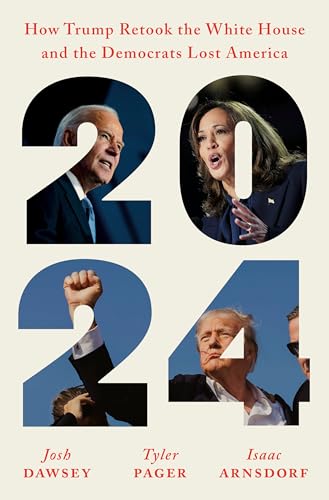
If 2024 were a book, it would be a sprawling, genre-blending novel—part political thriller, part technological manifesto, part climate diary, and part Olympic drama. It would not sit neatly on one shelf. It would demand several.
A Year Framed by Democracy
One of the dominant “chapters” of 2024 centered on elections. In the United States, the rematch between Donald Trump and Joe Biden gave the year the pacing of a tense courtroom drama. The campaign cycle felt less like a seasonal ritual and more like an extended referendum on democratic norms, institutions, and political fatigue.
Beyond the U.S., voters across the globe—from India to Mexico—participated in elections that collectively made 2024 one of the most politically consequential years in recent memory. As a “book,” this section reads dense and argumentative, filled with speeches, rallies, court rulings, and the ever-present hum of social media commentary.
Technology as Protagonist
If democracy was one main character, artificial intelligence was another. The rapid evolution of AI tools—led in part by companies like OpenAI—gave 2024 a speculative-fiction undertone. What had once seemed experimental felt embedded in everyday life: classrooms, offices, art studios, and coding environments.
This chapter would be written in sharp, fast-moving prose. It would ask unsettling questions about authorship, employment, creativity, and truth. It would include moments of awe—machines composing music, generating images, assisting research—alongside moments of anxiety about regulation, misinformation, and labor displacement. The tone would oscillate between utopian and cautionary.
War and Uneasy Continuity
Not all sections of the book would be forward-looking. The ongoing conflict between Russia and Ukraine continued to cast a long shadow, lending the narrative a somber, unresolved quality. Similarly, tensions in the Middle East added urgency and grief to the global storyline.
These passages would be written with restraint—less spectacle, more human consequence. They would remind readers that history does not pause for innovation or elections. The “plot” here resists tidy resolution.
Climate: The Relentless Subplot
Climate events threaded through the year like a recurring motif. Heat records, extreme weather, and environmental debates made 2024 feel like a sequel to warnings long ignored. This chapter would be atmospheric in the literal sense—dense with heatwaves, storms, and wildfire smoke.
Unlike the dramatic spikes of election night or tech announcements, climate change reads as slow-burning tension. It builds quietly but persistently, shaping every other storyline in subtle ways.
A Moment of Global Stagecraft
Then came the spectacle: the 2024 Summer Olympics in Paris. For a few weeks, the narrative shifted tone. The prose brightened. The pacing quickened. Nations gathered not for debate or conflict, but for competition and ceremony.
In literary terms, this was the festival scene—the temporary truce in a complicated epic. It did not erase the year’s tensions, but it reframed them, reminding readers of shared humanity and global interconnection.
Style and Structure
As a book, 2024 would not be elegant. It would be fragmented—structured like a collection of interlinked essays rather than a single, clean arc. Its “voice” would alternate between alarm and adaptation. It would rely heavily on digital marginalia: tweets, livestreams, AI prompts, and viral clips functioning as footnotes to major events.
Critically, it would not offer a satisfying conclusion. Instead, it would end mid-sentence, handing its unresolved tensions to 2025.