

What do you think?

The Decurion Saga #1
The Infinite State
WHO GIVES YOU LIFE?
PATER AETERNUS.
Katherine Fuller’s husband is dead. As an esteemed member of Pater Aeternus—governing party of the fascist, galaxy-spanning Decurion Empire—he has left behind an estate of immeasurable wealth. And Katherine is going to inherit it.
WHO GIVES YOU PURPOSE?
PATER AETERNUS.
Life under the Eternal Father is rigidly stratified, surveilled, and controlled—each new day to be endured, not lived. But with Katherine’s newfound fortune, she is presented with a rare and dangerous opportunity: purchase a virgin world, and create a better, fairer society.
WHO GIVES YOU JOY?
PATER AETERNUS.
But the Empire cannot allow its wayward daughter to succeed. And as Katherine works in secret, recruiting allies she's not even sure she can trust, she will discover exactly how far Pater Aeternus is willing to go to stop her. Because Katherine is going to create something nobody has seen for many years.
A democracy.
PATER AETERNUS.
Katherine Fuller’s husband is dead. As an esteemed member of Pater Aeternus—governing party of the fascist, galaxy-spanning Decurion Empire—he has left behind an estate of immeasurable wealth. And Katherine is going to inherit it.
WHO GIVES YOU PURPOSE?
PATER AETERNUS.
Life under the Eternal Father is rigidly stratified, surveilled, and controlled—each new day to be endured, not lived. But with Katherine’s newfound fortune, she is presented with a rare and dangerous opportunity: purchase a virgin world, and create a better, fairer society.
WHO GIVES YOU JOY?
PATER AETERNUS.
But the Empire cannot allow its wayward daughter to succeed. And as Katherine works in secret, recruiting allies she's not even sure she can trust, she will discover exactly how far Pater Aeternus is willing to go to stop her. Because Katherine is going to create something nobody has seen for many years.
A democracy.
416 pages, Kindle Edition
First published August 4, 2026
About the author
Richard Swan
25 books2,187 followersRichard Swan is a critically acclaimed British genre writer. He is the author of the Sunday Times bestselling Empire of the Wolf, Great Silence, and Decurion series, and fiction for Black Library and Grimdark Magazine. His work has been translated into ten languages.
Richard is a qualified lawyer, and before writing full time spent ten years litigating multimillion pound commercial disputes in London. He currently lives in Sydney with his wife and three young sons.
For updates follow him at stonetemplelibrary.com.
Richard is a qualified lawyer, and before writing full time spent ten years litigating multimillion pound commercial disputes in London. He currently lives in Sydney with his wife and three young sons.
For updates follow him at stonetemplelibrary.com.
Ratings & Reviews
Friends & Following
Create a free account to discover what your friends think of this book!
Community Reviews
Displaying 1 - 30 of 443 reviews

September 28, 2026
Really enjoyed this one - space opera with oppressive 1984 vibes that you could really feel, but not relentlessly dark. I'll leave the detailed reviews to others, but recommended, and looking forward to the sequel.

August 4, 2026
Empires might be ruled by monsters, but they're sustained by ordinary people who convince themselves they have no choice.
Richard Swan's The Infinite State is a chilling portrait of a society where fascism has become mundane, surveillance routine, propaganda the air people breathe and countless small acts of compliance grind inexorably towards oppression. Echoing the enduring relevance of Orwell's 1984 while remaining unmistakably its own, Swan crafts an authoritarian empire that feels all too plausible.
The political world building is exceptional. Every institution, policy and carefully calculated compromise reinforces the suffocating weight of the Decurion Empire. Swan explores the banality of evil through everyday lives, revealing how fear, ambition, privilege and mere exhaustion become the machinery of oppression. It's deeply unsettling, casting a pall across every page.
Three protagonists reveal the regime from vastly different corners of society. Katherine, a privileged widow whose grief gives way to a political awakening. Cyprian, a cynical Inspektor surviving through conformity until he is dragged back into dangerous political games. Julian, a foreign hypersled racer whose dream opportunity curdles into a nightmare as he discovers the empire's reputation was no exaggeration.
None are uncomplicated heroes. They're naïve, compromised or even complicit, yet profoundly human. Through their converging journeys, Swan gives enormous questions of freedom versus security, ethics of government and the cost of looking away an intensely personal face.
A relentless slow burn, its atmosphere of dread is punctuated with shocking reminders of the empire's power, exhilarating hypersled races, sharp twists and explosive action that reward the patient build up.
But sometimes it feels like the victories come too easily. As the protagonists are swept along by forces beyond their control, unseen allies and political operators are making the big moves just off the page sometimes only showing us the end results.
Bleak, intelligent and frighteningly believable, The Infinite State is as gripping as it is disturbingly relevant.
My thanks to Gollancz for the arc
Richard Swan's The Infinite State is a chilling portrait of a society where fascism has become mundane, surveillance routine, propaganda the air people breathe and countless small acts of compliance grind inexorably towards oppression. Echoing the enduring relevance of Orwell's 1984 while remaining unmistakably its own, Swan crafts an authoritarian empire that feels all too plausible.
The political world building is exceptional. Every institution, policy and carefully calculated compromise reinforces the suffocating weight of the Decurion Empire. Swan explores the banality of evil through everyday lives, revealing how fear, ambition, privilege and mere exhaustion become the machinery of oppression. It's deeply unsettling, casting a pall across every page.
Three protagonists reveal the regime from vastly different corners of society. Katherine, a privileged widow whose grief gives way to a political awakening. Cyprian, a cynical Inspektor surviving through conformity until he is dragged back into dangerous political games. Julian, a foreign hypersled racer whose dream opportunity curdles into a nightmare as he discovers the empire's reputation was no exaggeration.
None are uncomplicated heroes. They're naïve, compromised or even complicit, yet profoundly human. Through their converging journeys, Swan gives enormous questions of freedom versus security, ethics of government and the cost of looking away an intensely personal face.
A relentless slow burn, its atmosphere of dread is punctuated with shocking reminders of the empire's power, exhilarating hypersled races, sharp twists and explosive action that reward the patient build up.
But sometimes it feels like the victories come too easily. As the protagonists are swept along by forces beyond their control, unseen allies and political operators are making the big moves just off the page sometimes only showing us the end results.
Bleak, intelligent and frighteningly believable, The Infinite State is as gripping as it is disturbingly relevant.
My thanks to Gollancz for the arc

September 14, 2026
If this isn’t already on your TBR, it should be.
I wasn’t sure I was going to like this going in, having a particular aversion to fanaticism in any form. But since Swan had dazzled me before with Tyranny of Faith, I took a leap of faith and dove in anyway.
I was hooked from the first page.
There were a lot of brilliant things going on in this book. World-building that felt expansive. Characters who were anything but perfect but more endearing for it. An ominous overtone to the entire book that made my skin crawl. Superb use of pacing – this thing started with a slow burn and eventually amped up to the point where I lost sleep… I had such an experience with this book even though parts of it were really uncomfortable to read.
There’s something slightly unconventional about the way Swan tells his stories. And it really works for me. The way all three POVs were woven together to give the reader the broader picture of what’s going on in this empire was superb. I can’t think of many books I’ve read lately where I felt a genuine fear and suspense for the characters’ survival. I cannot wait to see where the story goes next in Guerrilla Republic (coming out sometime August 2027) – I need it yesterday!
I listened to this on audio and thought the narrators chosen were a perfect match for their characters. They definitely enhanced the story with their precise delivery and cadence. I think the immersive experience they offered is partly why I was able to lose myself so entirely into the story while tandem-reading (where you read the book while the audio plays in the background). Occasionally it was a bit jarring to hear the same character represented by a different narrator, as is common with multiple narrators for a story when POVs start to merge, but it didn’t take long to acclimate. Highly recommend!
Thank you to my Patrons: Dave, Katrin, Frank, Jen, Karen, Sonja, Staci, Kat, Betsy, Eliss, Mike, Elizabeth, Bee, Poochtee, Kinsey, Alysa, Derek, Kelly, Grace, Carmen, Leticia, and Leah! <3
Also, I’d like to thank Richard Swan, Macmillian Audio, and Netgalley for the chance to read and review an early copy of this audiobook.
Find me on Booktube at: The Obsessive Bookseller
Via The Obsessive Bookseller at www.NikiHawkes.com
Other books you might like:


I wasn’t sure I was going to like this going in, having a particular aversion to fanaticism in any form. But since Swan had dazzled me before with Tyranny of Faith, I took a leap of faith and dove in anyway.
I was hooked from the first page.
There were a lot of brilliant things going on in this book. World-building that felt expansive. Characters who were anything but perfect but more endearing for it. An ominous overtone to the entire book that made my skin crawl. Superb use of pacing – this thing started with a slow burn and eventually amped up to the point where I lost sleep… I had such an experience with this book even though parts of it were really uncomfortable to read.
There’s something slightly unconventional about the way Swan tells his stories. And it really works for me. The way all three POVs were woven together to give the reader the broader picture of what’s going on in this empire was superb. I can’t think of many books I’ve read lately where I felt a genuine fear and suspense for the characters’ survival. I cannot wait to see where the story goes next in Guerrilla Republic (coming out sometime August 2027) – I need it yesterday!
I listened to this on audio and thought the narrators chosen were a perfect match for their characters. They definitely enhanced the story with their precise delivery and cadence. I think the immersive experience they offered is partly why I was able to lose myself so entirely into the story while tandem-reading (where you read the book while the audio plays in the background). Occasionally it was a bit jarring to hear the same character represented by a different narrator, as is common with multiple narrators for a story when POVs start to merge, but it didn’t take long to acclimate. Highly recommend!
Thank you to my Patrons: Dave, Katrin, Frank, Jen, Karen, Sonja, Staci, Kat, Betsy, Eliss, Mike, Elizabeth, Bee, Poochtee, Kinsey, Alysa, Derek, Kelly, Grace, Carmen, Leticia, and Leah! <3
Also, I’d like to thank Richard Swan, Macmillian Audio, and Netgalley for the chance to read and review an early copy of this audiobook.
Find me on Booktube at: The Obsessive Bookseller
Via The Obsessive Bookseller at www.NikiHawkes.com
Other books you might like:

August 8, 2026
This is unlike anything Richard Swan has ever written. A scifi set in a galactic empire where it’s treasonous to not only doing it doggy style but to also choose your leader.
Following 3 characters who are caught up in serious trouble with the “government” and all want change. One going out of her way to purchasing a planet to create a democracy. If she’s caught? DEATH.
The beginning of the book had me worried as it’s a lot of back and forth where an evil person takes each character into a secret location to have a secret conversation and to be reprimanded and it repeats that. I wanted things to pick up and thankfully they do. It becomes more what I expect in a scifi with the buttery Richard Swan writing.
Full review to come on my YouTube channel: https://youtube.com/@hollyheartsbooks...
Following 3 characters who are caught up in serious trouble with the “government” and all want change. One going out of her way to purchasing a planet to create a democracy. If she’s caught? DEATH.
The beginning of the book had me worried as it’s a lot of back and forth where an evil person takes each character into a secret location to have a secret conversation and to be reprimanded and it repeats that. I wanted things to pick up and thankfully they do. It becomes more what I expect in a scifi with the buttery Richard Swan writing.
Full review to come on my YouTube channel: https://youtube.com/@hollyheartsbooks...

August 25, 2026
🌟🌟🌟🌟💫4.5 stars!!
I loved this future, Earth-in-the-remote-past, dystopian sci-fi, beginning of a space opera. The Decurian Empire is an Orwellian dystopia that spans hundreds of worlds where speech is closely policed and society has two classes of citizens, the “productives” and the “non-productives.” Even the productives don’t have freedoms although they have creature comforts and are allowed, and in fact forced, to have children. The unproductives are called “monos” or “class2” citizens. Even meals one might cook have to be on a list “approved” by the “party”- a term reminiscent of the communist party although there is an emperor called Pater Aerernus or the eternal father. Any one can be killed at any time for the slightest of infractions.
The story really is about a woman, the widow of a party operative who has died in mysterious circumstances, who decides to buy and settle an uninhabited world for herself and some like-minded people in a surprising turn of events. I enjoyed her exploration of the different forms of government a country, its people, can have, and how she finds herself in-over-her-head with the opportunity/trouble she has come into. There are other two POVs that are also engaging characters.
I can’t wait to read the next one in the series. I do not believe the number of books expected in this series has been disclosed by the publisher. There was a prolific amount of world-building elements to which we are introduced in this book, technology/races/conflicts, threads that will need to be followed to their logical ends. There is indeed so much to unpack in just this short book that I think it will take several books to tell the complete story. I am excited to have gotten my hands on a new space opera after Sun-Eater and that too by an author who is an auto-buy for me after his completed Empire of the Wolf trilogy and the ongoing Great Silence trilogy.
I loved this future, Earth-in-the-remote-past, dystopian sci-fi, beginning of a space opera. The Decurian Empire is an Orwellian dystopia that spans hundreds of worlds where speech is closely policed and society has two classes of citizens, the “productives” and the “non-productives.” Even the productives don’t have freedoms although they have creature comforts and are allowed, and in fact forced, to have children. The unproductives are called “monos” or “class2” citizens. Even meals one might cook have to be on a list “approved” by the “party”- a term reminiscent of the communist party although there is an emperor called Pater Aerernus or the eternal father. Any one can be killed at any time for the slightest of infractions.
The story really is about a woman, the widow of a party operative who has died in mysterious circumstances, who decides to buy and settle an uninhabited world for herself and some like-minded people in a surprising turn of events. I enjoyed her exploration of the different forms of government a country, its people, can have, and how she finds herself in-over-her-head with the opportunity/trouble she has come into. There are other two POVs that are also engaging characters.
I can’t wait to read the next one in the series. I do not believe the number of books expected in this series has been disclosed by the publisher. There was a prolific amount of world-building elements to which we are introduced in this book, technology/races/conflicts, threads that will need to be followed to their logical ends. There is indeed so much to unpack in just this short book that I think it will take several books to tell the complete story. I am excited to have gotten my hands on a new space opera after Sun-Eater and that too by an author who is an auto-buy for me after his completed Empire of the Wolf trilogy and the ongoing Great Silence trilogy.

Review of advance copy received from NetGalley
4.5 stars.
This is a story of a sprawling sci-fi totalitarian empire, rife with politicking, scheming, backstabbing and manipulative control over the expendable masses; told through Richard Swan’s signature expansive, detail-rich world-building and densely layered, yet always pleasing to read prose.
The journey begins in Leonis, the crown jewel of Pater Aeternus’ and his rather Orwellian Decurion Empire. Here every citizen is born pre-stripped of autonomy, living a marionette existence, conditioned to conform to a prescribed way of life. Various ‘unproductive’ behaviours relegate individuals to second class citizens and women in general are seen as glorified broodmares.
Infinite State follows three very different protagonists, all dulled to sheer hopelessness, and complacency, whilst trapped under the cruel hand of Pater Aeternus. Katherine, a grieving upper-class Party woman, Cyprian, a drunk, jaded second-class Inspektor and Julian, a foreign hypersled prodigy. Each unknowingly finding themselves amidst the rabid scheming of ministry fractions; setting the core plot to motion.
The protagonists feel compellingly human and complex; each perspective engaging in its own way. I enjoyed the parallels between Katherine and Cyprian and how grief becomes the catalyst to acknowledging their oppression and thus desire to seek change. By contrast, Julian’s perspective is uncomfortably invasive, yet a morbidly fascinating experience of identity erosion, as someone from freedom, unused to fanatical obedience and subjugation is conditioned through fear.
Swan explores human psychology; cognitive dissonance, dehumanisation, indoctrination and conformity, which I found thought-provoking and relevant. This ability to disregard basic morality and freedoms for the pageantry of comfort, status and group belonging. There’s interesting social commentary imbedded in the narrative and an eerie parallel with extreme sentiments found in reality. Yet the story is also the search for hope, seeking selfhood and ultimately, happiness.
There’s much to unpack in this novel it’s difficult to do it justice with this review. The plot is world-hopping and vast. Swan takes unlikely protagonists and fluidly manipulates all the threads to convincingly bring them together and weave a dynamic, riveting narrative. Overall, this leads to a suitably tense and action-packed novel with a satisfying conclusion that sets up potential for further exploration of the Empire and Free Nations.
Looking forward to reading more! Thanks Netgalley and Orion Publishing for the eARC, this was an amazing read!
This is a story of a sprawling sci-fi totalitarian empire, rife with politicking, scheming, backstabbing and manipulative control over the expendable masses; told through Richard Swan’s signature expansive, detail-rich world-building and densely layered, yet always pleasing to read prose.
The journey begins in Leonis, the crown jewel of Pater Aeternus’ and his rather Orwellian Decurion Empire. Here every citizen is born pre-stripped of autonomy, living a marionette existence, conditioned to conform to a prescribed way of life. Various ‘unproductive’ behaviours relegate individuals to second class citizens and women in general are seen as glorified broodmares.
Infinite State follows three very different protagonists, all dulled to sheer hopelessness, and complacency, whilst trapped under the cruel hand of Pater Aeternus. Katherine, a grieving upper-class Party woman, Cyprian, a drunk, jaded second-class Inspektor and Julian, a foreign hypersled prodigy. Each unknowingly finding themselves amidst the rabid scheming of ministry fractions; setting the core plot to motion.
The protagonists feel compellingly human and complex; each perspective engaging in its own way. I enjoyed the parallels between Katherine and Cyprian and how grief becomes the catalyst to acknowledging their oppression and thus desire to seek change. By contrast, Julian’s perspective is uncomfortably invasive, yet a morbidly fascinating experience of identity erosion, as someone from freedom, unused to fanatical obedience and subjugation is conditioned through fear.
Swan explores human psychology; cognitive dissonance, dehumanisation, indoctrination and conformity, which I found thought-provoking and relevant. This ability to disregard basic morality and freedoms for the pageantry of comfort, status and group belonging. There’s interesting social commentary imbedded in the narrative and an eerie parallel with extreme sentiments found in reality. Yet the story is also the search for hope, seeking selfhood and ultimately, happiness.
There’s much to unpack in this novel it’s difficult to do it justice with this review. The plot is world-hopping and vast. Swan takes unlikely protagonists and fluidly manipulates all the threads to convincingly bring them together and weave a dynamic, riveting narrative. Overall, this leads to a suitably tense and action-packed novel with a satisfying conclusion that sets up potential for further exploration of the Empire and Free Nations.
Looking forward to reading more! Thanks Netgalley and Orion Publishing for the eARC, this was an amazing read!

September 3, 2026
3.5
I’m not a die-hard fan of science fiction. Often, I find it goes in too hard on ideas and scientific futurism and too little on the characters. Richard Swan balances these two elements, but still, I’m a bit dissatisfied with knowing who the characters are beneath the surface level. Katherine, in particular, who, along with a couple of other characters, plays a leading role in this novel, leaves me particularly unsatisfied regarding her most heartfelt motivations. I like her as a character. She’s somewhere in her 40’s, married to this world’s version of a Party man, a man who’s been successful in the government and business. The beginning of the story finds Katherine and her husband, Eskil, being called to the medical center for an emergency update on their child, growing in an ectogenetic pod. They’ve been unsuccessful at natural conception, which is highly encouraged at Pater Aeternus. In this society, any kind of unproductivity is a societal evil. Without adding spoilers, the plot carries forward until we see Katherine come into a huge amount of money. What to do with it? Underneath the floorboards of her study is a pamphlet whose headline says,
TYRANNY IS AN ABERRATION
PATER AETERNUS IS EVIL
IT DOESN’T HAVE TO BE THIS WAY
Katherine engages with the pull of the pamphlet and fixates on buying land outside of the world in which she lives, a world that is tightly governed and striated into distinct classes, with the lower classes having no say in government. Although she’s been a member of the higher echelon, her unhappiness with life in this world rises like a tsunami, demanding action. I wanted to understand Katherine better, understand how these emotions roiled within her and why. Perhaps this would have required backstory or more insight into her interior thoughts, her emotional world. The author does give limited insight into her emotions, but not enough to satisfy my desire to understand her need and capacity to engage in what would become a furiously difficult task: setting up a democracy on another world and going up against an enormously lethal and controlling government.
This is where the ideas come in, and that is the novel’s greatest success. The totalitarian world that Richard Swan builds is intelligent and credible, yes, more so, as people are now learning from the ground up how these things swirl around us in real time. Pater Aeternus has been in existence for some time and has a sophisticated network of ministries, all dedicated to maintaining its grip on power over the people through fear of a political enforcement department and through manipulation. Conspiracy and intrigue abound. Cyprian is an Inspector who investigates homicide, but only those that haven’t been sanctioned by the Ministry of the Interior. His junior partner, Lang, is an ambitious young man who seeks to rise in the ranks by his adherence to the Party line, which creates a great deal of tension. Cyprian’s children have been sent for re-education because he fell out of line with the rules, so his goal is to fly under the radar. Go along to get along. For all that, Cyprian still has some integrity.
Julian is an off-worlder and darker-skinned, anathema to Pater Aeternus’s previous conformity in skin color. Julian is a skilled genius when it comes to hypersledding, and that’s why he’s racing in this world, a world that is committed to having only winners. Hypersledding is the national and perhaps galactic sport, so Julian garners an outsized celebrity. However, when Julian’s sexual orientation becomes known, what he is forced to do makes him realize that he has become a high-stakes pawn in an interworld game. He wants nothing more than to return to his homeland, which is a free nation, but will he be able to get out of his one-year contract?
Here are a few quotes that will give you a sense of the world and the author’s writing skill.
Good. Because there isn’t anything more important than winning.
Did you know there are other nations where they choose their leaders?
…the Empire was a place where it rarely paid to be too informed, too educated, to question one’s surroundings too closely. To do so simply made one stand out, and standing out at the wrong time or with the wrong friends could be fatal in surprising, unexpected ways—like being caught in the downwash of a mega freighter and crashing into the Mariasoke at its deepest point.
From the day my ancestors left Old Earth many centuries ago, to now—and until the end of forever—the Decurion Empire cements, and will cement, its place in the galaxy as the infinite state.
This novel is a social commentary on totalitarianism, which, to my mind, is hugely important in the times we are living. However, it doesn’t neglect the fact that democracy is messy and offers up some important questions about the backside: the cost of democracy and what ugly things are swept under the rug in order to attain it. Is it legitimate to do whatever is necessary in the attainment of democracy? A timely and thought-provoking read.
I’m not a die-hard fan of science fiction. Often, I find it goes in too hard on ideas and scientific futurism and too little on the characters. Richard Swan balances these two elements, but still, I’m a bit dissatisfied with knowing who the characters are beneath the surface level. Katherine, in particular, who, along with a couple of other characters, plays a leading role in this novel, leaves me particularly unsatisfied regarding her most heartfelt motivations. I like her as a character. She’s somewhere in her 40’s, married to this world’s version of a Party man, a man who’s been successful in the government and business. The beginning of the story finds Katherine and her husband, Eskil, being called to the medical center for an emergency update on their child, growing in an ectogenetic pod. They’ve been unsuccessful at natural conception, which is highly encouraged at Pater Aeternus. In this society, any kind of unproductivity is a societal evil. Without adding spoilers, the plot carries forward until we see Katherine come into a huge amount of money. What to do with it? Underneath the floorboards of her study is a pamphlet whose headline says,
TYRANNY IS AN ABERRATION
PATER AETERNUS IS EVIL
IT DOESN’T HAVE TO BE THIS WAY
Katherine engages with the pull of the pamphlet and fixates on buying land outside of the world in which she lives, a world that is tightly governed and striated into distinct classes, with the lower classes having no say in government. Although she’s been a member of the higher echelon, her unhappiness with life in this world rises like a tsunami, demanding action. I wanted to understand Katherine better, understand how these emotions roiled within her and why. Perhaps this would have required backstory or more insight into her interior thoughts, her emotional world. The author does give limited insight into her emotions, but not enough to satisfy my desire to understand her need and capacity to engage in what would become a furiously difficult task: setting up a democracy on another world and going up against an enormously lethal and controlling government.
This is where the ideas come in, and that is the novel’s greatest success. The totalitarian world that Richard Swan builds is intelligent and credible, yes, more so, as people are now learning from the ground up how these things swirl around us in real time. Pater Aeternus has been in existence for some time and has a sophisticated network of ministries, all dedicated to maintaining its grip on power over the people through fear of a political enforcement department and through manipulation. Conspiracy and intrigue abound. Cyprian is an Inspector who investigates homicide, but only those that haven’t been sanctioned by the Ministry of the Interior. His junior partner, Lang, is an ambitious young man who seeks to rise in the ranks by his adherence to the Party line, which creates a great deal of tension. Cyprian’s children have been sent for re-education because he fell out of line with the rules, so his goal is to fly under the radar. Go along to get along. For all that, Cyprian still has some integrity.
Julian is an off-worlder and darker-skinned, anathema to Pater Aeternus’s previous conformity in skin color. Julian is a skilled genius when it comes to hypersledding, and that’s why he’s racing in this world, a world that is committed to having only winners. Hypersledding is the national and perhaps galactic sport, so Julian garners an outsized celebrity. However, when Julian’s sexual orientation becomes known, what he is forced to do makes him realize that he has become a high-stakes pawn in an interworld game. He wants nothing more than to return to his homeland, which is a free nation, but will he be able to get out of his one-year contract?
Here are a few quotes that will give you a sense of the world and the author’s writing skill.
Good. Because there isn’t anything more important than winning.
Did you know there are other nations where they choose their leaders?
…the Empire was a place where it rarely paid to be too informed, too educated, to question one’s surroundings too closely. To do so simply made one stand out, and standing out at the wrong time or with the wrong friends could be fatal in surprising, unexpected ways—like being caught in the downwash of a mega freighter and crashing into the Mariasoke at its deepest point.
From the day my ancestors left Old Earth many centuries ago, to now—and until the end of forever—the Decurion Empire cements, and will cement, its place in the galaxy as the infinite state.
This novel is a social commentary on totalitarianism, which, to my mind, is hugely important in the times we are living. However, it doesn’t neglect the fact that democracy is messy and offers up some important questions about the backside: the cost of democracy and what ugly things are swept under the rug in order to attain it. Is it legitimate to do whatever is necessary in the attainment of democracy? A timely and thought-provoking read.

September 27, 2026
Five stars, and not for the reason you would expect from a book this size. Scale is the easy trick in science fiction. Anyone can hand you five hundred worlds and a war that never ends and call it ambition. That is not hard, it is just expensive. What is hard, and what this book pulls off without seeming to break a sweat, is holding a dozen live political interests in the air at once and never dropping one.
Some of that is just craft. Some of it might be Richard Swan, who spent a decade as a commercial litigator before this became his job. He knows precisely how an institution can make something monstrous sound procedurally reasonable in the room, and nobody here needs to raise their voice to be terrifying.
Nobody in this empire is working from the same script either, and that is the detail that sells the politics. The people quietly enabling one woman's plan to build a democracy on stolen ground are not doing it because they believe in democracy. They are doing it because it happens to suit them, for reasons that have nothing to do with each other. The people trying to stop her cannot agree on how hard to come down on it either. That is a far harder thing to write convincingly than one evil empire marching in lockstep, and it is the difference between a political situation that could tip in six directions and one that is just cardboard wearing a uniform.
And the dialogue plays the same game from underneath. People rarely say what they mean or what they are threatening, so the sentence on the page is doing maybe a third of the work while the rest happens in the pause after it. I kept rereading exchanges just to work out what had just been decided, which is a strange thing to do in a book this violent, and also exactly why it works.
When the fighting finally does break loose, none of it reads as set dressing. It reads as consequence, the bill arriving for choices made two hundred pages earlier, a thing most galaxy spanning sagas talk about and rarely earn. The plot backs it up too, threads turning up from angles I would not have called, then landing later in ways that feel earned instead of merely clever.
There is no such thing as an infinite state, not in physics and not in politics. Entropy gets everything eventually, and human incompetence usually gets there first. That is probably the quietest joke sitting inside this title, and watching the first real cracks show up early, with book two still a year out, is most of the fun of reading book one at all.
Some of that is just craft. Some of it might be Richard Swan, who spent a decade as a commercial litigator before this became his job. He knows precisely how an institution can make something monstrous sound procedurally reasonable in the room, and nobody here needs to raise their voice to be terrifying.
Nobody in this empire is working from the same script either, and that is the detail that sells the politics. The people quietly enabling one woman's plan to build a democracy on stolen ground are not doing it because they believe in democracy. They are doing it because it happens to suit them, for reasons that have nothing to do with each other. The people trying to stop her cannot agree on how hard to come down on it either. That is a far harder thing to write convincingly than one evil empire marching in lockstep, and it is the difference between a political situation that could tip in six directions and one that is just cardboard wearing a uniform.
And the dialogue plays the same game from underneath. People rarely say what they mean or what they are threatening, so the sentence on the page is doing maybe a third of the work while the rest happens in the pause after it. I kept rereading exchanges just to work out what had just been decided, which is a strange thing to do in a book this violent, and also exactly why it works.
When the fighting finally does break loose, none of it reads as set dressing. It reads as consequence, the bill arriving for choices made two hundred pages earlier, a thing most galaxy spanning sagas talk about and rarely earn. The plot backs it up too, threads turning up from angles I would not have called, then landing later in ways that feel earned instead of merely clever.
There is no such thing as an infinite state, not in physics and not in politics. Entropy gets everything eventually, and human incompetence usually gets there first. That is probably the quietest joke sitting inside this title, and watching the first real cracks show up early, with book two still a year out, is most of the fun of reading book one at all.

Want to Read
April 18, 2026beyond excited to have received a physical arc! i love any book that has comps to red rising🙂↕️ so i'm eager to dive in!

August 20, 2026
I have read all of Richard Swan's fantasy novels to date, but had not yet tried his science fiction. He has a self-published sci fi series out in the wild but I have not read it. That being the case, I was excited to try his foray into trad pub sci fi and it did not disappoint. I think it's important to note that one should go into The Infinite State with the proper expectations. First, this book is very different than the type of fantasy he has been writing and publishing over the last several years. If you're looking for Justice of Kings in space you will be disappointed. Second, if you go into this book thinking it's some sort of roman a clef about current political situations you will also be disappointed (or maybe pleasantly surprised like I was). It's not either of those things.
This is a sci fi book that has good characters and some fairly good plotting, but the crux of this book is really the ideas and specifically political theory with some intrigue thrown in for excitement. This is a book about a far future world/galactic empire that has adopted a pure authoritarian fascist political system and most of the book centers around someone trying to escape it and build a new polity on a different world and setting up a system of government from scratch. It would have been easy for Swan to try to make some sort of trite political argument or message, but he chose instead to explore ideas of political theory and have his characters have those conversations and show how hard it is to accomplish. It's a far better book for that and one someone with a Political Science background, like myself, can just eat up. But even if that isn't your jam there is still a lot to like here. He rather brilliantly weaves the stories of his 3 POV characters to a nice culmination to produce some rather satisfying reveals. And the climax has some very good action sequences as well, but overall I'd say the tone and vibe is a lot closer to Fahrenheit 451 or 1984 than say Red Rising. And that's a good thing.
This is a sci fi book that has good characters and some fairly good plotting, but the crux of this book is really the ideas and specifically political theory with some intrigue thrown in for excitement. This is a book about a far future world/galactic empire that has adopted a pure authoritarian fascist political system and most of the book centers around someone trying to escape it and build a new polity on a different world and setting up a system of government from scratch. It would have been easy for Swan to try to make some sort of trite political argument or message, but he chose instead to explore ideas of political theory and have his characters have those conversations and show how hard it is to accomplish. It's a far better book for that and one someone with a Political Science background, like myself, can just eat up. But even if that isn't your jam there is still a lot to like here. He rather brilliantly weaves the stories of his 3 POV characters to a nice culmination to produce some rather satisfying reveals. And the climax has some very good action sequences as well, but overall I'd say the tone and vibe is a lot closer to Fahrenheit 451 or 1984 than say Red Rising. And that's a good thing.

August 21, 2026
OH MY GOD, okay, one thing at a time:
1. This book was a 5-star read by chapter 3, and somehow it only got exponentially better from there onwards.
2. Did I just finish my top read of 2026? Of the next decade? How was it even possible to top all the other incredible books I’ve already had the fortune of finding this year?
3. Help: how do I stop thinking about The Infinite State? How does one recover? WHEN IS BOOK 2 COMING OUT???
4. Importantly, what book do I inevitably sacrifice to follow up this masterpiece? Hard to find a Katniss, the tribute that comes out on top..
5. YOU should also read this book RIGHT NOW and tell EVERYBODY YOU KNOW to do EXACTLY THE SAME.
6. WHO GIVES YOU LIFE? Pater Aeternus.
7. WHO GIVES YOU PURPOSE? Pater Aeternus.
8. WHO GIVES YOU JOY? Pater Aeternus.
Message for my book club: NO, I am not reading Agnes Aubert’s Mystical Anything next. I simply cannot. This is the way.
1. This book was a 5-star read by chapter 3, and somehow it only got exponentially better from there onwards.
2. Did I just finish my top read of 2026? Of the next decade? How was it even possible to top all the other incredible books I’ve already had the fortune of finding this year?
3. Help: how do I stop thinking about The Infinite State? How does one recover? WHEN IS BOOK 2 COMING OUT???
4. Importantly, what book do I inevitably sacrifice to follow up this masterpiece? Hard to find a Katniss, the tribute that comes out on top..
5. YOU should also read this book RIGHT NOW and tell EVERYBODY YOU KNOW to do EXACTLY THE SAME.
6. WHO GIVES YOU LIFE? Pater Aeternus.
7. WHO GIVES YOU PURPOSE? Pater Aeternus.
8. WHO GIVES YOU JOY? Pater Aeternus.
Message for my book club: NO, I am not reading Agnes Aubert’s Mystical Anything next. I simply cannot. This is the way.

August 13, 2026
This is the kind of euphoria I’m always chasing in books, the kind that hooks me from the start and keeps me gripped until the very end.
I loved how The Infinite State mixes space opera, political thriller, and dystopia without losing sight of the characters caught in the middle of it all. The three POVs are very different, but watching their stories slowly tighten around each other was one of my favorite parts. I was completely invested in how each of them navigated survival, loyalty, identity, and the choices they had to make under an oppressive system.
The worldbuilding was another huge win for me. The authoritarian state is built through bureaucracy, propaganda, rules, status, and institutions, which made it far more unsettling than a simple evil empire. I loved all the political maneuvering and the way Richard Swan explores complicity, power, and what people are willing to sacrifice just to survive.
This had everything I wanted from a sci-fi read: big ideas, tension, messy characters, political intrigue, and enough action to keep the momentum going. I finished it already wanting more.
“What gives me life? What gives me joy?” Apparently, 10/5-star books like this one. ✨
I loved how The Infinite State mixes space opera, political thriller, and dystopia without losing sight of the characters caught in the middle of it all. The three POVs are very different, but watching their stories slowly tighten around each other was one of my favorite parts. I was completely invested in how each of them navigated survival, loyalty, identity, and the choices they had to make under an oppressive system.
The worldbuilding was another huge win for me. The authoritarian state is built through bureaucracy, propaganda, rules, status, and institutions, which made it far more unsettling than a simple evil empire. I loved all the political maneuvering and the way Richard Swan explores complicity, power, and what people are willing to sacrifice just to survive.
This had everything I wanted from a sci-fi read: big ideas, tension, messy characters, political intrigue, and enough action to keep the momentum going. I finished it already wanting more.
“What gives me life? What gives me joy?” Apparently, 10/5-star books like this one. ✨

August 8, 2026
4.5 stars! I am not a fan of Empire of the Wolf, so my expectations were very reserved going into this. I wasn’t sure I would even read it, to be honest, but I love sci-if and I was intrigued by the description. Something told me I should give it a shot, and I’m very glad I did! I was instantly hooked and tore through it in a few sittings. I’m looking forward to the next one!

July 5, 2026
4.5 stars
I had such a fantastic time with this book from beginning to end. I absolutely love the way that Richard Swan crafted this book. It was beautifully written with incredible word choices that felt immersive and intelligent without feeling like he just pulled out of thesaurus or was trying to show off. As someone who just loves words, I constantly found myself being so satisfied with the choices he made, and I don't know if anybody else will relate to that but it really increased my enjoyment.
The story itself was fast moving and compelling. The characters were intriguing, although not always the most likable. I felt like the politics were explored well, and nothing was glanced over, but at the same time it wasn't unnecessarily loquacious or boring. I cannot wait to see where this goes in the future.
Minor complaint:
I did have a few issues with it, but I liked it so much that I brushed them off. I didn't love the way the female characters were portrayed. It was a little annoying to have the fmc basically just fumbling along with a young man having to mansplain every single aspect of how government works. It would've just been nice to see her have a little bit more agency, especially since this particular male character really could have not existed and she could have found these answers on her own. But I'm choosing not to dwell on that because I just enjoyed the story so much. I'm also never going to be a fan of what is the equivalent of a villain monologue, but again it was a minor thing.
Overall, this was a fantastic book and I can't wait to see where it goes from here!
Audiobook: I was about halfway through reading this when the audiobook became available from Libro alc, and I was so happy because I didn't want to stop reading this book for a single second. The audiobook was fantastic. I thought all of the narrators did an incredible job and I loved that there were multiple different narrators for each of the main characters. Highly recommend!
I had such a fantastic time with this book from beginning to end. I absolutely love the way that Richard Swan crafted this book. It was beautifully written with incredible word choices that felt immersive and intelligent without feeling like he just pulled out of thesaurus or was trying to show off. As someone who just loves words, I constantly found myself being so satisfied with the choices he made, and I don't know if anybody else will relate to that but it really increased my enjoyment.
The story itself was fast moving and compelling. The characters were intriguing, although not always the most likable. I felt like the politics were explored well, and nothing was glanced over, but at the same time it wasn't unnecessarily loquacious or boring. I cannot wait to see where this goes in the future.
Minor complaint:
I did have a few issues with it, but I liked it so much that I brushed them off. I didn't love the way the female characters were portrayed. It was a little annoying to have the fmc basically just fumbling along with a young man having to mansplain every single aspect of how government works. It would've just been nice to see her have a little bit more agency, especially since this particular male character really could have not existed and she could have found these answers on her own. But I'm choosing not to dwell on that because I just enjoyed the story so much. I'm also never going to be a fan of what is the equivalent of a villain monologue, but again it was a minor thing.
Overall, this was a fantastic book and I can't wait to see where it goes from here!
Audiobook: I was about halfway through reading this when the audiobook became available from Libro alc, and I was so happy because I didn't want to stop reading this book for a single second. The audiobook was fantastic. I thought all of the narrators did an incredible job and I loved that there were multiple different narrators for each of the main characters. Highly recommend!

August 21, 2026
I picked this up on a whim, and boy am I glad that I did! This book was awesome! I really want this to be made into a tv series.

August 11, 2026
I'm so bummed I didn't like this more. I made it 50% and had to stop.
The themes were exceedingly heavy handed. Beating us over the head with "Decurion bad" over and over. I can definitely tell the author wanted to go for Orwell/Butler, but the characters weren't compelling to me at all.
The pacing had a lot of issues for me. We have three MCs that we bounce between and most of what I read was basically a nothing burger. Yes, we're repressed. Yes, the planet we're on really sucks. Yes, they're only allowed to ejaculate with the intent to procreate and only missionary... Sure, okay.
The characters were such a miss for me, too. We have a cop (ACAB), a foreign bisexual sports-racer, and the token woman character.
The cop is a cop character, but doesn't like the government. Pretty straightforward, nothing pulling me in, bit of a dickhead.
The Bi is a sports-racer, who was contracted to do racing in a colony he's never been in. But oh boy! He doesn't read the contract nor does he do any research on the colony he's going to be in. They frown on any homo activity. Big no-no. So then he's blackmailed into sexing up the only other woman character we have any meaningful interactions with in the first half of the book... All to get on camera to talk about this mans semen with other women. Wtf are we even doing?
Then we have the woman... My god, how to put this into words. She does such a disservice to women in general. Yes, "thE PlOt iS suPpOseD To bE [insert tantrum here]". I TOTALLY GET IT, BRO. After being married to a man for decades and trying like hell to be a broodmare, her husband is murdered. She's free to do what she wants, but before she is able to have any agency AT ALL... *POOF* more men start making her decisions for her. THE WHOLE TIME. She literally doesn't stop to reflect on any choice she makes, just blindly does the bidding of men hiding behind her. The author had a really good chance to do something cool with this character, but every woman that "matters" to the plot is reduced to Mommy. It's so boring and cringe.
Anyway, it wasn't for me.
Thanks to NetGalley and Macmillan for a copy of the Audio ARC for my open and honest review.
The themes were exceedingly heavy handed. Beating us over the head with "Decurion bad" over and over. I can definitely tell the author wanted to go for Orwell/Butler, but the characters weren't compelling to me at all.
The pacing had a lot of issues for me. We have three MCs that we bounce between and most of what I read was basically a nothing burger. Yes, we're repressed. Yes, the planet we're on really sucks. Yes, they're only allowed to ejaculate with the intent to procreate and only missionary... Sure, okay.
The characters were such a miss for me, too. We have a cop (ACAB), a foreign bisexual sports-racer, and the token woman character.
The cop is a cop character, but doesn't like the government. Pretty straightforward, nothing pulling me in, bit of a dickhead.
The Bi is a sports-racer, who was contracted to do racing in a colony he's never been in. But oh boy! He doesn't read the contract nor does he do any research on the colony he's going to be in. They frown on any homo activity. Big no-no. So then he's blackmailed into sexing up the only other woman character we have any meaningful interactions with in the first half of the book... All to get on camera to talk about this mans semen with other women. Wtf are we even doing?
Then we have the woman... My god, how to put this into words. She does such a disservice to women in general. Yes, "thE PlOt iS suPpOseD To bE [insert tantrum here]". I TOTALLY GET IT, BRO. After being married to a man for decades and trying like hell to be a broodmare, her husband is murdered. She's free to do what she wants, but before she is able to have any agency AT ALL... *POOF* more men start making her decisions for her. THE WHOLE TIME. She literally doesn't stop to reflect on any choice she makes, just blindly does the bidding of men hiding behind her. The author had a really good chance to do something cool with this character, but every woman that "matters" to the plot is reduced to Mommy. It's so boring and cringe.
Anyway, it wasn't for me.
Thanks to NetGalley and Macmillan for a copy of the Audio ARC for my open and honest review.

August 18, 2026
It's been a really long time since I've picked up and actually finished a meaty sci-fi, with enjoyment. I reallllly wish book two was out sooner than a year from now. I should have waited to read it. 😫
[4.5 stars]
[4.5 stars]

October 29, 2025
4,5*
Look, at this point i will read whatever Richard Swan writes, so 1984\The Handmaid's Tale mixed with Prisoners of Power and a tinge of Heroes Die with a promise of complexity of Legend of the Galactic Heroes is apparently just about what I needed in my life. Swan is not new to the genre since before the The Justice of Kings he wrote Reclamation and two subsequent books set in the same universe, but essentially a crazy scifi political adventure as well.
Which I know, because I've read it. This novel in comparison? Definitely a more polished and more focused work, but still Richard Swan type of unhinged.
So, the story is set on Kada Gamar, capital city of Leonis, the Decurion Empire's main planet. It revolves around three characters. Katherine Fuller is a widowed wife of a high-ranking Party member and a class I citizen who decides to use all of her money to buy a planet and build something that's more aligned to her own sensibilities. Julian Yashego is an elite hypersled racer who signed a very lucrative contract to race for Loenis national team but slowly realizes that may have been a mistake. He comes from Trillia, a planet that's part of the Free Nations, a planetary system Empire finds subpar and he isn't ready for what Leonis has in store for him. Cyprian Reis is a jaded detective in Serious Crime Bureau who already dealt with authorities and came short, but this new case of a dead body in industrial zone entangles him into an inter-ministry fight and it may just kill him.
We are following each of the pov characters through their trails and tribulations of dealing with Empire, but they ultimately have a task to show you what it means to live under totalitarian regime. Julian's chapters are particularly harsh to read because it hits him like a train and it keeps hitting him and I like how Swan made a point to show that Empire is a mess he got himself into for not reading a contract, but just seeing the money. There is a sort of innocence to Julian that's definitely part arrogance and part stupidity, but essentially a result of growing up in a different system. Katherine never faced much of the injustices of the Empire and yet, when we are introduced to her she is a woman getting unraveled. I find her interesting because it would be easier to say that her change was a result of terrible sequence of events in her life, but Swan doesn't write like that. There was already something brewing deep inside her, and I liked this because it opens up a question of whether ideology makes you blind or are you willingly blind in order to preserve the purity of ideology. Her chapters are where most of the debate and pondering about political systems take place, and they carry their own sense of "innocence that's part arrogance and part stupidity, but essentially a result of growing up in a certain system." She goes into this adventure with sort of an idealism you just know will get challenged along the way. Cyprian, by comparison, has no idealism at all and he will be sure to emit that either with words or his lifestyle. Jaded detective is such a cliche in scifi noir, but we see Cyprian getting scared for his life so hard it makes him livid and he does something that will have a longlasting consequence. All three face a different danger which comes from a same place and it's pretty clear the story leads them to a collision at a certain point and a common cause. I wasn't a huge fan of what a sharp turn for all of our characters this had because they changed a lot, but perhaps the message is that belief in something can bring that up in a person. Swan also continues writing some of the most intriguing and entertaining antagonists in his novels. Take this passage:
One of these was often the most intriguing character to me on the page. :)
There is a crazy fight at the end and action galore. And yes, there are killer gorillas who are rational and you want them beside you when shit hits the fan. Sequel is already announced, which is good because we need to know how this fledgling planet is going to defy the might of the empire. And I hope there is more of Decurion saga because it seems like Swan had just as much fun writing it as I had fun reading it. Recommended.
________________
Richard Swan writing dystopian novel with Roman/Kier Eagan vibes? And I hear there are killer gorillas?
Want.
Look, at this point i will read whatever Richard Swan writes, so 1984\The Handmaid's Tale mixed with Prisoners of Power and a tinge of Heroes Die with a promise of complexity of Legend of the Galactic Heroes is apparently just about what I needed in my life. Swan is not new to the genre since before the The Justice of Kings he wrote Reclamation and two subsequent books set in the same universe, but essentially a crazy scifi political adventure as well.
Which I know, because I've read it. This novel in comparison? Definitely a more polished and more focused work, but still Richard Swan type of unhinged.
So, the story is set on Kada Gamar, capital city of Leonis, the Decurion Empire's main planet. It revolves around three characters. Katherine Fuller is a widowed wife of a high-ranking Party member and a class I citizen who decides to use all of her money to buy a planet and build something that's more aligned to her own sensibilities. Julian Yashego is an elite hypersled racer who signed a very lucrative contract to race for Loenis national team but slowly realizes that may have been a mistake. He comes from Trillia, a planet that's part of the Free Nations, a planetary system Empire finds subpar and he isn't ready for what Leonis has in store for him. Cyprian Reis is a jaded detective in Serious Crime Bureau who already dealt with authorities and came short, but this new case of a dead body in industrial zone entangles him into an inter-ministry fight and it may just kill him.
We are following each of the pov characters through their trails and tribulations of dealing with Empire, but they ultimately have a task to show you what it means to live under totalitarian regime. Julian's chapters are particularly harsh to read because it hits him like a train and it keeps hitting him and I like how Swan made a point to show that Empire is a mess he got himself into for not reading a contract, but just seeing the money. There is a sort of innocence to Julian that's definitely part arrogance and part stupidity, but essentially a result of growing up in a different system. Katherine never faced much of the injustices of the Empire and yet, when we are introduced to her she is a woman getting unraveled. I find her interesting because it would be easier to say that her change was a result of terrible sequence of events in her life, but Swan doesn't write like that. There was already something brewing deep inside her, and I liked this because it opens up a question of whether ideology makes you blind or are you willingly blind in order to preserve the purity of ideology. Her chapters are where most of the debate and pondering about political systems take place, and they carry their own sense of "innocence that's part arrogance and part stupidity, but essentially a result of growing up in a certain system." She goes into this adventure with sort of an idealism you just know will get challenged along the way. Cyprian, by comparison, has no idealism at all and he will be sure to emit that either with words or his lifestyle. Jaded detective is such a cliche in scifi noir, but we see Cyprian getting scared for his life so hard it makes him livid and he does something that will have a longlasting consequence. All three face a different danger which comes from a same place and it's pretty clear the story leads them to a collision at a certain point and a common cause. I wasn't a huge fan of what a sharp turn for all of our characters this had because they changed a lot, but perhaps the message is that belief in something can bring that up in a person. Swan also continues writing some of the most intriguing and entertaining antagonists in his novels. Take this passage:
Someone like Droor, for example, was evil but in an applied, measurable way. Councillor General Morozov was evil but in a much more blunt, stupid way. Godofredo Martens’ evil lay in the frightening indifference of his logistical machinations, which operated on levels beyond human comprehension; Ampelio Antic, the Defence Minister, was evil because he comfortably spent ten thousand lives where one—or none—might have been spent.
Morita was evil in a way that was impossible to anticipate. And that made him the very worst of the lot.
One of these was often the most intriguing character to me on the page. :)
There is a crazy fight at the end and action galore. And yes, there are killer gorillas who are rational and you want them beside you when shit hits the fan. Sequel is already announced, which is good because we need to know how this fledgling planet is going to defy the might of the empire. And I hope there is more of Decurion saga because it seems like Swan had just as much fun writing it as I had fun reading it. Recommended.
________________
Richard Swan writing dystopian novel with Roman/Kier Eagan vibes? And I hear there are killer gorillas?
Want.

August 6, 2026
Review originally on JamReads
The Infinite State marks the start of a new sci-fi series, The Decurion Saga, written by Richard Swan, published by Tor (US) and Gollancz (UK). As somebody that has greatly enjoyed his fantasy, picking this one was a no brain, but especially once you see the themes chosen by Swan for it: the founding of a democracy, the fight against authoritarianism, and how silence and conformism makes us necessary accomplices on maintaining the regimen in power, among others; an intelligent novel that couldn't be released in a better moment (vaguely gestures at the world).
Swan immediately transports us to a really dark world, under the control of a rigid authoritarian system that is so close to those portrayed by classic dystopias such as 1984; an almost omnipotent state that keeps a firm iron grip over its citizens, who are mostly resigned with their situation. However, while it sounds as the classical dystopian novel, Swan immediately takes a different path for his story, far from big revolutions or plans, putting us in the shoes of really flawed humans that will try to do something different, something bold that will allow to finally become free from Pater Aeternus: a democracy.
The core of this novel raises many questions that our characters will need to face on their path to establish themselves, questions that are part of what constitutes the social contract that sustains a society. Swan takes the opportunity to make an in-depth discussion of concepts such as fairness, freedom, and the limits of the state, all through the mouths of his characters, creating a heavy political and philosophical novel that engulfs you while inviting you to reflect on those same concepts applies to society.
Part of what makes the execution brilliant is how our cast is forced to confront terrible decisions if that means it gives an opportunity of survival for the new state they are creating; they might have elevated ideals and goals, but in the name of creating something better they will need to break them many times.
This is a really ambitious book, one that might feel dense at moments, especially as there are almost no flashy action scenes, choosing instead to invite us to think, to follow those flawed characters who are striving to create something better. In the end, we have a deeply philosophical book that analyzes the nature of power and the form of states; and on a positive note, it also shows how there's hope, that we can strive for more, even in the darkest times.
The Infinite State is a superlative novel, a thought-provoking proposal that shows how Swan's brilliance is not contained to fantasy; a novel that is just the start of a saga that promises to become a classic among the dystopian genre. I can't wait to see what Richard Swan has for us in the next instalments of the series!
The Infinite State marks the start of a new sci-fi series, The Decurion Saga, written by Richard Swan, published by Tor (US) and Gollancz (UK). As somebody that has greatly enjoyed his fantasy, picking this one was a no brain, but especially once you see the themes chosen by Swan for it: the founding of a democracy, the fight against authoritarianism, and how silence and conformism makes us necessary accomplices on maintaining the regimen in power, among others; an intelligent novel that couldn't be released in a better moment (vaguely gestures at the world).
Swan immediately transports us to a really dark world, under the control of a rigid authoritarian system that is so close to those portrayed by classic dystopias such as 1984; an almost omnipotent state that keeps a firm iron grip over its citizens, who are mostly resigned with their situation. However, while it sounds as the classical dystopian novel, Swan immediately takes a different path for his story, far from big revolutions or plans, putting us in the shoes of really flawed humans that will try to do something different, something bold that will allow to finally become free from Pater Aeternus: a democracy.
The core of this novel raises many questions that our characters will need to face on their path to establish themselves, questions that are part of what constitutes the social contract that sustains a society. Swan takes the opportunity to make an in-depth discussion of concepts such as fairness, freedom, and the limits of the state, all through the mouths of his characters, creating a heavy political and philosophical novel that engulfs you while inviting you to reflect on those same concepts applies to society.
Part of what makes the execution brilliant is how our cast is forced to confront terrible decisions if that means it gives an opportunity of survival for the new state they are creating; they might have elevated ideals and goals, but in the name of creating something better they will need to break them many times.
This is a really ambitious book, one that might feel dense at moments, especially as there are almost no flashy action scenes, choosing instead to invite us to think, to follow those flawed characters who are striving to create something better. In the end, we have a deeply philosophical book that analyzes the nature of power and the form of states; and on a positive note, it also shows how there's hope, that we can strive for more, even in the darkest times.
The Infinite State is a superlative novel, a thought-provoking proposal that shows how Swan's brilliance is not contained to fantasy; a novel that is just the start of a saga that promises to become a classic among the dystopian genre. I can't wait to see what Richard Swan has for us in the next instalments of the series!

August 8, 2026
Well well well, you've done it again Mr. Swan. HE CAN'T KEEP GETTING AWAY WITH THIS!!! I am a huge Swan fan as you know, nearly all his books have been knockouts for me, but especially the original Empire of the Wolf trilogy.
Sci-fi is not a genre I read a ton in so I was a bit nervous for this but damn if this wasn't a killer fucking book. I read this thing in two days, I couldn't put it down. I loved the worlds, the characters were so unexpected, the politics were insane. I had such a good time with this book, I really think this has some of his strongest writing and he's been a damn fine writer since day 1.
Exceptional, truly pick this up. The sci-fi/political weaving was so impressive it transported me back to watching Season 1 of Battlestar Galactic iykyk. I loved every second. Will be a top read of the year for sure!
Thank you to Gollancz/Macmillan for the audiobook ARC, the physical copy was my own purchase.
Sci-fi is not a genre I read a ton in so I was a bit nervous for this but damn if this wasn't a killer fucking book. I read this thing in two days, I couldn't put it down. I loved the worlds, the characters were so unexpected, the politics were insane. I had such a good time with this book, I really think this has some of his strongest writing and he's been a damn fine writer since day 1.
Exceptional, truly pick this up. The sci-fi/political weaving was so impressive it transported me back to watching Season 1 of Battlestar Galactic iykyk. I loved every second. Will be a top read of the year for sure!
Thank you to Gollancz/Macmillan for the audiobook ARC, the physical copy was my own purchase.

August 5, 2026
I’ve seen The Infinite State touted as 1984 meets The Handmaid’s Tale. Inasmuch as both of those books made me extremely uncomfortable while reading, it’s fairly accurate. If you’re a fan of futuristic political dystopian featuring fascist galactic empires, this book is for you.
The Infinite State is told from three POVs; the widow of a very wealthy higher up party member, a famous hypersled racer (futuristic Nascar like sport), and a washed up alcoholic police detective.
The Infinite State felt like 1984 on steroids. The women are there to have babies. Lots of babies who will grow up to be good little soldiers for the state.
Katherine the widow is left so much money by her husband that she decides to buy a planet and start a democracy, which for me is when the story became really intriguing. I learned quite a bit about what creating an entire new world society would entail. Who knew?
I’m really simplifying the story here, but overall I did end up enjoying it. It did take a bit for me to get into the book and I’m glad I hung in there. I was confused at first by the three entirely different POVs, but I finally got into the rhythm of their stories and somewhere in there, I had to know. Why are we getting three characters that seemed to have no connection to each other whatsoever.
By the end, I was completely invested in all three.
I’m definitely looking forward to the continuation of this series.
*Thanks so much to Tor Books and to NetGalley for the gifted eARC!*
The Infinite State is told from three POVs; the widow of a very wealthy higher up party member, a famous hypersled racer (futuristic Nascar like sport), and a washed up alcoholic police detective.
The Infinite State felt like 1984 on steroids. The women are there to have babies. Lots of babies who will grow up to be good little soldiers for the state.
Katherine the widow is left so much money by her husband that she decides to buy a planet and start a democracy, which for me is when the story became really intriguing. I learned quite a bit about what creating an entire new world society would entail. Who knew?
I’m really simplifying the story here, but overall I did end up enjoying it. It did take a bit for me to get into the book and I’m glad I hung in there. I was confused at first by the three entirely different POVs, but I finally got into the rhythm of their stories and somewhere in there, I had to know. Why are we getting three characters that seemed to have no connection to each other whatsoever.
By the end, I was completely invested in all three.
I’m definitely looking forward to the continuation of this series.
*Thanks so much to Tor Books and to NetGalley for the gifted eARC!*

July 30, 2026
I loved this so much. It had everything you would ever want, well, anything I want in a book. Politics, war, technology, terraforming new planets, HYPERSLED RACING. Sign me up.
I’m sad the next book won’t be released tomorrow, plzzzzz hurry Richard swan :))))
Thank you NetGalley for the ARC <3333
I’m sad the next book won’t be released tomorrow, plzzzzz hurry Richard swan :))))
Thank you NetGalley for the ARC <3333

September 3, 2026
4.5 ⭐
I absolutely loved this book.
I was already obsessed with it after the first 100 pages, and honestly, I couldn't stop thinking about it whenever I wasn't reading. I wasn't quite as obsessed with the second half as I was with the first, but overall this was such an incredible read.
The atmosphere was probably my favourite thing about it. It's SO dark, oppressive and unsettling, and Richard Swan does such an incredible job of making you feel like you're actually living inside this world. There was this constant sense of tension and unease throughout the book that I absolutely loved.
And the worldbuilding!! It's incredibly detailed without feeling like you're constantly being fed information. The political system, the different levels of power and hierarchy, the way the state works and controls its people... there's so much going on, and I was genuinely impressed by how well developed everything was.
Swan's portrayal of a totalitarian, fascist state also felt almost ridiculously real at times. There were so many moments where I found myself thinking about our own society and the world we live in right now. He really doesn't try to make any of it subtle either. The dystopian elements are very much in your face, brutal and uncomfortable, and I think that's part of what made the book work so well for me. It felt disturbingly believable.
I also really enjoyed the three main POV characters. None of them are perfect, they all have their flaws, make questionable choices and have their own motivations, which made them feel like actual people rather than characters simply there to move the plot forward. I found all three of them really interesting to follow, and I loved slowly learning more about them and seeing how each of them experienced this world differently.
And Richard Swan's writing is just SO good. I'd already enjoyed his writing in The Justice of Kings, but I think it worked even better for me here. There's something about his style combined with this incredibly dark and oppressive setting that just worked.
Overall, I had such a good time with this. Dark, political, oppressive, incredibly well written and genuinely difficult to put down. I already can't wait to see where the story goes next.
I absolutely loved this book.
I was already obsessed with it after the first 100 pages, and honestly, I couldn't stop thinking about it whenever I wasn't reading. I wasn't quite as obsessed with the second half as I was with the first, but overall this was such an incredible read.
The atmosphere was probably my favourite thing about it. It's SO dark, oppressive and unsettling, and Richard Swan does such an incredible job of making you feel like you're actually living inside this world. There was this constant sense of tension and unease throughout the book that I absolutely loved.
And the worldbuilding!! It's incredibly detailed without feeling like you're constantly being fed information. The political system, the different levels of power and hierarchy, the way the state works and controls its people... there's so much going on, and I was genuinely impressed by how well developed everything was.
Swan's portrayal of a totalitarian, fascist state also felt almost ridiculously real at times. There were so many moments where I found myself thinking about our own society and the world we live in right now. He really doesn't try to make any of it subtle either. The dystopian elements are very much in your face, brutal and uncomfortable, and I think that's part of what made the book work so well for me. It felt disturbingly believable.
I also really enjoyed the three main POV characters. None of them are perfect, they all have their flaws, make questionable choices and have their own motivations, which made them feel like actual people rather than characters simply there to move the plot forward. I found all three of them really interesting to follow, and I loved slowly learning more about them and seeing how each of them experienced this world differently.
And Richard Swan's writing is just SO good. I'd already enjoyed his writing in The Justice of Kings, but I think it worked even better for me here. There's something about his style combined with this incredibly dark and oppressive setting that just worked.
Overall, I had such a good time with this. Dark, political, oppressive, incredibly well written and genuinely difficult to put down. I already can't wait to see where the story goes next.

August 20, 2026
a brilliant sci-fi dystopian novel that is on its way to becoming a modern classic. Authoritarian governments, cyborg guerrilla warriors, and space racing all make this a truly epic start to a great series

August 13, 2026
Jumped back and forth between 4 and 5 stars on this one, but landing on 4. An excellent start to a new series and personally, my favorite Swan novel to date. Very relieved and excited after not enjoying the conclusion of the Empire of the Wolf trilogy as much as I would've hoped. Looking forward to see where the story goes in the next installment.
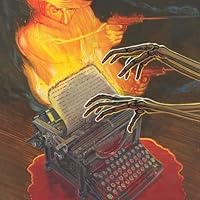
August 19, 2026
Special thanks to Netgalley and the Publisher for a eARC copy of this book.
All opinions are my own.
Since first picking up Richard Swan's Justice of Kings a couple of years ago, Swan has steadily advanced up my author rankings, and has achieved Day 1 must read status. His ability to mesh genres (horror and fantasy in the case of The Empire of the Wolf and Great Silence trilogies) show a wide range of authorial talent.
Here, in The Infinite State, Swan takes on a Sci-Fi Dystopian story, mixed with the right blend of political thriller and espionage. Swan's Decurian Empire is something new, yet it's allegory to Nazi fascism is unmistakable.
A first of a planned trilogy, this novel lays a nice foundation for this universe, with interesting characters, great worldbuilding, and Swan's well written prose to guide us on the journey.
No spoilers here, but I will say that if you like political thrillers, cold war thrillers, science fiction, and well written character drama, this is going to be a book for you.
Another hit from Mr. Swan, and I look forward to the next book in the series.
4.5 STARS
All opinions are my own.
Since first picking up Richard Swan's Justice of Kings a couple of years ago, Swan has steadily advanced up my author rankings, and has achieved Day 1 must read status. His ability to mesh genres (horror and fantasy in the case of The Empire of the Wolf and Great Silence trilogies) show a wide range of authorial talent.
Here, in The Infinite State, Swan takes on a Sci-Fi Dystopian story, mixed with the right blend of political thriller and espionage. Swan's Decurian Empire is something new, yet it's allegory to Nazi fascism is unmistakable.
A first of a planned trilogy, this novel lays a nice foundation for this universe, with interesting characters, great worldbuilding, and Swan's well written prose to guide us on the journey.
No spoilers here, but I will say that if you like political thrillers, cold war thrillers, science fiction, and well written character drama, this is going to be a book for you.
Another hit from Mr. Swan, and I look forward to the next book in the series.
4.5 STARS

August 9, 2026
Some pros and cons.
Pros:
World building that actually explains how political systems operate.
Multiple POVs that are easy to follow
Moments of high action where characters contemplate consequences.
Cons:
Pacing was all over the place.
The messaging throughout was incredibly heavy handed.
The POVs and their stances didnt differ as much as you would want.
Overall good but not great that I was expecting.
Pros:
World building that actually explains how political systems operate.
Multiple POVs that are easy to follow
Moments of high action where characters contemplate consequences.
Cons:
Pacing was all over the place.
The messaging throughout was incredibly heavy handed.
The POVs and their stances didnt differ as much as you would want.
Overall good but not great that I was expecting.

August 11, 2026
The Infinite State is an intellectual masterpiece.
Novels like it aren't really written anymore
Richard Swan deserves a lot of praise
Novels like it aren't really written anymore
Richard Swan deserves a lot of praise

August 19, 2026
Katherine Fuller's late husband was a well-respected party member of Pater Aeternus, the governing body on the galactic empire home planet. Paeter Aeternus demands absolutely party piety, which includes following strict gender roles, moral guidelines, and dedication to increasing the number of party citizens (i.e. having large families). Katherine has already begun to question the party line, but when she loses her child and her husband on the same day, she takes her inheritance and invests by purchasing a planet at auction, establishing a new colony as a democracy, while hiding her intentions from Paeter Aeternus.
If you crossed The Man in the High Castle with Handmaid's tale, you get the feel of the world of Infinite State. I liked a lot of this, but it is also hard to read with the current political climate. The book has an antifacist message, as all three of our main POV characters either already recognize or begin to recognize that the party line is unjust and destructive to all but those at the top. Richard Swan does a good job exploring the party impact on his three main characters: a woman, a queer celebrity athlete, and a detective. The pacing throughout the novel is even until the end, where there is a stretch of climactic action, and then an unfortunate letdown in pace as Swan wraps the book up. He's setting us up for a great series of political power and intrigue, though, and I'm excited to read more.
There are three narrators for the audiobook, Chris Rowe, Helen Keeley, and Nathaniel Priestley, making it easy to follow each perspective while listening. I enjoyed listening to The Infinite State quite a lot: a well produced and narrated audiobook goes a long way to being able to present a story clearly.
Thank you to MacMillan Audio for an ALC. The Infinite State is out 8/4/2026.
If you crossed The Man in the High Castle with Handmaid's tale, you get the feel of the world of Infinite State. I liked a lot of this, but it is also hard to read with the current political climate. The book has an antifacist message, as all three of our main POV characters either already recognize or begin to recognize that the party line is unjust and destructive to all but those at the top. Richard Swan does a good job exploring the party impact on his three main characters: a woman, a queer celebrity athlete, and a detective. The pacing throughout the novel is even until the end, where there is a stretch of climactic action, and then an unfortunate letdown in pace as Swan wraps the book up. He's setting us up for a great series of political power and intrigue, though, and I'm excited to read more.
There are three narrators for the audiobook, Chris Rowe, Helen Keeley, and Nathaniel Priestley, making it easy to follow each perspective while listening. I enjoyed listening to The Infinite State quite a lot: a well produced and narrated audiobook goes a long way to being able to present a story clearly.
Thank you to MacMillan Audio for an ALC. The Infinite State is out 8/4/2026.

August 28, 2026
www.instagram.com/novelswithnick
This has made it to my list of top reads of the year.
Social commentary is often woven into stories, but this one hits that little bit differently and it definitely wasn’t subtle about it. Even though the horrors kept persisting in this world, the story itself had some interesting concepts making for an engaging read. I also found the characters to be interesting, I enjoyed following all of the POV’s as well as watching the story unravel between them. I can’t wait for the sequel!
This has made it to my list of top reads of the year.
Social commentary is often woven into stories, but this one hits that little bit differently and it definitely wasn’t subtle about it. Even though the horrors kept persisting in this world, the story itself had some interesting concepts making for an engaging read. I also found the characters to be interesting, I enjoyed following all of the POV’s as well as watching the story unravel between them. I can’t wait for the sequel!
Displaying 1 - 30 of 443 reviews