Shifting between the present and the archival past, New York City and the remote mountains of Negueira de Muñiz, What Remains follows a young scholar’s journey into a forgotten episode of the Franco regime, uncovering both the tragic history and the still-present afterlife of a forced resettlement project in the Galician countryside of the 1950s.
Like the hybrid works of Valeria Luiselli, Nathalie Léger, and Cristina Rivera Garza, Galician writer Brais Lamela’s prize-winning debut novel blends fiction, memoir, essay, and archival research to set history in conversation with contemporary reality. The result is a work of striking intimacy that explores, with subtle prose and arresting imagery, the complexity of modern migration and the legacy of twentieth-century colonization.
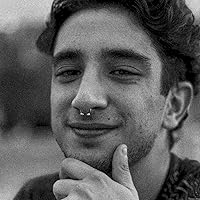
Brais Lamela was born in 1994 and lives between Galicia and New York. He is a writer and PhD candidate at Yale University. His debut novel, What Remains (published in translation in the U.S. by Dorothy, a publishing project and originally in Galician in 2022 as Ninguén Queda) became the first Galician-language book to ever win the prestigious Ojo Crítico Prize, and was a book of the year for El País. It has been translated into Spanish, Catalan, and English.
Galician academic and author Brais Lamela’s award-winning novella is a haunting, beautifully-realised, exploration of displacement and loss. Travelling between New York and Galicia, the past and the present, Lamela explicitly mines autofiction and essay genres. His story’s narrated by a postgrad student who’s moved from Spain to New York. His unfinished thesis centres on a half-forgotten social experiment set up under Spanish dictator Franco’s repressive rule. Now he’s doing archival research, puzzling out the precise links between Franco’s projects and American institutions fascinated by their potential. Although this isn’t historical fiction, it’s firmly rooted in history. In the late 1950s and early 1960s, Spanish dictator Franco embarked on a radical reconfiguration of farming and the Spanish countryside – partly inspired by the colonisation of Palestine and Mussolini’s ventures into similar territory.
Franco built a series of vast reservoirs flooding surrounding villages and countryside. In parts of Galicia these events formed the basis of processes of internal colonisation. Rural ‘peasant’ farmers inhabiting these villages were relocated to model estates. In colony records people are referred to by number, no longer individuals but objects to be manipulated like pieces in a board game. Placed there to see if they can be moulded by supposed forces of modernity into Franco’s desired ‘new men’ - a middle-class to sustain his brand of authoritarian capitalism. Lamela’s subject matter may sound dry but his treatment renders it anything but. Lamela’s focus is on the human cost of forcible displacement, often evoking wider narratives of dispossession. His approach is insightful and, often, extremely moving.
Increasingly Lamela’s narrator’s caught up in pondering the likely consequences of Franco’s erasure attempts: what was lost and what might remain. He singles out a community from mountainous Ernes (Negueira de Muñiz) relocated to the uncultivated flatlands of the Terra Chá Colonization Project. Their oral testimonies reveal how these people’s customs, even their memories were suppressed; generations brought up in the midst of particular landscapes and soundscapes abruptly severed from their cultural roots. A lecture on how forensic architecture maps sites of trauma – such as prison cells that housed dissidents concealed through rebuilding or redecorating – inspires thoughts about the potential impact of building design on the colonised’s consciousness and emotions. In the Terra Chá project collective and domestic space was drastically altered - in rural villages kitchens were typically interactive, communal environments but here kitchens were small, isolated spaces reinforcing traditional gender roles. The industrialisation of farms and farming practices demolished traditional relationships between human and animal. The overall layout suggested or required people to live this way and not that. But what persisted, underlined by its central location, was the dominance of the Spanish Catholic church which most often acted to shore up Franco. All of which feeds into a reassessment of how being in New York is reshaping the narrator’s own consciousness and that of fellow emigrants.
There’s no conventional plot but there is a mystery driving things forward, the fate of one of the villagers, a woman forced out of the project who then disappeared. The narrator's quest to find out what happened to her leads him back to Galicia and Negueira de Muñiz - now housing a hippy commune first founded as part of a flight from Francoist oppression. An experience that unexpectedly highlights the potential for positive acts of reclamation and recreation. Admittedly there are clumsy elements - the hippies are oddly romanticised - but for me these flaws were minor. I was completely gripped, impressed by its fluidity, the arresting imagery encased in quiet, measured prose. Overall, it’s a striking, relevant, series of meditations on the role of the researcher, forms of cultural violence, relations between self and environment, assimilation versus resistance. Translated by Jacob Rogers.
Thanks to Edelweiss and Lost River Press for an ARC
Un tornado de ideas hai por aquí para falar de Ninguén Queda. Algunhas que máis ocuparon a miña cabeza estes días:
- Interesoume especialmente a primeira parte do libro. Ese narrador que investiga pero que enceita a súa vida ao mesmo tempo é un dos grandes fitos do libro para min. Gustoume especialmente como ás veces, recordando a Valiera Luiseli, dubidamos da súa credibilidade. - O xeito de narrar é engaiolante. Non puiden soltar o libro das mans escrito cun estilo limpo pero moi suxerente á vez. - Encantoume o xogo literario entre o ficcional e o non ficcional, o ensaio e a narrativa. Gústanme moito os libros que transitan esas marxes. - A derradeira parte non me pareceume tan boa como a primeira. Tiña a sensación de que era algo menos pulida en prol dunha intensificación da peripecia. Pode que como eu son de obras máis reflexivas e con escasa narración callase menos comigo. Aínda así, está moi ben feita esa mistura entre un capítulo máis reflexivo e outro onde a raíña é a acción.
Non deixedes de ler a Brais Lamela, creo que é unha sorte poder facelo en galego mentres navegamos esas marxes xenéricas con penedos ben interesantes.
Sixth thesis: what we see in the plans for the colonial settlement is not an orderly world in which each and every person has their place, but a world in which, in order to have a place, you’re must accept the only one you offered.
Bullaun Press, a small Irish independent press focused on literature in translation, published its first novel in 2022, and in 2025 was awarded the Republic of Consciousness Prize for There's a Monster Behind the Door by Gaëlle Bélem (tr. Karen Fleetwood and Laëtitia Saint-Loubert).
What Remains, translated by Jacob Rogers from the Galacian original by Brais Lamela, is the presses entry for the 2026 edition of the prize which is now rebranded as the Queen Mary Small Press Fiction Prize.
As the author explains in a note at the novel's start, in the 1950s the Franco regime built a hydroelectric dam in mountainous rural north-west Spain, with some hamlets lost to the water, and others left isolated. The Galician families displaced were offered a chance to move to - indeed colonise was the official term used - newly constructed settlements in the interior of the region. But the project was also an experiment in social engineering, with the rural, communal families, moved into modern diary farms aligned with the Francoist ideal - see below - the Terra Chá Colonisation Plan.
The novel's narrator is from Galicia but living in New York, where he came some time ago on an (originally) one year academic scholarship to finish a thesis on the Terra Chá colonies, where he grew up. He is struggling to settle on the exact topic of his thesis, having considered:
- the approach of forensic architecture, which he learns about from a Professor at a lecture he attends (the concept based on the work of the real-life Professor Eyal Weizman)
Let’s imagine, continues the architect, that it’s possible to reconstitute that experience, that it’s possible to gather the fragments left behind by the woman, like breadcrumbs, and use them as a path that leads back to her house: something she tells us about the layout of the living room, about the windows she closed to keep out the noise of the street, about the various hues of sunlight that filtered through the orange trees early in the mornings. Let’s imagine that we can use these fragments to construct an identical house, that we can allow this woman to walk through a phantasmagoric version of her home that we’ve created. We will find that she can suddenly remember the details of the explosion, that she has regained the right to her own experience, if you will. This is what’s known as forensic architecture: the reconstruction not of physical places but of the memories linked to those places
his own interest in architecture more theoretical than practical:
What I like most about architecture is the plan, the unrealized possibility, that gaze from nowhere in which, if you try hard enough, you can recognize subtle idiosyncrasies of style (the airy, adaptive spaces of Lina Bo Bardi, the soft, ethereal angles of Le Corbusier, almost like skeletons of structures hanging in the air, about to be swallowed up by the white paper). I've never liked to judge plans based on their real-world feasibility. In fact, I like plans specifically because they don't need to be realized, because they can remain pure potential, like the messy pages of private journals that have no intention of becoming books.
- the complicity of the US in the colonial project (and supporting right-wing dictatorial regimes generally)
and, then, based on a chance discovery
- tracing the story of one particular woman who was forced to leave the colony when her husband died (of suicide, having failed to settle in their artificial new home)
The ideology behind the Franco regime's colonization is an ideology of gender, structured around the basic unit of social reproduction: marriage. Houses are granted to couples of supposedly good behaviour, who will later be given instruction on the activities deemed appropriate for a man and his wife. It's not about perpetuating the existing order, it's about imposing a particular vision, creating something new, a rural world divided into housewives who take care of the domestic space, and working husbands who are employed by highly capitalized companies, still a distant fantasy in the Galicia of the time. A world of marriages where human reproduction is no more than a vector for the reproduction of an ideology, of a will to power.
The first half of the novel, Those Who Leave, tells the story of his research in New York, his own life as an emigrant from his homeland, and as part of a community of such people, and the story of him writing the account we are reading, although he claims I’m writing an academic thesis, not a novel.
In the second half, Those Who Remain, he and his partner return to Galicia, and visit the original community in the mountains that his family had left, now a hippy commune. And this part contrast the story of those who found new economic possibilities in the new settlements, and those who found them artificial - as one such villager observer of the situation when Franco himself visited and a hasty garden display was assembled:
Things have their places, you know, and when you move them around, they can try to hold on but more likely than not they won't last. And so what was underneath that beautiful garden was death. That's how it all was back then: if you dug deep enough under the surcace of anything, all you found was death.
A thought-provoking novel - although I preferred the more academically focused first half to the more personal second.
Bullaun Press
A recent arrival on the Irish publishing scene, Bullaun Press has chosen literature in translation as its focus. It is the first such press of this kind in Ireland. We aspire to open up a space for readers seeking new and different voices.
Founder Bridget Farrell’s background in independent publishing and languages inspired her to set up Bullaun in 2021. She wants to see the press become an advocate for translators, especially Irish and Irish-based ones. Bullaun is open to approaches from translators looking for a home for a text that they are passionate about.
Translators will also be commissioned to work on recent books that could strike a chord with an Irish audience and beyond. As well as an enriching our reading experiences, it’s an important gesture of recognition of the cultural heritage of some of the many different language-speakers living in Ireland. We’d love to hear from you about compelling books that have not yet been translated into English.
The name ‘Bullaun’ comes from the Irish word for a stone with a manmade hollow that holds water at its centre. Many bullauns around the country are traditionally associated with magical, healing or holy properties.
ChatGPT (sorry! but it's a great summary) on Terra Chá
Franco’s rural colonies in the Terra Chá (Terra Cha) form part of a much larger, state-directed project of internal colonisation carried out in Spain from the late 1930s to the 1960s, mainly through the Instituto Nacional de Colonización (INC), founded in 1939.
1. Why the Terra Chá?
The Terra Chá — the flat, wet plain of inland Lugo province — was attractive to the Franco regime for several reasons: • Underused land: Large areas were marshy, poorly drained and considered “unproductive” by the regime. • Low population density and limited political resistance after the Civil War. • Strategic symbolism: transforming a marginal, impoverished rural zone into “ordered” Catholic villages fitted Francoist ideology of national regeneration.
2. What were the “colonies”?
They were new, planned villages (pueblos de colonización), usually built from scratch or radically reshaping existing hamlets. In Terra Chá, examples include areas around: • Cospeito • Begonte • Vilalba • Parts of Castro de Rei
Families (colonos) were settled on small plots, typically 5–10 hectares, with a house, barn, and access to communal facilities.
3. Ideology behind them
These colonies were not just agricultural projects; they were social-engineering experiments: • Catholicism at the centre: church and rectory placed prominently in the village plan. • Authoritarian order: the village layout itself embodied hierarchy and discipline. • Anti-urban, anti-liberal ethos: the regime idealised the peasant farmer as morally pure and politically obedient. • Spanish nationalism: notably, this occurred in a Galician-speaking region, but administration, schooling and church life were conducted strictly in Castilian Spanish.
In this sense, the colonies were tools of cultural homogenisation as much as economic reform.
4. Who were the settlers?
Colonists were carefully selected: • Often land-poor Galician peasants, but also families relocated from other regions. • Political loyalty and “moral standing” mattered; former Republicans or the families of the defeated were often excluded. • Women were explicitly framed as domestic and reproductive agents of the “New Spain”.
Ownership was conditional: settlers had to meet productivity targets and conform socially. Failure could mean eviction.
5. Architecture and planning
The INC developed a distinctive architectural style: • Vernacular-inspired but simplified Galician forms (whitewashed stone, tiled roofs). • Rigid geometry: straight streets, central plaza, axial alignment with church and civic buildings. • This created villages that felt both “traditional” and oddly artificial — recognisably Francoist landscapes.
6. Economic results
The outcomes in Terra Chá were mixed:
Successes • Improved drainage and pasture productivity. • Some stabilisation of rural livelihoods in the 1940s–50s. • Introduction of cooperatives and mechanisation.
Failures • Small plots were often not economically viable long-term. • Young people left anyway during the 1960s rural exodus. • Many colonies aged rapidly, becoming semi-depopulated.
7. Longer-term legacy
Today, these settlements are still visible but often unmarked as Francoist projects. Their legacy is ambiguous: • They helped reshape the agrarian landscape of inland Galicia. • They imposed a model of life that suppressed Galician language, customs, and autonomy. • They illustrate how Francoism governed not only through repression, but through spatial design and everyday life.
In short, the Terra Chá colonies were less about agricultural modernisation alone and more about disciplining land and people simultaneously — turning a fluid rural world into something legible, controllable, and ideologically aligned with the dictatorship.
A primeira parte conta as súas dinámicas de emigrante a mesma vez que expón a investigación que está a facer. Desde a distancia en Nova York estuda un poboamento de colonización en Galicia e os colonos desprazados aos que case forzaran a o habitar. A segunda parte conta, xa en Galicia, unha viaxe a aldea orixinal dos colonos que agora é unha comuna hippie. Entendense as dúas identificacións nas dúas partes. Non sei se é ficción o da comuna ou non, o da muller que imaxinamos que atopa ao final ou non, pero non e importante. E moi bon libro e goceino moito.
Me gustaría que la primera parte se pareciera más a la segunda o que el paralelismo entre los dos momentos espacio-temporales fuera más claro (o más elocuente o, no sé, quizá más revelador), pero el caso es que he acabado por disfrutarlo mucho y he terminado el libro llorando. Además el tema es muy interesante, y a bote pronto diría que es bastante original en comparación con muchas de las ficciones que se han escrito sobre el franquismo. Mención especial a algunas ideas muy guays de la primera parte, y a algunos destellos muy sutiles al final que 💫
Recoñezo que, dende unha lectura deste ano, achégome á ficción escrita por persoas que pasaron por unha tese con recelo. Como se tentásemos xustificar o sensible a través de nomes, de citas mal disimuladas en metáforas. Todo o contrario acontece con este libro. Sentino como quen observa o verdello que queda nas casas inhabitadas polas que non somos quen de preguntar. Canta delicadeza cabe en _Ninguén queda_ e cantos mundos posibles na nostalxia. É precioso.
al principio me costó un poco de trabajo en medio me dije "por qué no ha escrito más libros este chico que escribe tan hermoso?" luego vi que se publicó hace poco me dio gusto saber que seguiré leyéndolo si él decide seguir escribiendo no creo que haya sido fácil construir una novela así
al final, suspiré, por sus frases, por el ambiente que crea, por su padre, por los emigrados, por su escritura... me gustó mucho!!
“...tengo la sensación de que mi vida no se define por los objetivos que quería alcanzar sino, más bien, por todo cuanto me ha distraído mientras trataba de alcanzarlos”.
Con la excusa de un trabajo de tesis acerca de las migraciones causadas por la creación del embalse de Grandas de Salime en los años 60, Brais Lamela nos habla de espacios, de emigración, de desarraigo. Nos habla de los colonos que se vieron desplazados a unas viviendas estatales en A Terra Chá, cerca de Villalba, pero también nos habla del narrador, a su vez migrante en Nueva York. Nos habla de errantes, de aquellos que han de hallar un hogar en esa itinerancia a la que les lleva la vida.
“Porque los amigos, cuando volvían de visitar a la familia, decían que en los pueblos o ciudades donde habían nacido, donde se habían criado, ya no quedaba nadie, ya se habían ido todos. Callejeando, con la pizza todavía caliente en las manos, me pregunto adónde se va todo el mundo, adónde nos vamos, si hay algún destino concreto o si nuestro único destino es este errar constante, este caminar hacia la nada”.
Es uno de los mejores textos que he leído últimamente, sin duda una nueva voz en la literatura gallega y española a la que no debéis perderle la pista.
No suelo sentirme tan cómoda leyendo en gallego como en castellano y siempre he pensado que es porque el gallego normativo me resulta algo ajeno, porque no representa el habla de mi zona, próxima a Asturias. Pero esta novela me ha sorprendido gratamente y me quedo con la versión original en gallego. Hablando con el autor, al que he tenido la suerte de conocer, he llegado a la conclusión de que se debe a cierta influencia del inglés (frases más cortas, estructuras diferentes) y a las palabras elegidas, más cercanas al habla del norte de Lugo del que proviene mi familia. Ha sido un disfrute total.
Para aquellos que no leéis en gallego he de recomendar con igual fervor la maravillosa edición de Cuatro Lunas, traducida por María Alonso Seisdedos.
Excelente primera novela de @BraisLamela esta «No queda nadie» (en castellano en @edcuatrolunas, desde el «Ninguén queda» gallego); preciosa y profunda obra que merece ser muy leída.
The drowning of communities through the creation of reservoirs for hydroelectric dams is a topic that keeps popping up again and again in my reading this year. First there was Sami author Labba's The Home of the Drowned, then Brazilian author Kretzmann's The Red Earth, and now it appears again in Lamela's debut. But although the communities in these books share similar fates, it was a book I had just finished, Perry's May We Feed the King, that kept cropping up in the back of my mind as I read this slim work.
Lamela opens the novel with a scene of an architect giving a university lecture on forensic architecture, or the reconstruction of a physical space as a means of recalling memories for victims and witnesses to crimes or traumatic events. This gets our narrator's brain spinning on the ways this practice can be applied to the topic of his graduate studies: the displacement of rural Galician communities and the subsequent colonizing initiative that took place under the Franco dictatorship. This idea of restoring the details, of attempting to bring back the essence of a place as a way to understand all that happened there felt so meaningfully connected to the work of Perry's curator and her methods of reconstructing history, of bringing the past to life.
Throughout the course of the novel, the narrator digs into archives and relistens to oral testimonies of the displaced, working to settle on the angle he'll take in presenting this research for his thesis. I loved the little meta interludes that highlighted the hybrid nature of the novel, with the narrator's partner stepping in to the text to occasionally critique the way a scene was written, the way the facts were presented. These glimpses of the narrator as author called to mind the work of Christina Rivera Garza and Álvaro Enrigue and their signature blend of journalism/memoir/fiction.
A quiet and insightful examination of forced displacement, of the subtle cruelty of hostile architecture, and the search for what remains-- but even more so, what to do with those remains--after so much of what makes up ones identity has been systematically stripped away.
No queda nadie, de Brais Lamela, es un libro que conocí gracias a esta red social y a los premios que está cosechando. Originalmente escrita en gallego y traducida ahora al castellano por María Alonso Seisdedos y publicado por @editorialcuatrolunas, a los que agradezco el envío del ejemplar para esta reseña.
La historia arranca con un joven investigador universitario (mal)viviendo en Nueva York que pronto se centrará en conocer más a fondo una etapa del franquismo con la que llegará a obsesionarse, para conocer y entender el porqué de lo que aquí se nos plantea. No quiero decir mucho por si caigo en spoilers, pero en la propia sinopsis oficial podéis saber un poco más sobre el tema que no nombro.
Me ha pasado un cosa bastante inusual con esta lectura. Para empezar, tengo que decir que el libro, en cierta manera, se divide en dos partes. La primera parte, más centrada en la vida del joven, me estaba encantando, sin tener demasiada chicha, pero tanto la narración como lo que me contaba me estaba interesando tanto que practicamente me lo leí del tirón. Es verdad que uno de los temas que trata (y que podemos decir que es el principal de la novela) no me estaba generando el interés que creo que se trata de conseguir.
En la segunda parte, ya centrada más en el tema que comentaba al final del anterior párrafo, es donde ha venido el problema para mí. Como ya digo, venía ya con el interés bajo en ello y, al ser ya el centro del libro, me he salido yo del texto. No puedo decir que no me haya gustado, porque sí lo ha hecho, pero es verdad que ya aquí me costaba ponerme a leerlo. Para mí ha ido de más a menos lamentablemente.
Como digo, está ganando muchos premios e incluso está nominada a mejor obra del año en los premios Cálamo, así que me temo que el "problema" aquí he sido yo, así que si os llama la atención os animo a darle una oportunidad y a ver qué os parece a vosotr@s.
"Quinta tese: O poder non depende soamente da exclusión senón tamén do eterno afastamento da inclusión, do control sobre os desexos de ser quen non somos, de ser quen queren que sexamos". Creo que lle fixen un feo a este libro léndoo en traxectos de 20 minutos no transporte público. Non sei se o desfrutei tanto como podería. Unha lectura moi interesante e reflexiva, para ler con algo de tempo (máis de 20 minutos) e tranquilidade.
Unha liña argumental súper interesante, e un xogo de paralelismos entre os colonos e o exilio estadounidense do protagonista moi lúcido. Ás veces custoume seguirlle o fío a certas disertacións, e outras parecéronme un chisco forzadas, pero en xeral, un libro moi moi curriño
Fai de realidades que poderían parecer afastadas, un relato no que todos nos podemos identificar. Logra achegarnos unha imaxe da riqueza da vida, no bó e no malo, na cidade e no rural, no pasado e no presente. Plasma o sentimento de tantos que marchan e tantos que quedan.
Gracias por esta historia tan universal coma a nosa terra, na que verme retratada en tantos aspectos.
moi boas reflexións que andan na miña cabeciña: o concepto de habitar, a emigración, os sentimentos de pertenza a unha terra... moi ben escrito, grazas vane por engancharme á literatura en galego de novo🫶🏻🫶🏻🫶🏻
Obra a medio camiño entre a narrativa e o ensaio, Ninguén queda é unha novela sobre os que marchan... E os que veñen. Unha novela sobre o desarraigo e a necesidade de sentirmos de algures. Escrito con moita lucidez e elegancia, do mellor que teño lido en meses.
"Fixeron un deserto e chamáronlle paz" Inmensa novela denunciando a usurpación dos espazos e da memoria colectiva durante o franquismo. Historias e anacos de vida quedaron asolagados baixo a auga dun encoro planificado polos fascistas. Brais Lamela fai unha tremenda labor indagando entre vaos de brétema e ferralla para contar a terrible experiencia dos colonos do novo mundo na Terra Chá e dos que quedan en Negueira de Muñiz, Ernes.
"toda forma de poder político constitúese como unha forma de poder sobre os mortos, sobre as posibilidades que teñen os mortos de seguir a falarnos"
"se a casa xurdiu como un descanso no camiño ou como un espazo onde quedar. Se os lugares existen para marchar deles ou para retornar."
M'ha agradat x raons obvies tot i q cap al final afluixa. Molt original com està plantejada la història ojalà totxs els meus amicxss q us doctorareu feu un llibre així.
Magnífic relat amb una espectacular traducció del gallec d'Eduard Velasco. Un llibre sobre la construcció de la memòria dels espais que ocupem i que ens porten, amunt i avall, com ho fa el riu.
L'estil narratiu és força poètic i l'estructura molt original, amb un estudiant que prepara una tesi sobre un desplaçament forçat, en temps del franquisme a Galícia, mentre viu en pròpia persona els problemes de viure lluny de casa, en un territori desconegut i agrest. És també una novel·la sobre el desarrelament.
"El trauma de l'exili no és l'oblit, sinó la memòria. Totes les coses que abans eren intangibles i ara adquireixen pes, superfície, pòsit."
"Vagarejant pels carrers de la ciutat amb la pizza encara calenta a les mans, em pregunto on és que se'n deu anar tothom, on ens n'anem, si hi ha cap destí concret, o si el nostre únic destí és errar com ara constantment, caminar com ara cap a enlloc".
Que gusto ler un libro tan redondo. Rescata unha historia fascinante que eu non tiña nada presente, e entrelazaa coas vivencias do protagonista sacando de todo un relato único sobre os espazos que habitamos, o arraigo e o desprazamento. Unha lectura moi agradecida.
Otro sorprendente descubrimiento entre los libros elegibles para los International Booker Prize 2027. Un libro que debería haber conocido antes ya que soy española, y tengo raíces gallegas, y no sabía de su existencia. El libro ha sido traducido del gallego por Jacob Rogers. Se trata de un libro de ficción, que a veces toma la forma de ensayo, en el cual escribe el protagonista de la historia, para hablar de los asentamientos en tierra gallega llevados a cabo por Franco. El libro parte de una tragedia: unas ciudades que quedaron más o menos olvidadas debido a una tragedia natural, y Franco traslada a la población superviviente a unos asentamientos, con el fin de convertir a esa gente, que Franco considera campesinos empobrecidos, en mano de obra para el régimen. Se trata de asentamientos, pero con un claro significado ideológico. Para introducir esta tragedia al lector, Lamela divide la obra en dos partes diferenciadas: Those who leave, que explora el sentimiento de la población, de los ciudadanos, que se vieron obligados a dejar sus casas, y trasladarse a otras tierras; y Those who return, que habla del regreso a casa. Lo más interesante para mí es el estilo de la obra, a veces como ensayo, donde traslada al lector cómo se sentía esa población. El protagonista estudia las cintas que ha grabado de las entrevistas realizadas a la población. El propio protagonista se asombra de descubrir detalles que le pasaron desapercibidas en la entrevista. Lamela analiza en profundidad ese sentimiento de exilio, del recuerdo de aquello que dejaron atrás y no volverán a recuperar. Y aunque viven en otra tierra, muchos de ellos desean volver a la riqueza, riqueza natural, de dónde vivían. Esas tierras no son suyas, ni los cultivos les pertenecen ya que cuando Franco visita la zona, los cultivos se trasladan de zona, llevando a perderse la fauna natural en aras de sorprender a Franco. Otro aspecto que me ha parecido muy interesante es la metáfora final de Dante y la canción y retorno a casa. El autor emplea esa metáfora para trasladar al lector la emoción que el propio protagonista siente de verse rodeado de gente con la que congenia, y se siente a gusto. Otro aspecto que me parece relevante es la forma en que traslada al lector el trabajo de todo historiador: las teorías que construye a medida que analiza los testimonios de los supervivientes, y va reconstruyendo lo sucedido en esas horas cruciales. Hay un testimonio que me conmovió especialmente, el de la anciana, que habla de que su familia no entiende que ella extrañe su hogar, al que consideran pobre comparado donde viven ahora. Ella expone que extraña la belleza natural de su hogar, el verse rodeada de naturaleza viva y el aire que respiraba antaño. Además, esta mujer acaba dando forma y resolviendo el enigma del libro, lo que le sucedió a una mujer, a quien expulsaron de ese asentamiento al morir su marido. Ella expone que las autoridades la consideraban perniciosa, al haber muerto su marido queriendo volver a casa, y cimentaron, de forma maliciosa, el rumor de que ella fue la responsable de la muerte de su marido. En ese punto, el relato toma cuerpo de discurso ideológico de género, que el régimen franquista quiere implantar: una mujer que recuerda a Eva y el pecado de Adán. Ese discurso también se sustenta en el análisis arqueológico que hace de las casas, al eliminarse la colectividad de la comida y aislando la cocina de la casa. Una obra muy recomendable por la forma de analizar el exilio, muerte y sobre todo por acercar al lector un hecho poco conocido como