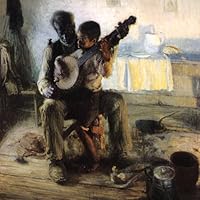
هناك جهد هائل يجري الآن لإعادة الالتفاف والتجمع في القارة الإفريقية وحولها. ولكن تكلفته البشرية باهظة لا شك. إنه جهد عميق لبناء بُنى الفكر، وتحويل الذهنية الإفريقية إلى مستقبل عالمي، ولا يمكن أن يتحقق هذا المستقبل إلى عبر علاقة متشابكة الأطراف من هدم للبُنى الفكرية الاستعمارية، وإعادة خلق الذات الإفريقية، ووضع تبايناتها في الحسبان. سوف يتشكل مستقبل إفريقيا في تداول مفارقاتها بقوة، وعدم استعدادها للخضوع. هذه هي إفريقيا التي تحرر إطارها الاجتماعي وبنيتها المكانية، وهي تتجه الآن في اتجاهي الماضي والمستقبل على حد سواء - إفريقيا التي تتجه إلى رعاية هذا العالم والانغماس فيه، والاهتمام باللحظة الحاضرة، إفريقيا ذات اللغات والأصوات الهجينة العميقة، إفريقيا التي تمنح مكانًا مركزيًا للتجربة، إفريقيا التي تنبت فيها صور وممارسات ما بعد الحداثة المذهلة. إفريقيا التي تخلق عالمًا يرحب بالجميع، حيث يكون الكل قادرًا على الدخول فيه من دون قيد أو شرط، وسيكون الكل قادرًا على معانقة بعضهم بعضًا، بعيون مفتوحة على مصراعيها، لا يمكن الانفصال عن العالم، في طبيعته المتشابكة وطابعه المركب، تكريمًا لهذه الأرض التي نتشاركها، وتكريما لسائر سكانها بما في ذلك البشر وغير البشر.
Joseph-Achille Mbembe, known as Achille Mbembe (born 1957), is a Cameroonian philosopher, political theorist, and public intellectual.
He has written extensively in African history and politics, including La naissance du maquis dans le Sud-Cameroun (Paris, Karthala, 1996). On the Postcolony was published in Paris in 2000 in French and the English translation was published by the University of California Press, Berkeley, in 2001. In 2015, Wits University Press published a new, African edition. He has an A1 rating from the National Research Foundation.
What makes decolonial theory so accessible is that it is not nearly as impenetrable as philosophy, or as analytical as economics. Instead, it is something of a bastard stepchild theory of history and politics; is it praxis or manifesto? Both and neither. Mbembe is an exceptionally erudite and informed decolonial theorist who writes with eloquence and knife-sharp precision from the context of Africa’s contested futurity.
I read this mainly for his superb chapter on ‘Planetary Entanglement’:
Major transformations in the way in which we think about the histories of the world are underway. In this context, any inquiry into the place of Africa—and by extension the global South—in theory is necessarily an interrogation concerning the experience of the world in an epoch when “the planet is no longer as large as it once was.”
No kidding. That late-baked end-capitalism pie is getting smaller and smaller, while the rich and corrupt simply become more voracious in their appetites.
A book that is uneven in places, and not up to the beauty nor the insight of Mbembe's best work, which I regard as On the Postcolony and Critique of Black Reason. Still, Mbembe's critique of French eurocentrism is perceptive, enlightening, and a very necessary intervention. His way of thinking about Africa is even more so. Mbembe argues persuasively that Africa is not a 'dark continent' situated on the edge of the world. It is bound up in planetary entanglement with the world at large, and is central to thinking the world as such. Moreover, it is a continent that has both foreshadowed our present and points to where the world might go in future.
Here's one of my favourite passages, in which Mbembe reads our technologically augmented lives through a kind of Cyber(afro)punk prism:
The plasticity of digital forms speaks powerfully to the plasticity of African precolonial cultures and to ancient ways of working with representation and mediation, of folding reality. African precolonial cultures were obsessed with questioning the boundaries of life. As evidenced by their myths, oral literatures, and cosmologies, among the most important human queries were those concerning the world beyond human perceptibility, visibility, and consciousness. The time of objects was not unlike the time of humans. Objects were not seen as static entities. Rather, they were like flexible living beings endowed with original and at times occult, magical, and even therapeutic properties.
Things and objects and the animal and organic worlds were also repositories of energy, vitality, and virtuality. As such, they constantly invited wonder and enchantment. Tools, technical objects, and artifacts facilitated the capacity for human cognition and language. They belonged to the world of interfaces and, as such, served as the linchpin for transgressing existing boundaries so as to access the Universe's infinite horizons. With human beings and other living entities, they entertained a relationship of reciprocal causation. This is what early anthropologists mistook for 'animism'. Indeed precolonial African ways of knowing have been particularly difficult to fit into Western analytical vocabularies...
[Today] it is as if the Internet was speaking unmediated to this archaic unconscious or to these societies' deepest and hidden brain. It is nowadays common sense to argue that the technological devices that saturate our lives have become extensions of ourselves. The novelty is that in the process, they have instituted a relationship between humans and other living or vital things that African traditions had long anticipated. Indeed in old African traditions, human beings were never satisfied simply being human beings. They were constantly in search of a supplement to their humanhood. Often, they added to their humanhood various attributes or properties taken from the worlds of animals, plants, and various objects. Modernity rejected such ways of being and their compositional logics, confining them to the childhood of Man. Clear distinctions between ourselves and the objects with which we share our existence were established. A human being was not a thing or an object. Nor was he or she an animal or a machine. This is precisely what human emancipation was supposed to mean.
Our own relationship to ourselves and to what surrounds us has changed as a result of our increasing entanglement with objects, technologies, or other living or animate things or beings. Today we want to capture for ourselves the forces and energies and vitalism of the objects that surround us, most of which we have invented. We think of ourselves as made up of various spare parts. This convergence, and at times fusion, between the living human being and the objects, the artifacts, or the technologies that supplement or augment us is at the source of the emergence of an entirely different kind of human being that we have not seen before.
Achille Mbembe is a leading postcolonial thinker, with a deep seated perspective on the dark past and the prospects of the future of Africa. The present collection of essays was written on the occasion of the celebration of the half-century of African independences, and offer a thorough evaluation of what happened during the postcolonial period either on the continent or on the land of the former Metropoles (case of France). The book's argumentation is inline with Franz Fanon's "The Wretched of the Earth" written immediately after the struggles for national autonomy. Mbembe writes with an unusual insight on the current debates linking them with a political, social and economic historic sweep of the last half of the 20th century, in Africa. Moreover, Mbembe offers a fresh inquiry of the contemporary forces at work on the continent, painting the different faces of mutation found in different fields. I was only sorry that he could not write a longer book on the subject. He does a remarkable work at touching on the various aspects that a large subject as this requires, hence the impression the book gave of skimming over a vast field covered with uneven and changing relief. I can't wait to jump on his next book, of course after a significant time of digestion.
Uma análise brutal acerca da desestruturação das sociedades africanas que viveram um colonialismo europeu desgastante. Além disso, são absurdamente perspiscazes as metáforas com órgãos execretores e genitais para explicar estruturas do poder pós-colonial que a europeu exerceu sobre o continente africano. Com a descolonização, Mbembe sugere que a África deve abandonar definitivamente qualquer parâmetro europeu de desenvolvimento e criar seus próprios parâmetros, para atingir sua potencialidade máxima como nação. Durante toda a discussão, Mbembe expõe ideias que te fazem perceber todas as estruturas, não só a racial, mas também a cultural, econômica, política que nos rodeiam e muitas vezes são impercetíveis para olhos não atentos.
Achille Mbembe is one of the most interesting critical theorists working today. His work is always ambitious and dense; spanning political, social, and cultural theory of all types. He's a historian and political theorist by training but his writing is unapologetically literary and speculative. It's a style that's difficult categorize and generally for the better. Most of the time, that sweeping approach is exciting and launches me into a cascade of profound connections that makes me want to highlight all the brilliant turns of phrase and nuanced interdisciplinary connections. This is especially true for the book's first two chapters "Planetary Entanglement" and "Disenclosure". He has an incredible ability to locate and draw connections between political economy, phenomenology, neuroscience, philosophy of science, political theory, aesthetics, and historiography.
However, there were definitely points where Mbembe's ambitious style could be a bit head-scratching for me. Especially the sections where he doubles down on psychoanalysis to theorize African political dynamics and identity. I have read Marxist/materialist critiques of Mbembe's reliance on poststructuralism, and while I believe such critiques can be too harsh, these psychoanalytic passages did frustrate me for the exact reasons they frustrate his critics.
All that said, as someone early in their journey to understanding decolonial thought and is trying very hard to grasp the nuances of various perspectives, Mbembe's essays here are a fantastic gateway to the pressing questions and dilemmas of our era. His references section is also a treasure trove of resources on African politics and societies and decolonial research
Un buen libro que hace un balance noble de lo que fueron las luchas anticoloniales, sus fallos, y la necesidad de repensar y renovar ese espíritu que motivo a estas luchas: la reposición y apropiación del ser mismo, del salir de 'la zona Fanoniana del no ser' o momento de gran noche, para poder entrar en la humanidad, y llevar acabo la ‘déclosion du monde’. Desde allí comenzar todo de nuevo, algo más justo, sin racismo (que equivale a colonialismo para Mbembe), y de imaginar por qué no el pluriverso (que, si bien no usa esta palabra, usa su esencia basándose en el poeta Leopold Sedar Senghor). Otro punto interesante, y clave, es cuando menciona ese hecho palpable de que Europa ya no es el centro del mundo. Los conceptos teóricos, los ejes epistemológicos, las claves para el futuro de l@s mund@s, los modelos para un cambio de paradigma, duela a quien le duela, surgen hoy más que nunca desde el sur. Así mismo, es interesante ver también el capítulo donde Mbembe, a manera autobiográfica, relaciona la evolución de su pensamiento postcolonial con el transitar por el mundo: Paris, NY, Johannesburgo. Precisamente es de estos lugares de donde nutre su crítica, extrae sus ejemplos contemporáneos (de aún presencia de colonialismo-racismo) y elabora sus propuestas. Dos críticas personales y puntuales al libro de Mbembe. Uno, la falta de mención de Latinoamérica salvo contadas opiniones para llenar página. Al hacer una genealogía del pensamiento postcolonial, es imposible dejar de mencionar a teóricos y críticos latinoamericanos, que mucho antes de los 80s de Said, ya venía enarbolando sus críticas al paradigma moderno occidental. José Martí, Jose Carlos Maríategui, Enrique Dussel, Fernández Retamar, son solo algunos de ellos. Esta falta de mención es imperdonable, más aún cuando Mbembe construye y toma prestado mucho de Frantz Fanon, que irónicamente, pudo haber sido en el libro precisamente el punto de anclaje para un diálogo sur-sur con Latinoamérica. Dos, la percepción ‘colonial y neoliberal’ suya, al afirmar que entre los ‘fuertes’ de África, es la relativamente existencia de tierras.
Мбембе пише про "Африку" так, як куратори на своєму curatorese пишуть супровідні тексти до виставок сучасного мистецтва. Всі ті ж самі гріхи, та ж сама "інтердисциплінарна" необов'язковість, той же словник, з душком "занимательной физики", з цими всіма потоками, розламами, тертями, ..., і найвища ціль - винайти ім'я для нового жанру (афрополітанізм!). Такою ж мовою пишуть всі, хто від зваблення "Анти-Едіпом" не оговтався, типу Мануеля де Ланди, і читати це - як поїдати п'ятнадцять морозив за раз. В примітках багато цікавих посилань на літературу, і головний текст книжки можна було би вважати таким собі розтягнутим трейлером до приміток, який, зрештою, стає зайвий, і стає схожий на нескінченне деренчання зв'язкою ключів, коли всі двері вже давно відкриті.
On a beaucoup parlé à l’automne 2011 du livre du politologue camerounais Achille Mbembe : Télérama lui a consacré un dossier spécial, France Culture une longue interview, Africultures une recension dithyrambique. Ce brillant esprit subversif, qui excelle dans la forme courte, les articles, les contributions, les prises de position, n’avait plus signé d’ouvrage depuis "De la postcolonie" qui avait marqué en 2000 son entrée bruyante dans l’arène des "postcolonial studies". Tant pis pour le mépris que lui inspirera la présente recension dont il aura tôt fait de classer son auteur au nombre des chiens de garde antipostcolonialistes et provincialistes, c’est-à-dire de ceux qui à la fois mésestiment la portée des études postcoloniales et restent prisonniers d’une pensées hexagonale et rétrograde. Mais au risque de se voir reprocher, comme il le fait à ceux qui, tels Jean-Louis Amselle ou Jean-François Bayart, ne partagent pas ses avis, des « assauts désinvoltes », des « insinuations malveillantes » ou encore des « énoncés apodictiques » (p. 143), il faut exprimer le malaise qu’inspire Sortir de la grande nuit. L’objet de ce livre trop ambitieux n’est pas clair. S’agit-il d’un essai prométhéen comme semble l’annoncer son titre poétique emprunté aux Damnés de la terre de Fanon ? d’une invitation à la lutte pour sortir de la race et se décoloniser enfin ? d’une auto-biographie comme le laisse augurer le premier chapitre où l’auteur narre son parcours depuis son Cameroun natal vers la France « un vieux pas orgueilleux, conscient de son histoire – qu’il tend à glorifier à tout propos – et particulièrement jaloux de ses traditions » (p. 43) qu’il a tôt fait de quitter pour les Etats-Unis et l’Afrique du Sud autrement plus hospitaliers ? d’une étude sur l’Afrique décolonisée, comme l’indique le sous-titre, où une nouvelle modernité « afropolitaine » (Mbembe n’est pas peu fier de ce néologisme) serait en voie de naître ? Un peu de tout cela ; mais rien qui ne convainque vraiment. Certains crieront au génie soutenant que ce livre transcende les genres littéraires et chevauche les champs trop étriqués des savoirs ; d’autres à l’imposture en retrouvant, au mot près, la reprise de textes déjà publiés et pour certains très anciens. Comme l’a caustiquement résumé Jean-François Bayart, Mbembe est « très fâché » . Personne n’a grâce à ses yeux. Ni la France, plongée dans un « long hiver impérial », incapable de « liquider l’impensé de la race ». Ni les anciennes colonies francophones d’Afrique qui se sont transformées en satrapies, en « chefferies masquées » (p. 20) dont l’unique objectif est de rester au pouvoir, avec le soutien « le plus tenace, le plus retors et le plus indéfectible » (n’en jetez plus !) de l’ancienne puissance colonisatrice. Le problème est que la vindicte de Mbembe est aveugle aux évolutions. Cette France qu’il dénigre, cette Afrique qu’il vomit, elles ont bien changé depuis qu’il les a fuies pour s’accueillir sur des terres plus accueillantes.