Jump to ratings and reviews
Rate this book

The Sick Rose: Disease and the Art of Medical Illustration

Rate this book
The Sick Rose is a beautifully gruesome and strangely fascinating visual tour through disease in an age before colour photography. This stunning volume, combining detailed illustrations of afflicted patients from some of the worlds rarest medical books, forms an unforgettable and profoundly human reminder of mankinds struggle with disease. Incorporating historic maps, pioneering charts and contemporary case notes, Richard Barnett's evocative overview reveals the fears and obsessions of an era gripped by epidemics.

256 pages, Hardcover

First published April 30, 2014

76 people are currently reading
4946 people want to read

About the author

Richard Barnett

72 books31 followers

Ratings & Reviews

What do you think?
Rate this book

Friends & Following

Create a free account to discover what your friends think of this book!

Community Reviews

5 stars
570 (55%)
4 stars
359 (34%)
3 stars
90 (8%)
2 stars
13 (1%)
1 star
3 (<1%)
Displaying 1 - 30 of 112 reviews
Profile Image for XenofoneX.
250 reviews354 followers
November 5, 2021
WARNING: The images below don't mix well with scrambled eggs or corn flakes.

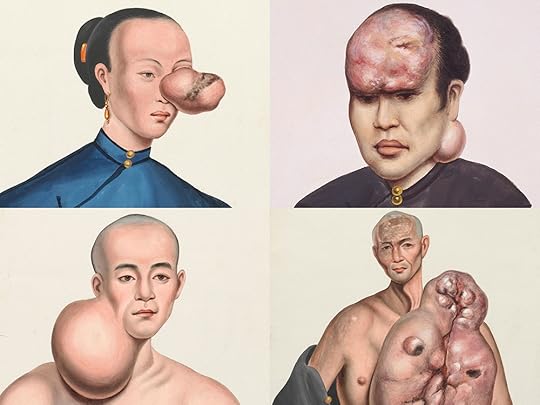
If you're feeling low, weeping into your corn-flakes because you never smiled enough at that parakeet who died a year ago, and you think life in the modern world is a sad fucking thing... this book should be a pick-me-up. Because you might not be happy at the moment, but you don't have a 10-lb tumor hanging from your face (unless, of course, you DO, in which case I'm very... blechh).

This gorgeously designed little 7" x 10" book, 'little' being relative to typically oversized art monographs, is one of the most paradoxically appealing and revolting releases of the year. I have long admired D.A.P.'s commitment to utilizing the highest-quality materials and binding in every book they publish, and The Sick Rose is no exception.

The writing is informative and impeccably researched, delving into the gruesome history of anatomical study in a professional manner that walks the tightrope between sensationalistic indulgence of morbid fascination on the one side, and overly clinical jargon designed to emotionally distance the reader on the other.

description
description

The earliest years of what would become modern medicine were remarkable in the lengths these 'Resurrectionists' went to in obtaining corpses for study. Doctors functioning under the influence of dangerously obsessive desires, be they purely for intellectual enlightenment and eventual renown, or something far more perverse, created a dark and ugly industry... and in 18th and 19th century Europe, that's really saying something.

Gabriel Von Max, 'The Anatomist'; Von Max captured something of the lurid fascination and perverse sensuality associated with the autopsy, particularly when the corpse belongs to a young and beautiful woman (All other images are from 'The Sick Rose'):
description

For a time, condemned criminals were routinely sentenced to death and public dissection, their bodies donated to the Medical Institutes*. This practice was ended in the early 19th Century, but parliament allowed that any person found dead without identification and/or someone willing to claim their body would be fair game for anatomical research. This amounted to depriving the poorest classes of any guarantee that they would be given a decent burial, and many were outraged that poverty alone meant they might be dissected publicly like criminals. 'Burial Insurance' became a popular method of avoiding the indignities that might have been inflicted on their bodies. As test subjects became scarce, members of the nascent medical community were complicit in murder, paying money to the 'Ghouls' that stalked the harbors for departing ships, where they would kill drunken sailors not likely to be missed and deliver them to the Anatomists.

description
description

This Black Market trade in lives was rooted in an upper class arrogance that saw the poor as a drain on society. The arrogance of medical researchers, their smug self-assurance in the supreme importance of their work, was similar to the self-righteous and psychotic dogmatism of the Inquisition, the presumed right to kill and cause suffering for a greater good. Someone protect us all from 'good' men trying to save the world, because it always involves ending human lives. A worthless beggar or drunk was far more valuable dead, perhaps providing them with the knowledge of how to end smallpox, syphilis, cancer, even death itself (Hence the term 'Resurrectionist').

description
description

As fascinating as the history of medicine is, the artwork -- used to document and compare ailments in the age before cameras -- is truly stunning; first, because the level of technical ability is of a very high order, and second, because many of the symptoms depicted are horrifying, disfiguring the subjects to a point that is near monstrous. The fact that the artists rarely depersonalize their subjects, but instead make us see and feel for their suffering, forcing us to wonder who these poor people were, makes The Sick Rose one of the most powerful and poignant artbooks I've read. Once again, I have to comment on the design and layout, which is pretty damn slick -- I think they pulled out all the stops, knowing a project like this requires careful packaging. The cover image, the turquoise cloth spine and paint-embossed titles, the color endpapers which turn a blown-up detail of a torso covered in lesions into a random design element -- everything offers proof of the thought, labor and expense that went into all 260 pages of this fine volume. Not for the squeamish... or hypochondriacs. Highest Recommendations.

description
description

FOOTNOTE:
*That definitely sucked, but it was better than the fate that befell criminals in Edo-period Japan, who would be used, still living, to 'break-in' the newly forged katanas and dotanukis of the nation's Daimyo and high-ranking members of the Shogunate. In a time of peace, it wasn't possible to properly test and consecrate a sword in battle, so it became a 'two birds, one stone' method of 'blooding' swords and dealing with law-breakers in a way that was terrifying enough to deter other would be criminals... as well as utterly fucking grotesque, the condemned men losing limbs before being bisected at the waist AND decapitated.
Profile Image for Caro the Helmet Lady.
833 reviews462 followers
February 22, 2016
I'll give it 5 stars. no! 7 stars! just please don't make me look at it any more! The craft and detail of drawings is fantastic, but the diseases and deformations so grotesque and monstrous you get sick to your stomach almost immediately. Imagine that as a coffee table book...

P.S. The funny part is that as a kid I loved looking at the pictures in my mom's medical encyclopedia. My favourite ones were those with burns and mouth problems. I was fun kid, right.
Profile Image for Stephanie McGarrah.
100 reviews130 followers
September 17, 2015
Who knew pustules and tumors could be so lovely? If you like to look at pretty books this is one to get your hands on. Everything from the binding to the paper and design is awesome. I particularly enjoyed the section on skin diseases, having one myself that is usually embarrassing to think about. I'm not sure what it is and unfortunately could not use this book to self-diagnose. The pictures, as gruesome as they are beautiful, just increased my fascination of the human body, its insurrections and decomposition and how it has been perceived through time.

The author does a great job delving into the broader social context and meaning of these disorders and the writing is as interesting as the images themselves.
Profile Image for Bill Hsu.
992 reviews221 followers
March 9, 2019
(I'm somewhat obsessed with various aspects of medical history and documentation, and have a reasonable little collection of books on such. So my demands might be quite different from less obsessive readers. Warning: grumpy notes ahead.)

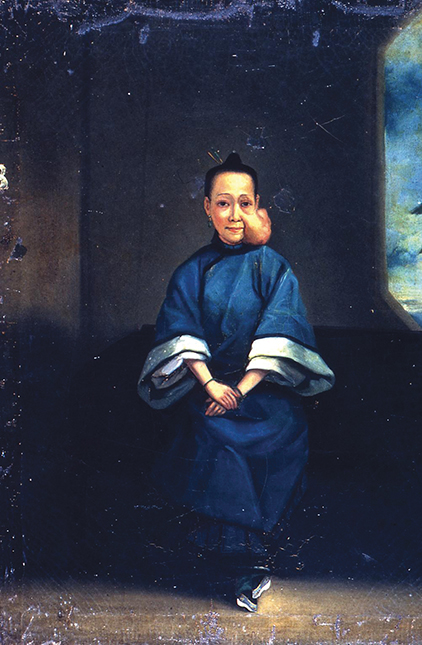
The illustrations are beautifully reproduced. Unfortunately, the text is, more often than not, dry and academic, and almost entirely focused on snippets of medical practices rather than the illustrators and illustrations. It's great to see beautiful samples of Kanda Gensen's textured paper prints and Lam Qua's paintings, but Gensen and Qua are only briefly mentioned in captions. I'm certainly more interested in Gensen's techniques, than in (say) the well-known historical use of mercury to treat venereal diseases. It's also laborious to match the illustrations with the sources.

I see the author also wrote the Dedalus Book of Gin. Hope that is not as umm dry.
Profile Image for El.
1,355 reviews491 followers
Want to read
May 15, 2014
Yes, please.

I love that I have friends who see articles about gross medical stuff and think, "Oh, hey, El would be interested in this."
Profile Image for Hon Lady Selene.
579 reviews85 followers
January 6, 2025
"Turning a person into a thing - a cadaver on a dissecting table, a specimen in a jar, an illustration in a textbook - demands Labour and not merely the physical skill of Cutting or Engraving. It requires the intellectual labour of reducing confusion and imperfection to comprehensible order and the cultural labour of bridging boundaries between life and death, personhood and object, speech and silence. The results of these effortful transformations are hybrids - literally combining bone and metal, tissue and paper, blood and ink, but also metaphorically as they show the body transformed by craft, context and theory - a confluence of Art and Anatomy."

Thoroughly enjoyable - high quality printed illustrations, with coherent information on the history of diseases, since the first physicians of Bologna started dissecting cadavers in the 13th century "with a knife in one hand and Galen's treatise in the other".

Richard Barnett really highlighted the laborious process involved in creating medical illustrations in the 17th century as not many physicians actively knew how to sketch, therefore the first steps involved the physician securing a supply of bodies and a private space for dissection. A draughtsman would make detailed sketches of the body parts/organs presented. An engraver would cut the plates. A compositor would position the images and explanatory texts. A binder would make the book. And a publisher would be in charge of selling and distribution.

All this posed a problem as an objective clinical gaze cannot be sustained if passing through so many pairs of eyes and hands, therefore the process would sometimes require as many as 50 dissections for one illustration, so the artists involved would know precisely what to draw.

Scottish surgeon and artist Charles Bell bypasses much of this process by creating his own detailed illustrations in the 1802 treatise 'Anatomy of the Brain', see here.

Other interesting stuff:

(! some of these links are not for the easily nauseated !)

- this 17th century illustration of Smallpox made by the Japanese physician Kanda Gensen, who combined both a visual and a tactile way of depicting disease.

- this illustration of Tuberculosis from 1912 by Richard Cooper, massively reminiscent of The Magic Mountain, mentioned in the chapter, alongside Keats, Barrett Browning, Thoreau, Chopin, and 6 Brontës.

- this illustration of Cancer, made in gouache by Lam Qua, commissioned by the American physician Peter Parker, who opened a hospital in Canton in 1835.

- this before/after illustration of a woman with Cholera, second portrait showing her an hour after contracting the disease.

5 stars for the comprehensive Further Reading and Places of Interest lists at the end.
Profile Image for Laura Leilani.
371 reviews17 followers
February 26, 2018
Ten chapters:
Skin diseases
Leprosy
Small Pox
Tuberculosis
Cholera
Cancer
Heart Disease
Venereal Diseases
Parasites
Gout

Each chapter has a historical overview of the disease and how it was treated. The descriptions of the ongoing research were very interesting. Usually research involved experimenting on prisoners but sometimes unwitting servants would do. One Dr injected himself with Gonorrhoea to prove it was a separate disease from Syphillis.

It's the color plates that are the main part of the book. Genuine color plates used for medical training, some are people who have been infected others are taken from dissected parts. The cover of the book is a twenty three year old woman who has been infected with Cholera for only an hour.

The color plates themselves are printed in high quality; there was not a single plate in the book where the colors did not line up perfectly. Excellent printing. Fascinating read
Profile Image for Joseph Hirsch.
Author 50 books132 followers
July 10, 2022
It’s hard, maybe impossible at this great remove to truly appreciate a pre-photography world. It’s like trying to imagine a world where the only way to experience music was to hear it live.
But such a world did once exist. And even when photography was a nascent art, there were those who preferred paintings, especially when it came to the depiction of medical ailments. Looking at the images in The Sick Rose, it’s easy to see why.
Everything rendered here from cholera—depicted in eerie teals—to gout—with massive orblike tumors throbbing beneath the skin—is as aesthetically arresting as it is off-putting. If you’re the kind of person who guiltily sneaks off to watch a zit popping or a deworming video on YouTube, wondering what’s wrong with you, this is the book for you.
The medical drawings, paintings, and wax models herein are lurid to the point of prurience, richly colored and backed by informative introductions explaining the state of medicine at the time. Subjects covered range from tuberculosis (which, like gout, had great cache among the romantic and well-heeled) and sexually transmitted diseases. Looking at the ravages of tertiary syphilis, cratered noses and spirochetes drilling their way into brain tissue, it becomes easier to understand puritanism and the eschewing of fleshly pleasures.
The book can be read, in a single afternoon, but would no doubt make a good coffee table tome, albeit certainly a morbid one. Those with an especial interest in art history and medical history will find it even more edifying than the layperson. But the only prerequisite to enjoy this one (if that’s the right word) is a pair of eyes. Highest recommendation, except for those of an especially weak constitution.
Profile Image for Anna  Gibson.
393 reviews85 followers
June 21, 2025
How should an artist depict the flesh and the soul, and what thoughts and feelings should such a depiction evoke?

A disappointing book that has a solid introduction regarding the development and purpose and morality of medical illustration, a few sentences scattered throughout that vaguely discuss elements of medical illustration... and the rest is focused on the medical symptoms and treatments of various diseases rather than on the supposed subject of the book.

Almost all of these disease-oriented chapters that proceed a series of illustrations have nothing to offer on the subject of said illustration. Instead, we get information about those who studied the disease. Not those who illustrated it or how the illustrations came about or the techniques used, just... medical information.

It was exciting to see far lesser known non-Western illustrations reproduced here, but you get zero information about the artists or the books themselves.

Overall, a misleading book that doesn't really live up to its supposed premise. Worth a check-out at the library for the high quality illustrations, but I would've been upset if I spent money on it.
Profile Image for Mel.
461 reviews99 followers
June 12, 2023
This is a fascinating book with gorgeous illustrations of well, people with illnesses and illness related things. Early medical drawings and a very basic history of early medicine. It is not a book for people easily grossed out by detailed drawings of frightening looking skin rashes or the hypochondriac.
Profile Image for Jessie Pietens.
277 reviews24 followers
September 20, 2018
Absolutere stunning book. Although the drawings can be quite gruesome, they are so well crafted! I found it really interesting to read short snippets of information about the big diseases of the 18th and early 19th century. This book was beautifully put together: a real eye catcher. I reserve my 5 stars for my “favourite books of all time” but there is truly nothing wrong with this one. It’s just more of an informational read. Loved it!
Profile Image for Rebecca.
54 reviews43 followers
June 12, 2014
A beautifully illustrated medical history book with short medical commentary. I did not like the way the author grouped the descriptions of the pictures and felt that there was a dearth of explanation of the illustrations (approximate date, country of origin, and the modern disease description). The pictures which fascinated me the most were a collection of hand-drawn Japanese pictures from the late 17th or early 18th century rendering three dimensional smallpox lesions. These drawings probably appealed to the more texture and shaped centered Japanese mindset contrasting with the Occidental smallpox depictions in the previous pages and made these Japanese drawings extremely unique in the history of medical illustration.
Profile Image for Kat.
18 reviews
November 9, 2015
Dazzling depictions of horrifying afflictions.
Profile Image for Stella Whitfield.
7 reviews
July 12, 2025
The nobility given to the decaying faces! The sensual pulling back of a sheet to reveal the festering wound. Old hands folded on a table, a waiting mystic ready to reveal his secrets: the slow peeling back of his fingernail.

“We have known a professor as much enraptured with the delineation of the different stages of vaccination, as a florist with a bed of tulips, or an auctioneer with a collection of Indian shells”

My eczema’s been really acting up on account of our heat pump and I’ve been trying to catalog the different shades of red and pink where it cracks along my knuckles.

The face of a 13 yr old boy made very old and wizened by leprosy in the first third of book makes me stop in my tracks a bit—now I am reading having blinked away the eyes of the voyeur. I thought of him alone in a lepers colony.

“Some even affected a fashionably consumptive appearance, whitening their faces with powder and mimicking emaciation with corsets” Consumption chic…

Abrupt ending spoils the show … interesting thoughts around colonisation’s relationship to disease ; industrialisation’s relationship to disease ; syphilis-as-artistic-driver ; etc compelling things like this get raised and never really resolved ah well
Profile Image for Rubis Lantier.
55 reviews33 followers
January 9, 2025
4.5 ⭐️
I really appreciated the text, it was just enough history and context and can be easily understood if you have a bit of biological science background.
The images are fascinating, notably because these diseases degenerated to great extent in the absence of adequate treatment. I will never see such cases IRL.
I also liked the chapters/main subjects.
It loses half a star because I was greatly frustrated by vague captions, like "bunch of skin diseases" - okay, which ones?! But I do understand that it is very likely that they were not known and not written in the original books. I would have appreciated being able to read the original captions to some of these illustrations.
Profile Image for Kim.
29 reviews
September 9, 2019
I enjoyed The Sick Rose more than Barnett’s Crucial Interventions. It had more interesting and more easily read text chapters, and a perspective more focused on the art in medical history, rather than medicine och surgery in itself. Sometimes I felt it could have focused even more on this, but still great.
Profile Image for Tamara Fahira.
130 reviews8 followers
January 19, 2022
The Sick Rose
by WILLIAM BLAKE

O Rose thou art sick. 
The invisible worm, 
That flies in the night 
In the howling storm: 

Has found out thy bed
Of crimson joy:
And his dark secret love
Does thy life destroy.

Terrifying but this masterpiece grew my great curiosity. My first five-stars-rated book in this year. Coffee table book with beautifully painted vintage pictures in an age before colored photography, various knowledges about the epidemics that plagued in 19th centuries.
Profile Image for Irka.
276 reviews24 followers
June 30, 2022
It's an interesting though not an easy read, mostly because of the font size. However its content is worth reading.
------
Ciekawa książka, choć nie prosta w lekturze z uwagi na rozmiar czcionki i podział na kolumny, przez co sprawia wrażenie encyklopedii.
Profile Image for Asha Stark.
620 reviews18 followers
October 12, 2020
Growing up, I was absolutely FASCINATED by my mother's medical textbooks with all their gore and awesomely terrifying information. So maybe my repeated readings of those are why I felt let down by this book: The information in it was exceptionally basic and even the discussion of the art the book's about was... Meh.

I wanted to hear in depth about the art, the subjects where possible, the artists themselves. The processes that went into creating and distributing the plates contained in this book. I paid $40 and got none of that and honestly? I'm a bit bloody angry about it.

Two stars purely because the binding is lovely and high quality, and the illustrations have been reproduced beautifully.
Profile Image for Cindy Waldman.
15 reviews1 follower
May 27, 2017
Ver interesting

But I would have enjoyed a bit more context. For example, after discussing cholera or gout and seeing wonderful images, bring me up to date... "This disease, which killed tens of thousands, is now eradicated with antibiotics", or "Despite centuries of ineffective treatments, current sufferers experience the same discomfort as their predecessors". Just wanted more.
Profile Image for Erik B.K.K..
781 reviews54 followers
December 29, 2023
A great tool if you want to lose weight: look at the pictures every day and you'll lose your appetite.
Interesting pictures, not so interesting read. The info is scarce, and a short description of what each disease actually is would have helped. I also hate having to leaf through all the time to read the caption of each illustration, I don't understand why editors don't simply put these next to them.
Profile Image for Luna Miguel.
Author 22 books4,782 followers
May 3, 2014
"La parte dedicada a las enfermedades de la piel y al cáncer me ha partido el corazón. Las ilustraciones son tan desagradables como brutalmente bellas. La pena: haberlo leído en PDF. Espero que pronto me llegue la edición física, para que cada cicatriz pueda ser acariciada. Para que cada enfermo, en realidad, huela a tinta.

Una buena enciclopedia, para coleccionistas."
Profile Image for Lindsay.
115 reviews
March 9, 2015
The bulk of the book is antique medical illustrations but the text is interesting as well (the works are grouped by disease with a an introduction to each: Cancer, leprosy, tuberculosis, VD, etc) It's worth looking through just because it's gorgeously designed, printed & bound. I do wish every illustration referenced the artist, but I guess a lot of that info may have been lost to history.
Profile Image for Ian Rogers.
33 reviews3 followers
June 25, 2014
Great illustrations but I found it off-putting that instead of titling the illustrations they were all referenced to an index at the back of the book. The same was done with the text. Footnotes would have provided a far better reading experience. Great reproductions though, and very informative.
Profile Image for The Kawaii Slartibartfast.
1,004 reviews22 followers
January 9, 2021
Today I learned that leprosy (Hansen's Disease) can be really beautiful and yes I am well aware of how strange that it is to say but im talking purely of art and temporarily ignoring the physical agony and social stigma these folks would've gone through.
This is a beautiful book of horrible pain and I am so glad I read it.
I winced and tears filled my eyes when I got to the smallpox part because that's not a thing I'll ever have to worry about. And I am in awe of how far we've come in terms of medicine. And how far we have yet to go
341 reviews2 followers
May 8, 2020
What a strange book. A bit of history, contrasting stunning paintings with the horrible diseases that they depict. I don't know how I feel about it, but it certainly is different. Not good "before bed" reading.
Displaying 1 - 30 of 112 reviews

Can't find what you're looking for?

Get help and learn more about the design.