

What do you think?

Daredevil: Born Again
In Frank Miller and David Mazzucchelli's Born Again, the comic's titular hero has his life destroyed after his most menacing enemy learns his real identity. His attempts to rebuild his life and sanity result in one of the most gripping and impactful superhero storylines of all time.
Released in 1986, the storyline is an extraordinary exploration of what happens when a hero's identity is revealed, and his personal life completely annihilated. We see Daredevil reduced to the lowest depths in the character's history, but we also follow his painstaking path toward redemption.
This entry in MARVEL AGE OF COMICS explores Born Again's gorgeous and unique artwork, the lasting impact of its story and art, and how it forever changed the ways superhero characters and their secret identities have functioned.
Released in 1986, the storyline is an extraordinary exploration of what happens when a hero's identity is revealed, and his personal life completely annihilated. We see Daredevil reduced to the lowest depths in the character's history, but we also follow his painstaking path toward redemption.
This entry in MARVEL AGE OF COMICS explores Born Again's gorgeous and unique artwork, the lasting impact of its story and art, and how it forever changed the ways superhero characters and their secret identities have functioned.
160 pages, Paperback
Published November 11, 2025
Ratings & Reviews
Friends & Following
Create a free account to discover what your friends think of this book!
Community Reviews
Displaying 1 - 24 of 24 reviews

September 2, 2025
Thanks so much to NetGalley for the free Kindle book. My review is voluntarily given, and my opinions are my own.
This is an overview of the 1986 comic arc in the Daredevil series #227-233. It details each story and even has some panels from the original comics.
I can see this being very helpful for people who can't find all the comic books but want to know how to story ends. Or even just want to know more backstory of their favorite characters.
Definitely would recommend.
This is an overview of the 1986 comic arc in the Daredevil series #227-233. It details each story and even has some panels from the original comics.
I can see this being very helpful for people who can't find all the comic books but want to know how to story ends. Or even just want to know more backstory of their favorite characters.
Definitely would recommend.

November 10, 2025
I was excited to read this because I’m a massive Daredevil fan, and it didn’t disappoint.
Ryall delves into the Born Again comic series - an in-depth analytical look at the storylines and artwork and what they meant for the characters. This was really interesting and whilst it was a quick read, it was a fun one.
You can really tell Ryall is a Daredevil comics fan and his enthusiasm and knowledge shines through. There’s something so enjoyable about people talking about things they’re enthusiastic about and love - which made this a really enjoyable read.
I’d recommend if you’re a Daredevil fan and want to know more about his comics.
ARC copy provided by Bloomsbury Academic & NetGalley in exchange for an honest review
Ryall delves into the Born Again comic series - an in-depth analytical look at the storylines and artwork and what they meant for the characters. This was really interesting and whilst it was a quick read, it was a fun one.
You can really tell Ryall is a Daredevil comics fan and his enthusiasm and knowledge shines through. There’s something so enjoyable about people talking about things they’re enthusiastic about and love - which made this a really enjoyable read.
I’d recommend if you’re a Daredevil fan and want to know more about his comics.
ARC copy provided by Bloomsbury Academic & NetGalley in exchange for an honest review

Read
September 15, 2025I've been using the shorthand 'Marvel 33 1/3' for this series, but the two I've read so far each addressed a decade of comics, whereas here the parallel is much closer, Ryall addressing a single storyline which was told across seven issues and is readily available in one collection of manageable size – hell, much like a designated classic album, you can even get it in a variety of different formats. It's the archetype of the arc in which a superhero gets his life broken down and then rebuilt, and the core of this book is exactly what the 33 1/3 comparison would lead you to expect: the 85-page third chapter analyses each issue in detail, looking at what Miller, Mazucchelli et al are doing on the page, the techniques and effects employed, while also occasionally diving into what was happening behind the scenes and shedding further light that way – so, for instance, a late tweak to the art removed a Peter Parker cameo, thereby increasing the sense of the story's and the hero's isolation, at least until the final issue, where Daredevil's distance from the guest-starring Avengers is a big part of the point. It's very good, right down to how it uses its own pages, where as well as the full art reproduction the series uses as standard, there's also a neat trick of sometimes deploying a speech bubble or caption in isolation. All of which serves to remind one that, however much Mazucchelli's subsequent path has served to take him away from superheroes, and Miller's away from being any cop at all, they really did create something special here.
The problem is that, even for a slim volume, 85 pages isn't quite enough, the rest of the book being taken up with preamble and aftermath. Some amount of which, clearly, you do need – a reminder of Miller's first DD run, developments between that and Born Again, a nod to the story's reputation and influence. But for some reason, the same Ryall who offers such a taut, readable analysis in the heart of the book here gets lost in a morass of repetition (the number of times we hear that the story opens with Karen Page in a Mexican motel room...), broken-backed sentences, and plain ugly English that's all the more distressing given Ryall has worked extensively as an editor. "A year after taking over as series artist, Miller also started writing the series, too" would occasion a wince in isolation, but the same duplication happens often enough that I wondered whether Ryall had somehow decided 'also' and 'too' are inseparable twins, rather than cousins who really shouldn't be invited to the same sentence. Maybe this will get ironed out between my Netgalley ARC and the finished copy, but it's not great that it was there in the first place – and unlike the strong central section, I'm not convinced there's that much being said even once you polish up the manner of the saying. As for suggesting that Born Again is "perhaps only matched by another industry high from 1986 also created by Miller and Mazucchelli, that one featuring the early days of a certain pointy-eared dark knight detective"...well, OK, Watchmen does finally get allowed on to the podium towards the end of the book, but when it does, it's sharing space with that other great milestone in comics' reinvention....Mutant Massacre? Still, skim or skip this stuff and the actual Born Again chapter is a great revisit for a deservedly revered run.
The problem is that, even for a slim volume, 85 pages isn't quite enough, the rest of the book being taken up with preamble and aftermath. Some amount of which, clearly, you do need – a reminder of Miller's first DD run, developments between that and Born Again, a nod to the story's reputation and influence. But for some reason, the same Ryall who offers such a taut, readable analysis in the heart of the book here gets lost in a morass of repetition (the number of times we hear that the story opens with Karen Page in a Mexican motel room...), broken-backed sentences, and plain ugly English that's all the more distressing given Ryall has worked extensively as an editor. "A year after taking over as series artist, Miller also started writing the series, too" would occasion a wince in isolation, but the same duplication happens often enough that I wondered whether Ryall had somehow decided 'also' and 'too' are inseparable twins, rather than cousins who really shouldn't be invited to the same sentence. Maybe this will get ironed out between my Netgalley ARC and the finished copy, but it's not great that it was there in the first place – and unlike the strong central section, I'm not convinced there's that much being said even once you polish up the manner of the saying. As for suggesting that Born Again is "perhaps only matched by another industry high from 1986 also created by Miller and Mazucchelli, that one featuring the early days of a certain pointy-eared dark knight detective"...well, OK, Watchmen does finally get allowed on to the podium towards the end of the book, but when it does, it's sharing space with that other great milestone in comics' reinvention....Mutant Massacre? Still, skim or skip this stuff and the actual Born Again chapter is a great revisit for a deservedly revered run.

August 27, 2026
🏛️ RAW INK, BROKEN LIVES, AND HOLY RESURRECTION: AN ARCHIVAL MASTERCLASS 🏛️
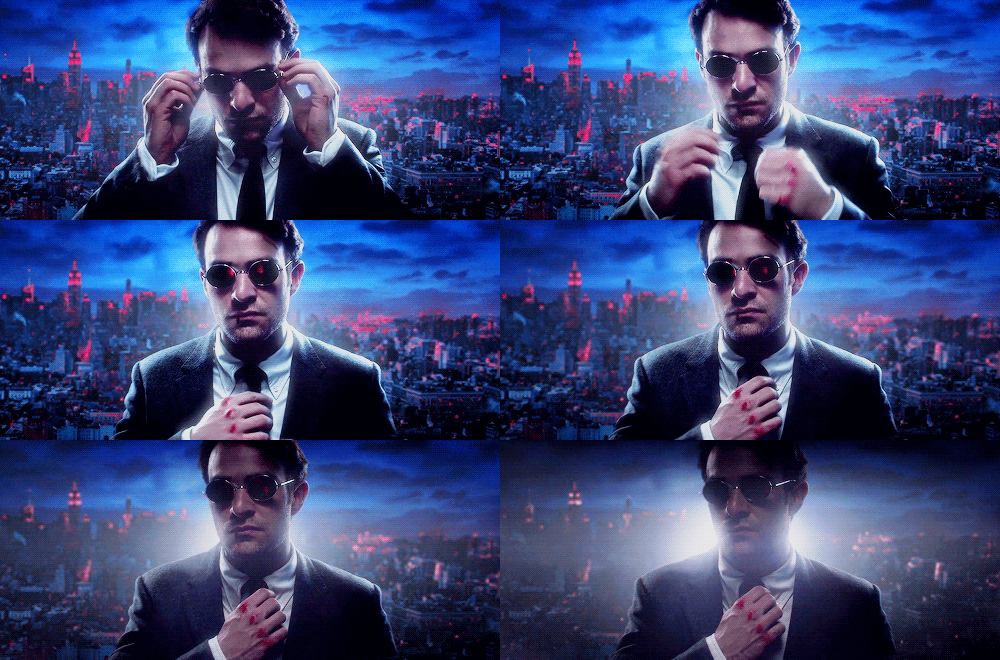
Edited and curated by Chris Ryall, the Daredevil: Born Again Artist's Edition strips away four-color printing to present David Mazzucchelli and Frank Miller's magnum opus in its purest, most visceral physical form: raw, high-resolution original art scans straight from the drawing board.
“And I... I have shown him that a man without hope is a man without fear.”
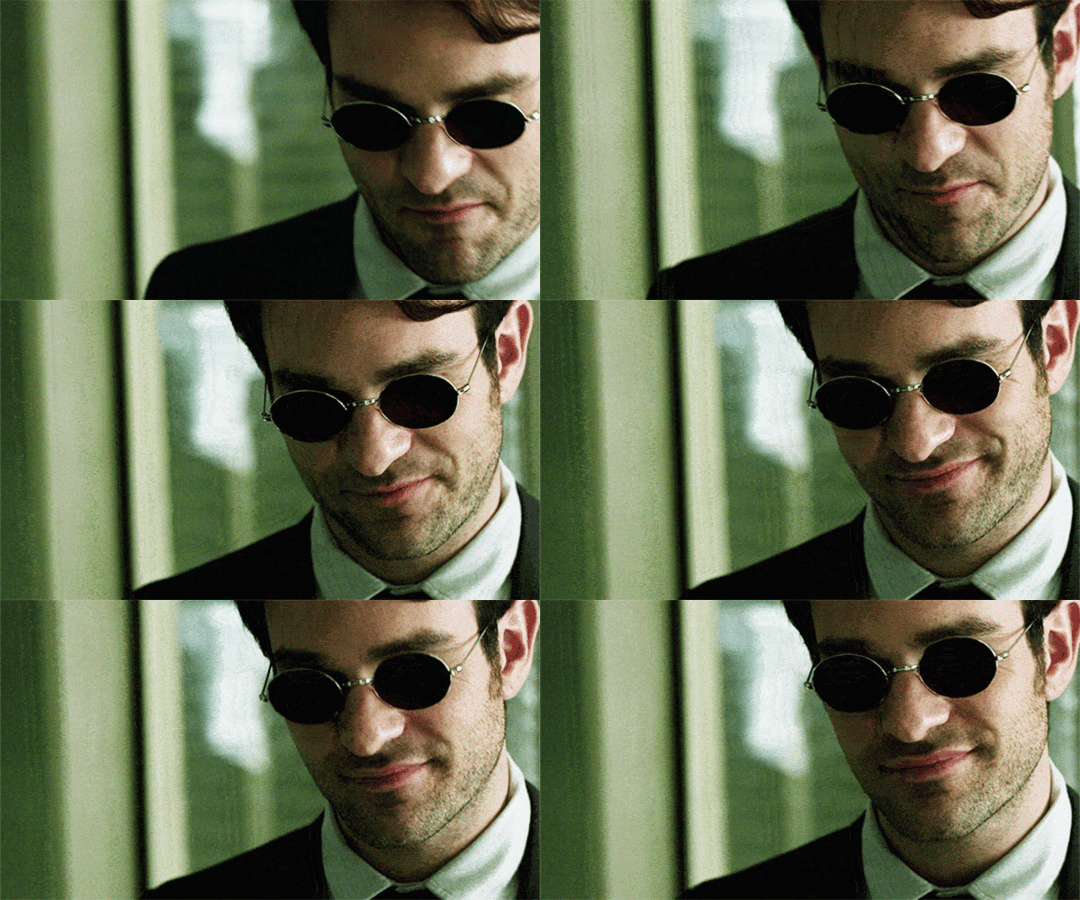
🎨 The Vibe Check:
If the profound psychological devastation and redemption arc of Frank Miller's greatest script was placed directly under a museum archivist’s microscope, allowing you to see every pencil line, ink splatter, whiteout correction, and hand-lettered margin note, you would get this edition. It is an essential monument to comic book craftsmanship.
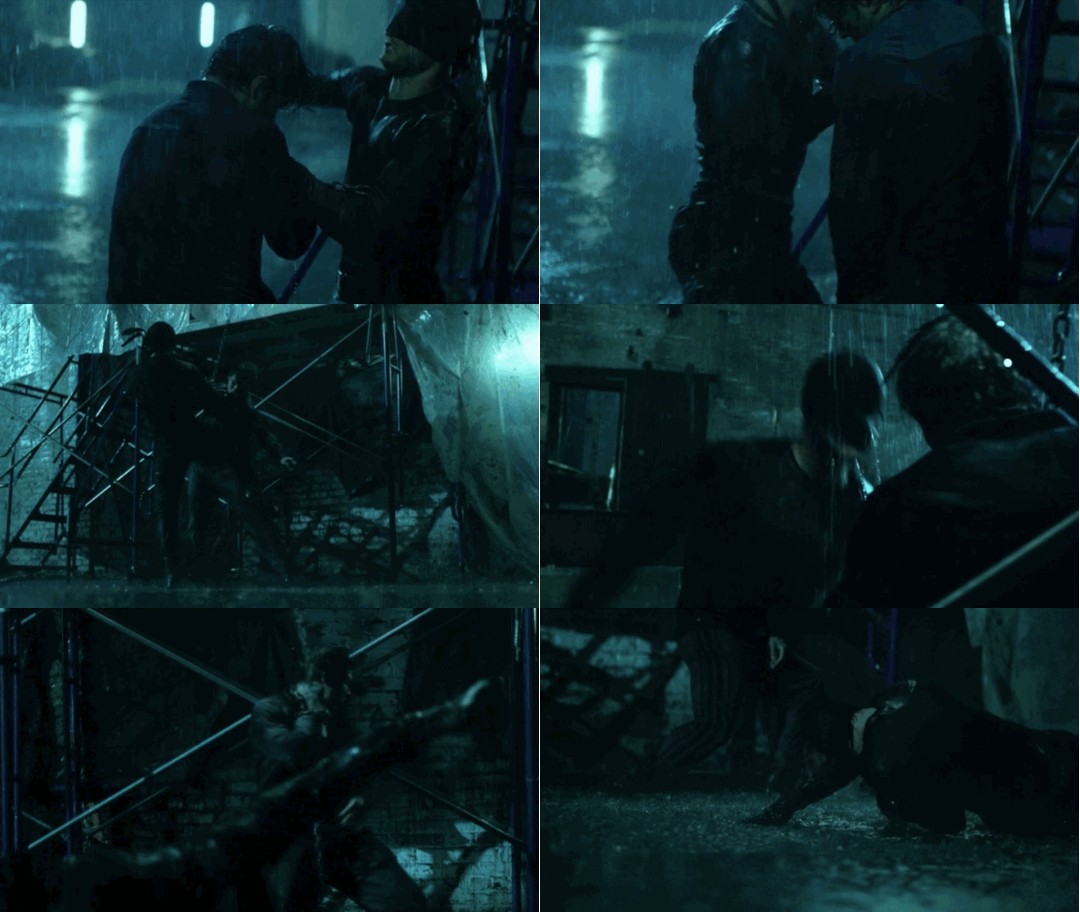
📖 The Deep-Dive & Edition Overview:
Frank Miller's Born Again (spanning Daredevil #227–#233) remains the undisputed gold standard of Marvel deconstructionist storytelling. Karen Page sells Matt Murdock’s secret identity for a hit of heroin, the information reaches Wilson Fisk (The Kingpin), and Fisk systematically dismantles Murdock’s life piece by piece—stripping his law license, freezing his bank accounts, bombing his brownstone, and reducing him to a paranoid, homeless wreck wandering Hell's Kitchen.
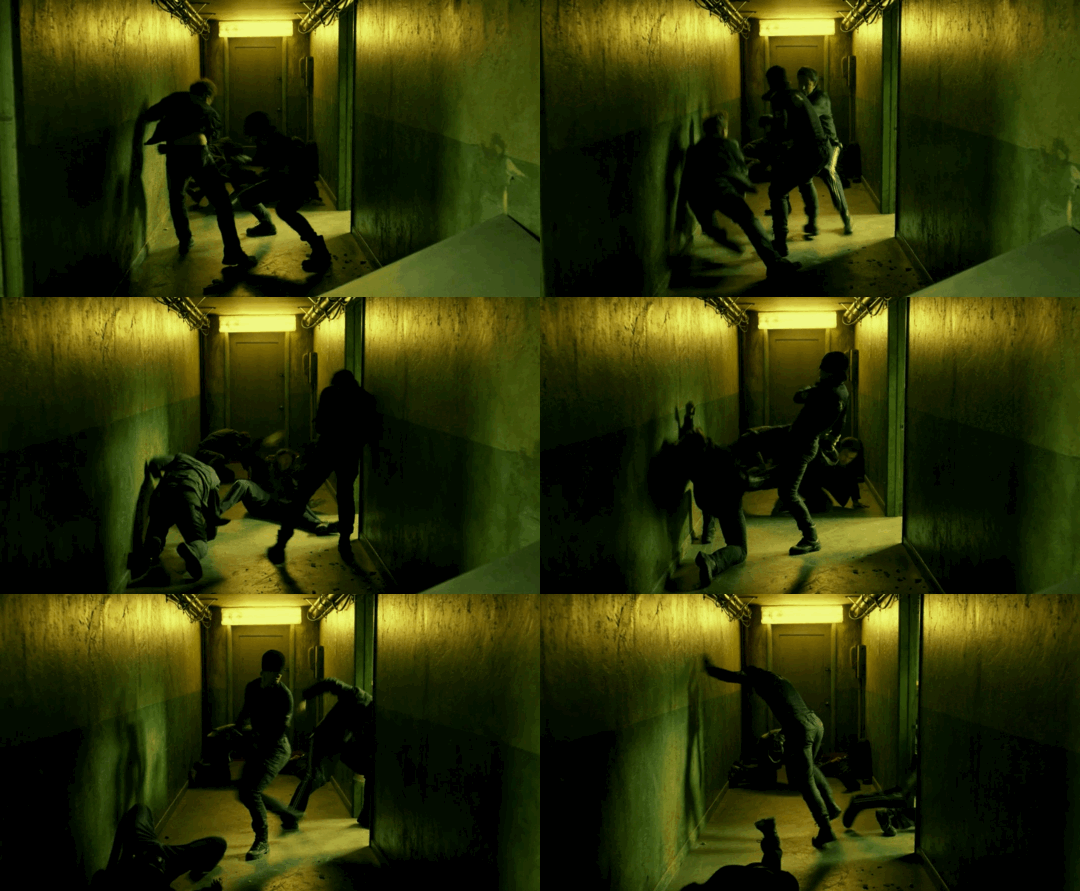
What Chris Ryall accomplished with this curated Artist’s Edition is nothing short of miraculous for comic historians. Scanning Mazzucchelli’s original pages at actual size (12x17 inches) in full color reveals the delicate, masterly anatomy of comic production:
The Ink Textures: You can visually track the weight of Mazzucchelli’s brush strokes, feathering, and cross-hatching across Murdock's descent into madness.
Process Artifacts: The paste-ups, blue-pencil layout guidelines, margin notes between creators, and fluid correction fluid marks humanize the creation of what many consider Marvel's greatest single storyline.
The Iconic Pieta Moment: Seeing the famous visual callback of Sister Maggie cradling a broken Matt Murdock in raw brushwork is an unforgettable aesthetic experience.
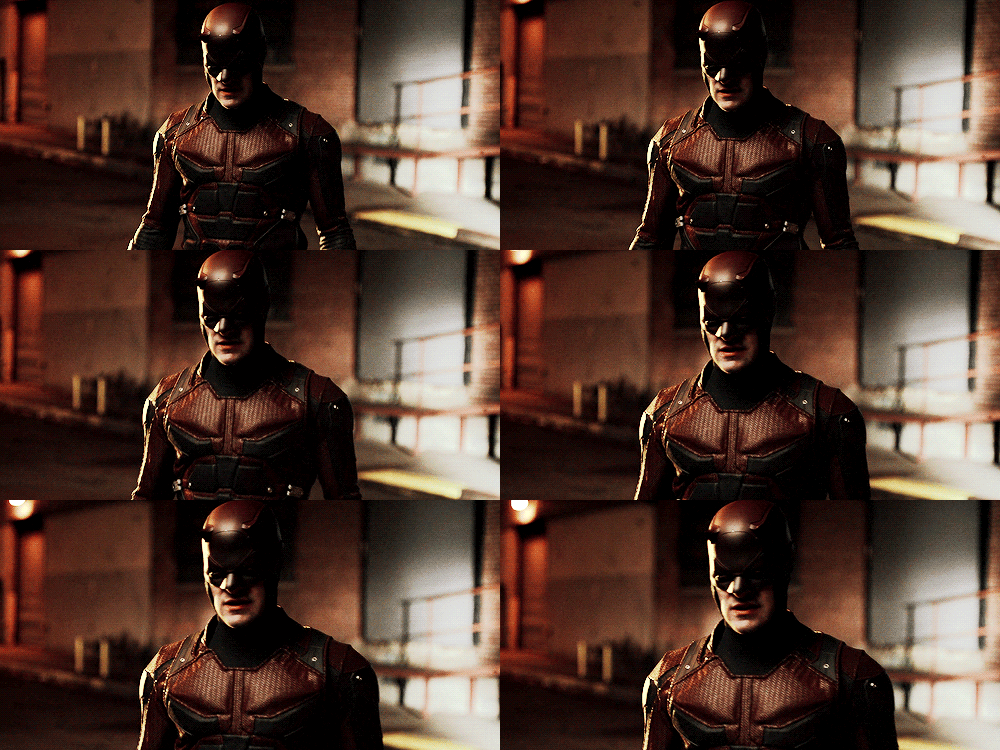
🔥 Why This Archival Release Is Extraordinary:
Curatorial Diligence: Chris Ryall and IDW tracked down legendary, elusive private collectors across the globe to assemble near-complete scans of one of the most historically significant storylines in medium history.
Mazzucchelli’s Line Dynamics: Without modern digital recoloring or vintage newsprint dot matrices flattening the images, Mazzucchelli's absolute mastery of noir lighting, negative space, and architectural weight in Hell's Kitchen takes center stage.
Historical Preservation: It treats comic books with the same fine-art prestige typically reserved for classic renaissance sketches and historic manuscripts.
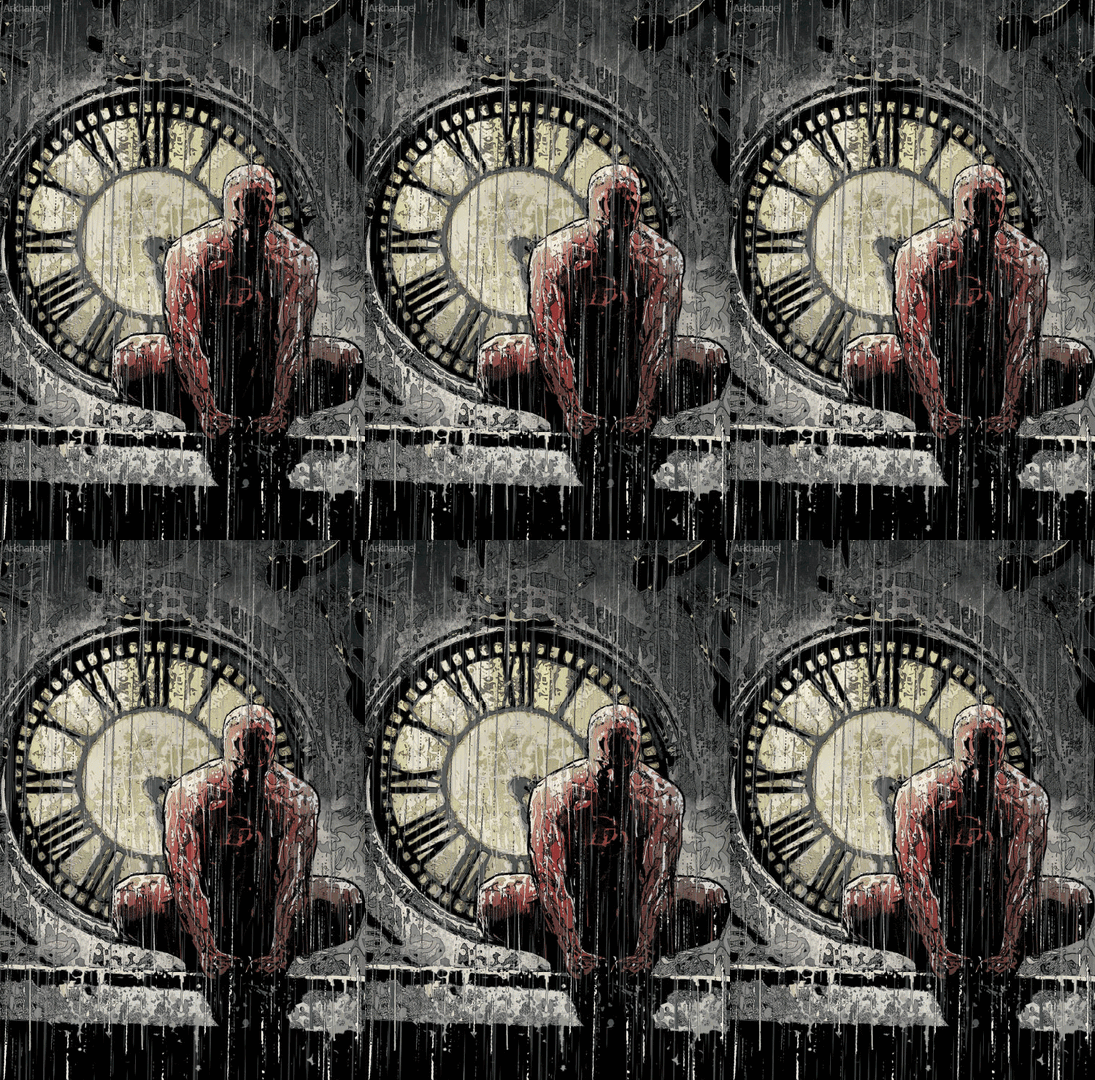
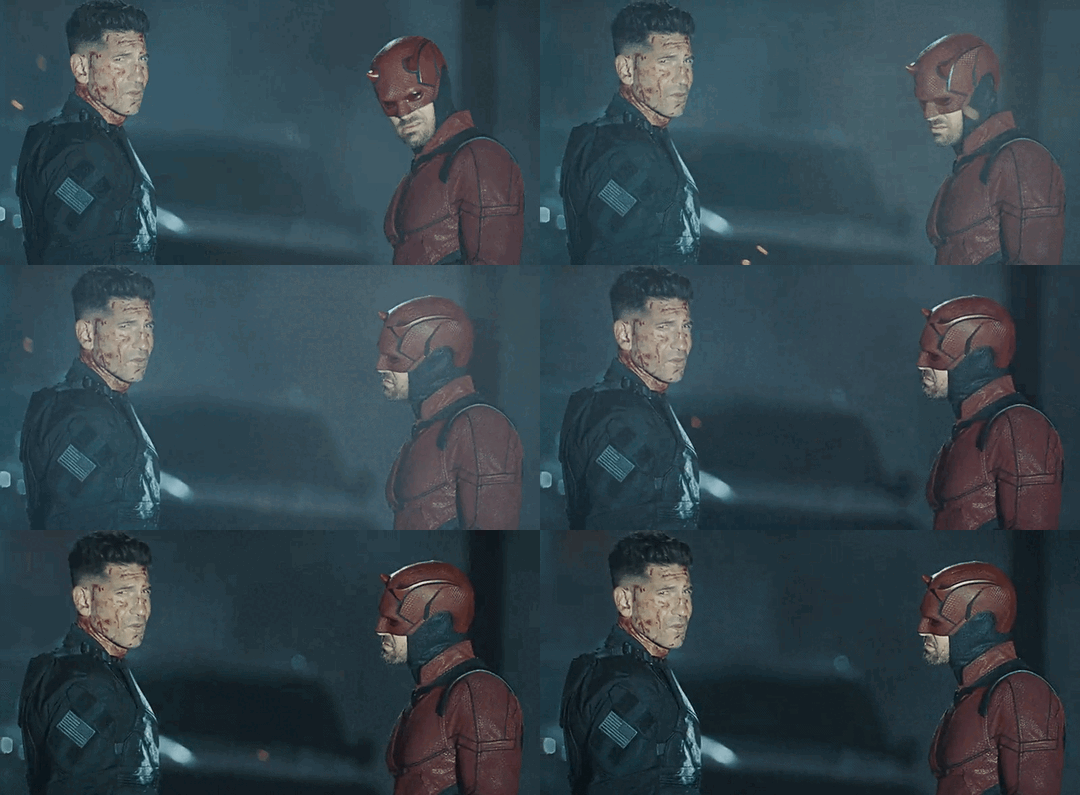
⭐️ THE VERDICT:
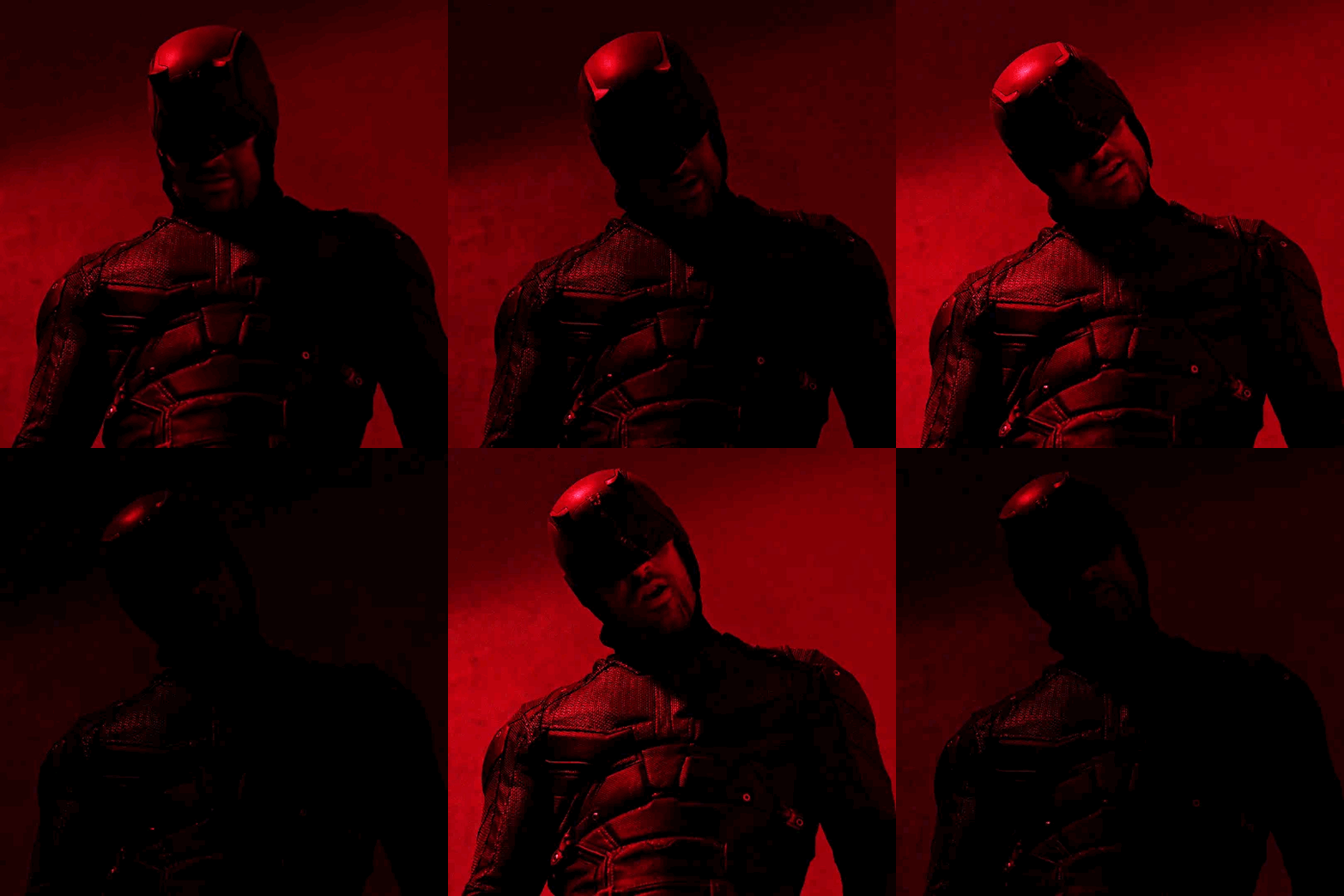
Final Rating: ⭐⭐⭐⭐⚝ (4/5 Stars - The Crown Jewel of Comic Archiving)
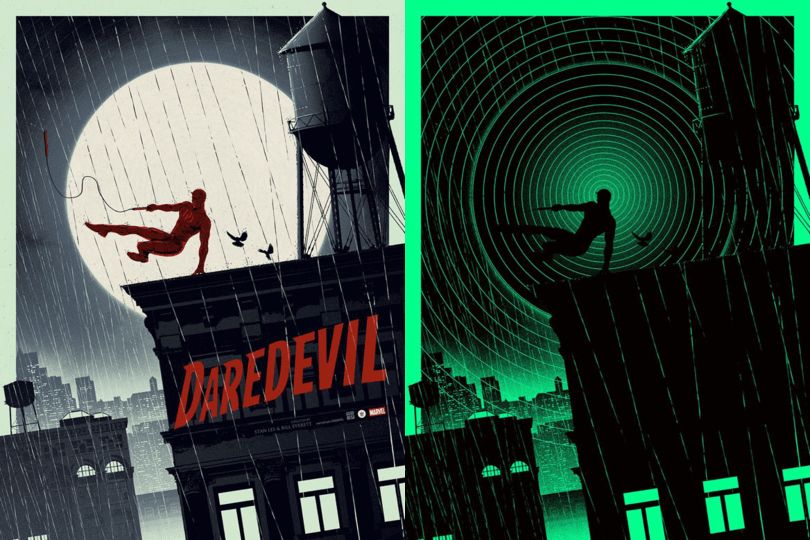
Edited and curated by Chris Ryall, the Daredevil: Born Again Artist's Edition strips away four-color printing to present David Mazzucchelli and Frank Miller's magnum opus in its purest, most visceral physical form: raw, high-resolution original art scans straight from the drawing board.
“And I... I have shown him that a man without hope is a man without fear.”
🎨 The Vibe Check:
If the profound psychological devastation and redemption arc of Frank Miller's greatest script was placed directly under a museum archivist’s microscope, allowing you to see every pencil line, ink splatter, whiteout correction, and hand-lettered margin note, you would get this edition. It is an essential monument to comic book craftsmanship.
📖 The Deep-Dive & Edition Overview:
Frank Miller's Born Again (spanning Daredevil #227–#233) remains the undisputed gold standard of Marvel deconstructionist storytelling. Karen Page sells Matt Murdock’s secret identity for a hit of heroin, the information reaches Wilson Fisk (The Kingpin), and Fisk systematically dismantles Murdock’s life piece by piece—stripping his law license, freezing his bank accounts, bombing his brownstone, and reducing him to a paranoid, homeless wreck wandering Hell's Kitchen.
What Chris Ryall accomplished with this curated Artist’s Edition is nothing short of miraculous for comic historians. Scanning Mazzucchelli’s original pages at actual size (12x17 inches) in full color reveals the delicate, masterly anatomy of comic production:
The Ink Textures: You can visually track the weight of Mazzucchelli’s brush strokes, feathering, and cross-hatching across Murdock's descent into madness.
Process Artifacts: The paste-ups, blue-pencil layout guidelines, margin notes between creators, and fluid correction fluid marks humanize the creation of what many consider Marvel's greatest single storyline.
The Iconic Pieta Moment: Seeing the famous visual callback of Sister Maggie cradling a broken Matt Murdock in raw brushwork is an unforgettable aesthetic experience.
🔥 Why This Archival Release Is Extraordinary:
Curatorial Diligence: Chris Ryall and IDW tracked down legendary, elusive private collectors across the globe to assemble near-complete scans of one of the most historically significant storylines in medium history.
Mazzucchelli’s Line Dynamics: Without modern digital recoloring or vintage newsprint dot matrices flattening the images, Mazzucchelli's absolute mastery of noir lighting, negative space, and architectural weight in Hell's Kitchen takes center stage.
Historical Preservation: It treats comic books with the same fine-art prestige typically reserved for classic renaissance sketches and historic manuscripts.
⭐️ THE VERDICT:
Daredevil: Born Again (Artist’s Edition), curated by Chris Ryall, is the ultimate celebration of sequential art. It elevates an already legendary Frank Miller and David Mazzucchelli masterpiece into an awe-inspiring masterclass of raw draftsmanship, storytelling mechanics, and archival excellence. An absolute holy grail for comic art aficionados.
Final Rating: ⭐⭐⭐⭐⚝ (4/5 Stars - The Crown Jewel of Comic Archiving)
July 9, 2026
This was an interesting exploration of what is a brilliant comic. It had elements of art history examinations and some intriguing insights into the comics world at large before, during, and after the story's publication.
I do think too much of the book is devoted to a run-down of the story of the comic, and wish this bit had been tighter and examined them more deeply. Overall though it was an interesting read and you can feel Ryall's enthusiasm brimming through the pages.
I do think too much of the book is devoted to a run-down of the story of the comic, and wish this bit had been tighter and examined them more deeply. Overall though it was an interesting read and you can feel Ryall's enthusiasm brimming through the pages.

November 21, 2025
I was looking forward to this series of Bloomsbury books on Marvel runs, but I was disappointed at the inaugural entry. The book is about 80% a straight recap of the series, less a detailed analysis than a summary. I wanted an exploration of the themes and imagery, but I got very little from this book that I didn’t get from re-reading Born Again beforehand. It doesn’t help that the presentation is odd: double-spaced, with an occasional typo. I suppose it would be a much shorter book at normal typography. I was pleased to see that they had significant amounts of color reproductions of Mazzuchelli’s art, though.
The book starts with a discussion about it from the Editor, Ralph Macchio. Later, they quote a contemporary review from Heidi McDonald: that’s what I was looking for more of. McDonald didn’t like it at the time: I have to imagine she’s changed her mind forty years later. Why not talk to her? Or others involved in the production? Or even forego the summary to dive into the themes? This one was a bit of a dud, but I’ll give the next couple in the series a try.
The book starts with a discussion about it from the Editor, Ralph Macchio. Later, they quote a contemporary review from Heidi McDonald: that’s what I was looking for more of. McDonald didn’t like it at the time: I have to imagine she’s changed her mind forty years later. Why not talk to her? Or others involved in the production? Or even forego the summary to dive into the themes? This one was a bit of a dud, but I’ll give the next couple in the series a try.
October 19, 2025
My thanks to NetGalley and Bloomsbury Academic for an advance copy of this book that is the first in series looking at the history of Marvel Comics from differing points of view, and different eras, this one focusing on the Man Without Fear, Daredevil and the storyline that showed what comics could do, a storyline that is still being mined by intellectual property owners today.
The say only love can break your heart. I'll take their word on it, but comics have broken my heart, my mind and my spirit much more that amore ever will. Every time one thinks that the comic industry has learned something new, that they have found a new maturity, they do something stupid like invest in collectible cards, bagged first issues, or giving an artist who can't draw feet prominence in what comics are going to look like. This happens alot, but in the mid-80's I was young, and thought that comics were going to be changing for the better. The stories seemed bigger, more real and more interesting. Watchman, Dark Knight, an independent comics scene that seemed to be finding itself. This didn't last of course. However some incredible stories came from this time. One of the first stories featured a blind crime fighter Matt Murdock, a man who used his enhanced senses to fight crime. A short run that has left an impact that is still being drawn on today. Daredevil: Born Again by Chris Ryall is the first in a new series the Marvel Age of Comics, that looks at the highlights and cultural impact the comics have had on society, readers and of course the characters themselves.
During the eighties the numbering of comics was pretty standard, until comic companies found that making something a number one meant more people buying it. Daredevil the comic had been up and down in the sales charts since starting in the mid-60's. Issue #227 looked like a standard issue, until one opened the comic. Karen Page an early character in Daredevil has gone from leading lady to an addict, with only one thing left to buy the drugs she needs. The secret identity of the superhero known as Daredevil. This information is passed up the line, arriving in the hands of Wilson Fisk, known as the Kingpin. Fisk is a smart man, who can see the moves that he needs to make, and is willing to wait to gain his revenge. And when he does it comes fast and hard. Matt Murdock is a vigilante by night, but a lawyer by day. Slowly without his knowing his life is being disassembled. Banks are foreclosing, utilities are shut off, he is facing disbarment, and his slowly losing his sanity. Culminating in the destruction of his house, his past, and everything he holds dear. Leaving him with nothing. Or so he and the Kingpin who has orchestrated this think.
This story hit so hard and so fast I still remember reading the issue. Written by Frank Miller who brought a new sense of writing, a maybe new fatalism before dark and gritty became cool, the story was dark, mean, violent, and yet hopeful. We all can be crushed by things outside our control, we can fall back, lose steps. We just have to pick up what we have and continue on. Abetted in this Miller had artist David Mazzucchelli a young artist but one willing to experiment, an artist who grew while working, honing skills that would also later, with Miller change DC's Batman. The story was strong, full of redemption, and also showing that while New York might be full of heroes, ie the Avengers, sometimes one can't wait to be saved. There was so much happening in this series, that I still can't get over the shortness of the run. Ryall looks at all of this interviewing editors on their decisions, addressing certain controversies. and laying out the legacy of what followed, for both Daredevil and the industry.
A very good look at a run many take for granted, and yet almost 40 years later is being used to create a streaming series. I enjoy this Bloomsbury series quite a bit, a nice mix of history and understanding of how comics worked, and continue to work. This is a good starting point for understanding the comics of today, and is perfect for longtime fans, and slightly interested people. I look forward to more in this series, hopefully written by Chris Ryall.
The say only love can break your heart. I'll take their word on it, but comics have broken my heart, my mind and my spirit much more that amore ever will. Every time one thinks that the comic industry has learned something new, that they have found a new maturity, they do something stupid like invest in collectible cards, bagged first issues, or giving an artist who can't draw feet prominence in what comics are going to look like. This happens alot, but in the mid-80's I was young, and thought that comics were going to be changing for the better. The stories seemed bigger, more real and more interesting. Watchman, Dark Knight, an independent comics scene that seemed to be finding itself. This didn't last of course. However some incredible stories came from this time. One of the first stories featured a blind crime fighter Matt Murdock, a man who used his enhanced senses to fight crime. A short run that has left an impact that is still being drawn on today. Daredevil: Born Again by Chris Ryall is the first in a new series the Marvel Age of Comics, that looks at the highlights and cultural impact the comics have had on society, readers and of course the characters themselves.
During the eighties the numbering of comics was pretty standard, until comic companies found that making something a number one meant more people buying it. Daredevil the comic had been up and down in the sales charts since starting in the mid-60's. Issue #227 looked like a standard issue, until one opened the comic. Karen Page an early character in Daredevil has gone from leading lady to an addict, with only one thing left to buy the drugs she needs. The secret identity of the superhero known as Daredevil. This information is passed up the line, arriving in the hands of Wilson Fisk, known as the Kingpin. Fisk is a smart man, who can see the moves that he needs to make, and is willing to wait to gain his revenge. And when he does it comes fast and hard. Matt Murdock is a vigilante by night, but a lawyer by day. Slowly without his knowing his life is being disassembled. Banks are foreclosing, utilities are shut off, he is facing disbarment, and his slowly losing his sanity. Culminating in the destruction of his house, his past, and everything he holds dear. Leaving him with nothing. Or so he and the Kingpin who has orchestrated this think.
This story hit so hard and so fast I still remember reading the issue. Written by Frank Miller who brought a new sense of writing, a maybe new fatalism before dark and gritty became cool, the story was dark, mean, violent, and yet hopeful. We all can be crushed by things outside our control, we can fall back, lose steps. We just have to pick up what we have and continue on. Abetted in this Miller had artist David Mazzucchelli a young artist but one willing to experiment, an artist who grew while working, honing skills that would also later, with Miller change DC's Batman. The story was strong, full of redemption, and also showing that while New York might be full of heroes, ie the Avengers, sometimes one can't wait to be saved. There was so much happening in this series, that I still can't get over the shortness of the run. Ryall looks at all of this interviewing editors on their decisions, addressing certain controversies. and laying out the legacy of what followed, for both Daredevil and the industry.
A very good look at a run many take for granted, and yet almost 40 years later is being used to create a streaming series. I enjoy this Bloomsbury series quite a bit, a nice mix of history and understanding of how comics worked, and continue to work. This is a good starting point for understanding the comics of today, and is perfect for longtime fans, and slightly interested people. I look forward to more in this series, hopefully written by Chris Ryall.
November 3, 2025
Next up, Chris Ryall focuses in on one of the best Daredevil runs in history with a look at
Daredevil: Born Again
.
What happens when a hero loses everything? In Frank Miller and David Mazzucchelli's Daredevil: Born Again, the comic's titular hero has his life destroyed after his most menacing enemy learns his real identity. His attempts to rebuild his life and sanity result in one of the most gripping and impactful super hero storylines of all time.
Released in 1986, the storyline is an extraordinary exploration of what happens when a hero's identity is revealed, and his personal life completely annihilated. We see Daredevil reduced to the lowest depths in the character's history, but we also follow his painstaking path toward redemption.
This entry in Marvel Age of Comics explores Daredevil: Born Again's gorgeous and unique artwork, the lasting impact of its story and art, and how it forever changed the ways super hero characters and their secret identities have functioned.
Unlike the first entry, Ryall's book revolving around Daredevil: Born Again was something special. I believe the shorter period of time and slightly longer book allowed for the information to be consumed a bit easier. The focus on one main character and one series allowed for a bit more breathing room. Like the other entries, this one also featured great imagery, illustrations, and samples of the story arc to give more context.
Whether you are big fan of Daredevil, the Born Again arc, or just want to learn more about the characters and those who created the storylines, Ryall's entry into the Marvel Age of Comics is a great place to be.
Marvel Age of Comics: Daredevil: Born Again hits bookstores everywhere on November 11, 2025 from Bloomsbury Academic. The audiobook, narrated by Seth Podowitz, lands on Libro.fm on November 13.
NOTE: We received an advance copy of Marvel Age of Comics: Daredevil: Born Again from the publisher. Opinions are our own.
What happens when a hero loses everything? In Frank Miller and David Mazzucchelli's Daredevil: Born Again, the comic's titular hero has his life destroyed after his most menacing enemy learns his real identity. His attempts to rebuild his life and sanity result in one of the most gripping and impactful super hero storylines of all time.
Released in 1986, the storyline is an extraordinary exploration of what happens when a hero's identity is revealed, and his personal life completely annihilated. We see Daredevil reduced to the lowest depths in the character's history, but we also follow his painstaking path toward redemption.
This entry in Marvel Age of Comics explores Daredevil: Born Again's gorgeous and unique artwork, the lasting impact of its story and art, and how it forever changed the ways super hero characters and their secret identities have functioned.
Unlike the first entry, Ryall's book revolving around Daredevil: Born Again was something special. I believe the shorter period of time and slightly longer book allowed for the information to be consumed a bit easier. The focus on one main character and one series allowed for a bit more breathing room. Like the other entries, this one also featured great imagery, illustrations, and samples of the story arc to give more context.
Whether you are big fan of Daredevil, the Born Again arc, or just want to learn more about the characters and those who created the storylines, Ryall's entry into the Marvel Age of Comics is a great place to be.
Marvel Age of Comics: Daredevil: Born Again hits bookstores everywhere on November 11, 2025 from Bloomsbury Academic. The audiobook, narrated by Seth Podowitz, lands on Libro.fm on November 13.
NOTE: We received an advance copy of Marvel Age of Comics: Daredevil: Born Again from the publisher. Opinions are our own.
January 2, 2026
With two of the three books that launch this series covering a whole decade of titles, it was going to be interesting to see if the idea also worked for a much smaller focus – here, we get a lot smaller than a decade with just seven (if you don't count the preliminaries) monthly comics from 1985-6. You can certainly believe the author here in the focus being justified – the issues brought to light a dream team, months before they did something similar and equally grandiloquent with Batman for DC. The story was certainly the strongest 'superhero gets his identity found out' drama, and the psychological wringer Matt Murdoch goes through was one of the most cutting yet seen. All while the comic was shifting units like few others.
This closely looks at all that had led up to those pages, and the seven chapters itself, showing our author's connection with the specific angles and colours used, as well as all the ins and outs of the Kingpin's shenanigans. There's the expected, if short, chapter regarding its contemporary appeal and on the impact the story would have on those tasked with picking the character up after this, and one on the specifics of the mental state of Murdoch, so charged was his mood and so pronounced the attack on him.
So far, so standard – and that's what we get here, the standard four stars in my opinion about this title. It doesn't suffer for looking at so few pages, but neither does it really dazzle with enlightenment. I can see some people annoyed the discussion is so forensic, but many will appreciate the nous and detail the author brings. It's not difficult to see the fan with their copy of the Daredevil pages and this book in front of them at the same time, which is going to be a lot easier than when concerning ten years' worth of output. Once again we see the strengths of this series, and come the summer of 2026 when we get a second tranche of three, I shall be eager to take my place in the classroom for more.
This closely looks at all that had led up to those pages, and the seven chapters itself, showing our author's connection with the specific angles and colours used, as well as all the ins and outs of the Kingpin's shenanigans. There's the expected, if short, chapter regarding its contemporary appeal and on the impact the story would have on those tasked with picking the character up after this, and one on the specifics of the mental state of Murdoch, so charged was his mood and so pronounced the attack on him.
So far, so standard – and that's what we get here, the standard four stars in my opinion about this title. It doesn't suffer for looking at so few pages, but neither does it really dazzle with enlightenment. I can see some people annoyed the discussion is so forensic, but many will appreciate the nous and detail the author brings. It's not difficult to see the fan with their copy of the Daredevil pages and this book in front of them at the same time, which is going to be a lot easier than when concerning ten years' worth of output. Once again we see the strengths of this series, and come the summer of 2026 when we get a second tranche of three, I shall be eager to take my place in the classroom for more.

November 2, 2025
The Born Again plotline of Daredevil is one of the most iconic arcs in comics history as Matt Murdock has his life fall apart and he has to rise from the ashes. Chris Ryall's Marvel Age of Comics entry dives into the issues of Born Again, providing a recap of the events, discussing the storyline in the context of Daredevil and comics in general, and giving insight into the story's creators. The book is a quick read and I read the Born Again issues along side it. Most of the book is just a recap of the comic itself, so it felt a little repetitive of what I was reading, but for those who haven't read it in a while, I am sure it would be a great reminder of the story. The book also incorporates panels from the story well to explore the art and impactful imagery used. The start and end of the book provided a lot of great context and insight into why Born Again was such an important plotline and remains memorable to this day. This is a nice, useful book for comics fans even if it its a little stretched out.
Thank you to NetGalley and Bloomsbury Academic for a copy of Marvel Age of Comics: Daredevil Born Again in exchange for an honest review.
Thank you to NetGalley and Bloomsbury Academic for a copy of Marvel Age of Comics: Daredevil Born Again in exchange for an honest review.

October 28, 2025
Thank you to Bloomsbury and NetGalley for providing me with an eARC. All thoughts are my own.
I was super excited to pick this book up because I am a massive Daredevil fan, he's up there in my top 5 Marvel characters ever. Especially after watching the newest season of the show I was excited to get to learn a bit more about the comic that inspired it. However what I was hoping this book was and what it actually contained didn't quite match up.
The book is a lot of just telling the story of the comic run but in words instead of the comic panels. The beginning and end of the book have some of the behind the scenes info but the middle is basically just "here's what happens in this issue and here's what happens in this one" which I wasn't a fan of, because I can easily just read the comics and get the same story.
However I will admit this would be good for someone who likes the characters but isn't a comic reader. It just wasn't really for me.
I was super excited to pick this book up because I am a massive Daredevil fan, he's up there in my top 5 Marvel characters ever. Especially after watching the newest season of the show I was excited to get to learn a bit more about the comic that inspired it. However what I was hoping this book was and what it actually contained didn't quite match up.
The book is a lot of just telling the story of the comic run but in words instead of the comic panels. The beginning and end of the book have some of the behind the scenes info but the middle is basically just "here's what happens in this issue and here's what happens in this one" which I wasn't a fan of, because I can easily just read the comics and get the same story.
However I will admit this would be good for someone who likes the characters but isn't a comic reader. It just wasn't really for me.

November 23, 2025
Until I read Chris Ryall's excellent exegesis of Daredevil: Born Again, I don't think I'd ever connected the dots between Frank Miller's writing in comics with the writer I am today. Miller's terse noir style in Daredevil, Wolverine, Ronin, and many more primed the pump for me to discover pulp heroes like Jim Thompson, Goodis, and Willeford that helped me understand that good writing was so much more than style. Ryall makes a very strong case for why Born Again is a watershed moment in comics history.

June 1, 2026
A very good analysis of what is a seminal comic book work, Ryall and his sources pointed out several details that had passed me by from renascence art inspirations to minor thematic parallels.
I don't think it's the most deep of ground breaking analysis of a work of fiction ever written however. Most of what is said won't surprise anyone who's read Daredevil Born Again closely not does anything here make me rethink any aspect of its story. But the points made were sound, well researched and cohesive and the behind the scenes history especially provided a lot of context I didn't have before.
I don't think it's the most deep of ground breaking analysis of a work of fiction ever written however. Most of what is said won't surprise anyone who's read Daredevil Born Again closely not does anything here make me rethink any aspect of its story. But the points made were sound, well researched and cohesive and the behind the scenes history especially provided a lot of context I didn't have before.

November 24, 2025
While this book focuses a lot on the Born Again arc, it gives an interesting view of the Daredevil character and the artists that brought him to life.
I haven’t read a ton of Daredevil comics so a lot of this was new to me, but it was very easy to follow. I think it’d be an enjoyable read.
Disclosure: I received a gifted ALC from Libro.fm. No review was required and all opinions are my own.
I haven’t read a ton of Daredevil comics so a lot of this was new to me, but it was very easy to follow. I think it’d be an enjoyable read.
Disclosure: I received a gifted ALC from Libro.fm. No review was required and all opinions are my own.

June 17, 2026
was very descriptive, pretty much just described the plot which in all honesty, I don’t know what i was expecting lol
it was fun to read the context behind it though, especially since it truly did alter how daredevil is perceived and is still used as character inspiration in modern day
it was fun to read the context behind it though, especially since it truly did alter how daredevil is perceived and is still used as character inspiration in modern day

November 17, 2025
Solid overview of both the "Born Again" story line chapter from the 1980s and Daredevil comics in general.

December 21, 2025
such a fun deep dive into one of the best comic arcs of all time!

January 3, 2026
my brother would love these
June 8, 2026
This book was less an academic exploration and more just a synopsis of the original work, with quite a few inaccuracies and many, many typos.

July 17, 2026
This is the first entry in the Marvel Age of Comics series. Ryall manages to find a good balance between personal views, plot summary, and criticism. It's a well done examination of a great story.

September 9, 2026
Key reading for any Daredevil fan. This book offers an expert analysis of the iconic “Born Again” run from Frank Miller and how it influenced comics for decades after its release.

March 20, 2026
The Marvel Age of Comics begins its series with this history of the mid-80s Daredevil storyline, Born Again by Frank Miller and David Mazzucchelli. These are similar to the 33 1/3 series on historic albums, also published by Bloomsbury Academic. The stated goal of the series is to release "concise, affordable, beautifully designed books that explore the history of over 85 years of Marvel Comics." This selection more than meets this criterion.
Personally, I am a huge Daredevil fan, and the Born Again storyline is one of my favorite comic storylines ever, so I was excited for this book, and it did not disappoint. The 140 pages did leave me wanting more due to the quality of Ryall's work. An in-depth breakdown of each issue is provided, along with background on writer Frank Miller and artist David Mazzucchelli, the relevant history of the Daredevil character, and an analytical look at the storyline, showing why it is important and remembered today, 40 years after its creation.
The writing is done in a smart but easy-to-read style that is enjoyable and informative. The in-depth focus on the Born Again storyline was appreciated and allowed mental gears to turn as it was being discussed, but also reminded the reader why comics are fun. The inclusion of artwork from the series is an important addition to the book, which I am glad is included.
More at: https://thrillingtonsuperherobooks.bl...
Personally, I am a huge Daredevil fan, and the Born Again storyline is one of my favorite comic storylines ever, so I was excited for this book, and it did not disappoint. The 140 pages did leave me wanting more due to the quality of Ryall's work. An in-depth breakdown of each issue is provided, along with background on writer Frank Miller and artist David Mazzucchelli, the relevant history of the Daredevil character, and an analytical look at the storyline, showing why it is important and remembered today, 40 years after its creation.
The writing is done in a smart but easy-to-read style that is enjoyable and informative. The in-depth focus on the Born Again storyline was appreciated and allowed mental gears to turn as it was being discussed, but also reminded the reader why comics are fun. The inclusion of artwork from the series is an important addition to the book, which I am glad is included.
More at: https://thrillingtonsuperherobooks.bl...

October 19, 2025
Daredevil: Born Again is a famous story arc that still has a huge impact on the Daredevil character. The story of how Kingpin ruined his life both as a lawyer and as a vigilante.
Starting this book inspired me to finally read Born Again comic book and even almost 40 years later I quickly understood why this story is so important to comic book fans. It really is one of the best stories I've read.
Marvel Age of Comics Daredevil book recounts not only the plot of this storyline but also how it came to be created, and its impact on the comics industry and the pop culture as a whole. Since I've just read the comic book, the summary was a little boring, but it was well written. Perfect book for Daredevil and Marvel fans.
Thank you to Netgalley and the publisher for providing me with a digital copy of this book.
Starting this book inspired me to finally read Born Again comic book and even almost 40 years later I quickly understood why this story is so important to comic book fans. It really is one of the best stories I've read.
Marvel Age of Comics Daredevil book recounts not only the plot of this storyline but also how it came to be created, and its impact on the comics industry and the pop culture as a whole. Since I've just read the comic book, the summary was a little boring, but it was well written. Perfect book for Daredevil and Marvel fans.
Thank you to Netgalley and the publisher for providing me with a digital copy of this book.

Read
March 29, 2026Thank you to Bloomsbury Publishing for sending me a copy of this book!
This was such an interesting deep dive into Daredevil as a character and the legacy behind Born Again. It really leans into the darker, more complex side of his story, exploring what makes him such a compelling and enduring figure within Marvel.
I loved how reflective this felt - it’s less about just retelling events and more about unpacking the themes, evolution, and impact of Daredevil over time. You can tell there’s a real appreciation for the character and the world he exists in.
Definitely one to pick up if you’re a fan of character-driven storytelling and want a bit more insight into the man behind the mask.
This was such an interesting deep dive into Daredevil as a character and the legacy behind Born Again. It really leans into the darker, more complex side of his story, exploring what makes him such a compelling and enduring figure within Marvel.
I loved how reflective this felt - it’s less about just retelling events and more about unpacking the themes, evolution, and impact of Daredevil over time. You can tell there’s a real appreciation for the character and the world he exists in.
Definitely one to pick up if you’re a fan of character-driven storytelling and want a bit more insight into the man behind the mask.
Displaying 1 - 24 of 24 reviews