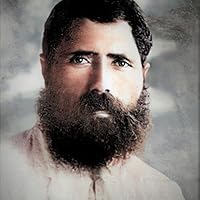
"יצירת יזהר היא ההישג הוודאי והמעניין ביותר בספרות הנכתבת על ידי בני הארץ... עלייתו הראשונה של הקורא מן המרחב המהמם של 'ימי צקלג' עומדת כולה בסימן השתאות ליחוד ולעצמת הנדירות של מעשה סיפור זה..." פרופ' דן מירון
"ס. יזהר הוא הסופר הישראלי החשוב ביותר בספרות הישראלית" עמוס עוז
"יצירה גדולה... הספר החשוב ביותר בספרות שלאחר קום המדינה"
Yizhar Smilansky (Hebrew: יזהר סמילנסקי), known by his pen name S. Yizhar (Hebrew: ס. יזהר), was an Israeli writer and politician.
Yizhar Smilansky was born in Rehovot to a family of writers. His great uncle was Israeli writer Moshe Smilansky. His father, Zev Zass Smilensky, was also a writer. After earning a degree in education, Yizhar taught in Yavniel, Ben Shemen, Hulda, and Rehovot.
From the end of the 1930s to the 1950s, Yizhar published short novellas, among them Ephraim Goes Back to Alfalfa, On the Edge of the Negev, The Wood on the Hill, A Night Without Shootings, Journey to the Evening's Shores, Midnight Convoy, as well as several collections of short stories. His pen name was given to him by the poet and editor Yitzhak Lamdan, when in 1938 he published Yizhar's first story Ephraim Goes Back to Alfalfa in his literary journal Galleons. From then on, Yizhar signed his works with his pen name.
In 1949, he published the novella Khirbet Khizeh, in which he described the expulsion of Palestinian Arabs from their village by the IDF during the 1948 Arab-Israeli War. It became a best-seller and in 1964 was included in the Israeli high school curriculum. In 1978, a controversy arose after a dramatization of Khirbet Khizeh by director Ram Loevy was aired on Israeli television. Shapira has lamented that, despite the publishing of Yizhar's novella decades earlier, Benny Morris was able, when he published The Birth of the Palestinian Refugee Problem, 1947–1949 in 1988, to announce "himself as the man who had laid bare the original sin of the State of Israel".
In the late 1950s, his massive work Days of Ziklag appeared, comprising two volumes and more than a thousand pages. This work had a powerful impact on changing the outlook for Hebrew prose on the one hand, and "war literature" on the other. Although Yizhar remained in the public eye as an outstanding polemicist, he broke his decades-long literary silence only in 1992 with the publication of his novel, Mikdamot (Preliminaries). This was quickly followed by five additional new volumes of prose, both novels and collections of short stories, including Tsalhavim, Etsel Ha-Yam (At Sea), Tsedadiyim (Asides), and Malkomyah Yefehfiyah (Beautiful Malcolmia). His last work, Gilui Eliahu (Discovering Elijah), set in the period of the Yom Kippur War, was published in 1999 and later adapted for the stage. The play won first prize at the Acco Festival of Alternative Israeli Theatre in 2001. Yizhar also wrote stories for children in which he contended with the defining themes of his youth, as in Oran and Ange concerning the Israeli cultivation of citrus fruits; Uncle Moshe's Chariot, a memoir of the character of his famous great uncle Moshe Smilansky; and others.
To interrupt your fine Saturday morning with this fresh link from the untranslated wherein ::
"Interview with Josh Calvo: On S. Yizhar’s Days of Ziklag, Albert Suissa’s Aqud, Volter Kilpi’s Alastalon salissa, unjustly untranslated Hebrew and Arabic literary works, and on the present state of Anglophone literature" https://theuntranslated.wordpress.com...
Wherein also it is stated (in that grand literary spirit of the Eternal Hope of Forthcoming Translation) :: "My hope is that the English translation of Days of Ziklag forthcoming by Nicholas de Lange and Yaacob Dweck — who previously tackled, with much deserved success, Yizhar’s earlier and also controversial novella Khirbet Khizeh — will rightfully elevate this masterpiece onto the highest shelves of world literature." Whereto we are linked thusly ::
https://www.wordswithoutborders.org/d... Wherein wiederum it is thusly found in the words of This Most Holy of Translators :: "As for Hebrew literature, I am currently engaged (with a cotranslator, Yaacob Dweck) on a daunting project: translating the longest and perhaps most challenging Hebrew novel, Days of Ziklag by S. Yizhar. This massive modernist novel was first published in 1958, and it had an enormous influence on a whole generation of Israeli writers. The translation will take several years. We have previously translated another, much shorter, book by Yizhar, Khirbet Khizeh, and it was very well received. We hope that our translation of Days of Ziklag will help to give it its rightful place as a classic of world literature." Hear the Word of the Translator oh Reader!
__________ "Days of Ziklag is the longest novel in Hebrew literature."
Please note (you've seen this already over and over and over and over and over again) :: "...and staunch detractors. The latter berated it for the experimental excesses which rendered the novel well-nigh unreadable. It was castigated for the lack of plot, monotonousness, repetitiveness, the indiscriminate use of historical facts recreated with obsessive fastidiousness. But, as is the case with many outstanding novels, the “weaknesses” ascribed to it by the traditionalist critics have proved to be the hallmarks of its brilliance, making this novel so different from everything else written in Hebrew before. The novel is a monumental, meticulously detailed, and even, as some would say, photographically hyper-realistic depiction of..."
Excerpt at the link above.
And, doing the numbers :: "Talking of biblical proportions, if ever translated into any European language, the resulting version of Days of Ziklag will considerably exceed the impressive girth of the original (1,143 pages) since the vowels are not shown in Hebrew writing." To say nothing of the tendency for sentences to balloon in the target language, typically losing some economy found in the source language ; especially form a relatively dense language like Hebrew into the wordy English. [yes, page count counts folks.]
The whole enormous novel (Days of Ziklag) follows a group of Israeli soldiers during a week in the 1948 war who are sent to liberate and hold the remote hill #244, which they identify ad the biblical Ziklag. They arrive on trucks while whining, bickering, dragging crates, arguing about whose turn it is to carry what, and wondering why the army hates them.
The narrator plunges us into the slog of military routine: loading crates, cursing the dust, yelling at each other about water, and generally acting like a platoon whose real enemy is logistics. Every page repeats the same existential theme: war is boring until it tries to kill you.
Soldiers are lugging jerrycans, crates of canned food, endless ammunition boxes, and poor Shmuelik the cook screaming that somebody messed up the food box.
Then comes Gidi with his mountainous hair, barking orders like a man auditioning for a one man play. He keeps trying to get everyone organized.
Shaul constantly complains about how they never get sent home, and how someone else should be doing this endless line of dull tasks.
Kobi the sapper wanders around being laconic, sticking explosives everywhere like a bored pyromaniac.
Pini, Dovid, Barzilai, Sheike, Ouri, and the others are all given pages of internal musings, gripes, philosophical soul searching, and ellipses of dread.
They sit. They dig. They arrange machine guns. They argue about who is supposed to be on watch. They drink tepid water and pretend the camp stew qualifies as food. Everything is dirt-colored, sand-flavored, and accompanied by wind.
Every time someone shouts, the wind conveniently erases half the sentence, symbolizing the futility of trying to communicate during war.
They get there expecting to meet glorious battle. Instead they get empty houses, empty hills, scattered villagers long gone, and a whole lot of air. They patrol the surrounding area, which is suspiciously quiet, except for occasional shots and sudden panic that maybe something is moving out there.
There are moments where they advance toward another hill, convinced it is a tactical masterpiece. Then someone remembers to ask why. Someone else quotes rumor about a big operation coming. Rumors, by the way, are the real main character here. They are always swirling, just like the dust that covers everyone for twelve hundred hundred long pages.
They think they will go home tomorrow. They will not. They think they will be relieved any minute. They will not. They think the enemy is near. Possibly, but the book is in no hurry to confirm.
Everyone longs for home, girls, families, and the promise that the State they are supposedly building will send someone else next time. This longing turns circular: they plan what they will do after the war, then immediately contradict themselves, because no one trusts peace to stay.
War here is not about battles. It is about time. The endless, smothering time between anything happening. The soldiers are stripped of heroic fantasy. They are mostly sweaty, irritated, hungry, and waiting for orders that never come, or come too late.
The land itself becomes antagonistic: blazing sun, wind, dust, and the sensation of being nowhere. Every rock looks the same, every night feels longer. The novel is a diary of slow psychological erosion.
Soldiers take turns doing watches that feel eternal. Sometimes there are shots from unseen positions, or shadows that might be scouts. Sometimes patrols come back shaken without clear explanation. The fear builds quietly.
The closer you get toward the later chapters, the more the tension thickens. People start to sense things tightening. Some soldiers unravel internally, some find stubborn resilience, some joke until joking feels thin.
There are enemy encounters. Yes, they come under fire. No, I am not telling you who lives or dies or what the final operation results in. I can safely reveal that the general mood is constantly swinging between boredom and fear, between thinking nothing is happening and realizing something definitely is.
Every thought, every dust particle, every digression becomes an existential essay. You get pages of wind, reflections on the landscape, meditations on Israel, history, identity, Zionism, fear, and how any soldier could possibly fit himself into these huge narratives when he cannot even keep sand out of his socks.
A war novel that doesn't behave like a war novel. It is intimate, exhausting, claustrophobic, and far more interested in what soldiers think while lying behind a mound of sand than in cinematic victories. It is also profoundly human.
And infuriatingly long. Some readers swear it changed them. Others swear it was punishment. I can see both sides.
If you ever fantasized that the founding of the state was a nonstop spectacle of trumpet fanfare, prepare for several hundred pages of soldiers rediscovering that real history is mostly complaining while carrying heavy things up hills in scorching heat.
In the biblical books of Samuel, David exiled among enemies, receives a temporary haven, loses everything, nearly gets killed by his own, pulls off a rescue, and reclaims Ziklag, which later becomes part of Judah in a formal sense.
Ziklag in the Bible is not the triumphant home of a chosen king. It is a shaky refuge, a tactical compromise, a borrowed corner of history. Nothing about it is secure. It can be burned overnight. The people inside it can vanish. The so called hero can return to ashes and find his authority hanging by a thread. Ziklag is about contingency, instability, and the terrifying truth that power rests on sand until it suddenly becomes rock, and then just as suddenly becomes sand again.
Because his novel about 1948 is full of soldiers who think they are holding new territory, who believe they are participating in a foundational moment, yet they cannot escape the sense that everything is provisional. The hill they hold is transitioning, contested, and threatened. They are the supposed founding generation, yet they feel hardly in control of anything.
By invoking Ziklag, Yizhar is reminding us that even biblical origins include fear, displacement, and moral ambiguity.
He encourages readers to notice the echoes: young Jewish men in their own land waiting in uncertainty, surrounded by enemies, told they are building a future, while the future looks suspiciously like a pile of sand that could blow away tomorrow.
He is not interested in David the triumphant king with harp music and glowing destiny. He is interested in David the fugitive, living in enemy territory, dependent on luck, improvising survival, and almost losing everything in a single afternoon. That is what appeals to Yizhar. The fragility, not the heroism. The instability, not the legend.
S. Yizhar, born Yizhar Smilansky in Rehovot in 1916, was part of that first generation of Hebrew writers who practically treated literature like a national nerve system, always twitching with history. He fought in 1948, worked as a teacher, served in the Knesset for years, and somehow still found time to produce fiction that made everyone else in the room feel lazy.
He became notorious for combining obsessive interior monologue with political discomfort, especially in stories like "Khirbet Khizeh" where he forced Israeli readers to confront things the national mythology preferred to skip. His prose has the reputation of being both virtuosic and exhausting, which feels accurate enough.
He lived a long life, won every prize Israel could throw at him, and remained a kind of stern literary patriarch whose books dealt with war in honesty and with Hebrew in an inimitable original pyrotechnics.
This book is monumental, stubborn, and occasionally brilliant. It is also about as user friendly as a Sabra cactus. The prose is obsessive, the inner monologues spool on like overheated tape, and the story practically refuses to move. Yet it has a creeping power. The novel drags you into the mud of war and forces you to share the boredom, fear, and doubt of the soldiers. It is a novel that believes realism means showing how nothing happens until suddenly everything matters.
My brain took turns between admiration and exasperation. There are passages so precise, so psychologically sharp, that you forget time passing. Then there are sections where you wonder if the author is testing your endurance, like some literary boot camp. Sometimes it feels devastatingly insightful. Sometimes it feels like someone got trapped inside their own introspection.
War is not glory, it is repetition, waiting, and doubt. National mythology is built by terrified kids who barely know what they are doing. Heroism is usually mundane and often accidental. Memory lies, especially when it tries to turn history into legend.
This, longest Hebrew novel tondate, is a cultural cornerstone. It is psychologically rich and morally complicated. But you should not expect a friendly guide. The novel is demanding, dense, and allergic to simple drama. You have to meet it on its own dusty, wind battered terms.
It captured something raw about 1948 that most novels prefer to cloak in triumph. This book shows the daily grind, the uncertainty, the petty disagreements, and the anxious human core beneath The War od Independence. The scale of it, the seriousness, and the uncomfortable honesty turned it into a landmark work. It is practically required cultural opus that nobody really enjoys looking into but everyone recognizes as important.
I think that it was never translated due to a cruel combination of problems. The style is thick, idiosyncratic, and linguistically tied to Hebrew rhythms. The endless interior monologue is hard to render in another language without drowning the reader. International publishers tend to avoid eleven hundred page war novels that treat plot like a suspicious stranger. The audience for deeply Israeli, deeply 1948 material is probably considered niche outside Israel.
There have been attempts and rumors for decades, but apparently even translators need a will to live.
My irritation aside, the novel matters. It forces you to sit in a trench with history rather than watching it in a museum display. It is exhausting, thoughtful, fearless, and at times weirdly moving. If you want a heroic march, look somewhere else. If you want the uncomfortable truth of how nations are built by people who are scared, dusty, and desperately human, this is the book.
אחד הספרים הכי ארוכים שקראתי וגם אחד המתסכלים והמופלאים. בלתי נסבל ובלתי נשכח. יזהר יכול לתאר הצתת סיגריה בשש פסקאות כאילו אנחנו צופים בסרט בהילוך איטי שכל פעילות בו היא מערכה בפני עצמה. הספר מלא במילים יחידאיות שתקינותן המילונית מונחת בספק גדול אם כי אחרי מחשבה ההגיון בהן ובבחירתן בצורה המסוימת הזאת דווקא מתבהר והגיוני.
בדפים צפופים ובכתיבה דחוסה אנחנו נשאבים אל תוך מלחמת השחרור לרגע היסטורי אמיתי שקומץ לוחמים צעירים יוצאים לקרב נגד חיילים מצריים בפיקודו של גמאל עבדול נאצר הצעיר והשאפתן. ברם, ההיסטוריה כאן היא שולית, הקרב עצמו הוא תפאורה. עיקר העניין הוא המחשבות, הרגשות, הפחדים, התיסכולים, הערגות, הפסיכולוגיה הנוטפת מכל שורה מדהימה ומייגעת.
אין לי למה להשוות את הספר הזה באף שפה. כל מי שבילה רגעים בשמירה בצבא יזדהה לחלוטין ויתפעם מתיאוריו המדויקים של יזהר. מי שלחם או שחשב על הלוחמים, אולי יתחיל להבין את הטירוף השכלתני שהנערים והנערות האלו עוברים. אם נוסיף את הנדבך הגיאוגרפי של התרחשות הספר בעוטף עזה והבחירה בצקלג שממנה נחטפו משפחות צבא דוד על ידי העמלקים, לא נוכל אלא לתהות על המעגליות האכזרית של קיומו של עמנו וכמה צמאה האדמה של ארצנו לדם.
"... האזניים נתחדדו לשמע צליפה שהטרידה כה וכה, האריכה קצת, עד כי היה נדמה לרגע כאילו דבר חדש נפל, וחדלה. - 'זזים?' - בא קובי, ממחה בשרוולו מים מסנטרו. הנה יודקה יילוה אל השנים, אם טוב לבו עליו, ויקח את האיגרת, ויראה שכל דבר יסודר, ויתאם כל דבר עם דגוס, וכל השאר. שוב צליפה חולפת. מה זה?' - מקמט יודקה מצחו בחשד. - "זה ההיסטוריה" - אמר קובי "מחדדת עפרון. לרשום עודף מזהיר על פני השדות האלה". "הו, הו" - אמר יצחקלה. ובגחינה שחוחה חמקו בזה אחר זה דרומה, אל מעבר קו הרכס, ויצחקלה מניד ראש דומם לברכת פרידה. ריצה קצרה, ואתה מחופה במדרון. מקלות של כלכים וסוככיהם המרוטים, נראו כזעיר אנפין של אילני ערבה, כמין שיטה של סאואנה, במדרון הנפתח ממול. אבל בעוד מה, מביאים השדות השלוים שלהלן מרגעה, והאבן זעה קצת מעל לבך. הכתפיים אובות להתישר, והריאות לנשום למישרין. נעצרים לתפוש נשימה. וממילא לקטום גבעול מה להריח בו ולתחבו ללעיסה של כלום. יודקה, שקפיץ שערו בשמש כסבך חוטי ברזל חלודים, מבקש שימתינו לו, עד שירוץ ויתפנה מאחורי גדר האבנים ההיא. יושבים להמתין, באמצע המקום, מתחת השמש, על העפר כפי שהוא חם ורגיב, וקצת עשיב, ויבש מאד, מציתים סיגריות, משתענים על מרפק, מציצים אל אופק דרום, הגבעי, המרחיק, ההולך ונעשה תכלכל אי־שם. משהו מתלבלב להתנסח מעין: מלוא שדות קיץ, עם שטף זהב רץ. וגם פשוט: שדות חמים. מלה יפה. לחזור עליה כצרצר בשדה: שדות חמים. שדות חמים עד אין קץ. ושמא נוציא את הפנקס הפרוף ונקרא באזני ברזילי דבר או שנים, מה דעתו, איך זה מתקבל? שירי השדות הלא קצורים. ופתאום הרגשה מיוחדה. הרגשה של תמצית החיים. חריפה עד טעימה. (או שזה העשב הזה?) טיפת החיים האמיתית, עיקר העיקרים, המתיחות הבלתי נפרקת, המצומצמת. אולי ככה: סתיו. ועוד יבוא היורה. כמה נפלא לחיות! …"