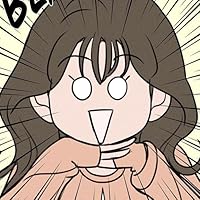
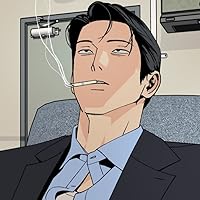
The story was honestly kind of thin in this one. I never fully understood Fujinaga's motivations: he loves acting, so his dream is to be a movie or tv star, but he fails auditions repeatedly because he only knows how to act like he's on stage. Meaning, full-body movements and projecting to the farthest seats in the audience.
I get that he's upset no one appreciates him in his auditions but...they're not wrong. You have to tone down your acting to reach a different type of viewer for different formats. And it sounds like he overacts on stage, too, to the point where even his close friend won't give him any serious roles, leaving him the big loud dramatic comic relief types.
To be perfectly frank, that's not a flaw in the people around him. That's a limitation in his acting ability, if he's not able to adjust to fit different roles, moods, settings, etc. His big decision at the end of this volume - giving up on tv and movies to stay on stage! - is...nice, and definitely suits him better, but he also needs to learn how to improve his theatre acting, too.
So I dunno...I didn't totally connect with the whole "he's misunderstood like Keito" storyline attempt. Keito is Deaf, moving through a largely hearing world, and wanting desperately to be able to communicate with everyone around him. Everything about his character was pretty good; it's a decent balance thus far of him being confident in who he is and comfortable in settings where he can speak his native language, and also wanting to speak with and be understood by others, like Fujinaga, who can hear and have never considered that others around them can't.
Fujinaga actually starts out fairly selfish, although he does improve as he goes on. Like Keito, I appreciate that once he gets that Keito is fully Deaf and that sign language is his primary language, he throws himself into learning how to communicate more effectively with him. The best scene, I think, was when Keito felt so much happiness over how focused Fujinaga is when it comes to talking to him.
Keito doesn't want people to give up on repeating themselves - or asking him to repeat what he's saying - until the conversation flows more smoothly. "It's fine, you don't need to understand what I'm saying" can seem like someone being "nice," but it's exactly the opposite, because you're cutting someone out of communication that you just have to put a little more effort into.
Fujinaga throws his entire being into everything he does, which makes him such an over-the-top actor, but also someone Keito really, really enjoys being around. While the romantic side of their relationship really kicks off due to a misunderstanding - Keito only catching the tail end of something Fujinaga was saying - their chemistry is good, and there were some really lovely dynamics near the end of this volume.
So while it's a little bit messy trying to get off the ground, it does hold promise, and I'm interested to see where it goes, with them getting together so early on. Even if I'm less invested in Fujinaga's acting career...that seemed like a sort of shoehorned element that will maybe work better in the story as it goes on. I was getting the impression he was maybe going to become a sign language interpreter or something, but nope.
I did learn some more things about sign language, which is neat; I didn't know about the whole CL thing, which makes it all sound super complex. Even if sign language was a mandatory language in school - which it should be, honestly - it seems like it'd be pretty hard to actually become fluent in it, since there are so many different variations. And that's not even factoring in adding in different languages. If that continues to be more of a story element - Fujinaga learning all the different ways of communicating in sign - that'll be neat.