

What do you think?

Something Small of How to See a River
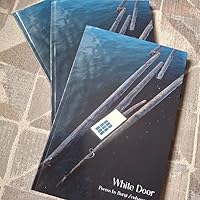
Through the weaving of documentary poetics, first-hand accounts, dialogue, and lyric, these poems tell the story of co-running a school at the Ocethi Sakowin Camp at Standing Rock.
Something Small of How to See a River interrogates the idea of narrative. Who gets to tell a story and what does it mean when the official story, the story told by the governor, the police, or the local media, is a fundamentally dishonest one? The poems collected here meditate on how systems fail us and our environment, how whiteness fails to hold itself accountable, how future generations and the land are being failed—and how, in the face of all this, the Standing Rock movement was not a failure. At the heart of this collection is the strength, care, and radical joy of the movement, which shines through and against the violence.
Something Small of How to See a River interrogates the idea of narrative. Who gets to tell a story and what does it mean when the official story, the story told by the governor, the police, or the local media, is a fundamentally dishonest one? The poems collected here meditate on how systems fail us and our environment, how whiteness fails to hold itself accountable, how future generations and the land are being failed—and how, in the face of all this, the Standing Rock movement was not a failure. At the heart of this collection is the strength, care, and radical joy of the movement, which shines through and against the violence.
- GenresPoetry
92 pages, Paperback
Published October 1, 2025
Ratings & Reviews
Friends & Following
Create a free account to discover what your friends think of this book!
Community Reviews
Displaying 1 - 5 of 5 reviews

Read
December 31, 2025Teresa Dzieglewicz ’05
Author
From the author:
Through the weaving of documentary poetics, first-hand accounts, dialogue, and lyric, these poems tell the story of co-running a school at the Ocethi Sakowin Camp at Standing Rock.
Something Small of How to See a River interrogates the idea of narrative. Who gets to tell a story and what does it mean when the official story, the story told by the governor, the police, or the local media, is a fundamentally dishonest one? The poems collected here meditate on failure: how systems fail us and our environment, how whiteness fails to hold itself accountable, how future generations and the land are being failed — and how, in the face of all this, the Standing Rock movement was not a failure. At the heart of this collection is the strength, care, and radical joy of the movement, which shines through and against the violence.
Author
From the author:
Through the weaving of documentary poetics, first-hand accounts, dialogue, and lyric, these poems tell the story of co-running a school at the Ocethi Sakowin Camp at Standing Rock.
Something Small of How to See a River interrogates the idea of narrative. Who gets to tell a story and what does it mean when the official story, the story told by the governor, the police, or the local media, is a fundamentally dishonest one? The poems collected here meditate on failure: how systems fail us and our environment, how whiteness fails to hold itself accountable, how future generations and the land are being failed — and how, in the face of all this, the Standing Rock movement was not a failure. At the heart of this collection is the strength, care, and radical joy of the movement, which shines through and against the violence.

August 21, 2026
"Something Small" may not describe big things, but it is large of heart and full of touching detail. The poet describes in sometimes painful, sometimes brutal imagery, her experience on the Standing Rock reservation in 2016. Dziegliewicz had joined a large contingent of young people protesting and actively resisting construction of the Dakota Access Pipeline through sovereign native lands. The pipeline, in violation of numerous agreements, crosses the Missouri River and threatens sites of cultural importance to say nothing of the community's drinking water. In moving verse, the poet conjures the experience of life and strife in the camp, one of the largest gatherings of indigenous people in a century.
It's not a political tract. It's not really a protest rant. It's a heartfelt cry from a witness to life in this fleeting community.
It's not a political tract. It's not really a protest rant. It's a heartfelt cry from a witness to life in this fleeting community.
May 3, 2026
The poems in Something Small of How to See a River document the poet's stay in one of the camps at Standing Rock in the second half of 2016 into winter to oppose the construction of the Dakota Access Pipeline across Ochéthi Sakówin land. But to say they document doesn't even come close. These poems invoke, summon, and speak. They MEAN on the most fundamental level. This is poetry that comes from deep communion with others and the very ground its speaker stands on. Leonard Cohen called us to "ring the bells that still can ring." Dziegliwicz's poems ring with a beauty that keeps on ringing.
January 30, 2026
I loved this poetry book. Although I read it in a day, I would love to go back and really dive into each section a little more deeply. I got the chance to meet the author of this book and one of the students she taught at Standing Rock. Emotions poured through these poems like none I had ever read before. 10/10 but be ready to become an activist when you’re done!

December 16, 2025
I appreciated the passion and humility in these poems, as well as the constructive redirection of anger--a continual iterative process that seems the essence of resilience. Resilience does not require winning all the battles, nor even winning the war, but rather recognizing the importance and meaning of fighting the good fight, bearing witness, and living one's values in community. Poetry is well suited to expressing the personal and communal pain, joy, healing, growth, and awareness of the Standing Rock water protectors, and they are all evident in Dzieglewicz's work.
Displaying 1 - 5 of 5 reviews