Jump to ratings and reviews
Rate this book

Man in Profile: Joseph Mitchell of The New Yorker

Rate this book
WINNER OF THE SPERBER PRIZE • NAMED ONE OF THE BEST BOOKS OF THE YEAR BY  SAN FRANCISCO CHRONICLE  AND PUBLISHERS WEEKLY •  This fascinating biography reveals the untold story of the legendary New Yorker profile writer—author of Joe Gould’s Secret and Up in the Old Hotel —and unravels the mystery behind one of literary history’s greatest disappearing acts.

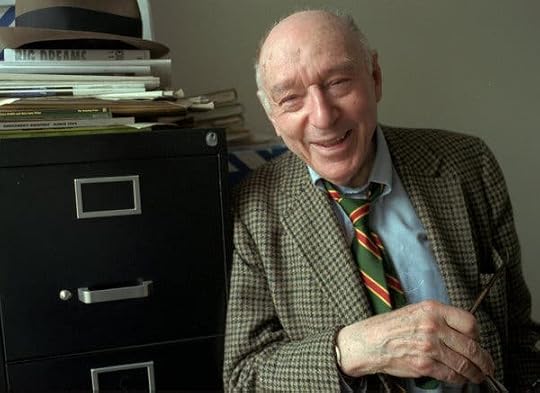
Born and raised in North Carolina, Joseph Mitchell was Southern to the core. But from the 1930s to the 1960s, he was the voice of New York City. Readers of The New Yorker cherished his intimate sketches of the people who made the city tick—from Mohawk steelworkers to Staten Island oystermen, from homeless intellectual Joe Gould to Old John McSorley, founder of the city’s most famous saloon. Mitchell’s literary sensibility combined with a journalistic eye for detail produced a writing style that would inspire New Journalism luminaries such as Gay Talese, Tom Wolfe, and Joan Didion.
 
Then, all of a sudden, his stories stopped appearing. For thirty years, Mitchell showed up for work at The New Yorker, but he produced . . . nothing. Did he have something new and exciting in store? Was he working on a major project? Or was he bedeviled by an epic case of writer’s block?
 
The first full-length biography of Joseph Mitchell, based on the thousands of archival pages he left behind and dozens of interviews, Man in Profile pieces together the life of this beloved and enigmatic literary legend and answers the question that has plagued readers and critics for decades: What was Joe Mitchell doing all those years?
 
By the time of his death in 1996, Mitchell was less well known for his elegant writing than for his J. D. Salinger–like retreat from the public eye. For thirty years, Mitchell had wandered the streets of New York, chronicling the lives of everyday people and publishing them in the most prestigious publication in town. But by the 1970s, crime, homelessness, and a crumbling infrastructure had transformed the city Mitchell understood so well and spoke for so articulately. He could barely recognize it. As he said to a friend late in life, “I’m living in a state of confusion.”
 
Fifty years after his last story appeared, and almost two decades after his death, Joseph Mitchell still has legions of fans, and his story—especially the mystery of his “disappearance”—continues to fascinate. With a colorful cast of characters that includes Harold Ross, A. J. Liebling, Tina Brown, James Thurber, and William Shawn, Man in Profile goes a long way to solving that mystery—and bringing this lion of American journalism out of the shadows that once threatened to swallow him.
 
Praise for Man in Profile
 
“[An] authoritative new biography [about] our greatest literary journalist . . . Kunkel is the ideal biographer of Joseph Mitchell: As . . . a writer and craftsman worthy of his subject.” —Blake Bailey, The New York Times Book Review (Editor’s Choice)
 
“A richly persuasive portrait of a man who cared about everybody and everything.” — London Review of Books

“Mitchell’s life and achievements are brought vividly alive in [this] splendid book.” — Chicago Tribune

“A thoughtful and sympathetic new biography.” —Ruth Franklin, The Atlantic
 
“Excellent . . . A first-rate Mitchell biography was very much in order.” — The Wall Street Journal

384 pages, Hardcover

First published April 21, 2015

25 people are currently reading
915 people want to read

About the author

Thomas Kunkel

17 books5 followers

Ratings & Reviews

What do you think?
Rate this book

Friends & Following

Create a free account to discover what your friends think of this book!

Community Reviews

5 stars
99 (36%)
4 stars
125 (45%)
3 stars
42 (15%)
2 stars
7 (2%)
1 star
0 (0%)
Displaying 1 - 30 of 45 reviews
Profile Image for Chrissie.
2,811 reviews1,419 followers
September 14, 2015
The book fits readers interested in The New Yorker and its acclaimed profile writer Joseph Mitchell (1908-1996). These names – Harold Ross, William Shawn, Stanley Walker, A. J. Liebling, Ann Honeycutt, James Thurber, Joe Gould, John McSorley – do they ring a bell? The New York writers of the 30s, 40s, and 50s and how they shaped American literary scene - that is what this book is about. It is about Mitchell’s ties to Fairmont, North Carolina, and to New York City, its waterfront, its gypsies, its homeless, its oystermen, its down-and-out denizens, the bars frequented by journalists, the Fulton Fish Market, the cemeteries.

The book starts with Mitchell’s parents, of Danish and Norwegian origin, his youth in North Carolina, his studies, his first forays into journalism at The World, the New York Herald Tribune, the New York World-Telegram and finally The New Yorker. At the New York World-Telegram he covered the kidnapping and death of Lindbergh‘s son and subsequent trial proceedings. Mitchell’s acute sense of observation and his ability to listen and hear what he was told becomes evident. The book moves forward from journalism to profile writing. His writing techniques and each of his works are analyzed. It follows through his marriage, birth of children, writer’s block, personal tragedies and finally his own death.

The themes covered are what pushed him into journalism and a writing career. Who influenced him? What was he trying to say? What is truth? Are facts always truthful? Which of his profile figures were real and which were not? How did it happen that he invented composite figures? Where do you belong – the place of your youth or where you choose to reside?

Why didn’t I give it more stars? Parts are repetitive. The middle drags. Literary criticism isn’t my favorite genre; I can figure out for myself the import of Mitchell’s lines. When you pick up a book about an author you shouldn’t fool yourself into thinking you will get the same style; it isn’t written by Mitchell! I did appreciate that most every chapter began with a quote from his writing. The book is more about Mitchell’s New York and less about New York itself, I was looking for more about the city’s cultural diversity. Mitchell felt more and more disconnected with the city and his time. He was fixed in the past, and I found this frustrating. His chronic depression closed off his world.

You do learn about the man, Joseph Mitchell. What shaped him, what he thought, what troubled him, what he was searching for and why he could no longer write. When you complete this book you have learned both about the man and the numerous reasons for his writer’s block, and how it came to be that for thirty years he took home a paycheck and wrote practically nothing. When his final publication in 1992 of Up in the Old Hotel was to be presented and he was to speak, he asked, “Do you think anyone will come?” This made me smile. This is the man who tries to get under the surface, to speak the truth...with utter simplicity.

The narration by Joe Barrett fits the lines and feel of the man about whom the book is written. It is low-key, gravelly and toward the end appropriately elegiac in tone. It works very well.

Guess what my next book will be - Up in the Old Hotel! I thought I would read both books at the same time, but I just couldn’t do it.
Profile Image for Art.
551 reviews18 followers
April 8, 2016
A profile of a profile writer. In 1938, thirty-year-old Joe Mitchell began his career at The New Yorker after several years of newspapering. Thirty-two years later, his writing, now regarded as art, earned him an induction into the National Institute of Arts and Letters.

Thomas Kunkel's book, a cradle-to-grave biography, explores Mitchell's career as a fiction and nonfiction writer.

But it was the ethical controversies of the day that fascinated me. Mitchell, for example, used the dubious technique of invented or composite characters for several of his profiles, a practice that ended in mid-century during an elevation of journalism standards. Kunkel writes that this practice mislead the readers, blurred reality and bent the boundaries of nonfiction.

By the early forties, Mitchell also took license with quotes. He would routinely stitch, weave and embroider what his subjects said into impossibly long monologues in a time before pocket recorders. That's another practice that ended years ago. Kunkel documents a case by comparing Mitchell's notes with the published version. Fascinating to learn how much the notes varied from the article.

"New Journalism," or literary journalism, emerged in the sixties as some writers in the next generation turned their backs on the entrenched conventions. Did Mitchell serve as a forerunner or an inspiration?

Mitchell and his wife, Therese, enjoyed book readings, art-house films and chamber music. She wore a Rolleiflex around her neck and enjoyed taking documentary photographs in Greenwich Village, where they lived. Mitchell walked aimlessly for hours to take in the city and find subjects for his profiles.

Mitchell grew up in North Carolina, where he went to Chapel Hill and took at least seven journalism classes before moving to New York. Kunkel described Mitchell as "a master of journalism."

I liked this story. An interesting tale of a literate writer, an urban walker who loved his adopted city.

Thirteen pages of notes and bibliography. This story about Joe Mitchell naturally includes scenes at The New Yorker plus anecdotes about the writers and editors there as well as other characters of the time.

Pairs well with Joe Gould's Secret. Mitchell became embarrassed, incensed and ultimately felt betrayed when he realized Gould's fraud.

An article, "Sleuthing sheds light on New Yorker mystery," turned me onto the book: http://www.jsonline.com/news/milwauke...

I worked as a news writer, so it was interesting to read about an earlier era of newspapering and magazine writing from the thirties, forties and fifties. By the time I came along as a journalist, quotation marks signified what the speaker said.
Profile Image for Tom Stamper.
661 reviews38 followers
April 5, 2015
Joseph Mitchell has been a mystery for such a long time that I assumed some things would never really be known. Thomas Kunkel does two things that make this book a revelation. He uses Mitchell’s notes to better understand how he wrote his most acclaimed stories and he unearthed Mitchell’s incomplete memoir that explain his view on life and what he spent the last 30 years working on.

The notes show that Mitchell would spend countless hours talking with his subjects and the dialogues he would share in his stories were from fragments of conversations that he would clean up. I didn’t know that Mr. Flood stories were originally presented as nonfiction. He and Harold Ross treated it as a joke between themselves although Mitchell came clean when he presented the stories as a book. And from there Kunkel shows that according to the notes some of Mitchell’s other profiles were composites rather than actual people, although he never said so during his lifetime.

Kunkel has much to say about the Joe Gould subplot in Mitchell’s life. You will be familiar with this backstory if you have seen the Stanley Tucci movie, Joe Gould’s Secret. Like most of Mitchell’s subjects, Gould is a stand-in for the author, but as a writer himself Gould became a window into Mitchell’s own struggles, and a popular explanation for why Mitchell fought writer’s block after that last Gould story.

Kunkel also offers insight into Mitchell’s strained relationship with his father, his 49 year marriage and home life, his feeling of being an exile in New York City, and his work to preserve the history of that city. The author talked with many of his friends and knew Mitchell personally. The acknowledgments page is thorough on who helped him flesh out the story.

I wanted to know what every other Joseph Mitchell fan wanted to know. How could anyone with such talent have 30 years of writer’s block? If you come to the book looking for that answer I think you will be satisfied with the research that at least partially explains the dearth of output.

I think this biography is a treasure. Thomas Kunkel has filled a void between the writing and the man himself. If you are drawn to the work of Joseph Mitchell you will find much insight here.
Profile Image for Truman32.
362 reviews121 followers
February 26, 2015

What makes a life interesting? Or more specifically, what makes a life so interesting it deserves a written history?

There are biographies that uncover how men and women of the past accomplished great feats. Biographies that describe personal tragedies that reveal we are not alone in our pain and it will get better. Biographies that show people changing; becoming fuller, better, more complete people. And there are the biographies about actors, baseball players, and musicians that we all love and yearn to understand how they got to be so distinguished.

Man In Profile: Joseph Mitchell of The New Yorker by Thomas Kunkel tells the story of writer Joseph Mitchell, a forefather of literary journalism (i.e. Tom Wolfe or Joan Didion). Mitchell wrote impressive nonfiction profiles of the outerliers in New York City from the late 1930’s through the mid 1960’s. Like a literary Howard Stern, Mitchell took interest in bearded women, gypsy kings, strippers, and unhinged homeless writers and found grace, nobility and a connection to these misfits. His profiles on these misfits were favorites in The New Yorker magazine and created a rabid following (no small feat in a publication that at the time included James Thurber, J.D. Salinger, Charles Adams, etc.). Then, as if a switch was pulled, the words dried up and Mitchell- though remaining on The New Yorker payroll for the remaining 3 decades—never published another article again. Everyday he would show up for work, immaculately dressed in a finely tailored Brooks Brother’s suit and smart fedora, he’d close his office door and write. But nothing was ever submitted.

For writer, Thomas Kunkel, this is his 3rd book about The New Yorker magazine, so the subject of Mitchell is ripe for a biography. For the fan of Mitchell’s work, this might likewise seem captivating.

But what about for the average reader (I had no idea who Mitchell was and what his profiles were like)? Is Mitchell’s life made up of the stuff a that creates a great biography? Is there a great story there?

I am not sure.

Kunkel does a nice job of writing Man in Profile. Mitchell’s story is told in clear fast-moving prose and the pages turn easily enough. The circumstances of Mitchell’s life are detailed and interesting, but the biography only really shines when it gets to the stories behind his profile characters. How Mitchell discovers the folks he writes about and the process of bringing these articles to fruition brings a welcome energy to the book. Mitchell is a fantastic writer and it is fascinating to see the curtains pulled away and understand how his art is created.

While I would not go so far as to say that Mitchell’s life is tedious, most of his years come off as relatively conflict free and very vanilla. This makes the rest of the book not about his writing somewhat slower to read. Mitchell was a nice guy, but with no apparent vices and only a minor conflict in being unable to please his father, this niceness doesn’t make for very a very riveting story.

So is he biography worthy?

That is the $100 question. While I certainly enjoyed Man in Profile and felt the time I used reading about Mitchell’s life well spent, I am not sure if I would want to read the book again. What I would do is get my hands on Mitchell’s own books, notably: Up In the Old Hotel which collects all of his wonderful profiles and writings.

Note: I happily won a copy of this book from the Goodreads firstread program for my honest opinion. This is it!
Profile Image for Bookforum Magazine.
171 reviews62 followers
Read
August 4, 2016
"I can think of no other writer, in fiction or nonfiction, whose work produces concurrently the unsettling feeling of being in a dream and the reassuring feeling of being in capable hands.

For all the questions Kunkel's new biography helps resolve, its biggest contribution may be that it helps us understand which questions about Mitchell's work are the important ones.

That Kunkel provides us with further tools with which to contemplate and understand Mitchell's life and work is one of the many valuable gifts contained in his biography."

–Thomas Beller on Man in Profile: Joseph Mitchell of the New Yorker in the Summer 2015 issue of Bookforum

To read the rest of this review, go to Bookforum:
http://bookforum.com/inprint/022_02
Profile Image for Holly.
1,068 reviews292 followers
May 1, 2016
Loved this biography. Mid-century New York and Americana, lots of examples of Mitchell's writing, Mitchell's and the New Yorker's roles in American journalism, personal reasons he wrote on subjects such as Joe Gould, and theories on why he stopped publishing in later years. Delightful audio production read by Joe Barrett.
Profile Image for Bryan Cebulski.
Author 4 books51 followers
August 6, 2025
A really splendid biography! Demystifies Mitchell's notorious 30 year writers block, gives plenty of focus to his personal life as well as the days before he was famous. A great portrait that manages to have a lot of reverence for its subject without veering into hagiography.
Profile Image for Mike Wigal.
485 reviews8 followers
December 18, 2020
Somewhat late in life I discovered Joseph Mitchell. Now I can’t get enough of him.
Profile Image for Bert.
151 reviews7 followers
February 14, 2015
I won this book in a Goodreads Firstreads giveaway, but other than receiving a copy of the text I was in no way compensated. I am delighted to generate this review voluntarily. Joseph Mitchell was born on a North Carolina farm, but his dyscalculia (in an age that preceded modern understanding of learning disabilities) made him unsuitable to broker commodities like his father. He felt drawn to New York City, and immediately he fell in love with it. a Eventually he got a job as a newspaper reporter with the New York World Telegram, and ultimately he became a writer for the fledgling New Yorker, a magazine founded by Harold Ross. Mitchell was not prolific with his stories that blended factual studies of people & places with fictional composite protagonists. He was a fanatic for attention to detail, whether it be architectural nuisances or subtle details of the lives of ordinary people. His professional associates included outstanding writers and journalists. I felt I was there beside him as he took his lengthy walks, studying gargoyles or the waterfront or just the down & out. This author attentions so wrote "Genius In Disguise: Harold Ross of the New Yorker." After a brief sabbatical so as to not get overly saturated with related stories, I plan to track that book down as well. Heck, I even like the Caslon typeface in this book. My rating (and I'm finicky about superlatives): ☆☆☆☆☆
Profile Image for Christopher.
268 reviews328 followers
February 18, 2015
Note: I received an advanced reading copy of this book through Goodreads Giveaways.

Every once in a while I come across an autobiography that reminds me why I love the genre. Thomas Kunkel provided a great reminder with his profile on Joseph Mitchell.

Prior to reading this, I had a passing familiarity with Mitchell's work. After finishing, I'm not sure why I haven't read more. Here is a man feeling exiled from his home in North Carolina, yet never quite feeling right in New York, City. But he writes. And he writes, churning out work at an alarming rate. He pushes the boundaries of nonfiction, sometimes compiling subjects to create a better literary work. Sometimes he makes up real people. All in the name of getting the story. He's met with a thirty year drought with his work, all while collecting a paycheck from The New Yorker

Somehow, Kunkel captures it. From delicious farm upbringing, to the resurgence at the end of his life, Kunkel captures it. Not once does it feel romanticized. Rather, I heard the hustle and bustle of the New York streets Mitchell walked. I smelled McSorley's. I heard the laughter of A.J. Liebling. And while that's happening, I gained a deeper appreciation for the work Joseph Mitchell produced- His works being analyzed against his life.

I don't know how he did it, but Kunkel managed to create a master class in biography writing.
Profile Image for Ben.
182 reviews26 followers
February 28, 2016
I had only heard of Joseph Mitchell before reading this. If that's what's stopping you from picking it up, thinking that you need to read his huge story collections in order to appreciate the book - go ahead and start this book! The literary biography of Mitchell is excellent. His prose and approach to literary nonfiction is covered comprehensively. I was also pleasantly surprised by how well a short book touches on the history of New York City and Southern farming. Of course, it has a lot of fun New Yorker insider stuff, too.

My only criticisms of this book were that the legendary writers block that Mitchell suffered was really only poked at. Maybe it's unfair of me to expect Thomas Kunkel to decipher a great literary mystery, but "he just became too particular about his work" was a frustrating conclusion. I guess only Mitchell really knew, but since this is a biography of him, I figured some new information would have come to light.

However, this is a tidy little biography for a very interesting man. Mitchell changed the course of journalism for the better and the peerlessness of his legacy is argued persuasively.
Profile Image for Linda.
1,109 reviews144 followers
Read
January 1, 2015
Just splendid. I'd never heard of Joseph Mitchell before this. Now I can't wait to read everything he's written.
What a wonderful job by this biographer of pulling together all the disparate elements of a long life, of a man who was by his own account not of any one place, but who embodied the age in which he lived.
This work seems to me to be one that will ignite a bit of a new fervor - or at least interest - in his work. I say get your hands on his volumes now because they are sure to go up in value!
Profile Image for Eric.
117 reviews
December 10, 2015
Imagined conversation between Thomas Kunkel and his editor:

TK: Hey, I need a new project.

ED: Got any ideas?

TK: How about a Joseph Mitchell biography. I've got all my research I did for the other New Yorker books so it should be pretty easy.

ED: Sounds good.

(twenty minutes later...)

TK: Okay, here it is!

Maybe I'm the wrong audience for this. Mitchell is one of my favorite writers. I did learn some new things about him, but not that much. If you are unfamiliar with him, just read his collected stories in "Up In The Old Hotel" and skip the biography.
Profile Image for Steve Scott.
1,229 reviews57 followers
July 29, 2023
I loved this.

I listened to the unabridged audiobook. Kunkel's writing and the reader Joe Barrett team up to give a wonderful account of the life of the celebrated New Yorker writer Joseph Mitchell. I've had a string of really crappy audiobooks lately...this was a refreshing change.

I've never read Joseph Mitchell, but now I hope to. Maybe one of his works will end up in my 500 book library...and eventually with a review here.
Profile Image for Anne-Marie Keswick.
1 review12 followers
August 1, 2015
I received this book free from Goodreads. This biography of the revered writer Joseph Mitchell for The New Yorker gives the reader a detailed look at his personal and professional lives. I especially enjoyed reading Mitchell's depictions of the "ordinary man" in which he looked for the "revealing remark".
Profile Image for Paul.
291 reviews
April 21, 2016
Excellent biography of my favorite reporter/writer.
Profile Image for SundayAtDusk.
754 reviews33 followers
August 29, 2017
In Man in Profile: Joseph Mitchell of The New Yorker, author Thomas Kunkel does a skillful job of going back and forth between Joseph Mitchell's professional life and his personal life, his times in New York and his times in North Carolina, his feelings of contentment and his feelings of depression. Due to an inability to grasp math, which may have been a bona fide case of dyscalculia, young Joseph Mitchell could not join the family cotton farming business, and instead went off to UNC at Chapel Hill with thoughts of becoming a doctor. There, he realized his "paralysis over mathematics" would not only keep him from getting a medical degree, but any college degree. Nevertheless, he still stayed for four years, taking a wide range of liberal arts classes, and at least seven journalism classes. By the time he turned 21, he had writings that had been published, and an intense desire to go to New York and become a newspaper man.

When he informed his father of his career plans, his father replied: "Son, is that the best you can do, sticking your nose into other people's business?" That's not exactly what Joseph Mitchell ended up doing, at least not when he became well known for his articles. What he did was tell, in a most exceptional way, the stories of people and places that usually did not end up in newspapers, because these people and places weren't exactly "news". Average working people, eccentric people, gypsies, Native Americans who were high-steel workers, fishing boat captains, the fish market, Sandy Ground, eating and drinking establishments, rats, etc.

In 1938, the year he turned 30 years old, Mr. Mitchell joined The New Yorker and stayed until his death in 1996. He became a legend there both due to what he wrote and what he did not write. After 1964, he never submitted another article to the magazine for publication, even though he continued going to work and had his own office. Apparently, he was never again able to finish anything he started, including an autobiography and a big book on New York City that he was writing. Mr. Kunkel of course explores the matter. Was Joseph Mitchell too afraid his new writings could not live up to his old ones? Was he spending too much time living in the past? Was his depression keeping him from finishing anything?

I wondered if both his depression and his inability to complete a story wasn't due to a deeply rooted fear of death; going back to his Baptist upbringing which obviously still frightened him as an adult, with all the talk of Hell. If he went back to North Carolina to work on a book, as he sometimes thought he should, he would be going full circle in life, which to many represents the end of a life. If he quit The New Yorker, he would in a sense be retired; and to many men, especially of his generation, retirement was the stepping stone right before death. If he finished his big book on New York, that would be like an end of his life type of writing, as would an autobiography. But if he kept going back and forth from New York to North Carolina . . . kept working on a story or book but not finishing it . . . kept walking streets and walking fields . . . well, hopefully if Mr. Death showed up at one place, Joe Mitchell would be at another place. He would write no last words.

After finishing this accomplished biography about such an accomplished person, I also began to wonder why I spend so much time these days reading contemporary memoirs; since many of those memoirs seem to be written by those who have accomplished the same three things in their lives: 1) They were born. 2) They grew up. 3) They wrote a memoir. Maybe it's time to start seriously searching for more books by those and about those who are or were truly accomplished individuals, like Joseph Mitchell and Thomas Kunkel.

(Note: I received a free ARC of this book from Amazon Vine.)
Profile Image for Rosa Angelone.
320 reviews3 followers
May 31, 2020
My dentist office when I was a kid had two magazines you could read while you waited. Highlights or The New Yorker. Which gave both those magazines a special status. Mitchell died just about the time I started reading the magazine he wrote at for most of his life.

This biography is like one of those articles I read in the dentists office a kid. A window into a different world that still clearly is a part of and related to my own.

I decided to read Down at the Old Hotel before I read this book and I am glad. His stories and what drove him to write them are as much a part of this book as a recounting of events in his life.

Reasons to read this book: You like or have liked The New Yorker
story of a small town boy going to the big city
how fact and fiction work together to tell a truth
on perspective on Mid Century New York City.

I liked this book. I am glad I read it. I think there is a chance you will be too.
Profile Image for Steve.
1,086 reviews12 followers
June 22, 2023
I finally started reading Mitchell recently, and (of course) went down the Joe Gould rabbit hole. Which kept me on Mitchell (hard to separate the 2 really!), and hence this bio.
It is Kunkel's 3rd book on a NY'er figure.
Rather uninspired, journeyman effort. This came out about the same time as Jill Lepore's book, "Joe Gould's Teeth", (2015 copyright date here, and an odd 2015/2016 copyright date on the HC edition of her book). The discovery of Gould's diaries catches one line at the end of the chapter on "JGS", and feels tacked on in the final editorial process.
Kunkel does use Mitchell's archives (it appears he kept all his research and correspondence for every story he had every begun, or written, for the NY'er).
But, to describe the book quickly, "Just the facts, mam..." And, as the NYTBR reviewer points out, Mitchell was not the most exciting guy in the world.
2 = It was OK.
Profile Image for Carolinecarver.
345 reviews19 followers
November 27, 2018
Thomas Kunkel does a great job of using Joseph Mitchell's own notes from his long career at the New Yorker to give us a revealing look at the writer and his process. He also does his best to explain the 30-year case of writer's block that Mitchell experienced while working for such illustrious editors as Harold Ross and William Shawn. I loved learning about the legendary Joe Mitchell who, with one foot rooted in the agrarian soil of North Carolina, lived and wrote about New York City during one of its most thrilling periods of literary growth. I listened to the CD while driving and I seemed to alternate between laughing out loud and blinking back tears. Mostly I want to listen to it again and find and read Mitchell's iconic pieces from the New Yorker that were published over the years. Anyone who cares about the writer's process and who loves New York City will love this book.
Profile Image for Sevelyn.
187 reviews5 followers
July 23, 2019
Years ago, I overheard someone reducing Mitchell to a crank and an eccentric who “had a thing for fish.” That’s indicative of our snark-filled times, where a writer capable of sculpting 1200-word sentences about the natural world and the history of the greatest city on earth is characterized as “having a thing for fish.” No wonder the world is spinning in a downward spiral. This book is a beautifully crafted time capsule, capturing Mitchell’s world, where writers wrote w pencils on pads as they wandered the city streets and slowly sipped bourbon in dark, sawdust-floored bars. Of all my reading, Mitchell stands out as the most memorable and re-readable. When our own Rome crumbles, his words will be what stone tablets were to the ancients.
Profile Image for Stuart Smith.
227 reviews
February 3, 2022
I went to see "The French Dispatch" because I love Wes Anderson films. But then I was captivated by the personalities and inner workings of the characters and the magazine so I took the names from the dedication at the end of the film and decided to read something by or about each of the writers and editors listed. As an entry point into that investigation I could not have asked for a better guide and subject than Mr. Kunkel and his biography of Joseph Mitchell.
Profile Image for Austin Moore.
369 reviews1 follower
March 9, 2022
95/100

5 stars - 90/100
4 stars - 80/100
3 stars - 70/100
2 stars - 60/100
1 star - 50/100
Profile Image for Nancy Kennedy.
Author 13 books56 followers
July 9, 2015
Famed New Yorker writer Joseph Mitchell gets the full treatment in this absorbing biography by journalist and author Thomas Kunkel. The book opens with an aging and gloomy Mitchell entering one of his favorite haunts, McSorley's, the landmark Manhattan saloon that he had once famously written about. From there, Mr. Kunkel opens the book out to both the writer's personal and professional life.

Of course, anything written about The New Yorker magazine from the mid-1900s is going to fascinate readers devoted to the publication. Mr. Mitchell's profiles of eccentric New Yorkers, in particular, drew a loyal and devoted following. "Joseph Mitchell was the greatest literary journalist of his time -- and some would have it of all time," writes Mr. Kunkel.

Yet Mr. Mitchell is almost as famous for NOT writing, as for writing. After producing pieces prodigiously his first years at the New Yorker, he stopped writing in 1964, although he continued to come into his office -- and to be paid -- until his death in 1996. Why did Joseph Mitchell stop writing?

Mr. Kunkel explores this mystery, this conundrum of the talented writer who fails to write. In part, Mr. Mitchell's cautious and meticulous personality hampered him. But he also seemed to have set himself an impossible task -- writing the definitive book about New York -- that paralyzed his creative self. As I read of his decades-long writers block, it reminded me of the fictional Edward Casaubon of Middlemarch, the aging scholar stymied by the scope of his unpublished "Key to All Mythologies."

On the personal side, Mr. Kunkel writes of Mr. Mitchell's birth and upbringing in genteel North Carolina and his introduction as a 10-year-old to the fascinating city that he would call home for the rest of his life. While anchored by both places, and traveling frequently between them, he also found that he felt truly at home in neither place, which Mr. Kunkel speculates contributed to his desire to write about people on the fringes of society.

Mr. Kunkel's biography is an affectionate look at a devoted family man and a literary lion. It is particularly gratifying to persevere to the end of the book, when Mr. Mitchell is prevailed upon to allow his earlier work back into print and to celebrate the release of the resulting book, Up in the Old Hotel, with a book signing. His delight -- and relief -- was evident to all. Writes Mr. Kunkel, "He had not been forgotten after all, it turned out, merely misplaced."

For New Yorker lovers, Mr. Kunkel has also written about the legendary editor, Harold Ross, in his book, Genius in Disguise: Harold Ross of The New Yorker.
Profile Image for Jill Meyer.
1,188 reviews121 followers
May 7, 2016
A couple of months ago, I read a novel by Jami Attenberg, called "Saint Mazie". It was the fictional account of a real woman - Mazie Phillips - who helped down-and-out men in New York's poorer areas during the Depression. The bare facts of the book were taken from an article, written in 1940 for The New Yorker magazine, by a staff writer named Joseph Mitchell. Who was Joseph Mitchell? The answer is in a very well-written biography, "Man in Profile: Joseph Mitchell of The New Yorker", by Thomas Kunkel.

Joseph Mitchell was a country-boy from a prosperous North Carolina farming family. He knew he didn't want to follow his father into the growing of tobacco and cotton, and realising he was an excellent writer, he went to New York in October, 1929, to try his luck at the newspaper business. His talent was recognised by the New York World-Telegram and he spent a few years there, honing his craft. But in the 1930's, he was hired on at The New Yorker as a staff writer. The magazine, by then renowned under the editorship of Harold Ross, had a staff that produced some of the most important journalism of the time. Mitchell, who wrote "Profile", which were longish looks at people who made New York tick. One of those profiled was Mazie Phillips but there were many more in the next 20 or so years.

Some of Joseph Mitchell's profiles were questioned as to the "truthiness" behind the writing. Some were not real people, but rather composites of a few individuals. Today, in the age of Stephen Glass and Jayson Blair, readers and journalists are much more critical about how a story or a real character is portrayed.

Author Thomas Kunkel is a pretty good writer himself. His biography of Joseph Mitchell looks at both the personal and working sides of the man, as well as others in the New York literary world.
Profile Image for Mark Lisac.
Author 7 books39 followers
October 1, 2016
Not an essential book, but an interesting quick read, a good review of Joseph Mitchell's work, and an introduction to someone who sounds as if he would have been a good companion in a tavern.
Mitchell's newspaper and magazine articles combined a natural eloquence and depth of meaning. He became more a writer than a journalist, saying about one of his own highly regarded articles in the New Yorker, "It's more truthful than factual." Kunkel lays out the evidence for this equivocation, which has become unfortunately popular over the years even as working journalists have become trained to stick more closely to literal fact, but never really wrestles with the ethical implications.
Mitchell's art is taken as powerful enough to overshadow such questions. He was in many ways a simple and good man and that doesn't lend itself to a full biography, although he was complicated enough that two of his chief passions were James Joyce's novels and New York's Fulton Fish Market. Descriptions of his work take up much of the space in the book. Most of it his workmanlike. But Mitchell does come to life when Kunkel describes him listening intently to interview subjects and occasionally interjecting with a soft drawl, "Ye-e-e-ss. Yes, indee-eed."
Aside from his gifts of empathy and natural speech, Mitchell was apparently remarkable for his astonishingly wide range of knowledge and his superior memory for both the spoken and written word, on one occasion reciting poems off the cuff when a friend casually mentioned the poet's name.
One of the most intriguing aspects is Mitchell's upbringing in a rich natural world of the rural U.S. South; his childhood is reminiscent of that of renowned scientist E. O. Wilson.
Profile Image for Paul.
227 reviews5 followers
September 18, 2015
A very enjoyable and interesting biography. I had randomly discovered Mitchell's writings for the first time back in 1993, with the publication of his anthology Up In The Old Hotel. Checked it out of a library near Boston, found the stories fascinating, and later I purchased a copy which I have picked up many, many times since to read small sections. It's probably a book I'll keep for good. As someone who has always enjoyed walking and exploring in wilderness, rural areas, and big cities, I felt a bit of a kinship with Mitchell. Forgotten places and people have always fascinated me, and indeed I have spent many a day walking the streets of NYC (as well as other cities) and imagining what life must have been like at various times in the past there. My explorations of NYC have come just in time, as so much of the older architecture has been lost or renovated into something much more boring in recent years, often turning the atmosphere of the city into a more sterile one and losing it's sense of history. Thus I always appreciated Mitchell's "permanent record" created by his writing, of the city and many of it's citizens from days past.
Profile Image for Norman Metzger.
74 reviews1 follower
August 19, 2015
No one has ever married a passionate love of New York superb reportorial skills with the enormous talent to share it with all us in clear, precise, and limpid prose. Joseph Mitchell came out of North Carolina farm country to New York, responding to the very tough demands of New York's newspapers with a ferocious production and then in time of course joining the New Yorker. Harold Ross, the magazine's creator, recognized his talent as did his successor, Williams Shawn, as did his colleagues, not leas AJ Liebling, who become a close friend. Thomas Kunkel is the president of St Norbert College, and an earlier book is his biography of Harold Ross.
Displaying 1 - 30 of 45 reviews

Can't find what you're looking for?

Get help and learn more about the design.