Jump to ratings and reviews
Rate this book

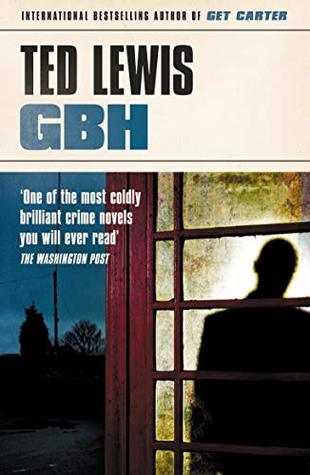
GBH

Rate this book
The lost masterwork of British crime icon Ted Lewis—author of Get Carter —is an unnerving tale of paranoia and madness in the heart of the late 1970s London criminal underworld.

In London, George Fowler heads a lucrative criminal syndicate that specializes in the production and distribution of “blue films”—nasty illegal pornography. Fowler is king, with a beautiful girl at his side and a swanky penthouse office, but his entire world is in jeopardy. Someone is undermining his empire from within, and Fowler becomes increasingly ruthless in his pursuit of the unknown traitor. As his paranoia envelops him, Fowler loses trust in just about everyone, including his closest friends and associates, and begins to rely on the opinions of an increasingly smaller set of advisors.

Juxtaposed with the terror and violence of Fowler’s last days in London is the flash-forward narrative of his hideout bunker in a tiny English beach town, where Fowler skulks during the off-season amongst the locals, trying to put together the pieces of his fallen empire. Just as it seems possible for Fowler to reclaim his throne, another trigger threatens to cause his total, irreparable unraveling.

320 pages, Hardcover

First published January 1, 1980

76 people are currently reading
1051 people want to read

About the author

Ted Lewis

16 books63 followers
Ted Lewis (1940 – 1982) was a British writer born in Manchester, an only child. After World War II the family moved to Barton-upon-Humber in 1947. He had a strict upbringing and his parents did not want their son to go to art school, but Ted's English teacher Henry Treece, recognising his creative talents in writing and art, persuaded them not to stand in his way.

Lewis attended Hull Art School for four years. His first work was in London, in advertising, and then as an animation specialist in television and films (among them the Beatles' Yellow Submarine). His first novel, All the Way Home and All the Night Through was published in 1965, followed by Jack's Return Home, subsequently retitled Get Carter after the success of the film of the same name starring Michael Caine, which created the noir school of British crime writing and pushed Lewis into the best-seller list. After the collapse of his marriage Lewis returned to his home town in the 1970s.

Ted Lewis died in 1982 having published seven more novels and written several episodes for the television series Z-Cars.

Ratings & Reviews

What do you think?
Rate this book

Friends & Following

Create a free account to discover what your friends think of this book!

Community Reviews

5 stars
244 (30%)
4 stars
303 (38%)
3 stars
153 (19%)
2 stars
68 (8%)
1 star
26 (3%)
Displaying 1 - 30 of 108 reviews
Profile Image for Baba.
4,067 reviews1,511 followers
August 3, 2023
From the writer of the 70's crime fiction classic Get Carter comes this plot led (yes, I actually read a plot-lead story!) of hardcore London gangster pornographer couple the George and Jean Fowler, who are not only prolific slow-torture murderers but get off on their kills. Compromised of two alternating chapter told stories that happened one after the other chronologically: The Smoke tells the story of the couples reign and how they try to deal with, for what is the first time, real threats to their 'business', the other story The Sea catches up with George Fowler in hiding after an event that saw him loose everything but his 'business' and causes him to go into hiding in Grimsby.
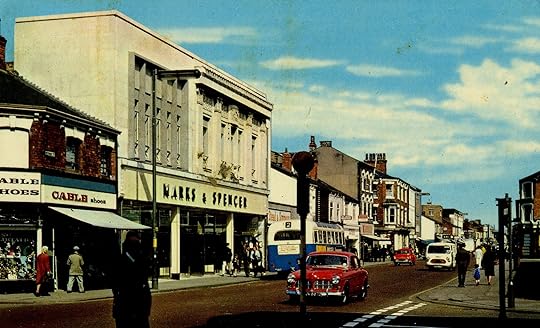
1970s Grimsby

A cleverly dual plotted story with both stories hiding secrets and paying off at their ends, and even more so that I could have dreamed off. I am a character-led reading addict but this is a deadly and engrossing piece of plotting that has no grey areas for the organised criminals or the police themselves and it works so well. 8 out of 12, Four Stars. Although a book set in the the world of pornography, there is hardly any explicit sex, but I can give a huge trigger warning for the torture kill scenes.

2023 read
Profile Image for Francesc.
477 reviews281 followers
February 17, 2022
Es un autor que idolatro y muy poco conocido. Sus dos novelas sobre Carter me parecieron impresionantes. Pero esta no llega a la misma cota. No está mal, pero...
La historia está bien y los personajes también, pero no te ríes tanto ni la trama es tan atractiva.

He is an idolized author and very little known. His two novels about Carter struck me as impressive. But this does not reach the same level. Not bad, but...
The story is fine and so are the characters, but you don't laugh so much nor is the plot so attractive.
Profile Image for Nigeyb.
1,475 reviews405 followers
September 6, 2023
Absolutely stunning. One of the best crime books I have ever read. The darkest possible shade of noir. I'm reeling. GBH is extraordinary.

Ted Lewis is best known for Get Carter (1970, aka Jack's Return Home), another UK crime masterpiece. I've also read the other two Jack Carter novels and after the discernible decline in quality that was 1977's Jack Carter and the Mafia Pigeon (1977) I wondered if that book was the moment Ted lost his mojo. Emphatically not, GBH (1980) must surely be Ted Lewis's crowning glory. Sadly it was published just two years before his untimely death.

As with all great genre writing, GBH completely transcends its genre. GBH is as much about alienation, loyalty, trust, and madness. It's a disorientating and hallucinatory read, and absolutely gripping. A word of caution though, it's not for the feint of heart. Whilst there is very little by way of graphic or explicit violence, the novel contains references to murder, torture, sadomasochism, and pornography, and every character is deeply flawed and very unsympathetic.

The edition I read contains an afterword by Derek Raymond (written in 1990) who, coincidentally, is the only writer I have read whose work comes close to the genius of GBH, and then only sporadically (most notably in He Died With His Eyes Open). Needless to say Derek Raymond identifies Lewis as a huge influence and one of the UK's greatest crime writers.

I urge you to read GBH if you enjoy noir crime novels, or just bleak, dark, well written literature.

5/5

Profile Image for Karl.
3,258 reviews372 followers
May 8, 2015
How could this book have been sitting around for the last thirty or forty years ?

Between 1965 and 1980, Ted Lewis wrote nine novels, they had gritty, incendiary storytelling that would influence writers on both sides of the ocean. Some say he brought Noir to England.

THIS IS NOIR fiction. The definition of Noir is - a genre of crime film or fiction characterized by cynicism, fatalism, and moral ambiguity. In France Noir means "black", at least "dark" and this indeed falls into that crater. No warm and fuzzy here, no gentle home spun cozy.

The story concerns a London gangster named George Fowler. Fowler runs a world wide Pornography ring. He is surrounded by killers, crooks, bent cops and crooked lawyers. It's not easy to be a porn barron. You can not trust anyone. We join Fowler in the present. We examine some of his past. We watch the timelines (past and present) merge as the kingpin looses his sanity and those around him.

Amazingly well written and compulsive reading, Highly recommended.

Profile Image for Bill Kupersmith.
Author 1 book245 followers
May 17, 2021
A TLS reviewer was sceptical of the claim in the new biography of Ted Lewis that he was the British Albert Camus. But Jack Carter continues to haunt me nearly half a century since we first heard Michael Caine deliver the best line in his career: “A pint of bitter [pause] in a thin glass,” in a low-life Newcastle pub popularly referred to as “The Star and Vomit” with genuine locals providing the extras, including a man with six fingers holding a pint of Newcastle Brown. (Carter wanted a thin glass in case of a fight.) The screenplay for Get Carter was adapted from Lewis’s novel Jack’s Return Home. Its original location was Scunthorpe and much as I loved the scenes of the slum housing of Newcastle just before the clearers could remove it, I was glad to return to Linconshire in GBH. (Grievous Bodily Harm: I reckon the American equivalent might be Aggravated Assault.) Half the story is set in the decrepit beach holiday area of Mablethorpe (“The Sea”) and the other half a bit earlier in London (“The Smoke”). The novel first appeared in 1980—ten years after Get Carter. The narrator is George Fowler, a kingpin distributor of pornographic films (“Blues”), who for reasons we only gradually find out has gone to ground in a bungalow near this seedy seaside resort - compared to which Skegness or Great Yarmouth is the Albert Hall. In the portions set in London, George, assisted by his wife Jean and Mickey his principal enforcer and a supporting cast of rival gangsters (“minions”) and bent coppers (“the filth”) has discovered that someone in his organization is defalcating.

'Mickey thought about it.
“Do you really think they’d try it on? I mean Hales, Wilson, Chapman, Warren. They make a lot of bread. Would they risk what they already get? And risked what they’d get if they were sussed out?”
“Money has a funny effect on people, Mickey,” I said to him. “Corrupting. Sometimes it makes them act very peculiar.”
Mickey thought some more. . . .
“And supposing all four are at it?”
“Then we’ll find out all four of them are at it, won’t we?”
Mickey lit a cigarette. “So what do you want me to do?”
“I want you to talk to them.”. . .
“So you’d like me to bring them along to Sammy’s?” [The safe house where they interrogate (i.e. torture) the suspects.]
“That’s right.”'

Most of the dialogue is delivered in the same clipped understated tone, often as statements cast into the grammatical form of questions. As I read it, I could almost hear the voice of Michael Caine, which was both all wrong and perfect for Get Carter, who didn’t sound at all like a Geordie but absolutely like a gangster. He would have been perfect for George. (Unlike the reader in the audio of GBH, who from the sample sounded like an upscale version of estuary – like someone from the London suburbs who’d gone to uni.)
My recollection of reading Jack’s Return Home so long ago in an el-cheepo paperback knockoff for the movie (if I’d bought another one and sealed it in cling film, it would probably be worth a pile today) is that it was a big disappointment. Get Carter ranks at the top of my list of movies that are better than the original book. But with GBH I could almost imagine seeing the same bleak but totally arresting atmospheric shots we had in Get Carter. George is watching a young woman in an amusement arcade in Grimsby.

'While I’m getting more change from the kiosk, I clock that this particular machine is already in use, being operated by a dark-haired girl in dark glasses. She’s wearing one of those Afghan coats and a deliberately patchy jeans and white plimsolls. A newspaper is sticking out of one of the pockets of her Afghan. I pick up my change and walk over and lean against the machine next to hers and watch her manipulating the flippers. She’s wearing a T-shirt which reads, I’D RATHER BE HANG-GLIDING. She’s clocking up quite a good score and she’s got a couple of ball-bearings to come. She takes no notice of my interest. When I notice that the paper sticking out of her pocket is a copy of The Stage, and also she’s beautiful in a way that goes with the clothes she’s wearing.'

You can almost see her. If there’s ever a movie I hope they offer the part of Emily Blunt! As the story unfolds, the girl whose name seems to be Lesley keeps morphing into different possible identities. At various points George (and we) suspect she may be a prostitute, a singer in the Carly Simon class, a car crash victim, a porn-film performer, a ghost, a spy from a rival gang, and an alcoholic delusion. (Both George and his creator were suffering from a stage-four case of the dingbats.) And George’s wife Jean in the Smoke sections is almost as enigmatic: porn-film performer, sadist, number-one henchwoman, sex partner, target for rival gangs. As with Glenda in Get Carter (who delivers that marvellous line “to the Demon King’s castle”), the women characters in GBH aren’t realistic, but they are fascinating, literally.

Even though the author and his protagonist were dissolving into an alcoholic abyss (Lewis would be dead two years later), I believe definitely that GBH is a lost classic due for revival that should re-read beautifully. Is Ted Lewis the Albert Camus of northern England? Not sure, but that picture of Michael Caine with that shotgun as Jack Carter has all the charisma of the famous picture of Bogie on the wall of Jean-Paul Belmondo’s bedroom in Breathless. And if that’s not an icon of an Existential saint, what is?
Profile Image for Nigel Bird.
Author 52 books75 followers
August 10, 2016
GBH is an assault on the senses.

The protagonist’s life is split into two alternating sections, The Smoke and The Sea.

In The Smoke, we’re in the past. George Fowler is leading a successful and violent criminal gang that makes most of its money peddling porn movies. For Fowler, his cold ruthless wife and close associates, the world is controlled through fear and the perpetration of enough acts of terror to keep that fear alive. Problems arise when it becomes clear that someone in the organisation is no longer playing by the rules. This heightens tensions between Fowler and the other major players in London’s underbelly and their friends of the law enforcement variety. Fowler sets about smoking out the rats from the nest and in doing so risks setting the entire operation ablaze. The story in the city is taught and strained like a muscle pushed to its limits.

The Sea is told in the present tense and has Fowler in hiding in a down-on-its-knees seaside resort. This allows for reflection on what’s been and along with this comes detailed description of the world he inhabits. Having lived through extreme horrors and lost much of what he held dear, he is drinking heavily to find another kind of escape. Though he should find it easy to lie low, he can’t relax. Paranoia engulfs him and he can’t break old habits of trying to fathom exactly what is going on in the world around him. Those he encounters become potential threats and as he tries to work out their motives he slowly tears himself apart.

The tension and pace mean it’s difficult to break away from.

Lewis does an amazing job of creating an environment of menace and perversity without ever really shining a torch directly upon it. The most sinister aspects are told through suggestion, intimidating settings and sharp similes:

‘I strike a match and light the fire. The newsprint crackles like the sound of small bones breaking.’

The finale is held tantalisingly in the near-distance all the time and the way this is done means the appetite for more is always kept alive.

Key to the psychological elements is the empathy engendered for Fowler. Not only is it easy to relate to his plight, it’s also impossible not to root for him in spite of all his dark deals and reign of terror.

This book is a beautiful thing. It’s for writers to learn from and readers to enjoy.

GBH? Great Book Here.
Profile Image for Paul Oliver.
10 reviews7 followers
January 16, 2015
Among crime fiction enthusiasts it is a book of near mythical legend, available only via rare book dealers for exorbitant prices. GBH was published as a paperback original at a low point in the career of its author. Within a year of its publication the book was out of print and its author dead of alcohol related disease. Lewis was only 42.

That last and grimmest detail is what perhaps makes GBH so fascinating and tragic. The two novels that preceded it were among Lewis' least inspired. The sharp wit was there but so too was a cynicism and meanness that no longer contained the emotional resonance of his previous work.

And yet while his health was failing, and at the lowest point in his still young career, Lewis wrote the brilliantly sinister GBH, a novel that captures nearly every theme the author addressed during his all too short life. In a pair of narratives you are given "The Smoke" of 1970s London, where a ruthless crime lord is losing grasp on his sanity and empire, and "The Sea" of an English beach town in the off season, where the same man now lives in hiding, his empire in shambles and his identity uncertain.

The classic Lewis themes concerning the contrast between big and small town life, the ruthlessness of organized crime, and the high cost of violence are all present in GBH just as they were in his groundbreaking second novel, Get Carter. So too are the richly drawn characters, whether they are vicious gangsters or boardwalk townies living out their lives in the sleepy off-season. But GBH has something more: a delightfully clever twisting of plot that lends it a near supernatural air.

GBH is not the influential "blueprint" that Get Carter was. It did not influence the way crime stories are told. It is however a masterpiece of crime fiction and a wholly singular novel. Gritty, creepy, fascinating.

It is now available for the first time in North America, and for the first time in hardcover and ebook formats. It's time this novel finds its place in the crime fiction canon.
Profile Image for Constantinos Capetanakis.
128 reviews50 followers
March 20, 2021
British noir’s best book from the writer of the iconic book turned equally iconic film Get Carter starring the unsurpassed Michael Caine (not the Stallone remake, obviously).

Amazing read of a dark, pithy, gritty world oozing corruption, atavistic instincts and violence. London’s 70s crime arena, well polished thugs and kingpins, total hubris and the inescapable fall.

The prose is spot on, the setting is cinematographic, the plot challenging yet fully absorbing, the characters reminiscent of Shakespeare, the climax unfathomable.

One more case of a gem remaining hidden and which should definitely be discovered and widely read.

A must-read of top notch crime fiction, no question about that whatsoever.
Profile Image for Tor Gar.
419 reviews48 followers
June 13, 2021
Meh! Dos líneas temporales con el mismo personaje y el escaso interés radica en saber cómo pasó de una situación a otra. Me resulta falso y engañoso porque el protagonista lo sabe, el autor lo sabe y al lector se le oculta de forma deliberada para contarlo al final del libro. Aceptaría si propusiese algo más pero todo radica en esa cuestión y el camino recorrido no tiene nada que me atraiga.

Le diría al autor: “Pues bien, pues vale, lo he acabado ¿qué quieres un premio? Pues no. Pasa pa casa”
Profile Image for Ed [Redacted].
233 reviews28 followers
July 12, 2015
A very good character study of a pornographer's decent into madness, told in two parts in alternating chapters;

The Sea:
The sea is the current timeline. It is set in a small seaside town in Northern England where the protagonist, George Fowler, is hiding out from someone. George was a prominent gangster and pornographer until recently, when something terrible happened

The Smoke:
This is a timeline set sometime in the recent past. In this timeline, George is at the height of his power. Feuding with a rival gang and murdering and torturing an increasing number of his colleagues as his paranoia grows.

George sinks further and further into alcoholism and madness as the story goes along. This was a very well written book, and has made me both very interested in checking out Lewis's other stuff, and very sad at his own decent into alcoholism and death at what appears to have been the height of his literary powers.

I recommend this to anyone interested in crime stories or well written character studies generally.
Profile Image for Tuck.
2,264 reviews252 followers
September 16, 2015
this found after decades past author's death. ted lewis famous for hard living and hard books , you may have even seen the movie of this one Get Carter. pretty good noir with booze/guilt/paranoia mind bending....a king pen kills his way into a corner. that is all good. i gave this excellent book 'only' 3 stars because of the overabundance of characters and plot. maybe that's why he didnt publish it? didnt have time to finish it? reminded me a bit of cain's dialog and atmosphere The Moth and a bit of bruen and his stripped down, drug addledness Slide
but i like how nisbet does all this better: Old and Cold
Profile Image for Andy Weston.
3,191 reviews226 followers
August 27, 2021
GBH by Ted Lewis. GBH by Ted Lewis
Derek Raymond writes an informative piece at the end of this quite memorable novel.
Ted Lewis died 'of alcohol' at the age of 42. Raymond says that when trying to understand why he drank, it is necessary to read this novel , and his other work, like Jack's Return Home. Quoting further, as far as the contemporary black novel in Britain is concerned, Lewis was the prototype, the first of a generation. The first British writer of the sixties to take Chandler literally..
The crime story tips violence out of its vase on the shelf and pours it back down into the street where it belongs.

This story is about the the downfall of George Fowler, the king of a porn empire in London, who at the outset is prosperous and on top of his game. He suspects betrayal, a weasal from within. Whether paranoia or not, and along with his intimidating hardcase minder, Mickey Brice, sets out find and stamp the threat out, in the most violent of ways.
The novel's opening and closing are both quite brilliant. In the first pages George and Mickey 'interrogate' their initial disloyal suspect.
The denouement is sensational, Don Giovanni-esque and quite befitting.
Whereas Plender may have a sense of poetic justice, there is none of that here, it is far darker. The closing horrors may have been hinted at throughout, but are far worse than could have been imagined.
This is a Britain in the 60s that they don't teach about in school, one wihtout morals, one of violent crime, vice, corruption, hardcore pornography and BDSM.
Haunting and unforgettable.

Here’s a clip..
‘Bad news about Ray Warren,’ Mickey said. ‘Or for him. Or for us, temporarily.’
‘What’s that Mickey?’ I asked him.
‘His old lady. He phoned last night. She snuffed it. He’s staying up there for a few days, until after they’ve put her in the ground.’
‘Sorry to hear it,’ I said.
‘Yeah, I knew you would be,’ Mickey said. ‘You want me to organise a wreath?’.
‘Yes, I should do that.’
‘Shall I get two made up while I’m at it?’ he said.
Profile Image for Sue Russell.
Author 11 books44 followers
June 12, 2017
Yowza. (Is that a word?) GBH (Grievous Bodily Harm in British criminal justice parlance) was the last work from the late great British writer Ted Lewis, author of "Get Carter" (eventually a film starring Michael Caine.) Ted Lewis was a major talent who died young, apparently from alcohol-related issues, gone far too soon. Not for the faint of heart, that's for sure.

In GBH, Lewis colourfully inhabits rather than portrays British gangland brutality in the 1960s. I could feel the locations in my bones and dreamed about the book and about gangsters Ronnie and Reggie Kray and other notorious figures who stole headlines back then. (It wasn't all tea and crumpets, that's for sure.)

The novel is all the more chilling for the torture, not always graphically written (although there is plenty of that) but possibly because of what is not spelled out. Ted Lewis's compelling writing helps you power through his last work. I really couldn't bear to put it down.

Now it is behind me, I am still pondering the plot twists and just how he did it? I plan to go back to review a few passages to check out where I now, in retrospect, believe turning points in the plot may have lay in wait. If you are a fan of hard core crime fiction with a strong stomach (you will need it), Lewis was a master. As one reviewer suggested, Lewis's viewpoint suggested that surely he must have been dangerously close at times to the world he painted on paper: too close to have made it all up. On that I won't comment. Gangland brutality was a cloud shrouding areas of England: you only had to read the newspapers. But Ted took it to new levels.

His brief chapters--few exceeded three pages--accentuated the speed of the ride.
Profile Image for Warren Stalley.
235 reviews18 followers
April 23, 2017
Split between two time frames The Smoke and The Sea – GBH tells the twisted story of blue movie empire businessman George Fowler and his determined search to track down who is stealing money from his organisation. The Smoke episodes tell the grim story of the search for the thief, while The Sea episodes concentrate on the aftermath as Fowler lies low in a luxury bungalow at the edge of the out of season sea-side town of Mablethorpe. At first the narrative does seem hazy but gradually as the story unfolds it becomes a gripping tale of one man’s obsession and decline into madness. As Fowler’s search continues he starts to question those closest to him including his wife Jean and loyal lieutenant Mickey. We witness that the business has corrupted everyone including Jean. While Fowler faces mass paranoia as he realises that he can’t trust anyone around him anymore. With the police hounding him and rival firm The Shepherdsons stalking him then the destructive spiral can only lead downwards. The slow burning narrative leads to a brutal, shocking climax as both time lines converge. As with Get Carter (Jack’s Return Home) author Ted Lewis seems able to convey a beauty and finesse in the grimmest of environments – dark city or grey seaside. He portrays a brutal underworld full of despicable characters both men and women. GBH is without doubt a landmark British noir novel that in its own brutal, gritty way is as classic and astonishing as anything by Raymond Chandler, Dashiell Hammett or Jim Thompson. Ted Lewis was truly a talented author who shouldn’t be forgotten and GBH is highly recommended for any fan of gritty British crime fiction.
Profile Image for Gunnar.
386 reviews13 followers
March 4, 2021
Ein Gangsterboss taucht in einem verschlafenen Seebad unter und lässt die letzte Zeit Revue passieren. Dabei trinkt er eine Menge Scotch und rechnet permanent mit seiner Enttarnung. Ein überzeugender Noir aus den frühen 1980ern, neu aufgelegt, voller gewissenloser Gangster, korrupten Bullen, Folter, Pornografie und Paranoia.
Profile Image for Will.
81 reviews3 followers
September 9, 2024
GBH, by Ted Lewis. 1980.

The final novel by British noir author, Ted Lewis. Most people know Lewis for his 1970 Jack's Return Home, aka Get Carter story, which was famously made into a movie starring Michael Caine. I'm a big fan of the movie and the book. GBH is just as good, and, in some ways, is even more hard-hitting. There are psychological aspects that are not only reminiscent of classic noir fiction, but that prefigure what would become an entire subgenre of the crime novel, psychological thrillers, all while maintaining the gritty, working-class elements common to noir and gangland. It's a shame Lewis died so young. I think he was a bit ahead of his time. As Derek Raymond states in the Afterword to this edition:

Another point that needs stressing here is that, if Lewis is not much better known than he should be in his own country, it is because, in the days when he was writing (I hope, I think the situation has improved now) the better written, the blacker, and more direct a novel was, the more liable it was to upset the sensibilities of the squeamish publishers, whose blind devotion to - and thus fear of alienating - middle class taste (which, above all, dreads reality in literature and anything that cannot be mentioned in the drawing room) was true across far too wide a sample of British editors.

Fans of David Goodis, Jim Thompson, Ed McBain, and similar authors, some of the darkest of the noir (not just hardboiled) writers, should give Lewis serious attention. At the very least, read both Jack's Return Home and GBH.
Profile Image for Richard Schaefer.
364 reviews12 followers
September 28, 2023
Grievous Bodily Harm (sometimes published as GBH, I don’t know why), is the last novel by the hard boiled British crime writer Ted Lewis (most famously, the movie Get Carter is based on Lewis’s first novel). It’s structured to tell two related stories on an alternating basis: one, in the past, relays the investigation into a betrayal within George Fowler’s crime syndicate. The other, in the present, shows him in hiding in a remote coastal village, becoming more and more paranoid about those around him.
The chapters are short, often less than two pages, so the compulsion to keep reading is nearly irresistible; especially in the second half, my desire to find out what happened next in both the past and present kept me turning pages. The two stories parallel each other nicely, and despite the hard boiled subject matter, Lewis’s prose adds a poetic touch to this brutal crime story.
The story’s major theme is paranoia—who can you trust, when you’re the king? Well, without spoiling anything, I’ll say the answer is: not many people. This mindset drives George crazy in his hiding place on the beach. His obsession with a woman he keeps seeing reminded me favorably of Vertigo, and the climax (climaxes, really, as past and present converge) is wild.
Unfortunately, Lewis has become fairly hard to find; I only own this one and Get Carter, but I look forward to reading more by him. Carter wanted to return the grit and grime to British crime writing, and GBH succeeds.
292 reviews
July 19, 2024
A pulpy dark ride through the criminal underground of London in the 1970s. GBH is a tough book with a fun narrative twist. Every chapter switches between the past and the present. In the past - titled The Smoke - we're treated to a twisting convoluted plot to try and unearth the traitors amongst this gangster's organization. In the present - The Sea - the previous head-honcho of the organization is in hiding trying to battle his demons while increasing paranoia and madness claw their way in.

The chapters last usually only 1 to 3 pages - making it almost a whiplash like switch constantly between the past and present. It keeps the story flowing really well and makes for some very interesting interplay and comparisons.

I did have a hard time following the rather large cast of characters, and found the Smoke sections a little less engaging. Mostly because I didn't quite follow all the slang, the web of characters, and the innerworkings of this mob traitor storyline. The Sea was easier to understand - and more compelling in it's simplicity. Watching a man fall apart and fall victim to his own paranoia was engaging and interesting.

The last 100 pages definitely picked up the pace and I enjoyed the final reveals. Solid pulpy crime stuff.
Profile Image for Al.
1,657 reviews58 followers
May 16, 2020
Ted Lewis in general and GBH in particular have attained cult status, so I had to give it a try. Now I can see why it has a following; however, it's not quite for me. Definitely good hard-core noir, but between the confusing plot and characters, the murky London street slang, and too many loose ends, it was just too much work. I still might try his other highly-praised work, Get Carter, just to be fair.
Profile Image for Pete.
108 reviews15 followers
January 23, 2020
A masterpiece. Up there with the best crime novels I'e ever read . Noir in the extreme, you can smell the paranoia wafting from each page. Ted Lewis at his very very best.
70 reviews
June 15, 2020
Grizzly Truth

Oh my!!! My heads in a spin! Incredible writing, a true masterclass in storytelling. I dont want to say anymore about this book other than If you dont read it your missing out. Absolute tour de force, complex and very satisfying.
Profile Image for Scott.
519 reviews6 followers
February 6, 2015
Once again, I find myself 'discovering' a writer who had already earned legions of fans . . . 'GBH' is my first Ted Lewis book, but it will certainly not be my last. The late (Lewis passed on in 1982) great author wrote seven novels of hard-boiled British crime fiction, including 'Get Carter,' which was also adapted into the popular film starring Michael Caine. Several of his novels are deemed classics of the British crime genre, and it's easy to see why.

'GBH' (stands for Grevious Bodily Harm) is narrated by its anti-hero, George Fowler, currently living in anonymous exile on the coast of England after surviving an apparent coup attempt - Fowler was until recently the head of a highly lucrative (and lethal) pornography empire that sold everything, up to and including snuff films. The novel gives us two narratives - the present day as Fowler tries to recover from his recent losses (this narrative is called 'The Sea'), and the undefined-but-recent-past where Fowler was still on top (this strand is called 'The Smoke'). While on top, Fowler fought and bought friends and enemies, as needed, including reaching a lucrative arrangement with the upper management of The Law. Still, in Fowler's world one can never sleep too soundly, and in The Smoke Fowler confronts the hard truth that one of his inner circle is less than 100% loyal.

That's the kind of disloyalty Fowler cannot abide, and he's the kind of man who uses pain as a tool - it's not personal, even has he has you tied up to hot electrical wires.

In The Sea, Fowler struggles to cope with the staggering losses he incurred in The Smoke, but he's living a quiet life of mourning and self-reflection. That is, until a mysterious woman arrives, dropping clues that war that raged in The Smoke may still claim Fowler as a casualty.

The Sea and The Smoke gradually converge as Fowler pieces together clues and ties the strands together. But paranoia, grief, and madness may have also taken more than a bit out of Fowler. Back in The Smoke, Fowler had trusted allies to feed him information and help him analyze the situation, but in The Sea he is painfully alone. Is he drawing the right conclusions now that he's flying solo? His life may well hang in the balance.

Lewis writes with a laser-like focus - no words are wasted. There is a lot of British period slang that is a bit difficult to translate at first, but eventually this modern American reader got the hang of it and reveled in it. This is dark, gritty stuff - very much akin to James Ellroy's darker stories . . . in other words, don't get this book for your young teenager even if he or she has read "The Maltese Falcon."

It took me too long to discover Mr. Lewis - I'll remedy that by reading each of his books soon.
Profile Image for Dave.
484 reviews
March 23, 2015
Thank you to Soho Press and goodreads, through First Reads, for this copy of GBH, by Ted Lewis.

This is the first Ted Lewis book I've had the opportunity to read, and enjoyed it very much. The book is written in alternating chapters of the past (The Smoke) and the present (The Sea), which worked to keep me wanting to read the next chapter to get back to the continuation of the previous chapter, etc. It kept the stories moving along at a fast pace as we watch a crime king and his family, the cancer of society really, as he works to keep control of his high flying company and stay on top of his industry. We learn quickly that George is a narcissist and psychopath, and nothing and nobody will stand in his way. In fact, his pleasure is others pain. No different than any other corporate or political leader, except for the more physical ruthlessness practiced.

His personal undoing (the company lives on) is his own self. He eventually becomes more and more paranoid and delusional, drinking more heavily, until he is put out of his misery by some partners in crime. So, in the end, some of his paranoia was justified.

A good read.
Profile Image for Nigel.
Author 12 books68 followers
November 15, 2015
Are there villains more squalid and vile than the narrator of GBH? Answer is there none. No, wait. The answer is none there. Dammit. None. None more squalid nor vile. A pornographer and snuff merchant who tortures and murders his way through his own gangland mob when threatened by rivals, a wife and sidekick nearly as bad as him, cops in his pocket and enemies under his heel. But something is going on and it's hard to put his exposed electric wires on it. We know it all goes wrong, though, because the story is split into the past, The Smoke, with Fowler at the height of his power, and the present, The Sea, with Fowler hiding out at a deserted out-of-season beach resort.

The disintegration of his empire and the disintegration of his mind are told with wonderful, calm and literate prose, reflecting the urbane civility of the man with monsters underneath. Utterly brilliant, searing and harrowing as he is brought low first by his ego, and then by the tiny sliver of a conscience he doesn't even know he has.
This entire review has been hidden because of spoilers.
Profile Image for Karen Gail Brown.
354 reviews15 followers
March 21, 2015
This is the story of a criminal, George Fowler, at the height of his vocation, which deals in pornography. Gradually, his life unravels as his organization begins to dismantle. This is also a love story of George and his wife, Jean. Jean is kidnapped and murdered by George's enemies and as he tries to find her, George himself begins to unravel. He becomes more and more paranoid.

Once you start GBH, it is hard to put down.
856 reviews6 followers
November 3, 2015
I'm not a fan of crime, noir, or as the afterwords calls this book - "black" novels. Death, cruelty, torture, drunkenness, pornography, and corruption of the legal system are all too close in real life without having to spend free time reading about it. So, I give the story one star.

But, the craft of the writing - particularly the pacing and building of suspense - is five stars.

So a combined 3 star rating.

Profile Image for Barry Hammond.
692 reviews27 followers
January 24, 2016
This is a throw-back to 1961, probably a found manuscript, from Ted Lewis, the author of the "Get Carter" trilogy. It's got plenty of British crime villain atmosphere in the "Long Good Friday" vein with a memorable leading character in porn-king George Fowler, who may be losing his mind. The dual time frame structure leads to a convincing climax in the action but it's undermined slightly by an ambiguous ending. Still worth a read but falls just short of being a classic. - BH.
Profile Image for Kate  prefers books to people.
656 reviews6 followers
February 10, 2023
I rarely actually dislike a book. This features garbled timelines, gross content (graphic snuff film of viewer's beheaded wife), and not one single likable or sympathetic character (which you can criticize me for to your heart's content, but if I am reading fiction, I want to like something about someone). This takes noir way farther than I care to go with it, and no, I don't particularly care you loved another book or a version of movie based on this book.
Profile Image for Lynn.
860 reviews9 followers
January 27, 2016
Crime noir at its best. Unfortunately, I'm coming to the realization that I may not be a big fan of the genre. I would probably really like a movie version, but I found the book's structure exasperating. The story, itself, was good and there were no holds barred in the depictions of criminals and brutal crimes.
Profile Image for Tim Pendry.
1,150 reviews491 followers
January 9, 2021

This is an important British noir. A psychotic sociopathic gangster George Fowler gets outplayed by the system and by his own paranoia and mental fragility. It has one flaw, however, that is appropriate for its thriller market but detracts from its status as a classic - exaggeration.

One exaggeration is that Fowler himself is an amalgam of Paul Raymond (who was not violent) and the Krays (who were not capable of sustained legitimate business management) with a partner in crime who is half Fiona Richmond and half something out of a more lurid Italian giallo.

The other exaggeration is the extent of corruption in the system. The coppers of the 1970s dealing with gangland businesses were as dodgy as hell but not quite to the level of organisational corruption suggested here. It makes a good story but obliges too great a suspension of disbelief.

We have been here before with Scerbanenco's 'Private Venus' (see our review of December 6th, 2020) and Richard Stark's 'The Hunter' (see our review of December 16th, 2020), both of which mythologise organised crime in a way that does not survive the test of time.

Lewis had varied fortunes with his books and died relatively young as an alcoholic. He also left London to return to his local small town after a failed marriage and an inability to build on his success as author of the novel behind the cult film, 'Get Carter'.

Once you know this and you have read the book, you know that 'GBH' is about the author as much as George Fowler, a fantasy spun around a reality of personal experience in which Fowler's mental state and the collapse of his world looks as if it echoes that of Lewis, at least in part.

And this is why the book is, despite the flaws, well worth reading. Lewis takes no prisoners in portraying a world centred not merely on pornography but on pornography that involves psychopathic torture and murder ('snuff movies') but he is also interested in suffering and loss.

In fact, while 'snuff movies' may exist (it is hard to prove that they do not although nearly all cases prove to be special effects), the scale of the industry and its normality within organised crime is yet another exaggeration for dramatic effect. Lewis keeps tipping us just over the edge of plausibility.

As a gangster story, 'GBH' thus does not stand up as well as its literary supporters seem to want it to do but as a psychological study of that grey area between an author and his creation, it begins to take on a new light and rise rapidly in status again.

What Lewis does well is plot his tale and construct characters and relationships that - if you accept the core problems as artistic licence - work well as a story line that pulls you in. Lewis is brilliant at evoking location and atmosphere whether a 1970s penthouse or a run-down seaside variety theatre.

Fowler himself does not entirely persuade because he seems simultaneously too hysterical and yet too articulate and 'middle class' in tone to represent the Kray side of the story while the 'Richardsons' of the story (the Stephensons) are shallowly presented as exceptionally stupid.

But the corrupt policeman Collins and the vicious and perverted cold killer Mickey 'come alive' as do characters such as Eddie, the third rate local promoter, and the various bar men who scatter the tale. The strange psychosis cleverly leaves a doubt whether we are dealing with a revenant.

Lewis adopts an unusual narrative style which has very short chapters alternating as 'Smoke' and Sea' telling two tales concurrently that are actually successive in time. 'Smoke' evokes the organised crime world of 1970s London and 'Sea' the dereliction of an out-of season seaside resort.

This is very skilled writing, managing to maintain pace along two tracks without allowing the second story to give the game away in the first - everything has to be wrapped up at the end in a different authorial voice and we do not mind. The final chapter leaves a mystery intact.

There really are unexpected twists and you may need a strong stomach for two or three short scenes of violence - both intended and accidental. The book is both filmic and unfilmable (at least not without taking out of the story some of its central mystery).

One senses a writer who knew real sociopaths, was fascinated and horrified by them at the same time but was certainly not one himself. Lewis does not really get to the core of a sociopath's mind here, however. Fowler sits as a sociopath by conduct but not entirely by thought patterns.

The grief and suffering of Fowler in the second story line come from the experience of a different type of human being to the one who created a criminal empire based on the most extreme forms of vice.

This is less of a problem if we stop trying to understand the mind of a violent pornographer in the snuff trade and a participant in violent orgies and see him rather just as a troubled human being whose paranoiac intelligence is just not up to understanding the logic of a real plot against him.

Perhaps my sense that Lewis was exorcising all sorts of demons when he wrote this novel is an over-simplistic reaction (after all, who can know another mind) but it is rare to find what was clearly intended to be a popular thriller rising to this higher level of flawed psychological subtlety.
Displaying 1 - 30 of 108 reviews

Join the discussion

Can't find what you're looking for?

Get help and learn more about the design.