

What do you think?

Deadgirl: The Novelization
Once deemed too controversial to release, DEADGIRL stunned festival audiences, outraged religious groups, and became an instant cult sensation. A film that seared itself into the minds of the depraved and the discerning alike, it remains one of the most transgressive and boundary-pushing nightmares of its era.
When two high school misfits—bound by boredom and adolescent hunger—ditch class to slip beyond the rusted doors of an abandoned hospital, they stumble upon a gruesome secret that will shatter their innocence and test the limits of their a woman, stripped bare and chained to a table.
She's abandoned. She's beautiful. She's dead ...or is she?
Celebrated author Bridgett Nelson breathes new life into Trent Haaga's infamous, unholy fever dream—a harrowing exploration of intimacy, morality, and the horrors of growing up. DEADGIRL is a grotesque coming-of-age nightmare that peels back the skin of innocence to expose the raw, throbbing horror beneath.
You can look away. You can tell yourself it's only a story. You may deny what it reveals about you.
But DEADGIRL will still be there—waiting.
When two high school misfits—bound by boredom and adolescent hunger—ditch class to slip beyond the rusted doors of an abandoned hospital, they stumble upon a gruesome secret that will shatter their innocence and test the limits of their a woman, stripped bare and chained to a table.
She's abandoned. She's beautiful. She's dead ...or is she?
Celebrated author Bridgett Nelson breathes new life into Trent Haaga's infamous, unholy fever dream—a harrowing exploration of intimacy, morality, and the horrors of growing up. DEADGIRL is a grotesque coming-of-age nightmare that peels back the skin of innocence to expose the raw, throbbing horror beneath.
You can look away. You can tell yourself it's only a story. You may deny what it reveals about you.
But DEADGIRL will still be there—waiting.
- GenresHorror
222 pages, Kindle Edition
Published May 6, 2025
About the author
Bridgett Nelson
47 books652 followersOnce an operating room registered nurse, Bridgett Nelson so enjoyed playing with human organs, she decided to turn her macabre interest into a horror writing career. She loves bubble baths (because nothing says spooooky writer like lemon-scented bubbles), hates not knowing what’s swimming in the water with her, lives for Halloween season (but loathes chainsaw-wielding dudes in haunted houses), adores her West Virginia University Mountaineers, is very pro-Oxford comma, and thinks bananas are absolutely disgusting.
Described as 'Splatterpunk with a heartbeat,' her first novel, Karma, has received stellar reviews from readers, while her debut collection, A Bouquet of Viscera, is a two-time Splatterpunk Award winner, recognized both for the collection itself and its standout story, "Jinx."
Deadgirl, the novelization of the cult classic film, is available from Encyclopocalypse Publications and includes forewords from the film's actors, Noah Segan and Shiloh Fernandez, a Q&A from screenwriter, Trent Haaga, and a fan fiction piece from noted horror author, Jeff Strand.
Her latest collection, Embracing the Profane, includes fifteen extreme stories and won 'Best Collection' at the Haunted Minds Book Club Awards Ceremony on December 31, 2025. S
Bridgett also penned Poisoned Pink, What the Fuck Was That?, Sweet, Sour, & Spicy, and Red Inside, an 'Elite 8' finalist in the 2025 Books of Horror Indie Brawl.
Her work has appeared in multiple anthologies, including the iconic Deathrealm Spirits, Duncan Ralston's Tales from Ghostland, Crystal Lake's Hotel Macabre, Edward Lee's Erotic Horror for Horny Housewives, The Rack, Splatterpunk's Basement of Horror, October Screams, American Cannibal, and the legendary Splatterpunk Zine.
When Edward Lee read her story "Giggly," available in the Poisoned Pink collection, he said to her: "Giggly kicked my ass. Outstanding job! I need therapy now."
Bridgett is mom to Parker and Autumn, three pugs, a Saint Bernard, a ball python, and a Dumeril's boa.
She is a 2022 Michael Knost WINGS award nominee, won second-place in the '22 Gross-Out contest at KillerCon in Austin, Texas, and third-place in the ’23 Gross-Out contest.
She's a freelance editor. Audiobook proofer. Bookworm. Dog lover. Tarantula whisperer. Bra avoider. ENJF. Amaretto Sour obsessor. She/her.
Bridgett currently lives in Duluth, Minnesota, with Bram Stoker Award-winning author, Jeff Strand, their ball python daughter, Indie Hellspawn McFangy Serenity Strand, and their Dumeril's boa son, Floyd Bernard Bodhi Snugglebunny Strand.
She is hard at work on her second novel, as well as a collaborative novel with a very funny writer.
Visit her website at www.bridgettnelson.com.
Described as 'Splatterpunk with a heartbeat,' her first novel, Karma, has received stellar reviews from readers, while her debut collection, A Bouquet of Viscera, is a two-time Splatterpunk Award winner, recognized both for the collection itself and its standout story, "Jinx."
Deadgirl, the novelization of the cult classic film, is available from Encyclopocalypse Publications and includes forewords from the film's actors, Noah Segan and Shiloh Fernandez, a Q&A from screenwriter, Trent Haaga, and a fan fiction piece from noted horror author, Jeff Strand.
Her latest collection, Embracing the Profane, includes fifteen extreme stories and won 'Best Collection' at the Haunted Minds Book Club Awards Ceremony on December 31, 2025. S
Bridgett also penned Poisoned Pink, What the Fuck Was That?, Sweet, Sour, & Spicy, and Red Inside, an 'Elite 8' finalist in the 2025 Books of Horror Indie Brawl.
Her work has appeared in multiple anthologies, including the iconic Deathrealm Spirits, Duncan Ralston's Tales from Ghostland, Crystal Lake's Hotel Macabre, Edward Lee's Erotic Horror for Horny Housewives, The Rack, Splatterpunk's Basement of Horror, October Screams, American Cannibal, and the legendary Splatterpunk Zine.
When Edward Lee read her story "Giggly," available in the Poisoned Pink collection, he said to her: "Giggly kicked my ass. Outstanding job! I need therapy now."
Bridgett is mom to Parker and Autumn, three pugs, a Saint Bernard, a ball python, and a Dumeril's boa.
She is a 2022 Michael Knost WINGS award nominee, won second-place in the '22 Gross-Out contest at KillerCon in Austin, Texas, and third-place in the ’23 Gross-Out contest.
She's a freelance editor. Audiobook proofer. Bookworm. Dog lover. Tarantula whisperer. Bra avoider. ENJF. Amaretto Sour obsessor. She/her.
Bridgett currently lives in Duluth, Minnesota, with Bram Stoker Award-winning author, Jeff Strand, their ball python daughter, Indie Hellspawn McFangy Serenity Strand, and their Dumeril's boa son, Floyd Bernard Bodhi Snugglebunny Strand.
She is hard at work on her second novel, as well as a collaborative novel with a very funny writer.
Visit her website at www.bridgettnelson.com.
Ratings & Reviews
Friends & Following
Create a free account to discover what your friends think of this book!
Community Reviews
Displaying 1 - 30 of 67 reviews

March 22, 2025
This is absolutely my favourite book of the year so far, and I couldn't put it down. I've not read anything by Bridgett before, and I also haven't seen the movie, so I went in completely blind and I'm so impressed.
I love how each chapter bounces between NOW and THEN - which is the POV of the boys and the teenage girl they find. The chapters are short, to the point, and really detailed in what's going on at that exact moment. I flew through this book. I loved Bridgett's writing style and just the right amount of gore and sex that didn't take it overboard and take away from the story.
The story itself is horrifying and completely heartbreaking, harrowing. People can be so disgustingly cruel and vile and ugh, the poor girl.
You HAVE to read this book. It will be available on May 6th!
I love how each chapter bounces between NOW and THEN - which is the POV of the boys and the teenage girl they find. The chapters are short, to the point, and really detailed in what's going on at that exact moment. I flew through this book. I loved Bridgett's writing style and just the right amount of gore and sex that didn't take it overboard and take away from the story.
The story itself is horrifying and completely heartbreaking, harrowing. People can be so disgustingly cruel and vile and ugh, the poor girl.
You HAVE to read this book. It will be available on May 6th!
March 1, 2025
This was brutal but it had me on the edge of my seat please read trigger warnings as sexual assault takes place in this book and could be triggering to individuals who have suffered with that trauma I absolutely was engrossed with his and I couldn't put it down it was written well and it was fast paced I'd highly recommend this book but please check trigger warnings

March 6, 2025
What A Brutal, Unflinching Descent into Horror!!!
Some books push boundaries. Others obliterate them. Deadgirl is the latter. It is a grotesque, unrelenting nightmare that forces you to confront the darkest corners of human nature, making it both unsettling and definitely UNFORGETTABLE. I, for one, will never forget this little ray of sunshine that kept me company as I hadn't been feeling well these past few days.
Every page dripped with tension. Every chapter was short and was fast-paced, the way i liked it, and every new chapter was a new discovery. When I say discovery, I mean in the visually graphic sense.
The horror that plays havoc with your psyche cut deeper than any graphic violence ever could, and there are just some things you won't forget anytime soon, capturing the cruelty of youth, and how perverted they can become when they are curious.
Last but not least, this book will bring out all your emotions. It will enthral you, it will definitely gross you out, it will pull at your heart strings, but most of all, it will make you root for the 'deadgirl' (no pun intended).
Well done, Bridgett 👏 for giving me my FIRST 5 ⭐️ read for March! Out May!
Some books push boundaries. Others obliterate them. Deadgirl is the latter. It is a grotesque, unrelenting nightmare that forces you to confront the darkest corners of human nature, making it both unsettling and definitely UNFORGETTABLE. I, for one, will never forget this little ray of sunshine that kept me company as I hadn't been feeling well these past few days.
Every page dripped with tension. Every chapter was short and was fast-paced, the way i liked it, and every new chapter was a new discovery. When I say discovery, I mean in the visually graphic sense.
The horror that plays havoc with your psyche cut deeper than any graphic violence ever could, and there are just some things you won't forget anytime soon, capturing the cruelty of youth, and how perverted they can become when they are curious.
Last but not least, this book will bring out all your emotions. It will enthral you, it will definitely gross you out, it will pull at your heart strings, but most of all, it will make you root for the 'deadgirl' (no pun intended).
Well done, Bridgett 👏 for giving me my FIRST 5 ⭐️ read for March! Out May!

March 5, 2025
I’ve not seen the movie that this book is based on so the plot, characters, and world were a brand new experience for me. And I’m glad because that made this book so engrossing.
I didn’t know what would come next, and Bridgett’s style made sure it was a tense but brutal read. I don’t want to give too much away for people who haven’t seen the movie, but this was an awesome book.
If you enjoy splatterpunk/darker horror pieces, this will be a favorite.
I didn’t know what would come next, and Bridgett’s style made sure it was a tense but brutal read. I don’t want to give too much away for people who haven’t seen the movie, but this was an awesome book.
If you enjoy splatterpunk/darker horror pieces, this will be a favorite.
March 8, 2025
I received an advance review copy for free, and I am leaving this review voluntarily. Thank you BookSirens and Bridget Nelson for this arc.
Deadgirl by Bridget Nelson is deeply
disturbing. There were times I did not think
I could finish this book. Not because it
wasn't any good, but because it reached
beyond my comfort zone and tapped into
the reality that any human has the potential
to become a monster, and on the flip side
monsters can indeed be human beings. That's
the stuff that nightmares are made of. I kept reading because DeadGirl was given a name: Ivy, and a voice to tell her story. I couldn't turn my back on Ivy, a young woman with a strong sense of self, who stayed as true to herself as one could, while having every part of her dehumanized and stripped away. In other words, a living death. This book will haunt you, as it should, long after you've finished reading it.
Deadgirl by Bridget Nelson is deeply
disturbing. There were times I did not think
I could finish this book. Not because it
wasn't any good, but because it reached
beyond my comfort zone and tapped into
the reality that any human has the potential
to become a monster, and on the flip side
monsters can indeed be human beings. That's
the stuff that nightmares are made of. I kept reading because DeadGirl was given a name: Ivy, and a voice to tell her story. I couldn't turn my back on Ivy, a young woman with a strong sense of self, who stayed as true to herself as one could, while having every part of her dehumanized and stripped away. In other words, a living death. This book will haunt you, as it should, long after you've finished reading it.
February 26, 2025
This book had me on the edge of my seat! I loved the identity of “Deadgirl”. Such a great read!

March 1, 2025
I saw this movie so long ago and really enjoyed it, so I was psyched when I saw this ARC on BookSirens… I have to say that Bridgette absolutely nailed it! This book is so good I couldn’t put it down! The writing is superb, the story closely resembles the movie, and I loved everything about it!!! 🫀🫀🫀🫀🫀

May 13, 2025
A Horror Bookworm Recommendation
Deadgirl by Bridgett Nelson
https://horrorbookwormreviews.com/
A naked woman is discovered in a basement of an abandoned mental hospital by two high school buddies. This finding leads to a crossroad where morality and loyalty become a personal battle within their friendship.
Bridgett Nelson has admitted the reader to an asylum of sexual deviance and the darkness of human nature. Based on the screenplay by Trent Haaga, this novelization of Deadgirl is a tension filled story that bounces back and forth between 1945 and the present. Incorporating teeth-gnashing violations, karma ridden undertones and a real life-like phenomenon, it’s safe to say Bridgett has knocked Deadgirl out of the creepy mental institutional park.
Not only do you get the shocks, frights and repulsion, you also get to read from an author that is a master at creating compelling antagonists. Beginning with the forward by Shiloh Fernandez and Noah Segan (both actors from the film) to the Q&A with the creator himself, Trent Haaga. But wait, there’s more! You also will receive a short story by none other than Jeff Strand himself! And finally a wonderful Author’s Note to complete this toxic landscape of the rotted undead. There’s much to explore within this novel.
I truly felt the confines of dark isolation within the pages of this novel. While using Bridgett’s flashlight to illuminate the underlying aspects of compassion and treatment of others, you will find Deadgirl is a must-read book. A five star ⭐️⭐️⭐️⭐️⭐️ Horror Bookworm Recommendation.
Deadgirl by Bridgett Nelson
https://horrorbookwormreviews.com/
A naked woman is discovered in a basement of an abandoned mental hospital by two high school buddies. This finding leads to a crossroad where morality and loyalty become a personal battle within their friendship.
Bridgett Nelson has admitted the reader to an asylum of sexual deviance and the darkness of human nature. Based on the screenplay by Trent Haaga, this novelization of Deadgirl is a tension filled story that bounces back and forth between 1945 and the present. Incorporating teeth-gnashing violations, karma ridden undertones and a real life-like phenomenon, it’s safe to say Bridgett has knocked Deadgirl out of the creepy mental institutional park.
Not only do you get the shocks, frights and repulsion, you also get to read from an author that is a master at creating compelling antagonists. Beginning with the forward by Shiloh Fernandez and Noah Segan (both actors from the film) to the Q&A with the creator himself, Trent Haaga. But wait, there’s more! You also will receive a short story by none other than Jeff Strand himself! And finally a wonderful Author’s Note to complete this toxic landscape of the rotted undead. There’s much to explore within this novel.
I truly felt the confines of dark isolation within the pages of this novel. While using Bridgett’s flashlight to illuminate the underlying aspects of compassion and treatment of others, you will find Deadgirl is a must-read book. A five star ⭐️⭐️⭐️⭐️⭐️ Horror Bookworm Recommendation.
May 11, 2025
I went into this without seeing the film, and I’m glad. Bridgett Nelson resurrects it with pain, purpose, and gives the silenced girl a soul. Ivy Reyes isn’t just "the Deadgirl" anymore. She's real. She's angry.
The novel jumps between the modern-day horrors of teenage boys discovering a chained woman in an abandoned asylum, and Ivy’s heartbreaking past. That dual timeline gives the story humanity, teenage cruelty with Ivy’s own journey of survival through systemic abuse and betrayal.
I received an advance review copy for free, and I am leaving this review voluntarily.
This is a harsh look at what people will do when no one’s watching—and what happens when we give someone their voice back.
The novel jumps between the modern-day horrors of teenage boys discovering a chained woman in an abandoned asylum, and Ivy’s heartbreaking past. That dual timeline gives the story humanity, teenage cruelty with Ivy’s own journey of survival through systemic abuse and betrayal.
I received an advance review copy for free, and I am leaving this review voluntarily.
This is a harsh look at what people will do when no one’s watching—and what happens when we give someone their voice back.

July 8, 2025
”Sure, she is some kind of monster, or something, but she's our monster.”
Sometime in late ‘09 and early ‘10s, I saw a movie that left me utterly speechless. I’ve never seen anything like it before and I knew it was going to change horror for the better. After watching this film, my husband and I just looked at each other wide-eyed with no words to say. All we knew was that we were impressed and truly disturbed by what we witnessed.
‘Deadgirl’ will definitely not be for everyone. There are heavy trigger warnings for this one, so tread lightly. If nothing fazes you then welcome to the club. This was truly horrifying and disturbing. Cringe to the max but yet I couldn’t look away. The book opened this up to a whole new world and I couldn’t put it down. Sadly, work got in the way and I read every little chance I got. Even though we thought we knew everything, Bridgett added things in there to truly make this a work of art.
Put your big girl pants on and grab a barf bag because you’re in for a wild ride!
Sometime in late ‘09 and early ‘10s, I saw a movie that left me utterly speechless. I’ve never seen anything like it before and I knew it was going to change horror for the better. After watching this film, my husband and I just looked at each other wide-eyed with no words to say. All we knew was that we were impressed and truly disturbed by what we witnessed.
‘Deadgirl’ will definitely not be for everyone. There are heavy trigger warnings for this one, so tread lightly. If nothing fazes you then welcome to the club. This was truly horrifying and disturbing. Cringe to the max but yet I couldn’t look away. The book opened this up to a whole new world and I couldn’t put it down. Sadly, work got in the way and I read every little chance I got. Even though we thought we knew everything, Bridgett added things in there to truly make this a work of art.
Put your big girl pants on and grab a barf bag because you’re in for a wild ride!

March 9, 2025
When I first started watching disturbing movies, Deadgirl was one that always stuck with me. It was brutal, disgusting, disturbing and had a simple plot. Reading this novelization truly just elevated the entire story! Bridgett incorporated an original backstory to the Deadgirl character and truly fleshed out her history and how she ended up as the “Deadgirl”. I couldn’t be more pleased with this story and the little short story by Jeff Strand was fun little addition! Overall, fantastic novelization and I love Bridgett’s writing!!!
If you’ve already seen the movie, I suggest a rewatch after reading this!!
If you’ve already seen the movie, I suggest a rewatch after reading this!!

April 18, 2025
Rickey and JT aren't the most popular kids in school. Nobody pays attention to them, and they could care less. They have each other, and that's what matters. One day, they go to an abandoned mental institution to drink and let loose. They find a locked up room in the basement that catches their attention. Once they open it, they discover a naked body. A young girl, to be exact. JT comes up with an insane idea that makes even Rickey question him.
Instead of alerting the cops, they decide to keep her and have their way with her. Rickey wants no part of it, but JT is invested. Shortly after, JT discovers a strange reality about their Deadgirl. Is she really dead? Is she alive? Can she feel? She likes this...right?
I decided to watch the movie before reading the book and let me tell you, the book broke my heart. There is so much more to Deadgirl and Nelson made sure to give us her background that will crush you. The reason a lot of people loved the movie was because of the unknown. The book gives us a sense of who she was. A name, a life, a back story, and it hits so well! Nelson stayed true to the movie, but she also gave it new life, and I really enjoyed it. Grab a copy when it hits the shelves May 6th!
Included in the book besides the great story are little extras. A forward from Shiloh Fernandez, who played Rickey and a forward from Noah Segan, who played JT. Some questions answered by the director of Deadgirl, Trent Haaga. Also, a short story at the end written by Jeff Strand! An excellent novelization done by Nelson!
Instead of alerting the cops, they decide to keep her and have their way with her. Rickey wants no part of it, but JT is invested. Shortly after, JT discovers a strange reality about their Deadgirl. Is she really dead? Is she alive? Can she feel? She likes this...right?
I decided to watch the movie before reading the book and let me tell you, the book broke my heart. There is so much more to Deadgirl and Nelson made sure to give us her background that will crush you. The reason a lot of people loved the movie was because of the unknown. The book gives us a sense of who she was. A name, a life, a back story, and it hits so well! Nelson stayed true to the movie, but she also gave it new life, and I really enjoyed it. Grab a copy when it hits the shelves May 6th!
Included in the book besides the great story are little extras. A forward from Shiloh Fernandez, who played Rickey and a forward from Noah Segan, who played JT. Some questions answered by the director of Deadgirl, Trent Haaga. Also, a short story at the end written by Jeff Strand! An excellent novelization done by Nelson!
May 7, 2025
One of the best movie novelizations I’ve ever read.
I remember watching this movie a few years back. Although not a terrible movie, it lacked a few elements that was present in the book.
Super creepy and unsettling, very well written.
I remember watching this movie a few years back. Although not a terrible movie, it lacked a few elements that was present in the book.
Super creepy and unsettling, very well written.

April 28, 2025
The novelization of Deadgirl is not your typical horror story — it’s a brutal, unflinching look at what happens when societal neglect, toxic masculinity, and cycles of trauma converge in one horrifying discovery. Based on Trent Haaga’s screenplay, the novel peels back layers of its shocking premise to reveal a disturbing fable about objectification, morality, and the violence we inflict on the vulnerable—often without realizing it.
At the heart of the story is the discovery of a naked, chained girl in an abandoned asylum by two teenage outcasts. This moment becomes a disturbing moral crossroads: Rickie, still tethered to empathy, wants to report her. JT, spiraling into objectification and dominance, chooses control. The girl—catatonic, unkillable, and silent—becomes a symbol of dehumanization. She’s not just a victim; she’s a mirror held up to a society that commodifies female bodies and suppresses consent under the guise of power.
What sets this novelization apart is the powerful juxtaposition of narratives. Woven through the present-day horror is the historical tragedy of Ivy Elizabeth Reyes, a young lesbian woman institutionalized in the 1940s for simply being herself. Her journey, from familial abuse to electroshock therapy and total isolation, forms the backbone of the book. Ivy’s story is a quiet scream beneath the main narrative, exposing the generational violence that leads to modern monstrosity.
The novel shines because of Nelson’s commitment to confronting uncomfortable truths and laying them bare on the page. JT’s descent, Wheeler’s complicity, and Rickie’s inner war all serve as cautionary portraits of masculinity shaped by repression and power. The “Deadgirl” herself, though mostly silent, radiates meaning. Her subtle defiance and resilience suggest that even in extreme dehumanization, identity and resistance endure.
More than a horror novel, Deadgirl is a devastating social commentary. It forces readers to question not just what happens, but why. How do cycles of abuse perpetuate? How does trauma echo across generations? And when faced with moral collapse, who chooses to act?
Disturbing, insightful, timely, and deeply necessary, Deadgirl transcends its genre trappings to become something far more important: a reflection of the culture that created it. If you like the movie, you will love the book!
At the heart of the story is the discovery of a naked, chained girl in an abandoned asylum by two teenage outcasts. This moment becomes a disturbing moral crossroads: Rickie, still tethered to empathy, wants to report her. JT, spiraling into objectification and dominance, chooses control. The girl—catatonic, unkillable, and silent—becomes a symbol of dehumanization. She’s not just a victim; she’s a mirror held up to a society that commodifies female bodies and suppresses consent under the guise of power.
What sets this novelization apart is the powerful juxtaposition of narratives. Woven through the present-day horror is the historical tragedy of Ivy Elizabeth Reyes, a young lesbian woman institutionalized in the 1940s for simply being herself. Her journey, from familial abuse to electroshock therapy and total isolation, forms the backbone of the book. Ivy’s story is a quiet scream beneath the main narrative, exposing the generational violence that leads to modern monstrosity.
The novel shines because of Nelson’s commitment to confronting uncomfortable truths and laying them bare on the page. JT’s descent, Wheeler’s complicity, and Rickie’s inner war all serve as cautionary portraits of masculinity shaped by repression and power. The “Deadgirl” herself, though mostly silent, radiates meaning. Her subtle defiance and resilience suggest that even in extreme dehumanization, identity and resistance endure.
More than a horror novel, Deadgirl is a devastating social commentary. It forces readers to question not just what happens, but why. How do cycles of abuse perpetuate? How does trauma echo across generations? And when faced with moral collapse, who chooses to act?
Disturbing, insightful, timely, and deeply necessary, Deadgirl transcends its genre trappings to become something far more important: a reflection of the culture that created it. If you like the movie, you will love the book!

June 3, 2025
4.5 ⭐️
“It’s another reason I wanted to give Deadgirl, or, as I like to call her, Ivy…an identity. Because she’s so much more than a slab of meat on a cold table. More than a receptacle. More than a punching bag. And far more than a vessel. She was a woman who was silenced. I’ve given her a voice.”
Friends JT and Rickie ditch class to mess around in an abandoned hospital when they stumble upon a disturbing secret that will shatter their innocence and test their friendship. There, lying naked and chained up is a girl; she’s beautiful, abandoned, and..dead..or is she?
Deadgirl by Bridgett Nelson is the novelization of a movie that was considered (and probably is still considered) controversial. The movie is troubling, disturbing, and bleak but underlining a very real and horrifying issue. If you’ve watched any “disturbing movie iceberg” or any videos regarding “disturbing films” on youtube, you’ve probably come across this movie a few times. If you’ve seen it yourself then you know how depraved of a film it is.
Although I wasn’t the biggest fan of the film, I can say I enjoyed the novelization much more. The author bringing a name and backstory to “Deadgirl” was something I didn’t know I wanted until I got it. Having Ivy’s story tied into the story with the boys makes it all the more heartbreaking. The author makes sure that she’s not just a “body” anymore, she’s a fleshed out human being these boys are desecrating and abusing. Ivy was stripped of her rights, her power, and her dignity and it was all due to the hands of men. Men who were supposed to protect her, along with strangers who didn’t even know her name. Unfortunately this is the reality a lot of women live with. We are stripped of everything we are and reduced down to a “warm body” or property. The novelization just hit in a way the film didn’t, and I applaud Bridgett Nelson for doing that.
Please remember this novel is NOT for everyone, and it covers a lot of dark, disturbing topics along with many triggering themes. Please check those before reading!
“It’s another reason I wanted to give Deadgirl, or, as I like to call her, Ivy…an identity. Because she’s so much more than a slab of meat on a cold table. More than a receptacle. More than a punching bag. And far more than a vessel. She was a woman who was silenced. I’ve given her a voice.”
Friends JT and Rickie ditch class to mess around in an abandoned hospital when they stumble upon a disturbing secret that will shatter their innocence and test their friendship. There, lying naked and chained up is a girl; she’s beautiful, abandoned, and..dead..or is she?
Deadgirl by Bridgett Nelson is the novelization of a movie that was considered (and probably is still considered) controversial. The movie is troubling, disturbing, and bleak but underlining a very real and horrifying issue. If you’ve watched any “disturbing movie iceberg” or any videos regarding “disturbing films” on youtube, you’ve probably come across this movie a few times. If you’ve seen it yourself then you know how depraved of a film it is.
Although I wasn’t the biggest fan of the film, I can say I enjoyed the novelization much more. The author bringing a name and backstory to “Deadgirl” was something I didn’t know I wanted until I got it. Having Ivy’s story tied into the story with the boys makes it all the more heartbreaking. The author makes sure that she’s not just a “body” anymore, she’s a fleshed out human being these boys are desecrating and abusing. Ivy was stripped of her rights, her power, and her dignity and it was all due to the hands of men. Men who were supposed to protect her, along with strangers who didn’t even know her name. Unfortunately this is the reality a lot of women live with. We are stripped of everything we are and reduced down to a “warm body” or property. The novelization just hit in a way the film didn’t, and I applaud Bridgett Nelson for doing that.
Please remember this novel is NOT for everyone, and it covers a lot of dark, disturbing topics along with many triggering themes. Please check those before reading!
May 8, 2025
Bridgett Nelson’s work never ceases to amaze me. I know it’s always going to be dark and twisted and she is literally the only author who can consistently surprise me (which kinda pisses me off, if I’m honest), yet somehow I still come away with a mind weighed down, not with angst or horror, but with thoughts. Tons of them.
How can a splatterpunk novel about a dead girl make me so emotional? I finished this book teary about the future for my own girls and with a reminder of how important it is to realize that sometimes people have horrific lives that we know nothing about, sometimes they’re just little $h!+$, and often it’s somewhere in between. And yes, it left me appropriately traumatized as every Bridgett Nelson work does.
** I received an advanced copy of this book but will be purchasing an autographed copy to add to my growing collection.
PS - Can’t wait to watch the movie with my older daughter and then let her read my hard copy of the book!
How can a splatterpunk novel about a dead girl make me so emotional? I finished this book teary about the future for my own girls and with a reminder of how important it is to realize that sometimes people have horrific lives that we know nothing about, sometimes they’re just little $h!+$, and often it’s somewhere in between. And yes, it left me appropriately traumatized as every Bridgett Nelson work does.
** I received an advanced copy of this book but will be purchasing an autographed copy to add to my growing collection.
PS - Can’t wait to watch the movie with my older daughter and then let her read my hard copy of the book!

May 2, 2025
Having never seen the film, I dove 100% blind into DEADGIRL: The Novelization. I had no idea what to expect.
DEADGIRL is a fast paced dual timeline horror that will grip you up and suck you right into the utter chaos. Every chapter brings something even more unsettling than the last. I especially loved the backstory of DEADGIRL and how well the timelines came together in the end.
Fans of splatterpunk will love the present timeline. Unhinged, unsettling, and unbelievably grotesque.
Thank you to Booksirens and Encyclopocalypse Publications for this ARC opportunity. This is an honest and voluntary review.
DEADGIRL is a fast paced dual timeline horror that will grip you up and suck you right into the utter chaos. Every chapter brings something even more unsettling than the last. I especially loved the backstory of DEADGIRL and how well the timelines came together in the end.
Fans of splatterpunk will love the present timeline. Unhinged, unsettling, and unbelievably grotesque.
Thank you to Booksirens and Encyclopocalypse Publications for this ARC opportunity. This is an honest and voluntary review.

April 24, 2025
I've always loved Deadgirl, it's one of my favorite horror films! I have always wondered who is this beautiful but wild soul that was just left behind in the basement of an abandoned sanatorium. She's not just a piece of meat...to finally have a backstory to who Deadgirl is is so satisfying.

April 23, 2025
Bridgett Nelson’s *Dead Girl* delivers graphic realism and gut-tas-tic depth, paired with extensive trigger warnings. Its novelization amplifies the haunting impact of the novel’s raw themes. In the world of horror novelizations, this is a 5 star extravaganza.

March 2, 2025
I really loved this book. Dead girl is a novelization of a 2008 movie of the same name. I was lucky enough to have not seen the movie beforehand so the storyline was completely new to me, although I now plan on seeing the movie asap.
I am having a difficult time finding a way to review this without including spoilers, so let me just say this was a wild and disturbing ride from start to finish. The characters were interesting, engaging and well developed. The author did a great job telling this story, it was hard to put this one down. If you are a fan of horror or transgressive fiction this is a must read.
There is no shortage of possible triggers so this book is not for the faint of heart.
I am having a difficult time finding a way to review this without including spoilers, so let me just say this was a wild and disturbing ride from start to finish. The characters were interesting, engaging and well developed. The author did a great job telling this story, it was hard to put this one down. If you are a fan of horror or transgressive fiction this is a must read.
There is no shortage of possible triggers so this book is not for the faint of heart.

March 4, 2025
This was a really well done novelization, it had that element that I was hoping for from this type of book. The characters felt like they belonged in this world and from the movie. Bridgett Nelson was able to weave the tale perfectly and kept the horror element to this. I thought this worked overall and had that horrifying element to this story. I look forward to more from Bridgett Nelson as this was really well done.
I received an advance review copy for free, and I am leaving this review voluntarily.
I received an advance review copy for free, and I am leaving this review voluntarily.

February 28, 2025
This is the 1st book I've ever read from Bridgett Nelson, but I've been following (stalking) her on fb for a long time lol. I've been wanting to read her books and I finally got a chance to. Let me tell you, I was not disappointed.
I didn't know what to expect going in since this is a new author for me, and I'm fairly new to the splatter punk/horror genre.
I loved it. The descriptions were awesome. The characters were well thought out. The plot kept me guessing. And that ending was pure chefs kiss 🤌🏼
I've already started another 1 of her books (red inside) and I'm enjoying it so far too.
*I was given an ARC from the author for my honest review.*
I didn't know what to expect going in since this is a new author for me, and I'm fairly new to the splatter punk/horror genre.
I loved it. The descriptions were awesome. The characters were well thought out. The plot kept me guessing. And that ending was pure chefs kiss 🤌🏼
I've already started another 1 of her books (red inside) and I'm enjoying it so far too.
*I was given an ARC from the author for my honest review.*

May 1, 2025
As always, let me first thank BookSirens for the opportunity to read an ARC of DEADGIRL; I greatly appreciate it.
Full disclosure, I went into this novelization 100% blind - at the time, I hadn't seen (or even heard of) the film. All I knew was that Bridgett Nelson wrote it, so I had to read it.
After reading the novelization, I went to find the movie - and I am so glad I read the book first. Sorry to all involved, and to those who like the film, but that movie was AWFUL! I mean, truly horrible - to the point that I don't know why anyone would want to write a novelization of it.
That being said, I am so happy Bridgett did just that. There's an old saying among readers, "The book was better". In this instance, not only was the book better, but it's what the movie SHOULD have been.
Bridgett filled in a lot of the glaring holes in the movies plot, and makes you actually feel for the characters (at least the ones that you're supposed to feel for). She offered a prequel, and a finale, that the movie seriously missed; and does so beautifully.
You can tell Bridgett is a fan for the movie (again, not sure why), and it shows. Her novelization is almost like a love letter, and it moved me a whole lot more than the move ever attempted.
II can say this with 100% certainty - love it, or hate it, if you've seen the movie, you must read this book. If you love it, you'll love it even more. If you hate it, you'll now appreciate what it should have been. And, if you're like me, read the book first, and pass on the movie - unless you have an hour or so to kill (no pun intended).
Full disclosure, I went into this novelization 100% blind - at the time, I hadn't seen (or even heard of) the film. All I knew was that Bridgett Nelson wrote it, so I had to read it.
After reading the novelization, I went to find the movie - and I am so glad I read the book first. Sorry to all involved, and to those who like the film, but that movie was AWFUL! I mean, truly horrible - to the point that I don't know why anyone would want to write a novelization of it.
That being said, I am so happy Bridgett did just that. There's an old saying among readers, "The book was better". In this instance, not only was the book better, but it's what the movie SHOULD have been.
Bridgett filled in a lot of the glaring holes in the movies plot, and makes you actually feel for the characters (at least the ones that you're supposed to feel for). She offered a prequel, and a finale, that the movie seriously missed; and does so beautifully.
You can tell Bridgett is a fan for the movie (again, not sure why), and it shows. Her novelization is almost like a love letter, and it moved me a whole lot more than the move ever attempted.
II can say this with 100% certainty - love it, or hate it, if you've seen the movie, you must read this book. If you love it, you'll love it even more. If you hate it, you'll now appreciate what it should have been. And, if you're like me, read the book first, and pass on the movie - unless you have an hour or so to kill (no pun intended).
April 2, 2025
Wow! This story was f-ing heartbreaking!
Bridgett Nelson is as talented as she is beautiful. Deadgirl had me in a chokehold from start to finish, evoking a range of emotions with every page I turned. However, two emotions stood out the most for me, anger and disgust. The novelization was exceptional. It's a story that will stick with you long after you've finished reading it. Not only is it a heartbreaking and horrific tale, but it also includes plenty of humor. And that ending...whoa! I had high hopes for that boy.
I had never seen "Deadgirl," so I didn’t know what to expect when I read this story. After finishing and reading the author's notes, I discovered that Bridgett had created a backstory for "Deadgirl," also known as Ivy Reyes. Since I hadn’t seen the movie before, I initially thought this backstory was part of the original storyline. Now that I know it wasn’t, I love how she gave Ivy an identity and a unique narrative of her own. As Bridgett notes, "She was a woman who was silenced. I’ve given her a voice."
This novelization includes plenty of bonuses, such as a foreword by two of the movie's main characters: Shiloh Fernandez, who plays Rickey, and Noah Segan, who plays J.T. In the end, you'll find a Q&A with Trent Haaga, the writer of Deadgirl, as well as a short story called "Deadgirl's #1 Fan," written by the talented Jeff Strand.
Bridgett Nelson is as talented as she is beautiful. Deadgirl had me in a chokehold from start to finish, evoking a range of emotions with every page I turned. However, two emotions stood out the most for me, anger and disgust. The novelization was exceptional. It's a story that will stick with you long after you've finished reading it. Not only is it a heartbreaking and horrific tale, but it also includes plenty of humor. And that ending...whoa! I had high hopes for that boy.
I had never seen "Deadgirl," so I didn’t know what to expect when I read this story. After finishing and reading the author's notes, I discovered that Bridgett had created a backstory for "Deadgirl," also known as Ivy Reyes. Since I hadn’t seen the movie before, I initially thought this backstory was part of the original storyline. Now that I know it wasn’t, I love how she gave Ivy an identity and a unique narrative of her own. As Bridgett notes, "She was a woman who was silenced. I’ve given her a voice."
This novelization includes plenty of bonuses, such as a foreword by two of the movie's main characters: Shiloh Fernandez, who plays Rickey, and Noah Segan, who plays J.T. In the end, you'll find a Q&A with Trent Haaga, the writer of Deadgirl, as well as a short story called "Deadgirl's #1 Fan," written by the talented Jeff Strand.
March 22, 2025
Wow!!
Definitely check TW, as I went into this not having seen the movie and it’s definitely darker than the books I typically go for, but Bridgett Nelson’s clever, snappy writing style really gives you a sense of the characters and the story being told and she builds a really immersive world. I felt like even if I couldn’t relate to some of the horrible characters, they were written in a way that made it extremely easy to get in their heads; I wasn’t rooting for many of them, but I understood who they were and why they acted the way they did.
Once I started, I read this in two quick sittings and was voraciously trying to get to the end. A book has not left me on the edge of my seat like this in a long time! I felt extremely connected to Deadgirl, the dual POV really helps to break up some of the more intense visuals, and the chapters were short without leaving any annoying loose ends. Overall, a 4.5 star read for me!
Perfect for any fans of dark horror. Thank you to Bridgett Nelson and BookSirens for allowing me to read an advanced review copy for free and allowing me to share my thoughts.
Definitely check TW, as I went into this not having seen the movie and it’s definitely darker than the books I typically go for, but Bridgett Nelson’s clever, snappy writing style really gives you a sense of the characters and the story being told and she builds a really immersive world. I felt like even if I couldn’t relate to some of the horrible characters, they were written in a way that made it extremely easy to get in their heads; I wasn’t rooting for many of them, but I understood who they were and why they acted the way they did.
Once I started, I read this in two quick sittings and was voraciously trying to get to the end. A book has not left me on the edge of my seat like this in a long time! I felt extremely connected to Deadgirl, the dual POV really helps to break up some of the more intense visuals, and the chapters were short without leaving any annoying loose ends. Overall, a 4.5 star read for me!
Perfect for any fans of dark horror. Thank you to Bridgett Nelson and BookSirens for allowing me to read an advanced review copy for free and allowing me to share my thoughts.

April 23, 2025
Thank you to Encylopocalypse Publications for providing a review copy.
When I saw that Encylopocalypse was putting out a novelization of Deadgirl (by Bridgett Nelson, no less!), I jumped right on that. Deadgirl is a difficult movie to watch, and the book is the same. The subject matter is abhorrent, made even more so by the fact that Deadgirl has been given a name and a backstory. And it is a doozy of a backstory, much more interesting to me than the present-day story. The horrors of real life history intersect with the evil that modern men do. I'll be thinking about this book for a long time. 4.5 stars
When I saw that Encylopocalypse was putting out a novelization of Deadgirl (by Bridgett Nelson, no less!), I jumped right on that. Deadgirl is a difficult movie to watch, and the book is the same. The subject matter is abhorrent, made even more so by the fact that Deadgirl has been given a name and a backstory. And it is a doozy of a backstory, much more interesting to me than the present-day story. The horrors of real life history intersect with the evil that modern men do. I'll be thinking about this book for a long time. 4.5 stars
April 1, 2025
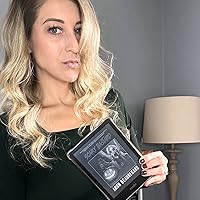
ARC 📖 Review: Deadgirl: The Novelization by Bridgett Nelson
⭐️⭐️⭐️⭐️💫 (4.5 stars)
OMG, I cannot believe the story I just read—lol! It was so messed up and crazy, and I absolutely loved it! Highly recommend picking this one up when it publishes May 6th!
Thank you @booksirens for the free eARC in exchange for an honest review!
💀👩🏼
When two high school misfits—bound by boredom and adolescent hunger—ditch class to slip beyond the rusted doors of an abandoned hospital, they stumble upon a gruesome secret that will shatter their innocence and test the limits of their a woman, stripped bare and chained to a table.
She’s abandoned. She’s beautiful. She’s dead ...or is she?
⭐️⭐️⭐️⭐️💫 (4.5 stars)
OMG, I cannot believe the story I just read—lol! It was so messed up and crazy, and I absolutely loved it! Highly recommend picking this one up when it publishes May 6th!
Thank you @booksirens for the free eARC in exchange for an honest review!
💀👩🏼
When two high school misfits—bound by boredom and adolescent hunger—ditch class to slip beyond the rusted doors of an abandoned hospital, they stumble upon a gruesome secret that will shatter their innocence and test the limits of their a woman, stripped bare and chained to a table.
She’s abandoned. She’s beautiful. She’s dead ...or is she?

April 13, 2025
Having never seen the movie, I was going in blind. I loved this book. It was on your edge of your seat wild from page one. I liked the back and forth with past and present. You could definitely tell when they connected and knew what was happening and get horrified. I admit looking up a character online as soon as I saw the name. (No giveaways) That part really got me. Just so great that I have a feeling the movie is going to pale by comparison. Of course I loved Jeff Strand’s chapter at the end.
March 19, 2025
This brutal scenario is about 2 teenagers who find their way into a broken down mental institution.
It includes a story of a father who is a pastor and rules his household with an iron fist.
Set in the 40’s, he decides to put is daughter into a the horrible institution. The reasons are absolutely messed up.
Bridget’s writing style is descriptive and keeps your attention constantly.
Don’t hesitate to grab this book when it releases in May.
I’m honored to have been given an Arc.
It includes a story of a father who is a pastor and rules his household with an iron fist.
Set in the 40’s, he decides to put is daughter into a the horrible institution. The reasons are absolutely messed up.
Bridget’s writing style is descriptive and keeps your attention constantly.
Don’t hesitate to grab this book when it releases in May.
I’m honored to have been given an Arc.
May 3, 2025
So, booksta got me with this one. I was seeing so many positive reviews of it, and I have to say I agree. It’s kinda hard to even put into words what an experience it was.
Deadgirl is the definition of a rollercoaster of emotions. Check your trigger warnings because it has a little bit of everything in it. I LOVED Ivy and Lily’s relationship as twin sisters. I hated almost every other character. 😅 The ending tied up everything perfectly but comes with a bang as well. 🫣 I didn’t truly know what I was in for. It definitely disturbed and horrified me at parts. I haven’t watched the movie. I would definitely say it’s a book worth checking out if you’re looking for a twisted storyline with quite a bit of trauma endured.
Deadgirl is the definition of a rollercoaster of emotions. Check your trigger warnings because it has a little bit of everything in it. I LOVED Ivy and Lily’s relationship as twin sisters. I hated almost every other character. 😅 The ending tied up everything perfectly but comes with a bang as well. 🫣 I didn’t truly know what I was in for. It definitely disturbed and horrified me at parts. I haven’t watched the movie. I would definitely say it’s a book worth checking out if you’re looking for a twisted storyline with quite a bit of trauma endured.
Displaying 1 - 30 of 67 reviews