

What do you think?

Breakneck: China's Quest to Engineer the Future
*New York Times Bestseller*
A Book of the Year According to Financial Times and Sunday Times
Shortlisted for the Financial Times and Schroders Business Book of the Year
From an indispensable voice on China comes a riveting, first-hand account of China's seismic progress
For close to a decade, Dan Wang has been observing China’s tumultuous and astounding growth. The state has constructed towering bridges, gleaming railways and sprawling factories to improve economic outcomes in record time. But rapid change has also sent ripples of pain throughout society.
China has grown so quickly in part by beating America at its own capitalism and harnessing the restless energy of a vast population. Here Wang blends political and economic analysis with reportage into a provocative new framework for understanding China – one that helps us see America more clearly, too. Whereas China is an engineering state, relentlessly building big, the United States has transformed into a lawyerly society, stalling every attempt to make change, both good and bad.
As relations between the US and China are tense and uncertain and the potential for dreadful conflict looms, Wang offers an inventive new way of thinking about the two superpowers. Breakneck reveals that each country points towards a better path for the other. How much better the world would be, he argues, if Americans could live in a society not only governed by lawyers, and Chinese citizens could live with a state that values their individual liberties.
A Book of the Year According to Financial Times and Sunday Times
Shortlisted for the Financial Times and Schroders Business Book of the Year
From an indispensable voice on China comes a riveting, first-hand account of China's seismic progress
For close to a decade, Dan Wang has been observing China’s tumultuous and astounding growth. The state has constructed towering bridges, gleaming railways and sprawling factories to improve economic outcomes in record time. But rapid change has also sent ripples of pain throughout society.
China has grown so quickly in part by beating America at its own capitalism and harnessing the restless energy of a vast population. Here Wang blends political and economic analysis with reportage into a provocative new framework for understanding China – one that helps us see America more clearly, too. Whereas China is an engineering state, relentlessly building big, the United States has transformed into a lawyerly society, stalling every attempt to make change, both good and bad.
As relations between the US and China are tense and uncertain and the potential for dreadful conflict looms, Wang offers an inventive new way of thinking about the two superpowers. Breakneck reveals that each country points towards a better path for the other. How much better the world would be, he argues, if Americans could live in a society not only governed by lawyers, and Chinese citizens could live with a state that values their individual liberties.
266 pages, Kindle Edition
First published August 26, 2025
About the author
Dan Wang
35 books10 followersDan Wang (王丹) is one of the students leaders in the 1989 pro-democracy movement in China, as well as a renowned poet.
While in China, Wang was sent to prison more than once for his beliefs and activism. Eventually paroled due to medical reasons, he went to the United States in 1998 and was accepted into Harvard, where he finished his masters and then Ph.D in East Asian history.
While in China, Wang was sent to prison more than once for his beliefs and activism. Eventually paroled due to medical reasons, he went to the United States in 1998 and was accepted into Harvard, where he finished his masters and then Ph.D in East Asian history.
Ratings & Reviews
Friends & Following
Create a free account to discover what your friends think of this book!
Community Reviews
Displaying 1 - 30 of 1,633 reviews

July 11, 2025
One way to read Breakneck is as a complement to Klein and Thompson's Abundance. While Abundance lambasts American bien-pensants for creating rules so onerous they block their own social goals, Breakneck warns about the opposite extreme: a Chinese state so high-capacity that they crush diversity and vitality in the name of growth.
It is my view that US tech and political elites are going through a bout of "China envy." They gaze at our foil across the Pacific and wonder why America cannot build fast trains and SEZs, electric cars and open-source AI. China's technological ascension has undoubtedly fueled the US’s industrial policy revival. If Xi Jinping doesn’t have to deal with NIMBYs and DEI, why do we?
The progress crowd has a point. As Wang details, the US’s “lawyerly society”—obsessed with process, agnostic to implementation—has hampered our ability to produce housing, medicine, energy, and more at the rate our society needs. In a hypothetical military conflict in the Pacific, for instance, it’s not clear the US's paltry fleet will prevail.
But we ought not get carried away by authoritarian daydreams, Wang warns. China’s engineering prowess is helped by the state’s emphasis on STEM education and supporting strategic sectors, but it is equally about the talent concentration and tacit knowledge embedded in hubs like Shenzhen. Technology is the people, not the blueprints.
Worse, China’s engineering state has committed unconscionable ills. Song Jian over-extrapolated straight lines on a population chart, then sterilized 108 million women in the name of the one-child policy. Xi's zero-Covid mandate scared Shanghai hospitals into refusing to diagnose the virus, for fear of making the official numbers go up (I lost two grandparents to this policy). Rights and voice matter. Some megaprojects need vetoes.
I appreciated Breakneck because Wang sits in China’s complexities without watering down either side (which many Western commentators struggle with). The achievements coexist with the atrocities, emerging from the same strange place. And Wang's judgments are dealt from a place of both analytical distance and first-person love.
Breakneck is also worth reading because it’s fun: it’s a political economy book with chutzpah, as China letter aficionados will expect. Within two pages the US and China get called “full of hustlers” and “utterly deranged,” while Europe is a “mausoleum economy… too sniffy to embrace American practices.” Somehow he got away with calling America "low-agency" and "low-T." The voice shines through the text, which is, I think, the best compliment a writer can get.
It is my view that US tech and political elites are going through a bout of "China envy." They gaze at our foil across the Pacific and wonder why America cannot build fast trains and SEZs, electric cars and open-source AI. China's technological ascension has undoubtedly fueled the US’s industrial policy revival. If Xi Jinping doesn’t have to deal with NIMBYs and DEI, why do we?
The progress crowd has a point. As Wang details, the US’s “lawyerly society”—obsessed with process, agnostic to implementation—has hampered our ability to produce housing, medicine, energy, and more at the rate our society needs. In a hypothetical military conflict in the Pacific, for instance, it’s not clear the US's paltry fleet will prevail.
But we ought not get carried away by authoritarian daydreams, Wang warns. China’s engineering prowess is helped by the state’s emphasis on STEM education and supporting strategic sectors, but it is equally about the talent concentration and tacit knowledge embedded in hubs like Shenzhen. Technology is the people, not the blueprints.
Worse, China’s engineering state has committed unconscionable ills. Song Jian over-extrapolated straight lines on a population chart, then sterilized 108 million women in the name of the one-child policy. Xi's zero-Covid mandate scared Shanghai hospitals into refusing to diagnose the virus, for fear of making the official numbers go up (I lost two grandparents to this policy). Rights and voice matter. Some megaprojects need vetoes.
I appreciated Breakneck because Wang sits in China’s complexities without watering down either side (which many Western commentators struggle with). The achievements coexist with the atrocities, emerging from the same strange place. And Wang's judgments are dealt from a place of both analytical distance and first-person love.
Breakneck is also worth reading because it’s fun: it’s a political economy book with chutzpah, as China letter aficionados will expect. Within two pages the US and China get called “full of hustlers” and “utterly deranged,” while Europe is a “mausoleum economy… too sniffy to embrace American practices.” Somehow he got away with calling America "low-agency" and "low-T." The voice shines through the text, which is, I think, the best compliment a writer can get.

October 4, 2025
In one respect, Breakneck is a classic work of a hedgehog. Dan Wang knows one big thing: China is run by engineers, and the United States is run by lawyers. He then applies that idea to many topics, including infrastructure, technology, China’s one-child policy, zero COVID, and “fortress China.” Once you learn this way of seeing, you cannot unsee it as you think about both the United States and China. Yes, at times it feels strained and oversimplified; one wonders if it is not about authoritarianism vs. democracy (some of what China does is in common with other authoritarian countries not ruled by engineers, and ditto on the United States and other countries not ruled by lawyers). But it is a simple idea that has a lot of power to illuminate which more than justifies explaining everything through this perspective.
In another respect, Breakneck is anything but oversimplified. Engineering works well for building big stuff. It doesn’t work well for protecting the rights of people who are in the way of that big stuff. Wang tends to support the engineering approach (but not without reservations) for infrastructure and manufacturing but condemns it (pretty much without reservation) for the one-child policy, zero COVID, and “fortress China.”
The facts are stark: “By 2002, all nine members of the Politburo’s standing committee—the apex of the Communist Party—had trained as engineers… For his third term as the Communist Party’s general secretary starting in 2022, Xi filled the Politburo with executives from the country’s aerospace and weapons ministries… Five out of the last ten presidents attended law school. In any given year, at least half the US Congress has law degrees, while at best a handful of members have studied science or engineering.”
The description of China vs. the United States on infrastructure building is something I’ve read many times before but never get tired of reading. Of course, and Wang acknowledges this, some of this reflects debt-fueled overbuilding in China. But the abundance theme for the United States in Wang is well taken.
Wang gets less curious about his own unstated assumptions when it comes to manufacturing. He never explains why exactly he thinks the United States should have more manufacturing. The first-order description of the iPhone factories in Shenzhen does not make me wish the United States had workers in bunk beds locked in factory complexes working extremely long, repetitive, and arduous hours assembling iPhones (not to mention clothing and footwear). Does Wang believe these would be different and better jobs in the United States, so there is an economic rationale for his case? Does he think we would get more productivity from it? Is it a national security or resilience argument? I’m open to these but did not see arguments for any of them.
And Wang seems to admire Xi Jinping’s pursuit of “completionism,” wanting to be in every manufacturing industry. But is it a coincidence that this has coincided with slowing increases in living standards in China as it does not take full advantage of specialization and high-value/productivity industries?
This is related to one of the main arguments of the book: “While China was building the future, America had become physically static, its innovations mostly bound up in the virtual and financial worlds.” That’s not just a clever juxtaposition—it’s an indictment of American political economy. We subsidize consumption, not investment; we empower lawyers, not engineers.” But living standards in the United States are much, much higher than in China. Consumption is the point of an economy. Are we so sure the United States approach is generally much worse? China has had huge success in industries like shipbuilding, renewable energy, and EVs—but these have only provided jobs for a small minority of its population and, in some cases, at what is de facto a tremendous cost to everyone else.
(I’m not discussing the one-child and COVID chapters; the former had a lot I didn’t know, and the latter made some useful connections to what we all followed recently.)
All of that said, I mostly agree with Wang’s challenges and prescriptions for the United States. And I learned about China. And he himself organized all of this in an enjoyable read with just the right amount of engaging and likable first-person content about his experiences in a way that will give me a permanently new way to see the world’s two largest economies.
In another respect, Breakneck is anything but oversimplified. Engineering works well for building big stuff. It doesn’t work well for protecting the rights of people who are in the way of that big stuff. Wang tends to support the engineering approach (but not without reservations) for infrastructure and manufacturing but condemns it (pretty much without reservation) for the one-child policy, zero COVID, and “fortress China.”
The facts are stark: “By 2002, all nine members of the Politburo’s standing committee—the apex of the Communist Party—had trained as engineers… For his third term as the Communist Party’s general secretary starting in 2022, Xi filled the Politburo with executives from the country’s aerospace and weapons ministries… Five out of the last ten presidents attended law school. In any given year, at least half the US Congress has law degrees, while at best a handful of members have studied science or engineering.”
The description of China vs. the United States on infrastructure building is something I’ve read many times before but never get tired of reading. Of course, and Wang acknowledges this, some of this reflects debt-fueled overbuilding in China. But the abundance theme for the United States in Wang is well taken.
Wang gets less curious about his own unstated assumptions when it comes to manufacturing. He never explains why exactly he thinks the United States should have more manufacturing. The first-order description of the iPhone factories in Shenzhen does not make me wish the United States had workers in bunk beds locked in factory complexes working extremely long, repetitive, and arduous hours assembling iPhones (not to mention clothing and footwear). Does Wang believe these would be different and better jobs in the United States, so there is an economic rationale for his case? Does he think we would get more productivity from it? Is it a national security or resilience argument? I’m open to these but did not see arguments for any of them.
And Wang seems to admire Xi Jinping’s pursuit of “completionism,” wanting to be in every manufacturing industry. But is it a coincidence that this has coincided with slowing increases in living standards in China as it does not take full advantage of specialization and high-value/productivity industries?
This is related to one of the main arguments of the book: “While China was building the future, America had become physically static, its innovations mostly bound up in the virtual and financial worlds.” That’s not just a clever juxtaposition—it’s an indictment of American political economy. We subsidize consumption, not investment; we empower lawyers, not engineers.” But living standards in the United States are much, much higher than in China. Consumption is the point of an economy. Are we so sure the United States approach is generally much worse? China has had huge success in industries like shipbuilding, renewable energy, and EVs—but these have only provided jobs for a small minority of its population and, in some cases, at what is de facto a tremendous cost to everyone else.
(I’m not discussing the one-child and COVID chapters; the former had a lot I didn’t know, and the latter made some useful connections to what we all followed recently.)
All of that said, I mostly agree with Wang’s challenges and prescriptions for the United States. And I learned about China. And he himself organized all of this in an enjoyable read with just the right amount of engaging and likable first-person content about his experiences in a way that will give me a permanently new way to see the world’s two largest economies.

September 13, 2025
I'll be honest. I thought that, from the blurb, this was going to be a book about gauging the similarities and differences between China (the engineering state) and America (the lawyerly state).
However after the opening chapters and the odd reference to differences in costs of engineering and infrastructure costs, it seemed mainly to be a book about China and how they are trying to be a global power and why they probably won't outstrip the US despite the US's reliance on their regulations.
Quite a lot of the book is a detailed look at various Chinese cities and their history and, in general, it was interesting but I was expecting a different book.
I would recommend it if you want to look at the ways in which China has become a power to contend with in the past few decades and the few examples there are that show why the US has shot itself in the foot so far as infrastructure is concerned are fascinating and quite shocking. I would have liked more of them.
Thankyou to Netgalley and Penguin Press UK for the advance review copy.
However after the opening chapters and the odd reference to differences in costs of engineering and infrastructure costs, it seemed mainly to be a book about China and how they are trying to be a global power and why they probably won't outstrip the US despite the US's reliance on their regulations.
Quite a lot of the book is a detailed look at various Chinese cities and their history and, in general, it was interesting but I was expecting a different book.
I would recommend it if you want to look at the ways in which China has become a power to contend with in the past few decades and the few examples there are that show why the US has shot itself in the foot so far as infrastructure is concerned are fascinating and quite shocking. I would have liked more of them.
Thankyou to Netgalley and Penguin Press UK for the advance review copy.

October 21, 2025
What a particularly bad book it was. With all the hype around it, I expected much more. If you want to read this book to better understand how China works, it will only leave you with less knowledge than when you started.
Three things I didn’t like about this book:
- 1. I wanted to learn how China’s growth happened—what role the state, private sector, geography, and other factors played. But the book offers no real detail. It’s just some generic stats about China, personal anecdotes from the author’s travels, and baseless assumptions about the future, without providing any reasoning.
- 2. The book has a simplistic and reductionist tendency to explain everything with the phrase "China is an engineering state and the US is a lawyer state." It repeats this nonsense so many times that when it tries to explain why the government censors comedians, it says “engineers can’t take a joke.” That is the most ridiculous thing I have heard in a long time.
- 3. The book views China entirely from an American-centered perspective, which is really annoying at times. If China has good regulations that act quickly to prevent monopolistic behavior or protect consumer rights, or if it effectively stops economic corruption—even when it involves billionaires—Wang criticizes it! It's as if, like the American system, billionaires must be given extra opportunities to bypass the system, bribe, or act unlawfully. There’s another chapter about the Zero-Covid policy where the author complains at length about why China’s government locked down Shanghai during a serious, deadly pandemic. It was the most American nag ever...
Three things I didn’t like about this book:
- 1. I wanted to learn how China’s growth happened—what role the state, private sector, geography, and other factors played. But the book offers no real detail. It’s just some generic stats about China, personal anecdotes from the author’s travels, and baseless assumptions about the future, without providing any reasoning.
- 2. The book has a simplistic and reductionist tendency to explain everything with the phrase "China is an engineering state and the US is a lawyer state." It repeats this nonsense so many times that when it tries to explain why the government censors comedians, it says “engineers can’t take a joke.” That is the most ridiculous thing I have heard in a long time.
- 3. The book views China entirely from an American-centered perspective, which is really annoying at times. If China has good regulations that act quickly to prevent monopolistic behavior or protect consumer rights, or if it effectively stops economic corruption—even when it involves billionaires—Wang criticizes it! It's as if, like the American system, billionaires must be given extra opportunities to bypass the system, bribe, or act unlawfully. There’s another chapter about the Zero-Covid policy where the author complains at length about why China’s government locked down Shanghai during a serious, deadly pandemic. It was the most American nag ever...

September 16, 2025
Overrated: a polished restatement of the engineers vs lawyers trope; vivid anecdotes, scant causal proof; plenty of what, little why.

October 12, 2025
For all it's fluent and dense descriptions of Chinese cities, culture, and engineering communities, its theoretical frame is disappointingly thin. If I tell you he contrasts engineering China to lawyerly America, you get the gist. This is a story telling introductory book for Americans that are beginning to study China. I liked the chapters on child policy and the industrial growth of Shenzhen, but this book has not been very enlightening.

November 29, 2025
This book provides an elucidation of modern China which it described as an “engineering state” good at building things and manufacturing things. This is in contrast to the United States which the book labels as a “lawyerly society” good at not building things and not manufacturing things. This book isn’t saying that China is good and USA is bad, but rather it is saying that they would be wise to become a bit more like each other.
This book describes what at first appears to be marvelous Chinese accomplishments, but as the book proceeds with its thorough examination of the story behind these accomplishments the Chinese model becomes less attractive. After emerging from its history of reoccurring famines, Communist collectivization, Mao Zedong’s cultural revolution, rapid industrialization, and the one-child policy, the Chinese tried to engineer their way to zero COVID but then gave up when the Omicron version proved unstoppable.
All of these abrupt changes in direction were costly to the generations of Chinese who were forced to live through them. This book’s chapter describing China’s one-child policy brought its horrific impact on people’s lives into jarring focus. I had heard about the policy before, but hadn’t realized how it was enforced. Its impact was particularly ruthless in rural communities.
The author's description of living through the COVID pandemic while living in China was particularly interesting. Early in the pandemic life was mostly pleasant in China if one managed to not catch the virus and get hauled off to a quarantine site. But the author was living in Shanghai, a city of about twenty-five million people, that was totally shutdown in 2022 in an attempt to stop the spread of COVID. It was done without provisions being made for distribution of food and medicines, thus it was necessary to be creative and organized in order to survive—some didn't survive.
The following excerpt from the book provides a description of how following the science to its logical conclusion with no consideration for the human element leads to immiseration.
In the following excerpt the author shares his hope for possible future changes.
This book describes what at first appears to be marvelous Chinese accomplishments, but as the book proceeds with its thorough examination of the story behind these accomplishments the Chinese model becomes less attractive. After emerging from its history of reoccurring famines, Communist collectivization, Mao Zedong’s cultural revolution, rapid industrialization, and the one-child policy, the Chinese tried to engineer their way to zero COVID but then gave up when the Omicron version proved unstoppable.
All of these abrupt changes in direction were costly to the generations of Chinese who were forced to live through them. This book’s chapter describing China’s one-child policy brought its horrific impact on people’s lives into jarring focus. I had heard about the policy before, but hadn’t realized how it was enforced. Its impact was particularly ruthless in rural communities.
The author's description of living through the COVID pandemic while living in China was particularly interesting. Early in the pandemic life was mostly pleasant in China if one managed to not catch the virus and get hauled off to a quarantine site. But the author was living in Shanghai, a city of about twenty-five million people, that was totally shutdown in 2022 in an attempt to stop the spread of COVID. It was done without provisions being made for distribution of food and medicines, thus it was necessary to be creative and organized in order to survive—some didn't survive.
The following excerpt from the book provides a description of how following the science to its logical conclusion with no consideration for the human element leads to immiseration.
The Communist Party followed the science of zero COVID to its logical conclusion—barring people from their homes, testing people on a near daily basis, and doing everything else it could to break the chains of transmission. Four decades ago it followed the science to forcibly prevent many pregnancies in the pursuit of the one-child policy. We can agree that science is real, but we have to keep in mind that there is a political determination involved with how to interpret the science, and that is something the Lawyerly Society is better at. It has lawyers interested in protecting rights, economists able to think through social science, humanists who consider ethics and many other voices in the mix attempting to open policy prescriptions up for debate. China doesn't have a robust system for political contestation. Engineers will simply follow the science until it leads to social immiseration.It's worth noting that China adjusts its data as needed to avoid bad news. China’s official total for COVID-19 deaths was around 125,000 while other scholarly estimates come to nearly 2 million excess deaths. The book also notes that some of the older people said that the lockdown wasn’t the worst thing to happen to them pointing to the Cultural Revolution. Younger people born after 1990, however, who had known only rising prosperity had their first real taste of the disaster that could be inflicted by the engineering state.
In the following excerpt the author shares his hope for possible future changes.
I don't see much danger that Americans could wake up one day with a government that effectively steamrolls every opposition to building big projects, and I don't expect Chinese will encounter a government at last willing to leave them alone. Rather, I hope that China learns to value pluralism while embracing substantive legal protections for individuals, and the United States recovers the capability to build for its people.The author’s mixture of sharing his personal experiences together with descriptions of events in China was fascinating and surprisingly interesting to read. I found this to be one of the most candid descriptions of life in modern day China that I’ve ever read.
I don't want to get rid of lawyers. Rather I want to help lift the engineers, and also their technocratically-minded brethren, the economists, back up. Not to raise them onto a pedestal but to elevate them so that there are other voices in the mix. The United States could use fewer lawyers who devote their careers to litigating the life out of government agencies and more lawyers of the dealmaker bent, who are interested in working out how to deliver better services.

January 28, 2026
Insightful book on how the USA and China are on two profoundly different trajectories, with the author noting how the first is dominated by lawyers while the second is led by engineers. Personal anecdotes enliven the thesis and the stats that show the stark rise to power of China
Repress your soul’s yearning for freedom - Megaphones mounted on state drones calling out to citizens during the 8 week lockdown in Shanghai
Dan Wang his book was shortlisted as FT Business book of the year and it is very readable, given interesting stats on China's rise to power, on the back of major engineering prowess and manufacturing base that is estimated to account for 45% of world output by 2030. The central premise of Breakneck: China's Quest to Engineer the Future is that even though China and the USA are in a great power struggle, they could actually learn a lot from each other in terms of how to manage society. He argues that the US has fallen prey to inertia in realising any improvements in physical infrastructure due to a litigation driven culture that reflects more than half of congress and the last 5 presidents being lawyers or holding a law degree. Conversely China's standing committee under Hu Jing Tao consisted solely of engineer and Xi Jing Ping is a Tsinghua chemical engineer, explaining great feats of public works, leading to 11 Chinese cities having a metro network larger than New York and twice the number of roads of the US Interstate network having been build since 2000.
Wang arrives at a conclusion that it is important to embrace pluralism and individual rights, but current day trends are far from being in favour of learning from geopolitical adversaries and the more Western democracies can't deliver on the needs and wishes of their populace, the louder a call to embrace a strong man will sound to break out of the gridlock, I am afraid.
Some interesting facts and observations from the book:
The USA has 400 lawyers per 100.000 people, 3 times higher than the average European country
A common commitment to transformation
11 Chinese nuclear reactor build in the 21st century for the same price as the only nuclear reactor commissioned in the US.
10% GDP growth every years means an economy doubles every 7 years.
Three quarters of Chinese don’t pay income tax
China can produce 60m cars versus an estimated 90m global demand
6 times lower number of IC beds per capita than the US
Building 2/3 of the world’s solar and wind power in 2023
156 of the top 200 suppliers of Apple still being in China in 2023
28% of the economy being manufacturing based versus 21% in Germany, 20% in Japan and 10% in the UK and US
A worship of strength through technology
Hollowing out of technology ecosystems and loss of intangible manufacturing knowledge by outsourcing, making Shenzhen a hotbed for innovation into drones, hoverboards and other technology.
Disastrous demographical trends exacerbated by CCP policies: 1
6 million sterilisations and 14 million abortions in the peak years of the 1980s one child policy and early births induced to hit “leftover” quotas of a year.
35% of rural married women being sterilised in 1990 in some provinces
Still 112 boys per 100 women being born, from a high of 120/100
321 million abortions over 25 years, the equivalent of $200bn of fees and fines leveraged by over 500.000 bureaucrats, led by a former general
Japan was twice as rich per capita compared to China when it’s population started to fall
State media deeming 27 as the threshold of women being labelled as “leftover” if they are not married while there is a “surplus” of 40 million men
Failed Zero Covid policies leaving Shanghai residents without food and separating infected from their babies.
Forced Covid-19 testing costing an estimated 1.8% of GDP
China feels like a space where the ceiling keeps getting lower
38.000 Chinese fleeing to Equador and then tracking to the south border of the US before tightening border controls
Sometimes the only thing scarier than China’s problems are Beijing’s solutions.
A kilometre of subway construction in New York costs 5 times as much as in Paris, which in itself is multiple times more expensive as construction in China.
Repress your soul’s yearning for freedom - Megaphones mounted on state drones calling out to citizens during the 8 week lockdown in Shanghai
Dan Wang his book was shortlisted as FT Business book of the year and it is very readable, given interesting stats on China's rise to power, on the back of major engineering prowess and manufacturing base that is estimated to account for 45% of world output by 2030. The central premise of Breakneck: China's Quest to Engineer the Future is that even though China and the USA are in a great power struggle, they could actually learn a lot from each other in terms of how to manage society. He argues that the US has fallen prey to inertia in realising any improvements in physical infrastructure due to a litigation driven culture that reflects more than half of congress and the last 5 presidents being lawyers or holding a law degree. Conversely China's standing committee under Hu Jing Tao consisted solely of engineer and Xi Jing Ping is a Tsinghua chemical engineer, explaining great feats of public works, leading to 11 Chinese cities having a metro network larger than New York and twice the number of roads of the US Interstate network having been build since 2000.
Wang arrives at a conclusion that it is important to embrace pluralism and individual rights, but current day trends are far from being in favour of learning from geopolitical adversaries and the more Western democracies can't deliver on the needs and wishes of their populace, the louder a call to embrace a strong man will sound to break out of the gridlock, I am afraid.
Some interesting facts and observations from the book:
The USA has 400 lawyers per 100.000 people, 3 times higher than the average European country
A common commitment to transformation
11 Chinese nuclear reactor build in the 21st century for the same price as the only nuclear reactor commissioned in the US.
10% GDP growth every years means an economy doubles every 7 years.
Three quarters of Chinese don’t pay income tax
China can produce 60m cars versus an estimated 90m global demand
6 times lower number of IC beds per capita than the US
Building 2/3 of the world’s solar and wind power in 2023
156 of the top 200 suppliers of Apple still being in China in 2023
28% of the economy being manufacturing based versus 21% in Germany, 20% in Japan and 10% in the UK and US
A worship of strength through technology
Hollowing out of technology ecosystems and loss of intangible manufacturing knowledge by outsourcing, making Shenzhen a hotbed for innovation into drones, hoverboards and other technology.
Disastrous demographical trends exacerbated by CCP policies: 1
6 million sterilisations and 14 million abortions in the peak years of the 1980s one child policy and early births induced to hit “leftover” quotas of a year.
35% of rural married women being sterilised in 1990 in some provinces
Still 112 boys per 100 women being born, from a high of 120/100
321 million abortions over 25 years, the equivalent of $200bn of fees and fines leveraged by over 500.000 bureaucrats, led by a former general
Japan was twice as rich per capita compared to China when it’s population started to fall
State media deeming 27 as the threshold of women being labelled as “leftover” if they are not married while there is a “surplus” of 40 million men
Failed Zero Covid policies leaving Shanghai residents without food and separating infected from their babies.
Forced Covid-19 testing costing an estimated 1.8% of GDP
China feels like a space where the ceiling keeps getting lower
38.000 Chinese fleeing to Equador and then tracking to the south border of the US before tightening border controls
Sometimes the only thing scarier than China’s problems are Beijing’s solutions.
A kilometre of subway construction in New York costs 5 times as much as in Paris, which in itself is multiple times more expensive as construction in China.

November 7, 2025
I'm not sure if I completely agree with the central Engineers vs Lawyers conceit of this one (I think they're the *means* by which USA and UK can't do big engineering projects, but not the ideological *cause*) but it's very instructive and useful as a quick, breathless, very well argued explanation of what China does very well and what it does very badly, with the US for once not held up by a North American writer as a norm, but as a contrast, with its own extreme eccentricities. Also refreshing for pithily dismissing my two least favourite China analysis things, a) wishful thinking of the left (it is actually really run by Marxists and will one day save us) and b) of liberals and the right (it is a police state full of Potemkin projects that is one day going to collapse economically, as predicted constantly over 30 years of enormous growth and development), and for a lot of local detail. Some of the specifics are sharper than others, and inevitably some of it is more contentious for people on the left than other parts. So for instance, I'd agree strongly on the one-child policy's brutal idiocy, less so on zero-covid, where Wang is surely correct on how a once very smart policy became very stupid through technocratic rigidity but less interested in the fact it killed far fewer people proportionally than did doing what we did. In general, the book is so-to-speak 'Abundance'-pilled, so emphasises regulation as the cause of bad American things, rather than, you know, the material interests of actual American capitalists, who wouldn't get out of bed for the low profit margins and 'sluggish' stock exchange ratings of their much more technologically dynamic Chinese counterparts. But what I most liked in this was its sense of a particular pervasive culture, a way of seeing and doing that is technocratic, scientistic, and deeply socially conservative, but for all its flaws hasn't bogged its society down in despair, inertia and violence the way its competitor has.

September 15, 2025
Dan Wang begins Breakneck by identifying the remarkable similarities shared by Chinese and American people:
Given the shared characteristic, why are the political economies of each respective country so different? Wang answers by pointing to the contrasting cultural ethoses: America is a “lawyerly society,” while China is an “engineering state.” The engineers build bridges, high-speed railways, power plants and so on; the lawyers design institutions, block things, litigate, encumber with procedure. This framing isn’t provocative only because it is fairly familiar to those who have paid attention to debates circulating among America's intellectual class, including the business and political elite, though it will potentially make those wary of cultural essentialism somewhat uncomfortable (see Noah Smith's review -> https://www.noahpinion.blog/p/book-re...)
Wang does not pretend his framing device is exhaustive or perfect, but he argues it is powerful, and I tend to agree (we'll return to potential critique later). Much of what differentiates speed, scale, ambition, and cost in the two superpowers traces back to which kind of elite dominates and the cultural ethos they cultivate with their respective professional epistemologies (how they think, what evidence they trust, how they act under uncertainty). To some extent sexual identity is relevant, which Wang notes, but only gives passing treatment of (e.g. he mentions Xi has pushed out even the token female leadership position in the Chinese government). Additionally, Wang spends little to no time investigating the possible deep roots these differences, believing rightly that his readers will largely accept his frame as is (there is plenty of scholarship and speculation floating out there that attempts to explain East vs West differences).
To substantiate his primary claim, Wang takes us on journeys, both literal and figurative. They are drawn from his personal experiences as a second generation immigrant to the West; he's Canadian though his parents live in Philly and his background is that of a tech analyst focused on Chinese industry). One of the vivid starting points is a bike ride through Guizhou province, to Chongqing. Guizhou is one of China’s poorer provinces, mountainous, remote, often overlooked, but he calls attention to how dynamic life feels there. Its infrastructure even outstrips what many Americans in wealthier states enjoy. From that contrast emerges his awe at China’s ability to warp geography, to compress time, to impose human will on terrain in service of movement. This movement isn’t just physical, but economic and political, uniting hinterlands, factories, supply chains, etc. (as an aside: there is also quite a bit of commentary about cuisine).
But Wang’s admiration is never unqualified. The heart of the book is animated about his reservations about both the American and Chinese models. He covers the many moments where the “engineering state” becomes over-zealous, where its virtues curdle into vices. Among the most searing are the chapters on the one-child (chapter 4) and zero-Covid (chapter 5) policies. The one-child policy, initiated by misguided demographic projections and a sophomoric understanding of Malthusianism, quickly became barbarically coercive: fines, sterilizations, forced abortions, abandonments, and infanticides. All this tragedy and agony justified in the name of meeting the numerical targets of the government's plan. The lesson is the engineering mindset can be inhumane and myopic. There is a great deal of complexity among even the most homogenous human populations. They can't be understood as raw inputs that will provide predictably consistent outputs.
Zero-Covid, similarly, is presented as both a demonstration of engineering state capacity (to close borders, mobilize resources, quarantine, digitally monitor) and of its brittleness (inflexibility, failure to adapt to new viral variants, human suffering through lockdowns, supply chain breakdowns, arbitrary enforcement, failed vaccine development). Wang is particularly interested in how what seems “scientific” often becomes dogmatic; how data and models can become instruments of state power, rather than checks on it. Some of this discussion reminded me of Yuval Noah Harrari's recent book Nexus, which included the importance of building rapid self-correcting mechanisms into bureaucracies.
Breakneck also charts China’s technological and manufacturing prowess more generally (with some focus on Foxconn), especially concerning a phenomenon Wang refers to as "process knowledge" or the tacit, cumulative, hands-on kind of know-how that accrues in factories, on construction sites, in long supply chains, etc. The development and accumulation of process knowledge has allowed China to not only replicate but iterate and improve at scale. Wang covers how Shenzhen, for example, is less a Silicon Valley clone and more a hardware atelier, an enormous workshop with all the parts and tools at-hand for iterated learning. Wang concedes that much of China’s strength is less about paradigm-shifting invention and more in the mastery of execution, but cautions America about its over-reliance on creative innovations. China's know-how lets it produce essential hardware at a scale that few Western states can match, which is of strategic military importance.
Interwoven with praise of the industrial might of China is an implicit critique of its political institutions. There is little respect for individual liberties, procedural checks, cultural diversity, the possibility of dissent, or the sharing of political power. While the Chinese government can maintain an equilibrium as long as standards of living improve, it is unclear if this balance is as sustainable as it appears. Wang gives several examples of the less than satisfied elements of Chinese civil society without even touching on some of the well-reported, draconian treatment of Uyghurs or going into much detail on the abuses perpetrated on Chinese entrepreneurs and capitalists.
Wang spends less time exploring the American side of the equation, using America mostly as a foil and relying on the self-knowledge of his target audience. He does detail some of the serious drawbacks of having a “lawyerly society:” hyper-legalism, paralysis by procedure, regulatory capture, risk aversion, inability to build what is necessary, inability to commit, and a rentier class of elites. Most of the critique though is a gesture to those made by other analysts and pundits. Wang specifically references Abundance, which is primarily a critique of America's sluggishness about building housing in desirable and growing regions (e.g. the Bay Area), expensive public infrastructure, and waste/disinvestments from basic R&D. Wang's only addition is that he wishes that America had fewer drab suburbs and more neighborhoods like Sunset Park in Brooklyn. This aside turns into a digression about how history has been too unkind to Robert Moses and that America should try cultivate similar though more benevolent power brokers with public consciousness and drive (this hope seems a bit too optimistic about the nature of power).
In part of the book, Wang obliquely muses about America's lack of motivation. He gestures positively at America's generous social spending compared to China's, but he also implicitly praise the work ethic of the Chinese (even while accounting some of the costs of the extremes). He, of course, does not think America should (or could) become like China in this way. He values the procedural protections America has developed, but he does see a need for change. His ideal lies somewhere in a synthesis: a polity that can build, that has engineering muscle, that organizes large scale action, but is tempered by institutions that respect individual rights, error, dissent, the variability of human life.
Although an excellent work of lay comparative political economic analysis, the work would have benefitted from greater concision (another could have been an essay cases) as well as drawing more frequently from the research literature instead of relying on engaging anecdotes. The central thesis itself, as I have alluded, isn't necessarily well demonstrated. In fact, a closer look at it by others suggests the Chinese party leadership has been drifting away from a leadership class of engineers (see -> https://www.cogitations.co/p/litigati...). This isn't necessarily a refutation of the thesis itself, but it underscore the potential importance of alternative explanations, including the different developmental timelines of each country. American development has a much longer course and was arguably more impressive given its smaller population base. Unfortunately, there isn't a clear way to differentiate between the cultural versus the developmental theories and likely both play some meaningful role in explaining the differences between America and China. Nonetheless, Wang's thoughts are so valuable due to the limited amount of firsthand account on China in English.
Finally, there is an elegiac current; its not for China or America per se, but for what global modernity might feel like if both superpowers lose their way. Wang worries that China, in its drive, may hollow out its sources of legitimacy, while America may atrophy into a shell of itself.
I am sure that no two peoples are more alike than Americans and Chinese.
A strain of materialism, often crass, runs through both countries, sometimes producing veneration of successful entrepreneurs, sometimes creating displays of extraordinary tastelessness, overall contributing to a spirit of vigorous competition. Chinese and Americans are pragmatic: They have a get-it-done attitude that occasionally produces hurried work. Both countries are full of hustlers peddling shortcuts, especially to health and to wealth. Their peoples have an appreciation for the technological sublime: the awe of grand projects pushing physical limits. American and Chinese elites are often uneasy with the political views of the broader populace. But masses and elites are united in the faith that theirs is a uniquely powerful nation that ought to throw its weight around if smaller countries don't get in line.
Given the shared characteristic, why are the political economies of each respective country so different? Wang answers by pointing to the contrasting cultural ethoses: America is a “lawyerly society,” while China is an “engineering state.” The engineers build bridges, high-speed railways, power plants and so on; the lawyers design institutions, block things, litigate, encumber with procedure. This framing isn’t provocative only because it is fairly familiar to those who have paid attention to debates circulating among America's intellectual class, including the business and political elite, though it will potentially make those wary of cultural essentialism somewhat uncomfortable (see Noah Smith's review -> https://www.noahpinion.blog/p/book-re...)
Wang does not pretend his framing device is exhaustive or perfect, but he argues it is powerful, and I tend to agree (we'll return to potential critique later). Much of what differentiates speed, scale, ambition, and cost in the two superpowers traces back to which kind of elite dominates and the cultural ethos they cultivate with their respective professional epistemologies (how they think, what evidence they trust, how they act under uncertainty). To some extent sexual identity is relevant, which Wang notes, but only gives passing treatment of (e.g. he mentions Xi has pushed out even the token female leadership position in the Chinese government). Additionally, Wang spends little to no time investigating the possible deep roots these differences, believing rightly that his readers will largely accept his frame as is (there is plenty of scholarship and speculation floating out there that attempts to explain East vs West differences).
To substantiate his primary claim, Wang takes us on journeys, both literal and figurative. They are drawn from his personal experiences as a second generation immigrant to the West; he's Canadian though his parents live in Philly and his background is that of a tech analyst focused on Chinese industry). One of the vivid starting points is a bike ride through Guizhou province, to Chongqing. Guizhou is one of China’s poorer provinces, mountainous, remote, often overlooked, but he calls attention to how dynamic life feels there. Its infrastructure even outstrips what many Americans in wealthier states enjoy. From that contrast emerges his awe at China’s ability to warp geography, to compress time, to impose human will on terrain in service of movement. This movement isn’t just physical, but economic and political, uniting hinterlands, factories, supply chains, etc. (as an aside: there is also quite a bit of commentary about cuisine).
But Wang’s admiration is never unqualified. The heart of the book is animated about his reservations about both the American and Chinese models. He covers the many moments where the “engineering state” becomes over-zealous, where its virtues curdle into vices. Among the most searing are the chapters on the one-child (chapter 4) and zero-Covid (chapter 5) policies. The one-child policy, initiated by misguided demographic projections and a sophomoric understanding of Malthusianism, quickly became barbarically coercive: fines, sterilizations, forced abortions, abandonments, and infanticides. All this tragedy and agony justified in the name of meeting the numerical targets of the government's plan. The lesson is the engineering mindset can be inhumane and myopic. There is a great deal of complexity among even the most homogenous human populations. They can't be understood as raw inputs that will provide predictably consistent outputs.
Zero-Covid, similarly, is presented as both a demonstration of engineering state capacity (to close borders, mobilize resources, quarantine, digitally monitor) and of its brittleness (inflexibility, failure to adapt to new viral variants, human suffering through lockdowns, supply chain breakdowns, arbitrary enforcement, failed vaccine development). Wang is particularly interested in how what seems “scientific” often becomes dogmatic; how data and models can become instruments of state power, rather than checks on it. Some of this discussion reminded me of Yuval Noah Harrari's recent book Nexus, which included the importance of building rapid self-correcting mechanisms into bureaucracies.
Breakneck also charts China’s technological and manufacturing prowess more generally (with some focus on Foxconn), especially concerning a phenomenon Wang refers to as "process knowledge" or the tacit, cumulative, hands-on kind of know-how that accrues in factories, on construction sites, in long supply chains, etc. The development and accumulation of process knowledge has allowed China to not only replicate but iterate and improve at scale. Wang covers how Shenzhen, for example, is less a Silicon Valley clone and more a hardware atelier, an enormous workshop with all the parts and tools at-hand for iterated learning. Wang concedes that much of China’s strength is less about paradigm-shifting invention and more in the mastery of execution, but cautions America about its over-reliance on creative innovations. China's know-how lets it produce essential hardware at a scale that few Western states can match, which is of strategic military importance.
Interwoven with praise of the industrial might of China is an implicit critique of its political institutions. There is little respect for individual liberties, procedural checks, cultural diversity, the possibility of dissent, or the sharing of political power. While the Chinese government can maintain an equilibrium as long as standards of living improve, it is unclear if this balance is as sustainable as it appears. Wang gives several examples of the less than satisfied elements of Chinese civil society without even touching on some of the well-reported, draconian treatment of Uyghurs or going into much detail on the abuses perpetrated on Chinese entrepreneurs and capitalists.
Wang spends less time exploring the American side of the equation, using America mostly as a foil and relying on the self-knowledge of his target audience. He does detail some of the serious drawbacks of having a “lawyerly society:” hyper-legalism, paralysis by procedure, regulatory capture, risk aversion, inability to build what is necessary, inability to commit, and a rentier class of elites. Most of the critique though is a gesture to those made by other analysts and pundits. Wang specifically references Abundance, which is primarily a critique of America's sluggishness about building housing in desirable and growing regions (e.g. the Bay Area), expensive public infrastructure, and waste/disinvestments from basic R&D. Wang's only addition is that he wishes that America had fewer drab suburbs and more neighborhoods like Sunset Park in Brooklyn. This aside turns into a digression about how history has been too unkind to Robert Moses and that America should try cultivate similar though more benevolent power brokers with public consciousness and drive (this hope seems a bit too optimistic about the nature of power).
In part of the book, Wang obliquely muses about America's lack of motivation. He gestures positively at America's generous social spending compared to China's, but he also implicitly praise the work ethic of the Chinese (even while accounting some of the costs of the extremes). He, of course, does not think America should (or could) become like China in this way. He values the procedural protections America has developed, but he does see a need for change. His ideal lies somewhere in a synthesis: a polity that can build, that has engineering muscle, that organizes large scale action, but is tempered by institutions that respect individual rights, error, dissent, the variability of human life.
Although an excellent work of lay comparative political economic analysis, the work would have benefitted from greater concision (another could have been an essay cases) as well as drawing more frequently from the research literature instead of relying on engaging anecdotes. The central thesis itself, as I have alluded, isn't necessarily well demonstrated. In fact, a closer look at it by others suggests the Chinese party leadership has been drifting away from a leadership class of engineers (see -> https://www.cogitations.co/p/litigati...). This isn't necessarily a refutation of the thesis itself, but it underscore the potential importance of alternative explanations, including the different developmental timelines of each country. American development has a much longer course and was arguably more impressive given its smaller population base. Unfortunately, there isn't a clear way to differentiate between the cultural versus the developmental theories and likely both play some meaningful role in explaining the differences between America and China. Nonetheless, Wang's thoughts are so valuable due to the limited amount of firsthand account on China in English.
Finally, there is an elegiac current; its not for China or America per se, but for what global modernity might feel like if both superpowers lose their way. Wang worries that China, in its drive, may hollow out its sources of legitimacy, while America may atrophy into a shell of itself.

October 9, 2025
A vapid attempt of applying ‘abundance’ to China.
If you are looking for an honest attempt at describing the development of the Chinese industrial state then this is not for you. When not sharing useless personal anecdotes, the author frolics from story to story, using minimally researched allegories to make broad, meritless claims.
What’s most telling is what the author refuses to mention. They compare the Beijing–Shanghai high-speed rail line to the San Francisco–Los Angeles line, citing China’s engineering culture and California’s legalistic tendencies as causes. But they fail to note that the Chinese project was financed by the national bank and built by the Ministry of Railways — a product of centralized planning and direct state control over production. It’s precisely this capacity for coordinated, state-driven development that gives China its apparent dynamism, not some vague cultural difference.
I was very disappointed by this book. I’d love to see ‘left’ liberals actually try to construct a plan for reinvigorating the American industrial base. This doesn’t even pretend to be it.
If you are looking for an honest attempt at describing the development of the Chinese industrial state then this is not for you. When not sharing useless personal anecdotes, the author frolics from story to story, using minimally researched allegories to make broad, meritless claims.
What’s most telling is what the author refuses to mention. They compare the Beijing–Shanghai high-speed rail line to the San Francisco–Los Angeles line, citing China’s engineering culture and California’s legalistic tendencies as causes. But they fail to note that the Chinese project was financed by the national bank and built by the Ministry of Railways — a product of centralized planning and direct state control over production. It’s precisely this capacity for coordinated, state-driven development that gives China its apparent dynamism, not some vague cultural difference.
I was very disappointed by this book. I’d love to see ‘left’ liberals actually try to construct a plan for reinvigorating the American industrial base. This doesn’t even pretend to be it.

January 16, 2026
'What the United States presently lacks is the urgency to make the hard choices to build. Americans have to trust that society can flourish without empowering lawyers to micromanage everything. The United States should embrace its transformational urge. I hope one day that America can declare itself to be a developing country too. It can demonstrate that the country is able to reform itself, get unstuck from the status quo, and ultimately unlock as much as possible of human potential. “Developing” is a term to embrace with pride.'
RTF.
RTF.

October 8, 2025
Dan Wang is a technology analyst; he was born in China, moved to Canada as a child, and has lived his adult life between the United States and China (including experiencing much of the COVID lockdown in China). His 2025 book Breakneck is a provocative look at China today, comparing and contrasting China's society of engineers to the US' society of lawyers, where both countries are (largely fairly, I think) criticized more than lauded.
I'm always drawn to these types of books as well as the vantage points of those who write them. In the West, we typically get exposés from American journalists (like We Have Been Harmonized: Life in China's Surveillance State by Kai Strittmatter, Daughters of the Bamboo Grove: From China to America, a True Story of Abduction, Adoption, and Separated Twins by Barbara Demick, Other Rivers: A Chinese Education and similar books by Peter Hessler, Little Soldiers: An American Boy, a Chinese School, and the Global Race to Achieve by Lenora Chu, and Apple in China: The Capture of the World's Greatest Company by Patrick McGee) and carefully-researched works by academics (like The Struggle for Taiwan: A History of America, China, and the Island Caught Between by Sulmaan Wasif Khan), and more rarely do we get English-written or English-translated books by Chinese insiders who espouse understanding of the inner workings of the Chinese Communist Party (like David Daokui Li's China's World View: Demystifying China to Prevent Global Conflict). In vantage point, Breakneck lies closer to books like Xiaowei Wang's Blockchain Chicken Farm: And Other Stories of Tech in China's Countryside, where Dan Wang has spent enough time living in both the East and West and evokes sufficient cultural cachet to understand natives of both worlds (if not identify as one himself). So I really appreciated that take. Based on my reading of all the aforementioned books as well as Breakneck, I am in agreement with Wang about the perils for both East and West in years ahead.
My statistics:
Book 309 for 2025
Book 2235 cumulatively
I'm always drawn to these types of books as well as the vantage points of those who write them. In the West, we typically get exposés from American journalists (like We Have Been Harmonized: Life in China's Surveillance State by Kai Strittmatter, Daughters of the Bamboo Grove: From China to America, a True Story of Abduction, Adoption, and Separated Twins by Barbara Demick, Other Rivers: A Chinese Education and similar books by Peter Hessler, Little Soldiers: An American Boy, a Chinese School, and the Global Race to Achieve by Lenora Chu, and Apple in China: The Capture of the World's Greatest Company by Patrick McGee) and carefully-researched works by academics (like The Struggle for Taiwan: A History of America, China, and the Island Caught Between by Sulmaan Wasif Khan), and more rarely do we get English-written or English-translated books by Chinese insiders who espouse understanding of the inner workings of the Chinese Communist Party (like David Daokui Li's China's World View: Demystifying China to Prevent Global Conflict). In vantage point, Breakneck lies closer to books like Xiaowei Wang's Blockchain Chicken Farm: And Other Stories of Tech in China's Countryside, where Dan Wang has spent enough time living in both the East and West and evokes sufficient cultural cachet to understand natives of both worlds (if not identify as one himself). So I really appreciated that take. Based on my reading of all the aforementioned books as well as Breakneck, I am in agreement with Wang about the perils for both East and West in years ahead.
My statistics:
Book 309 for 2025
Book 2235 cumulatively

October 7, 2025
Having followed and enjoyed Dan Wang’s annual letters for years, I devoured his new book soon after it was released. Breakneck will most likely become a bestseller and make The Economist’s annual list. It is also a major letdown.
The book proposes a straightforward model: China is an engineering state that excels at construction; the US is a lawyerly society that excels at obstruction—a big, sexy thesis that grows too attached to its own conceit. Like most reductionist models, it is great fodder for thought and will make a viral X thread (which it should have been). Stretched into a book, its holes become too large to ignore.
Over the past decades, China has accomplished both impressive and impressively disastrous feats of building, from infrastructure and manufacturing to number-named policies (one child, zero COVID). Its cabinet is mostly staffed by people with engineering degrees. The US, in contrast, is spectacular at preventing anything from being built, and is run by a government dominated by law degrees.
All these are facts, supported by many fascinating anecdotes and examples in the book. And yet, contorting the two hegemons’ many differences into a simplistic, dichotomous lawyers vs engineers model is both unsound and unhelpful. So is implying a causal relationship. I winced at statements like, “Engineers don’t know how to persuade." Breakneck is blithely eager to imply that engineers are a robotic, ruthless group, obsessed with optimization at the expense of human factors. Critical thinking and dissent can only come from those trained in the social sciences and humanities 🤦 It is trivially easy to find counterexamples: the COVID protests in China didn’t just feature blank pieces of paper, but also scientific equations meant to convey subversive messages. Robert Moses, lauded by Wang himself for transforming NYC’s infrastructure, had a BA in Jurisprudence.
Lawyers vs. engineers is but the tip of a humongous iceberg of cultural, historical and sociopolitical factors, of clunky education, political and legal systems built over decades, among other things. Breakneck seems scrupulous not to offend. Firing jabs at vague masses of “engineers” and “lawyers” is socially acceptable; pointing out cultural traits a lot less so. Digging into the fallout from the Cultural Revolution would be a thorny, treacherous undertaking, but one a lot more helpful in explaining how China became the way it is. In being overly safe, Breakneck is disappointing. Its concludes with a hopeful, socially acceptable suggestion: The US should tone down on the lawyerliness and build more. China shouldn’t obliviously wield its engineering hammer all the time. Sure, but how 🤦
I'm not saying Breakneck doesn't have moments of brilliance. It does, especially when it veers away from the main thesis. The book's supposed revelation falls flat to me, but the observations, which are Dan Wang's strength, are still a joy to read. They remind me of his delightful annual letters.
The book proposes a straightforward model: China is an engineering state that excels at construction; the US is a lawyerly society that excels at obstruction—a big, sexy thesis that grows too attached to its own conceit. Like most reductionist models, it is great fodder for thought and will make a viral X thread (which it should have been). Stretched into a book, its holes become too large to ignore.
Over the past decades, China has accomplished both impressive and impressively disastrous feats of building, from infrastructure and manufacturing to number-named policies (one child, zero COVID). Its cabinet is mostly staffed by people with engineering degrees. The US, in contrast, is spectacular at preventing anything from being built, and is run by a government dominated by law degrees.
All these are facts, supported by many fascinating anecdotes and examples in the book. And yet, contorting the two hegemons’ many differences into a simplistic, dichotomous lawyers vs engineers model is both unsound and unhelpful. So is implying a causal relationship. I winced at statements like, “Engineers don’t know how to persuade." Breakneck is blithely eager to imply that engineers are a robotic, ruthless group, obsessed with optimization at the expense of human factors. Critical thinking and dissent can only come from those trained in the social sciences and humanities 🤦 It is trivially easy to find counterexamples: the COVID protests in China didn’t just feature blank pieces of paper, but also scientific equations meant to convey subversive messages. Robert Moses, lauded by Wang himself for transforming NYC’s infrastructure, had a BA in Jurisprudence.
Lawyers vs. engineers is but the tip of a humongous iceberg of cultural, historical and sociopolitical factors, of clunky education, political and legal systems built over decades, among other things. Breakneck seems scrupulous not to offend. Firing jabs at vague masses of “engineers” and “lawyers” is socially acceptable; pointing out cultural traits a lot less so. Digging into the fallout from the Cultural Revolution would be a thorny, treacherous undertaking, but one a lot more helpful in explaining how China became the way it is. In being overly safe, Breakneck is disappointing. Its concludes with a hopeful, socially acceptable suggestion: The US should tone down on the lawyerliness and build more. China shouldn’t obliviously wield its engineering hammer all the time. Sure, but how 🤦
I'm not saying Breakneck doesn't have moments of brilliance. It does, especially when it veers away from the main thesis. The book's supposed revelation falls flat to me, but the observations, which are Dan Wang's strength, are still a joy to read. They remind me of his delightful annual letters.

November 27, 2025
Ich hab durch das Buch wirklich einiges gelernt und es sieht auch sehr schön aus, aber das macht die gigantische Peinlichkeit nicht wett, die darin liegt, dass man dem Buch mit jeder Seite anmerkt, wofür es geschrieben wurde: als Bewerbungsschreiben an Elon Musk oder Donald Trump. Breakneck startet mit der Grundthese, dass China von Ingenieuren regiert wird und die USA von Anwälten. Laut Wang ist das der primäre Grund für die Unterschiede zwischen den beiden Staaten: Während die USA sich seit Jahrzehnten darauf fokussieren, irgendwelche Verfahren zu optimieren, Projekte zu stoppen und private Vermögen zu akkumulieren, baut China ein Großprojekt nach dem anderen: riesige Brücken in entlegene Gebiete oder Highspeed-Züge durchs ganze Land. Und das gilt auch für erneuerbare Energien: 2023 hat China zwei Drittel aller Wind- und Solar-Anlagen weltweit gebaut, 4-mal so viel wie alle anderen G7-Staaten zusammen. Wang beschreibt dann noch die Entstehung des chinesischen Hightech-Sektors, die brutale Durchführung der Ein-Kind-Politik und der Zero-Covid-Strategie in Shanghai, aber danach geht das Buch komplett unter: Das Buch gibt sich zwar betont neutral und versucht einfach, zwischen China und den USA zu vermitteln, aber im letzten Kapitel wird relativ klar, was die Sorge des Autors ist: Wenn die USA nicht genau wahnsinnig produktiv wie China werden, verliert das Land endgültig den Anschluss als Supermacht. Und dafür ist es anscheinend total okay, so zu tun, als würden links und rechts (im Sinne des Autors: Demokraten und Republikaner???) beide das Land auf ihre Weise hemmen und nur wahre Macher wie … Elon Musk können die USA retten. Ich zitiere: „I hope the American right can remember that the government is capable of building mighty works too!“ (S. 225) Ja, das wissen die noch: ein Militär haben die z. B. gebaut, das in den letzten 80 Jahren zahllose Angriffskriege geführt hat, oder auch Folterlager in Guantanamo oder in Baghdad, oder auch aktuelle in Florida. Und dann wird sich auch noch positiv auf Peter Thiel bezogen, wie Musk und Trump ein Faschist. Das sind die „großen Projekte“, von denen sich der Autor wünscht, dass die Rechten sich auf sie besinnen, so als ob die Rechten nicht genau das vorhaben: große Projekte, die Millionen Menschen unterdrücken. Mal abgesehen von der fast schon lustig falschen Verwendung des marxistischen Begriffs des Widerspruchs: Dan Wang erzählt über viele Seiten die Geschichte der Unterdrückung seiner chinesischen Vorfahren und sieht nicht, dass er ähnliche Vorgehen in der Gegenwart und Zukunft legitimiert, alles für einen netten Beraterjob in der mächtigen Trump-Regierung. Pfui! Lest diese Scheiße nicht

Read
August 1, 2026One of my personal sicknesses is that, before I review a book, I have a tendency to look at the one-star reviews, which, if anything in this case, seemed remarkably narrow-minded. “He’s too pro-China.” “He’s too pro-America.” It’s a funny thing, if you make blanket statements about most countries, you’re rightly called an ignoramus. But for both America and China, you’re given a pass to be as ignorant as you want, as long as you are not a resident of the country you’re speaking on.
Anyway.
This is a good, if flawed text. The lawyer vs. engineer distinction is an oversimplification, to be sure, but for someone not particularly versed in the difference, it makes sense. And he points out a lot of the critical political reasons why this difference matters, particularly when it comes to COVID. And his personal reflections on this are intelligent and well-written. So far, so good.
It’s when you get to the economics that he loses me a bit. He mostly neglects the central role of the state in planning all those nice shiny infrastructure projects, as opposed to the US, which gets lost in a morass of public-private partnerships and subcontractors (lawyerly, I suppose). And when he says that the Chinese approach alienates tech entrepreneurs, one could say… well, that’s kinda the point. He rightly identifies Americans’ frustration and rage towards our own tech overlords, but it seems not to have occurred to him that it might actually be a good thing to clip their wings. Because if I have to choose between a dynamic tech sector and a strong infrastructure development program, I know where I’m casting my vote. When he does doff his cap towards the Chinese approach, it reminds me of Ezra Klein, and I don’t mean that in a good way.
All of that being said, I still think this is a worthwhile read for the American public, in particular. Maybe I’m not the right audience, but that’s OK.
Anyway.
This is a good, if flawed text. The lawyer vs. engineer distinction is an oversimplification, to be sure, but for someone not particularly versed in the difference, it makes sense. And he points out a lot of the critical political reasons why this difference matters, particularly when it comes to COVID. And his personal reflections on this are intelligent and well-written. So far, so good.
It’s when you get to the economics that he loses me a bit. He mostly neglects the central role of the state in planning all those nice shiny infrastructure projects, as opposed to the US, which gets lost in a morass of public-private partnerships and subcontractors (lawyerly, I suppose). And when he says that the Chinese approach alienates tech entrepreneurs, one could say… well, that’s kinda the point. He rightly identifies Americans’ frustration and rage towards our own tech overlords, but it seems not to have occurred to him that it might actually be a good thing to clip their wings. Because if I have to choose between a dynamic tech sector and a strong infrastructure development program, I know where I’m casting my vote. When he does doff his cap towards the Chinese approach, it reminds me of Ezra Klein, and I don’t mean that in a good way.
All of that being said, I still think this is a worthwhile read for the American public, in particular. Maybe I’m not the right audience, but that’s OK.

October 13, 2025
Dear God, the first half of this book as a decent exploration of the Chinese state and how its methods differ from the USA's, but the second half turned into a Hoover Institute screed about covid lockdowns. I swear, this American stuck in Shanghai during the lockdowns is so fucking ungrateful that he didn't get the very American experience of watching your coworkers, family members, and neighbors die from a virus that the govt couldn't give a shit about. Unbelievable.

December 22, 2025
4.5 stars for me. Essential reading. And short. Truly not to be missed!
The best short review I saw was at the New Yorker, in their year's best book compilation:
"In recent decades, as China has laid down vast networks of high-speed rail and thrown up shimmering cities, Americans have developed a deepening sense that their own country struggles to get things done. In this ambitious account, Wang, a technology analyst with a journalist’s eye for color, uses studies of Chinese innovation to show how the two countries’ diverging paths and pathologies can be traced to their political cultures. Chinese leaders tend to be engineers who are capable of grand projects but liable to run roughshod over individual rights. The U.S., on the other hand, has become a society of lawyers, better at miring public infrastructure in proceduralism than at creating it. China’s example can remind Americans to treasure their country’s pluralism, Wang suggests, while also teaching them something about how to build."
Tunku Varadarajan's WSJ review is less optimistic:
https://www.wsj.com/arts-culture/book...
(Paywalled. As always, I'm happy to email a copy to non-subscribers)
Excerpt:
"A gloom quickly descends as we read this book. It’s hard not to conclude that the battle is already lost and that, in a generation or two, a hard-edged, hypernationalist, ruthlessly mercantilist and relentlessly revanchist China will have the world at its mercy."
Or not. China scares its neighbors. Interesting times...
The best short review I saw was at the New Yorker, in their year's best book compilation:
"In recent decades, as China has laid down vast networks of high-speed rail and thrown up shimmering cities, Americans have developed a deepening sense that their own country struggles to get things done. In this ambitious account, Wang, a technology analyst with a journalist’s eye for color, uses studies of Chinese innovation to show how the two countries’ diverging paths and pathologies can be traced to their political cultures. Chinese leaders tend to be engineers who are capable of grand projects but liable to run roughshod over individual rights. The U.S., on the other hand, has become a society of lawyers, better at miring public infrastructure in proceduralism than at creating it. China’s example can remind Americans to treasure their country’s pluralism, Wang suggests, while also teaching them something about how to build."
Tunku Varadarajan's WSJ review is less optimistic:
https://www.wsj.com/arts-culture/book...
(Paywalled. As always, I'm happy to email a copy to non-subscribers)
Excerpt:
"A gloom quickly descends as we read this book. It’s hard not to conclude that the battle is already lost and that, in a generation or two, a hard-edged, hypernationalist, ruthlessly mercantilist and relentlessly revanchist China will have the world at its mercy."
Or not. China scares its neighbors. Interesting times...

September 6, 2025
Would have expected somewhat more data underpinning his arguments. However, still a very good book.

October 23, 2025
Dan Wang’s Breakneck promises insight into the developmental contrasts between the U.S. and China, but what it delivers is a Silicon Valley sermon—thinly researched, heavily biased, and steeped in the kind of elitism that confuses anecdote for analysis.
To be fair, Wang does lay bare some stark contrasts between state-led and market-led development models. But his framing is so lopsided it borders on caricature. The book’s central metaphor—pitting “lawyers” against “engineers”—is not only laughably reductive, it betrays a shallow grasp of historical and political nuance. Engineers are rendered as mechanistic drones, lawyers as inept bureaucrats. Neither depiction holds water, especially when used to explain the divergent trajectories of two vast, complex nations.
Wang’s understanding of “engineering” itself is historically myopic. The term may have acquired its modern meaning in the 1800s, but the technical impulse in governance is as old as the state itself. As historian Charles Garnet once noted, China has always been a technical society. Its millennia-long obsession with hydraulic works—epitomized by Yu the Great, the legendary flood-tamer and founder of the Xia dynasty—reflects a deep-rooted tradition of state-led problem-solving. Readers seeking a richer account would do well to consult The Water Kingdom by Philip Ball, which offers a far more balanced and historically grounded perspective.
Wang’s biases are not just evident—they’re careless. In one breath, he laments the burden of massive infrastructure projects; in the next, he marvels at the material benefits enjoyed by citizens of Guizhou. Can anger and admiration coexist? Certainly. But Wang’s tone feels more like that of a disoriented tourist—shocked by what he sees, yet eager to cast shade. His discomfort with China’s growth story reads less like analysis and more like projection.
The book’s selective outrage is equally troubling. Wang bemoans censorship in China while remaining conspicuously silent on similar practices here about what is happening in the Middle East. He ridicules China’s capacity for innovation, even as Chinese pharmaceutical firms strike billion-dollar licensing deals with global giants
To be fair, Wang does lay bare some stark contrasts between state-led and market-led development models. But his framing is so lopsided it borders on caricature. The book’s central metaphor—pitting “lawyers” against “engineers”—is not only laughably reductive, it betrays a shallow grasp of historical and political nuance. Engineers are rendered as mechanistic drones, lawyers as inept bureaucrats. Neither depiction holds water, especially when used to explain the divergent trajectories of two vast, complex nations.
Wang’s understanding of “engineering” itself is historically myopic. The term may have acquired its modern meaning in the 1800s, but the technical impulse in governance is as old as the state itself. As historian Charles Garnet once noted, China has always been a technical society. Its millennia-long obsession with hydraulic works—epitomized by Yu the Great, the legendary flood-tamer and founder of the Xia dynasty—reflects a deep-rooted tradition of state-led problem-solving. Readers seeking a richer account would do well to consult The Water Kingdom by Philip Ball, which offers a far more balanced and historically grounded perspective.
Wang’s biases are not just evident—they’re careless. In one breath, he laments the burden of massive infrastructure projects; in the next, he marvels at the material benefits enjoyed by citizens of Guizhou. Can anger and admiration coexist? Certainly. But Wang’s tone feels more like that of a disoriented tourist—shocked by what he sees, yet eager to cast shade. His discomfort with China’s growth story reads less like analysis and more like projection.
The book’s selective outrage is equally troubling. Wang bemoans censorship in China while remaining conspicuously silent on similar practices here about what is happening in the Middle East. He ridicules China’s capacity for innovation, even as Chinese pharmaceutical firms strike billion-dollar licensing deals with global giants

July 13, 2026
Really good. I think he overfits the American society = legal society part. My impression is that it’s a combination of legal and managerial systems à la David Graeber.

July 23, 2026
I started reading this book ages ago, dropped off at 12% - probably because I found something more enticing - and then picked it up again after months because it was the first best thing at hand. It's quite good in explaining how China has developed over the past few decades because of their focus of building.
However, there have been some serious missteps along the way, such as the one-child policy. There are some incredibly atrocious examples of forced abortions and sterilizations presented in the book, not to speak of infanticide which has resulted in the lack of females. Now China's population is in such decline that the communist party wants women to return to the hearth and bear children. Which is pretty much the tune in all of the developed world, although quieter in Europe than the United States. The Chinese government has a much tighter control over their population than the US.
If the US would build more and the Chinese be granted more freedom, everything would be better for the people in both countries.
However, there have been some serious missteps along the way, such as the one-child policy. There are some incredibly atrocious examples of forced abortions and sterilizations presented in the book, not to speak of infanticide which has resulted in the lack of females. Now China's population is in such decline that the communist party wants women to return to the hearth and bear children. Which is pretty much the tune in all of the developed world, although quieter in Europe than the United States. The Chinese government has a much tighter control over their population than the US.
If the US would build more and the Chinese be granted more freedom, everything would be better for the people in both countries.
September 1, 2025
When I first traveled to and took an interest in China around 2007, just before the Beijing Olympics, the prevailing narrative on China's economic and political system was one of trepidatious optimism. Dozens of books narrate the story of China's reform and rise from the 1970s to the 2000s, culminating in the WTO entry and emergence as a major player on the world stage. Since the 2010s and accession of Xi Jinping, there has been a substantial shift in China's political priorities, some faltering of the economic performance, and global conflict leading to a new era of, if not isolation, a pulling away from globalization. Dan Wang's Breakneck is a story of China's place in the world rooted in the latter era, reevaluating the old stories and attempting to build a new narrative which encompasses the highs and the lows.
The taxonomy introduced in the book, of China as an "Engineering State" and the US as a "Lawyerly State", serves as a loose and sometimes ill-fitting frame for a largely chronological retelling of the major policy moves and events of the Xi era, through an autobiographical lens, with Wang recounting his life between China, Canada, and the US, and drawing connections to the broader environment. The frame story of lawyers vs engineers is used to contrast China's focus on (favorably) construction and public works, and (unfavorably) large scale programs of social control like the one child policy and the Covid lockdowns, with the sclerosis of the US built and legal environment.
The discussion is strongly normative, with Wang reiterating many YIMBY talking points both as criticism of the US and in praise of Chinese infrastructure plans, while criticizing the social programs and general lack of intellectual freedom. Unsurprisingly, the book has been endorsed and blurbed by prominent "state-capacity" libertarians and "abundance" liberals. These views are mostly backed up by anecdote, and while they could be subject to more rigorous questioning (might there be good reasons why China, quite recently a low income country with limited infrastructure, found it desirable to build a lot of infrastructure in a way that the US admittedly did in the 50s and 60s when it too was less developed?) but it's not even clear that the normative arguments are meant to be marshaling evidence, as opposed to just taking a stance. The contrast within the evaluation of the "engineering view" between economic and social priorities becomes somewhat jarring, given that many of the precepts of the economic argument (manufacturing and the "real" economy are crucial, because of, basically, learning by doing and innovation spillovers) are themselves clearly driven by reactionary nationalist and sexist preoccupations with the proper roles of men and women that drive the more explicitly social policies. It's perhaps not clear the Wang is fully endorsing the economic views, but that may be my own imputation driven by my feeling that repeating the phrase "communities of engineering practice" is not exactly a counterargument to more conventional views which ascribe less role to deliberate policy, including that manufacturing prevalence is driven mostly by change and growth in productivity, as well as shifting demand priorities as a country grows, over time.
Overall, I wasn't convinced, less due to inherent flaws in the argument than to simple lack of one, though perhaps keener readers than I will ascertain such views in Wang's anecdotes about hanging out with hippies in Thailand, how he met his spouse, or the history of his parents and grandparents. That said, such anecdata put together do a provide a keen and compelling story of how China's recent experience feels to those undergoing it, and form the beginning of what may be at least a novel standard narrative of China's experience in the Xi era.
The taxonomy introduced in the book, of China as an "Engineering State" and the US as a "Lawyerly State", serves as a loose and sometimes ill-fitting frame for a largely chronological retelling of the major policy moves and events of the Xi era, through an autobiographical lens, with Wang recounting his life between China, Canada, and the US, and drawing connections to the broader environment. The frame story of lawyers vs engineers is used to contrast China's focus on (favorably) construction and public works, and (unfavorably) large scale programs of social control like the one child policy and the Covid lockdowns, with the sclerosis of the US built and legal environment.
The discussion is strongly normative, with Wang reiterating many YIMBY talking points both as criticism of the US and in praise of Chinese infrastructure plans, while criticizing the social programs and general lack of intellectual freedom. Unsurprisingly, the book has been endorsed and blurbed by prominent "state-capacity" libertarians and "abundance" liberals. These views are mostly backed up by anecdote, and while they could be subject to more rigorous questioning (might there be good reasons why China, quite recently a low income country with limited infrastructure, found it desirable to build a lot of infrastructure in a way that the US admittedly did in the 50s and 60s when it too was less developed?) but it's not even clear that the normative arguments are meant to be marshaling evidence, as opposed to just taking a stance. The contrast within the evaluation of the "engineering view" between economic and social priorities becomes somewhat jarring, given that many of the precepts of the economic argument (manufacturing and the "real" economy are crucial, because of, basically, learning by doing and innovation spillovers) are themselves clearly driven by reactionary nationalist and sexist preoccupations with the proper roles of men and women that drive the more explicitly social policies. It's perhaps not clear the Wang is fully endorsing the economic views, but that may be my own imputation driven by my feeling that repeating the phrase "communities of engineering practice" is not exactly a counterargument to more conventional views which ascribe less role to deliberate policy, including that manufacturing prevalence is driven mostly by change and growth in productivity, as well as shifting demand priorities as a country grows, over time.
Overall, I wasn't convinced, less due to inherent flaws in the argument than to simple lack of one, though perhaps keener readers than I will ascertain such views in Wang's anecdotes about hanging out with hippies in Thailand, how he met his spouse, or the history of his parents and grandparents. That said, such anecdata put together do a provide a keen and compelling story of how China's recent experience feels to those undergoing it, and form the beginning of what may be at least a novel standard narrative of China's experience in the Xi era.

September 2, 2025
This is an exceptionally good comparison of China vs the US, mostly useful as a way to understand China but also policy prescriptions for both the US and China going forward.
The book describes 7 major events in modern Chinese history (a few of which the author experienced first-hand, like the Covid lockdown). The key argument of the book is that China is dominated by engineering approaches -- building things to solve problems technically, even if it requires major changes, and the US (and most of the West) is now dominated by legalistic approaches to government -- focused on individual rights and preventing harms from occurring/protecting established interests. There are obviously costs and benefits to each, and the argument is both countries would be better if they moved toward the middle and adopted some of the other techniques. Essentially the criticism is China is unpredictable for citizens, and the government can't fully trust citizens (and thus doesn't get to reach the ultimate potential of the nation), and the US is sclerotic and falling behind rapidly (and will also fail).
The book describes 7 major events in modern Chinese history (a few of which the author experienced first-hand, like the Covid lockdown). The key argument of the book is that China is dominated by engineering approaches -- building things to solve problems technically, even if it requires major changes, and the US (and most of the West) is now dominated by legalistic approaches to government -- focused on individual rights and preventing harms from occurring/protecting established interests. There are obviously costs and benefits to each, and the argument is both countries would be better if they moved toward the middle and adopted some of the other techniques. Essentially the criticism is China is unpredictable for citizens, and the government can't fully trust citizens (and thus doesn't get to reach the ultimate potential of the nation), and the US is sclerotic and falling behind rapidly (and will also fail).
October 13, 2025
BLUF: a must read for the deranged DC cocktail circuit. Sufficiently broad-brush /underresearched/feelings based that the defense tech bro/Econ statecraft community will love it. But the analysis is so facile that it doesn’t hit on the “whys and hows” of this phenomenon, which means it adds no value to the conversation in 2025.
Longer form: Surprisingly dilettantish. The overall argument in the book: CCP is engineers, America is lawyers, both should learn from each other, is comically simplistic - it should have been an article, not a book. There is a lot of gold in the hills of this premise (that Chinas success has come from scientism preferences in its leadership cadre) - the CCP has used scientism to justify its rule since mid Mao (and very openly since Deng). That mindset has resulted in new policymaking tools, new ways of vetting and promoting cadres, and new ways of thinking about the world (grey systems theory, cybernetics, etc). Dan glances at some of those trends without exploring deeply, which does a disservice to the book. It’s also inexplicable, since the book seems to run out of energy halfway through. One chapter is just a reprint of one of his annual letters. The last chapter is an autobiography. It just feels like it could have been so much more.
I also reject the idea that the U.S. needs to learn from China in governance. Dan makes this argument several times, then acknowledges that the U.S. used to be an engineering state before the PRC even existed. I think he’d get a lot more buyers with “America needs to learn from its past” than from “America needs to learn from a bunch of genocidal commies.”
Longer form: Surprisingly dilettantish. The overall argument in the book: CCP is engineers, America is lawyers, both should learn from each other, is comically simplistic - it should have been an article, not a book. There is a lot of gold in the hills of this premise (that Chinas success has come from scientism preferences in its leadership cadre) - the CCP has used scientism to justify its rule since mid Mao (and very openly since Deng). That mindset has resulted in new policymaking tools, new ways of vetting and promoting cadres, and new ways of thinking about the world (grey systems theory, cybernetics, etc). Dan glances at some of those trends without exploring deeply, which does a disservice to the book. It’s also inexplicable, since the book seems to run out of energy halfway through. One chapter is just a reprint of one of his annual letters. The last chapter is an autobiography. It just feels like it could have been so much more.
I also reject the idea that the U.S. needs to learn from China in governance. Dan makes this argument several times, then acknowledges that the U.S. used to be an engineering state before the PRC even existed. I think he’d get a lot more buyers with “America needs to learn from its past” than from “America needs to learn from a bunch of genocidal commies.”

October 4, 2025
Thursday of this week provided a good example of the stark contrasts Breakneck examines. In southwest China, the Beipanjiang Bridge opened to traffic: it’s now the earth’s highest suspension bridge and a triumph of engineering. On the same day here in the United States, a presidential tweet featuring a sombrero broke the internet.
The book frames this divergence as emblematic of deeper systemic differences: engineers vs. lawyers, doers vs. debaters, China vs. America. Like a Red Sox–Yankees rivalry, the competition could drive progress and innovation. Yet Breakneck also warns how easily such rivalries can devolve into distraction, inefficiency, and dysfunction. War, maybe, too.
To clarify: I don’t want to imply that China is the one that has it all right. Among this book’s most unforgettable sections is the chapter on China’s one-child policy. The account of how that policy was enforced is staggering—one of the most vicious and horrifying stories in modern history, and one I believe I’ll never unhear.
Ultimately, Breakneck is a sobering study of competing political and cultural philosophies and values, and one that raises urgent questions about which model will define the world’s future—and whether rivalry can, against the odds, propel humanity forward. Accessible and worth the read.
The book frames this divergence as emblematic of deeper systemic differences: engineers vs. lawyers, doers vs. debaters, China vs. America. Like a Red Sox–Yankees rivalry, the competition could drive progress and innovation. Yet Breakneck also warns how easily such rivalries can devolve into distraction, inefficiency, and dysfunction. War, maybe, too.
To clarify: I don’t want to imply that China is the one that has it all right. Among this book’s most unforgettable sections is the chapter on China’s one-child policy. The account of how that policy was enforced is staggering—one of the most vicious and horrifying stories in modern history, and one I believe I’ll never unhear.
Ultimately, Breakneck is a sobering study of competing political and cultural philosophies and values, and one that raises urgent questions about which model will define the world’s future—and whether rivalry can, against the odds, propel humanity forward. Accessible and worth the read.

January 26, 2026
"Breakneck is the story of the Chinese state that yanked its people into modernity—an action rightfully envied by much of the world..."
Breakneck was interesting at times, but there was not much new or exciting covered here that I haven't read elsewhere.
Author Dan Wang is a Canadian technology analyst and research fellow at Stanford University’s Hoover History Lab. Having lived in Hong Kong, Beijing, and Shanghai from 2017 to 2023, he previously served as the technology analyst at Gavekal Dragonomics, where he became well-known for his insightful annual letters on China’s industrial and tech landscape.
Dan Wang :
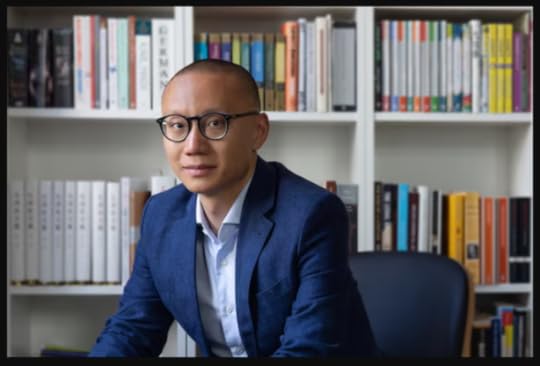
Wang writes with a fairly decent style here. The writing opens with a good intro, but I wasn't too fond of the presentation style of the rest of the book. Unfortunately, I found it a bit too jumbled. More below.
The author drops the quote above early on, and it continues:
He talks about his personal history in this short blurb:
He drops this interesting quote about China:
Some more of what he covers here includes:
• Lawyers vs. Engineers: A comparison between America's "lawyerly society" that prioritizes regulation and China's "engineering state" that prioritizes building.
• Shenzhen and Tech Production: Exploring the entrepreneurial energy and manufacturing ecosystems of the city.
• China's "One-Child" Policy: Using it as an example of the heavy-handed social engineering of the Chinese state.
• "Zero-COVID": A firsthand account of living through the restrictions and their impact on Chinese society.
• Family History: Personal anecdotes about his upbringing and his family's path from China to the West.
Although the book had its moments, I found the narrative flow to be somewhat disjointed. The writing felt more like a compilation of disconnected snapshots than a cohesive story with narrative continuity. The book provides an extensive exploration of historical and geopolitical themes, yet the author also devotes significant attention to his personal life, recounting how he met his wife and their experiences cycling through China.
On a positive note, Wang talks about politics here, but manages to avoid partisan rhetoric, discussing both the political left as well as the political right. This was a nice touch, as many authors are no more than rabid ideologues these days...
********************
I found Breakneck to be a fairly standard primer on the subject—competent, but ultimately unexceptional. I was looking for something new, and sadly I didn't find it here...
3 stars.
Breakneck was interesting at times, but there was not much new or exciting covered here that I haven't read elsewhere.
Author Dan Wang is a Canadian technology analyst and research fellow at Stanford University’s Hoover History Lab. Having lived in Hong Kong, Beijing, and Shanghai from 2017 to 2023, he previously served as the technology analyst at Gavekal Dragonomics, where he became well-known for his insightful annual letters on China’s industrial and tech landscape.
Dan Wang :
Wang writes with a fairly decent style here. The writing opens with a good intro, but I wasn't too fond of the presentation style of the rest of the book. Unfortunately, I found it a bit too jumbled. More below.
The author drops the quote above early on, and it continues:
"...using means that ran roughshod over many—an approach rightfully disdained by much of the world. It is also a reminder that the United States once knew the virtues of speed and ambitious construction. Traversing dazzling metropolises and gigantic factories, Breakneck will illuminate the astounding progress and the dark underbelly of the engineering state. The lawyerly society has virtues, too, to teach China. Each superpower offers a vision of how the other can be better, if only their leaders and peoples care to take more than a fleeting glance."
He talks about his personal history in this short blurb:
"My parents and I emigrated from China to Canada when I was seven. During high school, we moved to the woodsy suburbs of Philadelphia (where my mom and dad still live). After going to New York for college and Silicon Valley for work, I returned to China to investigate its technology developments. I learned to appreciate something vital: The country is always in motion. Living in Hong Kong, Beijing, and then Shanghai was a good education not only because these were China’s most prosperous economic zones. For six years, I lived through a period of economic dynamism that gave way to smothering political repressiveness. I experienced top leader Xi Jinping’s ongoing mobilization of the country for great-power competition. I tracked the expanding web of US restrictions on Chinese tech companies, as well as their struggle to escape from American restraints. And I endured all three years of Xi’s pursuit of zero-Covid, which started impressively until it plunged the country into broad misery..."
He drops this interesting quote about China:
"China learned so well from the United States that it started to beat America at its own game: capitalism, industry, and harnessing its people’s restless ambitions. If you want to appreciate what Detroit felt like at its peak, it’s probably better to experience that in Shenzhen than anywhere in the United States."
Some more of what he covers here includes:
• Lawyers vs. Engineers: A comparison between America's "lawyerly society" that prioritizes regulation and China's "engineering state" that prioritizes building.
• Shenzhen and Tech Production: Exploring the entrepreneurial energy and manufacturing ecosystems of the city.
• China's "One-Child" Policy: Using it as an example of the heavy-handed social engineering of the Chinese state.
• "Zero-COVID": A firsthand account of living through the restrictions and their impact on Chinese society.
• Family History: Personal anecdotes about his upbringing and his family's path from China to the West.
Although the book had its moments, I found the narrative flow to be somewhat disjointed. The writing felt more like a compilation of disconnected snapshots than a cohesive story with narrative continuity. The book provides an extensive exploration of historical and geopolitical themes, yet the author also devotes significant attention to his personal life, recounting how he met his wife and their experiences cycling through China.
On a positive note, Wang talks about politics here, but manages to avoid partisan rhetoric, discussing both the political left as well as the political right. This was a nice touch, as many authors are no more than rabid ideologues these days...
********************
I found Breakneck to be a fairly standard primer on the subject—competent, but ultimately unexceptional. I was looking for something new, and sadly I didn't find it here...
3 stars.

September 4, 2025
Engineers vs lawyers
Breakneck: China's Quest to Engineer the Future is what I call a "New Hammer" book. The name of course comes from the saying "When you have a new hammer, everything looks like a nail."
New Hammer books begin when the author has an idea that, they think, explains everything. Now, when the author really thinks the new idea explains absolutely everything in the whole damn universe, you get a new religion. Those books are not great. But sometimes an author has an idea that explains everything within some specific domain. Those can be very good books. One of my favorites is Plagues and Peoples, in which William H. McNeill explained that infectious disease explains all of human history. A more obscure one is Timur Kuran's Private Truths, Public Lies: The Social Consequences of Preference Falsification explains that "preference falsification" explains everything about political science. The big problem with New Hammer books, of course, is that the authors are apt to overstate their claims.
Dan Wang's Breakneck is about US/China relations. Here is his New Hammer:
Breakneck is not pro-China or anti-China or pro-USA or anti-USA. It is refreshing that Wang's views don't map onto any familiar political position. In fact, in his acknowledgements he humblebrags
My main problem with Wang's New Hammer is that he overstates the insight it gives into China's leadership, by ascribing to engineers in general tendencies that don't apply to all or even most engineers. For instance, he states, "Engineers don’t know how to persuade." As it happens, I know a lot of scientists and engineers, and I can tell you that some of them are very persuasive people. Strangely enough, none of the engineers I am acquainted with is the authoritarian leader of his or her nation. I would tend to ascribe unpersuasiveness more to authoritarianism than to engineering, but maybe that's just me.
This is a good book that taught me things I didn't know, and more important, helped me understand some things I did know. Recommended.
Blog review.
Breakneck: China's Quest to Engineer the Future is what I call a "New Hammer" book. The name of course comes from the saying "When you have a new hammer, everything looks like a nail."
New Hammer books begin when the author has an idea that, they think, explains everything. Now, when the author really thinks the new idea explains absolutely everything in the whole damn universe, you get a new religion. Those books are not great. But sometimes an author has an idea that explains everything within some specific domain. Those can be very good books. One of my favorites is Plagues and Peoples, in which William H. McNeill explained that infectious disease explains all of human history. A more obscure one is Timur Kuran's Private Truths, Public Lies: The Social Consequences of Preference Falsification explains that "preference falsification" explains everything about political science. The big problem with New Hammer books, of course, is that the authors are apt to overstate their claims.
Dan Wang's Breakneck is about US/China relations. Here is his New Hammer:
The starkest contrast between the two countries is the competition that will define the twenty-first century: an American elite, made up of mostly lawyers, excelling at obstruction, versus a Chinese technocratic class, made up of mostly engineers, that excels at construction.Surprisingly, he makes a pretty good case -- overstated in places, but generally sound, I think. I definitely come away from it better informed about China and the challenges of US/China relations than when I began it.
Breakneck is not pro-China or anti-China or pro-USA or anti-USA. It is refreshing that Wang's views don't map onto any familiar political position. In fact, in his acknowledgements he humblebrags
Breakneck is written from a perspective that makes most political scientists tart and many historians grumpy.But, as Walt Whitman wrote, “If you done it, it ain't bragging.”, and Wang done it.
My main problem with Wang's New Hammer is that he overstates the insight it gives into China's leadership, by ascribing to engineers in general tendencies that don't apply to all or even most engineers. For instance, he states, "Engineers don’t know how to persuade." As it happens, I know a lot of scientists and engineers, and I can tell you that some of them are very persuasive people. Strangely enough, none of the engineers I am acquainted with is the authoritarian leader of his or her nation. I would tend to ascribe unpersuasiveness more to authoritarianism than to engineering, but maybe that's just me.
This is a good book that taught me things I didn't know, and more important, helped me understand some things I did know. Recommended.
Blog review.

October 6, 2025
Really aimed to appeal to silicon valley elites, it just doesn't actually add to your understanding on China.
When it comes to the one child policy, China's millennial long history of patriarchy and violence against women will teach you more. Yes, numerical targets led the Chinese elite astray, but its the long standing hatred of women (footbinding, cloistering, concubinage) that made it possible.
The book barely talks about Leninism. The reason the Chinese state can make bad stuff happen is because its a Leninist one party state, not because they're engineers.
The Chinese state HAS built a lot but its done that to 1) buy off local elites, its been super effective at aligning incentives between local party elites and local capitalists and central state desire to strengthen the economy. Win-win-win but not due to engineering. Similarly engineering works have helped buy off working class rebellion.
China has such a long history of trying to rebuild the state against Western hegemony, the Self-Strengthening Movement were doing it mid-19th century.
ALSO its suggesting the US become a less lawyerly society exactly as Trump is wrecking the constitution and ripping off firms like Intel, or holding firms to ransom for tariff policy. Terrible timing.
Wouldn't recommend, loads of other books you could recommend on China.
BUT the travelogue sections are good, the one child policy chapter is written with real passion and it is broadly correct that its good to be able to do things.
When it comes to the one child policy, China's millennial long history of patriarchy and violence against women will teach you more. Yes, numerical targets led the Chinese elite astray, but its the long standing hatred of women (footbinding, cloistering, concubinage) that made it possible.
The book barely talks about Leninism. The reason the Chinese state can make bad stuff happen is because its a Leninist one party state, not because they're engineers.
The Chinese state HAS built a lot but its done that to 1) buy off local elites, its been super effective at aligning incentives between local party elites and local capitalists and central state desire to strengthen the economy. Win-win-win but not due to engineering. Similarly engineering works have helped buy off working class rebellion.
China has such a long history of trying to rebuild the state against Western hegemony, the Self-Strengthening Movement were doing it mid-19th century.
ALSO its suggesting the US become a less lawyerly society exactly as Trump is wrecking the constitution and ripping off firms like Intel, or holding firms to ransom for tariff policy. Terrible timing.
Wouldn't recommend, loads of other books you could recommend on China.
BUT the travelogue sections are good, the one child policy chapter is written with real passion and it is broadly correct that its good to be able to do things.

January 19, 2026
A fantastic book! I was wary going into this, a lot of these ‘study on China/comparison to America’ books often lean towards sensationalisation, and come too close to replicating the tradition of ‘yellow peril/fear a rising East-Asian economy’, beginning with worrisome breakdowns on Japan during the 70s and 80s. However, Wang is masterful at being modest in his criticisms of both China and the USA while acknowledging what makes them special. The dichotomy between the engineering and lawyerly states and how if each one took a bit from the other both nations would benefit was an excellent piece of framing.
I also very much enjoyed his weaving of personal anecdotes, especially the final chapter that paints such an illustrative picture. The book is very focused and does not overstay its welcome at all. This is for sure one that I recommend to all people who want to learn a bit more about current day China, and have some critical reflection on the US. 4.6/5, rounded up.
I also very much enjoyed his weaving of personal anecdotes, especially the final chapter that paints such an illustrative picture. The book is very focused and does not overstay its welcome at all. This is for sure one that I recommend to all people who want to learn a bit more about current day China, and have some critical reflection on the US. 4.6/5, rounded up.
Displaying 1 - 30 of 1,633 reviews