

What do you think?

Crumb: A Cartoonist's Life
Named a Best Book of the Year by The Washington Post and The New Yorker
Longlisted for the PEN/Jacqueline Bograd Weld Award for Biography
Eisner Award Nominee for Best Comics-Related Book
“A definitive and ideal biography—pound for pound, one of the sleekest and most judicious I’ve ever read.” —The New York Times
A critical darling, Crumb is the first biography of Robert Crumb—one of the most profound and influential artists of the 20th century—whose frank and meticulously rendered cartoons and comics inspired generations of readers and cartoonists, from Art Spiegelman to Alison Bechdel.
Robert Crumb is often credited with single-handedly transforming the comics medium into a place for adult expression, in the process pioneering the underground comic book industry, and transforming the vernacular language of 20th-century America into an instantly recognizable and popular aesthetic. Now, for the first time, Dan Nadel delivers a “gripping and essential account” (The Boston Globe) of how this complicated artist survived childhood abuse, fame in his twenties, more fame, and came out the other side intact.
Braiding biography with “cultural history and criticism...that honors the complexity of [its] subject, even, perhaps particularly, when it gets ugly” (Los Angeles Times), Crumb is the story of a richly complex life at the forefront of both the underground and popular cultures of post-war America. Including forty-five stunning black-and-white images throughout and a sixteen-page color insert featuring images both iconic and obscure “at once nuanced and propulsive” (The Times Literary Supplement, London), Crumb spans the pressures of 1950s suburban America and Crumb's highly dysfunctional early family life; the history of comics and graphic satire; 20th-century popular music; the world of the counterculture; the birth of underground comic books in 1960s San Francisco with Crumb's Zap Comix; the economic challenges and dissolution of the hippie dream; and the path Robert Crumb blazed through it all.
Written with Crumb's cooperation, this fascinating, rollicking book takes in seven decades of Crumb's iconic works, including Fritz the Cat, Weirdo, and his adaptation of The Book of Genesis and “floats Crumb on the rapids of his times” (Harper's Magazine), capturing, in the process, the essence of an extraordinary artist.
Longlisted for the PEN/Jacqueline Bograd Weld Award for Biography
Eisner Award Nominee for Best Comics-Related Book
“A definitive and ideal biography—pound for pound, one of the sleekest and most judicious I’ve ever read.” —The New York Times
A critical darling, Crumb is the first biography of Robert Crumb—one of the most profound and influential artists of the 20th century—whose frank and meticulously rendered cartoons and comics inspired generations of readers and cartoonists, from Art Spiegelman to Alison Bechdel.
Robert Crumb is often credited with single-handedly transforming the comics medium into a place for adult expression, in the process pioneering the underground comic book industry, and transforming the vernacular language of 20th-century America into an instantly recognizable and popular aesthetic. Now, for the first time, Dan Nadel delivers a “gripping and essential account” (The Boston Globe) of how this complicated artist survived childhood abuse, fame in his twenties, more fame, and came out the other side intact.
Braiding biography with “cultural history and criticism...that honors the complexity of [its] subject, even, perhaps particularly, when it gets ugly” (Los Angeles Times), Crumb is the story of a richly complex life at the forefront of both the underground and popular cultures of post-war America. Including forty-five stunning black-and-white images throughout and a sixteen-page color insert featuring images both iconic and obscure “at once nuanced and propulsive” (The Times Literary Supplement, London), Crumb spans the pressures of 1950s suburban America and Crumb's highly dysfunctional early family life; the history of comics and graphic satire; 20th-century popular music; the world of the counterculture; the birth of underground comic books in 1960s San Francisco with Crumb's Zap Comix; the economic challenges and dissolution of the hippie dream; and the path Robert Crumb blazed through it all.
Written with Crumb's cooperation, this fascinating, rollicking book takes in seven decades of Crumb's iconic works, including Fritz the Cat, Weirdo, and his adaptation of The Book of Genesis and “floats Crumb on the rapids of his times” (Harper's Magazine), capturing, in the process, the essence of an extraordinary artist.
Audible Audio
First published January 1, 2025
About the author
Dan Nadel
4 books60 followersDan Nadel is the author of Crumb: A Cartoonist's Life (Scribner, April 2025). His previous books include, It’s Life as a I See It: Black Cartoonists in Chicago, 1940–1980; Peter Saul: Professional Artist Correspondence, 1945–1976; and Art Out of Time: Unknown Comic Visionaries, 1900–1969. Nadel has curated exhibitions for galleries and museums internationally including the Museum of Contemporary Art Chicago, the Manetti Shrem Museum of Art, UC Davis, and the Whitney Museum of American Art. He is the founder of PictureBox, a publishing and packaging company that produced over one hundred books, objects, and zines from 2000 to 2014, including the Grammy Award–winning design for Wilco’s 2004 album A Ghost Is Born. Dan is the curator-at-large for the Lucas Museum of Narrative Art. He lives in Brooklyn, New York, with his family.
Ratings & Reviews
Friends & Following
Create a free account to discover what your friends think of this book!
Community Reviews
Displaying 1 - 30 of 146 reviews

June 21, 2025
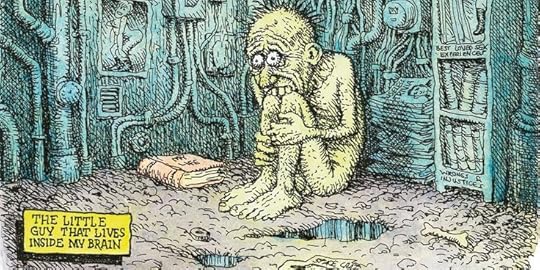
A STRANGE, ENTIRELY SELF-CREATED LIFE
He went from being a 22 year old incel, whose contemptuous father said “He’ll marry the first one that comes along” – and he did! – to a guy with a wife and kid, a girlfriend, another girlfriend, and various other liaisons that popped up wherever he happened to find himself. The trappings of fame. But what a bizarre kind of fame it was, like being on a beach and not realising how quickly the tide was coming in, suddenly it’s up to your knees. From years of pennilessness to lighting his cigars with a hundred dollar note and it all seemed to happen in about 18 months. I exaggerate, but only slightly. It was a scattershot, chaotic kind of fame – those ubiquitous Keep On Truckin’ cartoons were everywhere and he hardly made a dime off them. He hated the Fritz the Cat movie. Actually he was a genius-level hater.
ATTITUDE PROBLEM
He was the guy who proclaimed long and loudly how much he detested the hippies whilst living the most hippy life ever. He had not one but two open marriages and yes, his wives had their boyfriends while he had his girlfriends, and some of these gfs and bfs and exes became semi-permanent and all lived on and off in a sort of commune way out in California. Before that he lived in Haight Ashbury in 65 to 68 and gobbled a great deal of acid. But yes, he hated the hippies, and all things modern (rock music, television, long hair). Instead, he was in love with the style, the music, the look and the feel of the 20s and 30s.
He was a contrarian.
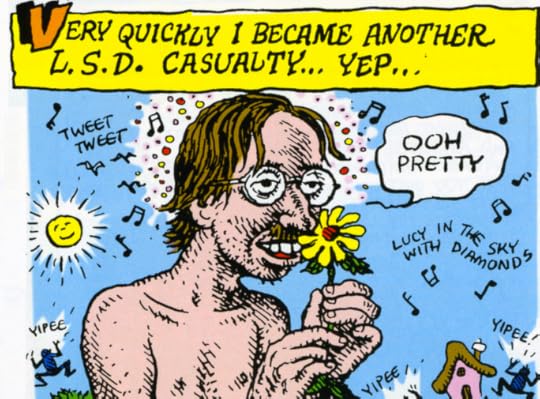
MY PARAPHILIA AND ME
But he invented a big chunk of modern art, and not just some of the most recognisable features of his time but the very concept of his art – comics - being art at all. And not being for children but for adults! Well… when I say he created comics for adults I mean comics for men who have a sniggering salacious puerile obsession about sex. He spent years making cutesy friendly cartoons about femicide, incest, paraphilias, that kind of thing. That was a big chunk of it, but not all. He also did careful and beautifully realised comics of Boswell’s London Journal, Kafka, Bukowski and Philip K Dick’s life.
He was a sweet gentle guy whose art revealed a whole series of ugly misogynistic and racist fantasies. This is not me doing the fingerwagging, this is the author’s verdict. Often, says Dan Nadel, his art
offers the ugliest vision of white male heterosexuality
Ugliest? I could add in here a few panels to prove the point but they’d kick me off Goodreads in five minutes. Some of his stuff is really shocking. Should you require proof you could google Crumb “A Bitchin’ Bod” and that will be all you need.
And it’s the kind of shocking where he would have said well, I just let my id flow out of my skull onto the page, with no filters, I’m totally honest, I don’t apologise, there it is, you don’t have to buy it.
Trina Robbins (cartoonist from the East Village Other)
The guys (and some of their gfs) continued to think Crumb was hilarious, but, suddenly, I didn’t get it. Rape and humiliation – and later, torturing and murdering women – don’t seem funny to me.
Cute, endearing and vile. That’s Crumb.
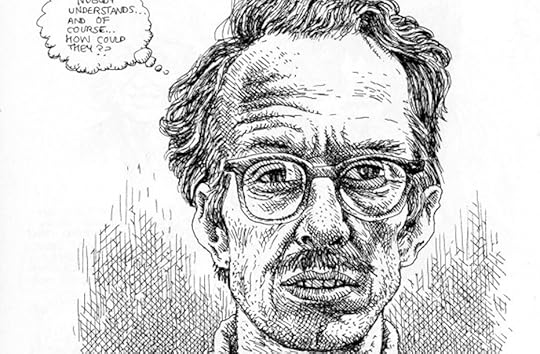
EFFECTS OF FAME
Robert formed an acoustic string band to play old timey music. It was called the Cheap Suit Serenaders. (Lasted a few years too).
So, it’s 1974, at a Suits gig.
Aline attended, looked around, and realized that Robert was sleeping with at least three other women in the audience, all also dressed as “Crumb girls” in plaid skirts, white shirts and knee-high socks.
CRUMB KEPT IT REAL
Now it’s 1977 :
He refused plenty of other offers that year, including $10,000 from the Rolling Stones for an album cover. Robert just hated the music – noisy, full of faux authenticity, and corporate – too much to even consider it.
TIMOTHY LEARY WAS NOT A FAN
For almost two decades Crumb has put out more aesthetic pollutants, more glorification of ugliness, pessimism, derogation of the human spirit than anyone I can think of. He is more of a menace than nuclear plants.
IN LATER YEARS
As vast sums rolled in from the hifalutin art galleries of the western world (yes, he was "taken up") Dan Nadel will say stuff like
The original drawings…were sold to the Lucas Museum of Narrative art for $2.9 million
(in 2011)
But also, he began to turn from curmudgeon to full-on crank, with an it’s-really-true plunge into astral projection, (Dan says with a straight face Robert achieved his last projection in 2005) and full on anti vax madness. At the same time as apparently truly believing the anti-vax conspiracy theories, he would draw a comic strip satirising his idiocy in believing this stuff. That's how he rolled.
CRUMBLAND
I can recommend
The Robert Crumb Handbook
The R Crumb Coffee Table Book
Crumb (a brilliant documentary from 1993 – if you think this biography will be too much go with the doc)
And
Robert Crumb and the Cheap Suit Serenaders albums (there are three – music is nice but his voice is not good!)
I LOVE BIOGRAPHY
When you get a juicy psychological weirdo like Crumb a solid biography like this one is better than a novel. Andrea Dworkin, Jean Rhys, George Gissing, Elijah Mohammed – and how could I forget Dostoyevsky – all amazing characters, amazing lives.

June 2, 2025
Congratulations for the Will Eisner Comic Industry Awards for Best Comics-Related Book (2026)! One of my faves from 2025!
6/2/25: I didn't think I'd read this whole thing, but Crumb is one of the greats, and this would appear to be the "definitive" biography by Dan Nadel. I can say I got it from the library and sat down and read the foreword and was absorbed. I recall seeing Terry Zwigoff's 1995 documentary, Crumb, when it came out. I own very little of Crumb's collected works as they mostly seem to be out of print, and our library system has almost nothing, but over the years I have read a lot of his work. Certainly in the top five of most influential cartoonists in history, imho. A very weird and complicated and sometimes downright disturbing man associated with alt comix, the sixties.
7/6/25: So it had to go back to the library and I let it go, but then happened on Paul Bryant's 5 star review! (Paul Bryant rarely five-stars a book!) so had to read it to the end. Such a messed-up sad family, so many weirdos, and then this complicated brilliance emerges out of all that. I like the story of his early comics work with the whole family, especially Charles, their collecting the work of Carl Barks, Walt Kelly, and then you can see how the story of American pop culture and of Mad Magazine fed into his own cynical humor, making fun of shallow tv shows, shallow movie stars, shallow pop culture, and (as they saw it) mostly vapid superhero comics. Those folks liked EC comics--gory horror, especially, with social critiques foremost.
7/14: 2/3 finished, and we are finally up to Crumb's living with Aline, with whom he still lives in the south of France. One crazy acid-fueled, dysfunctional trip back and forth across the country. This book does not avoid looking into Crumb's occasional misogyny in his work--"I was an asshole! I admit it!"--catalogued in his collection, My Trouble With Women, even as he is adoring of women and hypersexualizing them and working with them and on and on. Let the reader beware. You might be offended. Crumb didn't for a time have lines he wouldn't cross. He decried misogyny and racism and made comics that both identify his racism and condemn it. No one wrote comics about himself in the same way until Crumb, and this opened the door for so many during and after his time.
7/116/25: Finished, and what a story, well told, not hiding how weird and sometimes disturbing and in so many ways complicated--I keep using that word!--he was, but coming out of that family, whew. He was nevertheless one of rhe geniuses of comics, keep on truckin', changing the face of comics forever, alt-comix underground, and if you want the tone, look to Bukowski, Hunter Thompson, fear and loathing and self-loathing. Closer to punk aesthetic than hippie, but he was also a chronicler (and record collector) of the blues and black culture. Close to the end Aline dies, and Crumb, at 80, goes on the road in the US, leaving his home in France to see his friends and grieve. One close friend was Bill Griffith, Zippy the Pinhead. Harvey Pekar. This book chronicles a generation of underground comics. No one can read this and unequivocally celebrate everything he did. Crumb and Nadel sure do not. But the end result is impressive. One of the best books I read this year. This is a terrible review, so I will clean this up and improve it at some point. Or maybe just admit it is flawed and let it go.
6/2/25: I didn't think I'd read this whole thing, but Crumb is one of the greats, and this would appear to be the "definitive" biography by Dan Nadel. I can say I got it from the library and sat down and read the foreword and was absorbed. I recall seeing Terry Zwigoff's 1995 documentary, Crumb, when it came out. I own very little of Crumb's collected works as they mostly seem to be out of print, and our library system has almost nothing, but over the years I have read a lot of his work. Certainly in the top five of most influential cartoonists in history, imho. A very weird and complicated and sometimes downright disturbing man associated with alt comix, the sixties.
7/6/25: So it had to go back to the library and I let it go, but then happened on Paul Bryant's 5 star review! (Paul Bryant rarely five-stars a book!) so had to read it to the end. Such a messed-up sad family, so many weirdos, and then this complicated brilliance emerges out of all that. I like the story of his early comics work with the whole family, especially Charles, their collecting the work of Carl Barks, Walt Kelly, and then you can see how the story of American pop culture and of Mad Magazine fed into his own cynical humor, making fun of shallow tv shows, shallow movie stars, shallow pop culture, and (as they saw it) mostly vapid superhero comics. Those folks liked EC comics--gory horror, especially, with social critiques foremost.
7/14: 2/3 finished, and we are finally up to Crumb's living with Aline, with whom he still lives in the south of France. One crazy acid-fueled, dysfunctional trip back and forth across the country. This book does not avoid looking into Crumb's occasional misogyny in his work--"I was an asshole! I admit it!"--catalogued in his collection, My Trouble With Women, even as he is adoring of women and hypersexualizing them and working with them and on and on. Let the reader beware. You might be offended. Crumb didn't for a time have lines he wouldn't cross. He decried misogyny and racism and made comics that both identify his racism and condemn it. No one wrote comics about himself in the same way until Crumb, and this opened the door for so many during and after his time.
7/116/25: Finished, and what a story, well told, not hiding how weird and sometimes disturbing and in so many ways complicated--I keep using that word!--he was, but coming out of that family, whew. He was nevertheless one of rhe geniuses of comics, keep on truckin', changing the face of comics forever, alt-comix underground, and if you want the tone, look to Bukowski, Hunter Thompson, fear and loathing and self-loathing. Closer to punk aesthetic than hippie, but he was also a chronicler (and record collector) of the blues and black culture. Close to the end Aline dies, and Crumb, at 80, goes on the road in the US, leaving his home in France to see his friends and grieve. One close friend was Bill Griffith, Zippy the Pinhead. Harvey Pekar. This book chronicles a generation of underground comics. No one can read this and unequivocally celebrate everything he did. Crumb and Nadel sure do not. But the end result is impressive. One of the best books I read this year. This is a terrible review, so I will clean this up and improve it at some point. Or maybe just admit it is flawed and let it go.

May 31, 2025
So how interesting would this book be to someone unfamiliar with Crumb and his work? I don't know. Surely most folks of a certain age will recognize Keep On Truckin’, a meme from way back before there was widespread internet on which to share it? Or maybe that album cover for Big Brother and the Holding Company before Janis Joplin went solo? Mr. Natural? Fritz the Cat?
Me, I've known of his work for so long that I honestly don't recall when and where I first saw it. It was probably around the time I first got into collecting comics–as opposed to just buying random comics off the spinner rack on my weekly trips to the store with my dad. So late 70's, early 80's, something like that.
So, having read his comics for years, with all of the autobiographical work that he's done, and having watched the Crumb movie back when it was in theaters, this book was somewhat familiar territory. What Nadel brings to the table is an outsider's perspective, and the time and patience to do the necessary research. Crumb tends to exaggerate his own worst qualities in his work, so it's refreshing to hear from those who know him well.
It's also wonderful to have a timeline that isn't just a checklist of his work, but that talks about the circumstances under which everything was created and published. I, for one, now have a clearer understanding of what some of the works in The Complete Crumb Comics (published by Fantagraphics, and sadly out of print as I write this) actually are.
For Crumb fans, this book is indispensable. I gained a deeper understanding of the man and his work, and could not put it down. For anyone else, well, it's a biography of one of the more interesting and idiosyncratic artists of our time. His impact on the world of non-superhero comics has been considerable. If any of that sounds intriguing, check it out. I don't think you'll be disappointed.
Me, I've known of his work for so long that I honestly don't recall when and where I first saw it. It was probably around the time I first got into collecting comics–as opposed to just buying random comics off the spinner rack on my weekly trips to the store with my dad. So late 70's, early 80's, something like that.
So, having read his comics for years, with all of the autobiographical work that he's done, and having watched the Crumb movie back when it was in theaters, this book was somewhat familiar territory. What Nadel brings to the table is an outsider's perspective, and the time and patience to do the necessary research. Crumb tends to exaggerate his own worst qualities in his work, so it's refreshing to hear from those who know him well.
It's also wonderful to have a timeline that isn't just a checklist of his work, but that talks about the circumstances under which everything was created and published. I, for one, now have a clearer understanding of what some of the works in The Complete Crumb Comics (published by Fantagraphics, and sadly out of print as I write this) actually are.
For Crumb fans, this book is indispensable. I gained a deeper understanding of the man and his work, and could not put it down. For anyone else, well, it's a biography of one of the more interesting and idiosyncratic artists of our time. His impact on the world of non-superhero comics has been considerable. If any of that sounds intriguing, check it out. I don't think you'll be disappointed.
October 14, 2024
Interesting,well written and slightly disturbing bio of R.Crumb. Thanks to NetGalley,the author, and the publisher for the ARC.
While now considered the grand old man of underground comics, Crumb’s subject matter hasn’t aged well. He’s like an artifact of a time gone by, when it was ok to publish his weird compulsions. I enjoyed the book ,especially Aline, who grounded him.
While now considered the grand old man of underground comics, Crumb’s subject matter hasn’t aged well. He’s like an artifact of a time gone by, when it was ok to publish his weird compulsions. I enjoyed the book ,especially Aline, who grounded him.

May 1, 2025
Fantastic; the best book I’ve read in a good while. If you have even a passing interest in Crumb and his art, this is a must-read.

September 15, 2025
Rec. by: MCL's Lucky Day shelf, and previous exposure to its subject
Rec. for: Anyone who's interested in the parallel genesis (heh) and flowering of graphic novels, of underground comix, of sequential art that does not involve superheroes...
By the time you get to this assertion, near the end of Dan Nadel's Crumb: A Cartoonist's Life, you'll know it's true—and that Crumb's support was indeed absolutely crucial to the success of Nadel's work. Many of the people in Robert Crumb's life have already passed away, and others declined to participate in this project, so Nadel's biography would have been much shorter, and much less detailed, and much worse, had Crumb not made himself and his collections freely available. The result was amazing; Crumb is a monumental work, incredibly detailed both in research and in execution... but it's also a fascinating, compelling, propulsive read, one that I could not put down for long, one that I finished reading in fewer than 48 hours.
I've taken rather longer than that to put together this review.
Crumb covers Robert Dennis Crumb's entire life to date, from before his birth in 1943 up through his current residence in Sauve, France, as a widower in his 80s. For yes, as of this writing the man's still alive, and even now and then still drawing... Crumb's had an incredible career. And an incredible life.
Dan Nadel's biography is not simply a worshipful recounting of Crumb's many achievements, though. To be absolutely clear: Crumb is not for the kiddies; it's not some charming fable of a greeting-card artist churning out cute content for spinner racks in grocery stores (although Crumb has been that, too!)... No, at Crumb's own insistence, this book portrays him and his often quite raw and explicit work (and life!) without flinching from the parts of his personality that contribute to his being a loner, that are questionable, that are—quite frankly—repugnant. Nadel really digs into the dirt, confirming yet again that great talent is not correlated very well with being an admirable person. Which is, of course, one of the things that makes this book so fascinating...
I think it might be very hard to stay friends with Robert Crumb—although many, many people have been his friends, over the years, so maybe that part's just my interpretation.
*
Many of the events in Crumb's life do tie in well both with my own recent reading (of the novel Fame & Love in New York) and my own long-lasting interests—for example:
I have been running across Crumb's own artwork all my own life, of course. For example, I do own the obligatory copy of Big Brother and the Holding Company's second LP Cheap Thrills (1968), for which Crumb drew the cover, although I don't remember now where I picked up that record—it was long after 1968, though.
That fantastic cover art was Crumb's first big break—as Nadel notes,
I don't have any of Crumb's collections or solo work on my own shelves, but I do possess one oddity, a large-format paperback called The Apex Treasury of Underground Comics, which is backed with another anthology, The Best of Bijou Funnies in tête-bêche format, like an Ace Double write large—the only time I've seen that topsy-turvy format used for a book this size. The book features some of Crumb's early work, presented in context along with pieces from many of the other underground artists who get mentioned in Nadel's biography.
And although the only Harvey Pekar book I happen to own was drawn by someone else, I have long been aware of Pekar's long association with Crumb as well.
The eponymous biopic (1994), by Crumb's longtime friend and collaborator Terry Zwigoff, is also very much worth mentioning, and viewing.
*
It should be noted that Crumb has been on the right side of history at least once...
*
Now, there aren't nearly enough pictures in Crumb (although more than in this review, which contains none)... but then, how could there be enough? Robert Crumb is and always has been primarily a visual artist (well, mostly, apart from his musical career, which also receives quite a bit of Nadel's attention). Crumb's collected works span dozens of volumes (and his uncollected works would doubtless fill dozens more). Nonetheless, Nadel's biography does contain quite a few reproduced pages, mostly from Crumb's career in underground comix, as well as a dozen pages or so in color, of family snapshots and reproductions of his work—which was not nearly enough to satisfy me, but enough (I think) to give the reader at least a taste for Crumb's distinctive style.
Crumb is a portrait of the whole man, in other words, warts and all. And it's an exquisitely vivid portrait... of that, there can be no doubt.
Rec. for: Anyone who's interested in the parallel genesis (heh) and flowering of graphic novels, of underground comix, of sequential art that does not involve superheroes...
This book was written with the permission and support of Robert Crumb.
—"A Note on Sources," p.407
By the time you get to this assertion, near the end of Dan Nadel's Crumb: A Cartoonist's Life, you'll know it's true—and that Crumb's support was indeed absolutely crucial to the success of Nadel's work. Many of the people in Robert Crumb's life have already passed away, and others declined to participate in this project, so Nadel's biography would have been much shorter, and much less detailed, and much worse, had Crumb not made himself and his collections freely available. The result was amazing; Crumb is a monumental work, incredibly detailed both in research and in execution... but it's also a fascinating, compelling, propulsive read, one that I could not put down for long, one that I finished reading in fewer than 48 hours.
I've taken rather longer than that to put together this review.
Crumb covers Robert Dennis Crumb's entire life to date, from before his birth in 1943 up through his current residence in Sauve, France, as a widower in his 80s. For yes, as of this writing the man's still alive, and even now and then still drawing... Crumb's had an incredible career. And an incredible life.
Dan Nadel's biography is not simply a worshipful recounting of Crumb's many achievements, though. To be absolutely clear: Crumb is not for the kiddies; it's not some charming fable of a greeting-card artist churning out cute content for spinner racks in grocery stores (although Crumb has been that, too!)... No, at Crumb's own insistence, this book portrays him and his often quite raw and explicit work (and life!) without flinching from the parts of his personality that contribute to his being a loner, that are questionable, that are—quite frankly—repugnant. Nadel really digs into the dirt, confirming yet again that great talent is not correlated very well with being an admirable person. Which is, of course, one of the things that makes this book so fascinating...
I think it might be very hard to stay friends with Robert Crumb—although many, many people have been his friends, over the years, so maybe that part's just my interpretation.
*
Many of the events in Crumb's life do tie in well both with my own recent reading (of the novel Fame & Love in New York) and my own long-lasting interests—for example:
{...} the Fugs, which teamed poet Ed Sanders with performer Tuli Kupferberg and drummer Ken Weaver, were practically a house band.There are many subsequent mentions of the Fugs, whose story became for many years rather intertwined with Crumb's.
—p.94
I have been running across Crumb's own artwork all my own life, of course. For example, I do own the obligatory copy of Big Brother and the Holding Company's second LP Cheap Thrills (1968), for which Crumb drew the cover, although I don't remember now where I picked up that record—it was long after 1968, though.
That fantastic cover art was Crumb's first big break—as Nadel notes,
"R. Crumb," unmistakably the same head and hand responsible for Zap, was now in bedrooms and living rooms around the country.
—p.161
I don't have any of Crumb's collections or solo work on my own shelves, but I do possess one oddity, a large-format paperback called The Apex Treasury of Underground Comics, which is backed with another anthology, The Best of Bijou Funnies in tête-bêche format, like an Ace Double write large—the only time I've seen that topsy-turvy format used for a book this size. The book features some of Crumb's early work, presented in context along with pieces from many of the other underground artists who get mentioned in Nadel's biography.
And although the only Harvey Pekar book I happen to own was drawn by someone else, I have long been aware of Pekar's long association with Crumb as well.
The eponymous biopic (1994), by Crumb's longtime friend and collaborator Terry Zwigoff, is also very much worth mentioning, and viewing.
*
It should be noted that Crumb has been on the right side of history at least once...
For Hup 3, in 1989, he drew "Point the Finger," in which Robert, in a Johnny Carson-like talk show format, presciently lambastes "one of the most evil men alive": Donald Trump. Trump is dragged onto the stage/comic by two strong women and held in place while Robert paces back and forth ranting about the eviction notices and the greed. By page 3, Donald has successfully turned his audience against his negative, no-fun interlocutor. By the following page, Donald has left with the women and Robert is being arrested. Here, Stan Shooter emerges to tell the cartoonist to tack on a different ending. In this one, the girls aren't impressed, and instead they dunk Trump's head in the toilet and then eagerly submit to Robert's sexual fantasies. Robert pops up to say, "And isn't this a nutty kinda country where you can draw any irreverent, degrading thing you want about th' most powerful people and nobody cares! You don't get jailed, you're not persecuted... they just ice you out of th' market place."
—p.345
*
Now, there aren't nearly enough pictures in Crumb (although more than in this review, which contains none)... but then, how could there be enough? Robert Crumb is and always has been primarily a visual artist (well, mostly, apart from his musical career, which also receives quite a bit of Nadel's attention). Crumb's collected works span dozens of volumes (and his uncollected works would doubtless fill dozens more). Nonetheless, Nadel's biography does contain quite a few reproduced pages, mostly from Crumb's career in underground comix, as well as a dozen pages or so in color, of family snapshots and reproductions of his work—which was not nearly enough to satisfy me, but enough (I think) to give the reader at least a taste for Crumb's distinctive style.
Crumb is a portrait of the whole man, in other words, warts and all. And it's an exquisitely vivid portrait... of that, there can be no doubt.
April 27, 2025
I really enjoyed this. Well researched and well done. I listened to the audiobook and my only criticism is that someone should step in and inform narrators when they are mispronouncing a person's name. I laughed out loud every time Harvey Pekar's name was pronounced "Pecker". no judgement, just took me out of it a little. but maybe with a book about Crumb it's fitting. Soft 4 stars.

February 9, 2026
I was disappointed (but not surprised) to hear that the current crop of young cartoonists have no use for Crumb on account of his racy & racial material. This is a shame.
It’s fascinating that Crumb has a reputation as a crazy person when compared to everyone with whom he grew up (a strong strain of mental illness runs in the family) and most of the artists he worked with he’s lead a productive, normal life.
It’s fascinating that Crumb has a reputation as a crazy person when compared to everyone with whom he grew up (a strong strain of mental illness runs in the family) and most of the artists he worked with he’s lead a productive, normal life.

Read
February 13, 2026الكتاب عن فنان الكارتون crumb
كان نفسي يكون ف رسومات وصور اكتر ف كنت بفر ف الصفحات وخلاص لأن الكلام كتير وهو أصلًا رسام كارتون ف كان لازم الرسومات تكون اكتر
ع العموم عندي فيلم وثائقي عنه هنزله قريب اوي ع قناة جرافيميديا ع تليجرام لو حد مهتم 👇👇
graphimedia@
كان نفسي يكون ف رسومات وصور اكتر ف كنت بفر ف الصفحات وخلاص لأن الكلام كتير وهو أصلًا رسام كارتون ف كان لازم الرسومات تكون اكتر
ع العموم عندي فيلم وثائقي عنه هنزله قريب اوي ع قناة جرافيميديا ع تليجرام لو حد مهتم 👇👇
graphimedia@

November 28, 2025
(MY 5TH FAVORITE BOOK OF 2025)
Nadel’s book about the life and career of underground comic legend Robert Crumb is one of the most eye catching and harrowing stories I’ve ever picked up. We learn about his very hairy childhood growing up with a pretty unstable family and how comics became his escape. Looking into his time with comics (with samples of his work included), we see how he used his grotesquely fascinating art style to share his views of topics that include his own personal life, politics and the way of the American life from the late 1950s to the early 2020s.
I never stopped being so surprised and engaged at Crumb’s life as it’s full of honest and ugly emotions, while giving us a different and unorthodox side of the comics industry. It’ll also have you wanting to read more of his work and how bizarrely catching it is. An honestly brilliant and twisted mind. A (100%/Outstanding)
Nadel’s book about the life and career of underground comic legend Robert Crumb is one of the most eye catching and harrowing stories I’ve ever picked up. We learn about his very hairy childhood growing up with a pretty unstable family and how comics became his escape. Looking into his time with comics (with samples of his work included), we see how he used his grotesquely fascinating art style to share his views of topics that include his own personal life, politics and the way of the American life from the late 1950s to the early 2020s.
I never stopped being so surprised and engaged at Crumb’s life as it’s full of honest and ugly emotions, while giving us a different and unorthodox side of the comics industry. It’ll also have you wanting to read more of his work and how bizarrely catching it is. An honestly brilliant and twisted mind. A (100%/Outstanding)

September 25, 2026
Otra biografía más editada en espop del autor de comics underground conocido popularmente por "Keep On Truckin'", el meme, la portada del álbum de Big Brother and the Holding Company antes de que Janis Joplin se lanzara en solitario, Mr. Natural, Fritz the Cat etc. Complemento perfecto a uno de los mejores documentales de los 90 Crumb de Terry Zwygoff.
Como otras de la misma editorial, las dedicadas a Johny Cash, Stan Lee o William S Burroughs te cuentan hasta el detalle más íntimo de su trayectoria aparte de mostrarte también sus trapos sucios. Puedes comprarlas todas a ciegas nunca defraudan, son absorventes y envolventes y las ediciones/traducciones son impecables. Un Sobresaliente
Como otras de la misma editorial, las dedicadas a Johny Cash, Stan Lee o William S Burroughs te cuentan hasta el detalle más íntimo de su trayectoria aparte de mostrarte también sus trapos sucios. Puedes comprarlas todas a ciegas nunca defraudan, son absorventes y envolventes y las ediciones/traducciones son impecables. Un Sobresaliente
April 9, 2025
Wow, there’s so much to know and understand about R. Crumb. Dan Nadel has beautifully written this well researched biography of the cartoonist, Robert Crumb. It’s quite lengthy but does include 116 images of Robert’s work. He was involved and fact checked the content.
Robert’s experienced quite a bit through his life which helps understand his mindset. He is a self-made cartoonist but there have been many influential people in his life. His comics became a medium for him to acknowledge common plight in being human. This book details him and his family’s entire life and the climate of the time. There are depictions of sex, drugs, abuse, and polyamorous relationships.
It’s admirable that Robert was able to only work as an artist throughout his life which is something not many have been able to do. From greeting cards, fanzines, and magazine graphics, to underground comics, Robert has expressed his fascination and queries about the world we live in.
Thank you Scribner and NetGalley for this ARC.
Robert’s experienced quite a bit through his life which helps understand his mindset. He is a self-made cartoonist but there have been many influential people in his life. His comics became a medium for him to acknowledge common plight in being human. This book details him and his family’s entire life and the climate of the time. There are depictions of sex, drugs, abuse, and polyamorous relationships.
It’s admirable that Robert was able to only work as an artist throughout his life which is something not many have been able to do. From greeting cards, fanzines, and magazine graphics, to underground comics, Robert has expressed his fascination and queries about the world we live in.
Thank you Scribner and NetGalley for this ARC.

October 25, 2025
First off, I have to admit that I do not like Crumb's art nor do I like his lifestyle. Still, this biography mostly held my interest by the way that it describes the disturbing counterculture life of people like him.

August 11, 2025
I came into this not knowing very much about Robert Crumb. I found it to be a pretty even-handed, even-tempered treatment of Crumb, both the private and public personas, as well as his place in the history of underground/independent comics. I found Crumb himself to be pretty fascinating; one of the fortunate two that escaped from his truly dysfunctional childhood and family life somewhat intact. He holds some views I personally find pretty abhorrent (such as being anti-vax and supporting some truly dangerous modes of medical thinking), and I know I couldn't have tolerated his personal life of simultaneous wives, girlfriends, and flings, but there was just enough narrative distance to make it interesting instead of rage-inducing. He was plenty awful to plenty of people in his life, and this book makes something of an argument about it being a maladapted coping skill. Frankly, the fact that he's made it relatively unscathed to the ripe age of 88 is something of a miracle given his background.
There isn't a lot of rumination on his personal life, for better or worse. After childhood we're hitting the high points, as it were. His relationships with his ex-wife and son are extremely glossed over, so if you're here for dirt, you're not really going to find it. What you will find it a compelling read about his career and the fame that followed him; the good things and questionable things he's done, and his own unique drive to continue creating. The author had access not only to the published material about Crumb, but also the absolute wealth of material that Crumb himself has archived for the greater part of 7 decades, as well as voluminous correspondence. He's talked with the people in Crumb's circle who are still alive, and gotten some rather unique perspectives from the outside about what makes Crumb tick.
Even if you're not much for his art, his fetishes, or his personal opinions, if you've ever felt like The Weird Kid or the outsider looking in, I think you will enjoy this. I'm curious as to how well it will align with the 1994 documentary about Crumb's family.
There isn't a lot of rumination on his personal life, for better or worse. After childhood we're hitting the high points, as it were. His relationships with his ex-wife and son are extremely glossed over, so if you're here for dirt, you're not really going to find it. What you will find it a compelling read about his career and the fame that followed him; the good things and questionable things he's done, and his own unique drive to continue creating. The author had access not only to the published material about Crumb, but also the absolute wealth of material that Crumb himself has archived for the greater part of 7 decades, as well as voluminous correspondence. He's talked with the people in Crumb's circle who are still alive, and gotten some rather unique perspectives from the outside about what makes Crumb tick.
Even if you're not much for his art, his fetishes, or his personal opinions, if you've ever felt like The Weird Kid or the outsider looking in, I think you will enjoy this. I'm curious as to how well it will align with the 1994 documentary about Crumb's family.

February 9, 2026
This is it as far as Crumb bios go. The documentary served its purpose and is detailed at length in here. Crumb collaborated with Nadel and gave him full access to his extensive/obsessive records, so this is basically the warts and all story of the guy — minus the bizarre interviews with Jacques Hyazagi (https://observer.com/2015/10/robert-c... etc — I wonder what happened to Hyazagi, who really was notorious for trashing his subjects). Recommended if you want a complete story. Crumb has always invited critique of his “problematic” work, so Nadel offers the standard views and his defenses here too. Truly a strange life, though I’d start with the Zwigoff film first and then go to this book first. Does what it says on the tin, in other words. Recommended

October 1, 2025
I picked up this book because it is about a graphic artist and was mentioned in the drawing channels on YouTube. I had — strangely perhaps for someone interested in drawing, but not a comics reader — never heard of R. Crumb before. I don't think I have even seen his work in the wild, so there was no a-ha recognition when I saw the excerpted work.
But he does seem to be a big deal in the comics world, and while I can't imagine ever warming to his signature style, I can certainly see why he is lionized.
This is a warts-and-all biography, but with Crumb's authorization. The ruthless honesty can be both moving and repugnant, often in the same sentence. Crumb is clearly a genius who held on to his independence of vision. There is a lot of family tragedy, and other tribulations that he went through, a lot of it frankly self-inflicted, but he seems to have weathered it with something approaching grace. It is pleasing to think that his art may have helped him, where so many others not as lucky would have been crushed.
His linework is both masterful and tedious, as he chose to achieve tonal variation solely by hatching. This must have been torture physically, panel after panel after panel, so his obsessive drive is obvious. It also shows a very anti-modern bias against losing oneself in more and more tools. He appears to have used a single mark maker throughout his career: a rather mundane fineliner or a crow quill, but never together. Hatching is the go-to method of the single-tool artist who has no time or inclination to tool-switch, and prefers to simulate an effect with what is already at hand rather than learn a different, special-purpose utensil.
Lettering is obviously a fairly important component of comics, even if it must play second fiddle to the drawing. Crumb's display lettering is superb; his text lettering, in contrast, looks a bit rushed and not the same standard. It is possible that sketchy lettering is expected in his genre in order to lend it a natural, unfinished look, although I feel like sticking faithfully to a mindlessly bog-standard, Comic-Sans type lettering would have been less fatiguing to the reader. (The elsewhere vilified Comic Sans is ideal for comics, hence its name.) Perhaps the comics excerpts in the book are smaller than real-size, thus reducing legibility. I tried looking at the words with a magnifying glass, and it wasn't fun.
If you want answers to the big questions of what art is, why or if it is needed, and why some people do it, you may not get the answers here, but the bio does make you ponder the questions for yourself, in relation to the finiteness of your own time. Crumb steadfastly refuses to blow hi-falutin' smoke.
But he does seem to be a big deal in the comics world, and while I can't imagine ever warming to his signature style, I can certainly see why he is lionized.
This is a warts-and-all biography, but with Crumb's authorization. The ruthless honesty can be both moving and repugnant, often in the same sentence. Crumb is clearly a genius who held on to his independence of vision. There is a lot of family tragedy, and other tribulations that he went through, a lot of it frankly self-inflicted, but he seems to have weathered it with something approaching grace. It is pleasing to think that his art may have helped him, where so many others not as lucky would have been crushed.
His linework is both masterful and tedious, as he chose to achieve tonal variation solely by hatching. This must have been torture physically, panel after panel after panel, so his obsessive drive is obvious. It also shows a very anti-modern bias against losing oneself in more and more tools. He appears to have used a single mark maker throughout his career: a rather mundane fineliner or a crow quill, but never together. Hatching is the go-to method of the single-tool artist who has no time or inclination to tool-switch, and prefers to simulate an effect with what is already at hand rather than learn a different, special-purpose utensil.
Lettering is obviously a fairly important component of comics, even if it must play second fiddle to the drawing. Crumb's display lettering is superb; his text lettering, in contrast, looks a bit rushed and not the same standard. It is possible that sketchy lettering is expected in his genre in order to lend it a natural, unfinished look, although I feel like sticking faithfully to a mindlessly bog-standard, Comic-Sans type lettering would have been less fatiguing to the reader. (The elsewhere vilified Comic Sans is ideal for comics, hence its name.) Perhaps the comics excerpts in the book are smaller than real-size, thus reducing legibility. I tried looking at the words with a magnifying glass, and it wasn't fun.
If you want answers to the big questions of what art is, why or if it is needed, and why some people do it, you may not get the answers here, but the bio does make you ponder the questions for yourself, in relation to the finiteness of your own time. Crumb steadfastly refuses to blow hi-falutin' smoke.

February 3, 2025
This is a comprehensive, warts-and-all, biography of the cartoonist, Robert Crumb. It is a dense tome, giving in-depth attention to periods of his life 1914-2024 (he was born in 1943). Much of the information is gleaned from Crumb’s own writings and drawings. I now have a more intimate understanding about him and his family than I have of my own.
There are a few examples of his drawings (my ARC was blurry; maybe the actual book will be easier to see/read). I think this is the book for aficionados of him and his work.
I would like to thank Scribner and Goodreads for the opportunity to read and review this book.
There are a few examples of his drawings (my ARC was blurry; maybe the actual book will be easier to see/read). I think this is the book for aficionados of him and his work.
I would like to thank Scribner and Goodreads for the opportunity to read and review this book.

January 11, 2026
Robert Crumb, now 81 years old, is a genius underground illustrator who captured and defined the spirit of the hipster counterculture movement in the 1960s, ‘70s and beyond. Crumb is quoted on page 114: “My drawings are my personal attack on the absurd, sick, ridiculous world that we live in. I attempt to mildly shock you out of the euphoric life-process you are now being controlled by, and to pull you into my world so that I can take over your mind! But don’t worry, it won’t hurt, in fact you will, I hope, feel better when it is over. Love, Robert Crumb.”
On page 118, Dan Nadel states: “By 1967…His imagery defined the look of the Grateful Dead and Jimi Hendricks, and shifted psychedelic art away from Art Nouveau and Edwardian nostalgia and into densely imagined inner space.”
Crumb’s first job was with American Greetings in Cleveland, Ohio. He married Dana Morgan who was from an upper-middle-class Cleveland Heights family. Crumb worked in Cleveland and lived in University Circle at the same time I was studying in University Circle at the Cleveland Institute of Art. He describes, in this book, going to art events and hip places like La Cave night club to see Joan Baez, who I also saw there. I like the thought of possibly bumping into Crumb before he became rich and famous.
On page 118, Dan Nadel states: “By 1967…His imagery defined the look of the Grateful Dead and Jimi Hendricks, and shifted psychedelic art away from Art Nouveau and Edwardian nostalgia and into densely imagined inner space.”
Crumb’s first job was with American Greetings in Cleveland, Ohio. He married Dana Morgan who was from an upper-middle-class Cleveland Heights family. Crumb worked in Cleveland and lived in University Circle at the same time I was studying in University Circle at the Cleveland Institute of Art. He describes, in this book, going to art events and hip places like La Cave night club to see Joan Baez, who I also saw there. I like the thought of possibly bumping into Crumb before he became rich and famous.
January 6, 2026
A really well-written biography about perhaps the most important artist of the 20th century. Nadel refuses to shy away from the warts of Crumb's life (there are many) but always manages to remain sympathetic. Even I felt like shedding a few tears when I was reading about the past 5 years of Robert's life which are simply heartrending. Overall, a fantastic biography about a deeply troubled man.
June 21, 2025
Pretty long book but interesting. I didn’t know this guy at all so it was interesting to listen to how he shaped comics. Partly interested because it’s very recent history, partly because he lived in an area that I lived and so it was relatable.

August 1, 2025
Easily my favorite book that I have read/will read this year

July 14, 2025
I was such a fan of the Zwigoff doc (see it: “Crumb”) that it made me a Crumb fan. So I was interested in the broader scope a biography could deliver, and I thought Nadel delivered an honest, skilled, unflinching telling of this complicated, flawed but brilliant man’s life.

April 28, 2025
i am mostly interested in crumbs relationship to women and his crazy family, so the waffling about san Francisco comic book culture didn't interest me heaps. still a good read and i love the guys art

June 4, 2025
Ironically enough, I think a memoir by Crumb would have been far more objective than this biography.

August 8, 2025
All views and opinions in this review are my own. Thanks to my local Public Library, for carrying this book. Do yourself a favor and stop by your local library, there's always something new to read. Or go ahead to checkout an old favorite.
-All views and opinions in this review are my own. Thanks to my local Public Library, for carrying this book. Do yourself a favor and stop by your local library, there's always something new to read. Or go ahead to checkout an old favorite.
-
I'm picky, dare I say even cautious, when it comes to reading biographies. Even more so, when it was something during the lifetime of the subject. I think many of us are familiar with the eponymous "unofficial biographies" that tend to sprout up, like toadstools, in the presence of any figure of note.
I don't want a biography that is going to tell me a clean, easy to digest story. I'm in it to expand my understanding about the person, the delightful bits, and the ugly aspects of life, that none of us can hide.
While I often make it a point to go into a book with an open mind, in the case of Dan Nadel's biography of Robert Crumb, I knew that I had a benchmark I expected to to meet. David Michaelis' 2007 biography of Charles Schultz, for me was that benchmark. It was something thought back to at various times throughout Nadel's book. It was something I did unconsciously, but realizing it made me chuckle at the Irony. Two very different men, different generations and lived experiences, who both had a profound on the lives of so many, and still do....Okay, Okay, that's enough comparing Crumbs and Peanuts.
-
What is the line separating the artist from their art? How can we see past a pen name, a public persona shielding the person from the world? Like many I was introduced to the work of Robert Crumb through his comics, and stand alone drawings, and the documentary by Terry Zweigoff.
My father, a boomer and Viet Nam Vet, was the first to show me Crumb's art, during trips to book stores, peppered in amongst issues Heavy Metal Magazine, Comic Books and SCiFi paperbacks.
Zweigoff's film showed adolescent me a peak at the life of the artist himself, but even then it was clear that there was more going on.
Dan Nadel's extensive biography is something very special for those of us who never stopped drawing, doodling, stressing, creating. Forget glimpses at the human mind behind the art, this book, takes us each on a tour of the heart soul, perhaps even the DNA of this gifted, complex and fascinating person.
Something that Nadel returns to throughout the book is Roberts struggle to maintain a sense of self, of personality and privacy in the shadow of the "R. CRUMB, the ARTIST". It's this struggle, this journey that fans of his work will, themselves, also be drawn to. We cannot help but try to catch glimpses, glean messages from the man behind the extensive body of work. Yet, consumers of his art, or his presented self, in Zweigoff's film, are privy to only a snap shot, an echo of the man himself, left in amber, for public viewing.
The true beauty of Nadel's book is that the reader is brought yet again to these snapshots, but they are presented as sign posts in the journey, the growth and true transformation of Robert Crumb. The Son, The Artist, the Partner, The Parent, the Grandparent. Robert Crumb, The Human.
Whatever opinion or views you have on Robert and his work, be prepared to re-examine everything about this man and his lifetime of work, that continues to leave an impact on the world.
I'm picky, dare I say even cautious, when it comes to reading biographies. Even more so, when it was something during the lifetime of the subject. I think many of us are familiar with the eponymous "unofficial biographies" that tend to sprout up, like toadstools, in the presence of any figure of note.
I don't want a biography that is going to tell me a clean, easy to digest story. I'm in it to expand my understanding about the person, the delightful bits, and the ugly aspects of life, that none of us can hide.
While I often make it a point to go into a book with an open mind, in the case of Dan Nadel's biography of Robert Crumb, I knew that I had a benchmark I expected to to meet. David Michaelis' 2007 biography of Charles Schultz, for me was that benchmark. It was something thought back to at various times throughout Nadel's book. It was something I did unconsciously, but realizing it made me chuckle at the Irony. Two very different men, different generations and lived experiences, who both had a profound on the lives of so many, and still do....Okay, Okay, that's enough comparing Crumbs and Peanuts.
-
What is the line separating the artist from their art? How can we see past a pen name, a public persona shielding the person from the world? Like many I was introduced to the work of Robert Crumb through his comics, and stand alone drawings, and the documentary by Terry Zweigoff.
My father, a boomer and Viet Nam Vet, was the first to show me Crumb's art, during trips to book stores, peppered in amongst issues Heavy Metal Magazine, Comic Books and SCiFi paperbacks.
Zweigoff's film showed adolescent me a peak at the life of the artist himself, but even then it was clear that there was more going on.
Dan Nadel's extensive biography is something very special for those of us who never stopped drawing, doodling, stressing, creating. Forget glimpses at the human mind behind the art, this book, takes us each on a tour of the heart soul, perhaps even the DNA of this gifted, complex and fascinating person.
Something that Nadel returns to throughout the book is Roberts struggle to maintain a sense of self, of personality and privacy in the shadow of the "R. CRUMB, the ARTIST". It's this struggle, this journey that fans of his work will, themselves, also be drawn to. We cannot help but try to catch glimpses, glean messages from the man behind the extensive body of work. Yet, consumers of his art, or his presented self, in Zweigoff's film, are privy to only a snap shot, an echo of the man himself, left in amber, for public viewing.
The true beauty of Nadel's book is that the reader is brought yet again to these snapshots, but they are presented as sign posts in the journey, the growth and true transformation of Robert Crumb. The Son, The Artist, the Partner, The Parent, the Grandparent. Robert Crumb, The Human.
Whatever opinion or views you have on Robert and his work, be prepared to re-examine everything about this man and his lifetime of work, that continues to leave an impact on the world.
-All views and opinions in this review are my own. Thanks to my local Public Library, for carrying this book. Do yourself a favor and stop by your local library, there's always something new to read. Or go ahead to checkout an old favorite.
-
I'm picky, dare I say even cautious, when it comes to reading biographies. Even more so, when it was something during the lifetime of the subject. I think many of us are familiar with the eponymous "unofficial biographies" that tend to sprout up, like toadstools, in the presence of any figure of note.
I don't want a biography that is going to tell me a clean, easy to digest story. I'm in it to expand my understanding about the person, the delightful bits, and the ugly aspects of life, that none of us can hide.
While I often make it a point to go into a book with an open mind, in the case of Dan Nadel's biography of Robert Crumb, I knew that I had a benchmark I expected to to meet. David Michaelis' 2007 biography of Charles Schultz, for me was that benchmark. It was something thought back to at various times throughout Nadel's book. It was something I did unconsciously, but realizing it made me chuckle at the Irony. Two very different men, different generations and lived experiences, who both had a profound on the lives of so many, and still do....Okay, Okay, that's enough comparing Crumbs and Peanuts.
-
What is the line separating the artist from their art? How can we see past a pen name, a public persona shielding the person from the world? Like many I was introduced to the work of Robert Crumb through his comics, and stand alone drawings, and the documentary by Terry Zweigoff.
My father, a boomer and Viet Nam Vet, was the first to show me Crumb's art, during trips to book stores, peppered in amongst issues Heavy Metal Magazine, Comic Books and SCiFi paperbacks.
Zweigoff's film showed adolescent me a peak at the life of the artist himself, but even then it was clear that there was more going on.
Dan Nadel's extensive biography is something very special for those of us who never stopped drawing, doodling, stressing, creating. Forget glimpses at the human mind behind the art, this book, takes us each on a tour of the heart soul, perhaps even the DNA of this gifted, complex and fascinating person.
Something that Nadel returns to throughout the book is Roberts struggle to maintain a sense of self, of personality and privacy in the shadow of the "R. CRUMB, the ARTIST". It's this struggle, this journey that fans of his work will, themselves, also be drawn to. We cannot help but try to catch glimpses, glean messages from the man behind the extensive body of work. Yet, consumers of his art, or his presented self, in Zweigoff's film, are privy to only a snap shot, an echo of the man himself, left in amber, for public viewing.
The true beauty of Nadel's book is that the reader is brought yet again to these snapshots, but they are presented as sign posts in the journey, the growth and true transformation of Robert Crumb. The Son, The Artist, the Partner, The Parent, the Grandparent. Robert Crumb, The Human.
Whatever opinion or views you have on Robert and his work, be prepared to re-examine everything about this man and his lifetime of work, that continues to leave an impact on the world.
I'm picky, dare I say even cautious, when it comes to reading biographies. Even more so, when it was something during the lifetime of the subject. I think many of us are familiar with the eponymous "unofficial biographies" that tend to sprout up, like toadstools, in the presence of any figure of note.
I don't want a biography that is going to tell me a clean, easy to digest story. I'm in it to expand my understanding about the person, the delightful bits, and the ugly aspects of life, that none of us can hide.
While I often make it a point to go into a book with an open mind, in the case of Dan Nadel's biography of Robert Crumb, I knew that I had a benchmark I expected to to meet. David Michaelis' 2007 biography of Charles Schultz, for me was that benchmark. It was something thought back to at various times throughout Nadel's book. It was something I did unconsciously, but realizing it made me chuckle at the Irony. Two very different men, different generations and lived experiences, who both had a profound on the lives of so many, and still do....Okay, Okay, that's enough comparing Crumbs and Peanuts.
-
What is the line separating the artist from their art? How can we see past a pen name, a public persona shielding the person from the world? Like many I was introduced to the work of Robert Crumb through his comics, and stand alone drawings, and the documentary by Terry Zweigoff.
My father, a boomer and Viet Nam Vet, was the first to show me Crumb's art, during trips to book stores, peppered in amongst issues Heavy Metal Magazine, Comic Books and SCiFi paperbacks.
Zweigoff's film showed adolescent me a peak at the life of the artist himself, but even then it was clear that there was more going on.
Dan Nadel's extensive biography is something very special for those of us who never stopped drawing, doodling, stressing, creating. Forget glimpses at the human mind behind the art, this book, takes us each on a tour of the heart soul, perhaps even the DNA of this gifted, complex and fascinating person.
Something that Nadel returns to throughout the book is Roberts struggle to maintain a sense of self, of personality and privacy in the shadow of the "R. CRUMB, the ARTIST". It's this struggle, this journey that fans of his work will, themselves, also be drawn to. We cannot help but try to catch glimpses, glean messages from the man behind the extensive body of work. Yet, consumers of his art, or his presented self, in Zweigoff's film, are privy to only a snap shot, an echo of the man himself, left in amber, for public viewing.
The true beauty of Nadel's book is that the reader is brought yet again to these snapshots, but they are presented as sign posts in the journey, the growth and true transformation of Robert Crumb. The Son, The Artist, the Partner, The Parent, the Grandparent. Robert Crumb, The Human.
Whatever opinion or views you have on Robert and his work, be prepared to re-examine everything about this man and his lifetime of work, that continues to leave an impact on the world.

December 13, 2025
I think a lot of reviewers are conflating the book and the subject. Crumb is a (tortured) genius, no question about that. Stories of his dysfunctional family are legendary (and under-represented in this book). But the book itself is overly and unnecessarily detailed. Do we really need bios of all his sex partners (and many of their sex partners), summaries of all his comics (there were a lot over, what, 70 years?), details of every house he lived in and every gig he played? I assume the author was worried about leaving anybody or any phase of the artist's life out, but as a result, the book doesn't bring Crumb to life, which I think is what a good biography does. It's like the author was writing solely for Crumb's circle of confederates or other comics aficionados. And there weren't enough comics in the book!

August 21, 2025
Just think of how transient [rockstars’] existence must be. It's like the second someone decides to be an artist, successful, or not, they stop evolving with the rest of society. They are trapped in a state of suspended impermanence. —Patric Gagne, PhD, Sociopath: A memoir
Why we’re reading this
In 1994, Terry Zwigoff directed a documentary film about underground cartoonist Robert Crumb. Not everyone liked it, but those of us who did received brilliant, lasting impressions. This book exists to satisfy our urge to learn more about this man, who carved out a living and made himself a legend, at the fraying margins of culture.
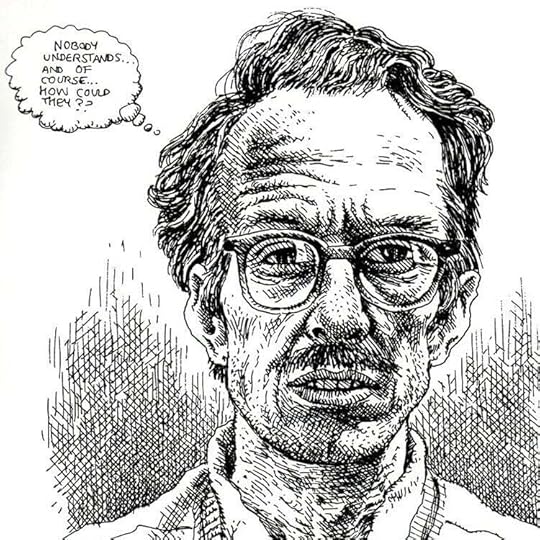
Beyond attaining the summit of the Nerd Pyramid, Robert pole-vaulted over it. I’m talking about the socially-awkward boys in high school who sat in the back of the classroom drawing. Either you saw them or you were them. That’s a well-worn niche in adolescent society, and some guys are born for it, fall straight into it.
But Robert transcended all that. He never had to get an actual job [the greeting card company doesn’t count]; the world let him live, making his own sarcastic doodles and selling them. He never had to incorporate anyone else’s sensibilities into his work, he never had to learn to drive, and he never had to grow up. He enjoys a special kind of fame, the kind all nerds dream of. He’s famous for never compromising, for doing exactly what he wanted for sixty years and somehow getting a living from it. He transformed being a loser with women into something sexy and irresistible. He’s an alchemist, a miracle worker!
No wonder Dan Nadel worships the ground Robert walks on and collects his used Kleenex. He documents Robert’s life in excruciating detail. I can’t really blame him. This is a remarkable life, and who knows which minor detail may turn out to be the secret of Robert’s superpowers?
What Dan has to say
There wasn’t much to do but get weird.
The writing is competent, in a ‘for the record,’ impersonal way. Dan gets deep in the weeds when discussing Robert’s business dealings. Comic book enthusiasts are wounded people. They resent the lack of respect their adored medium carries, and they take every opportunity to educate the unaware about its ‘true’ value. It has a long history, it’s harder to produce than you think, publishing it is a delicate undertaking, etc. This is too much information for those uninterested in that struggle for respect.
So what happened, before and after the documentary?
Robert stayed true to himself. Sometimes his stubborn insistence on drawing—and nothing else—led him and his consorts near to starvation, but he never wavered. I somewhat admire and envy him in that regard. There’s a merciless dictator in every artist, who needs to rule his work the way Adolf Hitler crushed Europe. If you must let other people make the big decisions, the act of making art is ruined. This may sound childish, but think of it this way: Art is probably the only thing in life that can exist without compromise. We can’t create the perfect job or city or lover, but within the limits of his ability, every artist is God in his studio. It’s just that ability that makes art worth doing. Now bring in an agent, a presenter, a director. That ruins it. It’s like getting to own an expensive sports car, but you can’t drive it. Someone else drives, you just own it. That makes the car not worth having.
Also, a tremendous amount of drug-taking and indiscriminate sex happened. I do not admire or envy him those experiences. Both of his children became addicts, and it seems never to have occurred to their caregivers to “just say no,” to themselves or anyone else.
[During their first LSD trip, Robert’s first wife,] Dana felt she was passing through the birth canal. Unfortunately, what she thought was amniotic fluid was Robert vomiting on her.

As for the sex, Dan describes it less in terms of penthouses and champagne, rather more trailer parks and shotguns. Robert could relate to the world indirectly, through art and music, but his principal reaction to human connection was to run away from it.
Robert had absolutely no model for how to be an adult in the world, let alone a parent. But he had developed, as a lot of artists do, a survival instinct, which didn’t always extend to those around him. In those days he was still escaping—from home, from Dana, from bourgeois expectations, even from his own kid. He needed to do things his way and needed to pursue himself. That he couldn’t leave Dana, and thus couldn’t prevent having a child, is typical of his own internal confusion—he wanted a mommy but not a wife. A sexual partner but not a relationship. He wanted a home but no responsibilities.
Robert managed to get and keep these contradictory rewards, to a surprising extent. From Dan’s excellent book, the journey nearly killed him and everyone around him, but he preferred death to conventionality. Now Robert and daughter Sophie are the only survivors of that wild ‘underground’ society.
Why we’re reading this
In 1994, Terry Zwigoff directed a documentary film about underground cartoonist Robert Crumb. Not everyone liked it, but those of us who did received brilliant, lasting impressions. This book exists to satisfy our urge to learn more about this man, who carved out a living and made himself a legend, at the fraying margins of culture.
Beyond attaining the summit of the Nerd Pyramid, Robert pole-vaulted over it. I’m talking about the socially-awkward boys in high school who sat in the back of the classroom drawing. Either you saw them or you were them. That’s a well-worn niche in adolescent society, and some guys are born for it, fall straight into it.
But Robert transcended all that. He never had to get an actual job [the greeting card company doesn’t count]; the world let him live, making his own sarcastic doodles and selling them. He never had to incorporate anyone else’s sensibilities into his work, he never had to learn to drive, and he never had to grow up. He enjoys a special kind of fame, the kind all nerds dream of. He’s famous for never compromising, for doing exactly what he wanted for sixty years and somehow getting a living from it. He transformed being a loser with women into something sexy and irresistible. He’s an alchemist, a miracle worker!
No wonder Dan Nadel worships the ground Robert walks on and collects his used Kleenex. He documents Robert’s life in excruciating detail. I can’t really blame him. This is a remarkable life, and who knows which minor detail may turn out to be the secret of Robert’s superpowers?
What Dan has to say
There wasn’t much to do but get weird.
The writing is competent, in a ‘for the record,’ impersonal way. Dan gets deep in the weeds when discussing Robert’s business dealings. Comic book enthusiasts are wounded people. They resent the lack of respect their adored medium carries, and they take every opportunity to educate the unaware about its ‘true’ value. It has a long history, it’s harder to produce than you think, publishing it is a delicate undertaking, etc. This is too much information for those uninterested in that struggle for respect.
So what happened, before and after the documentary?
Robert stayed true to himself. Sometimes his stubborn insistence on drawing—and nothing else—led him and his consorts near to starvation, but he never wavered. I somewhat admire and envy him in that regard. There’s a merciless dictator in every artist, who needs to rule his work the way Adolf Hitler crushed Europe. If you must let other people make the big decisions, the act of making art is ruined. This may sound childish, but think of it this way: Art is probably the only thing in life that can exist without compromise. We can’t create the perfect job or city or lover, but within the limits of his ability, every artist is God in his studio. It’s just that ability that makes art worth doing. Now bring in an agent, a presenter, a director. That ruins it. It’s like getting to own an expensive sports car, but you can’t drive it. Someone else drives, you just own it. That makes the car not worth having.
Also, a tremendous amount of drug-taking and indiscriminate sex happened. I do not admire or envy him those experiences. Both of his children became addicts, and it seems never to have occurred to their caregivers to “just say no,” to themselves or anyone else.
[During their first LSD trip, Robert’s first wife,] Dana felt she was passing through the birth canal. Unfortunately, what she thought was amniotic fluid was Robert vomiting on her.
As for the sex, Dan describes it less in terms of penthouses and champagne, rather more trailer parks and shotguns. Robert could relate to the world indirectly, through art and music, but his principal reaction to human connection was to run away from it.
Robert had absolutely no model for how to be an adult in the world, let alone a parent. But he had developed, as a lot of artists do, a survival instinct, which didn’t always extend to those around him. In those days he was still escaping—from home, from Dana, from bourgeois expectations, even from his own kid. He needed to do things his way and needed to pursue himself. That he couldn’t leave Dana, and thus couldn’t prevent having a child, is typical of his own internal confusion—he wanted a mommy but not a wife. A sexual partner but not a relationship. He wanted a home but no responsibilities.
Robert managed to get and keep these contradictory rewards, to a surprising extent. From Dan’s excellent book, the journey nearly killed him and everyone around him, but he preferred death to conventionality. Now Robert and daughter Sophie are the only survivors of that wild ‘underground’ society.

May 5, 2025
Since I was 13 and first discovered Robert Crumb in the pages of Carload O’ Comics while browsing in some bookstore, I’ve been a fan and devoured everything I could with his imprint. What could Crumb by Dan Nadel teach me? A lot!

September 9, 2025
Een groot kunstenaar, een groot mens. Ook, tegelijkertijd een griezel, een mysogiene hufter. Is allebei waar
Nadel windt er geen doekjes om en beschrijft uiterst precies en nauwgezet zowel het wordingsproces van de kunstenaar, als de totale ontsporing van de sexist Crumb.
Nadel windt er geen doekjes om en beschrijft uiterst precies en nauwgezet zowel het wordingsproces van de kunstenaar, als de totale ontsporing van de sexist Crumb.
March 3, 2025
My thanks to NetGalley and Scribner for an advance copy of this biography on a true pioneer in art, changing the way comic books were, viewed, helping other artists get noticed and a man who has lived his life the way he was wanted it, no matter the cost.
I have loved comic books since I started reading, but came to the world of underground comics late in my childhood. There were really no comic book stories around, so my Dad would take my brother and I on road trips to other towns, usually down a long flight of stairs into dim little basements, loaded with wonders. My brother was quick with his money, but I was someone who was well a little more picky. I would look for issues to complete certain runs, things I had heard of, then splurge in the bargain bins. And what wonders I found. Between bargain bins and flea markets I had comics that I knew had never seen a comic code. Nor in some places a good editor. Some were amazing, some were not. They were different, odd, personal, angry, mean, dark, funny, made a young man feel funny, and weird. It was love at first sight in many case to me. All this I owe to Robert Crumb. Crumb: A Cartoonist's Life by curator and comic historian Dan Nadel is a look at the life of this exceptional man, with exceptionally off the beaten paths taste, and incredible talent.
The book begins with a look at the world of comics and the backgrounds of the parents of the artist Robert Crumb. Even from their beginnings Crumb had a lot to get past to become the man he became. Their traumas later affected Robert and his many siblings, limiting and scarring them all for life, with only Robert and his sister Carol seeming to get free. The Crumb siblings shared a love of comics, creating entire runs of funny animal stories, with detailed art, stories, and even subscriptions. Robert escaped to Cleveland after high school, finding a job at American Greetings card company drawing cards, and soon designing, as others could see his skill. Robert also found something else. Women. Soon Robert was married, after a long courtship, and travelling the world, working on his art, selling his stories, and honing his craft. San Francisco opened him to more opportunities, as well as LSD, which helped him deal with, and be more open about himself, which he began to put into his art. Art that took comics into strange new places. Places that are still being discusses to this day.
A wonderful biography, done with permission and with the assistance of Crumb, family and friends. I remember years ago watching the documentary, Crumb, and thinking why aren't we talking more about the art, and stop making his family seem like a freak show. Nadel handles all facets of Crumbs life with aplomb. As a comic historian Nadel can explain Crumb's style, and what he has done for comic history. As a writer he can portray Crumb honestly, like Crumbs asks, as a man who has failed at being a father in some ways, a husband in others, but has more than succeeded at being an artist. Nadel is really good at breaking one's heart. There is a lot of sadness, so much wasted potential, lost to drugs, illness, past trauma, and just in many cases bad luck.
Nadel really soars at explaining the art. The book has quite a lot of examples an Nadel an explain why this works, why this doesn't, as well as give brief summaries of Crumb's fellow creators. One learns about publishing, the history of comic books, the underground and much more. Some of the stories are great, some are again quite sad. All make for compelling reading.
One of the best biographies I have read. I learned so much. This is the perfect book for comic fans, comic historians, artists, want-to-be artists and dreamers.
I have loved comic books since I started reading, but came to the world of underground comics late in my childhood. There were really no comic book stories around, so my Dad would take my brother and I on road trips to other towns, usually down a long flight of stairs into dim little basements, loaded with wonders. My brother was quick with his money, but I was someone who was well a little more picky. I would look for issues to complete certain runs, things I had heard of, then splurge in the bargain bins. And what wonders I found. Between bargain bins and flea markets I had comics that I knew had never seen a comic code. Nor in some places a good editor. Some were amazing, some were not. They were different, odd, personal, angry, mean, dark, funny, made a young man feel funny, and weird. It was love at first sight in many case to me. All this I owe to Robert Crumb. Crumb: A Cartoonist's Life by curator and comic historian Dan Nadel is a look at the life of this exceptional man, with exceptionally off the beaten paths taste, and incredible talent.
The book begins with a look at the world of comics and the backgrounds of the parents of the artist Robert Crumb. Even from their beginnings Crumb had a lot to get past to become the man he became. Their traumas later affected Robert and his many siblings, limiting and scarring them all for life, with only Robert and his sister Carol seeming to get free. The Crumb siblings shared a love of comics, creating entire runs of funny animal stories, with detailed art, stories, and even subscriptions. Robert escaped to Cleveland after high school, finding a job at American Greetings card company drawing cards, and soon designing, as others could see his skill. Robert also found something else. Women. Soon Robert was married, after a long courtship, and travelling the world, working on his art, selling his stories, and honing his craft. San Francisco opened him to more opportunities, as well as LSD, which helped him deal with, and be more open about himself, which he began to put into his art. Art that took comics into strange new places. Places that are still being discusses to this day.
A wonderful biography, done with permission and with the assistance of Crumb, family and friends. I remember years ago watching the documentary, Crumb, and thinking why aren't we talking more about the art, and stop making his family seem like a freak show. Nadel handles all facets of Crumbs life with aplomb. As a comic historian Nadel can explain Crumb's style, and what he has done for comic history. As a writer he can portray Crumb honestly, like Crumbs asks, as a man who has failed at being a father in some ways, a husband in others, but has more than succeeded at being an artist. Nadel is really good at breaking one's heart. There is a lot of sadness, so much wasted potential, lost to drugs, illness, past trauma, and just in many cases bad luck.
Nadel really soars at explaining the art. The book has quite a lot of examples an Nadel an explain why this works, why this doesn't, as well as give brief summaries of Crumb's fellow creators. One learns about publishing, the history of comic books, the underground and much more. Some of the stories are great, some are again quite sad. All make for compelling reading.
One of the best biographies I have read. I learned so much. This is the perfect book for comic fans, comic historians, artists, want-to-be artists and dreamers.
Displaying 1 - 30 of 146 reviews