

What do you think?

Detroit: A Biography
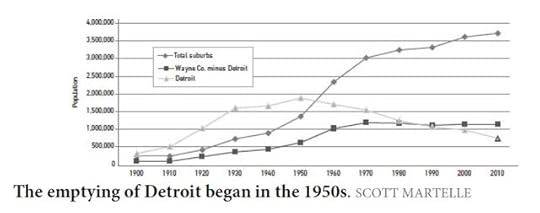
At its heyday in the 1950s and 1960s, Detroit's status as epicenter of the American auto industry made it a vibrant, populous, commercial hub—and then the bottom fell out. A Biography takes a long, unflinching look at the evolution of one of America's great cities and one of the nation's greatest urban failures. This authoritative yet accessible narrative seeks to explain how the city grew to become the heart of American industry and how its utter collapse—from nearly two million residents in 1950 to less than 715,000 some six decades later—resulted from a confluence of public policies, private industry decisions, and deeply ingrained racism. Drawing from U.S. Census data and including profiles of individuals who embody the recent struggles and hopes of the city, this book chronicles the evolution of what a modern city once was and what it has become.
Detroit was established as a French settlement three-quarters of a century before the founding of this nation. A remote outpost built to protect trapping interests, it grew as agriculture expanded on the new frontier. Its industry took a great leap forward with the completion of the Erie Canal, which opened up the Great Lakes to the East Coast. Surrounded by untapped natural resources, Detroit turned iron from the Mesabi Range into stoves and railcars, and eventually cars by the millions. This vibrant commercial hub attracted businessmen and labor organizers, European immigrants and African Americans from the rural South. At its mid-20th-century heyday, one in six American jobs were connected to the auto industry, its epicenter in Detroit. And then the bottom fell out.
A Biography takes a long, unflinching look at the evolution of one of America’s great cities, and one of the nation’s greatest urban failures. It tells how the city grew to become the heart of American industry and how its utter collapse—from 1.8 million residents in 1950 to 714,000 only six decades later—resulted from a confluence of public policies, private industry decisions, and deep, thick seams of racism. And it raises the when we look at modern-day Detroit, are we looking at the ghost of America’s industrial past or its future?
Detroit was established as a French settlement three-quarters of a century before the founding of this nation. A remote outpost built to protect trapping interests, it grew as agriculture expanded on the new frontier. Its industry took a great leap forward with the completion of the Erie Canal, which opened up the Great Lakes to the East Coast. Surrounded by untapped natural resources, Detroit turned iron from the Mesabi Range into stoves and railcars, and eventually cars by the millions. This vibrant commercial hub attracted businessmen and labor organizers, European immigrants and African Americans from the rural South. At its mid-20th-century heyday, one in six American jobs were connected to the auto industry, its epicenter in Detroit. And then the bottom fell out.
A Biography takes a long, unflinching look at the evolution of one of America’s great cities, and one of the nation’s greatest urban failures. It tells how the city grew to become the heart of American industry and how its utter collapse—from 1.8 million residents in 1950 to 714,000 only six decades later—resulted from a confluence of public policies, private industry decisions, and deep, thick seams of racism. And it raises the when we look at modern-day Detroit, are we looking at the ghost of America’s industrial past or its future?
322 pages, Kindle Edition
First published January 1, 2012
About the author
Scott Martelle
9 books43 followersA veteran journalist and former member of the Los Angeles Times editorial board, Martelle also writes books primarily about overlooked people and events from history. His newest, though, takes a broader look at a seminal year in American history: 1932: FDR, Hoover, and the Dawn of a New America.
Martelle's journalism and book reviews have appeared in the Los Angeles Times, Washington Post, Sierra Magazine, Los Angeles magazine, Orange Coast magazine and other outlets.
Martelle's journalism and book reviews have appeared in the Los Angeles Times, Washington Post, Sierra Magazine, Los Angeles magazine, Orange Coast magazine and other outlets.
Ratings & Reviews
Friends & Following
Create a free account to discover what your friends think of this book!
Community Reviews
Displaying 1 - 30 of 182 reviews

March 24, 2017
This book presents a good historical overview of the city of Detroit. Being a local, it was interesting to see who the important contributors to the area were that had streets and parks named after them. The book also explores the early origins and continuing factors of racial tensions in the area. It brings history to life by including personal stories of residents and what they experienced. Good read generally for understanding Detroit and surroundings. It is especially meaningful for locals.

December 20, 2011
I was born in Detroit. Lived outside of Detroit for my first 19 years of life and then got the heck out of there. It seems that many people had the same idea I did for the same sort of reasons. Detroit, was or is messed up. However, I still have this weird affection for the city. I want it to succeed, thrive and basically become the great city that it deserves to be. I'm just not willing to stay around and wait for that to happen.
Martelle wrote a great book about a damaged city. I didn't think this book would be interesting. But it was. I didn't think I'd care, but I did. I didn't think I could learn more about Detroit, but I was surprised.
The great part about this book is how the book is written. You can clearly see that Martelle is a writer and not just someone listing historical information. Biographies are hard for me since I have a tendency to flip through the book like an encyclopedia. Find what interests me, and then flip to that section. However, with Martelle's book, I found myself reading page by page. I even went back and reread an interesting section twice. Go figure!
Even if you never been to Detroit, never wanted to go to Detroit, or even if the thought of visiting Detroit scares the crap out of you, give this book a chance. You might be surprised.
Martelle wrote a great book about a damaged city. I didn't think this book would be interesting. But it was. I didn't think I'd care, but I did. I didn't think I could learn more about Detroit, but I was surprised.
The great part about this book is how the book is written. You can clearly see that Martelle is a writer and not just someone listing historical information. Biographies are hard for me since I have a tendency to flip through the book like an encyclopedia. Find what interests me, and then flip to that section. However, with Martelle's book, I found myself reading page by page. I even went back and reread an interesting section twice. Go figure!
Even if you never been to Detroit, never wanted to go to Detroit, or even if the thought of visiting Detroit scares the crap out of you, give this book a chance. You might be surprised.
May 30, 2012
I'm from Michigan. I've said before that loving Detroit is like having a sister on drugs. You love her, you want the best for her and you've seen those glimmers of what she could be if she would just make some difficult, but important changes. You feel powerless to help, but you still feel like there is something you can still do. You just don't know what.
This book was fantastic. It does a very good job of breaking down the SEVERAL factors that led Detroit into it's current situation. I highly recommend this book. Very well written and comprehensive.
This book was fantastic. It does a very good job of breaking down the SEVERAL factors that led Detroit into it's current situation. I highly recommend this book. Very well written and comprehensive.

April 22, 2013
I liked this book well enough. It was a thorough look at the total history of Detroit, from the time of Cadillac and Lafayette. It was particularly looking for reasons why Detroit started failing following
World War II when it was considered the "Arsenal of the World". Two main factors seem to be at work; racism and the short-sighted automotive industry. The lack of diversification of industry, the decentralization of the auto industry and of course, white flight all make Detroit the abject failure it has been since the '67 riots. It made me thing "what if" in so many places and saddened me completely when racism was at work.
Martelle also gave example of pockets of hope, but ultimately it seems like Detroit will never fully recover. Sad
I had a major problem with the reading of this book. The reader mispronounced many places that perhaps only Detroiters would know. It was jarring to hear Gratiot pronounced Grat-e-o. Or Macomb as Macom. It doesn't take much to find these simple things out.
World War II when it was considered the "Arsenal of the World". Two main factors seem to be at work; racism and the short-sighted automotive industry. The lack of diversification of industry, the decentralization of the auto industry and of course, white flight all make Detroit the abject failure it has been since the '67 riots. It made me thing "what if" in so many places and saddened me completely when racism was at work.
Martelle also gave example of pockets of hope, but ultimately it seems like Detroit will never fully recover. Sad
I had a major problem with the reading of this book. The reader mispronounced many places that perhaps only Detroiters would know. It was jarring to hear Gratiot pronounced Grat-e-o. Or Macomb as Macom. It doesn't take much to find these simple things out.

February 21, 2012
The author, a former staff writer for the LA Times, definitely did his homework on this one, creating a rich story of a city that has tremendous highs and lows, growing and shrinking throughout the years. He weaves in current people connected to the city with vibrant figures from the past. There's a lot of heartbreak to the story and Martelle doesn't flinch from the ugliness, explaining the factors that led to some of the city's most dramatic events. Full review at: Yestereeyear.com

October 2, 2020
This is my first from author Scott Martelle. Martelle is a veteran journalist and member of the Los Angeles Times editorial board. He also writes books primarily about overlooked people and events from history, according to his personal page here.
Author Scott Martelle:

Detroit: A Biography is a mostly chronological look at the history of the city of Detroit; including many of its notable luminaries and pivotal events.
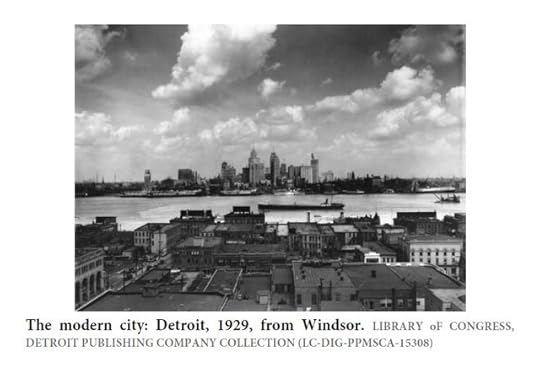
Topics covered here:
*The history of race issues in the city; slavery and racial tensions.
*The industrial boom and Henry Ford.
*Prohibition.
*The Roaring Twenties, and the Great Depression of the 1930s.
*The War years.
*The post-War boom.
*"White flight" and the 1967 race riots.
*The oil embargo of the 1970s.
*The decline and loss of jobs in the city.
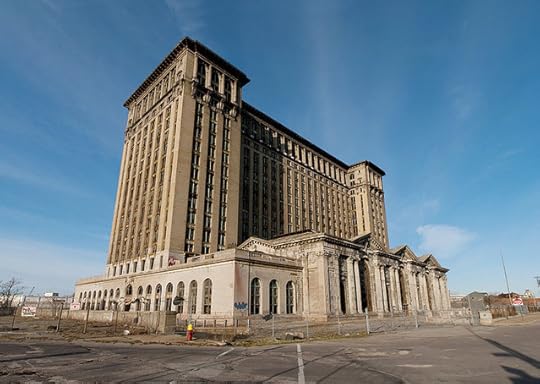
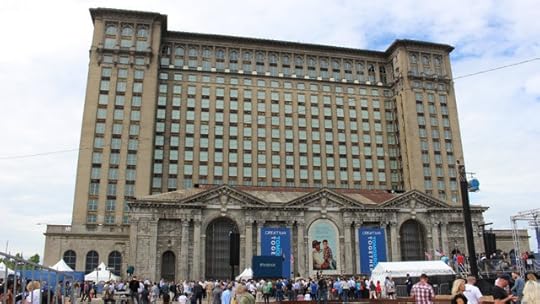
Detroit's Michigan Central Station was symbolic of the post-war industrial and economic decline of the once-vibrant city, as well as symbolic of efforts to rebuild the city. The building was purchased by Ford in 2018, and is being refurbished and renovated.
An abandoned Michigan Central Station:
Michigan Central Station, July 2018:
While the history of the city of Detroit is an interesting topic, I found the writing here to be fairly dry and unengaging at times, unfortunately. I was struggling to keep focus on the plot more than a few times here...
I also took issue with the dominant narrative forwarded here by Martelle; most of the entire book seems to place all the social and economic problems of Detroit squarely on the collective laps of its founding white population, which is simplistic and sloppy. Much of this book reads like a long-form "WHITE MAN BAD". Martelle does not include the city's now majority black population in assigning even a minute causal role or contribution to any of the blight that Detroit has suffered since its heyday of the mid-century...
3 stars for this one.
Author Scott Martelle:
Detroit: A Biography is a mostly chronological look at the history of the city of Detroit; including many of its notable luminaries and pivotal events.
Topics covered here:
*The history of race issues in the city; slavery and racial tensions.
*The industrial boom and Henry Ford.
*Prohibition.
*The Roaring Twenties, and the Great Depression of the 1930s.
*The War years.
*The post-War boom.
*"White flight" and the 1967 race riots.
*The oil embargo of the 1970s.
*The decline and loss of jobs in the city.
Detroit's Michigan Central Station was symbolic of the post-war industrial and economic decline of the once-vibrant city, as well as symbolic of efforts to rebuild the city. The building was purchased by Ford in 2018, and is being refurbished and renovated.
An abandoned Michigan Central Station:
Michigan Central Station, July 2018:
While the history of the city of Detroit is an interesting topic, I found the writing here to be fairly dry and unengaging at times, unfortunately. I was struggling to keep focus on the plot more than a few times here...
I also took issue with the dominant narrative forwarded here by Martelle; most of the entire book seems to place all the social and economic problems of Detroit squarely on the collective laps of its founding white population, which is simplistic and sloppy. Much of this book reads like a long-form "WHITE MAN BAD". Martelle does not include the city's now majority black population in assigning even a minute causal role or contribution to any of the blight that Detroit has suffered since its heyday of the mid-century...
3 stars for this one.

February 19, 2025
3.8 stars. First thing that needs to be said is get this narrator a book on how to correctly pronounce Detroit streets. I honestly didn’t realize how many of them were that hard to say until listening to this book.
Secondly, I found it difficult to listen to the last portion of this book and I was really hoping the author added an afterword. The reason I found it difficult is because this book ends its history around 2011/12 with a very doom and gloom perspective of Detroit will never recover. How wrong this author was. Detroit is slowly but surely on the up and up. It has made so much progress in the last 10 years that I really wanted the author to add something about the Detroit I know in 2025.
Ok after all that I should mention that I did enjoy learning about the history of the City. Hearing about places that I frequent every day. I mean, how hasn’t enjoyed a meal at Honest John’s looking at the Sobriety sign. I say read this book for the history but skip the last chapter.
Secondly, I found it difficult to listen to the last portion of this book and I was really hoping the author added an afterword. The reason I found it difficult is because this book ends its history around 2011/12 with a very doom and gloom perspective of Detroit will never recover. How wrong this author was. Detroit is slowly but surely on the up and up. It has made so much progress in the last 10 years that I really wanted the author to add something about the Detroit I know in 2025.
Ok after all that I should mention that I did enjoy learning about the history of the City. Hearing about places that I frequent every day. I mean, how hasn’t enjoyed a meal at Honest John’s looking at the Sobriety sign. I say read this book for the history but skip the last chapter.

June 7, 2026
Fantastic read on the history of the city from inception through the Great Recession. A solid read for anyone looking to better understand about a great city and even better community.
August 14, 2012
Having lived in Western New York most of my life; and having distant family in Detroit, I was instantly interested in this book. This biography is a good introduction to the history of a city that is needs to be understood by the country. Common threads lead the reader through this book, most auspiciously, the rampant racism evident in the history of the city as well as the dangers of lack of regional economic diversity. Historic accounts, as well as personal accounts are woven together along with a detailed geography of the city. The author is a former Detroit Free Press journalist, which gives him access to and perspective on the city. It seems that the spaces we create for ourselves on the surface of the earth can become vibrant enterprise or they can become a void. And for that reason decisions and choices that are made on the individual level as well as the aggregate can accumulate and have their own velocity. Great read.

February 25, 2012
I bought this book as a gift for my oldest son who plans to move to Detroit in a few years. This book reminded me a lot of Howard Zinn's "People's History of the United States." It seems Detroit even when it was successful has never known happiness. Martelle goes into detail about the pervasive racism that has plagued Detroit from the very beginning-so many riots. He has portraits of individual residents that are spread throughout the book as well. These are very interesting and give an individual and personal edge to the story of mass violence, flight, apathy, etc.. It's not a happy story nor is there much hope for a happy ending but it's told with precision and thoroughness. I only wish there had been some maps and more pictures. What are we going to do about Detroit? It's New Orleans without a Katrina.

April 16, 2026
It's been a while since I've posted any reviews and my ability to read any books lately has been hampered by other projects.
This book is rather personal for me. I live about 25-30 minutes from Detroit, and I've been to the city many many times in my life, it's basically like a home to me. I've been to Detroit more times than my own hometown of Toledo Ohio.
I am currently writing a book about the history of Detroits Underground music scene starting from the late 1970s with the first punk rock bands that began in Detroit, going all the way to today, with a focus on our scene in the 1980s with the goth, punk, and new wave scenes.
That being said, I realized I had to read a book about the history of Detroit, to understand the conditions that colored the background of the scene in that era. So I read this book, and have a few others I want to read. What I really wanted to learn about was the Detroit in the post second world war era, learning about the lead up to the riots, and the situation the city was in the 1970s and 80s. I ended up enjoying the whole history, which led me to put books in my wishlist that cover specific eras of Detroits history. A lot of sad things have occured in this city, and there's a long road to recovery, and lots of things need to change, but I'm optimistic that things will move in a better direction.
Definitely a great biography about the Motor City.
This book is rather personal for me. I live about 25-30 minutes from Detroit, and I've been to the city many many times in my life, it's basically like a home to me. I've been to Detroit more times than my own hometown of Toledo Ohio.
I am currently writing a book about the history of Detroits Underground music scene starting from the late 1970s with the first punk rock bands that began in Detroit, going all the way to today, with a focus on our scene in the 1980s with the goth, punk, and new wave scenes.
That being said, I realized I had to read a book about the history of Detroit, to understand the conditions that colored the background of the scene in that era. So I read this book, and have a few others I want to read. What I really wanted to learn about was the Detroit in the post second world war era, learning about the lead up to the riots, and the situation the city was in the 1970s and 80s. I ended up enjoying the whole history, which led me to put books in my wishlist that cover specific eras of Detroits history. A lot of sad things have occured in this city, and there's a long road to recovery, and lots of things need to change, but I'm optimistic that things will move in a better direction.
Definitely a great biography about the Motor City.

December 8, 2014
I learned some early history of Detroit from this book. Unfortunately, the tone of the book was heavily biased and overtly blamed racism for all the ills of the city and the author seemed able to conjecture intent when no one else has been able to do so. The theme was definitely racism and the author tried to plant that as an evil in Detroit's history as early as the beginning of 1800 - not sure how he could do that without substantiation. He only glossed over Coleman Young and only mentioned Kwame Kilpatrick in one sentence without referring to all his associated scandals.

May 1, 2025
What brought me to think about the book was my interest in understanding just exactly how Detroit became what it is today. The author obviously didn’t disappoint. He painstakingly showed the past, current and perhaps the future of Detroit.
One quick note before I dive into my main takeaway: on the Great Depression session, the author showed (and reminded me) that the Great Depression didn’t occur seemingly overnight. It’s rather gradual and as the author puts it, before the stock market collapse in October, “signs of the bursting bubble began emerging well before then”.
My main takeaway is this: it’s too easy to blame a group of people, a class of people, a race of people (or all of them above) for Detroit. But at the end of the day, Detroit was simply the result of the times. The author wrote:
With jobs flowing offshore, the city decays over time. The author noted that not just “white” flew, black too, flown:
With less job opportunities, obviously came crime and the downward spiral. Detroit’s decay can be seen just in the 2000s - it could be seen as early as the 1970s.
Towards the end of the book, the author compared Detroit with Pittsburgh, and noted that Pittsburgh would be the most similar comparison except that Pittsburgh had way more civic leaders’ (Andrew Carnegie namely) involvement. The city shifted from manufacturing into Ed and Med (and Finance) and survived. It’s ironic as I’m trying this, as Higher Ed is facing an existential crisis as well as medicine facing an unimaginable budget deficit, I wonder what the future in the near future might look like for Pittsburgh.
One quick note before I dive into my main takeaway: on the Great Depression session, the author showed (and reminded me) that the Great Depression didn’t occur seemingly overnight. It’s rather gradual and as the author puts it, before the stock market collapse in October, “signs of the bursting bubble began emerging well before then”.
My main takeaway is this: it’s too easy to blame a group of people, a class of people, a race of people (or all of them above) for Detroit. But at the end of the day, Detroit was simply the result of the times. The author wrote:
… city’s core problem:disinvestment and abandonment propelled by corporate decisions framed and aided by government policies, from housing to free trade…
With jobs flowing offshore, the city decays over time. The author noted that not just “white” flew, black too, flown:
White flight turned into class flight. Young professional adults, white and black, who wanted to remain in the city and try to stem the slide reconsidered their decisions once they began having children. Many of those with the economic means moved out… And the city can’t expect much help from the state of Michigan, which between 2000 and 2007 lost fifty-four hundred businesses with employees…
With less job opportunities, obviously came crime and the downward spiral. Detroit’s decay can be seen just in the 2000s - it could be seen as early as the 1970s.
Towards the end of the book, the author compared Detroit with Pittsburgh, and noted that Pittsburgh would be the most similar comparison except that Pittsburgh had way more civic leaders’ (Andrew Carnegie namely) involvement. The city shifted from manufacturing into Ed and Med (and Finance) and survived. It’s ironic as I’m trying this, as Higher Ed is facing an existential crisis as well as medicine facing an unimaginable budget deficit, I wonder what the future in the near future might look like for Pittsburgh.

March 27, 2013
My brother Tom read his book, then suggested that my wife Shari read it given that she and her family is from the greater Detroit area. As she was reading it, she kept saying that I needed to read it, since I am from Ann Arbor and grew up knowing about Detroit, right? Wrong. I hardly knew anything at all about Detroit and its history. A bit embarrassing given that I am a student of history.
The book does a good job of sharing the history of Detroit from its founding through a number of transitions to the current fiasco that defines that city.
It is interesting that what has happened to Detroit is due to a series of many small decisions combined with larger ones made by a variety of people. Clearly the ups and downs of the auto industry are a central part of the story, but that is not all of what happened. Lack of forward thinking by politicians, businessmen and perhaps not enough activism on the part of residents all played a role and have in the final analysis had a devastating impact. The book modified my thinking on that. One party rule is part of the equation, but not as much as I would have thought. The party involved is not the issue, it is one party leadership/rule that will do the damage - all politicians when they have no loyal opposition are subject to corruption. Power corrupts and absolute power corrupts absolutely.
The troubling aspects within the story concern me because I can see some of the same mistakes being made in Atlanta, though not nearly as serious nor do they seem to be as damaging.
I gave the book for stars because it informed me far more than I expected it would and changed my perspective. My brother Tom did a fine review of this book and rather me babble on about it, I will share his review and close with that. Tom's review follows:
"Given our family history in Michigan I was interested in this history of the city of Detroit. Beginning with the birth of the city as a French trading post; the British years; the opening of the Michigan territory following the construction of the Erie Canal; the Civil War years; the rise of the auto industry; the fractured race relations; the roaring twenties; the Depression and the depopulation of the core of the city. It is not a happy story.
My great-great grandfather moved his family to Michigan from upstate New York in around 1850. They were among many who migrated to Michigan after the opening of the Erie Canal (1825) connected the central Great Lakes with the Hudson River and New York, making it possible to ship produce to the east coast. They would likely have made the trip to Michigan by boat across Lake Erie. Here is what one anonymous traveler recorded about that journey: Lake Erie was, “..subject to frequent and heavy squalls of wind.” Entering the Detroit River was a relief, “…after suffering , as you frequently do, in a boisterous and unpleasant passage of six or seven days in a small but dirty vessel” Approaching Detroit, “This view, of a clear day, is extremely picturesque and beautiful: as the wind gently wafts you up the river, its green banks, fine farms, covered with orchards, and their houses of a singular architecture, which you can but discern through the trees planted around it, or various fruit, or in full bloom.” Rises in the land were topped with “the large wings of a large windmill, attached to a neat round white building, cutting the air” p.28-9.
The rise of Detroit as a manufacturing center around the automobile is of great interest. However, being a one industry town led to an over reliance on the rise and fall of that product. As car manufacturing left the city, nothing came in to fill its place. The years of the great migration of southern Blacks to the northern city, combined with periods of low employment created enormous racial tensions and the ‘white flight’ to the suburbs. Vast tracts of the city have not been rebuilt since the riots of 1967. The author compares the way In which these factors played out in Detroit, with how Pittsburgh, facing the same issues seems to have done better. One difference was that Henry Ford, unlike Andrew Carnegie, did not invest in the community. There is no Ford University for example as there is a Carnegie-Mellon University in Pittsburgh. Indeed Detroit has one university (Wayne State) to Pittsburghs’ eleven and the latter city was able to switch from steel to education and health care after the demise of the American steel industry.
“It is a place of fractured relationships, with children being raised by young, undereducated, and often unemployed mothers, and men living in social isolation, also often undereducated and unemployed. There is a common thread, particularly in conservative circles, that the urban poor should pull themselves up by their own bootstraps. But to be born in Detroit is to face imposing restrictions on one’s ability to become an educated, productive, and contributing member of society, from dysfunctional families as the norm to a failed school system to a crime-driven underground economy to an above-ground economic structure incapable of supporting itself.” P246
“For years our political and social culture has put the interests of corporations ahead of the interests of individuals and community stability. That has led to the decimation of the middle class, and well-paid working-class jobs, as US-based corporations shifted production overseas to keep up with the global drive for the lowest possible production costs. In theory, that is good free-market economics. But in practice, those production costs are, on the local level, individual jobs and neighborhoods. So as a matter of policy, we have traded our social and economic stability for higher profits for corporations, which has exacerbated the nation’s income divide and gutted the urban centers of our industrial cities and countless small manufacturing towns across the nation.”p252.
The chapters detailing the history of the city are interspersed with chapters highlighting individual people whose lives illustrate the statistics and sequences of events.
There is only one map and few illustrations or old photographs. More of these items would improve the book. Nevertheless, I found it very informative."
The book does a good job of sharing the history of Detroit from its founding through a number of transitions to the current fiasco that defines that city.
It is interesting that what has happened to Detroit is due to a series of many small decisions combined with larger ones made by a variety of people. Clearly the ups and downs of the auto industry are a central part of the story, but that is not all of what happened. Lack of forward thinking by politicians, businessmen and perhaps not enough activism on the part of residents all played a role and have in the final analysis had a devastating impact. The book modified my thinking on that. One party rule is part of the equation, but not as much as I would have thought. The party involved is not the issue, it is one party leadership/rule that will do the damage - all politicians when they have no loyal opposition are subject to corruption. Power corrupts and absolute power corrupts absolutely.
The troubling aspects within the story concern me because I can see some of the same mistakes being made in Atlanta, though not nearly as serious nor do they seem to be as damaging.
I gave the book for stars because it informed me far more than I expected it would and changed my perspective. My brother Tom did a fine review of this book and rather me babble on about it, I will share his review and close with that. Tom's review follows:
"Given our family history in Michigan I was interested in this history of the city of Detroit. Beginning with the birth of the city as a French trading post; the British years; the opening of the Michigan territory following the construction of the Erie Canal; the Civil War years; the rise of the auto industry; the fractured race relations; the roaring twenties; the Depression and the depopulation of the core of the city. It is not a happy story.
My great-great grandfather moved his family to Michigan from upstate New York in around 1850. They were among many who migrated to Michigan after the opening of the Erie Canal (1825) connected the central Great Lakes with the Hudson River and New York, making it possible to ship produce to the east coast. They would likely have made the trip to Michigan by boat across Lake Erie. Here is what one anonymous traveler recorded about that journey: Lake Erie was, “..subject to frequent and heavy squalls of wind.” Entering the Detroit River was a relief, “…after suffering , as you frequently do, in a boisterous and unpleasant passage of six or seven days in a small but dirty vessel” Approaching Detroit, “This view, of a clear day, is extremely picturesque and beautiful: as the wind gently wafts you up the river, its green banks, fine farms, covered with orchards, and their houses of a singular architecture, which you can but discern through the trees planted around it, or various fruit, or in full bloom.” Rises in the land were topped with “the large wings of a large windmill, attached to a neat round white building, cutting the air” p.28-9.
The rise of Detroit as a manufacturing center around the automobile is of great interest. However, being a one industry town led to an over reliance on the rise and fall of that product. As car manufacturing left the city, nothing came in to fill its place. The years of the great migration of southern Blacks to the northern city, combined with periods of low employment created enormous racial tensions and the ‘white flight’ to the suburbs. Vast tracts of the city have not been rebuilt since the riots of 1967. The author compares the way In which these factors played out in Detroit, with how Pittsburgh, facing the same issues seems to have done better. One difference was that Henry Ford, unlike Andrew Carnegie, did not invest in the community. There is no Ford University for example as there is a Carnegie-Mellon University in Pittsburgh. Indeed Detroit has one university (Wayne State) to Pittsburghs’ eleven and the latter city was able to switch from steel to education and health care after the demise of the American steel industry.
“It is a place of fractured relationships, with children being raised by young, undereducated, and often unemployed mothers, and men living in social isolation, also often undereducated and unemployed. There is a common thread, particularly in conservative circles, that the urban poor should pull themselves up by their own bootstraps. But to be born in Detroit is to face imposing restrictions on one’s ability to become an educated, productive, and contributing member of society, from dysfunctional families as the norm to a failed school system to a crime-driven underground economy to an above-ground economic structure incapable of supporting itself.” P246
“For years our political and social culture has put the interests of corporations ahead of the interests of individuals and community stability. That has led to the decimation of the middle class, and well-paid working-class jobs, as US-based corporations shifted production overseas to keep up with the global drive for the lowest possible production costs. In theory, that is good free-market economics. But in practice, those production costs are, on the local level, individual jobs and neighborhoods. So as a matter of policy, we have traded our social and economic stability for higher profits for corporations, which has exacerbated the nation’s income divide and gutted the urban centers of our industrial cities and countless small manufacturing towns across the nation.”p252.
The chapters detailing the history of the city are interspersed with chapters highlighting individual people whose lives illustrate the statistics and sequences of events.
There is only one map and few illustrations or old photographs. More of these items would improve the book. Nevertheless, I found it very informative."

March 24, 2020
If you are interested in learning and understanding more about Detroit, this book is an excellent choice. Easy-to-read, informative, and thought-provoking, Detroit: A Biography examines the evolution of the city from 1701 when the French began their endeavors in the area, to 2011 post the Great Recession with the city still reeling from decades of economic struggle. This biography offers a great perspective on understanding why and how Detroit and surrounding areas have evolved over the centuries. With testimonials scattered throughout the book, the reader gets to understand the city’s past and present by learning about the people who make up Detroit and its suburbs. While the author mentions themes of hope and resilience despite obstacles and hardship that citizen’s face throughout the book, he fails to see hope for change in the city’s near future that now is more apparent as we enter 2020. To get a more updated view of Detroit today, another book should be read, but despite this, I highly recommend this book if you enjoy history, are interested in Detroit, or if you live in the Metro Detroit area. Detroit: A Biography provides an engaging narrative about how cities evolve over time and what we need to do to help them thrive, and I believe that is important for all who live in or near Detroit.

August 8, 2019
Very interesting all the way from the exploration and fur trade to the resurgence in the 2010’s. Leans to the left, but still compelling points about The great migration, Henry Ford, Coleman Young, and the government’s role in the fall of a once great city. I listened to the book. The author MUST cringe at the mispronunciation of SO MANY WORDS. If you are interested in Detroit, this is an interesting, albeit idealistic, read.

February 2, 2018
I've lived in the Detroit area my entire life, so one would think I knew about my hometown. Not so. I learned a tremendous amount from this book. It was engaging and fascinating, at times depressing and others uplifting. Detroit is nuanced, complex and this book captures that. It sheds light on things and aspects of my life in this town that I hadn't really contemplated. Thoroughly enjoyed.

January 23, 2023
Book group. We wanted to read a history of old Detroit — the type that would two the tales of the founders for whom streets and parks derive their names. We gleaned a few nuggets from this book but found it to be pretty negative. Our group of mainly lifelong Detroiters does not recommend. But we do recommend Detroit!

December 2, 2020
2.5 stars. This book was alright.
He says it would take the drive of small businesses to slowly revitalize the neighborhoods of Detroit.
He says it would take the drive of small businesses to slowly revitalize the neighborhoods of Detroit.

December 18, 2020
Detroit has a rich history. I needed this book for a course but I’m glad I read it. It helped me to understand the city I grew up in.

November 27, 2023
Drier than I was expecting. Has sort of an abrupt shift in tone when discussing Detroit's decline - much less dry, but with a tone that's more like a journalist than a historian. (That is not a bad thing.) I liked this much better than the LeDuff book, though I think LeDuff tells a better narrative.

May 1, 2025
Great writing and very interesting historical account of Detroit and the major problems it has faced.
Martell writes beautifully and passionately about Detroit and gives useful insight into factors that brought about its success and downfall and the hurtles it must get over in order to revive.
Martell writes beautifully and passionately about Detroit and gives useful insight into factors that brought about its success and downfall and the hurtles it must get over in order to revive.

June 30, 2012
(Actual, 4.5 stars)
Wow, where to begin? I have a history with Detroit. I grew up in the suburbs (and was terrified to go into the city), practiced legal law in the city and taught in the school system. I now live in Ann Arbor which, despite protestations to the contrary, is very much a part of the SE Michigan/Detroit scene. Therefore, I felt depressed many times during this book.
Martelle is upfront in that he can't possibly hit on every aspect of Detroit's rich history, especially not when there are so many other books that do so. Still, I think he casts a wide net and comes up with a lot of interesting facts.
What I took away from this book was Detroit is dead unless:
a) we can change society/culture to put a community's and workers' interests above those of a corporation (and stopping the export of jobs would help, too)
and
b) we somehow change the racist attitudes of people.
Neither of those is going to happen, and that is why this book convinced me that Detroit will not rise like a phoenix. The scattered urban garden plots, while interesting, are not going to save it. The handful of (white) artists moving in won't save it either. I suppose, if we could gather up Mr. Smithers and his Way Back Machine, we could visit 1945ish and convince the automakers to keep making products for the national defense. Or we could go to 1830ish and convince UM to keep at least part of its campus there (UM East there and UM West here in a2, maybe?). Or we could go back further and implant some sort of anti-racism in the hearts of men and women.
But none of those things is going to happen either.
One thing that I wish WOULD happen is that every anti-union, pro-outsourcing, "class warfare!" screaming motherfucker would read this book and see how disgusting, greedy and inhumane they are. But, that won't happen either.
Despite my doom and gloom above, I loved this book. Martelle didn't try to sell us a bag of shit saying that the urban farm renewal will save Detroit! Or that the new Whole Foods will save Detroit! Or that having Quicken downtown will save Detroit! Or that the one or two restaurants that stand out like jewels are somehow the beginning of a new great age. No. None of those things will save Detroit. They might make it more comfortable for white folks to go there, but they aren't going to save the city. Not when you can make more money, for less work and get more respect slinging drugs in the underworld economy. Not when women keep having baby after baby after baby and men keep knocking up woman after woman after woman. Not when you can't get a job in your neighborhood.
Look, I applaud people who are trying to do good things in the city--I really do. I saw people out sweeping their sidewalks at 7:30am when I'd drive up to school. I saw families in SW Detroit who would all walk to pick up their kids (dogs in tow) from school. I saw the earnest white university students starting gardens. I saw the people who tried and didn't want to give up on the city and kept at it and kept hanging on. If Detroit is to be saved or reborn or whatever, that is who will do it. But not unless society starts putting their interests before the rich men in suits at the top floors of corporations (or Capitol buildings) and not unless we start letting go some of the racism that seems to be in our DNA.
But as I said before....
Wow, where to begin? I have a history with Detroit. I grew up in the suburbs (and was terrified to go into the city), practiced legal law in the city and taught in the school system. I now live in Ann Arbor which, despite protestations to the contrary, is very much a part of the SE Michigan/Detroit scene. Therefore, I felt depressed many times during this book.
Martelle is upfront in that he can't possibly hit on every aspect of Detroit's rich history, especially not when there are so many other books that do so. Still, I think he casts a wide net and comes up with a lot of interesting facts.
What I took away from this book was Detroit is dead unless:
a) we can change society/culture to put a community's and workers' interests above those of a corporation (and stopping the export of jobs would help, too)
and
b) we somehow change the racist attitudes of people.
Neither of those is going to happen, and that is why this book convinced me that Detroit will not rise like a phoenix. The scattered urban garden plots, while interesting, are not going to save it. The handful of (white) artists moving in won't save it either. I suppose, if we could gather up Mr. Smithers and his Way Back Machine, we could visit 1945ish and convince the automakers to keep making products for the national defense. Or we could go to 1830ish and convince UM to keep at least part of its campus there (UM East there and UM West here in a2, maybe?). Or we could go back further and implant some sort of anti-racism in the hearts of men and women.
But none of those things is going to happen either.
One thing that I wish WOULD happen is that every anti-union, pro-outsourcing, "class warfare!" screaming motherfucker would read this book and see how disgusting, greedy and inhumane they are. But, that won't happen either.
Despite my doom and gloom above, I loved this book. Martelle didn't try to sell us a bag of shit saying that the urban farm renewal will save Detroit! Or that the new Whole Foods will save Detroit! Or that having Quicken downtown will save Detroit! Or that the one or two restaurants that stand out like jewels are somehow the beginning of a new great age. No. None of those things will save Detroit. They might make it more comfortable for white folks to go there, but they aren't going to save the city. Not when you can make more money, for less work and get more respect slinging drugs in the underworld economy. Not when women keep having baby after baby after baby and men keep knocking up woman after woman after woman. Not when you can't get a job in your neighborhood.
Look, I applaud people who are trying to do good things in the city--I really do. I saw people out sweeping their sidewalks at 7:30am when I'd drive up to school. I saw families in SW Detroit who would all walk to pick up their kids (dogs in tow) from school. I saw the earnest white university students starting gardens. I saw the people who tried and didn't want to give up on the city and kept at it and kept hanging on. If Detroit is to be saved or reborn or whatever, that is who will do it. But not unless society starts putting their interests before the rich men in suits at the top floors of corporations (or Capitol buildings) and not unless we start letting go some of the racism that seems to be in our DNA.
But as I said before....

December 11, 2014
This is a well-researched encyclopedic history, that oddly fails to distinguish Detroit apart from any other post-industrial American city, and ends with a boiler-plate socioeconomic analysis of what has undermined Detroit and what can be fixed. This book does not meet the standard of the better biographical city histories that use details to frame a deeper narrative of the people and characteristics that give a place its distinctiveness, or essence. Detroit stands profoundly apart, and deserves this attention, and while a growing number of authors, journalists and bloggers have described a part of the city's story, we may still be waiting for a book that provides something approaching a comprehensive view. We often see in this book statistics that confirm what we already knew- that Detroit's industrial breakdown was more severe and, apparently, more final. But apart from mentioning a few cursory theoretical explanations, the book doesn't get too deeply into why it was so bad and so irreversible.
The book is strongest in its description of early- and mid-20th century events that portray the city's deep social fissures and economic short-sightedness. Martelle is persistent, persuasive, and right in calling Detroit's reactionary and race-baiting political forces to account for bringing the isolated and devastated city of today into being. His description of that process is truly helpful and instructive for today's context. However, the book abruptly shuffles through Detroit's post-1968 history where it may have been able to add new interpretations and discourses on what many are still trying to understand. Actually, the history stops a few chapters from the end and you're left with an out-of-place editorial on the standard ideas and critiques about Detroit that are already routinely discussed in the media these days.
The book is strongest in its description of early- and mid-20th century events that portray the city's deep social fissures and economic short-sightedness. Martelle is persistent, persuasive, and right in calling Detroit's reactionary and race-baiting political forces to account for bringing the isolated and devastated city of today into being. His description of that process is truly helpful and instructive for today's context. However, the book abruptly shuffles through Detroit's post-1968 history where it may have been able to add new interpretations and discourses on what many are still trying to understand. Actually, the history stops a few chapters from the end and you're left with an out-of-place editorial on the standard ideas and critiques about Detroit that are already routinely discussed in the media these days.

August 26, 2015
Growing up in Detroit I would occasionally hear some fact or other, there was a race riot in Detroit in 1943, there was a mayor of Detroit in the 20's or 30's whose party was the Ku Klux Klan, that Henry Ford openly distributed copies of the Protocols of the Elders of Zion, etc., but if I looked at any of the histories of the city available to me (I have one in front of me written by someone at Ford Motor Co.) there is no mention of these things. Scott Martelle's book doesn't just mention these things, that is what it is about. As terrible as the history of Detroit is, the book is a pleasure to read. There are many insightful comments, e.g that there is no Ford or Chrysler University, and a bigger portrait is painted of many interesting Detroiters, e.g. Coleman Young, than I have seen elsewhere. Others have complained that the book is written with a liberal point of view, and that is certainly true, but a bigger falsehood would be to ignore it all, as most white suburbanite accounts do. The book is relatively short and Detroit is, or was, a big city with a long history, so many things go unmentioned or only touched on. Did Mayor Cavanaugh have ties to the Mafia? What was the nature and extent of Union corruption? What was the extent of police department corruption in the last 50 years? What role did the big three play in the absence of public transportation in the modern city?
This book would be much better if it had some historically appropriate maps in it. In fact I think you could take the illustrations from a crappier history of the city and insert them with happy consequences.
This book would be much better if it had some historically appropriate maps in it. In fact I think you could take the illustrations from a crappier history of the city and insert them with happy consequences.

September 6, 2017
so out of all of my books this semester (besides gatsby) this one I read the most of. I probably read like 75% of it. So that's pretty impressive for me.
ok so if you didn't know I live in Detroit. And this book was written by some guy who stayed here for like one year. He calls the city a failure over and over and is always talking about the tragedy that people here live in like wtf.
There was a lot of clear and organized history and I see why we read it for class. But I mean seriously bro. I'm pissed he's making money off of people scared of Detroit. I mean it's not like there aren't people suffering in this city. There are so many and we can't ignore that and pretend it's all going well now. But why the fuck you gotta come after them like you know what it's like bro? Actually help someone or contact them and tell their story.
Idk I guess he's coming at it from a white man economist like "yep. this is a failure." But dude there's so more to the city. It's not like he never talks about it. He defends Detroit repeatedly actually. But time and time again he concludes with dramatic apocalypse-like descriptions to sell more books and make Detroit like area 51
ok so if you didn't know I live in Detroit. And this book was written by some guy who stayed here for like one year. He calls the city a failure over and over and is always talking about the tragedy that people here live in like wtf.
There was a lot of clear and organized history and I see why we read it for class. But I mean seriously bro. I'm pissed he's making money off of people scared of Detroit. I mean it's not like there aren't people suffering in this city. There are so many and we can't ignore that and pretend it's all going well now. But why the fuck you gotta come after them like you know what it's like bro? Actually help someone or contact them and tell their story.
Idk I guess he's coming at it from a white man economist like "yep. this is a failure." But dude there's so more to the city. It's not like he never talks about it. He defends Detroit repeatedly actually. But time and time again he concludes with dramatic apocalypse-like descriptions to sell more books and make Detroit like area 51

June 29, 2015
I wish Detroit had been longer. At this length, it felt like Martelle was skipping around rather than giving a complete historical account -- which, to be fair, he admits is his goal up front. I think a more comprehensive account of the latter half of the 20th century would have done more to answer what is really the book's central question -- why Detroit essentially collapsed.
Of course, he provides plenty of reasons, including the influx of blacks during the Great Migration and the deep-rooted racism it created, the city's near-complete dependence on the automotive industry, white flight and the constantly shifting racial borders it created, and a handful of other factors (including drugs, crime, and a plummeting population). But something about the structure of Martelle's narrative just didn't pull these threads together for me. Maybe it's not really possible to tell a tidy story of Detroit's decline -- I could be hankering for a narrative arc that just doesn't exist in reality.
Of course, he provides plenty of reasons, including the influx of blacks during the Great Migration and the deep-rooted racism it created, the city's near-complete dependence on the automotive industry, white flight and the constantly shifting racial borders it created, and a handful of other factors (including drugs, crime, and a plummeting population). But something about the structure of Martelle's narrative just didn't pull these threads together for me. Maybe it's not really possible to tell a tidy story of Detroit's decline -- I could be hankering for a narrative arc that just doesn't exist in reality.

April 22, 2013
Altogether, this was an enjoyable read. Of course, it's difficult to give anything but a concise history of a city with such a long and complex history as Detroit. The author tends to focus on key events, rather than give an overview of the topic at hand. About three-quarters of the way in the author begins to editorialize, and offer opinions (vaguely clouded as facts), some of which were rather insulting to me--a born-and-bred-Detroiter. I wouldn't let that stand in the way of my recommendation, though. The section on the labor movement was particularly enthralling.

June 26, 2014
A very misleading title! The book should have been called "Detroit: a history of relations between blacks and whites in the age of the auto industry." While an interesting topic, it doesn’t encompass the entirety of the city’s “biography.”
Disappointed that it did not cover other topics, time periods, or the diverse ethnic groups and communities that helped shape the city (both in the past and today).
Disappointed that it did not cover other topics, time periods, or the diverse ethnic groups and communities that helped shape the city (both in the past and today).
May 21, 2012
Interesting for anyone who has spent some time in Detroit and wonders when and how it started to fail. Martelle takes you through the
history from early trading post to the the present, the executives that built the motor city, and the architects of its demise. A very sad
biography.
history from early trading post to the the present, the executives that built the motor city, and the architects of its demise. A very sad
biography.
Displaying 1 - 30 of 182 reviews