

What do you think?

Second Life: Having a Child in the Digital Age
“Second Life is not only a book for parents; it's for anyone intrigued (and concerned) by the ways in which our digital footprints impact the circle of life itself.”
—Elle
“Engrossing….With a reporter’s gimlet eye, Hess lenses out from her personal experience…[She] has a (hilariously reluctant) native’s ear for the (awful) millennial marketing sound.”
—The New York Times
“[Hess probes] both the effect of the internet on maternal guilt and anxiety (a nearly universal condition) and the more specific challenges of her own motherhood journey….Smart, funny, and filled with love.”
—The Boston Globe
As an internet culture critic for The New York Times, Amanda Hess had built a reputation among readers as a sharp observer of the seductions and manipulations of online life. But when Hess discovered she was pregnant with her first child, she found herself unexpectedly rattled by a digital identity crisis of her own.
In the summer of 2020, a routine ultrasound detected a mysterious abnormality in Hess’s baby. Without hesitation, she reached for her phone, looking for answers. But rather than allaying her anxieties, her search sucked her into the destabilizing morass of the internet, and she was vulnerable—more than ever—to conspiracy, myth, judgment, commerce, and obsession.
As Hess documents her escalating relationship with the digital world, she identifies how technologies act as portals to troubling ideologies, ethical conflicts, and existential questions, and she illuminates how the American traditions of eugenics, surveillance, and hyper-individualism are recycled through these shiny products for a new generation of parents and their children.
At once funny, heartbreaking, and surreal, Second Life is a journey that spans a network of fertility apps, prenatal genetic tests, gender reveal videos, rare disease Facebook groups, “freebirth” influencers, and hospital reality shows. Hess confronts technology’s distortions as they follow her through pregnancy and into her son’s early life. The result is a critical record of our digital age that reveals the unspoken ways our lives are being fractured and reconstituted by technology.
—Elle
“Engrossing….With a reporter’s gimlet eye, Hess lenses out from her personal experience…[She] has a (hilariously reluctant) native’s ear for the (awful) millennial marketing sound.”
—The New York Times
“[Hess probes] both the effect of the internet on maternal guilt and anxiety (a nearly universal condition) and the more specific challenges of her own motherhood journey….Smart, funny, and filled with love.”
—The Boston Globe
As an internet culture critic for The New York Times, Amanda Hess had built a reputation among readers as a sharp observer of the seductions and manipulations of online life. But when Hess discovered she was pregnant with her first child, she found herself unexpectedly rattled by a digital identity crisis of her own.
In the summer of 2020, a routine ultrasound detected a mysterious abnormality in Hess’s baby. Without hesitation, she reached for her phone, looking for answers. But rather than allaying her anxieties, her search sucked her into the destabilizing morass of the internet, and she was vulnerable—more than ever—to conspiracy, myth, judgment, commerce, and obsession.
As Hess documents her escalating relationship with the digital world, she identifies how technologies act as portals to troubling ideologies, ethical conflicts, and existential questions, and she illuminates how the American traditions of eugenics, surveillance, and hyper-individualism are recycled through these shiny products for a new generation of parents and their children.
At once funny, heartbreaking, and surreal, Second Life is a journey that spans a network of fertility apps, prenatal genetic tests, gender reveal videos, rare disease Facebook groups, “freebirth” influencers, and hospital reality shows. Hess confronts technology’s distortions as they follow her through pregnancy and into her son’s early life. The result is a critical record of our digital age that reveals the unspoken ways our lives are being fractured and reconstituted by technology.
Audible Audio
First published May 6, 2025
Ratings & Reviews
Friends & Following
Create a free account to discover what your friends think of this book!
Community Reviews
Displaying 1 - 30 of 282 reviews

May 15, 2025
can't stop reading about how weird it is to have a kid.
this nailed that.
things it also nailed include but are not limited to: the balance between personal and researched topics; an overall readability that led me to finish this in a few sittings; a solid sense of humor.
the author uses her own (mostly first) pregnancy, childbirth, and early child-raising life experiences to explore the larger topic of what it's like to become a parent in the online age we live in. my main struggle with this book is that the chapters felt like they fell where they landed, not really building toward anything but an abrupt ending.
but it felt like reading a long, intelligent article, and i enjoyed it.
bottom line: life is crazy.
(thanks to the publisher for the e-arc)
this nailed that.
things it also nailed include but are not limited to: the balance between personal and researched topics; an overall readability that led me to finish this in a few sittings; a solid sense of humor.
the author uses her own (mostly first) pregnancy, childbirth, and early child-raising life experiences to explore the larger topic of what it's like to become a parent in the online age we live in. my main struggle with this book is that the chapters felt like they fell where they landed, not really building toward anything but an abrupt ending.
but it felt like reading a long, intelligent article, and i enjoyed it.
bottom line: life is crazy.
(thanks to the publisher for the e-arc)

December 27, 2024
I think it is only fair that before I start critiquing a book on pregnancy and birth that I come clean. I know and admit full well that I would be terrible at having a baby. I would whine, complain, and you'd need to drug me up so much to get through the whole thing. In summary, if you need me to admit that the author, Amanda Hess, is tougher than me then no problem! She is. As the father of a daughter, I have other, less impressive skills like reaching the top shelf, hanging things, and sarcasm. I am okay with my lot in life.
Hess has written Second Life which is a chronicle of the birth of her first son and all the technology and social media around this momentous life change. I find with memoirs I need the author to establish early on that they know writing a memoir is an exercise in navel gazing. I connect best with authors who admit their own failings and don't take themselves too seriously. Life is not easy and pretty all the time and an idealized main character is an absolute bore. Luckily, Hess knows this and never misses a chance to let the reader know how she can be anxious, hyper critical, and hypocritical. My favorite example was her willingness to look back on an article she had read years ago about not having children and detailing just how badly it has aged. It doesn't make her look bad because who doesn't have something in their past they really wish they could forget?
The strongest sections are when Hess focuses on specific things which touch on her own experiences. The first chapter revolves around a health app called Flo (if you can't guess what it focuses on then head back to health class). Hess breaks down how this app burrowed into her psyche and at times made the process of getting pregnant and being pregnant feel like just another online activity. She also dives into other parenting trends like "freebirthing" with similar incisiveness.
My sole criticism is with sections where Hess tries to comment on wider issues related to scenarios outside her specific experience. For example, she introduces studies about the higher rate of c-sections among Black women in the U.S. Examples like this need much deeper analysis than what she gives and it wouldn't fit in the book stylistically if she did explore deeper. These sections are not numerous so don't let this critique deter you from reading it.
I might as well be blunt (something new for me!). I do not think this book will be very entertaining for people who don't want or have kids. That's not a failure on Hess's part, but merely my observation on the subject matter. Hess's point of view is obviously from her perspective as a mother, but I still found a lot to like as a dad reading it. However, anyone uninterested in parenting will not find enough to keep them interested in my opinion.
(This book was provided as an advance copy by Netgalley and Doubleday Books.)
Hess has written Second Life which is a chronicle of the birth of her first son and all the technology and social media around this momentous life change. I find with memoirs I need the author to establish early on that they know writing a memoir is an exercise in navel gazing. I connect best with authors who admit their own failings and don't take themselves too seriously. Life is not easy and pretty all the time and an idealized main character is an absolute bore. Luckily, Hess knows this and never misses a chance to let the reader know how she can be anxious, hyper critical, and hypocritical. My favorite example was her willingness to look back on an article she had read years ago about not having children and detailing just how badly it has aged. It doesn't make her look bad because who doesn't have something in their past they really wish they could forget?
The strongest sections are when Hess focuses on specific things which touch on her own experiences. The first chapter revolves around a health app called Flo (if you can't guess what it focuses on then head back to health class). Hess breaks down how this app burrowed into her psyche and at times made the process of getting pregnant and being pregnant feel like just another online activity. She also dives into other parenting trends like "freebirthing" with similar incisiveness.
My sole criticism is with sections where Hess tries to comment on wider issues related to scenarios outside her specific experience. For example, she introduces studies about the higher rate of c-sections among Black women in the U.S. Examples like this need much deeper analysis than what she gives and it wouldn't fit in the book stylistically if she did explore deeper. These sections are not numerous so don't let this critique deter you from reading it.
I might as well be blunt (something new for me!). I do not think this book will be very entertaining for people who don't want or have kids. That's not a failure on Hess's part, but merely my observation on the subject matter. Hess's point of view is obviously from her perspective as a mother, but I still found a lot to like as a dad reading it. However, anyone uninterested in parenting will not find enough to keep them interested in my opinion.
(This book was provided as an advance copy by Netgalley and Doubleday Books.)

February 19, 2025
It's like Amanda Hess climbed inside my head (or my algorithm?), saw exactly how I felt about the Owlet baby monitor, and wrote it all down. This book resonates for many reasons, including how *feels* to become and be a parent when the internet and technology are characters in the room. Sometimes those characters are loud and judgy. Sometimes they're fake, fickle friends. Sometimes—in the case of genetic screening—they can be literal lifesavers that also happen to fan the flames of a new eugenics movement.
Part memoir of her own pregnancy and early parenthood (she gives her children pseudonyms; one is based on an erroneous internet bio of herself, and the other is "Brayden, because that is a name I would never give to a child"), Second Life journeys through the digital landscapes of freebirthers and tradwives, influencers and medical moms, reality shows and culty festivals. The book feels like a bit of a companion piece to Naomi Klein's Doppelganger (though I said that about another recent read; maybe I just really liked Doppelganger) in its depiction of wellness-to-eugenics pipelines and its critique of a culture that craves community while settling for consumer substitutes.
Hess is the subject of a battery of prenatal testing, a "highly medicalized" pregnancy, and the parent of a child with a serious but manageable medical condition. She has a personal stake in technology and anti-tech movements that alternately threaten and supplement his humanity. (Some freebirthers believe babies who can't survive unassisted birth should just die peacefully...to which I want to scream "Half the population would have died by the age of five if not for SOME type of intervention.") As a genetic mutant myself, with two wonderful adopted kids who are a genetic role of the dice, I experienced this book as a confirmation of my own humanity, and a rallying cry to find real community, however complicated "real" may be in this world.
Part memoir of her own pregnancy and early parenthood (she gives her children pseudonyms; one is based on an erroneous internet bio of herself, and the other is "Brayden, because that is a name I would never give to a child"), Second Life journeys through the digital landscapes of freebirthers and tradwives, influencers and medical moms, reality shows and culty festivals. The book feels like a bit of a companion piece to Naomi Klein's Doppelganger (though I said that about another recent read; maybe I just really liked Doppelganger) in its depiction of wellness-to-eugenics pipelines and its critique of a culture that craves community while settling for consumer substitutes.
Hess is the subject of a battery of prenatal testing, a "highly medicalized" pregnancy, and the parent of a child with a serious but manageable medical condition. She has a personal stake in technology and anti-tech movements that alternately threaten and supplement his humanity. (Some freebirthers believe babies who can't survive unassisted birth should just die peacefully...to which I want to scream "Half the population would have died by the age of five if not for SOME type of intervention.") As a genetic mutant myself, with two wonderful adopted kids who are a genetic role of the dice, I experienced this book as a confirmation of my own humanity, and a rallying cry to find real community, however complicated "real" may be in this world.

Did Not Finish
October 17, 2025Read through page 120, which is almost halfway. The author’s style is very readable but I found myself confused about what she was trying to say. There are lots of observations and experiences but without analysis or reflection. And after the first chapter, focused on her relationship with a period-tracking app, it’s really more about her experience of being pregnant than her relationship with technology. It wasn’t doing enough for me to hang onto while others have holds at the library.

June 9, 2025
This book made me realize that there is a whole world of pregnancy capitalism that I knew nothing about, but that is apparently being foisted on expecting and new mothers via social media and the broader internet.
Amanda Hess’s Second Life chronicles her first son’s gestation and birth (side note: she refers to her son as Alma throughout, the placeholder for his real name taken from an inaccurate AI biography of her life, which is a detail I love), from the apps that allegedly help you know when to conceive to the high-tech tests that will tell you every possible health detail, to the multitudes of Big Brother baby technology meant to monitor all aspects of your child’s life.
Hess also looks at the motherhood subcultures that have developed online, from crunchy free birthing to conservative tradwifery (and the overlap between those) to message boards full of compulsively obsessive expecting mothers fixating on the possibility of rare birth defects (such as BWS, which Hess’s son has).
I really enjoyed Hess’s writing style, which reminded me one one of my absolute favorite journalistic nonfiction writers, Naomi Klein (and I equally came away from her work feeling as fascinated as I did infuriated). The strongest moments of the book are when Hess focuses on her personal journey, her anxiety over and love for her children, but the cultural criticism elements offer important and interesting context and insight into the intersection of internet and technology in modern motherhood.
July 9, 2025
Learned that the first person to popularize period tracking (for a western audience at least) was a Nazi botanist. So think of that next time you describe yourself as being in your “luteal phase.”
Not sure if I always like when non-fiction is a blend of memoir and research on a topic. Maybe because I am incredibly nosy and always want to hear more about the personal stuff.
Not sure if I always like when non-fiction is a blend of memoir and research on a topic. Maybe because I am incredibly nosy and always want to hear more about the personal stuff.

March 19, 2025
RTC!
Thank you bunches to Doubleday & Amanda Hess for the gifted copy 🥰
Thank you bunches to Doubleday & Amanda Hess for the gifted copy 🥰

December 8, 2024
This was a quick read that touched on anxieties and preoccupations I definitely feel as a pregnant person in 2024. I found myself chuckling at a lot of shared experiences navigating the black hole of the parenting and pregnancy Internet, and it helped clarify some of my positions as I approach parenthood, like those around constant-vigilance type tech like Snoos and Owlet socks and whatnot. I think Hess is a lot more open-minded toward the more woo-woo side of birth culture than I am, but I still liked her perspective and found this to be a worthwhile memoir that got at a lot of my own feelings.
March 2, 2026
TL;DR review: My Bible. One of the most powerful books I've ever read.
I do have more to say than that but nothing coherent. I think, maybe, for me to form coherent thoughts about this book, I'd have to let more time pass. Or go back to therapy. Reading this book felt like a form of therapy itself. I cried so much -- while reading the library copy, while going back and underlining stuff in the copy I bought, and now, again, while trying to write this dumb Goodreads review. I DMed Amanda Hess on Instagram to thank her. I never do shit like that.
The phrase that's been tumbling around in my head for months now is "how to tell a truewar birth story." It's not about courage. It has no moral. It makes the stomach believe.
In the story of what pregnancy and birth look like, the mother is blissful and strong. She knows what to do. She carries the weight of pregnancy with a calm, knowing smile. She pushes the baby out of her body and then feeds the baby with her body. The baby is perfect.
If you got bad news on an ultrasound, if you cried for five months of your highly medicalized pregnancy, if you had a scheduled c-section ("not an emergency and not a preference") and the baby was removed from you while you did nothing, just laid there, dissociating, while this monumental thing happened to you, while your baby was held up over your body for a second and then rushed out of the room, if you were unable to feed your baby with your body, if your baby could not on eat, could not breathe on his own -- you're not part of the story. You maybe stood on the sidewalk, looking like a woman who was going to have a baby, but that story is not about you.
This spring, one of my AP students wrote her junior research paper on genetic testing, and after her class presentation, another student asked me what I thought about it. I didn't have a clear or confident answer. My son is sweet and kind and funny and adorable. But if someone told me ahead of time about the months of high-risk appointments, the fear, the stress, the c-section operating room, the ten weeks in the NICU, the first Thanksgiving, the first Christmas, the first New Year's in the hospital, his swollen intubated face, and then, when he finally came home with us, the Postpartum anxiety, the utter conviction that he was going to stop breathing -- would I have chosen any of it? Would I have chosen him? The person I am now would choose it, of course, every time obviously 100%; he's my favorite person. But the person I was three years ago? The me who told a close friend that oh, no, no, I would "test" for autism? (The implication being that my child wouldn't have autism. The mortifying implication being that, oh, no, no, I would not choose her son.) Would that version of me choose my birth story, my son? As genetic testing improves, will Hess's son's genetic code be erased? Will my son's?
Rereading what I've written, I sound sick with a lack of gratitude. I know that. When you plan your child's birth, when you talk to your friends about your birth plan, the moral thing to say is that you want the pregnancy and birth to be as unmedicated as possible. The truth is, the c-section, the NICU, the surgeons -- they saved my son's life, so I felt in my core when Hess said:
She goes on to talk about Yolande Norris-Clark's freebirth course where, finally, in the eighty-fifth chapter, Norris-Clark speaks "for seventeen minutes" on "developmental differences," telling a story about a family whose baby was born at home with his intestines outside of his body and was immediately transferred to the hospital where he survived. Hess says Norris-Clark stumbles over the pronunciation of the baby's condition, kind of laughs, kind of shrugs: "You just never know!" Sometimes babies live, and sometime they die ("the ultimate unmediated experience"). That part of the freebirth course is a footnote, a throwaway. Hess (and I) took that personally. [*insert Michael Jordan meme*]:
A bridge I haven't crossed yet: when friends tell me they're expecting, just smiling and not accidentally saying anything that asks them to carry the weight of my pregnancy and birth story when they say "as long as the baby is healthy," which really means "as long as the baby is normal." Which means not like mine.
I told you: I don't have coherent thoughts. I'm not saying that I think you should or should not track your child's life on Flo and Huckleberry and Nanit and Instagram (I did/I do) or do genetic testing (I did) or plan for an unmedicated birth (I didn't) or hope for a "healthy" baby (I did). What I'm thinking about are the stories that inform our decisions and who is telling those stories (mothers? doctors? influencers? our corporate overlords?) and what makes those stories true.
I do have more to say than that but nothing coherent. I think, maybe, for me to form coherent thoughts about this book, I'd have to let more time pass. Or go back to therapy. Reading this book felt like a form of therapy itself. I cried so much -- while reading the library copy, while going back and underlining stuff in the copy I bought, and now, again, while trying to write this dumb Goodreads review. I DMed Amanda Hess on Instagram to thank her. I never do shit like that.
The phrase that's been tumbling around in my head for months now is "how to tell a true
In the story of what pregnancy and birth look like, the mother is blissful and strong. She knows what to do. She carries the weight of pregnancy with a calm, knowing smile. She pushes the baby out of her body and then feeds the baby with her body. The baby is perfect.
If you got bad news on an ultrasound, if you cried for five months of your highly medicalized pregnancy, if you had a scheduled c-section ("not an emergency and not a preference") and the baby was removed from you while you did nothing, just laid there, dissociating, while this monumental thing happened to you, while your baby was held up over your body for a second and then rushed out of the room, if you were unable to feed your baby with your body, if your baby could not on eat, could not breathe on his own -- you're not part of the story. You maybe stood on the sidewalk, looking like a woman who was going to have a baby, but that story is not about you.
This spring, one of my AP students wrote her junior research paper on genetic testing, and after her class presentation, another student asked me what I thought about it. I didn't have a clear or confident answer. My son is sweet and kind and funny and adorable. But if someone told me ahead of time about the months of high-risk appointments, the fear, the stress, the c-section operating room, the ten weeks in the NICU, the first Thanksgiving, the first Christmas, the first New Year's in the hospital, his swollen intubated face, and then, when he finally came home with us, the Postpartum anxiety, the utter conviction that he was going to stop breathing -- would I have chosen any of it? Would I have chosen him? The person I am now would choose it, of course, every time obviously 100%; he's my favorite person. But the person I was three years ago? The me who told a close friend that oh, no, no, I would "test" for autism? (The implication being that my child wouldn't have autism. The mortifying implication being that, oh, no, no, I would not choose her son.) Would that version of me choose my birth story, my son? As genetic testing improves, will Hess's son's genetic code be erased? Will my son's?
Rereading what I've written, I sound sick with a lack of gratitude. I know that. When you plan your child's birth, when you talk to your friends about your birth plan, the moral thing to say is that you want the pregnancy and birth to be as unmedicated as possible. The truth is, the c-section, the NICU, the surgeons -- they saved my son's life, so I felt in my core when Hess said:
"If I had had a wild pregnancy, dismissed prenatal care as a scam, I never would have received that terrifying ultrasound. But I also would have denied myself the information that I needed to protect my child after he was born. I appreciated that the doctors and nurses caring for my son were strangers -- professionals. I welcomed their lights and their machines." (113)
She goes on to talk about Yolande Norris-Clark's freebirth course where, finally, in the eighty-fifth chapter, Norris-Clark speaks "for seventeen minutes" on "developmental differences," telling a story about a family whose baby was born at home with his intestines outside of his body and was immediately transferred to the hospital where he survived. Hess says Norris-Clark stumbles over the pronunciation of the baby's condition, kind of laughs, kind of shrugs: "You just never know!" Sometimes babies live, and sometime they die ("the ultimate unmediated experience"). That part of the freebirth course is a footnote, a throwaway. Hess (and I) took that personally. [*insert Michael Jordan meme*]:
"Norris-Clark wanted to give newborn babies 'the most intimate and authentic experience of life,' she said, from the very beginning. But all she had to offer my baby was a laugh and a sheet of plastic. That was the image she thought he deserved: his little body wrapped up like a day-old deli sandwich." (113)
A bridge I haven't crossed yet: when friends tell me they're expecting, just smiling and not accidentally saying anything that asks them to carry the weight of my pregnancy and birth story when they say "as long as the baby is healthy," which really means "as long as the baby is normal." Which means not like mine.
I told you: I don't have coherent thoughts. I'm not saying that I think you should or should not track your child's life on Flo and Huckleberry and Nanit and Instagram (I did/I do) or do genetic testing (I did) or plan for an unmedicated birth (I didn't) or hope for a "healthy" baby (I did). What I'm thinking about are the stories that inform our decisions and who is telling those stories (mothers? doctors? influencers? our corporate overlords?) and what makes those stories true.

June 4, 2025
A lot of this really, really resonated. I need to gather my thoughts before I can say anything intelligent about it but mostly just like: yeah, consumer culture + internet culture around pregnancy and parenting will make you insane.
I also really appreciated and was moved by the memoir aspects. I loved this passage especially: “For so long I had wondered about what caused Alma’s condition. I worried over what I had done to trigger it, over the dark secret of my body that had determined his suffering. But the more I cared for him, the longer I spent as his mother, the less this seemed to matter. I realized my great luck now: I had no outside entity to blame, no corporation to fight to make us whole again. If this was ‘like Frankenstein,’ that would make Alma a monster and me a tragic figure. I did not believe this about us or anyone else. We were just made this way. And each day, we were remaking each other.”
I also really appreciated and was moved by the memoir aspects. I loved this passage especially: “For so long I had wondered about what caused Alma’s condition. I worried over what I had done to trigger it, over the dark secret of my body that had determined his suffering. But the more I cared for him, the longer I spent as his mother, the less this seemed to matter. I realized my great luck now: I had no outside entity to blame, no corporation to fight to make us whole again. If this was ‘like Frankenstein,’ that would make Alma a monster and me a tragic figure. I did not believe this about us or anyone else. We were just made this way. And each day, we were remaking each other.”
September 13, 2025
It’s like she was in my own head and eloquently narrating my reactions to what it’s like to have and raise babies right now. Would recommend!
July 2, 2025
sooooooooooooooooo good

May 20, 2025
Soooooo damn good. 10/10. Smashed through this book during my 3 month olds day naps lol. Unsure what this genre is - pregnancy/early motherhood memoir intertwined w historical, cultural and political content - but I love it and would like to read more. Presumably I loved this book in part because it was highly relatable, but the relatable part aside the book is extremely well written - beautiful, v crack up, and heartbreaking is hard to bundle together seamlessly tbh.
August 11, 2025
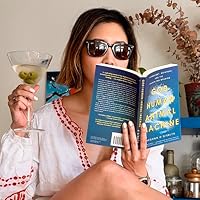
In my adult life, I have long been ambivalent about having children, a consequence of my constant side-eyeing of expectations foisted upon me (ask me about my thoughts on marriage, homeownership, and other markers of success - I have many!) and the excessive performance of motherhood thanks to social media. Books that explore modern day motherhood vis a vis technology are a specific brand of catnip for me, and this one did not disappoint.
This book explores what it means to be a mother in an age of constant performance + optimization and anxiety; in an age where there is this alleged promise of technology to provide more complete information at every stage of mothering. It’s told through Hess’ own experience, but layers in investigative reporting.
What I loved most was how Hess shines a light into areas not often publicly discusses nor critiqued enough (imo). Is technology and the ability to constantly monitor and gather data just feeding our (the parents’) anxiety? Is more information truly better, and do we even know what to do with all the information we receive? Is the justification for constantly surveilling our child - from embryo to baby to toddler and beyond - worth the lack of privacy to the child? This is most salient in the discussions around baby monitoring devices to monitor whether a child is sleeping, if they’re still breathing, etc.
Hess’ discussion on pre-natal screening was a particular standout. It touches on so many themes: disability and able-bodiedness (i.e. the parents’ intense desire to have a “normal” screening so they can feel relief that their baby is “healthy” aka able-bodied); the imperfectness of these tests - but the real consequences of choices made from these results; the fact that a screening is not a guarantee that the baby does not have some other condition that is not detectable until birth.
I have two tiny critiques of the book. One is that I felt that the through line was inconsistent. This book starts off anchored on Hess’ journey to being a mother and then giving birth, but we lose this in the latter half of the book. Second is that I didn’t love listening to the audio - I found Hess’ voice somewhat annoying.
Despite these critiques, this was a good read if you are soon to be pregnant for the first time and/or have any interest in books examining accepted norms around motherhood and technology. Definitely worth your time!
PS. This book is often compared to I Cannot Control Everything Forever: A Memoir of Motherhood, Science, and Art, another book on modern day motherhood and technology. I see the comparisons, but do not think they are fair because Bloom and Hess are approaching this topic from two distinct lenses.
Bloom is looking at motherhood and technology through the lens of mothering a medically complex child, and focuses more on the ethics. Hess touches a bit on this, but is more focused on technology feeding into modern day parental anxieties in general - even vis a vis an able-bodied child.
Bloom’s errs more philosophical, while Hess’ is more grounded and is more of a commentary of how distorted we have allowed our views around parenting to become as we yearn to optimize.
There is merit to both books, but it is a disservice to compare to the two!
This book explores what it means to be a mother in an age of constant performance + optimization and anxiety; in an age where there is this alleged promise of technology to provide more complete information at every stage of mothering. It’s told through Hess’ own experience, but layers in investigative reporting.
What I loved most was how Hess shines a light into areas not often publicly discusses nor critiqued enough (imo). Is technology and the ability to constantly monitor and gather data just feeding our (the parents’) anxiety? Is more information truly better, and do we even know what to do with all the information we receive? Is the justification for constantly surveilling our child - from embryo to baby to toddler and beyond - worth the lack of privacy to the child? This is most salient in the discussions around baby monitoring devices to monitor whether a child is sleeping, if they’re still breathing, etc.
Hess’ discussion on pre-natal screening was a particular standout. It touches on so many themes: disability and able-bodiedness (i.e. the parents’ intense desire to have a “normal” screening so they can feel relief that their baby is “healthy” aka able-bodied); the imperfectness of these tests - but the real consequences of choices made from these results; the fact that a screening is not a guarantee that the baby does not have some other condition that is not detectable until birth.
I have two tiny critiques of the book. One is that I felt that the through line was inconsistent. This book starts off anchored on Hess’ journey to being a mother and then giving birth, but we lose this in the latter half of the book. Second is that I didn’t love listening to the audio - I found Hess’ voice somewhat annoying.
Despite these critiques, this was a good read if you are soon to be pregnant for the first time and/or have any interest in books examining accepted norms around motherhood and technology. Definitely worth your time!
PS. This book is often compared to I Cannot Control Everything Forever: A Memoir of Motherhood, Science, and Art, another book on modern day motherhood and technology. I see the comparisons, but do not think they are fair because Bloom and Hess are approaching this topic from two distinct lenses.
Bloom is looking at motherhood and technology through the lens of mothering a medically complex child, and focuses more on the ethics. Hess touches a bit on this, but is more focused on technology feeding into modern day parental anxieties in general - even vis a vis an able-bodied child.
Bloom’s errs more philosophical, while Hess’ is more grounded and is more of a commentary of how distorted we have allowed our views around parenting to become as we yearn to optimize.
There is merit to both books, but it is a disservice to compare to the two!

August 22, 2025
An incisive, of-the-moment look at how our digital life shapes pregnancy and motherhood, from preconception to postpartum. Hess uses her keen journalistic eye to examine how the internet stokes the anxieties of birthing people, then exploits the user data they so willingly give up to apps like Flo, genetic testing companies like Natera, and baby monitoring devices like Hatch, for financial gain.
Hess grounds her cultural critique in her own experience of giving birth to a medically fragile baby during the pandemic, blending the personal with the political, journalistic distance with the raw emotions of parenthood. My favourite moments include her takedown of Mickey Mouse Clubhouse as “an insipid CGI program in which a flatly emotionless Mickey Mouse rules over a technocratic fantasyland” and her descriptions of visiting r/antinatalism and ruminating over the burden of consciousness during late-night feedings, a thing I thought only I did haha. Ultimately Hess pinpoints the problem with parenting under late capitalism: the wisdom and communal childrearing practices that were once imparted through multigenerational communities have been supplanted and replaced by assistive technologies that surveil and isolate. She’s not the first to make this critique, but boy does she name names.
Anyway, modern parenting is kind of my Roman Empire so Amanda Hess, if you’re reading this, let’s be mom-friends. If you’ve ever hate-listened to a freebirth podcast, been personally victimized by a Snoo, or had a complicated relationship with Dr Becky, this book is for you.
Hess grounds her cultural critique in her own experience of giving birth to a medically fragile baby during the pandemic, blending the personal with the political, journalistic distance with the raw emotions of parenthood. My favourite moments include her takedown of Mickey Mouse Clubhouse as “an insipid CGI program in which a flatly emotionless Mickey Mouse rules over a technocratic fantasyland” and her descriptions of visiting r/antinatalism and ruminating over the burden of consciousness during late-night feedings, a thing I thought only I did haha. Ultimately Hess pinpoints the problem with parenting under late capitalism: the wisdom and communal childrearing practices that were once imparted through multigenerational communities have been supplanted and replaced by assistive technologies that surveil and isolate. She’s not the first to make this critique, but boy does she name names.
Anyway, modern parenting is kind of my Roman Empire so Amanda Hess, if you’re reading this, let’s be mom-friends. If you’ve ever hate-listened to a freebirth podcast, been personally victimized by a Snoo, or had a complicated relationship with Dr Becky, this book is for you.
June 10, 2026
Instant favorite! I have been looking for a book like this for a while now, and it's pretty amazing how close this memoir hits to home for me. Watch me get into memoirs now! :)
Ms. Hess documents her journey through trying to conceive, pregnancy, high risk pregnancy and parenthood in today's modern tech-heavy reality.
She is surrounded by apps, forums, gadgets, targeted ads, and social media, each forcing themselves onto her with their own "wisdom" and opinions. The result is confusion and overwhelm, and this is exactly how I felt like as a new mother three years ago. At one point, I remember telling my mom, freshly postpartum, that I wished I could turn the internet off for everyone, just to catch a break.
The part that particularly resonated with me is the author's account of her pregnancy journey: once she is confronted with uncertain results, she finds herself craving the comfort of technology, as if she can simply Google her anxieties away, if she tries hard enough. As a ... mom that's been tested postpartum with my child's own health journey ("nene e sprovuar", as I tell hospital workers), I do remember feeling a compulsion that if only I read enough of this and that, I would find the secret answer that would make everything better again.
Overall, a lovely memoir. I love reading first-hand accounts of "tested" parents and the wisdom they collected throughout their journey.
Ms. Hess documents her journey through trying to conceive, pregnancy, high risk pregnancy and parenthood in today's modern tech-heavy reality.
She is surrounded by apps, forums, gadgets, targeted ads, and social media, each forcing themselves onto her with their own "wisdom" and opinions. The result is confusion and overwhelm, and this is exactly how I felt like as a new mother three years ago. At one point, I remember telling my mom, freshly postpartum, that I wished I could turn the internet off for everyone, just to catch a break.
The part that particularly resonated with me is the author's account of her pregnancy journey: once she is confronted with uncertain results, she finds herself craving the comfort of technology, as if she can simply Google her anxieties away, if she tries hard enough. As a ... mom that's been tested postpartum with my child's own health journey ("nene e sprovuar", as I tell hospital workers), I do remember feeling a compulsion that if only I read enough of this and that, I would find the secret answer that would make everything better again.
Overall, a lovely memoir. I love reading first-hand accounts of "tested" parents and the wisdom they collected throughout their journey.
November 23, 2025
I'm exactly the target audience for this book in so many ways, it's completely unsurprising that I loved it and couldn't put it down. I do think Hess is a great writer, and I would love to read her future work. Her blend of personal and journalism was well balanced to me, and I do think she brought something fresh to the post-pandemic progressive political parenting book genre emerging ('What Are Children For?' and 'Essential Labor' coming to mind, 5-P genre if you will) by talking about her older son's BWH diagnosis and care. This especially made her discussion of baby surveillance tech more complicated and interesting. The toe dipping in free birthing, gentle parenting, maternity brands and 'mama' influencers scratches an itch I'm sure most of us feel.
Overall, all of her worries and concerns were very relatable, and yes I did cry a little at the end ("every day I seemed to unbecome her and become her again"), and also still after every chapter I did find myself thinking that the obvious solution to all of this is (generally) to get off the Internet and social media. Confirmation bias of course, but how much longer will we let this go on, you know?
Overall, all of her worries and concerns were very relatable, and yes I did cry a little at the end ("every day I seemed to unbecome her and become her again"), and also still after every chapter I did find myself thinking that the obvious solution to all of this is (generally) to get off the Internet and social media. Confirmation bias of course, but how much longer will we let this go on, you know?

July 22, 2026
What a fascinating and rather vulnerable memoir, focused on how pregnancy and technology (including the internet) intersect. We’re talking baby gear that veers into surveillance, genetic testing decisions, period and pregnancy tracking apps, connecting with and watching other pregnant folks on Facebook, Reddit, and Instagram. Ending the book on the Free Birth Movement truly gave me the heebie jeebies (scary). And yet I still understand how medical trauma and modern life could make people seek guidance away from the mainstream. Without giving myself completely away, these are definitely topics I think about and I am so interested to hear what other women think. Hess writes about her personal experience, but as a journalist researches and interviews insightful corners of the internet. This book languished in my tbr before I finally got to it, and I’m glad I did.
October 17, 2025
Fascinating stuff. Such personal, intimate, spiritual experiences that are surveilled and critiqued at every possible stage. Appreciate her being so vulnerable about these experiences because they teach me how to approach other people and imagine the experience myself.
August 30, 2026
not pregnant, just book club
October 23, 2025
Nailed it on the head.
May 20, 2025
just finished second life by Amanda Hess and this book covers my favorite topic of how digital tools shape our most personal moments under the disguise of empowerment and “optimization,” when really, companies are just selling us back to ourselves. This is a deeply personal book about pregnancy and early motherhood in the age of surveillance capitalism.
some of my favorite parts include Hess on predictive targeted ads, where new parents are framed as the “holy grail” of retail because they’re “exhausted and overwhelmed and their shopping patterns and brand loyalties are up for grabs.” the way the internet doesn’t need to guess you’re pregnant, you tell it through apps, search engines, symptom trackers, and suddenly every part of her online experience is optimized to sell her something. when she searches “what to do when you get pregnant,” 74 companies track her, facebook gets notified, she’s categorized by 33Across into audience segments like “expecting parents.” pregnancy becomes a form of data collection.
i loved her take on the app Flo’s anonymous forums, this weirdly intimate, corporate-managed space where women share fear, excitement, and symptoms in real time. but some phrases are censored, and other features are locked behind a paywall requiring money to access community and information. also loved her writing on gender reveal parties, tradwife content, and the pressure to present birth and parenting as hyper-curated experiences.
the book also tracks her experience through pregnancy and birth of a child with a rare genetic disorder, and what it means to be a “medical mom” as someone navigating their child’s condition in real life while witnessing how others perform that identity online.
this book is so good and i can’t wait to read more from her
some of my favorite parts include Hess on predictive targeted ads, where new parents are framed as the “holy grail” of retail because they’re “exhausted and overwhelmed and their shopping patterns and brand loyalties are up for grabs.” the way the internet doesn’t need to guess you’re pregnant, you tell it through apps, search engines, symptom trackers, and suddenly every part of her online experience is optimized to sell her something. when she searches “what to do when you get pregnant,” 74 companies track her, facebook gets notified, she’s categorized by 33Across into audience segments like “expecting parents.” pregnancy becomes a form of data collection.
i loved her take on the app Flo’s anonymous forums, this weirdly intimate, corporate-managed space where women share fear, excitement, and symptoms in real time. but some phrases are censored, and other features are locked behind a paywall requiring money to access community and information. also loved her writing on gender reveal parties, tradwife content, and the pressure to present birth and parenting as hyper-curated experiences.
the book also tracks her experience through pregnancy and birth of a child with a rare genetic disorder, and what it means to be a “medical mom” as someone navigating their child’s condition in real life while witnessing how others perform that identity online.
this book is so good and i can’t wait to read more from her
August 17, 2025
This took me a little bit, but I really feel like it nailed the current parenting climate. From Flo to Nanit, she hits it all. Becoming a parent is a strange identity crisis - and Hess is able to make me feel more sane in my thoughts about it. She is also able to critique a lot of “modern” parenting in an articulate way that I have not found the words for. I really appreciate her ability to unpack the digital nature of raising young kids right now. Our reliance on technology is a bit daunting, the need many feel to be online, be right, to nail this stage of parenting, it’s exhausting!
Additionally, this is the first time I have read something that discusses c-sections in a tangible way (something that happened to me, nothing more, nothing less). I cannot speak to the data about it, I just felt connected with her view on it, especially with many people dreading them.
I’m not sure how this would read if you aren’t a parent, but I would highly recommend it to anyone who little kids right now. Super thought provoking, a bit troubling, really highlights how many people are capitalizing on new moms, but a worthy read.
Additionally, this is the first time I have read something that discusses c-sections in a tangible way (something that happened to me, nothing more, nothing less). I cannot speak to the data about it, I just felt connected with her view on it, especially with many people dreading them.
I’m not sure how this would read if you aren’t a parent, but I would highly recommend it to anyone who little kids right now. Super thought provoking, a bit troubling, really highlights how many people are capitalizing on new moms, but a worthy read.
May 16, 2026
This is a strikingly honest account of the strange challenges that come from having a child today. Hess is not saying "don't have kids," or "do have kids," or "stay off the internet when you have kids," or anything else resembling a call to action. She is just exposing the complexities that exist at this modern intersection, and I think she masterfully accomplished what she set out to do.
June 19, 2025
Amanda Hess’s memoir is the type of book I wish I wrote but since I did not/have not, I’m glad someone else did. The only thing it was missing was a mention of the baby tracking app Huckleberry (nothing but respect for MY president) which ran my life for about 6 months and I still have flashbacks. I was surprised by my visceral reaction to a lot of things in here and it made me feel so seen while giving me a lot to think about. Feels like I have so much more to say but this is just extremely my thing, I loovve an examination of how our lives are shaped by internet culture. 4.5 rounded up!
April 24, 2026
Sharp and witty and to the point! Hess touches on so many important ideas (Big Data and tracking consumers, medical racism, the rise of conservatism and trad-wife culture, influencers, hypochondriasis fueled by the internet, etc.) and does it very well. Her commentary is intelligent and researched and I appreciated her nuanced perspectives.
Such an interesting book about what it’s truly like to contend with having children in an age where algorithms track all your thoughts you’ve ever inputted into a browser.
Such an interesting book about what it’s truly like to contend with having children in an age where algorithms track all your thoughts you’ve ever inputted into a browser.

October 1, 2025
I really liked this and will be recommending it to my online mom friends (you know who you are...!) though I do also feel it's a very personal account, and definitely specifically for pregnancy and early parenthood in the United States in the 2020s (Hess's first son was born in 2020 with a rare genetic disorder, her second in 2022).
It resonated with me because motherhood and connection have been VERY digital for me- unlike Hess I didn't use a period tracker app like Flo but I did spend time in subreddits and most especially my bump group discord (again, shoutout to my mumies) and like Hess, I find it interesting to look at how our fears get converted into currency for clicks or to buy stuff ("surely if I buy THIS bassinet baby will sleep statistically more than their peers! if I eat/drink/sleep a certain way, maybe I can avoid THAT developmental issue!"). Hess's pregnancy happening during initial pandemic restrictions heightens that sense of aloneness and leaning on Dr. Google to make sense of what's going on in your body.
Her personal first pregnancy story is also a means to compare the medicalization of birth to the free birthing community, whom she watches via podcast and social media feeds even though due to various factors it's not something she would actually do, and in the chapter on Work she briefly goes into how the tradwife aesthetic is still the work of glamorizing an idealized feminine motherhood.
I think this could be too autobiographical for some readers, but for me in this season of life, it's an A+ read (even if she is a privileged white lady lol)
It resonated with me because motherhood and connection have been VERY digital for me- unlike Hess I didn't use a period tracker app like Flo but I did spend time in subreddits and most especially my bump group discord (again, shoutout to my mumies) and like Hess, I find it interesting to look at how our fears get converted into currency for clicks or to buy stuff ("surely if I buy THIS bassinet baby will sleep statistically more than their peers! if I eat/drink/sleep a certain way, maybe I can avoid THAT developmental issue!"). Hess's pregnancy happening during initial pandemic restrictions heightens that sense of aloneness and leaning on Dr. Google to make sense of what's going on in your body.
Her personal first pregnancy story is also a means to compare the medicalization of birth to the free birthing community, whom she watches via podcast and social media feeds even though due to various factors it's not something she would actually do, and in the chapter on Work she briefly goes into how the tradwife aesthetic is still the work of glamorizing an idealized feminine motherhood.
I think this could be too autobiographical for some readers, but for me in this season of life, it's an A+ read (even if she is a privileged white lady lol)
September 23, 2025
Didn’t care much about having babies or the internet and yet this prose is so beautiful and seamless that it carries you along without you even realizing you’re learning and thinking— but learn and think you will!! It gave me such a deep new appreciation for the specificity of parenting and the broadness of grasping for cultural meaning. I checked this out from the library but bought a new copy because I think I will refer back to it throughout my life. The vision of collectivity and community in child rearing (vs ownership and individualizing ) will really stay with me. At many times throughout the books I thought I was just sitting there watching Amanda as if watching a movie. The level of detail is that brilliant. Will be giving this to everyone who has kids or wants to have kids or knows someone with a kid or has been a kid themselves.
May 23, 2025
I think about this topic often- the role of tech in our child rearing. I find it particularly interesting because it’s such a different landscape than my own experience as a child and I’m sure my parents nowadays. This book was the author’s experience, and the personal story was gripping and detailed. I’ll be thinking about this topic for some time and probably.. years to come as the digital world evolves.
November 8, 2025
I don’t do a ton of social media but I do a TON of googling and looking at my phone. I’ve definitely done a lot of lurking on What To Expect app forum threads and scrolling through Reddit to see if someone has had the same experiences as me.
I wrote down what she said at one point: “my relationship with my baby was supplanted by my relationship with his information.” That was crazy to think about.
I loved reading about this millennial experience and thought she was really relatable. Maybe more importantly though I am thinking more about how I interact with my tech and with my kids.
I wrote down what she said at one point: “my relationship with my baby was supplanted by my relationship with his information.” That was crazy to think about.
I loved reading about this millennial experience and thought she was really relatable. Maybe more importantly though I am thinking more about how I interact with my tech and with my kids.
Displaying 1 - 30 of 282 reviews