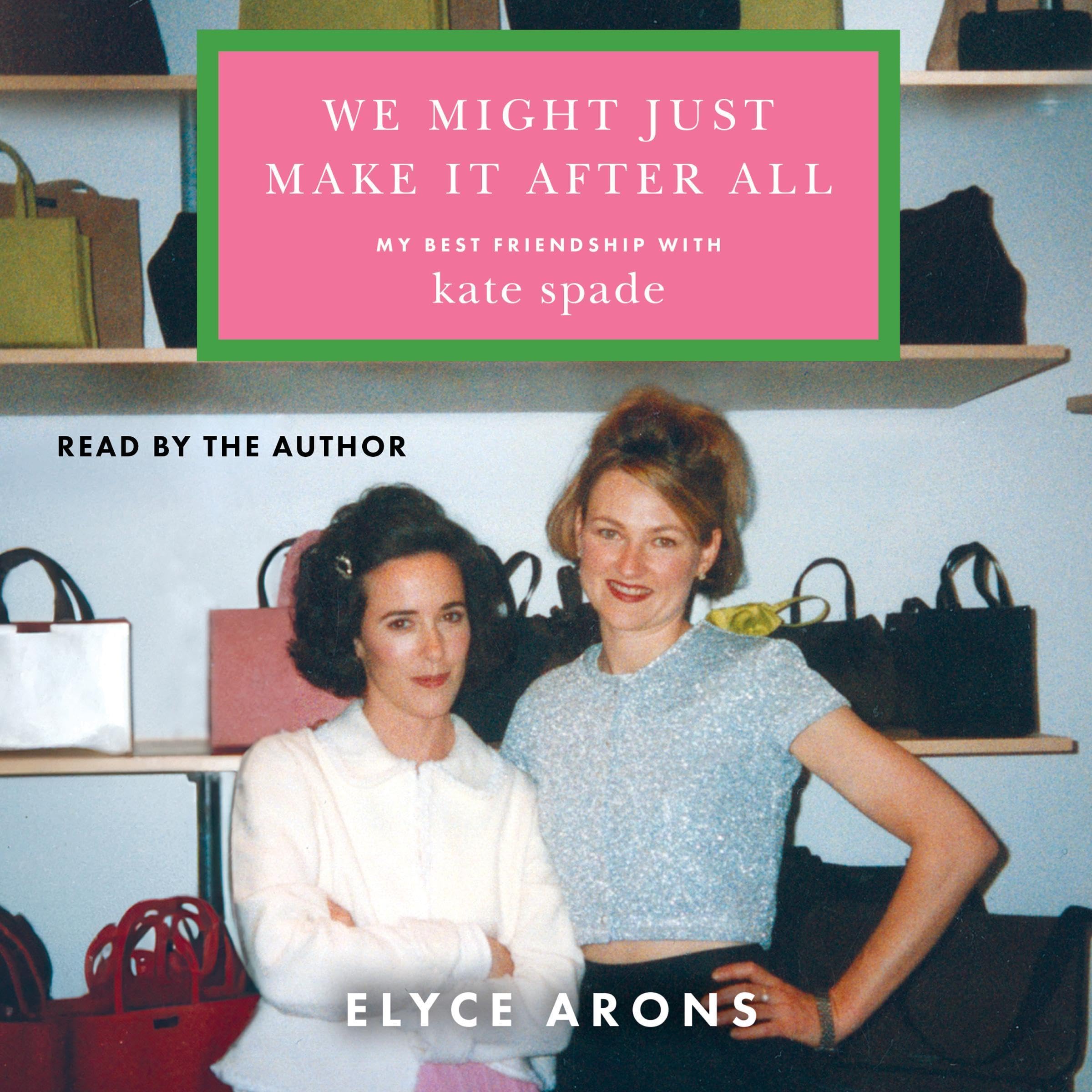
A moving portrait of friendship by Elyce Arons as she reflects on her long relationship with Kate Spade, whom she met in college and went on to cofound the multi-billion-dollar fashion company as they came of age in 1990s New York.
When Elyce Arons first met Katy Brosnahan in a University of Kansas dorm room, she had no idea that this polo shirt–wearing Missouri girl would not only become her best friend but also change the course of her life. Back then, Katy and Elyce were preoccupied with frat parties and The Mary Tyler Moore Show;within a decade, they’d be scraping by in New York City, working day jobs to spend nights building a new line of handbags that would one day revolutionize the accessories industry.
We Might Just Make It After All brings us on the rollercoaster of adventures (and misadventures) that the best friends embarked on, from transferring colleges on a whim, to falling in and out of love with suitors, cramming into roach-infested Hell’s Kitchen apartments, and eventually designing the chic, simple bag that would launch the pair to global fame. Through it all, Katy and Elyce’s friendship remained unshakeable. This powerful friendship lasted nearly forty years, until Katy’s tragic suicide in 2018. We Might Just Make It After All celebrates her legacy as a cultural icon and loyal friend.
Set against the glitzy and gritty backdrop of downtown New York at the turn of the century, We Might Just Make It After All lovingly and candidly explores the power of a friendship as close as sisterhood, the challenges facing women entrepreneurs in the 1990s, and the timeless elegance of a generation-defining brand.
Do not listen to this book. The author is the narrator; and I am not one to be overly critical, but this was like nails on a chalkboard for me.
I skimmed quite a bit of it just for this very reason. I was waiting for this book, I knew there was a story there and yet, I never felt any depth. The high- pitch narrator sounded like she was talking to elementary children. Once again I do not want to be overly critical yet here I am. 👋🏻 Hi, it’s me!
It does highlight their life long friendship and their hugely successful business, but sadly, a missed opportunity with mental health advocacy.
Always a Kate Spade fan, and perhaps the physical copy would offer a better reading experience. The content doesn’t compel me to do this though. I don’t like the cover either, Kate Spade was vibrant and loud with her colour palate. It’s me again. 👋🏻
We Might Just Make it After All is a captivating and poignant memoir about friendship, business and complicated relationships.
Written by Elyce Arons, Katie Spade’s ride or die bestie and business partner, this memoir details her relationship with the innovative entrepreneur and business mogul. The two met Freshman year at The University of Kansas and became lifelong friends. They both transferred to Arizona State Sophomore year, where Katie met her husband Andy Spade (brother of David Spade). Together, Katie, Andy, Elyce and another friend created the innovative handbag company, Kate Spade in the early ‘90s. No one knew Katie better than her best friend, but she had skeletons in her closet. It was a shock to all who knew and loved her when she committed suicide in 2018.
I listened to the audiobook which is read by the author. Elyce Arons is a FANTASTIC narrator - maybe one of the best (sorry January LaVoy), and I highly recommend this format.
I absolutely devoured this book. It is so intriguing to learn the behind the scenes of a company that I admire. I remember buying my first Kate Spade black nylon tote in the ‘90s and marveling over its beauty and stylishness. I also have a hometown connection to her family, as her niece Rachel Brosnahan (The Marvelous Mrs. Mazel) graduated from my high school!
This book will appeal to those who enjoy fashion, stories about friendship, and the ins and outs of creating a successful business.
As a side note, Katie’s suicide is just briefly touched on in this memoir. Instead, Arons focuses on the time she spent with her best friend.
I liked reading about how Elyce and Kate met in college and then had a dream to start a handbag company. They had been Best Friends since the beginning of College. My best friend from high school and I started a business (much smaller scale, obviously) but do remember how exciting it was to go from just talking about something to actually putting it together and all the work that went into it. I lived on Long Island, NY so it was also fun to read about all the neighborhoods in NYC and places they went. I was about their age, so am familiar with how much NYC changed from the early 1980’s-90’s and now. Each neighborhood had a much more distinctive feel and there downtown definitely had an Artsy Feel, but there were many dangerous areas. Being young, I was never afraid. Familiar, with the Hamptons as well, and enjoyed going, but knew these two were really making it, as renting a house in the Hampton’s is really expensive, but again knew the towns and beautiful ocean, so felt nostalgia reading this. It was also nice and unusual that through everything they remained such close friends.
My problem was sadly Kate Spade committed suicide. It was known for several years that she was dealing with severe depression and anxiety. She had gotten separated from her husband Andy, who she had been married to for over 20 years and he was a partner of Kate Spade. Kate was a private person and do understand that she was frightened of the stigma of having a mental illness would have on her Brand, that was Aspirational, and had Whimsy and Fun attached to it. Yet, Elyce barely mentions this at all. Says she was shocked Kate committed Suicide. Yes, even if someone is struggling, it would still be a shock, but the years of illness are completely skipped. The Marriage just says they needed a break, but loved each other.
What is the point of writing a book that does not explore the real person? There was Kate Spade the Name and Katherine Brosnahan, the Person. Elyce did not have to say every detail of her struggle if she thought Kate would want some privacy, but this was an important opportunity to show how someone Suffering from Mental Illness could also be a wonderful friend, loving, creative, and fun. It would help ease the stigma. The book more reflects Elyce’s life and doesn’t offer enough information about who Kate Spade really was. Elyce really doesn’t reflect on any difficulties she had either. I loved that they were Best Friends for 30 years and went through life together and it must be very difficult to lose someone this way. Just thought her real life was glossed over.
it’s not that i did not enjoy the book, i did. authors’s description of starting a wildly successful company with her best friend seemed magical, fortunate, and very fun! but absolutely ZERO insight into Kate’s seemingly abrupt suicide, which let’s face it, is a big part of why people are picking up this memoir. also, i found the title to be off-putting and actually in poor taste. what part of suddenly succumbing to her sadness and despair leads one to title the book: we might just make it after all?? makes no sense to me.
I was a huge fan of the original Kate Spade products in the 90’s and anxious to read this book. I listened to it on Audible and was disappointed by both the content and the reader. Aside from David Sedaris, most authors should have a professional perform the reading and this was no exception. Arons sounded over-animated and her mocking renditions of voices of people she disliked were especially grating. The technical description of the company’s establishment and growth was interesting but the personal stories fell flat.
Kate Spade is my favorite handbag designer, so I knew I needed to read this book. I also interviewed Elyce for work, and after talking to her, the book was brought even more to life. Elyce's storytelling ability was magnificent. I loved seeing how she and Katy met and built their business from nothing. It was so cool to get a glimpse into the behind-the-scenes moments. Their friendship was really special, and I could feel that through Elyce. I also loved seeing how the brand evolved and how they went on to have respective families and come back together to start a new brand. The stories were raw and intimate and I felt like I was on the journey with them. The ending had me tearing up, and I loved learning the history about one of my beloved brands. Thank you to Gallery Books for the ARC to read and review!
Elyce Arons has written a heartfelt and moving memoir about her long and enduring friendship with Katy Brosnahan (Kate Spade). They met on the first day of freshman orientation at the University of Kansas. From that day on they became literally inseparable.
Both girls found that they had similar interests and had grown up fascinated by The Mary Tyler Moore television program. They hoped to someday have a life similar to Mary’s character. Elyce’s down to earth style of writing makes you feel part of their journey from college girls going to parties, transferring colleges in their sophomore year, to first jobs, first loves, moving to New York City, scraping by while starting and building their business and sharing the ups and downs of corporate life, and motherhood - all the while maintaining their unbreakable bond of love, support and friendship.
Elyce presents a behind-the-scenes, close up view of the fashion industry and the incredible tenacity and single-mindedness it took to achieve their dream. She also allows the reader to share the vibrant social scene of New York in the 1980’s and 1990’s.
Elyce and Katy’s dream of “making it” with their start up company far exceeded their expectations. Together with Katy’s husband, Andy Spade, and friend Pamela Bell, they revolutionized the fashion accessories industry and became a model for other entrepreneurs.
When I saw this was dropping, I was so excited!! I’m such a big fan of Kate Spade bags, so I was curious to learn more about the woman behind the brand. And wow, this book really delivered. I loved reading about Kate and Elyce’s friendship from the very beginning and watching how the brand came to life and evolved over time. I knew the ending would be emotional, and Elyce handled it with so much care and grace. My only critique is that I wish the book had explored the complexities of mental health a bit more as it’s such an important part of the story. Still, this was a beautiful and powerful read
3.5 stars. This book hit so many categories of interest for me, from design and fashion to women business owners and entrepreneurs. That being said, something felt not quite there for me. I don’t know. Kate Spade handbags don’t have any special meaning for me, but everyone knows the brand. I’m not sure what was missing, maybe Elyce wasn’t quite sure what to do with the book herself. Still worth a quick read if you’re interested in how the company started!
How do I quit my job and work for Kate Spade in the 90s?!?
In all seriousness, this was a wonderful novel on the iconic brand of Kate Spade and the friendships that brought it to life. Each chapter was an anecdote of coming of age when you really could “make it” by relying on your intuition, connections and a little luck.
I felt incredibly grateful for the insight on the friendship between Katy, Elcye, Andy and Pamela. Also, on the overall insight on living in New York in the 90s/00s while working in the fashion industry.
Aarons doesn’t shy from the complexities of life and relationships throughout time. I knew I’d be heartbroken by the end, but came out more grateful for witnessing such an incredible founding of a company sprouted by friendship.
Kate Spade is a brand I feel so deeply connected to as a person & it was in fact my first “big girl” bag. Kate Spade the person however has made me appreciate the brand and what it stood for so much more now!
A must read for any Kate Spade lover of any generation.
The author is one of the 4 founding members of the company Kate Spade and was also friends with the person Kate Spade. This memoir tells the story, from the author's perspective, of how the company came into existence.
If you are seeking the story behind the establishment of the company then the book will be interesting for that information. It also provides a sense of what living in NYC at that time was like. If you are seeking the story of Kate Spade the person, then this book will be a disappointment.
It was clearly written by a midwestern, white boomer - the corniness was palpable on almost every page. Still some good storytelling about the start of the company, but I had higher expectations that the founders of Kate Spade would be more cosmopolitan and less “think pranks are hilarious” kind of people.
Elyce Arons is a co-founder of both Kate Spade and Frances Valentine and was Kate Spade’s close friend from college onward. Arons' 2025 memoir, We Might Just Make It After All: My Best Friendship with Kate Spade, recounts their decades-long bond and their journey building an iconic brand together - though the bulk of the narrative ends before, and doesn't shed any meaningful light on, Spade’s death by suicide in 2018.
This memoir is most likely to attract readers drawn to the Kate Spade brand or those seeking answers to a painful part of her story. What you get instead is a memoir of someone adjacent to fame and grief, offering sparkling, aspirational yet disappointingly surface-level glimpses of '90s/'00s New York glamour - city nightlife, summers in the Hamptons, Sex and the City-like adventures by well-heeled 30- and 40-somethings with disposable income. Arons begins with her childhood on a Kansas farm marked by hard work and financial uncertainty before flashing forward to her 1980s friendship with Kate (then Katy Brosnahan) in college, a brief post-college period of financial struggle, and then the fruitful partnership (alongside Andy Spade, whom Kate would marry, and their fourth business partner, Pamela Bell) that led to the Kate Spade brand. Though the four's initial partnership arrangement was 30/30/20/20 ownership by Kate Spade/Andy Spade/Arons/Bell respectively), Kate quickly became the de facto face of the brand, whereas the other three remained much lower profile.
There are occasional moments where Arons goes deeper and reaches emotional gravitas, like when she talks about how meaningful it was for her to be able to share her financial success with her family back in Kansas, but most of the book stays (probably intentionally, possibly to protect Spade) glossy and shallow. The writing isn't particularly powerful, well-examined, or introspective - very much an "I did this, then this happened, then I did that" arc throughout, like many memoirs by famous or fame-adjacent individuals. Arons' life has been fairly interesting in its right - though probably not interesting enough to secure a book deal and write a compelling memoir without relying on the Kate Spade brand - hence the narrative choices made herein.
I really wanted to love this book, as I am a Kate Spade brand fan. The narration was distracting throughout, sometimes booming and loud with overly-animated inflection, and other times seemingly condescending. The building of the business was interesting to learn about, but most of the other parts fell flat. Lots of recanting of drinking wine, eating dinner, and hanging out at beach houses — overall, it lacked depth for me.
My mom introduced me to Kate Spade in 2008, when I was in high school, and I’ve been smitten ever since. I worked in Kate Spade stores for 7 years ‘for fun’ alongside my full time job(s) and am to this day a huge fan of both the Kate Spade and Frances Valentine brands. Getting to know more about the inspiring women who built these brands, Katy and Elyce, was so meaningful to me. What a beautiful friendship they shared; I’m so thankful for the beauty they’ve brought to the world.
… little do they know that they helped a girl from Ohio find her style, her people and her passion.
Originally, I wasn’t planning to read We Just Make It After All. I thought it was a strange ... and maybe off-putting? ... choice to frame the book around her friendship with Kate Spade, especially since she barely addresses her passing until the very end. Of course I do also acknowledge there is no proper or correct way to acknowledge her passing and I am not the moral police at all and I get that might be out of respect to address at the end or very briefly, but if that’s the case… maybe don’t title the book after the friendship? I don’t know ... I realize I’m probably in the minority here, but it just didn’t sit right with me. The odd part is, I probably would have read this book anyway if she had just written it as a memoir about building a brand in the '90s. That kind of behind-the-scenes perspective is genuinely interesting to me. And honestly? Her and their rise was impressive. Once you get past the framing, it’s clear she did a lot and had a real impact, which is why it’s all the more confusing that she didn’t just lean into her own story. Maybe she thought she couldn’t sell the book without attaching it to Kate Spade, but that undercuts her own accomplishments, and it leaves a weird aftertaste. Tone-wise, she gives off major Pollyanna energy, talking about sororities, casually smoking in other people’s houses like it’s charming, talking about being involved in school things with her children, and gliding through challenges with a kind of la-di-da detachment that feels out of touch. The audiobook was tough; she screeches at certain moments, and I had to switch to the print version. That said, I did enjoy parts of the book. I just wish there had been more detail throughout. So many chapters felt skimmed-over or vague. Aron makes sweeping statements like “we were as close as sisters” and then says she always knew it wouldn’t last, so which is it? It felt like emotional shorthand for something deeper that never quite got explored. I would’ve much preferred a straight-shooting business memoir. Her rise in the '90s was genuinely interesting, and I would’ve loved to learn more about the behind-the-scenes decisions, especially how the company evolved and how she, Pamela, and Kate decided to divide roles or eventually part ways. I get that some of it is probably protected by NDAs or just too complicated to fully unpack, but still the lack of depth left the whole thing feeling disjointed and… off. Again, maybe this is just my bias coming from the field I’m in, but maybe because I would never write this book if this had been my friend, I think it would've been hard to satisfy what I wanted out of this book and I always hate giving memoirs a "negative" review. I also am not here to tell anyone how to grieve, I just personally thought it was an odd choice, but what do I know! There are some good stories here, and Arons does her best to wrap things up nicely, so I would say I liked it but still felt a bit off for me.
I found this memoir to be equal parts heart-breaking and heart-warming.
Like Katy and Elyce, I also graduated college in the late 80s, so the timeline of their lives shared in this book, mirrors mine. I recall so vividly the phenomenon of the Kate Spade brand and what it meant to carry one of her bags in the 90s. They were "affordable luxury" before that was even a thing and they told the world that while you were serious about your career, you didn't take yourself too seriously. Kate Spade bags were the symbol of youthful, female ambition and a signal to all that you had an irreverent sense of style. As a brand marketer, I loved everything that the brand stood for and admired their fresh, bold and unapologetic approach.
Elyce Arons memoir made me laugh and giggle one minute and sob and sniffle the next. It is a beautiful recounting of her deep and unwavering relationship with Katy, her best friend. From capers in college (two actually) to glamorous and gritty adventures in the Big Apple, this memoir puts it all out there: their professional successes and failures, their personal highs and lows and the challenges of being female entrepreneurs in the 90s.
I loved the 32 pages of color pictures that are included in the book and found myself referring to them throughout. Most are dated, so it is fun to see them grow and change as they take on different life stages together, best friends forever.
I am the target market for this book, I still have all of my Kate Spade purses, jewelry and china. My initials are KS and I always had an affinity for Kate Spade and Kendra Scott. I enjoyed learning about the beginnings of the company I so loved but did not know more than their product line. There were great anecdotes and I laughed out loud listening to the audiobook and also brought to tears at other parts of the book. I liked her different voices she used when telling a story, it was comical and I could see why they were such best friends. I was hesitant at first to read this because I didn’t want to listen to a depressing story. But it turned out to be much more pleasant and just a story told with a lot of heart and a lot of love.
I went to high school with Elyce. She always had a style that the rest of us in Newton, Kansas did not have. Her moving to New York to work in fashion was not a surprise. But she accomplished so much more than any of us could have imagined. I'm sure it was therapeutic to write this book about her very special friendship with Katie.
Such a beautiful story about friendship and building a brand from the ground up. Found myself tearing up at times! I didn’t know much about Kate Spade (or Katy) herself (aside from owning several purses and jewelry) prior to listening to this, so I’m glad Elyse was able to tell us who Katy was as a person. It was also cool to learn about Elyse herself, and she seems like a great time!
Loved this!! The story of their friendship and later business is so well written and fascinating to read. Needing to teleport back to nyc in the 90s fashion scene!
“I will never let Katy's choice in those tragic last few minutes of her life define her. Katy is still with me every day. She is the most gracious, sweet, intelligent, funny woman I've ever known.”
what a beautiful sentiment. i don’t understand the harsh ratings this book has received, and i especially don’t understand what people were expecting. it makes me uncomfortable how people seem to think Elyce was capitalizing on her best friends death to only speak of it briefly in the book.
to me, this book was a beautiful and touching homage to the journey of their careers together founding Kate Spade. After reading the entirety of it, I didn’t feel I was deserving of anymore insight to their grief and pain than what she described for us.
i loved reading about their friendship. i loved every bit of it. i think everyone would want a friendship like theirs, and i was touched by how impacted each of them were by each other at all stages of their life. true friendship! very very touching.
thank you, elyce, for sharing this story with us. i was amazed at how hard work led to two friends creating a multi million dollar company with great success.
girlhood! these two were girls together! how beautiful.
I actually wanted to give this book 4 stars just for the simple fact that I have no idea who Elyce Arons is and I had picked this up assuming she kinda used the name Kate Spade to sell this book. But I just listened to this audio today - basically for 5.5 hours straight without wanting to put it down - completely engrossed by Ms Elyse Arons and her bestest friend Kate Spade. Narrated by Elyse and what a delight!
When I picked this up I wasn't even sure what story I was going to get, but in the end it was very uplifting ...especially in light of the fact that Kate Spade took her own life, and no one really knows why. I think I really wanted that nostalgic story, and this one delivered. Not only did I have that 90's kate spade handbag, the one that defined the coming era of affordable luxury - but this was a fun look at the fashion industry and the one that told me about the business climb of the 90's. I also got a wonderful story of friendship and smatterings of NY city and the east coast.
This book is absolutely amazing! It’s laid out in such a way that you can easily follow the chronological order of events, but it also includes personal touches and side notes from the author. I feel like this book gave me a new understanding and appreciation for Kate Spade as a brand. If you love this brand, it’s a must-read.
LOVED this one - a story about 2 bestie girl bosses i am SAT lolol. Especially loved hearing about their time spent in NYC and how they became so successful in the fashion industry 10/10 recommend!
this was as heartwarming as it was heartbreaking. I know how lucky I am to have the friendships in my life that I do. the best parts of those relationships were reflected in the pages of this book. it made me very grateful for what I have with my home people🥲
also, like so so side note… but, I think this is my best book year ever to date???? by far, too. 5 star ratings all around.
In so many ways this book felt as if it were written specifically for me. As a lifelong devotee of the Kate Spade brand, a lover of the feel curated in Sex and the City’s romanticization of 1990’s New York, a girl with deep gratitude for her university years that were shaped by being a Chi Omega, and someone who consistently maintains the belief that friendship is the closest thing we have to magic and the greatest gift one can be given, I loved absolutely everything We Might Just Make It After All had to say.
Even as someone with experience in mental health, I feel like I am walking away from this book having gained a new perspective on the nature of suicidality. Very little of this story discusses Katy’s death, but what is said feels so well put. It’s nonsensical to focus the story of anyone's life on only their last few minutes.
Today I not only completed my read of We Might Just Make It After All, but also had the great pleasure of joining a virtual discussion between Elyce Arons and fellow Chi Omega alumnae. Elyce writes in a way that feels as if she could be your own best friend, and it’s no wonder someone with her degree of style, grace, and dedication has reached her level of success; no doubt while also owing thanks to the friends she made and kept along the way. While much of her story inspired me to work harder and dream bigger, as Elyce mentioned, she wrote this book to encourage holding close to your girlfriends like you'll never let them go – and that I surely will do.
This book follows the friendship and business partnership of Elyse Cox and Kate Brosnahan as they build what would become the iconic Kate Spade brand. No spoilers needed—we already know her tragic ending. For me, Kate’s death still casts a long shadow over the bright, preppy world she helped create. And yet her influence endures: the brand remains so culturally relevant that it landed a major Target collaboration just this past spring.
As I read, I found myself searching for signs—clues to what could have led someone so talented, stylish, and seemingly full of life to such a heartbreaking end. Kate was my age, and I recognized the energy of our generation in her: a St. Elmo’s Fire vibe, yuppie ambition, and that youngest-Boomer feeling that the best parts of the buffet may have already been picked clean. The book doesn’t offer answers—are there ever any?—but it does honor her spirit—her drive, her devotion to family and friends, and her belief in the brand they built.
Elyse’s storytelling shines when describing life in New York City through the eyes of two transplanted Kansans—full of wide-eyed grit and a Mary Tyler Moore, you’re-gonna-make-it-after-all optimism. The pages brim with pranks, dinner parties, and college roomie snapshots. But when it comes to the actual mechanics of building the brand—or Elyse’s own role in that process—things feel a little vague. And honestly, I doubt Kate would’ve appreciated the moth anecdote that opens the book. I’m no fashion icon, but I’d still be annoyed by that.
Still, it’s a compelling read. It offers a behind-the-scenes look at a brand I loved (and still do), and at the women who made it happen. I’d be just as eager to read Andy Spade’s take on it. Someday I hope he writes his version.