

What do you think?

Friends with Benefits
Listening Length: 11 hours and 3 minutes
Evie Bloom pays attention to the details. Her very job depends on it—as an aspiring Foley artist, she’s responsible for every crisp footstep, smacking kiss, and distinct sound in film and television. So when she’s selected for a fellowship opportunity that would make all her career dreams come true, she’s quick to spot the catch: there are no health benefits, and for someone with a chronic illness, that’s a non-starter.
Theo Cohen is an elementary school teacher who can't afford to live on his own in LA, and is facing eviction after his roommates couple up and move out of their rent-controlled apartment. But there is one loophole in his lease: each tenant must meet an income threshold, unless the tenants are married.
For Theo, the answer is obvious. Marry Evie, his best friend since forever. It’s not as if they don’t spend all their free time together anyways. Not only will Theo be able to keep his apartment, but Evie can be added to his insurance plan so she can accept her dream fellowship. It’s such a logical, practical solution. Never mind that Evie doesn’t really want to be married—not to Theo, not to anyone—ever. Or the small, complicating fact that Theo has always been a little bit in love with Evie.
But it doesn’t have to be a big deal. Marriage. It will just give them space to breathe, and much-needed relief from the daily financial stress. It won’t change anything.
It’s . . . going to change everything.
Evie Bloom pays attention to the details. Her very job depends on it—as an aspiring Foley artist, she’s responsible for every crisp footstep, smacking kiss, and distinct sound in film and television. So when she’s selected for a fellowship opportunity that would make all her career dreams come true, she’s quick to spot the catch: there are no health benefits, and for someone with a chronic illness, that’s a non-starter.
Theo Cohen is an elementary school teacher who can't afford to live on his own in LA, and is facing eviction after his roommates couple up and move out of their rent-controlled apartment. But there is one loophole in his lease: each tenant must meet an income threshold, unless the tenants are married.
For Theo, the answer is obvious. Marry Evie, his best friend since forever. It’s not as if they don’t spend all their free time together anyways. Not only will Theo be able to keep his apartment, but Evie can be added to his insurance plan so she can accept her dream fellowship. It’s such a logical, practical solution. Never mind that Evie doesn’t really want to be married—not to Theo, not to anyone—ever. Or the small, complicating fact that Theo has always been a little bit in love with Evie.
But it doesn’t have to be a big deal. Marriage. It will just give them space to breathe, and much-needed relief from the daily financial stress. It won’t change anything.
It’s . . . going to change everything.
12 pages, Audible Audio
First published May 6, 2025
About the author
Marisa Kanter
5 books496 followersMarisa Kanter is the author of modern love stories for both teens and adults. Born and raised in the suburbs of Boston, her obsession with books led her to New York City, where she worked in publishing for a number of years. She currently lives in Los Angeles with her husband, where she writes by day and crochets her wardrobe by night. Friends With Benefits is her debut adult novel.
Ratings & Reviews
Friends & Following
Create a free account to discover what your friends think of this book!
Community Reviews
Displaying 1 - 30 of 995 reviews

April 17, 2025
I was so invested in this book as a devoted lover of binge romance reading. I also read the previous works of Marisa Kanter and enjoyed them, which made me extra enthusiastic about this book. But... yes, a big but coming up...
I made the mistake of requesting this one without reading the plot first—rookie move, I know—only to realize it shares a strikingly similar premise with Would You Rather by Allison Ashley, a book I absolutely adored and rated five stars. In both stories, we have lifelong friends entering a marriage of convenience: one needs health insurance, the other needs to keep a roof over their head. When plots echo each other this closely, it’s hard not to compare, and unfortunately, Friends with Benefits didn’t shine as brightly in that comparison.
The biggest hurdle for me was the protagonist, Evie Bloom. I wanted to like her. Her job as a Foley artist (seriously cool!) had the potential to bring something really fresh and quirky to the story, but her personality came off as too chaotic and self-centered for me to emotionally connect. Her inner monologue often felt more exhausting than endearing, and some of her choices made it hard to root for her. It’s not that she had flaws—I like flawed characters—but she didn’t seem to grow in a way that made those flaws feel purposeful or redemptive.
On the flip side, Theo was an absolute sweetheart. As an elementary school teacher facing eviction, he felt grounded, kind, and genuine. His soft-spoken, supportive nature was exactly what Evie needed—but sometimes it felt like he got lost in the whirlwind of her drama. I would have loved to see more of his perspective, more fire from him, and a better balance between their emotional journeys.
I do want to acknowledge one of the book’s strengths: the honest and much-needed representation of chronic illness and the broken healthcare system. Evie’s health struggles gave the story a real-world urgency, and I appreciated how the author didn’t shy away from showing the messy, stressful realities of living with a chronic condition. That layer added substance to the otherwise rom-com-style plot.
The friends-to-lovers dynamic had sweet moments, and some flashbacks were lovely, but overall, the pacing dragged for me, and the chemistry just didn’t feel strong enough to carry the story. I found myself wanting more connection and less over-explaining of every detail (seriously, I didn’t need to know every character’s drink order!).
In the end, this was a solid three-star read. It had potential, and there were moments that hit the right notes, but as a whole, it didn’t sweep me off my feet. Still, I know many romance readers will find charm and warmth in these pages—and I’ll absolutely keep an eye out for what Marisa Kanter writes next.
A very huge thanks to NetGalley and Celadon Books for sharing this romance's digital reviewer copy with me in exchange for my honest thoughts.
medium.com
instagram
facebook
twitter
I made the mistake of requesting this one without reading the plot first—rookie move, I know—only to realize it shares a strikingly similar premise with Would You Rather by Allison Ashley, a book I absolutely adored and rated five stars. In both stories, we have lifelong friends entering a marriage of convenience: one needs health insurance, the other needs to keep a roof over their head. When plots echo each other this closely, it’s hard not to compare, and unfortunately, Friends with Benefits didn’t shine as brightly in that comparison.
The biggest hurdle for me was the protagonist, Evie Bloom. I wanted to like her. Her job as a Foley artist (seriously cool!) had the potential to bring something really fresh and quirky to the story, but her personality came off as too chaotic and self-centered for me to emotionally connect. Her inner monologue often felt more exhausting than endearing, and some of her choices made it hard to root for her. It’s not that she had flaws—I like flawed characters—but she didn’t seem to grow in a way that made those flaws feel purposeful or redemptive.
On the flip side, Theo was an absolute sweetheart. As an elementary school teacher facing eviction, he felt grounded, kind, and genuine. His soft-spoken, supportive nature was exactly what Evie needed—but sometimes it felt like he got lost in the whirlwind of her drama. I would have loved to see more of his perspective, more fire from him, and a better balance between their emotional journeys.
I do want to acknowledge one of the book’s strengths: the honest and much-needed representation of chronic illness and the broken healthcare system. Evie’s health struggles gave the story a real-world urgency, and I appreciated how the author didn’t shy away from showing the messy, stressful realities of living with a chronic condition. That layer added substance to the otherwise rom-com-style plot.
The friends-to-lovers dynamic had sweet moments, and some flashbacks were lovely, but overall, the pacing dragged for me, and the chemistry just didn’t feel strong enough to carry the story. I found myself wanting more connection and less over-explaining of every detail (seriously, I didn’t need to know every character’s drink order!).
In the end, this was a solid three-star read. It had potential, and there were moments that hit the right notes, but as a whole, it didn’t sweep me off my feet. Still, I know many romance readers will find charm and warmth in these pages—and I’ll absolutely keep an eye out for what Marisa Kanter writes next.
A very huge thanks to NetGalley and Celadon Books for sharing this romance's digital reviewer copy with me in exchange for my honest thoughts.
medium.com

June 24, 2025
it's always disappointing to read a book that you're excited about, a book that on paper is everything that you're into, that just... doesn't work. i think this one comes down to the writing. not even flashbacks could make me feel for these characters, root for them, feel their chemistry.

April 26, 2025
Evie Bloom is offered the opportunity of a lifetime when she’s accepted into the fellowship she’s always wanted. The only thing standing in her way is the health benefits she needs to keep her Crohn’s disease in remission. Her best friend, Theo Cohen, is facing a dilemma of his own when his roommates move out, leaving him in jeopardy of losing his apartment. When the two develop a plan to help them achieve both of their goals, they have no idea that it will open up the door to the romance they have tried not to explore.
There are a few things I really appreciated about this book. First and foremost, chronic illness and pain are not widely depicted in romance, although that has been changing more recently, and its inclusion felt like a breath of fresh air for those, like me, who suffer from chronic autoimmune illness. I am also a huge fan of the friends to lovers trope and it was fun to see these complete opposites (in every way) take their longstanding friendship, and finally, finally, turn it on its head.
All that said, at the end of the day, I think this book is ultimately not for me. Marisa Kanter is a YA author and this is her first adult romance. As a result, I feel like this book is sort of stuck in limbo between the two worlds. In one sense, the writing is more simplistic, the characters not quite as developed or complex - something I tend to find in YA because it’s appealing to a different audience. And yet, the sexual content felt *very* adult-like. This disconnect between those elements was quite jarring at times. And while I do not mind spicy books, this felt a bit much for me. I do love a good open-door romance but not with so much…verbiage. Because it felt unnecessarily spicy at times, it didn’t feel as though it flowed naturally as part of their relationship or the story, but rather was more gratuitous in nature.
🎧 The audiobook did not add or subtract from the storyline, but felt right in line with what the book was trying to accomplish overall. I would rate the audio on par with the overall story.
Read if you like:
▪️women’s fiction
▪️friends to lovers
▪️marriage of convenience
▪️forced proximity
▪️bisexual FMC
▪️chronic pain and illness rep
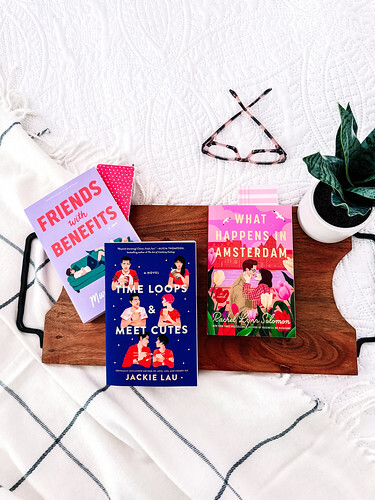
Check out my Bookstagram post here ♥
Thank you Celadon Books and Macmillan Audio for the advanced copies.
There are a few things I really appreciated about this book. First and foremost, chronic illness and pain are not widely depicted in romance, although that has been changing more recently, and its inclusion felt like a breath of fresh air for those, like me, who suffer from chronic autoimmune illness. I am also a huge fan of the friends to lovers trope and it was fun to see these complete opposites (in every way) take their longstanding friendship, and finally, finally, turn it on its head.
All that said, at the end of the day, I think this book is ultimately not for me. Marisa Kanter is a YA author and this is her first adult romance. As a result, I feel like this book is sort of stuck in limbo between the two worlds. In one sense, the writing is more simplistic, the characters not quite as developed or complex - something I tend to find in YA because it’s appealing to a different audience. And yet, the sexual content felt *very* adult-like. This disconnect between those elements was quite jarring at times. And while I do not mind spicy books, this felt a bit much for me. I do love a good open-door romance but not with so much…verbiage. Because it felt unnecessarily spicy at times, it didn’t feel as though it flowed naturally as part of their relationship or the story, but rather was more gratuitous in nature.
🎧 The audiobook did not add or subtract from the storyline, but felt right in line with what the book was trying to accomplish overall. I would rate the audio on par with the overall story.
Read if you like:
▪️women’s fiction
▪️friends to lovers
▪️marriage of convenience
▪️forced proximity
▪️bisexual FMC
▪️chronic pain and illness rep
Check out my Bookstagram post here ♥
Thank you Celadon Books and Macmillan Audio for the advanced copies.

May 3, 2025
I’m going to be upfront about a few things over the course of this review because, well…I’ll be honest and admit that I skipped ahead a bit and read a few of the reviews that others had written in advance of my time with Marisa Kanter’s debut adult novel, Friends With Benefits, and upon finishing this book, I had just as many thoughts about other people’s reaction to it as I did about the novel itself.
Having a parent that abandons you, at any age, regardless of how good or bad the situation is that they leave you stranded in, changes you. It alters your behaviour and your patterns and fits you with a unique set of lenses in which you view the world, but more importantly, how you view others. Every interaction with anyone that you even remotely care about becomes laced with one specific question that burns in bright neon letters just behind your eyes: when are they going to leave me? This type of abandonment holds court deep within the heart of Friends With Benefits and shapes and colours the reality of both of the central characters’ existences.
Friends With Benefits alternates between two narrators: the anxious, determined and dairy-free Evie and her lifelong best friend, the laid-back, driven and Survivor-obsessed Theo. Evie and Theo have been friends since they were barely teenagers when they both joined the same dance studio and spent their formative years as dance partners and best friends alternating hidden crushes on each other that ultimately did little more than crush each of them emotionally. But as Friends With Benefits opens, we meet them near the end of their twenties, each having dealt with a past littered with a handful of failed relationships, severe parental abandonment issues, chronic pain and illness in the case of Evie and a stagnation of career goals in the case of Theo.
After suffering a disastrous fall that ended her aspirations of becoming a dancer, Evie was inspired by her grandmother’s longtime radio show to become a Foley artist. But her need for adequate health care to help deal with her chronic illness - Crohn’s disease - has instead left her employed as an editor for a popular podcast and only daydreaming about opportunities in the world of television and cinema that have thus far eluded her. At the same time, Theo followed in his mother’s footsteps and became a fourth grade teacher at the same school that he attended as a child and that his mother also taught at before she passed away after a battle with colon cancer. Theo and his dad collided with each other in the lead up to his mother’s passing over how best to handle her care and in the aftermath of her death, they’ve remained at odds as Theo is convinced that his father is disappointed in his choice of career and can’t find a way to forgive his father for falling apart in the midst of his mother’s cancer diagnoses.
When an opportunity mysteriously arises that would allow Evie to take part in a much sought-after fellowship in which she would be mentored by her Foley artist idol, she is ultimately crestfallen as the position offers no health care and little pay and would render it impossible for her to be able to cover her ongoing medical care. As if that wasn’t enough, both she and Theo discover that they are about to be in a position where each of them will need to move from their respective homes and find new places to live. Theo proposes a plan to Evie that has him literally proposing to her - as a friend - in order to both allow Evie to be added to his health care plan and to take the Foley fellowship, while also providing him with the necessary marriage and financial requirement to keep his current rental lease.
When I first received Friends With Benefits, I wasn’t expecting it to contain a deep look into how badly damaged and broken the United States health care system is for people dealing with chronic illnesses that require them to be under constant medical attention while being inundated with a steady regimen of pricey prescriptions. There is a lot more that exists at the centre of this story than you would guess at a glance. Marisa does a admirable job explaining an extremely nuanced, difficult and touchy subject in a way that only serves to add to Evie and Theo’s story and doesn’t detract by miring things in technical details that would leave many readers yawning and waiting for the action to resume. Instead, she gives just enough information to help you understand the very real plight that so many people go through on a daily basis in order to receive the most basic and minimum care possible.
Evie and Theo’s story is also much deeper than it first appears. This is a duo with a lot more behind them than a few instances of bad timing on who was crushing on who at any particular moment. They each represent the closest thing that either of them has to an actual sense of home and both understand the ins and outs of who the other is without any effort - it simply comes naturally to them. While Theo has helped Evie through her battles with her mom’s disappearance, her dad’s unwillingness to be a father and the fall that led to her overall diagnoses for Crohn’s, Evie has equally been there to help Theo deal with his mother’s battle with cancer and the eventual aftermath which finds her being the only bridge left between Theo and his father. In a much more literal sense than you would expect, these two complete each other and over time have been doomed to be the only ones connected to them that haven’t chosen to recognize that simple fact.
Upon finishing this novel, I have to admit that I’ve been a bit perplexed at the number of instances in reviews of Friends With Benefits that have criticized the character of Evie or found reason to characterize her as a selfish and nasty person, while in the same breath boosting Theo as being a totally loyal and almost infallible character. I will be the first to admit that I am not as well-versed in books that graze the contemporary romance genre, but I found both Evie and Theo to be remarkably well-balanced in terms of how they each handled the situations that both served to bring them together and drive them apart in their past and also how they approached their new living situation as a “married” couple. Both characters made mistakes that impacted the other’s actions, both acted with a frustrating level of selfishness at times and both acted nobly in moments when it was necessary. I feel that any read of this book that attacks the way that the character of Evie approaches her life and deals with the intense amount of trauma that she continues to experience while elevating Theo to that white knight level of “you’re too good for her” says a lot more about the reader than it does about the story being told or the character inside of that story, but again, that’s just my read on things.
All in all, I was very pleasantly surprised at how much I enjoyed reading Friends With Benefits and I can confidently say that I would recommend it to anyone that is flirting with thoughts of taking a dive into the romance genre and definitely to anyone that is already well-read in that particular world. With this being her first foray into adult fiction, Marisa Kanter feels like a fresh new voice that will likely find a strong foothold the more that she explores and allows important real world issues to influence the direction of her work.
Thank you to Celadon Books for gifting me an advanced copy of this book and allowing me the chance to read and experience it.
Having a parent that abandons you, at any age, regardless of how good or bad the situation is that they leave you stranded in, changes you. It alters your behaviour and your patterns and fits you with a unique set of lenses in which you view the world, but more importantly, how you view others. Every interaction with anyone that you even remotely care about becomes laced with one specific question that burns in bright neon letters just behind your eyes: when are they going to leave me? This type of abandonment holds court deep within the heart of Friends With Benefits and shapes and colours the reality of both of the central characters’ existences.
Friends With Benefits alternates between two narrators: the anxious, determined and dairy-free Evie and her lifelong best friend, the laid-back, driven and Survivor-obsessed Theo. Evie and Theo have been friends since they were barely teenagers when they both joined the same dance studio and spent their formative years as dance partners and best friends alternating hidden crushes on each other that ultimately did little more than crush each of them emotionally. But as Friends With Benefits opens, we meet them near the end of their twenties, each having dealt with a past littered with a handful of failed relationships, severe parental abandonment issues, chronic pain and illness in the case of Evie and a stagnation of career goals in the case of Theo.
After suffering a disastrous fall that ended her aspirations of becoming a dancer, Evie was inspired by her grandmother’s longtime radio show to become a Foley artist. But her need for adequate health care to help deal with her chronic illness - Crohn’s disease - has instead left her employed as an editor for a popular podcast and only daydreaming about opportunities in the world of television and cinema that have thus far eluded her. At the same time, Theo followed in his mother’s footsteps and became a fourth grade teacher at the same school that he attended as a child and that his mother also taught at before she passed away after a battle with colon cancer. Theo and his dad collided with each other in the lead up to his mother’s passing over how best to handle her care and in the aftermath of her death, they’ve remained at odds as Theo is convinced that his father is disappointed in his choice of career and can’t find a way to forgive his father for falling apart in the midst of his mother’s cancer diagnoses.
When an opportunity mysteriously arises that would allow Evie to take part in a much sought-after fellowship in which she would be mentored by her Foley artist idol, she is ultimately crestfallen as the position offers no health care and little pay and would render it impossible for her to be able to cover her ongoing medical care. As if that wasn’t enough, both she and Theo discover that they are about to be in a position where each of them will need to move from their respective homes and find new places to live. Theo proposes a plan to Evie that has him literally proposing to her - as a friend - in order to both allow Evie to be added to his health care plan and to take the Foley fellowship, while also providing him with the necessary marriage and financial requirement to keep his current rental lease.
When I first received Friends With Benefits, I wasn’t expecting it to contain a deep look into how badly damaged and broken the United States health care system is for people dealing with chronic illnesses that require them to be under constant medical attention while being inundated with a steady regimen of pricey prescriptions. There is a lot more that exists at the centre of this story than you would guess at a glance. Marisa does a admirable job explaining an extremely nuanced, difficult and touchy subject in a way that only serves to add to Evie and Theo’s story and doesn’t detract by miring things in technical details that would leave many readers yawning and waiting for the action to resume. Instead, she gives just enough information to help you understand the very real plight that so many people go through on a daily basis in order to receive the most basic and minimum care possible.
Evie and Theo’s story is also much deeper than it first appears. This is a duo with a lot more behind them than a few instances of bad timing on who was crushing on who at any particular moment. They each represent the closest thing that either of them has to an actual sense of home and both understand the ins and outs of who the other is without any effort - it simply comes naturally to them. While Theo has helped Evie through her battles with her mom’s disappearance, her dad’s unwillingness to be a father and the fall that led to her overall diagnoses for Crohn’s, Evie has equally been there to help Theo deal with his mother’s battle with cancer and the eventual aftermath which finds her being the only bridge left between Theo and his father. In a much more literal sense than you would expect, these two complete each other and over time have been doomed to be the only ones connected to them that haven’t chosen to recognize that simple fact.
Upon finishing this novel, I have to admit that I’ve been a bit perplexed at the number of instances in reviews of Friends With Benefits that have criticized the character of Evie or found reason to characterize her as a selfish and nasty person, while in the same breath boosting Theo as being a totally loyal and almost infallible character. I will be the first to admit that I am not as well-versed in books that graze the contemporary romance genre, but I found both Evie and Theo to be remarkably well-balanced in terms of how they each handled the situations that both served to bring them together and drive them apart in their past and also how they approached their new living situation as a “married” couple. Both characters made mistakes that impacted the other’s actions, both acted with a frustrating level of selfishness at times and both acted nobly in moments when it was necessary. I feel that any read of this book that attacks the way that the character of Evie approaches her life and deals with the intense amount of trauma that she continues to experience while elevating Theo to that white knight level of “you’re too good for her” says a lot more about the reader than it does about the story being told or the character inside of that story, but again, that’s just my read on things.
All in all, I was very pleasantly surprised at how much I enjoyed reading Friends With Benefits and I can confidently say that I would recommend it to anyone that is flirting with thoughts of taking a dive into the romance genre and definitely to anyone that is already well-read in that particular world. With this being her first foray into adult fiction, Marisa Kanter feels like a fresh new voice that will likely find a strong foothold the more that she explores and allows important real world issues to influence the direction of her work.
Thank you to Celadon Books for gifting me an advanced copy of this book and allowing me the chance to read and experience it.

July 17, 2025
1.5 ★
This was exhausting. I need a full day retreat just to recover from trying to finish this book. A marriage of convenience between two childhood best friends so he (Theo) doesn't lose the apartment he can't afford with his teacher salary, and she (Evie) can access his health insurance and apply to her dream fellowship that doesn't come with one, shouldn't be this tiring and frustrating. And it's interesting because it didn't take me long to read, but I wanted to get inside this book and strangle these characters.
As fun as it is to write rant reviews and hate-read books, I hate doing that with ARCs. I hate not having anything nice to say about an ARC, so let me start with the only aspects of this book I enjoyed: the kids, Evie's job as a Foley artist, and the chronic illness rep. (1) Theo's fourth graders were adorable and had me laughing over their antics. They were so witty and well-spoken, and you can tell they owe that to him. (2) It was so interesting to learn a bit more about Foley work since I only got introduced to it late last year. It's such a cool and underrated career path, and I love characters with unique jobs. (3) I appreciate some good chronic illness representation, and Evie has Crohn's disease. There's a lot of talk about the special care she needs, how difficult it was for her to get a diagnosis since women's pain isn't taken seriously, and all the pain she had to endure before it. Some people in the reviews have complained about these thoughts and her call-outs on the healthcare system, and I need to distance myself from these people, so let me make something clear:
Now, back to Evie and Theo's relationship. I know they've been friends for decades, but telling me they've known each other since they were kids isn't enough for me to believe in them as a couple. It doesn't do anything for their romantic or sexual chemistry if you don't show me moments that build up to that change between platonic and romantic love. I believe they're friends, but I don't feel anything for them as lovers.
Not even Evie thinking this can make me believe her because she spends the whole book pushing him away, downplaying her and his feelings, bringing up whatever excuse she can to let things stay the way they are, cutting off conversations, pretending to know more about his feelings than he does, and being okay with the insane amount of miscomunication they've been dealing with since forever 🙄. I simply don't believe she loves this man, and not even her maturing a bit towards the end can change my mind. I know she didn't have the best childhood and is still dealing with the consequences, but at one point, you're grown enough to have to deal with it and stop hurting people. There's this moment where she asks herself if she's the problem, and I wanted to get inside this book to scream "YES" at her face.
But here's the worst: while she's the main problem, he doesn't stay as far behind as I first thought. He might be super considerate, sweet, understanding, and pretty obvious with his feelings for her, but he's also a doormat. He lets her treat him the way she wants (and not in a 🫦 way, but a 😬 way) and doesn't fight to be heard until the very end. They were such a frustrating pair that I was pushing myself to keep reading just to see if they could redeem themselves... and they slightly did, but not enough.
Aside from my aforementioned problems with Evie and Theo, I also struggled with the writing. There were pop culture mentions, rants, lots of overdescriptions of food, drinks, and activities, and thoughts going on. It felt like the author was trying to include as many things as she could, but it only ended up feeling overwhelming, unnecessary, and underdeveloped. My head still hurts while thinking about everything that this book had going on, so yeah, not the story I was expecting.
Thank you to Celadon Books and Netgalley for the ARC ♡
This was exhausting. I need a full day retreat just to recover from trying to finish this book. A marriage of convenience between two childhood best friends so he (Theo) doesn't lose the apartment he can't afford with his teacher salary, and she (Evie) can access his health insurance and apply to her dream fellowship that doesn't come with one, shouldn't be this tiring and frustrating. And it's interesting because it didn't take me long to read, but I wanted to get inside this book and strangle these characters.
“These kids are terrifying.”
“I know.”
“I'm kind of obsessed with them?”
“I know.”
As fun as it is to write rant reviews and hate-read books, I hate doing that with ARCs. I hate not having anything nice to say about an ARC, so let me start with the only aspects of this book I enjoyed: the kids, Evie's job as a Foley artist, and the chronic illness rep. (1) Theo's fourth graders were adorable and had me laughing over their antics. They were so witty and well-spoken, and you can tell they owe that to him. (2) It was so interesting to learn a bit more about Foley work since I only got introduced to it late last year. It's such a cool and underrated career path, and I love characters with unique jobs. (3) I appreciate some good chronic illness representation, and Evie has Crohn's disease. There's a lot of talk about the special care she needs, how difficult it was for her to get a diagnosis since women's pain isn't taken seriously, and all the pain she had to endure before it. Some people in the reviews have complained about these thoughts and her call-outs on the healthcare system, and I need to distance myself from these people, so let me make something clear:
‼️‼️ DNF-ing this book because you found it "too political" when the only thing it does is call out the healthcare system in America and the dismissal of women's pain worldwide, doesn't make you valid or above the rest of us. A book that highlights inequality in the workforce and healthcare is just a book about our reality. Is it valid to want to "escape" when you read a book? Sure, but hate to break it to you: it's not possible. Every book out there is political, yes, including romance books. The way people write characters is political, the background they give them and the way that influences their actions is political, the descriptions characters give their love interests are political. Everything, absolutely everything (again, including the "silly romance book" you're reading) is political. So uhm, no. You don't get to abandon something because it had a character talking about her health struggles and her need for free (as possible) healthcare. That's not a valid reason. Complain about the characters' actions or other aspects of the writing, not because it's "too political"(whatever that means 😒) ‼️‼️
Now, back to Evie and Theo's relationship. I know they've been friends for decades, but telling me they've known each other since they were kids isn't enough for me to believe in them as a couple. It doesn't do anything for their romantic or sexual chemistry if you don't show me moments that build up to that change between platonic and romantic love. I believe they're friends, but I don't feel anything for them as lovers.
“(...) she loved him.
She's always loved him.
Really, it's an exhausting amount of work to not love him.”
Not even Evie thinking this can make me believe her because she spends the whole book pushing him away, downplaying her and his feelings, bringing up whatever excuse she can to let things stay the way they are, cutting off conversations, pretending to know more about his feelings than he does, and being okay with the insane amount of miscomunication they've been dealing with since forever 🙄. I simply don't believe she loves this man, and not even her maturing a bit towards the end can change my mind. I know she didn't have the best childhood and is still dealing with the consequences, but at one point, you're grown enough to have to deal with it and stop hurting people. There's this moment where she asks herself if she's the problem, and I wanted to get inside this book to scream "YES" at her face.
“His whole life, Evelyn Bloom has dictated the terms of their relationship, and it was always enough for him, to just be in her life.”
But here's the worst: while she's the main problem, he doesn't stay as far behind as I first thought. He might be super considerate, sweet, understanding, and pretty obvious with his feelings for her, but he's also a doormat. He lets her treat him the way she wants (and not in a 🫦 way, but a 😬 way) and doesn't fight to be heard until the very end. They were such a frustrating pair that I was pushing myself to keep reading just to see if they could redeem themselves... and they slightly did, but not enough.
Aside from my aforementioned problems with Evie and Theo, I also struggled with the writing. There were pop culture mentions, rants, lots of overdescriptions of food, drinks, and activities, and thoughts going on. It felt like the author was trying to include as many things as she could, but it only ended up feeling overwhelming, unnecessary, and underdeveloped. My head still hurts while thinking about everything that this book had going on, so yeah, not the story I was expecting.
Thank you to Celadon Books and Netgalley for the ARC ♡

Want to Read
July 23, 2025books are political. get over yourselves.

March 25, 2025
OUTLIER ALERT:
Although I loved the book's "Friends with Benefits" title/premise, I was not the right reader for this book.
WHY?
1) I AM A KATHERINE CENTER FAN.
The publisher's blurb promised a lighthearted rom-com for fans of Katherine Center.
Katherine Center's new 2025 release just received a glowing 5-star review from me.
Even with a vivid imagination, stating that author Marisa Kanter's writing style shared similarities with Katherine Center's style was a HUGE stretch.
2) PACING. At times, the book's pacing was tediously slow.
3) POLITICS. The author's political views were included in this book. (Ouch!!!!!)
I enjoy "no politics, please" rom-coms, and therefore, this book was not lighthearted and had me cringing instead of LOL and commiserating with the protagonists.
I listened to the audiobook narrated by Gail Shalan and GM Hakim.
I always enjoy multi-cast narrations.
Gail Shalon's narration was good but not great. GM Hakim's narration was superb.
Special thanks to NetGalley and the publisher for an ARC in exchange for an honest review.
2.5 stars

March 19, 2025
2.5⭐️
A friends-to-lovers, marriage of convenience romance! Evie and Theo get married so that a) Evie can use Theo's health insurance and b) they qualify for rent in Theo's building. I had high hopes for this, because all of these things sounded right up my alley- but this really did not work for me. I kept pushing myself to finish it, hoping it would get better and it really just got worse
To start us off: the romance. Did not work. The author did a really good job setting up Evie and Theo as friends- they've known each other since they were children. Went to school together, danced together, are close with each other's families. But they were such platonic friends that I didn't believe it when they started to (internally) admit their feelings? I just didn't buy that they've been in love with each other for years, let alone five minutes
So I think the author also pushed too hard to try and make this like, hip? And sex-positive? Like Evie is very open about her sexuality and casual partners, which is great! But the author really kept pushing, to the point of a) making Evie awful and b) just making things weird. Evie brings Theo across the country to NYC as her date to a family bat mitzvah- where she tries to ditch him for the day to go hook up with an old FWB. If a friend EVER did this to me, I would seriously reconsider our friendship. Like again, great! Evie is capable and unashamed of having casual sex. But bailing on her best friend? Not cool. ALSO. Her grandparents send her and Theo a box of sex toys to celebrate their marriage?... Her grandma also took her to a sex shop on her 18th birthday to help pick out her first vibrator. I'm sorry, I don't care what anyone thinks- this is weird.
Then we get to Evie. Honestly I wanted this book to end with Theo running as far as he could in the opposite direction of Evie. She's in therapy and acts like this makes her well-adjusted, but is the most toxic person in this book. On the relationship side, I truly don't believe she loved Theo. She flies to NYC in a flashback to confess her feelings and is devastated when he's with another woman- so she sleeps with his roommate? This is not the behaviour of someone in love. At one point she says she can't be rejected by Theo for a third time- you know what the first two times were?! Prom when they were like 16 and she threw him a casual 'hey want to go together' but he already had a date. And the second time he "rejected" her? AT HIS MOTHER'S FUNERAL. Dear god. They were both drinking and end up making out and Theo stops things because again- it's his mother's funeral and they were both grieving. When he points out that that was CLEARLY not the time for them to get together or talk about their relationship, Evie basically implies that she should have been the priority in that moment.
She just kept continually getting more awful. When she gets made she throws a really low-blow at Theo purposefully to hurt him (to get him to leave her in LA and go to NYC I think? I don't even know) but is absolutely flabbergasted when he throws a low-blow right back at him. Like Evie CONTINUALLY pushed him away, was awful to him on purpose, and for some reason Theo kept coming back for more.
Thank you to Netgalley and the publishing team for the ARC in exchange for an honest review.
A friends-to-lovers, marriage of convenience romance! Evie and Theo get married so that a) Evie can use Theo's health insurance and b) they qualify for rent in Theo's building. I had high hopes for this, because all of these things sounded right up my alley- but this really did not work for me. I kept pushing myself to finish it, hoping it would get better and it really just got worse
To start us off: the romance. Did not work. The author did a really good job setting up Evie and Theo as friends- they've known each other since they were children. Went to school together, danced together, are close with each other's families. But they were such platonic friends that I didn't believe it when they started to (internally) admit their feelings? I just didn't buy that they've been in love with each other for years, let alone five minutes
So I think the author also pushed too hard to try and make this like, hip? And sex-positive? Like Evie is very open about her sexuality and casual partners, which is great! But the author really kept pushing, to the point of a) making Evie awful and b) just making things weird. Evie brings Theo across the country to NYC as her date to a family bat mitzvah- where she tries to ditch him for the day to go hook up with an old FWB. If a friend EVER did this to me, I would seriously reconsider our friendship. Like again, great! Evie is capable and unashamed of having casual sex. But bailing on her best friend? Not cool. ALSO. Her grandparents send her and Theo a box of sex toys to celebrate their marriage?... Her grandma also took her to a sex shop on her 18th birthday to help pick out her first vibrator. I'm sorry, I don't care what anyone thinks- this is weird.
Then we get to Evie. Honestly I wanted this book to end with Theo running as far as he could in the opposite direction of Evie. She's in therapy and acts like this makes her well-adjusted, but is the most toxic person in this book. On the relationship side, I truly don't believe she loved Theo. She flies to NYC in a flashback to confess her feelings and is devastated when he's with another woman- so she sleeps with his roommate? This is not the behaviour of someone in love. At one point she says she can't be rejected by Theo for a third time- you know what the first two times were?! Prom when they were like 16 and she threw him a casual 'hey want to go together' but he already had a date. And the second time he "rejected" her? AT HIS MOTHER'S FUNERAL. Dear god. They were both drinking and end up making out and Theo stops things because again- it's his mother's funeral and they were both grieving. When he points out that that was CLEARLY not the time for them to get together or talk about their relationship, Evie basically implies that she should have been the priority in that moment.
She just kept continually getting more awful. When she gets made she throws a really low-blow at Theo purposefully to hurt him (to get him to leave her in LA and go to NYC I think? I don't even know) but is absolutely flabbergasted when he throws a low-blow right back at him. Like Evie CONTINUALLY pushed him away, was awful to him on purpose, and for some reason Theo kept coming back for more.
Thank you to Netgalley and the publishing team for the ARC in exchange for an honest review.

April 24, 2025
I received a copy of this book for free from the publisher (Celadon Books) for promotional purposes.
This was a fun rom-com with a lot of depth!
First off, the title is perfect because it sums up the book so well. Two friends, Theo and Evie, get married so Evie (who has a chronic illness) can get good health benefits and together they qualify for Theo’s rent controlled apartment.
Marriage of convenience is one of my favorite romance tropes and I thought the author executed it skillfully. Their reasons for getting married made sense and the fact that they were life long friends made it very plausible. Marriage of convenience can sometimes feel far-fetched when the two characters don’t know each other well.
Despite being a romantic comedy, I loved that the book touched upon more serious topics. It explored grief, chronic illness (specifically Crohn’s disease), family abandonment, the healthcare system, and the education system. These added a layer of “realness” to the story.
I also liked the inclusion of flashbacks that slowly revealed Theo and Evie’s not-so platonic friendship through the years. They were woven throughout the story and were perfectly placed.
Theo and Evie are not without their faults. Neither one of them is perfect and they both make a ton of mistakes, but that’s what makes them human. They worked well as a couple because of their history and friendship. They really understood each other.
Side note: I thought it was so fun that Theo and Evie were big Survivor fans. As a fan of the show, I enjoyed the Survivor references.
Overall, I really loved this romance! If you like the friends-to-lovers and/or marriage of convenience tropes, be sure to check this one out.
This was a fun rom-com with a lot of depth!
First off, the title is perfect because it sums up the book so well. Two friends, Theo and Evie, get married so Evie (who has a chronic illness) can get good health benefits and together they qualify for Theo’s rent controlled apartment.
Marriage of convenience is one of my favorite romance tropes and I thought the author executed it skillfully. Their reasons for getting married made sense and the fact that they were life long friends made it very plausible. Marriage of convenience can sometimes feel far-fetched when the two characters don’t know each other well.
Despite being a romantic comedy, I loved that the book touched upon more serious topics. It explored grief, chronic illness (specifically Crohn’s disease), family abandonment, the healthcare system, and the education system. These added a layer of “realness” to the story.
I also liked the inclusion of flashbacks that slowly revealed Theo and Evie’s not-so platonic friendship through the years. They were woven throughout the story and were perfectly placed.
Theo and Evie are not without their faults. Neither one of them is perfect and they both make a ton of mistakes, but that’s what makes them human. They worked well as a couple because of their history and friendship. They really understood each other.
Side note: I thought it was so fun that Theo and Evie were big Survivor fans. As a fan of the show, I enjoyed the Survivor references.
Overall, I really loved this romance! If you like the friends-to-lovers and/or marriage of convenience tropes, be sure to check this one out.

February 7, 2025
how could i not love this book? the characters are survivor fanatics. this book was adorable

March 31, 2025
My entire review is this: Evie sucks

September 9, 2025
I really wanted to love this more than I did. I didn’t love how it felt like the FMC was taking advantage of MMC. However her chronic illness journey was really relatable (been there, done that).

April 19, 2025
I wanted to love this more than I did. I will say this: I love a friends to lovers story. I bought the chemistry between Evie and Theo and I was rooting for them for a bit of the story. A little more than half way through, Evie started to bother me, specifically in her treatment of Theo. Her character development surrounding her Crohn’s disease and her love of foley were amazing. I felt like I was learning more about the art of foley as I read and it was such a fun journey to go on with Evie. Theo’s love of teaching and commitment to creating a fun curriculum made him such a lovable character. These things eventually were overshadowed by Evie’s selfishness and complete inability to let Theo make his own decisions. It was redeemed a little bit at the end and I really enjoyed the ending, but a good chunk of the last half of the book had me questioning if I even wanted Evie and Theo together. Evie talks so much about how her mom fucked her up only to end up like her.
HOWEVER. I really did enjoy the way this was written and the jumping between timelines was really well done, in my opinion. Theo was a great character and I loved reading about him. He deserved to be treated better!! I’ll definitely give her other books a try as this was a good book, Evie just irritated me a bit.
Thank you to Netgalley, the author, and Celadon Books for the ARC!
HOWEVER. I really did enjoy the way this was written and the jumping between timelines was really well done, in my opinion. Theo was a great character and I loved reading about him. He deserved to be treated better!! I’ll definitely give her other books a try as this was a good book, Evie just irritated me a bit.
Thank you to Netgalley, the author, and Celadon Books for the ARC!

April 2, 2025
So this is the first time I have ever used this term about a book and in fact, I had to search to find a descriptor. Over-inclusion. I get what the author was trying to do here and I respect characters having underlying health difficulties as a main characteristic, but this book was trying too hard to represent multiple issues and there were so many pop culture references. It was a lot to manage as a reader. Maybe this would appeal to younger readers better.
The main character of Evie is not that likable and she's quite immature for the age she is stated to be at 28. I found her frustrating. I tried to go with the flow and not judge the "romance" which didn't feel all that romantic to me. It felt forced, like maybe these two had enough of trying with others and went for the familiarity out of codependency and convenience. I wasn't feeling it.
I had the audiobook version and I must give kudos to GM Hakim as he was the better narrator. Gail Shalon's narration was just ok. But I did enjoy the multiple cast narration, it helped with the story.
Thanks to NetGalley and Macmillan Audio for the ARC!
The main character of Evie is not that likable and she's quite immature for the age she is stated to be at 28. I found her frustrating. I tried to go with the flow and not judge the "romance" which didn't feel all that romantic to me. It felt forced, like maybe these two had enough of trying with others and went for the familiarity out of codependency and convenience. I wasn't feeling it.
I had the audiobook version and I must give kudos to GM Hakim as he was the better narrator. Gail Shalon's narration was just ok. But I did enjoy the multiple cast narration, it helped with the story.
Thanks to NetGalley and Macmillan Audio for the ARC!

February 7, 2025
4.5 rounded up. This is one of the best executions of friends to lovers I’ve read. The small moments and shared memories are done so well, you really feel that these two have been through it and know the other one at their core. I think the third act dragged just a smidge, and I didn’t love how much Evie pushed away, but the background for her character did make that make sense. Bonus love for the Raise Your Voice reference—talk about a severely underrated movie. All in all such a great read!

April 4, 2025
Overall, 4 stars, this book gave me Abby Jimenez vibes. It was really close to 4.5 stars BUT I strongly dislike third person POV books (personal option). I love the friends to lovers trope and the story between Theo and Evie was so sweet. The friendship between Theo and Evie grew so organically and I loved their mutual respect and care for each other. What I really enjoyed about the book were the character development, the side characters, Theo and Evie's backstories, the humor (especially Theo's students <3), and how caring and observant Theo was.
If you liked Just for the Summer by Abby Jimenez, you will probably like this one. It gave me similar vibes.
Format: audiobook
Thank you NetGalley and Macmillan Audio for this advanced audiobook!
*Dual POV - third person
*Friends to lovers
*Childhood trauma
*Marriage of convenience
*Chronic illness
Instagram
If you liked Just for the Summer by Abby Jimenez, you will probably like this one. It gave me similar vibes.
Format: audiobook
Thank you NetGalley and Macmillan Audio for this advanced audiobook!
*Dual POV - third person
*Friends to lovers
*Childhood trauma
*Marriage of convenience
*Chronic illness

April 3, 2025
Confirmed: Hot girls have tummy issues. Love the chronic disability rep. Totally related to FMC having to break (literally) before medical community would take her pain seriously and diagnose/treat her autoimmune disease. Doing all the tests and hearing “everything is normal” is unbelievably frustrating, these people have clearly never shit their pants and it shows. With Theo’s mom dealing the similar issue, well it’s no wonder he goes above and beyond to care for Evie. The commentary of our dystopic health care system here in ‘merica was spot on.
Now for the love story…if you like imperfect characters, piss poor timing, and even worse emotional intelligence, this book will fit the mark. These two knuckleheads will make you want to reach in and shake them, but also give them big ole hugs. 💚
Thank you Net Galley and Macmillan audio for the ARC.
Now for the love story…if you like imperfect characters, piss poor timing, and even worse emotional intelligence, this book will fit the mark. These two knuckleheads will make you want to reach in and shake them, but also give them big ole hugs. 💚
Thank you Net Galley and Macmillan audio for the ARC.

July 29, 2025
Likely an unpopular opinion, but Theo deserved better than Evelyn.
March 1, 2025
Thanks to Celadon Books and NetGalley for the ARC in exchange for an honest review.
Anyone who knows me, knows #friendstolovers is my favorite trope. I just LOVE it!
Stefan and Caroline happen to be one of my favorite examples of this, after #mondler (Monica and Chandler) in #Friends.
Well, move over, Steroline and Mondler! Because we've got Thevelyn or...Eveo!
Point is, this book had me ALL IN MY FEELS, FOR REAL. And if Theo were real, whew! He was *the* love interest.
Theo and Evelyn (Evie, pronounced Eh-vee) have been best friends since childhood, facing dual crises in their lives.
Theo's roommates announce their moving out, and because of certain rent stipulations, he is ineligible to stay in the apartment solo.
Evelyn is a Foley artist (the magicians behind the sounds in movies and TV shows), who is presented with an opportunity to do a prestigious fellowship and finally get some legit experience and possible recognition for her passion. However, Evie, has Crohn's disease, and needs health insurance to literally live and function.
Does she stick with her current full-time job with bennies, continue to feel drained, under-appreciated, and stuck?
Well, after Evie is suddenly faced with her own housing crisis, the besties realize that two heads are better than one- marriage-style.
Theo and Evie get married to solve their problems--- score the apartment, pursue the fellowship, while not losing benefits since being married to Theo, she's on in his insurance.
Easy-peasy, right?
NOPE.
Turns out, good health insurance is not the only benefit.
This book has EVERYTHING:
*witty banter
*chronic illness rep
*gut-wrenching romance
*great supporting characters
*a great premise, with great execution
*an HEA
5-star rating, for sure. I absolutely fell in love with Eveo and their journey. How deep their friendship was, how solid the foundation they built, their support of each other, how in sync they were. JUST AMAZING! Go get it!
Anyone who knows me, knows #friendstolovers is my favorite trope. I just LOVE it!
Stefan and Caroline happen to be one of my favorite examples of this, after #mondler (Monica and Chandler) in #Friends.
Well, move over, Steroline and Mondler! Because we've got Thevelyn or...Eveo!
Point is, this book had me ALL IN MY FEELS, FOR REAL. And if Theo were real, whew! He was *the* love interest.
Theo and Evelyn (Evie, pronounced Eh-vee) have been best friends since childhood, facing dual crises in their lives.
Theo's roommates announce their moving out, and because of certain rent stipulations, he is ineligible to stay in the apartment solo.
Evelyn is a Foley artist (the magicians behind the sounds in movies and TV shows), who is presented with an opportunity to do a prestigious fellowship and finally get some legit experience and possible recognition for her passion. However, Evie, has Crohn's disease, and needs health insurance to literally live and function.
Does she stick with her current full-time job with bennies, continue to feel drained, under-appreciated, and stuck?
Well, after Evie is suddenly faced with her own housing crisis, the besties realize that two heads are better than one- marriage-style.
Theo and Evie get married to solve their problems--- score the apartment, pursue the fellowship, while not losing benefits since being married to Theo, she's on in his insurance.
Easy-peasy, right?
NOPE.
Turns out, good health insurance is not the only benefit.
This book has EVERYTHING:
*witty banter
*chronic illness rep
*gut-wrenching romance
*great supporting characters
*a great premise, with great execution
*an HEA
5-star rating, for sure. I absolutely fell in love with Eveo and their journey. How deep their friendship was, how solid the foundation they built, their support of each other, how in sync they were. JUST AMAZING! Go get it!

Read
April 15, 2025thank you netgalley & celadon books for the arc in exchange for an honest review!
a huge reason for my dislike of this book has to be that i did not vibe with the writing style, and that’s okay because even though it did not work for me, it might work for others. it was not the third pov that bothered me though (just to clear that up).
the premise of this book is good. i love marriage-of-convenience and friends-to-loves! however, evie’s inner monologues are another aspect of this book that felt unbearable and exhausting for me to read. as always, i recommend people to try this book because you may end up liking it even if i didn’t.
a huge reason for my dislike of this book has to be that i did not vibe with the writing style, and that’s okay because even though it did not work for me, it might work for others. it was not the third pov that bothered me though (just to clear that up).
the premise of this book is good. i love marriage-of-convenience and friends-to-loves! however, evie’s inner monologues are another aspect of this book that felt unbearable and exhausting for me to read. as always, i recommend people to try this book because you may end up liking it even if i didn’t.

April 11, 2025
A super fluffy & predictable read. The title says it all with not a super lot going on… hea, he falls first, friends to lovers, forced proximity - all the fun feeling tropes. Thank you @netgalley for my audiobook arc!

May 5, 2025
I wanted to love this one so much more than I did, but I just found there to be so many things that made my eye twitch.
The story follows longtime best friends Evie and Theo who decide to get married for health insurance purposes. Obviously, they fall in love. I liked Evie and Theo's story for the most part, but at times found Evie to be a little unlikable.
I appreciated the fact that the author tried to throw some representation in there with certain medical conditions, but I didn't feel like it played much of a role in the story other than existing and constantly being mentioned in the background for no real reason.
My biggest pet peeve with the book, which was not even a pet peeve I knew I had until I read this was the naming of every single person or character that was mentioned. I don't know how to explain it, but it had to be over 100 character name drops of people who were not even a part of the story. The book would mention a co-worker, an ex, a distant relative, literally anyone and everyone by name and then that character would only be relevant for a single paragraph or two and never mentioned again. It just got super confusing where they would mention a miniscule character by name, then 2 pages later use the name for that person instead of just referring to them as what they are (coworker, aunt, great-grandma, ex, distant cousin) and it was impossible to keep track because then the person would never be mentioned again. It was just wildly distracting while trying to follow the main story.
Overall, the story was cute, but not groundbreaking.
The story follows longtime best friends Evie and Theo who decide to get married for health insurance purposes. Obviously, they fall in love. I liked Evie and Theo's story for the most part, but at times found Evie to be a little unlikable.
I appreciated the fact that the author tried to throw some representation in there with certain medical conditions, but I didn't feel like it played much of a role in the story other than existing and constantly being mentioned in the background for no real reason.
My biggest pet peeve with the book, which was not even a pet peeve I knew I had until I read this was the naming of every single person or character that was mentioned. I don't know how to explain it, but it had to be over 100 character name drops of people who were not even a part of the story. The book would mention a co-worker, an ex, a distant relative, literally anyone and everyone by name and then that character would only be relevant for a single paragraph or two and never mentioned again. It just got super confusing where they would mention a miniscule character by name, then 2 pages later use the name for that person instead of just referring to them as what they are (coworker, aunt, great-grandma, ex, distant cousin) and it was impossible to keep track because then the person would never be mentioned again. It was just wildly distracting while trying to follow the main story.
Overall, the story was cute, but not groundbreaking.

July 20, 2025
I’m a sucker for friends to lovers 🤍
June 24, 2025
Friends with Benefits is the author's first adult contemporary romance.
This is a review of both the ebook and the audiobook (read by Gail Shalan and GM Hakim).
The book alternates between the male and female POVs. Evie was a dancer. But now she is trying to be a Foley artist (a person who creates and adds realistic sound effects to films/ tv shows media during post-production).
There were a lot of things that I loved about this book. I had never heard of a Foley artist. So I found everything to do with this occupation to be fascinating. Evie has a chronic illness (Crohn's disease). This was such a big part of the book and it was done so well. Also she is bisexual. This seemed like a realistic portrayal (which makes sense since the author is bisexual).
Evie was an interesting character. She was abandoned by her mom and so she believes that everyone will abandon her. This didn't make her the easiest character to like.
Theo on the other hand was wonderful. He was a fourth grade teacher. The classroom scenes with him and his students were the best. Especially everything to do with Survivor. I love the reality show and this book is a love letter to the show.
The book really looked at so many additional topics including mental health rep, grief rep and Jewish rep.
Gail Shalan and GM Hakim were both new to me. But I really enjoyed both of their performances a lot.
The book features some popular tropes. But it also features one that I like less: miscommunication. Evie and Theo had an incredible friendship. But wow I was not expecting so much miscommunication.
Overall this was a romance with substance. I was definitely impressed with the care given to the chronic illness storyline. This is such an important topic, which was handled so well.

May 18, 2025
4.5 ⭐️
From the second I saw that this book had a marriage of convenience for health benefits, I was absolutely hooked.
Friends to lovers is a really hit-or-miss trope for me, but Theo and Evie were a HIT. I loved their Survivor obsession and all of the memories we got to see of them growing up. It was so clear how deeply they knew each other – especially how much Theo understood what Evie was going through just from a single look – and I was rooting for them every step of the way.
I really enjoyed the chronic illness representation and both of their experiences with the US healthcare system brought so much to their characters. Since this was dual POV, I do wish that there had been a little more about what exactly Theo was going through. He seemed to have some kind of anxiety, especially related to his health, and I just wish it had been touched on a little more directly since we saw it impact his character several times.
Overall I adored this book and the balance of sweet romance with emotional depth and the exploration of mental health and chronic illness reminded me of some of Hannah Bonam-Young’s books (some of my favs), so if you like any of hers you should give this one a try.
*Thank you to Netgalley and the publisher for providing me with an ARC in exchange for an honest review.
From the second I saw that this book had a marriage of convenience for health benefits, I was absolutely hooked.
Friends to lovers is a really hit-or-miss trope for me, but Theo and Evie were a HIT. I loved their Survivor obsession and all of the memories we got to see of them growing up. It was so clear how deeply they knew each other – especially how much Theo understood what Evie was going through just from a single look – and I was rooting for them every step of the way.
I really enjoyed the chronic illness representation and both of their experiences with the US healthcare system brought so much to their characters. Since this was dual POV, I do wish that there had been a little more about what exactly Theo was going through. He seemed to have some kind of anxiety, especially related to his health, and I just wish it had been touched on a little more directly since we saw it impact his character several times.
Overall I adored this book and the balance of sweet romance with emotional depth and the exploration of mental health and chronic illness reminded me of some of Hannah Bonam-Young’s books (some of my favs), so if you like any of hers you should give this one a try.
*Thank you to Netgalley and the publisher for providing me with an ARC in exchange for an honest review.

May 14, 2025
There were some fun twists and turns in Marisa Kanter's Friends with Benefits. A traditional besties to lovers story, I enjoyed the way Kanter builds the attraction between the main characters. There are some nice memories between Evie and Theo from when they were kids, and the story of their families and Evie's battle with Crones is quite well done.
The audio version of Friends with Benefits is nicely performed by Gail Shalan and GM Hakim.
an audiobook copy of Friends with Benefits was provided by Macmillan Audio, via NetGalley, for the purpose of my honest review, all opinions are my own
The audio version of Friends with Benefits is nicely performed by Gail Shalan and GM Hakim.
an audiobook copy of Friends with Benefits was provided by Macmillan Audio, via NetGalley, for the purpose of my honest review, all opinions are my own

September 5, 2025
3.5 ⭐️
Very cute. I love Theo. Evie is meh. she seems very selfish. 3rd act breakup is boring tho. but the story overall is better than average.
Very cute. I love Theo. Evie is meh. she seems very selfish. 3rd act breakup is boring tho. but the story overall is better than average.

February 11, 2025
I got to read this book through NetGalley in exchange for an honest review.
In the spirit of honesty, I have to say that the beginning of this book almost made me DNF it. The writing felt very Wattpad-ish, but I did already like the characters, so I continued. There was some repetition of a piece of the story that irked me a bit, but I think it was just the author trying to show the other characters perspective? Overall, it was just the former English major in me that struggled in the beginning. That being said, I know that I need to bear in mind that I read an ARC, so I’m not sure how different the final version will be.
I ended up really loving the story and the characters, especially the focus on her invisible illness and insurance struggles. The characters, romance (and spice) were written well and I appreciate the realness of the story.
In the spirit of honesty, I have to say that the beginning of this book almost made me DNF it. The writing felt very Wattpad-ish, but I did already like the characters, so I continued. There was some repetition of a piece of the story that irked me a bit, but I think it was just the author trying to show the other characters perspective? Overall, it was just the former English major in me that struggled in the beginning. That being said, I know that I need to bear in mind that I read an ARC, so I’m not sure how different the final version will be.
I ended up really loving the story and the characters, especially the focus on her invisible illness and insurance struggles. The characters, romance (and spice) were written well and I appreciate the realness of the story.

March 12, 2025
Thank you, Celadon Books, Marisa Kanter, and NetGalley for giving me an ARC in exchange for an honest review.
Unfortunately, I DNF’d this at 6%. I am all for books sharing a political point of view that is personal to oneself, but when that opinion is made abundantly clear in less than two chapters it’s too much for me. The characters just seemed like I would not enjoy them, since much effort went into discussing the root of issues, other than possibly oneself. I don’t like that. I’m not going to take my free time to read that.
However, if you are a politically active individual who shares this authors politics, you’ll probably read this and enjoy it. I just prefer to escape reality with my books, not be inundated with it.
Unfortunately, I DNF’d this at 6%. I am all for books sharing a political point of view that is personal to oneself, but when that opinion is made abundantly clear in less than two chapters it’s too much for me. The characters just seemed like I would not enjoy them, since much effort went into discussing the root of issues, other than possibly oneself. I don’t like that. I’m not going to take my free time to read that.
However, if you are a politically active individual who shares this authors politics, you’ll probably read this and enjoy it. I just prefer to escape reality with my books, not be inundated with it.

May 29, 2025
I liked the representation 🌈 in this… that’s all I liked actually.
Displaying 1 - 30 of 995 reviews