

What do you think?
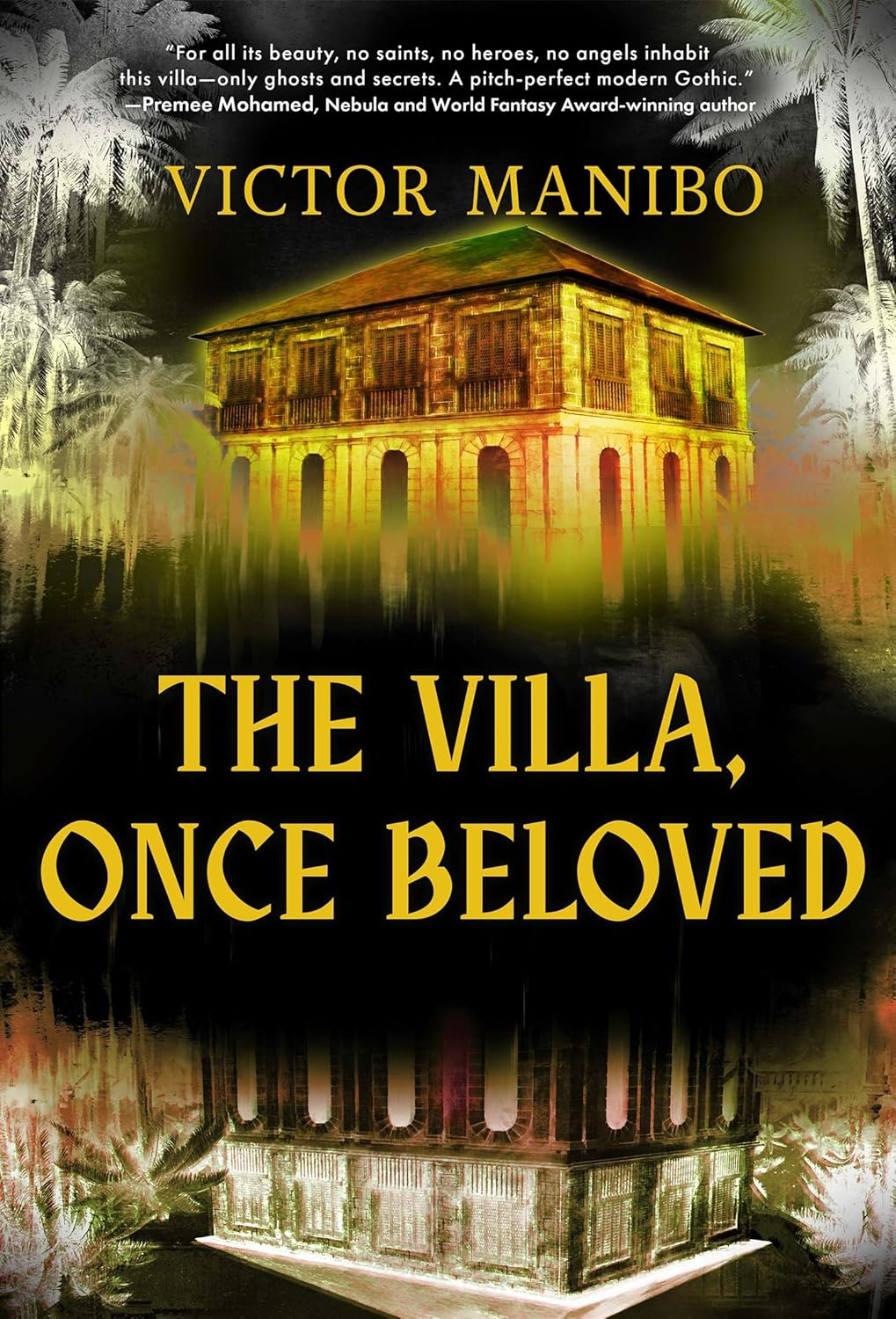
The Villa, Once Beloved
A dark history is unearthed amid crumbling façades in Lambda Literary fellow Victor Manibo’s new gothic tale of family, homecoming, and postcolonial vengeance . . .
SOME LEGACIES ARE BEST LEFT BURIED . . .
Villa Sepulveda is a storied relic of the Philippines’ a Spanish colonial manor, its moldering stonework filled with centuries-old heirlooms, nestled in a remote coconut plantation. When their patriarch dies mysteriously, his far-flung family returns to their ancestral home. Filipino-American student Adrian Sepulveda invites his college girlfriend, Sophie, a transracial adoptee who knows little about her own Filipino heritage, to the funeral of a man who was entwined with the history of the country itself.
Sophie soon learns that there is more to the Sepulvedas than a grand tradition of political and entrepreneurial success. Adrian’s relatives clash viciously amid grief, confusion, and questions about the family curse that their matriarch refuses to answer. When a landslide traps them all in the villa, secrets begin to emerge, revealing sins both intimately personal and unthinkably public.
Sifting through fact, folklore, and fiction, Sophie finds herself at the center of a reckoning. Did a mythical demon really kill Adrian’s grandfather? How complicit are the Sepulvedas in the country’s oppressive history? As a series of ill omens befall the villa, Sophie must decide whom to trust—and whom to flee—before the family’s true legacy comes to take its revenge . . .
SOME LEGACIES ARE BEST LEFT BURIED . . .
Villa Sepulveda is a storied relic of the Philippines’ a Spanish colonial manor, its moldering stonework filled with centuries-old heirlooms, nestled in a remote coconut plantation. When their patriarch dies mysteriously, his far-flung family returns to their ancestral home. Filipino-American student Adrian Sepulveda invites his college girlfriend, Sophie, a transracial adoptee who knows little about her own Filipino heritage, to the funeral of a man who was entwined with the history of the country itself.
Sophie soon learns that there is more to the Sepulvedas than a grand tradition of political and entrepreneurial success. Adrian’s relatives clash viciously amid grief, confusion, and questions about the family curse that their matriarch refuses to answer. When a landslide traps them all in the villa, secrets begin to emerge, revealing sins both intimately personal and unthinkably public.
Sifting through fact, folklore, and fiction, Sophie finds herself at the center of a reckoning. Did a mythical demon really kill Adrian’s grandfather? How complicit are the Sepulvedas in the country’s oppressive history? As a series of ill omens befall the villa, Sophie must decide whom to trust—and whom to flee—before the family’s true legacy comes to take its revenge . . .
352 pages, Hardcover
First published November 25, 2025
About the author
Victor Manibo
5 books212 followersVictor Manibo is a Filipino novelist living in New York. A Lambda Literary Emerging Voices Fellow, he is the author of the science fiction novels THE SLEEPLESS and ESCAPE VELOCITY. His first crime novel, DEAD NOTE is out now from Bonnier Books. His first horror novel, THE VILLA, ONCE BELOVED, is out now from Erewhon Books. Aside from fiction, he also spins fantastical tales in his career as a lawyer. He lives in Queens with his husband and their pets. Find him online at victormanibo.com and on most social media platforms @victormanibo.
Ratings & Reviews
Friends & Following
Create a free account to discover what your friends think of this book!
Community Reviews
Displaying 1 - 30 of 127 reviews

August 27, 2025
Content warnings: death of an elder (grandfather, father depending on the POV), systemic violence, vomiting, blood, gore, drugging, attempted sexual assault, mass murder, historical violence
The Villa, Once Beloved is a story about a grieving family and a sordid tale of a land which bore witness to many crimes. When the patriarch of the Sepulveda family passes, the cause can easily be explained by folklore or natural causes depending are who you ask. But it’s also Easter and the weather is catastrophic, so there’s no escape from the tension and eeriness trapped within this ancestral home who current residents have ties to the Marcos dictatorship.
Gothic is so back with this one. The house in and of itself is terrifying, and the mysteries and secrets unearthed examine the horrors of the Marcos regimes that mesh really well with the gothic genre’s expectations and roots.
One of the things that I particularly loved in this piece is Manibo’s command of perspective. The three main POVs are Remedios, a housekeeper, Adrian, the grieving grandson, and Sophie, his American-raised girlfriend. The information presented among them feels like the unfurling of a great mystery novel, where the author expertly doles out facts and context in ways that make reveals both surprising and satisfying for the acute reader. It also helped contextualize the politics and history in a way that is accessible to readers who only have a passing familiarity without interrupting the story. There are so many cool tricks of characterization employed that keep the dream that is the story perfectly in tact. I loved Sophie in particular, and I can’t speak to much of why without going into spoilers.
If you’ve found yourself burned more than once by “gothic” works that lean more into the aesthetic than the substance, you will not be disappointed. The grief and anger of generations of colonial and dictatorial violence are as tangible as the demons allegedly haunting the house. Despite the change in cultural context, the beats of the scares punctuate and aggravate the interpersonal drama, making for some compelling reading. This book has a thematic tightness through both the familial and supernatural tensions that both kept me on my toes and made me so excited as both reader and writer.
And much like queer gothic, this book also examines what happens if you go too far to delude yourself and how to balance existing as an other when the specters terrorizing the house seem not to care about distinctions. Sexuality drives the plot as well, whether acknowledged in backstory or a contributor to the stress pushing everyone to their limit. There’s such a rich sense of characterization throughout. Manibo mines deep into what makes these characters and this family tick, making for a horror that is also quite literary in its presentation.
If you’re someone who’s dedicated to studying gothic for themselves, I highly recommend this book as a worthy future entry for anyone else embarking on their own craft learnings.
The Villa, Once Beloved is a story about a grieving family and a sordid tale of a land which bore witness to many crimes. When the patriarch of the Sepulveda family passes, the cause can easily be explained by folklore or natural causes depending are who you ask. But it’s also Easter and the weather is catastrophic, so there’s no escape from the tension and eeriness trapped within this ancestral home who current residents have ties to the Marcos dictatorship.
Gothic is so back with this one. The house in and of itself is terrifying, and the mysteries and secrets unearthed examine the horrors of the Marcos regimes that mesh really well with the gothic genre’s expectations and roots.
One of the things that I particularly loved in this piece is Manibo’s command of perspective. The three main POVs are Remedios, a housekeeper, Adrian, the grieving grandson, and Sophie, his American-raised girlfriend. The information presented among them feels like the unfurling of a great mystery novel, where the author expertly doles out facts and context in ways that make reveals both surprising and satisfying for the acute reader. It also helped contextualize the politics and history in a way that is accessible to readers who only have a passing familiarity without interrupting the story. There are so many cool tricks of characterization employed that keep the dream that is the story perfectly in tact. I loved Sophie in particular, and I can’t speak to much of why without going into spoilers.
If you’ve found yourself burned more than once by “gothic” works that lean more into the aesthetic than the substance, you will not be disappointed. The grief and anger of generations of colonial and dictatorial violence are as tangible as the demons allegedly haunting the house. Despite the change in cultural context, the beats of the scares punctuate and aggravate the interpersonal drama, making for some compelling reading. This book has a thematic tightness through both the familial and supernatural tensions that both kept me on my toes and made me so excited as both reader and writer.
And much like queer gothic, this book also examines what happens if you go too far to delude yourself and how to balance existing as an other when the specters terrorizing the house seem not to care about distinctions. Sexuality drives the plot as well, whether acknowledged in backstory or a contributor to the stress pushing everyone to their limit. There’s such a rich sense of characterization throughout. Manibo mines deep into what makes these characters and this family tick, making for a horror that is also quite literary in its presentation.
If you’re someone who’s dedicated to studying gothic for themselves, I highly recommend this book as a worthy future entry for anyone else embarking on their own craft learnings.

November 16, 2025
Haunting. Like- whoa....I did not expect this book to engross me the way it did.
Thank you to goodreads for this giveaway!
Thank you to goodreads for this giveaway!

Read
June 12, 2025A big thank you to the editor and publisher for an ARC of the book for a blurb!!
THE VILLA, ONCE BELOVED is a gothic, haunting tale of estrangement, dissecting the complexities of identity and diaspora, intergenerational trauma, grief, and the helplessness of vicious cycles in a slow burn narrative bound together by chains of secrets buried and unearthed.
THE VILLA, ONCE BELOVED is a gothic, haunting tale of estrangement, dissecting the complexities of identity and diaspora, intergenerational trauma, grief, and the helplessness of vicious cycles in a slow burn narrative bound together by chains of secrets buried and unearthed.

May 5, 2026
I wish that Goodreads had half stars! For me, this is not quite a 3, but not quite a 4, and it all comes down to dishwater Sophie and her rich Filipino Adrien, whose character change in the finale had me doing a double take in disbelief. The story, however - the rich, bloody history of the Philippines and its exploitation of the lower classes by people like Marcos and the military, the spooky folklore stories of the aswang and the balbal, and of course, the gothic ancestral mansion, steeped in the blood of its workers.
Maybe this should be bumped up to a four, after all! Nice job, Mr. Manibo. Kudos on a great read!
Maybe this should be bumped up to a four, after all! Nice job, Mr. Manibo. Kudos on a great read!

March 30, 2026
Love the vibe, the historical (bloody) background that reminds me of my own country, the supernatural parts. The villa, you could just feel all the darkness and dread creeping in and around it. I read it during Easter and the novel was also set a few days pre and during Easter so that was quite nice coincidence.
I think a re-read would be useful since at first when I read the book I might have hurried due to wanting to know what happened next and the novel was quite fast paced in the final third, but when I reread I would be focusing more on the characters and their motivations. The author has made quite compelling points of view, insider-outsider and in between.
Horror book of the month with the World Beyond the Margins group!
Join the author Q&A here: https://www.goodreads.com/topic/show/...
I think a re-read would be useful since at first when I read the book I might have hurried due to wanting to know what happened next and the novel was quite fast paced in the final third, but when I reread I would be focusing more on the characters and their motivations. The author has made quite compelling points of view, insider-outsider and in between.
Horror book of the month with the World Beyond the Margins group!
Join the author Q&A here: https://www.goodreads.com/topic/show/...

December 10, 2025
Review originally on JamReads
The Villa, Once Beloved is a gothic horror novel written by Victor Manibo, published by Erewhon Books. A proposal that takes classic elements from the gothic genre, and weaves them together with Philippines' folklore, history and culture to deliver an engaging story that keeps the reader second-guessing about what's real and what's false, and about the truth behind the Sepulveda family.
After the death of Raul Sepulveda, patriarch of the Sepulveda family, the rest of the family members return to their family home in the Philippines to bury him; Sophie, who's dating Raul's grandson, takes the opportunity to join him and meet the family. With the entire family under one roof, old wounds are revisited; after a typhon, a landslide leaves the family isolated in the secluded villa. With nowhere to go, the Sepulvedas are forced to confront the secrets and the sins the family has kept for decades; is it the villa cursed or the consequence of the family's acts?
The story unfolds through the eyes of three characters. The first of them is the own Sophie, who gives us the perspective of an outsider, not only from the family but also as somebody who is finally getting directly in contact with her Filipino roots (incidentally, it is helpful to the reader, as many explanations are introduced naturally); a reinterpretation of the lady's character of gothic classics, that will have to navigate the danger and deal with some unexpected threats, uncovering the truth behind the family.
The second of them is Javier, Raul's second son and the black sheep of the family; he was always craving Raul's attention and validation, something that crashes against his queerness; and finally, we have Remedios, the caretaker who has served the Sepulvedas loyally all her life, who grew in the villa and that due to her position knows more than it is told. All three perspectives are used to filter the drama, giving the reader privileged spots to understand the different approaches to the events that happen in the vila.
As you might expect from the genre, the villa plays an important role in the novel: not only contributes to that atmosphere of old-time grandeur that is associated with the Sepulvedas, but is also serves as the perfect scenario of a story that becomes darker and darker, trapping the characters inside it. The exploration of Filipino culture and folklore also added to the richness of the setting, including not being afraid of touching historical themes such as colonization. It is a fresh take on a classic gothic trope.
The pacing is quite on the spot, slowly building the tension by moments to eventually release them, using this structure a few times until the great finale; found this to be a book that asks you to continue reading and finish in a few days.
The Villa, Once Beloved, is an excellent horror novel, a proposal that weaves together classic gothic with Filipino elements to deliver an engaging story that is built over those new elements in the genre; if gothic horror is your thing, Manibo's latest novel is a must read!
The Villa, Once Beloved is a gothic horror novel written by Victor Manibo, published by Erewhon Books. A proposal that takes classic elements from the gothic genre, and weaves them together with Philippines' folklore, history and culture to deliver an engaging story that keeps the reader second-guessing about what's real and what's false, and about the truth behind the Sepulveda family.
After the death of Raul Sepulveda, patriarch of the Sepulveda family, the rest of the family members return to their family home in the Philippines to bury him; Sophie, who's dating Raul's grandson, takes the opportunity to join him and meet the family. With the entire family under one roof, old wounds are revisited; after a typhon, a landslide leaves the family isolated in the secluded villa. With nowhere to go, the Sepulvedas are forced to confront the secrets and the sins the family has kept for decades; is it the villa cursed or the consequence of the family's acts?
The story unfolds through the eyes of three characters. The first of them is the own Sophie, who gives us the perspective of an outsider, not only from the family but also as somebody who is finally getting directly in contact with her Filipino roots (incidentally, it is helpful to the reader, as many explanations are introduced naturally); a reinterpretation of the lady's character of gothic classics, that will have to navigate the danger and deal with some unexpected threats, uncovering the truth behind the family.
The second of them is Javier, Raul's second son and the black sheep of the family; he was always craving Raul's attention and validation, something that crashes against his queerness; and finally, we have Remedios, the caretaker who has served the Sepulvedas loyally all her life, who grew in the villa and that due to her position knows more than it is told. All three perspectives are used to filter the drama, giving the reader privileged spots to understand the different approaches to the events that happen in the vila.
As you might expect from the genre, the villa plays an important role in the novel: not only contributes to that atmosphere of old-time grandeur that is associated with the Sepulvedas, but is also serves as the perfect scenario of a story that becomes darker and darker, trapping the characters inside it. The exploration of Filipino culture and folklore also added to the richness of the setting, including not being afraid of touching historical themes such as colonization. It is a fresh take on a classic gothic trope.
The pacing is quite on the spot, slowly building the tension by moments to eventually release them, using this structure a few times until the great finale; found this to be a book that asks you to continue reading and finish in a few days.
The Villa, Once Beloved, is an excellent horror novel, a proposal that weaves together classic gothic with Filipino elements to deliver an engaging story that is built over those new elements in the genre; if gothic horror is your thing, Manibo's latest novel is a must read!

August 1, 2025
Review in the October 2025 issue of Booklist and on the blog here: https://raforallhorror.blogspot.com/2...
(link live on 10/7)
Three Words That Describe This Book: cursed family, Filipino Gothic, isolation horror
The title adds just the right amount of tension to the story. Also the entire book is set framed around a death that in the first chapter is shown to be not "natural."
This book would not have gotten published with Mexican Gothic by SMG. But it is more than the Filipino version of that book and that is why it is also a good book. It is a Gothic about a cursed family-- the Sepulveda's-- on their Spanish Colonial villa which has been part of their family for generations. The history of this fictional family is intertwined with very real history of the Philippines, especially the Marcos family.
There are a few narrators (and one comes towards the end and is key to bringing the story all together) but readers mostly follow Sophie. She is a Filipino adoptee from Nebraska. Raised very blandly midwestern, aware of her heritage but echoing not to engage with it, until at Stanford she met Adrian, the oldest grandchild in the Sepulveda family, as they all travel to the Philippines to have the funeral for Adrian's grandfather.
Sophie is a great narrator for us because she knows very little about the family and their history. She also knows very little about the supernatural folklore and monsters of the culture. As a result, things are explained to her (and us) but also, she is also a conduit for the supernatural beings who visit her and increase the fear.
Readers know this family is rich and that in getting that power and money they probably did bad things, but as the book goes on, just how bad all of them are is revealed. And they have been literally cursed. This is referred to from the start, but the book does great job revealing the details.
Consequences are coming from the curse that was placed on them and the plagues set upon them for very serious wrongs against the people of their community. Wrongs they tried to flee. Wrongs they have no remorse for-- all of them. And the monsters from their own folklore who will mark their end
This entire story is told over the week just before Easter, during a typhoon. The group gets completely isolated from everyone else due to a landslide. No phone service, no road, no help.
I appreciated how well the author built up a complex family, giving all of the family members a distinct identity and allowing each of them to reveal themselves fully as the danger and stress builds. The political issues and history were woven in without sacrificing the pace.
This is a slow and steady build on purpose. As the isolation and danger increase, the pacing does as well. Sophie is our canary here-- as she gets more uneasy and unsettled and then terrified, so do we. This book would not work if it was told at a flat out pace. Readers need to see the story build and the days pass by-- labelled at the top-- and feel Easter coming. There is a reason this is told mostly over Holy Week. Religion and folklore overlap quite a bit.
A great choice for fans of what Mexican Gothic allowed others to do-- tell a traditional Gothic with their own culture's voice like The Hacienda by Canas.
(link live on 10/7)
Three Words That Describe This Book: cursed family, Filipino Gothic, isolation horror
The title adds just the right amount of tension to the story. Also the entire book is set framed around a death that in the first chapter is shown to be not "natural."
This book would not have gotten published with Mexican Gothic by SMG. But it is more than the Filipino version of that book and that is why it is also a good book. It is a Gothic about a cursed family-- the Sepulveda's-- on their Spanish Colonial villa which has been part of their family for generations. The history of this fictional family is intertwined with very real history of the Philippines, especially the Marcos family.
There are a few narrators (and one comes towards the end and is key to bringing the story all together) but readers mostly follow Sophie. She is a Filipino adoptee from Nebraska. Raised very blandly midwestern, aware of her heritage but echoing not to engage with it, until at Stanford she met Adrian, the oldest grandchild in the Sepulveda family, as they all travel to the Philippines to have the funeral for Adrian's grandfather.
Sophie is a great narrator for us because she knows very little about the family and their history. She also knows very little about the supernatural folklore and monsters of the culture. As a result, things are explained to her (and us) but also, she is also a conduit for the supernatural beings who visit her and increase the fear.
Readers know this family is rich and that in getting that power and money they probably did bad things, but as the book goes on, just how bad all of them are is revealed. And they have been literally cursed. This is referred to from the start, but the book does great job revealing the details.
Consequences are coming from the curse that was placed on them and the plagues set upon them for very serious wrongs against the people of their community. Wrongs they tried to flee. Wrongs they have no remorse for-- all of them. And the monsters from their own folklore who will mark their end
This entire story is told over the week just before Easter, during a typhoon. The group gets completely isolated from everyone else due to a landslide. No phone service, no road, no help.
I appreciated how well the author built up a complex family, giving all of the family members a distinct identity and allowing each of them to reveal themselves fully as the danger and stress builds. The political issues and history were woven in without sacrificing the pace.
This is a slow and steady build on purpose. As the isolation and danger increase, the pacing does as well. Sophie is our canary here-- as she gets more uneasy and unsettled and then terrified, so do we. This book would not work if it was told at a flat out pace. Readers need to see the story build and the days pass by-- labelled at the top-- and feel Easter coming. There is a reason this is told mostly over Holy Week. Religion and folklore overlap quite a bit.
A great choice for fans of what Mexican Gothic allowed others to do-- tell a traditional Gothic with their own culture's voice like The Hacienda by Canas.

February 25, 2026
Started strong, ended strong (if rushed), but just felt like it took way too long. I've enjoyed Manibo before (The Sleepless and Escape Velocity), and I was intrigued at this contemporary folklore horror from him given his first two books were SF. A lot of this book was great. I was invested in the family drama, and I liked the horror elements when they appeared. By page 200, though, I was itching for something to happen. This moves really slowly until you get to a couple chapters at the very end. There are hints of horror earlier, for sure - I love the stuff with the beetles. But there's far too much just sitting around talking, saying the same things.
There's a flashback later in the book, and I really wish we got more of that. Like a dual timeline with Remedios's POV in the past and Sophie in the present. There are also a couple transcripts from moments when Adrian is interviewing his family which add variety, but then it stops. I wish it was all more integrated and consistent. Instead it almost feels like this book needed another round of revision!
There's a flashback later in the book, and I really wish we got more of that. Like a dual timeline with Remedios's POV in the past and Sophie in the present. There are also a couple transcripts from moments when Adrian is interviewing his family which add variety, but then it stops. I wish it was all more integrated and consistent. Instead it almost feels like this book needed another round of revision!

January 4, 2026
This story is great, filled with Filipino lore and colonial history, and is such a great use of the gothic as a tool to explore how the past informs the present, and how ghosts take different forms… sometimes corporeal… sometimes emotional or mental… The second half was especially good because it was a little bit faster pace.
My main issues were that, at times, I felt like too much was trying to be accomplished— I thought the book could have benefited from a little bit more focus at times, and I also thought the protagonist was annoying at times. Adrian was also annoying me being a whiney baby.
Overall, really enjoyed this! I look forward to reading more from this author!
P.s. I technically finished this book after its publication, but thank you to NetGalley and the publisher for the ARC!! ⭐️
My main issues were that, at times, I felt like too much was trying to be accomplished— I thought the book could have benefited from a little bit more focus at times, and I also thought the protagonist was annoying at times. Adrian was also annoying me being a whiney baby.
Overall, really enjoyed this! I look forward to reading more from this author!
P.s. I technically finished this book after its publication, but thank you to NetGalley and the publisher for the ARC!! ⭐️

August 12, 2025
Adrian goes home to his family's ancestral home in the Philippines to attend his grandfathers funeral when a natural disaster leaves them all trapped. Now secluded together in the family estate dark secrets once hidden come to light. Political issues the family has been involved in and just the general selfish behavior that wealth has allowed them has caused them to be cursed. Gothic Isolation horror feel was how I imagined the story to feel after reading the synopsis. But while there was isolation a curse and dark family secrets it never felt gloomy enough or foreboding. I found the cultural folklore interesting, the pace was steady and the writing was well done but it just did not give me the heavy macabre feeling I was hoping for.
December 3, 2025
Wow, this family is terrible and 100% deserves the curse!!!
So, Sophie is a transracial Filipino American adoptee who was raised by a white family in a small Midwestern town. In college, she met and fell in love with Adrian, a Filipino American film student who is secretly making a documentary about his family's role in the dictatorship of Ferdinand Marcos. When Adrian's grandfather suddenly dies before Easter, the entire family returns to the family plantation for the funeral, and Sophie gets to come along too. But once Sophie gets to the Philippines, the trip very quickly starts to go wrong. There's a big typhoon that cuts the house off from the village, horrible beetles, and a famous curse upon the Sepulvedas.
As with any Gothic novel, I will start off by saying that this genre typically has some implied sexual threat to the maiden character. She is safe, but you should always be aware of this common theme if you have been assaulted before and are trying to read a Gothic novel.
Other Gothic tropes include: a curse, family secrets, colonialism, the aristocratic house is cut off from all help!!!, an evil man, and ghosts.
I wish this book had included a character list at the beginning, since I had a hard time keeping track sometimes. The audiobook switches between two narrators, I think so there's a different reader for the male versus female perspectives.
The Sepulvedas: Descended from Spanish aristocrats who moved to the Philippines during the colonial era.
- Raul- The family patriarch, whose death reunites all the relatives for a funeral. Raul was once a provincial governor and close friends with deposed dictator Ferdinand Marcos.
- Olympia- Raul's wife, the matriarch of the family.
- Divina- Raul's reclusive younger sister.
- Enrique (Eric)- Raul and Olympia's eldest son, married to Margot.
- Javier- Raul and Olympia's gay second son.
- Kai- Raul and Olympia's non-binary third child.
- Margot- Married to Eric. A blonde American WASP.
- Adrian- Eric and Margot's son. Adrian has been secretly working on a documentary about his family's dirty past for film school.
Others:
-Tiago- The groundskeeper, married to Remedios.
- Remedios- The caretaker, married to Tiago.
- Dante- Tiago and Remedios's son.
- Sophie Anderson- A Filipino American transracial adoptee who wants to reconnect with her heritage. Sophie is dating Adrian, but she's never met his extended family.
Because audiobooks aren't my preferred medium, I did get confused at the beginning of the book, mainly because of the multiple POV. I think we're mostly reading Javier and Sophie's perspectives, which gives us a fuller picture because each is focused on their own generation. Javier is back at his childhood home after being kicked out of the family. Sophie is trying to support Adrian but gradually getting more terrified of the sleep paralysis demon and weird behavior from the older people. Neither wants to be at the house, but they're trapped and can't get out.
I had expected the book to be one thing. I expected this to be a spooky house with skeletons in the closet. It's been a while since I read a truly supernatural Gothic with ghosts and demons. I was intrigued that Sophie's boyfriend's ancestors were actively involved in the colonization of the Philippines. I definitely did not expect to be googling a 1980s dictator.
"Everyone always imagines they would have done better... That if they came face-to-face with evil, they would fight it with no reservations, even when that face turned out to be familiar. Especially when. But people are never as strong as their convictions." This quote from Chapter 9 when Sophie is learning about the People Power Revolution felt similar to more recent political discussions. We grow up thinking, "I would do right, I would never let THAT happen," when learning about a war or genocide. And then we wonder how people today will commit or excuse murder, all because the victim is "unlike me."
But the beauty of Gothic Horror is that we see the depths of depravity, the monster takes its revenge on the transgressor, and then our heroine steps out into the sun where she is free and finally able to do right by the victims who didn't survive the house.
CW: This is a Gothic novel, which means that (threat of) rape, incest, murder, gaslighting, and confinement are not surprising. There is also a mass murder that takes place in the past. Also, multiple corpses and gore.
Thanks to Netgalley and Recorded Books for the audio ARC. Also shoutout to my library system for having the ebook on Libby; I switched formats for the last two chapters.
So, Sophie is a transracial Filipino American adoptee who was raised by a white family in a small Midwestern town. In college, she met and fell in love with Adrian, a Filipino American film student who is secretly making a documentary about his family's role in the dictatorship of Ferdinand Marcos. When Adrian's grandfather suddenly dies before Easter, the entire family returns to the family plantation for the funeral, and Sophie gets to come along too. But once Sophie gets to the Philippines, the trip very quickly starts to go wrong. There's a big typhoon that cuts the house off from the village, horrible beetles, and a famous curse upon the Sepulvedas.
As with any Gothic novel, I will start off by saying that this genre typically has some implied sexual threat to the maiden character. She is safe, but you should always be aware of this common theme if you have been assaulted before and are trying to read a Gothic novel.
Other Gothic tropes include: a curse, family secrets, colonialism, the aristocratic house is cut off from all help!!!, an evil man, and ghosts.
I wish this book had included a character list at the beginning, since I had a hard time keeping track sometimes. The audiobook switches between two narrators, I think so there's a different reader for the male versus female perspectives.
The Sepulvedas: Descended from Spanish aristocrats who moved to the Philippines during the colonial era.
- Raul- The family patriarch, whose death reunites all the relatives for a funeral. Raul was once a provincial governor and close friends with deposed dictator Ferdinand Marcos.
- Olympia- Raul's wife, the matriarch of the family.
- Divina- Raul's reclusive younger sister.
- Enrique (Eric)- Raul and Olympia's eldest son, married to Margot.
- Javier- Raul and Olympia's gay second son.
- Kai- Raul and Olympia's non-binary third child.
- Margot- Married to Eric. A blonde American WASP.
- Adrian- Eric and Margot's son. Adrian has been secretly working on a documentary about his family's dirty past for film school.
Others:
-Tiago- The groundskeeper, married to Remedios.
- Remedios- The caretaker, married to Tiago.
- Dante- Tiago and Remedios's son.
- Sophie Anderson- A Filipino American transracial adoptee who wants to reconnect with her heritage. Sophie is dating Adrian, but she's never met his extended family.
Because audiobooks aren't my preferred medium, I did get confused at the beginning of the book, mainly because of the multiple POV. I think we're mostly reading Javier and Sophie's perspectives, which gives us a fuller picture because each is focused on their own generation. Javier is back at his childhood home after being kicked out of the family. Sophie is trying to support Adrian but gradually getting more terrified of the sleep paralysis demon and weird behavior from the older people. Neither wants to be at the house, but they're trapped and can't get out.
I had expected the book to be one thing. I expected this to be a spooky house with skeletons in the closet. It's been a while since I read a truly supernatural Gothic with ghosts and demons. I was intrigued that Sophie's boyfriend's ancestors were actively involved in the colonization of the Philippines. I definitely did not expect to be googling a 1980s dictator.
"Everyone always imagines they would have done better... That if they came face-to-face with evil, they would fight it with no reservations, even when that face turned out to be familiar. Especially when. But people are never as strong as their convictions." This quote from Chapter 9 when Sophie is learning about the People Power Revolution felt similar to more recent political discussions. We grow up thinking, "I would do right, I would never let THAT happen," when learning about a war or genocide. And then we wonder how people today will commit or excuse murder, all because the victim is "unlike me."
But the beauty of Gothic Horror is that we see the depths of depravity, the monster takes its revenge on the transgressor, and then our heroine steps out into the sun where she is free and finally able to do right by the victims who didn't survive the house.
CW: This is a Gothic novel, which means that (threat of) rape, incest, murder, gaslighting, and confinement are not surprising. There is also a mass murder that takes place in the past. Also, multiple corpses and gore.
Thanks to Netgalley and Recorded Books for the audio ARC. Also shoutout to my library system for having the ebook on Libby; I switched formats for the last two chapters.

November 23, 2025
Adrian travels from the midwestern US to his ancestral coconut plantation home in the Philippines for his wealthy grandfather’s funeral. His girlfriend Sophie comes along. Maybe not the most positive situation for introductions and bonding with your boyfriend’s family, but it could work.
At first there’s some usual family drama we expect when grief combines with greed, but then there’s so much more. A storm traps everyone together with no access to outside communication. The story that unfolds is full of secrets, folklore, night terrors, curses, more death, sinister crimes, and supernatural horrors.
Overall what I enjoyed most was the haunting setting, the gothic atmosphere, and Sophie - she turned out to be a compelling protagonist that I wanted to root for. As far as pacing I found the middle to be a bit slow, but the end? Hold on tight 😨
I listened to this one and thought the narrators did a great job adding to the spookiness and drama.
Thank you to RB Media for the ALC.
At first there’s some usual family drama we expect when grief combines with greed, but then there’s so much more. A storm traps everyone together with no access to outside communication. The story that unfolds is full of secrets, folklore, night terrors, curses, more death, sinister crimes, and supernatural horrors.
Overall what I enjoyed most was the haunting setting, the gothic atmosphere, and Sophie - she turned out to be a compelling protagonist that I wanted to root for. As far as pacing I found the middle to be a bit slow, but the end? Hold on tight 😨
I listened to this one and thought the narrators did a great job adding to the spookiness and drama.
Thank you to RB Media for the ALC.

Read
January 26, 2026"You cannot undo what you have inherited, no matter how violent the legacy."
Maya Gittelman reviews Victor Manibo's searing, haunted horror novel The Villa, Once Beloved.
Maya Gittelman reviews Victor Manibo's searing, haunted horror novel The Villa, Once Beloved.

December 1, 2025
BWAF Score: 6/10
TL;DR: The Villa, Once Beloved by Victor Manibo is a Filipino Gothic about a cursed sugar estate, a family rotting from the inside, and a monster that is basically generational guilt with claws. It mixes creature-feature mayhem and political horror; a little baggy in spots, but full of sticky, fucked up tropical shit for haunted house sickos.
Our main lens is Sophie, a Nebraska computer science student limping through an elite AI program. She flies to Leyte with her boyfriend Adrian for the funeral of his hacendero grandfather, Don Raul Sepulveda, at Villa Sepulveda, once the jewel of the province, now an aging fortress of old money. Sophie wants to impress the clan and maybe save her relationship. Instead she gets storms arriving too early, swarms of beetles, sleep paralysis, and whispered warnings about gaba, the curse dogging the Sepulveda line. As Holy Week unfolds, she uncovers the story of Alondra, the nanny everyone called a witch, the desaparecidos tied to Marcos era state violence, and a balbal – a hulking, fanged creature that crashes funerals while the earth literally sinks out from under the house, exposing what the family tried to bury.
Victor Manibo is best known for near future SF like The Sleepless and Escape Velocity, and you can feel that background here. He cares about systems: how authoritarian regimes, landowning families, and American dreams feed each other like some awful ouroboros. This is easily his most Filipino book in terms of setting and texture, trading glossy corporate dystopia for typhoon-battered plantations, novenas, and the everyday Catholic and folk beliefs that live side by side with WiFi and FaceTime.
What really pops is how the haunting works on multiple levels. The balbal is a gnarly monster, all matted fur, membranes and fangs, dragging intestines across marble floors. But it is also the physical return of everything the Sepulvedas did to their workers and neighbors, and to the women in their orbit. The sinkhole sequence, with the villa collapsing into its silong and the lawn opening over a mass grave, is a genuine oh shit moment where the curse, the unfinished mausoleum, and the old colonial travelogue epigraph all snap into place without the book having to shout the metaphor at you.
On the craft side, the writing is clean and mostly unfussy, spiking into lushness when it lingers on beetles, mildew, rosaries, and storm light. The structure jumps between Sophie in the present, caretaker Remedios, young Raul, and various Sepulveda descendants, arranged around dated Holy Week sections and 1980s flashbacks. It generally works, widening the frame from one nervous girlfriend to a whole century of bad decisions. The cost is bloat. People explain the curse, Marcos history, or family grievances in long, talky scenes that step on the horror beats. The middle third especially could lose a chunk of exposition and let the reader connect more dots. The dialogue and family bitching feel lived in, though, and when the book decides to stop explaining and let a monster crash through a window or a dream drag Sophie into a tar-black swimming pool, it absolutely kills it.
Manibo is swinging at complicity and legacy. Gaba is not just a spooky word; it is what happens when you build wealth on stolen land, kiss up to dictators, and throw problems into unmarked pits until the ground gives way. The monster is vengeance that can be read as demonic, folkloric, or just the inevitable snap-back of history. Through Sophie – American, precarious, not nearly as “outside” the system as she thinks – the novel keeps asking what the fuck you owe to the dead, what it means to marry into someone else’s haunted story, and whether love is worth being absorbed into their shit.
Listen here, I’m the first to say I’m sick and tired of haunted house horror, But, within the current pile of cursed-house-and-colonial-sins novels, The Villa, Once Beloved lands as a solid, if slightly overstuffed entry: more specific and angrier than most “rich people get haunted” books, not as stylistically wild as the really weird shit. In Manibo’s catalog it feels like an exciting, if imperfect, turn toward horror rooted in Filipino history rather than just borrowing its vibes.
Smart, bloody, and thematically sharp, even if it sometimes talks its scares half to death.
Read if you are down for monsters, mass graves, and typhoon chaos in the same story.
Skip if you want your creature feature without a bunch of messy realism attached.
TL;DR: The Villa, Once Beloved by Victor Manibo is a Filipino Gothic about a cursed sugar estate, a family rotting from the inside, and a monster that is basically generational guilt with claws. It mixes creature-feature mayhem and political horror; a little baggy in spots, but full of sticky, fucked up tropical shit for haunted house sickos.
Our main lens is Sophie, a Nebraska computer science student limping through an elite AI program. She flies to Leyte with her boyfriend Adrian for the funeral of his hacendero grandfather, Don Raul Sepulveda, at Villa Sepulveda, once the jewel of the province, now an aging fortress of old money. Sophie wants to impress the clan and maybe save her relationship. Instead she gets storms arriving too early, swarms of beetles, sleep paralysis, and whispered warnings about gaba, the curse dogging the Sepulveda line. As Holy Week unfolds, she uncovers the story of Alondra, the nanny everyone called a witch, the desaparecidos tied to Marcos era state violence, and a balbal – a hulking, fanged creature that crashes funerals while the earth literally sinks out from under the house, exposing what the family tried to bury.
Victor Manibo is best known for near future SF like The Sleepless and Escape Velocity, and you can feel that background here. He cares about systems: how authoritarian regimes, landowning families, and American dreams feed each other like some awful ouroboros. This is easily his most Filipino book in terms of setting and texture, trading glossy corporate dystopia for typhoon-battered plantations, novenas, and the everyday Catholic and folk beliefs that live side by side with WiFi and FaceTime.
What really pops is how the haunting works on multiple levels. The balbal is a gnarly monster, all matted fur, membranes and fangs, dragging intestines across marble floors. But it is also the physical return of everything the Sepulvedas did to their workers and neighbors, and to the women in their orbit. The sinkhole sequence, with the villa collapsing into its silong and the lawn opening over a mass grave, is a genuine oh shit moment where the curse, the unfinished mausoleum, and the old colonial travelogue epigraph all snap into place without the book having to shout the metaphor at you.
On the craft side, the writing is clean and mostly unfussy, spiking into lushness when it lingers on beetles, mildew, rosaries, and storm light. The structure jumps between Sophie in the present, caretaker Remedios, young Raul, and various Sepulveda descendants, arranged around dated Holy Week sections and 1980s flashbacks. It generally works, widening the frame from one nervous girlfriend to a whole century of bad decisions. The cost is bloat. People explain the curse, Marcos history, or family grievances in long, talky scenes that step on the horror beats. The middle third especially could lose a chunk of exposition and let the reader connect more dots. The dialogue and family bitching feel lived in, though, and when the book decides to stop explaining and let a monster crash through a window or a dream drag Sophie into a tar-black swimming pool, it absolutely kills it.
Manibo is swinging at complicity and legacy. Gaba is not just a spooky word; it is what happens when you build wealth on stolen land, kiss up to dictators, and throw problems into unmarked pits until the ground gives way. The monster is vengeance that can be read as demonic, folkloric, or just the inevitable snap-back of history. Through Sophie – American, precarious, not nearly as “outside” the system as she thinks – the novel keeps asking what the fuck you owe to the dead, what it means to marry into someone else’s haunted story, and whether love is worth being absorbed into their shit.
Listen here, I’m the first to say I’m sick and tired of haunted house horror, But, within the current pile of cursed-house-and-colonial-sins novels, The Villa, Once Beloved lands as a solid, if slightly overstuffed entry: more specific and angrier than most “rich people get haunted” books, not as stylistically wild as the really weird shit. In Manibo’s catalog it feels like an exciting, if imperfect, turn toward horror rooted in Filipino history rather than just borrowing its vibes.
Smart, bloody, and thematically sharp, even if it sometimes talks its scares half to death.
Read if you are down for monsters, mass graves, and typhoon chaos in the same story.
Skip if you want your creature feature without a bunch of messy realism attached.

September 11, 2025
The Villa Once Beloved is one of those rare books that lingers with you long after the final page. It is haunting and visceral and Manibo layers atmosphere, dread, and raw emotion so seamlessly that I often found myself holding my breath.
It’s honestly not just gothic in setting, it's gothic in its bones: dark and decaying, it's a story about grief, memory, love, colonialism and the things we cannot let go of. The imagery is lush and unsettling, the characters sharply human and the story itself feels like a ghost reaching out through the page.
This isn’t a book you just read, it’s one you experience, one that seeps into your skin. Absolutely brilliant. High recommend!!
It’s honestly not just gothic in setting, it's gothic in its bones: dark and decaying, it's a story about grief, memory, love, colonialism and the things we cannot let go of. The imagery is lush and unsettling, the characters sharply human and the story itself feels like a ghost reaching out through the page.
This isn’t a book you just read, it’s one you experience, one that seeps into your skin. Absolutely brilliant. High recommend!!

October 7, 2025
A chilling tale told beautifully. A girl travels with her boyfriend to the Philippines for his grandfather’s funeral. They stay at the ancestral home which is in a remote area and very foreboding. To the girl an unease about the house and the family grows. This story will pull you in so you feel like you are staying in the house and experiencing the same things. Wonderfully written and very riveting. I won this book in a GoodReads Giveaway.

November 29, 2025
This book is a nice 3.75!
I enjoyed the build up of the plot, the character arcs, the twists and the scary points. While it was challenging for me to behold (my Filipino family is not at all like this so it hurts my heart to see this), I enjoyed the full display of generational trauma and the complexities of Filipino familial relationships especially when it comes to prominent families and their place in society. I also really enjoyed the idea of connecting the family dynamics, their secrets and their drama to the political climate.
I struggled a little bit with connecting to any of the living characters. But maybe the author intended for readers to dislike all the characters and this was on purpose. So it could be a "me" problem or it could be intentional. I only really liked [redacting character name so no spoilers] and I could go on about what this might symbolize but I want this to remain spoiler free and for everyone to have their own opinions and assessments on this book.
I also found that the gothic atmosphere only really showed itself during some of the scary moments. Mainly, Sophie's nighttime and then towards the end. We had a lot of other things though! We had turmoil, political strife and how it evolved in the Philippines from past to present, a very real and vivid sense of panic and pandemonium. All things I love in a horror! But I am missing that atmospheric sense in the writing.
I enjoyed seeing all the subject matters brought up by the author and appreciated that they wanted to blend it all in this book. Its all quite complex individually and together, even more so. Its quite an undertaking and I wish that there was a bit more "oomph" to the execution. But, again, this might be a "me" thing.
I received the audiobook as an ALC from NetGalley which I would rate at 3 stars. We had two narrators which could get confusing because there are multiple POVs, two of them women voiced by the same person. But they did a solid job.
I enjoyed the build up of the plot, the character arcs, the twists and the scary points. While it was challenging for me to behold (my Filipino family is not at all like this so it hurts my heart to see this), I enjoyed the full display of generational trauma and the complexities of Filipino familial relationships especially when it comes to prominent families and their place in society. I also really enjoyed the idea of connecting the family dynamics, their secrets and their drama to the political climate.
I struggled a little bit with connecting to any of the living characters. But maybe the author intended for readers to dislike all the characters and this was on purpose. So it could be a "me" problem or it could be intentional. I only really liked [redacting character name so no spoilers] and I could go on about what this might symbolize but I want this to remain spoiler free and for everyone to have their own opinions and assessments on this book.
I also found that the gothic atmosphere only really showed itself during some of the scary moments. Mainly, Sophie's nighttime and then towards the end. We had a lot of other things though! We had turmoil, political strife and how it evolved in the Philippines from past to present, a very real and vivid sense of panic and pandemonium. All things I love in a horror! But I am missing that atmospheric sense in the writing.
I enjoyed seeing all the subject matters brought up by the author and appreciated that they wanted to blend it all in this book. Its all quite complex individually and together, even more so. Its quite an undertaking and I wish that there was a bit more "oomph" to the execution. But, again, this might be a "me" thing.
I received the audiobook as an ALC from NetGalley which I would rate at 3 stars. We had two narrators which could get confusing because there are multiple POVs, two of them women voiced by the same person. But they did a solid job.
August 5, 2025
I loved this book, and when I give a book a five star rating, it means not only did I love reading the book, but I also can't stop thinking about the book and I have to tell all of my friends about it.
There is horror and suspense but also family drama that just made me want to keep going, and the further I got the harder it was to stop reading.
There is horror and suspense but also family drama that just made me want to keep going, and the further I got the harder it was to stop reading.

December 21, 2025
3.5🌟
The first 60%? 70%? was kinda a whole lot of nothingburger to me. I expected a lot more gothicness than what was served.
‼️SLIGHT SPOILER AHEAD‼️
I'm not satisfied with the plot twist regarding Adrian. Felt sudden and not enough of it foreshadowed beforehand, hence not a satisfying nor interesting plot twist imo
The first 60%? 70%? was kinda a whole lot of nothingburger to me. I expected a lot more gothicness than what was served.
‼️SLIGHT SPOILER AHEAD‼️
I'm not satisfied with the plot twist regarding Adrian. Felt sudden and not enough of it foreshadowed beforehand, hence not a satisfying nor interesting plot twist imo

August 22, 2026
I was immediately drawn to The Villa, Once Beloved by Victor Manibo because, on paper, it sounded like exactly the kind of book I would devour: a crumbling ancestral villa in the Philippines, a wealthy family with generations of secrets, Filipino folklore, political history, curses, and all the delicious gothic atmosphere I could possibly ask for. Unfortunately, despite having so many elements that should have worked for me, this was ultimately a book that just didn’t click.
The story follows Sophie, a Filipino transracial adoptee who was raised in the United States and has never really had a connection to the country of her birth. When her boyfriend Adrian Sepulveda’s grandfather, Raul, dies mysteriously, Sophie travels with Adrian to the Philippines for the funeral. Adrian’s family is wealthy, powerful, and deeply connected to the country’s political and colonial past, and their ancestral home, Villa Sepulveda, is a decaying Spanish colonial mansion surrounded by a remote coconut plantation. Almost immediately, the atmosphere begins to feel wrong. A typhoon and landslide leave the family isolated, strange events begin piling up, and rumors of a curse hanging over the Sepulvedas become increasingly difficult to dismiss.
From there, the novel becomes a tangled mixture of family drama, Filipino folklore, political history, colonialism, generational trauma, and supernatural horror. The family’s wealth is revealed to have darker origins than anyone wants to acknowledge, with connections to political corruption and the Marcos dictatorship. The supposed curse becomes intertwined with the idea of gaba, a form of divine retribution or consequence for wrongdoing.
Sophie is the primary outsider perspective, and I liked the idea of her being a Filipino woman raised away from her heritage, essentially discovering the country and its history alongside the reader. Adrian is caught between his relationship with Sophie and the complicated legacy of his family. Javier, Adrian’s uncle and the family’s more rebellious, queer black sheep, provides another perspective on the Sepulvedas and their history. Then there is Remedios, the longtime caretaker of the villa, who has spent decades watching the family and knows far more than she initially reveals.
And honestly, Remedios and the villa itself were probably my favorite parts.
The gothic atmosphere is absolutely there. I loved the idea of this decaying Spanish colonial estate, surrounded by tropical isolation and haunted by both literal and historical ghosts. The Filipino folklore was also what initially attracted me to the book, and I appreciated the way Manibo connects supernatural horror to the very real horrors of colonialism, political violence, class, and inherited privilege. There is something genuinely compelling about the idea that a family can be haunted not simply because their house is cursed, but because of everything that happened there.
Unfortunately, the execution just didn't work for me.
The plot felt all over the place, constantly pulling in different directions and introducing new pieces of history, mythology, family drama, and horror without always making them feel cohesive. I kept waiting for everything to snap into place, but instead I often felt like I was trying to keep track of too many threads at once. Even the pacing contributed to that feeling; the story sometimes seemed to crawl through exposition before suddenly jumping into another revelation.
And then there is the writing. This is completely subjective, but the prose was simply not my style. I wanted something lush and atmospheric to match the gothic premise, something that would make me feel swallowed up by this decaying villa and its history. Instead, I found the writing rather simple, which unfortunately kept me at a distance from the story.
I really wanted to love this one. The ingredients were practically tailor-made for me: gothic horror, Filipino history, folklore, family secrets, colonial ghosts, and a sinister ancestral house. But sometimes a book can have everything you think you want and still not work. The Villa, Once Beloved was unfortunately that book for me. The concept is fascinating, the setting is rich, and there are some genuinely intriguing ideas here, but ultimately the scattered plot and straightforward writing left me wanting something much more atmospheric and cohesive.
The story follows Sophie, a Filipino transracial adoptee who was raised in the United States and has never really had a connection to the country of her birth. When her boyfriend Adrian Sepulveda’s grandfather, Raul, dies mysteriously, Sophie travels with Adrian to the Philippines for the funeral. Adrian’s family is wealthy, powerful, and deeply connected to the country’s political and colonial past, and their ancestral home, Villa Sepulveda, is a decaying Spanish colonial mansion surrounded by a remote coconut plantation. Almost immediately, the atmosphere begins to feel wrong. A typhoon and landslide leave the family isolated, strange events begin piling up, and rumors of a curse hanging over the Sepulvedas become increasingly difficult to dismiss.
From there, the novel becomes a tangled mixture of family drama, Filipino folklore, political history, colonialism, generational trauma, and supernatural horror. The family’s wealth is revealed to have darker origins than anyone wants to acknowledge, with connections to political corruption and the Marcos dictatorship. The supposed curse becomes intertwined with the idea of gaba, a form of divine retribution or consequence for wrongdoing.
Sophie is the primary outsider perspective, and I liked the idea of her being a Filipino woman raised away from her heritage, essentially discovering the country and its history alongside the reader. Adrian is caught between his relationship with Sophie and the complicated legacy of his family. Javier, Adrian’s uncle and the family’s more rebellious, queer black sheep, provides another perspective on the Sepulvedas and their history. Then there is Remedios, the longtime caretaker of the villa, who has spent decades watching the family and knows far more than she initially reveals.
And honestly, Remedios and the villa itself were probably my favorite parts.
The gothic atmosphere is absolutely there. I loved the idea of this decaying Spanish colonial estate, surrounded by tropical isolation and haunted by both literal and historical ghosts. The Filipino folklore was also what initially attracted me to the book, and I appreciated the way Manibo connects supernatural horror to the very real horrors of colonialism, political violence, class, and inherited privilege. There is something genuinely compelling about the idea that a family can be haunted not simply because their house is cursed, but because of everything that happened there.
Unfortunately, the execution just didn't work for me.
The plot felt all over the place, constantly pulling in different directions and introducing new pieces of history, mythology, family drama, and horror without always making them feel cohesive. I kept waiting for everything to snap into place, but instead I often felt like I was trying to keep track of too many threads at once. Even the pacing contributed to that feeling; the story sometimes seemed to crawl through exposition before suddenly jumping into another revelation.
And then there is the writing. This is completely subjective, but the prose was simply not my style. I wanted something lush and atmospheric to match the gothic premise, something that would make me feel swallowed up by this decaying villa and its history. Instead, I found the writing rather simple, which unfortunately kept me at a distance from the story.
I really wanted to love this one. The ingredients were practically tailor-made for me: gothic horror, Filipino history, folklore, family secrets, colonial ghosts, and a sinister ancestral house. But sometimes a book can have everything you think you want and still not work. The Villa, Once Beloved was unfortunately that book for me. The concept is fascinating, the setting is rich, and there are some genuinely intriguing ideas here, but ultimately the scattered plot and straightforward writing left me wanting something much more atmospheric and cohesive.

November 29, 2025
The Villa, Once Beloved is a dark, layered novel that works best if you come in ready for it to be unsettling. It is a book about a haunted house, about family trauma across generations, and about what happens when power and shame get buried instead of talked about. This is not a cozy read. The book contains serious content warnings, and the writing is dense and intentional. If you come in expecting something lighter, you might bounce off it. But if you go in knowing what it is gothic horror with a Filipino-American family drama core, it is genuinely powerful and strange.
The book opens with Don Raul Sepulveda, the patriarch of the family, working alone late at night on his ancestral estate in Leyte, Philippines. He is digging at the foundation of what will become a mausoleum. He is old, visibly declining, and has clearly been through an Alzheimer's diagnosis that treatment has supposedly fixed. But something is wrong with him, he is paranoid, he is obsessed with the idea that monsters are coming to dig up the graves of his ancestors, and he is working alone in the dark, barefoot, driven by urgency.
The scene then shifts to Sophie Anderson, Adrian's girlfriend, flying across the Pacific on a private jet. She is a Stanford junior, brilliant in computer science, Filipino-American but raised in rural Nebraska, and she is about to experience her first international trip, her first real funeral, and her first exposure to old money and family dysfunction at a scale she did not know existed.
Sophie is a strong character. She is observant, she is self-aware about not belonging, and she knows she is being tested by everyone around her. Manibo writes her internal voice perfectly, she notices small moments (the beauty mark on Olympia's face, the way Remedios the caretaker treats Adrian differently from Sophie) and she worries about saying the wrong thing in Tagalog, about offending people, about fitting in. This is a very real experience for many Filipino-Americans, and the book does not dismiss it.
Once Sophie arrives at the villa, she meets the living members of the Sepulveda clan. Manibo gradually reveals their relationships and their damage:
Eric (Adrian's father) is trying to be the responsible son, stepping into his father's shoes, but he is also clearly carrying resentment and grief that he doesn't know how to process.
Olympia (Adrian's grandmother) is a widow of 50 years in mourning dress who has become sharper and more imposing with age. She is elegant, terrifying, and clearly has strong opinions about the "wrongness" in her family.
Divina (Raul's sister) has lived in the villa for decades wearing the exact same mourning dress, watching over the house and the business. She is reclusive, perceived as mad or cursed, and there are stories about her.
Javier (Eric's brother, Adrian's uncle) is the man who stayed away for 30 years. He is a real estate developer in Manhattan, married to a man named Connor, wealthy and successful on his own terms but he shows up for his father's funeral carrying deep wounds and a decade of accumulated resentment.
Throughout the novel, Villa Sepulveda itself becomes increasingly important. The house is 150 years old, ornate, maintained but deteriorating, filled with antiques and religious iconography. It was built as a summer retreat for a Spanish nobleman's wife who went mad. Now it is a place where stories gather, where locals avoid it, where things feel wrong.
Manibo writes in a literary style that is precise and often beautiful, but also demanding. he moves between perspectives (Sophie, Javier, occasionally Raul, occasionally Dante the driver). he uses long, intricate sentences. he drops details, historical, cultural, personal without always explaining them. If you don't know Filipino history, or Marcos-era politics, or Catholic funeral traditions, the book expects you to either know these things or to sit comfortably with not understanding everything.
By the end and I am being vague here because the ending is genuinely disorienting and you should experience it, the book is asking: What do we inherit from our families? What do we bury? What happens when we try to protect ourselves and our children by keeping secrets? What does it mean to love someone who has done terrible things, or come from a family that has done terrible things? What haunts us, and can we ever truly be free of it?
The Villa, Once Beloved is not for everyone, but it is a remarkable book for the right reader. It is atmospheric, complex, emotionally demanding, and genuinely unsettling in ways that linger after you finish. It treats Filipino-American identity seriously. It doesn't shy away from discussing family connections to power, to authoritarianism, to complicity. It is a gothic horror novel that is really about inherited trauma.
If you like books like Mexican Gothic, The Death of Jane Lawrence, or House of Hunger, literary horror that is more about mood and metaphor than plot, this will probably work for you. If you like character studies about families in crisis, this has that too. If you want clear answers and neat resolutions, this is not your book.
The book's content warnings are not exaggerated. It includes depictions of emotional abuse, physical violence, sexual assault, death, and it addresses authoritarianism and racism directly. Read responsibly, and read the full warning if you need to.
My Rating: 4/5
The book opens with Don Raul Sepulveda, the patriarch of the family, working alone late at night on his ancestral estate in Leyte, Philippines. He is digging at the foundation of what will become a mausoleum. He is old, visibly declining, and has clearly been through an Alzheimer's diagnosis that treatment has supposedly fixed. But something is wrong with him, he is paranoid, he is obsessed with the idea that monsters are coming to dig up the graves of his ancestors, and he is working alone in the dark, barefoot, driven by urgency.
The scene then shifts to Sophie Anderson, Adrian's girlfriend, flying across the Pacific on a private jet. She is a Stanford junior, brilliant in computer science, Filipino-American but raised in rural Nebraska, and she is about to experience her first international trip, her first real funeral, and her first exposure to old money and family dysfunction at a scale she did not know existed.
Sophie is a strong character. She is observant, she is self-aware about not belonging, and she knows she is being tested by everyone around her. Manibo writes her internal voice perfectly, she notices small moments (the beauty mark on Olympia's face, the way Remedios the caretaker treats Adrian differently from Sophie) and she worries about saying the wrong thing in Tagalog, about offending people, about fitting in. This is a very real experience for many Filipino-Americans, and the book does not dismiss it.
Once Sophie arrives at the villa, she meets the living members of the Sepulveda clan. Manibo gradually reveals their relationships and their damage:
Eric (Adrian's father) is trying to be the responsible son, stepping into his father's shoes, but he is also clearly carrying resentment and grief that he doesn't know how to process.
Olympia (Adrian's grandmother) is a widow of 50 years in mourning dress who has become sharper and more imposing with age. She is elegant, terrifying, and clearly has strong opinions about the "wrongness" in her family.
Divina (Raul's sister) has lived in the villa for decades wearing the exact same mourning dress, watching over the house and the business. She is reclusive, perceived as mad or cursed, and there are stories about her.
Javier (Eric's brother, Adrian's uncle) is the man who stayed away for 30 years. He is a real estate developer in Manhattan, married to a man named Connor, wealthy and successful on his own terms but he shows up for his father's funeral carrying deep wounds and a decade of accumulated resentment.
Throughout the novel, Villa Sepulveda itself becomes increasingly important. The house is 150 years old, ornate, maintained but deteriorating, filled with antiques and religious iconography. It was built as a summer retreat for a Spanish nobleman's wife who went mad. Now it is a place where stories gather, where locals avoid it, where things feel wrong.
Manibo writes in a literary style that is precise and often beautiful, but also demanding. he moves between perspectives (Sophie, Javier, occasionally Raul, occasionally Dante the driver). he uses long, intricate sentences. he drops details, historical, cultural, personal without always explaining them. If you don't know Filipino history, or Marcos-era politics, or Catholic funeral traditions, the book expects you to either know these things or to sit comfortably with not understanding everything.
By the end and I am being vague here because the ending is genuinely disorienting and you should experience it, the book is asking: What do we inherit from our families? What do we bury? What happens when we try to protect ourselves and our children by keeping secrets? What does it mean to love someone who has done terrible things, or come from a family that has done terrible things? What haunts us, and can we ever truly be free of it?
The Villa, Once Beloved is not for everyone, but it is a remarkable book for the right reader. It is atmospheric, complex, emotionally demanding, and genuinely unsettling in ways that linger after you finish. It treats Filipino-American identity seriously. It doesn't shy away from discussing family connections to power, to authoritarianism, to complicity. It is a gothic horror novel that is really about inherited trauma.
If you like books like Mexican Gothic, The Death of Jane Lawrence, or House of Hunger, literary horror that is more about mood and metaphor than plot, this will probably work for you. If you like character studies about families in crisis, this has that too. If you want clear answers and neat resolutions, this is not your book.
The book's content warnings are not exaggerated. It includes depictions of emotional abuse, physical violence, sexual assault, death, and it addresses authoritarianism and racism directly. Read responsibly, and read the full warning if you need to.
My Rating: 4/5

December 12, 2025
I received this audiobook ARC from NetGalley in exchange for a fair review.
A blend of recent historical fiction and Gothic horror, The Villa, Once Beloved is an intriguing story rich in detail.
I was intrigued by this book initially due to the title. I love interesting titles even more than interesting covers, so this one drew me in right away.
The audiobook narration, I was a bit torn on. The male voice was great, but the woman narrator was a bit stilted at times, almost tinny. Still, all the character voices they did were good and helped tell people apart.
The book itself is really good because it blends cultural myth with real history, which serves to ground the horror elements.
That being said, the book is more gothic than scary - there is some scary stuff, but most of the horror comes at the end or is more the result of the real-life crimes. While there was a pervading tone of dread throughout the book, it wasn’t frightening.
That there are historical crimes committed is not a surprise, but the way the fictional family dynamics blend into real history is really well done. There was also a part near the end where I was like “what!” but then I also was like “well, I shouldn’t have been surprised.” This aspect was the most poignant of the book, in that it brings in concepts around entitlement and coercion. .
The multiple narrators really worked in the book because you get a variety of perspectives, and the doling out of information seemed natural. Sophie was adopted into a white American family and so knows nothing of her birth parents’ culture. As such, those, like me, who know only a little (most of what I know is thanks to The House of Monstrous Women I read earlier this year), are given backstory, but it doesn’t feel info-dumpy. Then we have the ex-pat character, and then a woman who has lived there her whole life, as well as snippets into others’ points of view. This gave a well-rounded and immersive look at what was happening.
The pacing is where I struggled a little. While their interpersonal struggles were interesting, they were also almost too melodramatic at times, and I was like, “Where is this going?” The gothic or horror elements came in spurts, rather than were consistent, which lessened the tension for me.. This, for me, kept me from loving it, but I will also say it’s really good. If you’re interested in or are from the Philippines, love different takes on Gothic horror, and enjoy a dysfunctional family, you should check this out.
A blend of recent historical fiction and Gothic horror, The Villa, Once Beloved is an intriguing story rich in detail.
I was intrigued by this book initially due to the title. I love interesting titles even more than interesting covers, so this one drew me in right away.
The audiobook narration, I was a bit torn on. The male voice was great, but the woman narrator was a bit stilted at times, almost tinny. Still, all the character voices they did were good and helped tell people apart.
The book itself is really good because it blends cultural myth with real history, which serves to ground the horror elements.
That being said, the book is more gothic than scary - there is some scary stuff, but most of the horror comes at the end or is more the result of the real-life crimes. While there was a pervading tone of dread throughout the book, it wasn’t frightening.
That there are historical crimes committed is not a surprise, but the way the fictional family dynamics blend into real history is really well done. There was also a part near the end where I was like “what!” but then I also was like “well, I shouldn’t have been surprised.” This aspect was the most poignant of the book, in that it brings in concepts around entitlement and coercion. .
The multiple narrators really worked in the book because you get a variety of perspectives, and the doling out of information seemed natural. Sophie was adopted into a white American family and so knows nothing of her birth parents’ culture. As such, those, like me, who know only a little (most of what I know is thanks to The House of Monstrous Women I read earlier this year), are given backstory, but it doesn’t feel info-dumpy. Then we have the ex-pat character, and then a woman who has lived there her whole life, as well as snippets into others’ points of view. This gave a well-rounded and immersive look at what was happening.
The pacing is where I struggled a little. While their interpersonal struggles were interesting, they were also almost too melodramatic at times, and I was like, “Where is this going?” The gothic or horror elements came in spurts, rather than were consistent, which lessened the tension for me.. This, for me, kept me from loving it, but I will also say it’s really good. If you’re interested in or are from the Philippines, love different takes on Gothic horror, and enjoy a dysfunctional family, you should check this out.

November 13, 2025
This audiobook was such a surprise - I expected to enjoy it (I’m a sucker for a gothic horror and an old house) but I was gripped by the story and had to force myself to actually stop the audiobook and do other things! Following the death of the patriarch, the Sepulveda family must gather for the funeral in the historical home in the Philippines - an old Spanish colonial villa which has been in the family through their original descendents who were Spanish aristocrats until the newer generations - who had been big players in the government of the Marcos’. The very real and very heartbreaking history of the family is wrapped up in the dysfunctional and often criminal history of the Sepulveda family as they work to become part of the rich and famous, and I think it is this intertwining of fact and almost-fact that makes the book so compelling: it is not only the horror of a ghost, haunting and curse but also the very real horror of a country that was subjected to a violent and deadly dictatorship and the family that benefited from and committed their own share of atrocities. Our main narrator is Sophie - a Filipino adoptee who although aware of her heritage has not been very close to it - who is travelling with her boyfriend Adrian, who is the oldest grandchild of the family. She works fantastically as a narrator, she is distant enough from the history and folklore of the region to draw her own conclusions and actually investigate the curse and what has happened, and is also an outsider to the family. A classic trope in Gothic Horror for a reason, this gives us a more objective view of the family and their issues, and lets us discover the history of the house alongside Sophie - especially for someone not as familiar with the Philippines, it was helpful to have a character who was also missing some information and context. She is the driving force behind much of the reveals - as the family were determined to forget the horrors in their history and in their presence, and the book really focuses on the self-delusion that can be found when trying to maintain appearances and status. Even the family members who are the most determined to reveal the sordid history are unable to bridge that final gap and actually face up to the monsters in their family. The real impact of this book is found in the house itself - born of generations of colonial violence topped off with vicious reprisals by the Marcos regime, you can feel the anger and grief dripping off the pages. Once the secrets of the family are revealed, the pace speeds up dramatically as things come to a head - and the ending feels almost inevitable for both the guilty and the ‘innocent’. An excellent gothic novel that manages to wrap up the haunted house with a post-colonial horror focus, it is definitely a book that stays with you.
I received this audiobook as an ARC on NetGalley, all opinions are my own.
I received this audiobook as an ARC on NetGalley, all opinions are my own.

September 22, 2025
Thank you NetGalley for the ARC.
Following the death of Raul Sepúlveda, the rest of the Sepulveda family members made arrangements to return to their family home in the Philippines. The patriarch has to be buried, after all. Sophie, who happened to be dating Raul’s grandson, also takes the opportunity to join him and meet the family. While this seemed like a good chance to bond and get to know everyone, secrets come out and everything begins to unravel.
This is my first Victor Manibo read and I can’t even express how much I loved this book. It’s full of Filipino references, culture, folklore, and it’s written in such a way that makes it easy to understand. I thoroughly appreciate all the references and the deep dive into the history as well.
Our main character is Sophie, and I began rooting for her almost right away. She’s a unique character in this setting, as she’s pretty much the only person not directly tied to the Sepulvedas. Her background, her experiences, her struggles just make her so likable.
There was a good amount of story within a story, and nothing short of horrifying. I’m not very well read on Filipino literature, but I have delved into some local crimes and political stories. In many ways, the story really does back up some of the elements ive come across. Every character in this book had their own little background story, and I love how the author spent time giving us a 3D rendition of everyone. It’s not flat, they’re complicated, and they’re layered. I highly recommend this book, and I plan on purchasing a physical copy as well.
February 5, 2026
3.5 rounded up
I was a little worried at first, because this seemed more like a Filipino history lesson than the haunted mansion tale I’d been hoping for. But it was actually very engrossing! Steeped in history and culture as it was, it did also give me the horror elements that I’d been hoping for as well. It’s a bit of a slow burn, but worth it. My only knocks against it were Sophie, the main character - she started off kind of bland but generally likable and as the story progressed her characterization declined until I was rolling my eyes at some of her choices. I think this is a good book that could’ve been great with a little more time in the oven (or a more attentive editor). There were some bits that were slightly unclear in the writing, and also a handful of typos/errors. But I will definitely be looking for whatever this author does in the future!
I was a little worried at first, because this seemed more like a Filipino history lesson than the haunted mansion tale I’d been hoping for. But it was actually very engrossing! Steeped in history and culture as it was, it did also give me the horror elements that I’d been hoping for as well. It’s a bit of a slow burn, but worth it. My only knocks against it were Sophie, the main character - she started off kind of bland but generally likable and as the story progressed her characterization declined until I was rolling my eyes at some of her choices. I think this is a good book that could’ve been great with a little more time in the oven (or a more attentive editor). There were some bits that were slightly unclear in the writing, and also a handful of typos/errors. But I will definitely be looking for whatever this author does in the future!

July 1, 2026
So good! This book has everything- actual historical context, intergenerational family drama, a terrifying house, ghosts, scary creatures of the night, bug infestations, and all kinds of various relationships. A good amount of thrill mixed with horror. Surprised by aspects of the ending, but it all wrapped up as you’d expect.

April 4, 2026
I loved Manibo's first book but I've been much more tepid on his more recent works. This could have used a firmer hand on the pacing, and (sigh) I would have liked it more if I'd enjoyed literally any of the characters.
There's a lot of history mixed in with the Villa's gothic worldbuilding, and the real-world horrors in this one are a lot worse than the magical.
There's a lot of history mixed in with the Villa's gothic worldbuilding, and the real-world horrors in this one are a lot worse than the magical.

June 25, 2026
My first ever “gothic horror.” Really enjoyed! Lots of twists and turns I didn’t expect. Wish the development of Adrian unfurled a little more slowly throughout the book rather than all at once at the end.

November 17, 2025
4.25 stars
A chilling gothic horror full of suspense and tension. I've never read anything by this author, but I loved the title and cover, and the synopsis sounded right up my alley, and I'm definitely glad I picked it up. I thought the writing was excellent, very detailed and descriptive. The setting was excellent and definitely helped lean into the feeling of isolation. I thought the plot was great, very unique and unpredictable. The pacing in the beginning felt extremely slow, but it did pick up, and the ending was fantastic. The narrators did an amazing job at bringing the story to life and are outstanding. Their cadence, tone, and inflection are excellent.
A chilling gothic horror full of suspense and tension. I've never read anything by this author, but I loved the title and cover, and the synopsis sounded right up my alley, and I'm definitely glad I picked it up. I thought the writing was excellent, very detailed and descriptive. The setting was excellent and definitely helped lean into the feeling of isolation. I thought the plot was great, very unique and unpredictable. The pacing in the beginning felt extremely slow, but it did pick up, and the ending was fantastic. The narrators did an amazing job at bringing the story to life and are outstanding. Their cadence, tone, and inflection are excellent.

October 11, 2025
Thank you to NetGalley and the publisher for this ARC!
When I say I’m looking for horror with more diverse stories and perspectives, this is what I’m talking about. We’ve done all the witches, the vampires, the ghosts, and there is so much rich folklore from so many countries that would make for amazing horror novels. This is one of those amazing horror novels with that rich folklore.
We largely follow Sophie, a young woman who comes into the villa not knowing much at all about what she’s walking into, which is the perfect POV for us as readers. We do pick up on a few other characters along the way, but their stories are carefully woven to tell us very particular things, which prove to be fascinating.
It’s difficult to explain this book without spoiling too much, but there’s a lot to be drunk in here, from colonial attitudes to class conflict to religious fear, and it all culminated in a climax that is fit to be in the pinnacle of gothic literature.
This is definitely what I’m looking for in my creaky old houses with terrifying secrets material- actual secrets and actual terror. This one is well worth the read, and is best consumed on a warm stormy night (whether that warmth is from the weather or a cosy blanket).
When I say I’m looking for horror with more diverse stories and perspectives, this is what I’m talking about. We’ve done all the witches, the vampires, the ghosts, and there is so much rich folklore from so many countries that would make for amazing horror novels. This is one of those amazing horror novels with that rich folklore.
We largely follow Sophie, a young woman who comes into the villa not knowing much at all about what she’s walking into, which is the perfect POV for us as readers. We do pick up on a few other characters along the way, but their stories are carefully woven to tell us very particular things, which prove to be fascinating.
It’s difficult to explain this book without spoiling too much, but there’s a lot to be drunk in here, from colonial attitudes to class conflict to religious fear, and it all culminated in a climax that is fit to be in the pinnacle of gothic literature.
This is definitely what I’m looking for in my creaky old houses with terrifying secrets material- actual secrets and actual terror. This one is well worth the read, and is best consumed on a warm stormy night (whether that warmth is from the weather or a cosy blanket).
Displaying 1 - 30 of 127 reviews