

What do you think?

The Galapagos: A Natural History
The natural and human history of the Galapagos Islands--beloved vacation spot, fiery volcanic chain, and one of the critical sites in the history of science
The Galapagos were once known to the sailors and pirates who encountered them as Las Encantadas the enchanted islands, home to exotic creatures and dramatic volcanic scenery. In The Galapagos, science writer Henry Nicholls offers a lively natural and human history of the archipelago, charting its evolution from deserted wilderness to scientific resource (made famous by Charles Darwin) and global ecotourism hot spot. He describes the island chain's fiery geological origins as well as the long history of human interaction with it, and draws vivid portraits of the Galapagos' diverse life forms, capturing its awe-inspiring landscapes, its understated flora, its stunning wildlife and, crucially, the origin of new species. Finally, he considers the immense challenges facing the islands and what lies ahead. Nicholls shows that what happens in the Galapagos is not merely an isolated concern, but reflects the future of our species' relationship with nature--and the fate of our planet.
The Galapagos were once known to the sailors and pirates who encountered them as Las Encantadas the enchanted islands, home to exotic creatures and dramatic volcanic scenery. In The Galapagos, science writer Henry Nicholls offers a lively natural and human history of the archipelago, charting its evolution from deserted wilderness to scientific resource (made famous by Charles Darwin) and global ecotourism hot spot. He describes the island chain's fiery geological origins as well as the long history of human interaction with it, and draws vivid portraits of the Galapagos' diverse life forms, capturing its awe-inspiring landscapes, its understated flora, its stunning wildlife and, crucially, the origin of new species. Finally, he considers the immense challenges facing the islands and what lies ahead. Nicholls shows that what happens in the Galapagos is not merely an isolated concern, but reflects the future of our species' relationship with nature--and the fate of our planet.
226 pages, Kindle Edition
First published March 13, 2014
About the author
Henry Nicholls
10 books13 followersHenry is a journalist, author and broadcaster, specialising in evolutionary biology, conservation and history of science. His first book Lonesome George: The Life and Loves of a Conservation Icon was about the Galapagos Archipelago and global conservation.
He is also the author of The Way of the Panda: The Curious History of China's Political Animal, which charts the intertwined fortunes of giant pandas and China over the last 140 years. His third book, released in early 2014, is The Galapagos: A Natural History.
He is also the author of The Way of the Panda: The Curious History of China's Political Animal, which charts the intertwined fortunes of giant pandas and China over the last 140 years. His third book, released in early 2014, is The Galapagos: A Natural History.
Ratings & Reviews
Friends & Following
Create a free account to discover what your friends think of this book!
Community Reviews
Displaying 1 - 30 of 117 reviews

March 13, 2018
This is a fascinating book about the Galapagos Islands, covering their history, geology and amazingly diverse speciation. The Galapagos are an archipelago of volcanic islands that contain an enormous amount of endemic species. This book details early voyages that either incidentally or purposefully visited and began exploration of these islands, including Darwin’s visit. It discusses the plant and animal life on these islands through which it is easy to see the mechanisms of evolution at play including natural selection, speciation, and convergent evolution. Henry Nicholls discusses the impact of humans and introduced species to these islands and what has been done to try to protect the islands from harm. Amazingly, these are some of the most well preserved islands in the world, but continued efforts are necessary to maintain their integrity especially with the rise of tourism. This is a great overview of the history of the Galapagos. It is well written and very informational. This is actually a book I would enjoy reading or listening to again. I would recommend it to people who plan to visit the area or simply have a scientific curiosity about this area of the world.

October 23, 2018
This is a most interesting book about the Galapagos Islands. Nicholls describes the history, geology, sea birds, plants, invertebrates, land birds, reptiles and ocean life. I particularly enjoyed the section about the famous giant tortoise including Lonesome George. He also describes the sea turtles.
The UNESCO’s World Heritage Committee in 2006 warned the Island is at risk. The number of the visiting tourists having reached the tipping point for the conservation of the Islands. The area was being over fished. Nicholls states the Ecuador’s President, Rafael Correa, declared the preservation of the Island as a national priority.
The book is well written and concise. Nicholls provides enough information for an excellent overview of the Islands. From this information a reader can choose an area for further study.
I read this as an audiobook downloaded from Audible. The book is five hours thirty minutes. The book was published in 2014. James Adams does a great job narrating the book. His slight British accent is perfect for the book as it reminds me of the trip by Charles Darwin. Adams is an actor and audiobook narrator.
The UNESCO’s World Heritage Committee in 2006 warned the Island is at risk. The number of the visiting tourists having reached the tipping point for the conservation of the Islands. The area was being over fished. Nicholls states the Ecuador’s President, Rafael Correa, declared the preservation of the Island as a national priority.
The book is well written and concise. Nicholls provides enough information for an excellent overview of the Islands. From this information a reader can choose an area for further study.
I read this as an audiobook downloaded from Audible. The book is five hours thirty minutes. The book was published in 2014. James Adams does a great job narrating the book. His slight British accent is perfect for the book as it reminds me of the trip by Charles Darwin. Adams is an actor and audiobook narrator.

December 17, 2014
This isn’t a very substantial book, really: each chapter is fairly brief, and focused on a fairly broad swathe of the creatures living on the famous islands, often focusing on one or two representative examples when it’s a large family of critters. This works quite well for the layperson, avoiding going too in depth on any one subject that might become boring, while still offering an introduction to the wealth of variety and beauty in the Galápagos islands. A lot of it, of course, is related to Darwin and his theories, which are what have made the Galápagos so iconic for anyone with that kind of interest.
I did like the chapters which focus on the way humans have affected the islands. He seems fairly ambivalent about it, in a way: he hesitates to say that tourism is damaging the islands (probably because he’d be a hypocrite if he did!) but at the same time, he makes the impact quite clear.
Sometimes I do wonder about whether we can or should preserve species that are going extinct. In one sense, it’s often our own fault. We’re as much of a natural disaster as a massive meteorite strike. But maybe there should be a test applied first: if humans back off (after some captive breeding and releasing if necessary), can the population once again support itself? Or has the world just changed too fast for them? We can’t foresee all the ramifications, how and whether a species even can adapt. We could risk making a species that we value for its place in the wild into a species dependent on us, like the animals we’ve bred for food and convenience. If we do that, have we really saved the species after all? I don’t know. Sometimes I wonder; certainly I don’t think it’s unequivocally the right thing to do, and so some of the conservation aspects of this I disagreed with. Not the sentiment, but the practicality.
I did like the chapters which focus on the way humans have affected the islands. He seems fairly ambivalent about it, in a way: he hesitates to say that tourism is damaging the islands (probably because he’d be a hypocrite if he did!) but at the same time, he makes the impact quite clear.
Sometimes I do wonder about whether we can or should preserve species that are going extinct. In one sense, it’s often our own fault. We’re as much of a natural disaster as a massive meteorite strike. But maybe there should be a test applied first: if humans back off (after some captive breeding and releasing if necessary), can the population once again support itself? Or has the world just changed too fast for them? We can’t foresee all the ramifications, how and whether a species even can adapt. We could risk making a species that we value for its place in the wild into a species dependent on us, like the animals we’ve bred for food and convenience. If we do that, have we really saved the species after all? I don’t know. Sometimes I wonder; certainly I don’t think it’s unequivocally the right thing to do, and so some of the conservation aspects of this I disagreed with. Not the sentiment, but the practicality.

March 5, 2020
First read: A concise but informative introduction to the Galapagos
Second read: Rereading just before my trip to the Galapagos
Second read: Rereading just before my trip to the Galapagos

July 4, 2022
A very good book about the Galapagos, well put together but not quite at the level of our other Galapagos reading.

October 9, 2022
Najważniejsza dla mnie tematyka - lokalnej fauny - została potraktowana w sposób nader solidny, jestem jak najbardziej usatysfakcjonowana. Rozdziały omawiające zaplecze geologiczne czy wodne, poświęcone historii i współczesnej polityce - wszystkie nadal trzymały wysoki poziom, jednak nie zainteresowały mnie na tyle, bym z bólem serca przerywała lekturę.
Niemniej, jeśli Archipelag Galapagos ma w sobie to "coś", do czego stale powracacie przy okazji tworzenia planów wyjazdowych, książka może okazać się naprawdę warta uwagi.
Niemniej, jeśli Archipelag Galapagos ma w sobie to "coś", do czego stale powracacie przy okazji tworzenia planów wyjazdowych, książka może okazać się naprawdę warta uwagi.

August 26, 2024
A great overview of the natural and political histories of the Galápagos. Definitely read if you're planning to go, but don't know much beyond Darwin's trip.

July 2, 2014
Nichols touches on every aspect of the Galápagos Islands from the ground up in chapters such as "Rocks", "Ocean", "Plants", "Reptiles" and lastly "Humans". By the end of your first read, you will be equipped with a basic understanding of the islands' history, native species, and environmental conservation efforts. "The Galapagos" is an engrossing and easy read that I found informative and enjoyable.

August 17, 2022
> Closely related finches notice and act on differences in repertoire, preferring to mate with individuals with a more familiar song; hence two different forms may emerge on the same island. As mockingbirds have a much more varied and flexible song and continually learn new snippets throughout life, two birds that live on the same island but sound completely different will still mate like they belong to the same species.
> The weather was not the only influence on the medium ground finches of Daphne Major. In the wake of the 1982–1983 El Niño, a few large ground finches reached the island for the first time. So when the next serious drought occurred in 2003–2004, the medium ground finches with the biggest beaks were unable to muscle in on the supply of larger seeds, and most of them died. The presence of two competing species effectively carried the average beak size in different directions, with that of the medium ground finch getting smaller and that of the large ground finch getting slightly larger still.
> In the hot season—from December to May—a marine iguana can afford to spend around an hour a day at sea. In the cool season though—from June to November—the same iguana will only be able to get warm enough to swim for around twenty minutes.
> Nowhere is this more evident than on Isabela’s Wolf Volcano. Here, geneticists have discovered hybrid tortoises with a wonderful diversity of genes, probably as a result of the activities of buccaneers and whalers moving these reptiles around in the not-so-distant past. Some of these hybrids show clear signs of recent San Cristóbal and Española ancestry. It also turns out that there are descendants of Floreana tortoises, a species that nobody has seen for more than 150 years.
> Although the Galápagos is notable for its paucity of land-based mammals, it seems that some kind of rodent reached the archipelago long before humans, giving rise to at least a dozen endemic species, collectively known as the Galápagos rice rats.
> The weather was not the only influence on the medium ground finches of Daphne Major. In the wake of the 1982–1983 El Niño, a few large ground finches reached the island for the first time. So when the next serious drought occurred in 2003–2004, the medium ground finches with the biggest beaks were unable to muscle in on the supply of larger seeds, and most of them died. The presence of two competing species effectively carried the average beak size in different directions, with that of the medium ground finch getting smaller and that of the large ground finch getting slightly larger still.
> In the hot season—from December to May—a marine iguana can afford to spend around an hour a day at sea. In the cool season though—from June to November—the same iguana will only be able to get warm enough to swim for around twenty minutes.
> Nowhere is this more evident than on Isabela’s Wolf Volcano. Here, geneticists have discovered hybrid tortoises with a wonderful diversity of genes, probably as a result of the activities of buccaneers and whalers moving these reptiles around in the not-so-distant past. Some of these hybrids show clear signs of recent San Cristóbal and Española ancestry. It also turns out that there are descendants of Floreana tortoises, a species that nobody has seen for more than 150 years.
> Although the Galápagos is notable for its paucity of land-based mammals, it seems that some kind of rodent reached the archipelago long before humans, giving rise to at least a dozen endemic species, collectively known as the Galápagos rice rats.

June 2, 2016
This was a decent read. It provided some nice information without being overly "Darwin". I have read the "Origin of Species" and find it so full of conjecture, holes, and racism that it is humorous how many have fallen for this theory hook line and sinker. Overall a good read to make before traveling.

November 9, 2024
The perfect pre-Galapagos book. Not too in depth on anything, just enough to “prime the pump” as it were! Very readable with some pleasing little nuggets of British humour sprinkled in.
July 8, 2014
Wonderful book describing in more depth than the usual travel books full of anecdotes about Darwin, bits of information on studies that were done supporting Darwin's theories and the development of the islands . Not too scientific, wonderfully interesting, especially of you have had the great fortune to visit the islands.

January 8, 2015
A wonderful survey of the history and environment of the Galapagos islands. Very interesting, if rather short. He didn't go into very much detail with all the elements, but it was interesting and informative. Recommended for anyone who is interested in the Galapagos, or looking into visiting the islands.

February 24, 2018
Serious Misnomer: But Good Survey
These Brits seem intoxicated with their explorers, as is often the case. Aside from a bit of hero worship for dead Scientists, The Galapagos: A Natural History is a light survey of the geologic, animal, and plant life on the archipelago, which is part of Ecuador. Very light. The author adds quite a bit of history about the various explorers who collected and studied the life on the Galapagos, tortured and killed the animals in experiments, and the sailers who killed and ate thousands of the Galapagos turtles. And, he spent a bit more time dealing with the Scientists than he did the wildlife. In that sense, It’s not really a natural history, but rather a historical study of exploration and human change.
But, in the process, there was enough info here to spark further study. I learned a great deal about the variety of animal life and even a tad about plant life, such as Daisy Trees. He also covered the different biomes found on the islands, the volcanoes, and the geologic formation of the 13 islands. He covered such topics as genetic drift and speciation divergence in isolation. There could have been more about the geologic composition and the natural world for my taste. But, what was here was good.
The most interesting was the discussion of how some animal life, like snails can survive trans-avionic journeys and therefore could have been eaten by a bird in South America, which then passed the living creature out on the island still alive. So, it gave a good deal of info about how plant & animal colonists were possibly transported to these volcanic islands.
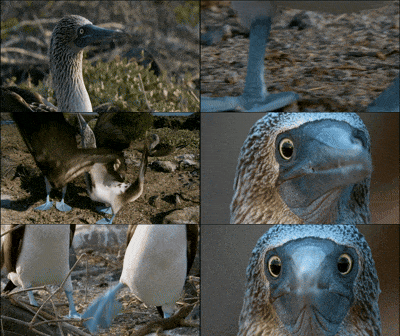
I especially enjoyed the sections dealing with the seabirds, like the Galapagos Penguin and the Blue-footed Booby.
The book includes extensive illustrations and diagrams that make it a wonderful resource. I also enjoyed the narration by James Adams. I read this as part of my Journey Around the World in 80 Books as my read for Ecuador. My next stop will be Peru.
These Brits seem intoxicated with their explorers, as is often the case. Aside from a bit of hero worship for dead Scientists, The Galapagos: A Natural History is a light survey of the geologic, animal, and plant life on the archipelago, which is part of Ecuador. Very light. The author adds quite a bit of history about the various explorers who collected and studied the life on the Galapagos, tortured and killed the animals in experiments, and the sailers who killed and ate thousands of the Galapagos turtles. And, he spent a bit more time dealing with the Scientists than he did the wildlife. In that sense, It’s not really a natural history, but rather a historical study of exploration and human change.
But, in the process, there was enough info here to spark further study. I learned a great deal about the variety of animal life and even a tad about plant life, such as Daisy Trees. He also covered the different biomes found on the islands, the volcanoes, and the geologic formation of the 13 islands. He covered such topics as genetic drift and speciation divergence in isolation. There could have been more about the geologic composition and the natural world for my taste. But, what was here was good.
The most interesting was the discussion of how some animal life, like snails can survive trans-avionic journeys and therefore could have been eaten by a bird in South America, which then passed the living creature out on the island still alive. So, it gave a good deal of info about how plant & animal colonists were possibly transported to these volcanic islands.
I especially enjoyed the sections dealing with the seabirds, like the Galapagos Penguin and the Blue-footed Booby.
The book includes extensive illustrations and diagrams that make it a wonderful resource. I also enjoyed the narration by James Adams. I read this as part of my Journey Around the World in 80 Books as my read for Ecuador. My next stop will be Peru.

April 20, 2025
A pretty short and very enjoyable science book about the Galápagos Islands and everything on them (including the people). I think if you’re going to the Galápagos (yes, I am doing that), this book is a must-read primer for understanding the formation of the islands, all the life on them and in the ocean around them, and exactly why they are so unusual. (Entering here my standard warning about anything Galapagos—there is a LOT of talk of animal death, but nothing graphic.)

August 28, 2022
An approachable yet comprehensive overview of the Galapagos’ history and ecology.
February 19, 2017
Good overview of the natural history of the Galapagos Islands, with many fascinating historical references. Read in preparation for a trip.
April 25, 2022
Una excelente introducción a la historia natural de las Galápagos.

November 3, 2016
An example of a quintessential read for the Natural History enthusiast. Though fairly succinct and relatively vague, Nicholls has captured through snapshot chapters the wonderful essence of the Galapagos and its history from firey conception to present political position. Furthermore, it unexpectedly (though delightfully) reveals some interesting flourishes and characteristics of its wildlife inhabitants including a particularly disturbing insight into the social interactions between Red-footed Boobies. I'll say no more, but it's really quite fascinating.
This book is a fine entree for such classics as The Voyage of the Beagle and The Origin of Species, two books that it references often - and why wouldn't it? As Nicholls' book mentions, Darwin and the Galapagos are, in retrospect, now almost synonymous (even if the famed Finches made no appearance whatsoever in TOoS).
But Darwinian or not, there's a lot to enjoy - particularly when coupled with David Attenborough's superb 2013 documentary on the subject (including one of the last appearances of Lonesome George two weeks before his death). To conclude, Henry Nicholl's Galapagos is a fine and thorough exploration of one of the most fascinating ecosystems on the planet.
This book is a fine entree for such classics as The Voyage of the Beagle and The Origin of Species, two books that it references often - and why wouldn't it? As Nicholls' book mentions, Darwin and the Galapagos are, in retrospect, now almost synonymous (even if the famed Finches made no appearance whatsoever in TOoS).
But Darwinian or not, there's a lot to enjoy - particularly when coupled with David Attenborough's superb 2013 documentary on the subject (including one of the last appearances of Lonesome George two weeks before his death). To conclude, Henry Nicholl's Galapagos is a fine and thorough exploration of one of the most fascinating ecosystems on the planet.
July 27, 2017
This was one of the recommended books to be read before going to the Galapagos. It was good in that it gave fairly current information about the laws that are in place now, and what the Ecuadorean government has done to protect the islands. They learned a lot in the earlier years, so that now there are many things being done to protect the treasures that they have there.
Nicholls has the books divided in a way that makes sense. He tells you what animals you will see on which islands and how some of it has changed over the many years. He also gives a history of the islands and their development. It was a good book to prepare for my visit.
Nicholls has the books divided in a way that makes sense. He tells you what animals you will see on which islands and how some of it has changed over the many years. He also gives a history of the islands and their development. It was a good book to prepare for my visit.

August 12, 2014
I read it because I want to travel to the Galapagos one of these days. The natural history gave me a lot of information about why the Galapagos is unique and how it came to be so. There is also an appendix on "how to travel to the Galapagos" which gave good insights into when and how to book your trip (land or water). It also talked about the impact humans are having on the island, and that it's probably fair to only visit once, as you should let someone else have a turn. Really good, and interesting natural history of a very special place.

September 13, 2014
An effortless yet well-referenced read. The chapters took me on a breezy tour through Rocks, Ocean, Seabirds, Plants, Invertebrates, Land Birds, Reptiles, and Humans Parts I, II, and III. The science and conservation anecdotes would have hooked me, anyway, but the author's passion and sense of humor made the pages turn even more quickly. I'm now obsessed with visiting the Galapagos, but I may have to settle for rereading this book for now.

September 5, 2014
Now I REALLY want to go to the Galapagos Islands!!!! Anyone like to join me?

February 10, 2017
Interesting overview of Galapagos including history, geology, wildlife and human impact, as well as the challenges facing the islands and their inhabitants.

June 23, 2021
This one was pretty dry, but it was short and I liked the arrangement of the chapters. I gained some helpful information, but i would have appreciated more citations for some of the claims.

October 16, 2022
Natural history isn't really my cup of tea, but I have a trip to the Galapagos coming up, and I wanted to know what to expect. I found this quite comprehensive.
January 3, 2024
If you’re going to the Galapagos, this is easily digestible and fascinating information about the creatures, the geology, Darwin, and the islands’ inhabitants and visitors.

May 12, 2017
Lubicie podróże i egzotyczne kraje? Nie zawsze możemy sobie pozwolić na drogie wycieczki ale na szczęście mamy książki takie jak ta. Pełne barwnych opisów, historii, zwierząt i przygód. Dzisiaj lecimy na Galapagos.
Galapagos to niesamowite miejsce. Składający się z trzynastu wysp archipelag to prawdziwy raj dla miłośników dzikiej, nieznanej przyrody. W dziesięciu obszernych rozdziałach Henry Nicholls, dziennikarz specjalizujący się między innymi w biologii ewolucyjnej przedstawia nam faunę i florę archipelagu, historię odkrycia wysp oraz problemy z jakimi się dzisiaj boryka.
Autor nie tylko rzetelnie i ciekawie ale również z humorem opowiada o wspaniałej historii Galapagos, o jej florze i faunie, różnorodnym klimacie podzielonym na trzy strefy ekologiczne. Jest to jeden z najbardziej aktywnych sejsmicznie obszarów na świecie. Wyspy wiele zawdzięczają Charlesowi Darwinowi. To on usystematyzował gatunki zamieszkujące archipelag jak również dokonał związanych z nimi niewiarygodnych odkryć. Wiedzieliście, że poszczególne gatunki na przykład żółwi zamieszkujące sąsiednie wyspy nieznacznie różnią się między sobą, chociaż teoretycznie warunki panują podobne? Henry Nicholls nie nudzi, pisze z prawdziwą pasją, bardzo interesująco i jak na biologa przystało raczy nas fascynującymi faktami.
“[Galapagos] Leży tak bardzo na uboczu i jest tak bliski stanowi naturalnemu, że gdy brodząc w wodzie, dochodzi się do brzegu którejś z jego wysp, można odnieść wrażenie, że jest się pierwszym człowiekiem, który to czyni.”
Wyspy na początku broniły się same. Podróżnicy, korsarze, wycieczkowicze omijali te wyspy ze względu na erupcje wulkanów, wszędobylską dżunglę i skały, które wydawałoby się, codziennie rosły w oczach. Niestety, niektórzy byli bardziej ciekawscy. W XVIII i XVIII wieku przetrzebiono populację żółwi słoniowych, następnie kaszalotów, wielorybów. Osadnicy sprowadzili nowe gatunki zwierząt, zakładali nowe pola uprawne. W końcu na Galapagos zaczęli napływać turyści, budowano bazy wojskowe, nowe miasta, nową infrastrukturę, a wyspa zaczęła umierać.
“Galapagos pozostaje jednym z najmniej dotkniętych przez cywilizację, najlepiej zachowanych naturalnych cudów świata.”
Obecnie na Galapagos działa jeden z największych Rezerwatów Morskich, a działacze z Międzynarodowej Unii Ochrony Przyrody walczą o usunięcie z wyspy gatunków roślin i zwierząt celowo sprowadzanych na przestrzeni lat i przywrócenie naturalnego ekosystemu tego rejonu. Henry Nicholls w dodatkach do książki doradza nam również jak najlepiej zwiedzać Galapagos. Kiedy najlepiej przyjechać aby popływać z rekinami albo zobaczyć albatrosa galapagoskiego. Wybrać wielką łódź wycieczkową czy małą łódkę z lokalnym przewodnikiem. Co naprawdę warto zobaczyć w tym prawdziwym raju.
To czego zabrakło mi w tej wspaniałej książeczce to jeszcze więcej zdjęć i schematów. W takich historiach nigdy nie mamy ich dosyć. Dodatki do książki prezentują szereg informacji dotyczących powstania wysp, map i różnorodnych przypisów. To naprawdę rzetelna i pełna treściwych informacji pozycja.
Zdecydowanie jest to książka po którą warto sięgnąć. Pełna ciekawostek, opisów wspaniałych i nietypowych zwierząt. Lektura ta z pewnością zachwyci tych, którzy kochają zgłębiać tajemnice nowych miejsc. Dołączam wizytę na Galapagos do listy moich marzeń.
Galapagos to niesamowite miejsce. Składający się z trzynastu wysp archipelag to prawdziwy raj dla miłośników dzikiej, nieznanej przyrody. W dziesięciu obszernych rozdziałach Henry Nicholls, dziennikarz specjalizujący się między innymi w biologii ewolucyjnej przedstawia nam faunę i florę archipelagu, historię odkrycia wysp oraz problemy z jakimi się dzisiaj boryka.
Autor nie tylko rzetelnie i ciekawie ale również z humorem opowiada o wspaniałej historii Galapagos, o jej florze i faunie, różnorodnym klimacie podzielonym na trzy strefy ekologiczne. Jest to jeden z najbardziej aktywnych sejsmicznie obszarów na świecie. Wyspy wiele zawdzięczają Charlesowi Darwinowi. To on usystematyzował gatunki zamieszkujące archipelag jak również dokonał związanych z nimi niewiarygodnych odkryć. Wiedzieliście, że poszczególne gatunki na przykład żółwi zamieszkujące sąsiednie wyspy nieznacznie różnią się między sobą, chociaż teoretycznie warunki panują podobne? Henry Nicholls nie nudzi, pisze z prawdziwą pasją, bardzo interesująco i jak na biologa przystało raczy nas fascynującymi faktami.
“[Galapagos] Leży tak bardzo na uboczu i jest tak bliski stanowi naturalnemu, że gdy brodząc w wodzie, dochodzi się do brzegu którejś z jego wysp, można odnieść wrażenie, że jest się pierwszym człowiekiem, który to czyni.”
Wyspy na początku broniły się same. Podróżnicy, korsarze, wycieczkowicze omijali te wyspy ze względu na erupcje wulkanów, wszędobylską dżunglę i skały, które wydawałoby się, codziennie rosły w oczach. Niestety, niektórzy byli bardziej ciekawscy. W XVIII i XVIII wieku przetrzebiono populację żółwi słoniowych, następnie kaszalotów, wielorybów. Osadnicy sprowadzili nowe gatunki zwierząt, zakładali nowe pola uprawne. W końcu na Galapagos zaczęli napływać turyści, budowano bazy wojskowe, nowe miasta, nową infrastrukturę, a wyspa zaczęła umierać.
“Galapagos pozostaje jednym z najmniej dotkniętych przez cywilizację, najlepiej zachowanych naturalnych cudów świata.”
Obecnie na Galapagos działa jeden z największych Rezerwatów Morskich, a działacze z Międzynarodowej Unii Ochrony Przyrody walczą o usunięcie z wyspy gatunków roślin i zwierząt celowo sprowadzanych na przestrzeni lat i przywrócenie naturalnego ekosystemu tego rejonu. Henry Nicholls w dodatkach do książki doradza nam również jak najlepiej zwiedzać Galapagos. Kiedy najlepiej przyjechać aby popływać z rekinami albo zobaczyć albatrosa galapagoskiego. Wybrać wielką łódź wycieczkową czy małą łódkę z lokalnym przewodnikiem. Co naprawdę warto zobaczyć w tym prawdziwym raju.
To czego zabrakło mi w tej wspaniałej książeczce to jeszcze więcej zdjęć i schematów. W takich historiach nigdy nie mamy ich dosyć. Dodatki do książki prezentują szereg informacji dotyczących powstania wysp, map i różnorodnych przypisów. To naprawdę rzetelna i pełna treściwych informacji pozycja.
Zdecydowanie jest to książka po którą warto sięgnąć. Pełna ciekawostek, opisów wspaniałych i nietypowych zwierząt. Lektura ta z pewnością zachwyci tych, którzy kochają zgłębiać tajemnice nowych miejsc. Dołączam wizytę na Galapagos do listy moich marzeń.
March 7, 2026
This was a relatively short, well-written, and insightful book on all that is “The Galapagos.” The books is very cleanly structured with an interesting prologue and then ten chapters on different facets of the natural history of the islands. Each chapter focuses on a specific topic (e.g., reptiles) and provides a suscinct overview, covering important history/events and contemporary themes. The first seven chapters are on “rocks,” the “ocean,” “seabirds,” “plants,” “invertebrates,” “land birds,” and “reptiles” and the text closes with three chapters related to “humans” (their actions, behaviors, impacts, policies, etc). The main text is approx 145 pages, with 15 pages of very useful appendix material (especially. “Maps and Diagrams”), 25 pages of notes, and 2 pages of further reading recommendations. I enjoyed reading Henry Nicholls’ book and felt like I had learned something on every page. At the time of my rereading of this book (2026), it is now 12 years old and I do wonder what Nicholls would write today, especially in the final three chapters on humans. My interests on several topics are piqued. I now will read more about the isands, its flora and fauna, its people, its famous visitors, and the scientists and conservationists working there.
Borrowed from Local Library March 2026
Borrowed from Local Library March 2026

October 27, 2023
This is not a must read if you are going to the Galapagos, but it is a good top ten of the books to read, and it does thoroughly cover what is on offer.
In 1832, the 10-year-old Republic of Ecuador claimed sovereignty over the Galápagos and built a modest settlement, but what really put the islands on the map, at least retrospectively, was the five-week visit of Charles Darwin in 1835. As naturalist on the global survey ship HMS Beagle, Darwin noticed astonishing variations between closely related plant and animal species on islands separated by just a few miles of sea and this set his thinking on the path that led to the theory of natural selection, perhaps the most important single scientific idea anyone has ever had.
Darwin was among the first Europeans to contemplate the non-human life native to the islands for what it was – rather than as something to exploit. And what an extraordinary upside-down world it was. The largest land animals are reptiles; the largest indigenous mammals are a dozen or so species of small shy creatures known as rice rats. A species of daisy has become a giant tree. Penguins swim in the tropical waters. With pink iguanas and blue-footed boobies there are many amazing things to see. This book introduces and celebrates these wonders and more in seven short chapters covering the geology, ocean life, seabirds, plants, invertebrates, land birds and reptiles of the archipelago. Three more explore the human impact and the hope that Nicholls and others have for the islands' future.
In 1832, the 10-year-old Republic of Ecuador claimed sovereignty over the Galápagos and built a modest settlement, but what really put the islands on the map, at least retrospectively, was the five-week visit of Charles Darwin in 1835. As naturalist on the global survey ship HMS Beagle, Darwin noticed astonishing variations between closely related plant and animal species on islands separated by just a few miles of sea and this set his thinking on the path that led to the theory of natural selection, perhaps the most important single scientific idea anyone has ever had.
Darwin was among the first Europeans to contemplate the non-human life native to the islands for what it was – rather than as something to exploit. And what an extraordinary upside-down world it was. The largest land animals are reptiles; the largest indigenous mammals are a dozen or so species of small shy creatures known as rice rats. A species of daisy has become a giant tree. Penguins swim in the tropical waters. With pink iguanas and blue-footed boobies there are many amazing things to see. This book introduces and celebrates these wonders and more in seven short chapters covering the geology, ocean life, seabirds, plants, invertebrates, land birds and reptiles of the archipelago. Three more explore the human impact and the hope that Nicholls and others have for the islands' future.
Displaying 1 - 30 of 117 reviews