The Divine Comedy is a narrative poem by Dante Alighieri that describes the the pilgrim Dante’s travels through Hell (Inferno), Purgatory (Purgatorio), and Paradise (Paradiso). This trio of books, or cantiche, is one example of the number three as a theme throughout the work. Each book consists of 33 cantos, which—added to an introductory canto—totals 100. Each cantica follows a pattern of nine phases plus one for a total of nine circles of hell plus Lucifer, nine rings of Mount Purgatory plus the garden of Eden, nine celestial bodies of Paradise followed by the Empyrean essence of God.
Widely considered the preeminent work in Italian literature, it helped establish the Tuscan language as the standardized Italian language. This edition follows the H.F. Cary English translation.
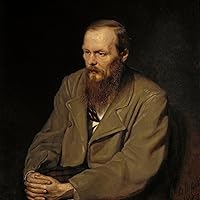
Dante Alighieri, or simply Dante (May 14/June 13 1265 – September 13/14, 1321), is one of the greatest poets in the Italian language; with the story-teller, Boccaccio, and the poet, Petrarch, he forms the classic trio of Italian authors. Dante Alighieri was born in the city-state Florence in 1265. He first saw the woman, or rather the child, who was to become the poetic love of his life when he was almost nine years old and she was some months younger. In fact, Beatrice married another man, Simone di' Bardi, and died when Dante was 25, so their relationship existed almost entirely in Dante's imagination, but she nonetheless plays an extremely important role in his poetry. Dante attributed all the heavenly virtues to her soul and imagined, in his masterpiece The Divine Comedy, that she was his guardian angel who alternately berated and encouraged him on his search for salvation.
Politics as well as love deeply influenced Dante's literary and emotional life. Renaissance Florence was a thriving, but not a peaceful city: different opposing factions continually struggled for dominance there. The Guelfs and the Ghibellines were the two major factions, and in fact that division was important in all of Italy and other countries as well. The Pope and the Holy Roman Emperor were political rivals for much of this time period, and in general the Guelfs were in favor of the Pope, while the Ghibellines supported Imperial power. By 1289 in the battle of Campaldino the Ghibellines largely disappeared from Florence. Peace, however, did not insue. Instead, the Guelf party divided between the Whites and the Blacks (Dante was a White Guelf). The Whites were more opposed to Papal power than the Blacks, and tended to favor the emperor, so in fact the preoccupations of the White Guelfs were much like those of the defeated Ghibellines. In this divisive atmosphere Dante rose to a position of leadership. in 1302, while he was in Rome on a diplomatic mission to the Pope, the Blacks in Florence seized power with the help of the French (and pro-Pope) Charles of Valois. The Blacks exiled Dante, confiscating his goods and condemning him to be burned if he should return to Florence.
Dante never returned to Florence. He wandered from city to city, depending on noble patrons there. Between 1302 and 1304 some attempts were made by the exiled Whites to retrieve their position in Florence, but none of these succeeded and Dante contented himself with hoping for the appearance of a new powerful Holy Roman Emperor who would unite the country and banish strife. Henry VII was elected Emperor in 1308, and indeed laid seige to Florence in 1312, but was defeated, and he died a year later, destroying Dante's hopes. Dante passed from court to court, writing passionate political and moral epistles and finishing his Divine Comedy, which contains the Inferno, Purgatorio, and Paradiso. He finally died in Ravenna in 1321.
This was so good!!!! Kinda reminded me of what the odyssey would be like. I loved the illustrations and different stouts. Especially in poem form simple to read
This dramatisation is a very good introduction to the Divine Comedy. I am interested to read it, but baulk a bit at starting a 14,000 line poem from 700 years ago. This is obviously a very filtered version with lots omitted, but being performed by professional actors with sound effects, brought it to life in a way that a simple read does not. It also gave me a introduction to different parts of the story and make me better prepared to read the full poem. While Dante's view is reflects Catholic theology of the time, listening made me reflect on things I do today. I thought that Purgatory was good, even though people normally find Inferno most enjoyable - maybe it is all the gory torments. However I found that I could identify with the sinners in Purgatory, they seemed like normal people, whereas those in Hell seemed irredeemably bad. The spirits in Hell seemed to be locked into themselves and their behaviours, blamed everyone else for their suffering and had not changed their attitudes and behaviour, whereas those in Purgatory could see they had made mistakes and they were suffering as a result. So it makes you think about the way we act in this life, even in you are not religious.
An easily digestible way to experience The Divine Comedy, this BBC produced full cast dramatization was highly engaging. It made for some fascinating listening and conversation on a long car ride with my husband.
I’d read Dante’s “Inferno” as well as bits and pieces of the other two parts of this “narrative poem” in college but never experienced the whole thing. It’s something that’s been popping up as I’ve been delving deeper into C.S. Lewis’s background and work as well as several other books by other authors.
Definitely worth visiting and researching if you are into understanding allegories and influences on Western culture.
This was fantastic. I think that the next time I read the Divine Comedy, I will be able to gain a lot more out of it now that I listened to this, and already familiarized myself with a surface-level reading of the epic poem.
This production itself makes the case, in a way, that a visual adaptation for the screen would be fantastic. I have seen the 1911 version of Inferno which, if I had seen it when it released, I probably would have converted. Whenever I meet Italians, they typically get excited talking about the Divine Comedy (and Manzoni and Sergio Leone). It's such a fascinating story and the BBC did a great job in this radio dramatization.
I cannot begin to describe my journey with this book; it is undoubtedly the most challenging piece of literature I have read so far. In fact, without the accompanying lectures, I doubt I would have gained even the slightest understanding of its contents. It is clear to me how this work sparked pivotal eras in human history, such as the Renaissance, serving as a guide to the creativity that illuminates our world today. This is a book I hope I will read multiple times throughout my life, and like the lectures suggested, I believe it will transform me with every reading in ways I cannot yet foresee. Ultimately, this book proves the divine spark within us all, reminding us that the only way to keep that flame alive is to love, imagine, and, most importantly, create.
I would also like to mention that the lectures I watched were from a different translation, and I believe I will provide another review once I finish that one.
quotes i liked :3
Inferno:
“How frozen and faint I then became, ask it not, reader, for I do not write it, because all words would fail. I did not die and I did not remain alive: now think for yourself, if you have any wit, what I became, deprived alike of death and life!”
Purgatory: “If lukewarm love draws you to see it or gain it, this terrace after due repentance torments you for it.”
“Now it may be apparent to you how far the truth is hidden from the people who aver that every love is praiseworthy in itself, because perhaps its matter appears always to be good: but not every imprint is good, although the wax be good.”
Paradise:
“here we repent not, but we smile, not for the fault, which returns not to mind, but for the power that ordained and foresaw. Here we contemplate the art which so much love adorns, and we discern the good by reason of which the world below again becomes the world above”
“If your fingers are insufficient for such a knot, it is no wonder, so hard has it become by not being tried.”
I’m on a mission to make classics cool again and pitch them in a way the girlies understand. Here goes…
This is basically Dante’s self-insert bible fanfiction. He’s created a situation where (because he is so very special) he gets to explore various levels of the afterlife and get a heads up on the soul’s journey before he has even died. On this journey, he’s joined by his poetry man crush (Virgil) and his dead girlfriend (Beatrice). Because who of us hasn’t used literature to imagine ourselves with celebrities or former romantic flames? Dante may be the OG fanfic.net/ao3 user.
Dante uses this journey for many symbolic purposes, but primarily to have cameos from friends, politicians, historical figures, etc & speculate on where they’ve ended up after death. Also to brag about Italy and dunk on the current pope, who he believes is going to be the downfall of Catholicism. Hate to break it to you dude, but that pope didn’t even scratch the surface of reasons why people broke from the Catholic Church.
In summation, Dante thinks he is very special. He has a bit of a crush/obsession on both Beatrice and Virgil. He hates the Greeks. Basically everything is symbolism for something in Christianity.
TLDR: Do I think everyone should read this? No, it’s veryyyyy dense. But I think everyone should watch a recap video or something to understand a lot of famous literary tropes that become established here.
I liked this one quite a bit. You could feel the cultural references stemming from it, and the dramatization made this version very accessible. There are many big questions addressed, from a cultural frame from a long time ago. I would recommend this if curious about Dante and other old writers, and you want an easy way in.
After writing the review I pondered why despite enjoying it, it didn't leave a strong impact, thus the three rating. I think I felt far off from the story's Dante. It was interesting to follow his arc, but his problems were far from mine (not due to the time, but due to his perspectives) and I didn't resonate.
WOW this was such a fun book to listen to on Audible. The storytelling was vivid and exciting. This is the gateway to my Dante obsession. I will be listening to the full version next, then I will read it physically. I’ve been recommending this audio book to everyone it’s SO GOOD.
Long, long and painful read... especially Paradisio... I still don't really know what the author was trying to say. I hope most of the rest of the classics I am working through are not as difficult.
FANTASTIC dramatization! 🤩 I’ve known Inferno since college, but this was my first time through Purgatorio and Paradiso and WOW what an amazing way to experience them! Highly recommend this! 👍🏻👍🏻
"Faith is what gives substance to our hopes and makes us certain of realities we do not see."
In Paradiso 24: Believing is Not Seeing, Dante is ultimately questioned on faith, hope, and love by the three major apostles: Saint Peter, Saint James, and Saint John. It's important to note that up until this point, Dante has had a continuous struggle in his belief in God and faith, being led and mentored throughout the epic poem by Virgil. It is astonishing therefore to both Lady Beatrice and Saint Peter when Dante quotes Saint Paul, echoing his own personal view on faith.
I listened to The Divine Comedy as a BBC Dramatization and found the heavy text much more understandable this way. I simply loved this ending sentiment recited by Dante. The final culmination of everything a young Dante has learned is summed up within it and although the traditional words were originally spoken over 2,000 years ago (in the 1st century BC by St. Paul the Epostle), they still resonate to modern ears.
To me, hearing the epic poem largely reenacted using a more modern script while still retaining the story and much of the original text, was the perfect compromise between old and new. Especially as a younger reader, I found I got so much more out of it.
In addition, the radio play format allowed me to listen to some of my favorite actors voice beloved classic characters, like Hattie Morahan portraying Lady Beatrice and Blake Ritson as a Young Dante.
Overall, I would strongly recommend listening to Dante's Comedy in this format, especially for anyone looking to get a taste for classic literature, but not prepared to swallow whole chunks of Italian 'terza rima' or complex rhyming schemes.
This is a BBC audio-theatrical dramatization of one of the most highly regarded literary works in the latest millennia: That of Dante Alighieri and his 14,000 Italian narrative poem La Divina Commedia.
“The hottest places in hell are reserved for those who, in times of great moral crisis, maintain their neutrality.” - Inferno/ La Divina Commedia (1/3)
The story, subdivided into three cantos, revolves around Dante and his journey through Inferno (Hell), Purgatorio (Purgatory) and Paradiso (Paradise). This voyage, based on the Western Church's view of the afterlife in the 14th century, symbolizes the journey of the ascent of a man's soul to God: starting with sin rejection (Inferno), followed by Christian penitence (Purgatorio), and ending by soul ascension (Paradiso). Through it all, Dante is accompanied by three successive guides: The Poet Virgil (symbolic of human reason), The Beautiful Beatrice (representative of faith and divine revelation) and the Saint Bernard (allegorical to his devotion to Mother Mary).
“Thus you may understand that love alone is the true seed of every merit in you, and of all acts for which you must atone.” - Purgatorio/ La Divina Commedia (2/3)
This BBC Dramatization does a fairly good job in capturing the essence of the above mentioned work, although in a very light and filtered way. Nonetheless, for an introduction into the world of La Divina Commedia, it does its work well, with the added bonus of the theatrical sounding performance, with a British accent, that is sure to captivate the attention of the auditor.
“As a wheel turns smoothly, free from jars, my will and my desire were turned by love, The love that moves the sun and the other stars.” - Paradiso/ La Divina Commedia (3/3)
I loved this! I wanted to do some preliminary research into the Divine Comedy before actually reading it and this is excellent for that. The performances and the sound effects are phenomenal, as well as the music that sometimes appears in certain scenes. It is a beautiful dramatisation, and I teared up at the end. It is packed with meaning and very tightly constructed. The Inferno is the most dramatic part and perhaps the most famous and it is very good. However, for my personal taste, Purgatory is my favorite, then Paradise and then the Inferno. Although perhaps that is only a reflection of my current state of mind and of what I am going through in my life right now. In any case, I would recommend this to anyone really, I think there is literary, poetic and dramatic merit in this dramatisation and if taken seriously, can seriously make you see your life in a different light. Everyone should read this, but especially every Christian out there, and for Catholics it should be must-listen, as Dante is perhaps the most brilliant author to come out of the Catholicism, and Christianity in general for that matter. This is a phenomenal introduction or refresher to his poem (although I don't think a replacement). Absolutely loved it.
I chose to read the Longfellow translation, as it was the edition I already owned. The first book, Inferno, was phenomenal. Gothic, fascinating, and dreadfully detailed. I'd give that one 5 stars. The second book, Purgatorio, was relatively bland in comparison, but was still fairly interesting. The third book, Paradiso, was pretty boring to me (other than Dante's love for Beatrice), and I think it lost me because Longfellow seemed tapped out with the translation. I suspect the original Italian version is quite a bit richer in its prose, but alas, it remains behind a language barrier for me at this time.
Overall, I would highly recommend reading The Divine Comedy, but I'd recommend doing some research into better translations than this one before you choose--or reading the original in Italian if you have that ability.
This is the second time I have read the Divine Comedy and I agree with those who say it takes at least two or three readings to "get hooked" on it. This is not easy to read with its allusions, metaphors, and historical references. After finally grasping what was being said, I needed additional help to understand what was meant.
One needs a guide to journey through the Comedia. There are many helps on internet, but I found Tom LA Books' YouTube commentary best matched my need and my own spiritual approach. With help from Tom LA Books and at least one more reading of this spiritual classic, I could fall in love with it. At this point I am grateful to have read it and illuminated by its depth.
Definitely a landmark of its time. Translation loses a bit of flair but the the original character is still there and it flows nicely as a poem. Interesting interactions with famous individuals however many will be unknown to the modern reader so will require some research. Although the title 'comedy' seems a little unusual at first it begins to slightly make sense in an abstract sense later on. Perhaps I don't have an extensive enough knowledge of medieval Italian culture and politics, but I found it interesting none the less.
Hard one to review. I feel the performance of the BBC cast is actually pretty good, but the story starts off really well in inferno and then just becomes one slow motion cart wreck. Should have ended at inferno
Thought I would eat this up because I loved Gabriel's Inferno in high school, but alas, that wasn't the case. This just reinforces the idea that classics aren't super my thing.
The angelic hymns, narration, the Italian passages, all come together to move through your soul like an ice breaker ship. It's an incredible audiobook.