I looked at the streets of Yagoona through eyes stinging with melted Maybelline liquid liner. Yagoona looked back at me, the wannabe hipster who dreamed of moving to a share house in the inner west, and cackled. Funny Ethnics catapults readers into the sprawling city-within-a-city that is Western Sydney and the world of Sylvia only child of Vietnamese refugee parents, unexceptional student, exceptional self-doubter. It's a place where migrants from across the world converge, and identity is a slippery, ever-shifting beast. Jumping through snapshots of Sylvia's life - from childhood to something resembling adulthood - this novel is about square pegs and round holes, those who belong and those on the fringes. It's a funhouse mirror held up to modern Australia revealing suburban fortune tellers, train-carriage preachers, crumbling friendships and bad stand-up comedy. In Funny Ethnics, Shirley Le uses a coming-of-age tale to reveal a side of Australia so ordinary that it's entirely bizarre.
There’s a lovely quirky offbeat quality to Le’s prose style that perfectly matches protagonist Sylvia’s feelings of disconnection to her life, her family and her community. The experiences of migrant children is always something I want to read about and I loved the way Le played with the ideas of a model minority. As a reader though I like to go into the mind of a protagonist much more than Le allowed here. At times it felt like life was happening to Sylvia when in fact she was making hard decisions, such as dropping law from her degree and finding paid work as well as writing the heartfelt slam poetry event review (that her tutor threatens to fail her for). She felt like a passive protagonist when she actually wasn’t and I loved the sweet moment when she, admittedly drunkenly, stands up. A solid debut.
Funny Ethnics by Shirley Le Release: 28/02/23 Contemporary Fiction Ratings: ⭐️⭐️⭐️⭐️⭐️
Thank you to @AffirmPress for this ARC.
Funny Ethnics is a coming-of-age tale that is like no other. Rooted in the streets of Western Sydney, a series of vignettes takes us from Sylvia’s childhood through to early adulthood.
Sylvia is the child of Vietnamese refugees - this is a story of living between two worlds, and a lifelong quest to find love and acceptance. This exceptional book traces her emotional growth as we struggle with her through all-too-familiar challenges of school (and beyond), friendship and family.
All-too-familiar challenges but layered with the themes of identity, choices, racism, and the realities of immigrants and their kids growing up in Australia. The author handles all of this with a light touch, with sensitivity and humour.
This book brims with honesty and is utterly grounded in its setting. Living in Western Sydney, I loved the level of artful detail scattered throughout. These are my streets too and it is a wonderful reading experience to share a little of the book’s world. But snappy warts-and-all observations will convince anyone of its authenticity.
It pulls no punches in the racism and ignorance experienced every day by those of diverse cultural backgrounds. There’s a scene where Sylvia starts to feel more at peace with her identity - “I felt good about being a Nguyễn” - only to be brutally ripped down for “centering” her cultural identity. Her response is heart wrenching, writing metaphorically about Bonsai - “Pruning little by little, day by day, will condition your bonsai to conform to what you desire.”
The narrative form is unusual and did take me a little while to settle into. While fiction, it reads a little more memoir than a traditional fictional arc. I was waiting for “the plot” to develop - but this is truly character driven development. This might not work for all readers, but I’d really encourage you to push through. While there are moments that might feel a little slow, it is full of heart, and it all comes together artfully, satisfyingly, at the end.
I loved this and will recommend widely. Five stars.
I picked this up because the author and MC are Vietnamese-Australian, and I am too. I wanted to be heard. Instead, this book made me feel incredibly uncomfortable, and though there are attempts at illuminating the subtle racist attitudes of Australians, this book itself often falls prey to these racist attitudes. The "humour" was often at the expense of another person, and so ended up falling completely flat for me. The story itself has no plot arc, not even for character development; without these two arcs, and failing to really make a point about racism and stereotyping, (in the nicest, gentlest way possible) what's the point of this book? I'm so disappointed.
Longer, more specific review below. All main points are in bold if you'd rather skim :)
what I liked: -the cover! -the MC was from the same background, and the cultural references made me feel seen; I could relate a lot to the cultural aspects (though the MC less so). I liked the inclusion of Vietnamese in the dialogue too. -the book attempted to illuminate some subtle racism in ordinary life, and I appreciated that.
what I didn't like: -before I get into the deeper stuff, I read this on audio, and the narrator's loud breathing really bothered me😭 Not sure if this was because I was reading at a faster speed. Either way, it's a me problem, and not a fault of the book. It did affect my rating a bit though. -into the deeper stuff: Sylvia. She didn't have any defining qualities, other than screaming at people in the most random situations. Things happen, but we don't see enough of her personal commentary to really get her. There isn't enough introspection to tick that box, IMO, but occasionally when she does share her thoughts, I almost wish she hadn't. There was even a point where Sylvia said that she didn't see what "asian nerds" could contribute to society; she said they have no value in society. I hated that. Also, I didn't like her "humor", which I'll elaborate below; they each need their own dot point💀 -I hate when people "joke" by degrading others. Maybe it's your type of humor, but it's not mine, and I won't laugh for the sake of it. In this, Sylvia makes fun of students who do well, simply because she thinks they try to hard and she isn't like them. She mocks a girl for asking for her paper to be re-marked, because Sylvia thinks the original score was good enough. Where is the empathy? Maybe the other girl thought she did better, and was confident in herself and her answers. Maybe the other girl wanted to do the best she possibly could. Sylvia doesn't need to be the same, but it's not okay to bring down someone else who's just trying to do their best. Sylvia made jokes about it, but that made me incredibly uncomfortable and sad. I wanted to see girls supporting girls, not this. -the writing. The author constantly referred to non-white people using adjectives that made me incredibly uncomfortable. Sylvia called Indian people "curries." I don't know if the author knows that this is short for currymuncher, a racial slur. It is a reductive word, designed to make people of Indian decent feel racial and cultural shame, and I hate how often Sylvia used it. She also constantly referred to women wearing hijabs as hijabis— this isn't derogatory, but Sylvia failed to ever refer to these women as anything else. They were always defined by their cultural clothing, and never as just a woman, or a friend, or a stranger, even. People are more than what they wear, where they're from, and the culture they're raised in, and I'm so upset that this book, of all books, failed to reflect this. No white person was ever joked about or referred to by a singular clothing item or called offensive names, even when they did offensive things. -Also, the words "Asian nerds" must have made up half the word count in this book. Again, Asian people have more qualities than being "nerdy." It's awfully narrow to restrict them to one word (which was originally derogatory, at that). Sylvia herself isn't even "nerdy;" she should know better than anyone to not use this to clump all Asian people together. The book conforms to stereotypes, rather than break free from them, even though the MC doesn't conform to the stereotypes. How does this even make sense? -the MC says she wants to be a writer, but there really is no evidence of this until the very end. She fails to mention her "passion" for writing through most of the book. She doesn't share any of her writing or writing classes, though she does share some law classes (which she dropped). I found this unrealistic/ inconsistent. -there was very little plot, more flashbacks than anything else. Literary fiction tends to be similar, and I usually enjoy those, but this story showed no progression. It was just a recount. A fictional biography. It opened with a big, life-changing decision, but then completely drops the present in favour of the far, far past, for at least half of the book. That original scene felt like a distant memory by the time it was addressed again. That's not a plot choice I particularly like; it was as if the first scene was bait, rather than an actual event playing a role in the MC's present and future. -there was no character development. I was hoping for either a plot arc or character arc, but got none. Sylvia didn't change much by the end, and that disappointed me.
Funny Ethnics is a coming of age novel, set in Sydney. Its protagonist and narrator is Sylvia Nguyen, the only child of Vietnamese Refugees.
To her parents' shame and horror, Sylvia is not the straight-A student they hoped for. She tries, but it's just not happening for her. She's torn between her Vietnamese heritage and community, the expectations of being part of that group, and her willingness to find her own way in life.
These themes had been explored in many novels. What makes this novel different is its tone and the wry humour and observations. It's a bit manic at times but in a fun, realistic way.
For a first novel, this wasn't bad, it had potential, but I wanted a bit more from the story.
This books was such a fever dream. Reading about the places and experiences I’ve had at Macquarie University and Western Sydney as a whole. Took me back to catching the train to the city with my Vietnamese friends in year 9.
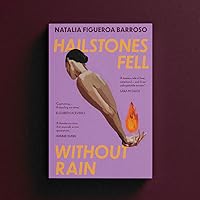
I might be shallow, but the cover of Funny Ethnics by Shirley Le is what grabbed me and made me take a look at the back blurb. A sacred ibis (aka bin chicken in Aussie slang) with a bubble tea? Totally Australian. This story represents multicultural Australia too, about the daughter of Vietnamese refugees who settled in Western Sydney, seen to be less desirable by the rich.
But Le’s Yagoona is more than just home to Australia’s first McDonald’s, it’s home to a mix of cultures. Sylvia and her parents are part of the Vietnamese community, where there is a determination by the parents to ensure the children grow up to succeed. That means law or medicine at university, excellent English and an exit out of the West. The story starts with Sylvia telling her parents she wants to quit law and concentrate on a creative writing degree. Her parents aren’t at all happy, wondering how they have failed (and how they will brag to their friends now!) The story then moves into retrospective events starting in Sylvia’s childhood, such as English tutoring, getting into a selective school and then being an outcast in that school for not being the smartest, prettiest or the richest. Time at university is covered, as are friendships, work and trying (or not) to please her parents somehow.
Sylvia is a hard character to read at times. It’s difficult to know what she wants – to please her parents, to go her own way or follow others? It was also hard to understand her motives at times, such as why she decided to help a stranger find ‘shrooms. I think the gaps in the narrative in her past contributed to being able to ‘read’ her character well. Once I thought of the novel as interlinked experiences from Shirley’s past and into the present, it was a bit easier to follow. What really shines though is the way Le writes of Western Sydney with love, showing that there is a community that cares (despite what the media would have you think). The closeness of the Vietnamese community is described multiple times from the gossip over children, fundraising and helping each other out. (There is also a lot of delicious food described). I liked how Le reflected on Australia through an immigrant lens with no holds barred. The wit was savage and I recognised a few similar experiences. Sylvia’s experiences could be very funny at times and the barbs at the casual racism some characters sprout was exceptionally clever.
Funny Ethnics was in fact, really funny. Both points for including Habib from Pizza (the classic ethnic show).
In writing classes we often hear the feedback, “Show, don’t tell.” This, is exactly what Shirley Le does in her debut novel with wit and humour. And each chapter’s full of “Ah-ha” moments as Oprah would call them back in the day (giving my age away here). Funny Ethnics not only makes you laugh but it leaves you thinking. A pleasure to read.
Really enjoyed this and many parts of the story was so relatable, growing up in Viet family living in Western Sydney. Appreciated how there was nothing overly dramatic. Also enjoyed a few chuckles while reading it!
Would def read more of Shirley’s work in the future!
I bought this book off the back of seeing Shirley Le at the Sydney Writers Festival - she was clearly a good panelist. The book is a mix of fact and fiction as it details the life of a Vietnamese girl born and raised in Western Sydney, feeling not Vietnamese enough and not Australian enough. I loved reading through the lens of Sylvia, although I wish there was more built into the plot. It was relatively uneventful in the way growing up is. In saying that, I’d recommend it.
I love reading books set in Western Sydney, hence my interest. Kudos on the mention of Greystanes viaduct! I just felt like this wasn’t cohesive enough - it felt like threads and not solid enough for me. 3 stars. P.s. I really hope the author is living her best life these days xx
Fiorucci, Tracy Grimshaw, Lizzie MacGuire, Marc Jacobs daisy perfume, altering Supre clothing, and Australian Idol in the early days. Le made me cringe, laugh and feel at home as she described navigating the complexities of identity in a rapidly changing world.
I loved reading this debut novel by Shirley Le, a second generation Vietnamese-Australian writer, who gives us a funny and endearing coming of age story about Sylvia Nguyen growing up in Yagoona, south-west Sydney.
In a 2018 interview with Stephen Pham, Le talks about how her personal exinfluence her writing but also how writers of colour are often asked 'did that really happen?' and not given full credit for their creativity. I have to confess that when I started reading I thought I was reading Le's memoir. Once I realised 𝙵𝚞𝚗𝚗𝚢 𝙴𝚝𝚑𝚗𝚒𝚌𝚜 is a work of fiction and not necessarily autobiographical fiction I think i appreciated it much more. It is actually wonderful to read an Australian novel that has characters and places that show a more diverse Australian identity. We need more fiction like this.
Le is part of the SWEATSHOP Writer's Group which is part of a literacy movement established by Dr Michael Mohammed Ahmad, author of 𝚃𝚑𝚎 𝙻𝚎𝚋𝚜 (𝟸𝟶𝟷𝟾) and more recently 𝚃𝚑𝚎 𝙾𝚝𝚑𝚎𝚛 𝙷𝚊𝚕𝚏 𝚘𝚏 𝚈𝚘𝚞 (𝟸𝟶𝟸𝟷).
For those of you living in Sydney, Shirley Le will be in conversation with the wonderful @mrbenjaminlaw on 9 March at @betterreadbookshop to celebrate the release of 𝙵𝚞𝚗𝚗𝚢 𝙴𝚝𝚑𝚗𝚒𝚌𝚜.
Thanks to #netgalley and @affirmpress for the free e-ARC in return for an honest review. This book will be published on 28 February.
2.5 rounded up to 3. Not an easy book to read, as there was no real story arc, just a bunch of random events. I don't mind a book that meanders or ruminates, but this just wasn't that interesting. I struggled to "get" the narrator and the events didn't really do much - too many things happening to her without really any explanation of how they affected her or what she thought about it.
I'm usually sceptical about publishers claim that the book is funny. But Funny Ethnics is laugh-out funny. Le's prose and depiction of characters is vivid and spot-on. I loved reading about familiar suburbs and locals in Western Sydney. My only criticism is that our bookstore in Bankstown Square didn't get a mention 😒. After all, aside from books, we had the best selection of educational (including selective test practices) in the area😉.
I enjoy reading both recognisably Australian stories and stories about other cultures, so this book had two plusses for me. It reads like an autobiography but isn’t, though real people do appear (check out Yasmine Lewis performing at Poetry Slam on youtube). I liked the writing, but the ‘story’ needed something more.
I really love all the imagery but at the same time the story kind of went no where but I guess that is the point because it’s juts about how ordinary life is ?? Also all of the fast food references made me very hungry.
A wonderful book. A truly unique voice that gives a compelling insight into a life poorly led, dynamic and diverse. A real sense of voice and place, a highly recommended book!
highly relatable read as an viet immigrant child from da area <3 enjoyed it and the references for that reason but other than that wanted a bit more from the story telling to keep me captivated! Overall an easy chill fun read
some of my earliest memories of australia were of western sydney. summer of 92/93. a democratic socialist party conference at the university of western sydney (i’ve noticed it’s now the wsu – western sydney uni). i had no idea who trotsky was, what was his beef with lenin, were they in different indie bands? so i spent three days reading lovecraft and crying into my journal (it had a picture of a sunset and a horse on it) in a darkened boarding house room (i closed all the curtains – it was blindingly bright outside), eating oranges i pilfered from the breakfast table (they were free, but it still felt like stealing).
i saw a wiji thukul performance during the arts night at the end of the conference, a performance art piece acted by himself, assisted by several young white activists, crawling in and out of oil drums with both ends cut out. considering the hearsay of how he was disappeared not more than five years later, these images still play as a chilling short horror flick in my head [ominous music playing].
we were co-living in a group house in dulwich hill along with several other leftist/ish indo activists, including the current director general of culture, hilmar farid, who still had his magnificent wavy glam metal mane then and seemed to be as popular with the ladies as tommy lee.
i escaped the daily seminar of reading 100 pages from lenin’s collected works by sneaking out to the summer hill pub to see local death metal bands. sadistik exekution played one day. the bouncer seemed unable to guess my age being an ageless azn boy so he just took the five buck note from me every time.
little did i know that this brief period in my life foreshadowed even more depressing years around a decade later of me as an inner westie.
sylvia nguyen, the anti-heroine of shirley le’s funny af funny ethnics (fr), is not an inner westie, she’s an out-and-out, proper, true blue?, westie from yagoona. i checked on google maps and the first aussie macca’s next to the hume highway mentioned as yagoona’s claim to fame in the novel is only an 18-minute drive from wsu/uws. i could’ve gotten a big mac and nuggies to go with my oranges.
the novel began with a dramatic soz, mea maxima culpa – sylvia confessing to her first-gen vietnamese immigrant mum me (with diacritic under the e) and dad ba that she was gonna drop law at uni (the already supposedly second-rate macquarie – “most students from slc [her selective school] ended up at the top unis like sydney uni or unsw”) to become a writer.
the scene straightaway brought my mind back to tracy lien’s all that’s left unsaid (okay, probably only because i’d just finished reading it before continuing my current contemporary aussie novels binge with funny ethnics), also a novel set in/about western sydney (lien’s set in cabramatta in the 90s) featuring a(n actual) heroine who also chooses a left-field profession for a “model minority” in australia (a journalist).
both main characters, sylvia in funny ethnics and ky in all that’s left unsaid, are even paired with the same type of contrasting, wilder, more slay bffls (sylvia is virginal and fears getting “dickmatised” and her best mate before the inevitable falling out/ghosting/getting canceled/blocked is fast-talking tammy, who studied fashion at TAFE while working part-time at bankstown’s professioNAIL (an artisanail!); ky is a model nerd and her bff is the heavily tattooed minnie who dropped out of highschool to join a cabra gang) – mean girls to their legally browns.
but in terms of the textacy you get from the prose and the complexity of each author’s positionality/pov – the different strategies le and lien took to weaponize their “own voice” storytelling – the two novels couldn’t be further apart from each other.
whereas all that’s left unsaid is written as a fast-paced plot-driven page-turner, in no-nonsense prose that borders on the hackneyed (the repeated metaphor of ky’s flashy rimless glasses suggesting she sees things that her community refuses to see is highkey cringe), undoubtedly with an eye for a possible future netflix adapt (this was my first impression early on, but i just checked and there’s an interview with lien on shondaland.com!), funny ethnics is rife with fantastic roflmao digressions (btw, afaik no one else has made the brilliant move to title all their novel chapters with internet acronyms? FML, SRSLY, IDC, GL, etc. – ROFL!) and seems to treat plot as more of an inconvenience than necessity. and i fucking love it.
in that first scene for example. some reviews quoted the following passage as an example of le’s funny (perhaps it’s part of the press release?): “i had an important announcement to make. earlier, i had cleared away the bowl of kiwi fruit and the napkin dispenser, as well as the matching cork coasters. just in case things became physical.” but for me the best part came right after when le went on one of her magnificent digressions telling the story of an aunt from france who visited her home and had to listen to an archaelogical lesson from ba on the origin story of his prized marble table (where sylvia’s confession was about to take place): “he spent thirty minutes explaining to her that the table was forty thousand years old and watched as she traced her fingers over the little crustaceans that had curled up and died in the slabs of beige stone, ‘c’est magnifique,’ she murmured.” LMAO.
another one of my favourite passages was when sylvia, stuck at home after dropping out of law, went on an expedition to “explore the hidden gens of western sydney” – the first stop “an aqueduct in greystanes that looked like the entrance to a lord of the rings castle.” behind a block of public toilets off cumberland road she encountered joe, a “drop-kick” who identified as a “flâneur” and enlisted her help to pick magic mushrooms in a “shrooms shrub” and split the results 50/50. in this passage le went from realism to electric surrealism in a heartbeat, from rambo: first blood to rimbaud: 1873. “wet soil squelched beneath my fingertips. i inhaled, expecting to smell rain. instead i smelled raw meat. i opened my eyes, looked down and near my finger was a quivering mass of flesh marbled with chunks of fat. i stopped breathing. my brain. my brain had fallen out of my head. i patted the top of my forehead. hair on a skull. i traced a finger along my scalp. checking for stitches. [paragraph break] i’d read mary shelley’s frankenstein in high school, the only book i’d finished in those years. i had been fascinated by the monster, described as having ‘yellow skin scarcely covering muscles and arteries’, its hair ‘lustrous black’, brought to life only to be shunned by society.”
cleverly putting in a reference to shelley, lowkey comparing the fate of asians (“yellow skin”, “hair lustruous black”) in white australia with the fate of the monster (“shunned by society”) after having just summoned benjamin’s flâneur and stuck him in the Great Australian Bush, at the same time exposing an archetype of modernist malaise as just “a fancy word for bludger” but also displaying a tenderness for him, this average, basic joe (the flâneur’s actual name!) for boulevarding off a highway – a perfect mix of sincerity and artsiness i haven’t seen since, full disclosure, SRSLY, fugazi.
talking about fugazi offers me the perfect segue to my own “own voice”. sylvia and her westie friends detest (white, inner west) indie kids: “listening to triple j was like listening to a foreign radio station. obscure references to people with names like leonard cohen”. IJBOL. i’m brown, and i’ve lived in jakarta, indonesia, for the last 18 years, but i still remember richard kingsmill. i’ve got multiple copies of beautiful losers and songs of love and hate. i spent my teenage years in canberra watching indie films at electric shadows (salo and almodovar’s entire oeuvre up to 1999 were highlights); seeing fugazi, mo tucker, weezer at the anu bar; reading eliot, austen, cohen. my english teacher in highschool (narrabundah college) was fucking geoff page (respect to the dude tho, he once endured reading to a room of students stoned out of their minds during a theory of knowledge camp on the south coast) – i can’t think of a more perfect coconut than me.
here in jakarta i still speak half english, half indonesian at home and with friends, and run a spoken word night (since 2017) where most of the crowd/readers codeswitch as a rule (earning their pejorative moniker “jaksel” which today seems to stand for anything that screams “privilege!” – from speaking english to wearing head-to-toe masshiros (whites only please). and yet i often feel frustration whenever my white aussie friends (who were my surrogate family when i lived there – and i still love them – and who now live all over the world, though some have also been happy enough to grow roots in tuggeranong) fail to understand the extent of my third-world (mostly financial) precarity. just because i can post about my top 10 gbv albums on instagram doesn’t mean that i can just fly off to sri lanka next year to join them on the australian cricket team’s tour to celebrate 30 years of our friendship. SMH. yes i’m so white australian i even watch the cricket. i did go to the unsw like a model minority azn but i was there to fail a phd thesis on “the bradman myth” (true story).
i am surprised though, looking back on the very beginning of my writing “career” as a poet, to realise that the very first poem i’ve ever written properly, and by properly i meant once i found out about the real weight of (mainly white, english-speaking) poetic traditions bearing down on me, was a robert lowell pastiche set at badde manors, the famous vegetarian café on glebe point road, inner west ground zero, but one that was – this was my oblique confessional in the poem – questioning my place as a brown boy meddling in english poetry. i’ll quote (just some lines, the whole thing makes me gag, not in a good way):
Lowell would give her a name, grand and old,
like De Witt Clinton, Hoes, or Vanderpoel
Of strange origins and split-second force
hung heavy on history’s family tree.
The sound of morning, meaning still far-fetched,
begins here. The date on the wall, Roman,
smiles and nods its dark head: Lowell is dead.
“her” was the barista, also white. what am i doing surrounded by all this whiteness? SMH.
i sent off the poem to a “sydney urban poetry” contest organised by the new south wales writers’ centre (now writing nsw?), and was invited to a reading for being one of the top 5 poets. the reading was at the glebe library, my local, and i was the only brown poet there. when i walked off the stage i could hear an elderly (yes, white) lady telling her friend, under her breath but still loud enough for me to hear, “well, that was a bit dry, wasn’t it?”
the thing is, she was right. LMAO.
why didn’t write my poem in the ouyang yu tradition instead of lowell? because i didn’t know then there was already an azn-australian man writing angry poems about white australia that weaponized that whitest of literary trope – the irony – against itself. “that is an indonesian struggling with right diction”, says “The White Australian”, “a nameless guy in Asia”, “a literary editor” in white australia in yu’s The White Australian (Kunapipi, 20(2), 1998). 1998! i wrote the stupid lowell poem (real revised title) in 2000! FML.
but is my “own voice” the voice of someone like yu? LMAO. in that poem, there’s a “chinese pretending to write in bad english”, maybe that’s yu being shady about himself, but hey, i really do struggle with my diction! i’m constantly dictiomatised. i want to be funny like le, a perfect cross between lorrie moore’s punny drollness and intan febriani’s savage take-downs (now that’s someone with a strong own voice, pity she doesn’t write anymore).
on my recent morning walks around menteng, past the old home of suharto, the former dictator who was in the last throes of his rule when i was living down under, past many ugly mcmansions (suharto’s isn’t one, his was in the ’70s civil servant humblebrag style, no doubt deliberately chosen to enhance his farmer boy-made-good father-of-development image), inhaling the sweetish, old sugar factory smell of polluted air – on which an aussie friend now traveling across continental europe (last stop: “fulfilled a lifelong dream to visit notre dame du haut by le corbusier in ronchamp, france. well-described by x as ‘y’s make-a-wish trip to disneyland.’” to be fair, another white aussie friend, one of those who chose to grow roots in canberra suburbia, cut the tall poppy down pronto: “a lecorbusier church – like worshipping at the old belco bus shelter.” WKWKWK) commented when i posted a photo of my morning walk on instagram: “love that weird Asian mega city pollution twilight”). ah irony, the refuge of the educated!
during those walks i’ve also been listening to a lot of podcasts on contemporary asian-australian books and authors – nina wan, the aforementioned tracy lien (they were interviewed together in one), a live broadcast from the sydney writers fest featuring the spec-fic novelist grace chan, le’s stablemate at affirm press (btw, chan’s bio is “australian writer and psychiatrist”, a model minority for me if ever there was one!), a feature on the helen demidenko affair (remember her, née darville, now dale? now that’s someone who struggled with their own name let alone their “own voice”!), and so far two interviews with le herself that i’ve found. the second one was actually tacked on to the end of the abc book show’s “fakes and frauds” episode on the helen demidenko affair – was it in any way deliberate, why? – featuring an interviewer who i thought was more than a bit irritating, slyly suggesting that perhaps the readers would like to hear more about sylvia’s parents’ boat people stories when the whole point of funny ethnics was telling the story of the second generation of vietnamese refugees in australia (sylvia’s/le’s), not the first (ba’s and me’s with diacritic)! note the clever way le uses the mum’s name, me with the diacritic and the object pronoun me for sylvia – sometimes you have to do a double take, did she mean me or me with the diacritic?, to suggest, almost primally, the deep emotional connection and compassion between the two despite the generational gap. the abc interviewer’s question is like if an old bule expat asked me, after reading my novel set in the jaksel club scene – the vixens, the mr foxes, the duck downs – ”no, please, tell me more about zanzibar and tanamur.” SMDH.
in several of these podcasts, le spoke of a “coming to voice” – aka, in her case, finally finding her “own voice” in the company of other sydney westie poc writers at sweatshop, “a literacy movement based in western sydney which is devoted to empowering culturally and linguistically diverse communities through reading, writing and citical thinking”, whose founding director michael mohammed ahmad wrote the lebs, the first of these sydney westie novels i read (sometime before pando) which kicked off this slow binge.
i wish sweatshop had existed when i was still living in sydney in mid-2000s – when i wrote that first poem whose voice was colonized by lowell, the whitest, born with the silverest of a silver spoon among the confessional poets. SMH. if there was something like sweatshop back then, perhaps i would not have felt so alone or confused, disconnected. i knew even in that très coconut poem that i was questioning my place not only in white australia but also in the western english-speaking poetry traditions – but the question manifested itself only vaguely through the subconscious and the alchemic magic of poetry, suddenly it was there at the end of the poem, but i didn’t know how it got there, or what exactly it (i) was asking or demanding. i felt there was something wrong with me, or the situation i was finding myself in – not realising that it was a sign instead of being wrong that i was actually on the right track to find my own voice even if i was still in the very beginning of the journey.
on le’s instagram there’s a poster of a session she appeared in at the latest brisbane writers fest, captioned “coming of rage”. IMHO though funny not quite the perfect made-up genre for funny ethnics. i’ve been tearing my hair out trying to find a working pun of my own for it, but so far no go. le’s novel is more of a comic, parodic, anti-, bildungsroman. if sylvia and tammy were dudes, i’d have my pun and call it a bildungsbromance. on the evidence of this debut novel, le is already a masterful comic author, and in that regard (only) she shares more with evelyn waugh or lorrie moore than with, say, michael mohammed ahmad. the combo of comedy and bildungsroman is well established. comedy can be savage on the genre’s anxiety about the social, professional, and romantic standing of its heroes/heroines, and le somehow manages to combine savagery with empathic irony in funny ethnics, presenting like a lovechild of bianca del rio and jinx monsoon. for example, when she went on full-on parodic mode to tear the “native speaker english tutor” stereotype to pieces by creating the jabba the fat bastard-like character of “Sir” – “The stench engulfed us and so did the humidity. The small room was crammed with at least fifty Viet children… In the middle… sat a white man with yellow-white hair slicked back and fluffy white hairs trailing down his jowls, sticking out of his ears and visible from under his vulture-beaked nose. He was the source of the smell.” – she then did an almost complete u-turn, lowkey praising him for teaching the kids prosody via poe’s poetry and his roasting of teacher’s pet/”vocaburglar” joey pham: “… MY BOY. BIG WORDS DON’T EQUAL BIG MEANINGS. BEING CLEAR AND HAVING INTERESTING IDEA IS WHAT MATTERS.” le never guns for “white tears and white laughs“, but she doesn’t go for easy brown(ie) points either. funny ethnics is morally complex, like all good comedies are.
so when le said in the helen demidenko podcast that “the spectrum of humour and laughter is just so wide, and i’ve tried to explore that in funny ethnics where we get all types of laughter, from a snicker to a deep, rich laughter straight from the belly”, for once she wasn’t joking. SRSLY.
so yeah, if only sweatshop – perhaps i could’ve completed my coming to voice years ago instead of still struggling in my middle age with a slow AF crawling to voice. FML.