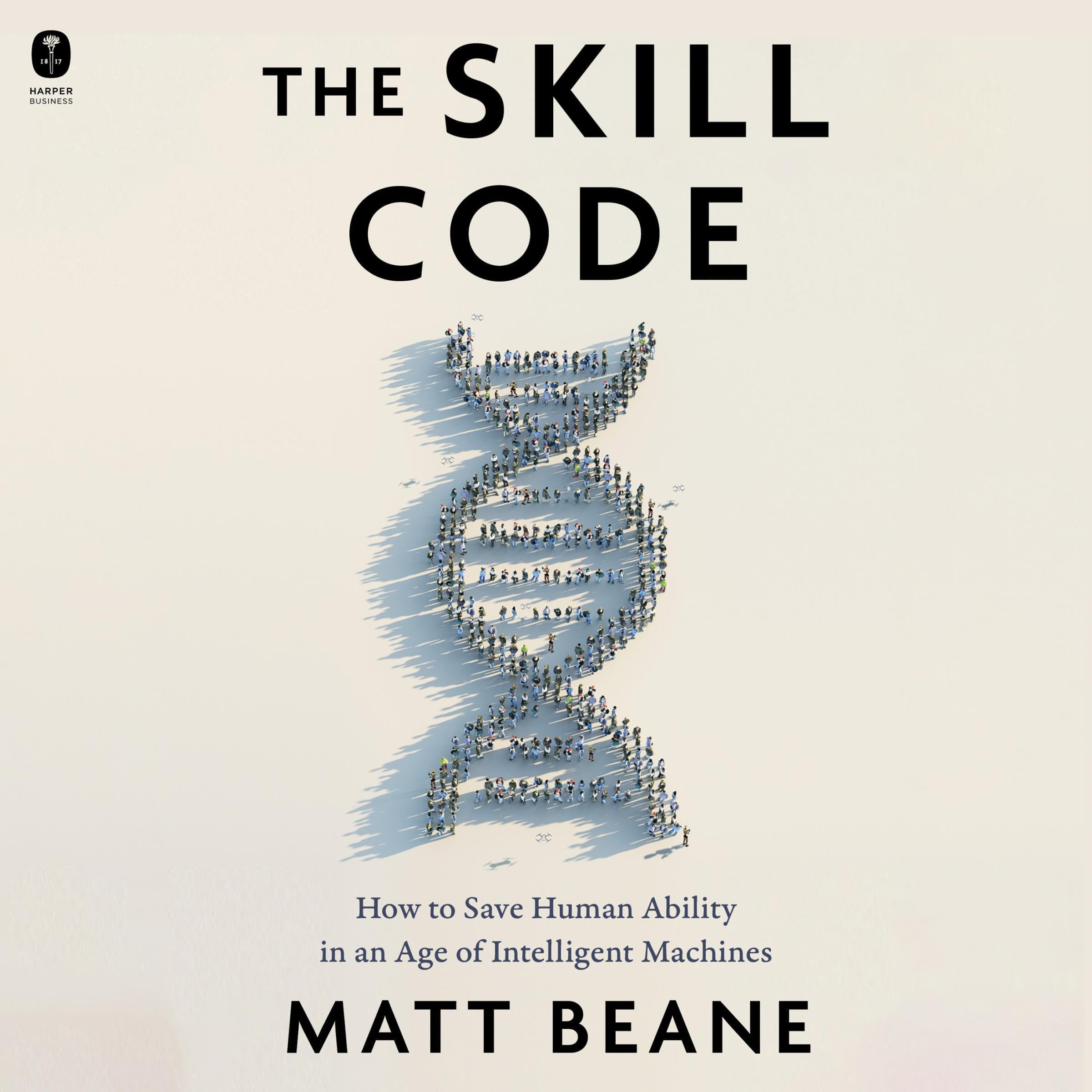
Main takeaway - engaging with complexity isn’t just beneficial – it’s essential
useful for BT notes
Notes:
- Whether you’re a surgeon, teacher, or craftsman, your expertise likely developed through direct interaction with seasoned professionals, not just textbooks. So, what happens to these skills when artificial intelligence and robotics start to permeate every aspect of our work environments? The looming question is, How do we protect and enhance our abilities in an era dominated by machines?
- By the end, you’ll hopefully be inspired to proactively engage with technology – using it as a tool to bolster rather than undermine your skills so you can excel in an increasingly automated world.
- the truth is that the whole skill of learning is facing unprecedented challenges. As robots and AI systems take on more tasks in our workplaces, there’s a growing concern that we might be losing touch with the very essence of human expertise
- the expert-novice bond remains a cornerstone of how we develop our most valuable abilities
- a delicate balance of pushing learners to the edge of their current abilities while providing support and guidance. This approach taps into our brain’s natural learning mechanisms, creating an optimal environment for skill development.
- healthy challenge isn’t just about individual tasks – it’s about creating a rich ecosystem for skill development
- While understanding and cultivating healthy challenge is now more crucial than ever before, this doesn’t mean we should reject AI and automation altogether – it’s about harnessing these tools to enhance our learning processes. By intentionally creating environments that promote healthy challenge, we can ensure that human skill continues to flourish alongside our advancing technologies.
- This transformation, driven by the need for efficiency and embraced during the pandemic, has led to a critical disconnection within the workplace – particularly affecting the essential mentorship dynamics between experienced workers and newcomers. The consequences? A dilution of hands-on learning experiences and a decrease in the complex interactions that foster professional growth.
- Across industries, as teams have become more dispersed, the foundational elements of skill development – challenge, complexity, and connection – have diminished. Technology, while a powerful enabler of efficiency, often filters out the necessary hardships and complexities of tasks that are crucial for deep learning. For instance, in the fast-paced world of tech, young engineers might rely heavily on sophisticated software to perform tasks that would traditionally require extensive problem-solving and innovation. This reliance on technology can streamline processes – but often at the cost of experiential learning, where young professionals learn by tackling complex problems alongside seasoned experts.
- What can I do to counteract these effects in my work environment? For starters, if you’re a leader, consciously invest in creating opportunities for junior team members to collaborate directly with more experienced colleagues. This could mean structuring projects in a way that necessitates their interaction. Or, perhaps more radically, it might be rethinking how technology is used – not as a replacement for human interaction but as a support that enhances it.
- it’s essential to recognize that technology shouldn’t replace the human elements critical to professional growth – it should enrich them instead. By fostering environments where technology and human expertise complement each other, we can preserve or even elevate our most valuable workplace skills amid the surge of automation and virtual interactions. This balanced approach ensures that while we evolve with technological advancements, we also maintain the deep human connections and challenges necessary for genuine skill development.
- it’s about cultivating a mindset that values creative problem-solving and continuous learning over routine proficiency.
- In workplaces saturated with technology, it’s easy to become passive users of tools and processes. Instead, why not delve deeper? Take the initiative to learn about the “why” and the “how” of the technologies you interact with daily. In doing so, you might discover inefficiencies or opportunities for enhancement that others overlook.
- The future of skill development
- In the not-too-distant future, we could witness a revolutionary shift in skill development. This might come about through digital apprenticeships. Imagine, for a minute, a world where a hypothetical integrated learning system seamlessly blends augmented reality, artificial intelligence, and global collaborative networks to supercharge skill acquisition. This isn’t just science fiction, though. The building blocks are already here in integrated corporate learning systems, online platforms like Khan Academy, and open technologies like YouTube.
- The solution lies in creating chimeric systems – those which blend human expertise with AI capabilities in ways that outperform either alone. These systems could provide personalized guidance, garner real-time feedback, and connect learners with experts worldwide.
- But technology alone isn’t enough. We all have a role to play in shaping this future. As novices, we must actively seek out and protect opportunities for meaningful skill development, embracing challenges that push us beyond our comfort zones. Experts should commit to enriching the learning journey for those around them, recognizing that mentorship is a two-way street that amplifies their own expertise. Managers need to insist on blending productivity with human capital development, creating environments where skill growth is as valued as output.
- Entrepreneurs have a unique opportunity to build technologies that foster skill alongside efficiency, potentially revolutionizing entire industries. And policymakers can make a significant impact by investing in addressing the skill externality – the recognition that a skilled workforce benefits society as a whole – and allocating resources accordingly.
- the rise of artificial intelligence and automation presents both challenges and opportunities for skill development. While technology increasingly performs tasks traditionally done by humans, it’s crucial not to lose the essence of human expertise