

What do you think?
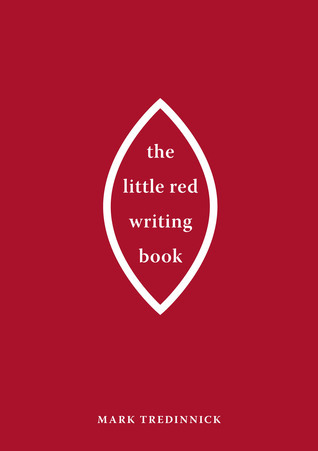
Little Red Writing Book
A manual of good diction, composition, sentence craft, paragraph design, structure and planning, this is a book on technique, style, craft and manners for everyone who writes and wants to do it better. It is a guide to lively and readable writing.
267 pages, Paperback
First published January 1, 2006
About the author
Mark Tredinnick
29 books30 followersMark Tredinnick (born 1962) is a celebrated Australian poet, essayist and teacher. Winner of the Montreal International Poetry Prize in 2011 and the Cardiff International Poetry Competition in 2012. He is the author of thirteen books, including four volumes of poetry (Bluewren Cantos, Fire Diary, The Lyrebird, The Road South); The Blue Plateau; The Little Red Writing Book and "Writing Well: the Essential Guide." For twenty years he has taught poetry, grammar, creative nonfiction and business prose in Sydney and around the world.
Ratings & Reviews
Friends & Following
Create a free account to discover what your friends think of this book!
Community Reviews
Displaying 1 - 27 of 27 reviews
March 3, 2011
This book is lovingly written, and has a few good tips, but overall there's just too much fluff and not enough substance. The voice is engaging, however, and some of the anecdotes are quite nice. He's also a little hyper-focused on sentence construction instead of overall composition, paragraphing, etc.
The poetics portion is all right, but face it, most folks have tin ears, and pretty much everybody has learned the difference between simile and metaphor by the time they're halfway through High School.
Not to mention that musicality in language is lost on pretty much everybody, myself included.
One final note to the author: we don't all want to write like Virginia Woolf and Cormac McCarthy. No need to keep quoting them.
The poetics portion is all right, but face it, most folks have tin ears, and pretty much everybody has learned the difference between simile and metaphor by the time they're halfway through High School.
Not to mention that musicality in language is lost on pretty much everybody, myself included.
One final note to the author: we don't all want to write like Virginia Woolf and Cormac McCarthy. No need to keep quoting them.

July 7, 2011
I love this book so much. It is really simple to read, yet with good instruction. The bits where you get to rewrite paragraphs in order with the chapter are really good to concrete in the leaning. It has helped me so much with my english oral. 10 billion stars out of 5 :)
September 1, 2016
This is a writing book for people who love reading. There is a lot to read to get to the key points. For me there was too much focus on the sentence level of writing and not enough about how sentences fit together into the bigger picture. While some writing tips are appropriate for both fiction and non-fiction, there was not enough recognition of the differences between the two types of writing.
The overall structure and poetic chapter headings also made it hard to find where content on certain topics was likely to be. The reader has to work hard to find and absorb the content, making this more like a memoir from a writer with some writing tips thrown in.
The overall structure and poetic chapter headings also made it hard to find where content on certain topics was likely to be. The reader has to work hard to find and absorb the content, making this more like a memoir from a writer with some writing tips thrown in.

August 25, 2015
I picked up The Little Red Writing Book because Mark is coming to Adelaide to give a workshop based on this volume. I've read a few how-to books on writing and I always manage to pick up useful tips, even though I've been to quite a few workshops by this time an d know a thing or two about writing. So I was a but complacent when I opened the book. I hadn't gotten much farther than page three when I knew this wasn't a typical how-to book. And the deeper I snaking the book, the more I felt immersed in the craft of writing. Not just plotting, characterisation, description and narrative, Mark wrangled with the basics of sentence structure, constructing effective paragraphs and how to link them. And amongst this treasure trove lay the heart of the book: Poetics. Not a matter of how to write but why we write. I love this book, my new favourite how-to write book and will unreservedly recommend it to all and sundry. A masterpiece.

August 3, 2014
Okay, so when you're reading a book and you think about reading it when you're doing other tasks, I consider that to be a book worthy of 5 stars. Mark writes in a conversational way, a way that engenders a feeling that you're sitting together chatting over coffee. I love this kind of non-fiction because I feel like I can take that conversation with me and let the words drop into my mind and deepen my creative thought.
Best thing about this book? I keep forgetting that I'm reading a book about sentence construction. Cool, hey?
Mark Tredinnick
Best thing about this book? I keep forgetting that I'm reading a book about sentence construction. Cool, hey?
Mark Tredinnick

August 20, 2009
This book is my personal Bible. I have taken so much from this book and have the confidence to put it into practice.

August 25, 2012
A very good read for those who need to improve their English writing skill!

February 6, 2026
Mark Tredinnick’s The Little Red Writing Book, in my own subjective view of it, is only seldom useful. Its ultimate conclusion is that writing is a great many things, but chiefly sentence craft – the way words can be carefully orchestrated and linked together to drive even the most dried up tear ducts into openly weeping. I’m not saying that the conclusion is wrong, I’m just saying it’s not particularly helpful.
Structurally, The Little Red Writing Book is somewhere between a self-help book and a school textbook. More often than not, you are left alone with a generous quotation from what the author considers to be good literature, and implored to see it in much the same light. It’s usually accompanied by a brief explainer as to the literary or stylistic device it’s putting on display, or some conclusion the author has managed to extract from between its lines. Whether or not you agree with him is often the point of contention, if not THE point of contention for the whole book.
Tredinnick makes an attempt to differentiate writing into its subsets – what I would humorously call commercially viable and commercial non-viable writing. There’s writing you do on the job. There’s writing you do as part of academia. There’s writing you do as a labour of love. There’s corporate writing, marketing, political statements, minutes, journaling, etc. It’s all writing, but each subset is just that little bit different. The Little Red Writing Book attempts to sporadically cater to them all, if even for just a brief moment. I personally question the usefulness of such an all-encompassing and encyclopedic view of writing, since I can scarcely think of a person who juggles that many hats at any given time. What I mean to say is: If you’re a writer, you’re most likely engaging in only one or two, at most three of these fields. In my case, I write non-fiction by way of critique, and fiction by way of a serialised novel. Capable as I am of abstract thought, I can certainly gleam some nuggets of wisdom from passages that are about how to write a corporate email or write recollections about the birth of my child, which remains yet to be conceived. However, I am often led to question the practicality of some of the provided exercises. Mainly, because I fail to see how my experimenting in those disparate domains, without any external oversight, would lead to any epiphanies.
Where I think The Little Red Writing Book is best, is in the scant few times it actually gives advice in no uncertain terms. When it tells you how Churchill famously stated, “Broadly speaking, the short words are the best, and the old words when short are best of all”. When it tells you to focus on who is doing an action within any given sentence, and avoid passivity. When it tells you that most writing is done away from a keyboard or a sheet of paper. When it tells you of all the ways you can establish pace and tempo, by varying sentence length and complexity. When it tells you that writing should sing and should sound like it ought to be spoken.
Intentionally or not, I find myself using some of the techniques it has taught me even now, as I describe it to you. To say that the book has not had a net positive effect on me would be selling it short. Yet, I don’t think that should distract you from the fact that, should you read it, a lot of this book will seem meaningless and heavily padded. It is a reader, annotated in in a very eloquent and conversational manner. For some, that might be a refreshing departure from the cold and sterile language common to academic literature, but for others it might be a mildly infuriating and slightly too colloquial book of juvenile humour and witticisms that don’t necessarily hold much water in practice. Even for a grown man-child like myself, the chapter about writing “the good SEX” was an embarrassing read. Funny, at first, but eventually every innuendo finds itself stretched out for far too long. This is no exception.
Now that I have (S)tated and (E)xplained, adherence to The Little Red Writing Book’s dogma states that I ought to (X)plore. I think I will go do so elsewhere. Maybe Orwell’s “Why I Write” or Murakami’s “What I Talk About When I Talk About Running”. Maybe in my own works as well (one would certainly hope).
P.S. I’d like to thank internet broadcaster Cody Hargreaves for introducing me to this book, many a moon ago, on a short-lived show called “Writing with Profanity”.
Structurally, The Little Red Writing Book is somewhere between a self-help book and a school textbook. More often than not, you are left alone with a generous quotation from what the author considers to be good literature, and implored to see it in much the same light. It’s usually accompanied by a brief explainer as to the literary or stylistic device it’s putting on display, or some conclusion the author has managed to extract from between its lines. Whether or not you agree with him is often the point of contention, if not THE point of contention for the whole book.
Tredinnick makes an attempt to differentiate writing into its subsets – what I would humorously call commercially viable and commercial non-viable writing. There’s writing you do on the job. There’s writing you do as part of academia. There’s writing you do as a labour of love. There’s corporate writing, marketing, political statements, minutes, journaling, etc. It’s all writing, but each subset is just that little bit different. The Little Red Writing Book attempts to sporadically cater to them all, if even for just a brief moment. I personally question the usefulness of such an all-encompassing and encyclopedic view of writing, since I can scarcely think of a person who juggles that many hats at any given time. What I mean to say is: If you’re a writer, you’re most likely engaging in only one or two, at most three of these fields. In my case, I write non-fiction by way of critique, and fiction by way of a serialised novel. Capable as I am of abstract thought, I can certainly gleam some nuggets of wisdom from passages that are about how to write a corporate email or write recollections about the birth of my child, which remains yet to be conceived. However, I am often led to question the practicality of some of the provided exercises. Mainly, because I fail to see how my experimenting in those disparate domains, without any external oversight, would lead to any epiphanies.
Where I think The Little Red Writing Book is best, is in the scant few times it actually gives advice in no uncertain terms. When it tells you how Churchill famously stated, “Broadly speaking, the short words are the best, and the old words when short are best of all”. When it tells you to focus on who is doing an action within any given sentence, and avoid passivity. When it tells you that most writing is done away from a keyboard or a sheet of paper. When it tells you of all the ways you can establish pace and tempo, by varying sentence length and complexity. When it tells you that writing should sing and should sound like it ought to be spoken.
Intentionally or not, I find myself using some of the techniques it has taught me even now, as I describe it to you. To say that the book has not had a net positive effect on me would be selling it short. Yet, I don’t think that should distract you from the fact that, should you read it, a lot of this book will seem meaningless and heavily padded. It is a reader, annotated in in a very eloquent and conversational manner. For some, that might be a refreshing departure from the cold and sterile language common to academic literature, but for others it might be a mildly infuriating and slightly too colloquial book of juvenile humour and witticisms that don’t necessarily hold much water in practice. Even for a grown man-child like myself, the chapter about writing “the good SEX” was an embarrassing read. Funny, at first, but eventually every innuendo finds itself stretched out for far too long. This is no exception.
Now that I have (S)tated and (E)xplained, adherence to The Little Red Writing Book’s dogma states that I ought to (X)plore. I think I will go do so elsewhere. Maybe Orwell’s “Why I Write” or Murakami’s “What I Talk About When I Talk About Running”. Maybe in my own works as well (one would certainly hope).
P.S. I’d like to thank internet broadcaster Cody Hargreaves for introducing me to this book, many a moon ago, on a short-lived show called “Writing with Profanity”.

July 6, 2017
I loved reading this book. I was wandering in the bookstore until I noticed this little red book on the shelf. After I picked it up and started reading it, I could not stop. This book attracted my attention immediately. Every time I started reading it, I felt like I wanted to know more. I spent nine days to finish this book. There were a lot of great contents to understand and practice. It offers me some new concepts to reshape the way I was used to. This book can serve as a writing guide for all different level writers. I felt an immediate difference just after finishing reading this book. It offered me a way of reshaping my writing style. Although there is a long way to become a good writer, the process of practicing and knowing there is such a book is assuring and rewarding.
May 14, 2021
Helpful
Recently retired, I’ve begun writing as a hobby. This book, and Mark’s class, showed me how to look critically at how I choose words and construct sentences, paragraphs and pieces.
Recently retired, I’ve begun writing as a hobby. This book, and Mark’s class, showed me how to look critically at how I choose words and construct sentences, paragraphs and pieces.

October 8, 2018
very useful, nice refresher.

November 10, 2019
Mark Tredinnick is a wonderful poet and so is his poetic language.

March 3, 2021
I’ve never read a book on writing that so palpably reads the kind of voice it preaches.
January 1, 2024
A smattering of good advice overwhelmed by idiotic advice that often contradicts itself. The author's conservative ideology consistently shines through, colouring his often poor advice.

February 2, 2024
Great book.

July 11, 2025
awesome little book. full of wit and life, very inspiring.
"good writing is like talking, and great writing sings"
"good writing is like talking, and great writing sings"

August 20, 2015
As a homeschooling parent, I'm always on the lookout for little treasures to add to our school room. The book itself is just lovely to flip through; the text and layouts are beautiful and reminiscent of my grandmother's textbook from the early 1900's. The information is easily accessed by the reader - no fluff or distracting superfluous text. I'll be using this for grade 3 and up, and have purchased an additional copy for our rising college freshman.

November 26, 2012
This book definitely embodied a VERY friendly tone, and it was UNDENIABLE good writing, but I didn't fall heads over heels for it, merely because I prefer fiction, I suppose (I commend the author for using McCarthy's passages as reference, though).
August 14, 2020
The Little Red Writing Book is a perfect guide to all kinds of writing - from creative to analytical and everything in between. It is written with so much care and expertise as well as humour, making it a delight to read. This is a book I will return to again and again.
October 11, 2010
Interesting easy read, and lots of practical pointers. Unfortunately, I think I've forgotten all of them, haha!
March 29, 2011
Love this book, continue to read over and over!

July 27, 2011
I didn't enjoy it as much as The Little Green Grammar Book, but TLRWB was still entertaining and informative.
August 24, 2012
I thoroughly enjoyed this book and look forward to referencing back to it through the years.
August 31, 2012
Beautifully written. Quite inspiring and informative.
June 29, 2016
this was interesting!! I liked it and it really did fly, but a lot of it was unnecessary. enjoyed it. :)

April 3, 2017
Helpful
February 15, 2018
The perfect little book for English teachers and their students.
Displaying 1 - 27 of 27 reviews