From the acclaimed New York Times bestselling author of Her Name, Titanic
SOON TO BE A MAJOR MOTION PICTURE FROM ACADEMY AWARD–WINNING FILMMAKER JAMES CAMERON
For all humanity, it was, literally and figuratively, childhood’s end.
No one recognized the flashes of bright light that filled the sky. Survivors described colors they couldn’t name. The blast wave that followed seemed to strike with no sound. In that silence came the dawn of atomic death for two hundred thousand souls.
On August 6, 1945, twenty-nine-year-old naval engineer Tsutomu Yamaguchi was on the last day of a business trip, looking forward to returning home to his wife and infant son, when the bomb was dropped on Hiroshima. He survived the atomic blast and got on a train to Nagasaki, only to be bombed again.
Jacob Beser, a Manhattan Project engineer, looked down on Hiroshima and saw the ground boiling. He refused to look at Nagasaki at all. Years afterward, he referred to what he witnessed as “the most bizarre and spectacular two events in the history of man’s inhumanity to man.”
From that first millionth of a second, people began to die in previously unimaginable ways. Near Hiroshima’s hypocenter, teeth were scattered on the ground, speckles of incandescent blood were converted to carbon steel, a child’s marbles melted to blobs of molten glass.
From the bombs were born radioactive substances that mimicked calcium in growing bones and which, ten years after, filled entire hospitals with a shocking nuclear weapons, more than anything else, were child-killers.
Based on years of forensic archaeology combined with interviews of more than two hundred survivors and their families, Ghosts of Hiroshima is a you-are-there account of ordinary human beings thrust into extraordinary events, during which our modern civilization entered its most challenging phase—a nuclear adolescence that, unless we are very wise and learn from our past, we may not
Charles Pellegrino is a scientist working in paleobiology, astronomy, and various other areas; a designer for projects including rockets and nuclear devices (non-military propulsion systems), composite construction materials, and magnetically levitated transportation systems; and a writer. He has been affiliated with Victoria University of Wellington, New Zealand National Observatory, Brookhaven National Laboratory, Long Island, NY; taught at institutions including Hofstra University and Adelphi University Center for Creative Arts; a member of Princeton Space Studies Institute. Cradle of Aviation Museum, space flight consultant; Challenger Center, founding member. After sailing with Robert Ballard to the Galapagos Rift in the immediate aftermath of the discovery of the Titanic (in 1985), Pellegrino expanded from the field of paleontology “into the shallows of archaeological time.”
GHOSTS OF HIROSHIMA was not what I expected. As was stated in the beginning of the book, "The question of whether the atomic bombs should have been exploded over Hiroshima and Nagasaki is a subject for another time and for other people to debate." That said, I will continue with my review.
I got the impression that nobody really knew what to expect when an atomic bomb was dropped on a city. Of course there would be an explosion, but what other effects there might be to human life no one knew for sure. This book goes a long way to explaining that.
Heat, blast, radiation and electromagnetic pulse (EMP) are released in a nuclear explosion. Back then the EMP was the least of their worries, with 'modern technology' being as it was. Still the other three effects were real killers of life. In such an explosion, it seems that the first indication is a flash of a bright white light. That is when you close your eyes tightly and duck. The heat immediately follows, or may be the flash itself. That part was confusing to me. The flash instantly burns a person to ash yet may leave a shadow of the poor soul on a wall behind them. Those wearing white clothing at a distance didn't suffer the deeper burns as those wearing black as the white reflected the heat. There is also the blast which knocks down buildings and sends debris flying with fatal force. In spite of the deadliness of the atom bomb, it is kind of surprising how a few people survived not just the Hiroshima bombing, but the Nagasaki one as well! How they survived is kind of a spoiler so I will pass on it here.
What was not apparent to the rescuers coming to the aid of the casualties was the radiation. The book explains how this kills. The Japanese simply referred to it as Disease X. Years after the bombing some survivors went into hiding to avoid the shunning from those of the population who feared their contamination. It seems though that at least one survivor gave birth to a healthy child.
The book presents a good case for mankind abandoning nuclear weapons. At one time US troops were told that in case of a tactical nuclear explosion, and everyone was pretty sure the Russians would have used them as well as chemical weapons in the 1980s, that troops should seek shelter underground, in storm sewers, in ditches or at least lay on the ground with "your ass to the blast." Meanwhile, the US developed the neutron bomb that was not as destructive in terms of blast as a fission bomb, but did release enhanced radiation to kill off the hordes of those pesky Warsaw Pact invaders. Will mankind ever learn?
Does death come for everyone or does it sometimes pick and chose who will survive a cataclysm?
This was some amazing and fascinating story but it also entailed many gruesome events and details. We all probably learned of the events of the atomic bomb dropping on both Hiroshima and Nagasaki, and the reasons for this action, but this book tells of the destruction of the cities, the people pulverized, the shadow people and of course the survivors.
It is a story that is true and one that presents the facts of destruction, the fact that between 150,00 to 246,000 people perished (mostly civilians) sent shivers down my spine. August sixth and ninth sent thousands of soul to their death and left the effects of radiation on many especially children where the isotopes seeped into their forming bones and subjected them to leukemia.
Those who survived were oftentimes badly burned and there was little available to heal or even help their wounds.
However, there were survivors who did remain alive, some protected by a fallen structure, some wearing white, some hidden in a ditch where the destructive forces seemed to miss them, and a few even after Hiroshima, traveled to Nagasaki, and were subjected to the second bombing.
It is a story that once again alerts us to the dangers of a bomb that can bring instantaneous death and destroy a devastate a city so that only some trees and telephone poles are left.
However, it was also a story of hope, of people helping people, of survivors who went on to live productive lives and some telling their stories in the hopes that this will never be humanity's fate.
This year was the eightieth anniversary of this event. Was it necessary for this to be done will always be the question. A powerful story and one that will make you think how war is seldom the answer.
4.5 Stars. Ghosts of Hiroshima by Charles Pellegrino was published on the 80th anniversary of the bombing of Hiroshima. Director James Cameron has taken on the daunting task of adapting the book into a motion picture. I am confounded by this, but if anyone can do it, James Cameron can!
I had read the author's previous account of the nuclear destruction, 'The Last Train from Hiroshima,' and found it meticulously researched with eyewitness accounts and multiple interviews with over 200 survivors and their families. It was a heartbreaking, macabre, and terrifying description that placed the reader on the ground during the bombing of Hiroshima and Nagasaki. I found it essential reading for heads of state, military leaders, peace activists, physicists and medical workers. The scenes were horrific, gruesome, and surreal beyond imagination.
Ghosts of Hiroshima expands on the previous book by adding further details, but I found it less accessible. This was not the author's fault, but I was overwhelmed by the technical and scientific explanations. These details included the science of making the atomic bombs, the 200,000 imminent deaths, and the aftermath and the scientific explanations of radiation illnesses were beyond my understanding. However, I couldn't put it down and read it within a day. It was difficult to envision some of the gruesome scenes. There were fascinating stories of some survivors and victims that recur throughout the narrative. I wish there had been a list to make these historical characters easier to follow. As I was reading on my Kindle, I came across an excellent list at the end of the book. This list, including descriptions of the victims and survivors, will be more helpful in other versions of the book. There were drawings as illustrations. Thirty people experienced the bombing at both sites and survived. One man aboard the plane that dropped the bomb on Hiroshima was so shocked at what he saw below that he refused to look down at Nagasaki. Survivors of the blasts described seeing unknown colours and experiencing a blast that had no sound.
Accounts of what happened in Hiroshima and Nagasaki stirred up protests against nuclear bombs. It continues the story of T. Yamagouchi, who miraculously survived both ground zeros in the two bombed cities. He lived to the age of 93 and advocated for peace, so that what he witnessed would never happen again.
This book included the history of the making of nuclear bombs, the internment camps in America where Japanese American citizens were confined, a look at a Japanese prisoner of war camp for American soldiers, the shunning of those exposed to radiation sickness and rumours that it might be contagious, the backlash at Japanese Americans after the war (even other Orientals mistaken for Japanese). Radiation effects mimicked calcium in the growing bones of children, often causing fatal results. The story continued through the Vietnam War, the 911 destruction, and with present-day mention of Obama and Trump. Trivial passages were included that seemed unnecessary.
This narrative covers information important for people to know. It tells many people’s stories and I was interested in all of them. The manner in which the account is told is one with which I struggled. Even with the important persons covered list at the back of the book I sometimes had a hard time keeping track of individuals and who was who. Also, there were so many back-and-forth and retellings from different times and points of view that the narrative felt disjointed. I ended up just reading and appreciating each vignette.
A lot of this book tried to show all the coincidences that occurred and also many of the victims’ and survivors’ forebodings. Some were definitely interesting but some were not what interested me about this account.
Despite all the heroes and the people who did and who do good, this was a dispiriting book. It was hard to read what happened. There is a message in this book, relayed by the survivors and some victims, the obvious one that atomic weapons should never be used again.
I’ve read lots of books about Hiroshima and Nagasaki and about nuclear war in general and about other types of wars. This book is very good and in some ways it’s excellent but I would not say that this is one of the best books I’ve read on the subject but I’m glad that I read it and I’m glad that it is available to readers. It related many stories that were new to me and additional details I didn’t know about several stories with which I was familiar. I do think it was a brilliant choice to include 9/11, the Japanese internment camps and other events (and places and people) not directly connected with the dropping on the two atomic bombs; in those ways the mish-mash way of storytelling did work.
In regards to the title. The contents have as much about Nagasaki as they do about Hiroshima so I do not understand the choice of title.
The illustration of Hiroshima and the one of Nagasaki in the front of the eBook were too tiny to really see, and they weren’t resizable.
Note: As with everything else I’ve read this validated by wish to be RIGHT AT ground zero if humankind is ever foolish enough to use today’s versions of nuclear weapons which are so much more destructive than the ones used in the 1940s. World ending really.
3-3/4 stars
(main parts of) Contents:
Prologue 1. Sunrise 2. Butterfly, Butterfly 3. Profiles of the Future 4. Neutron Star 5. Surfing the improbability Curve 6. All This Has Happened Before; All This May Happen Again 7. The Fallen Sky 8. Is It Dusk Already? Epilogue The Shadow People Project Appendix: Key eyewitnesses (Alphabetical Guide)
This book is a mess. The author moves from person to person with no logical break. Sometimes a paragraph is about one person then the next paragraph is about another person. It would have been nice to tell the story about each person in a more organized manner. There are so many survivors mentioned that it is difficult to keep them straight. I felt like even the author was trying to remind himself who was who because he would introduce someone who we already know by their circumstances rather than their name. He did this over and over. I kept thinking…wait who… oh that person has already been introduced.
The writing isn’t bad and the topic is very interesting so I finished the book but I was annoyed all the way through.
And…..towards the end, one of the subjects goes to Vietnam. The problem is that the author ONLY refers to it as ‘Nam. I felt that referring to Vietnam that way was disrespectful. It was the author’s choice to use the slang term and not a quote from the subject.
James Cameron is supposed to be making a movie from this book. I imagine he will have to be more organized.
Definitely a historical event that everyone should know about.
I can’t even properly put into words how this book made me feel. Anger, sadness, remorse for something that can never be undone, lives taken in such a cruel, inhuman way. We can truly learn much from the survivors of Hiroshima and Nagasaki. And as we approach the 100 year anniversary in 2045, we will not have anymore survivors to tell their stories. Let there be no chance that we make more survivors of nuclear war. Never again the A-bomb.
Sorry, I had to DNF. I was very interested in the subject but the structure of the book is all over the place. It can’t make up its mind which subject it is focusing on when. I think there is really important information in this book, but it just isn’t sure ultimately what it wants to be.
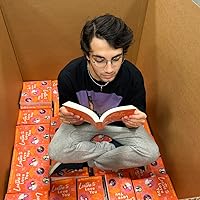
#ad much love for my finished copy @blackstonepublishing #partner
𝕲𝖍𝖔𝖘𝖙𝖘 𝖔𝖋 𝕳𝖎𝖗𝖔𝖘𝖍𝖎𝖒𝖆 ᴀᴠᴀɪʟᴀʙʟᴇ ɴᴏᴡ
𝕊𝕠𝕠𝕟 𝕥𝕠 𝕓𝕖 𝕒 𝕞𝕒𝕛𝕠𝕣 𝕞𝕠𝕥𝕚𝕠𝕟 𝕡𝕚𝕔𝕥𝕦𝕣𝕖…
“Throw the dice of history long enough, and any improbable event becomes possible, no matter how impossible it might seem,” (p. 53).
✰ First: I think the black/grey sprayed edges are just perfect for this book 🥹
✰ Second: Reference pages? 😘 You have no idea! Saved me so much writing! Thoughtful to include these. Esp the witness names.
✰ Third: The maps 🥹
ℜ𝔢𝔳𝔦𝔢𝔴 ✰ ✰ ✰ ✰ ✰
An undebatable and unforgettable five-star read that will rip your heart out. One of my top fav nonfiction reads for 2025. The audio is also great - but you might have to speed it up some.
Cannot wait to watch the movie.
𝕄𝕖𝕞𝕠𝕣𝕒𝕓𝕝𝕖: ✓ Lots of books can save you from atom bombs ✓ Lorenz’s butterfly effect ✓ Those who survived because they weren’t where they were supposed to be - much like 9/11 and other major horrific days.
This is an important for all to read. It is about when two model T atomic bombs were dropped on Japan and the results. Today's bombs are bigger by a factor of 10 or more! The message here is that this can never be allowed to happen again. Seriously. The consequences can not be overstated.
This is not the only book on the subject and I have read a few. But the terror that we brought to the world 80 years ago can never be forgotten. Read this book, or one like it, and pass it on. Please!
Charles Pellegrino has other books on the subject and it looks like James Cameron is going to do a movie of the Ghosts of Hiroshima. Look forward to seeing it.
Spoiler, many people died some in an instant and others over long horrible years. Not even to mention that victims became outcasts. Never again!
The A-bomb definitely has that "train wreck" (but worse) quality to it: it's the worst thing human beings have unleashed on other human beings, so you want it not to have happened, but you also want to know just how awful it was. Very. I'm glad they are making it into a movie, as so few people read, and we do need to recognize the horrific consequences of these actions.
I appreciated the way this book connected the Japanese interment camps in the US to the devastation suffered in Japan. I recently learned about the "No-no" group of detainees in the internment camps (I read about them in George Takaki's book about his time in those camps as a child) and was delighted to recognize the term when it appeared here. When I read Takaki's book, however, I didn't realize that some of those detainees were deported to Japan and killed by the A-bomb. Horrific.
This was hard to get through. Giving one person the power to destroy a nation or go to war needs to be seriously reevaluated. We can’t forget because when we do, there’ll be nothing left. Whenever you feel like you’re not enough, you’re just one person or a single snow flake, remember. “What is a flowing river but many melted snow flakes”
Some events don’t fade with time-they stay present through the people who lived them. The Ghosts of Hiroshima shares those stories. First-hand accounts from Hiroshima and Nagasaki, including a man who survived both, and another who watched it unfold from above and chose never to look again.
What stands out most is the detail -not just of what happened, but how it was experienced. Pellegrino doesn’t write with distance; the book puts you close to the human cost. It doesn’t just document the aftermath, it honors the memory of those who lived it.
The structure weaves testimony with science and moments of reflection in a way that feels respectful and very powerful.
Built from eyewitness testimony and scientific detail, it reconstructs not only what happened…but how it stayed with those who lived through it. I’ll also be keeping an eye on the upcoming film adaptation.
A powerful and eye-opening read. This book traces the events before, during, and after the Bombs of August that devastated Hiroshima and Nagasaki. The firsthand accounts are haunting, often described in ways that feel almost otherworldly. The devastation of war strips humanity to its core, leaving behind only bitterness and pain.
What stood out most to me was the reminder that these lessons must be remembered and passed down through generations, both to honor the survivors and to prevent history from repeating itself. Despite the horrors, the book also highlights the spirit of survival, resilience, and forgiveness.
Overall: unforgettable, haunting, and deeply important.
A powerful collection of the experiences of the victims of Hiroshima and Nagasaki. The author is at his best when discussing the human impact of the bombings, weaving heart wrenching narratives of fateful moments from those two days. I found myself less impressed when he attempted to become more philosophical. But overall this is an important and necessary read.
The first-hand testament from survivors of the bombs was powerful and moving; however, the author’s editorializing to be clunky, distracting, and dumb. He is a known enthusiast and researcher of the Titanic and he tried weaving that into this story which was bizarre. If you want a better book on Hiroshima and the horrors of nuclear war, John Hersey’s Hiroshima is a must.
Fascinating topic, but such awful, disorganized writing. These survivors and stories deserved so much more. Two stars mainly as a form of respect to them.
You know what? My biggest takeaway from this book is that if this is truly what it took to end the second World War – if this is what it takes to save America – hell, even if this is what it takes to save the human species – then we aren’t worth saving.
Seriously, I honestly believe that if this is what you have to resort to, nothing can be worth all that. Perhaps humanity will someday need to realise that we aren’t worth the depths of cruelty it may take to sustain us, that we would be better off bowing out gracefully rather than resort to these measures.
Most of us are aware that the atomic bombs were particularly grim, but the day-to-day human perspective is rarely given in the kind of detail this book goes into, and it’s haunting. To wit:
– When the atomic bomb engineers realized the flash would blind anyone looking at it, even for people outside the immediate blast radius, they considered adding air raid sirens to the bomb so that right before it detonated, everyone for miles would turn to look at the bomb. That way, even if they survived the blast and radiation, they would be blinded for life. That would be the point of adding the air raid sirens. (Fortunately, this plan was later rejected for reasons of practicality – not because of its pointless cruelty). Even so, many people who survived the bomb were rendered temporarily or permanently blind. One survivor, Takashi Tanemori, was lucky enough to cover his eyes at the moment of explosion - it was so bright, and combined with the radiation effect, through his closed eyelids he could see each bone of his hands “like an X-ray.”
– Atomic bombs are child-killers first and foremost. The way they uniquely target children is horrifying. See, the younger you are, the more rapidly your cells divide, and the higher the likelihood of radiation causing those divided cells to be distorted, causing cancer.
– It’s not just a one-time damage, either. When ionizing radiation causes DNA damage (mutations) in both male and female reproductive cells, that damage can be transmitted to the next generation.
– Even children who weren’t alive at the time of the atom bomb detonation suffered. The unstable isotopes that resulted have a tendency to bioconcentrate in plants and animals, mimicking calcium and being absorbed by the bones and teeth of children who consumed them. So the soil itself gave children cancer even if they hadn’t been present for the bombs themselves.
– People's shadows, the precise moment of their death, were literally burned onto the wall behind them. There is a shadow of a little boy reaching down to pick up his glass marbles (found melted) - the shadow was flash-burned into the wall of his mother's garden. Also flash printed were the ghost images of the plants around him. A leaf falling from a tree next to him at the moment of the explosion was vaporised and never hit the ground.
– The US infamously incarcerated innocent Japanese-Americans in internment camps. Less well known? Many Japanese-Americans were deported to Japan (even those who had never set food on Japanese soil) - a number of them to Hiroshima where they were brutally murdered by their own American military.
– Since the detonation of the two atomic bombs in WW2, and subsequent atomic tests which created global nuclear fallout, virtually everyone on earth carries the scars - cesium 137 (the body mistakes it for potassium), strontium 90 (the body mistakes it for calcium and adds it to your bones), and carbon 14.
– Even far away from the bomb’s radius, turtles were blinded and their shells bleached.
– The heartrending stories of terrible coincidence. Take the story of the man who survived the horrible trauma of the dropping of the atomic bomb on Hiroshima, who wanted nothing more than to flee and return to his wife and child, and so he dragged himself from the ruined city of Hiroshima back home - to Nagasaki.
So, yeah, this was an unspeakably evil act and we should all just hold our breath that nobody is that evil again. Say it again with me: humanity isn’t worth the cruelty it’s capable of creating. Our abilities have clearly outstripped our moral value.
But it’s a great book, by the way – and an important one. World leaders should be forced to read it. Apparently James Cameron is actually optioning it for a film (another of Pellegrino’s books was also the source for Cameron’s Titanic, so clearly they are a winning duo), so hopefully that gets more eyes on the book - because it does an incredible job of taking an abstract, remote historical event into a tangible, human narrative that conveys the depths of the tragedy and depravity of these acts.
With the recent anniversary of this event, there have been so many incredible and informative books released on the topic. This one caught my eye, and I knew I had to read it. The beginning provided some eerie details on the power of science fiction to seemingly predict the future. All of the references to books and literature made me want to scour the shelves for each and every one of those books. The first few chapters provided such startling and chilling descriptions of what happened after Moment Zero that it was almost hard to comprehend the terrifying pain and destruction that was endured by the people of Hiroshima on that fateful day. In an instant everything changed and so many had no true understanding of what had actually happened. It is truly frightening to ponder even now. Their continued struggle amidst failing health, hunger, and ostracization from their own countrymen made their stories even more devastating to experience page by page. The intricate details used to describe their continued plight really put the use of the bomb, even to bring an end to a terrible war, into a truly mortifying perspective. This device was used on real people, not once...but twice. The voices of the survivors that scream from every page drove home the absolute truth of what an awful act of war it was, as well as its devastating effects over time. It was not a one and done. It resonated through each family for decades. This was a truly eye-opening book that I think everyone should read.
Not really sure how you turn this book into a movie, but the direct accounts of the experiences was moving and educational. I want to know more about how they gathered these stories. There is an art to those books of collected first person experiences of real life tragedies. I wish I would read more of them, but they are heavy on the heart.
I enjoyed this novel because of the more personal stories of this time in history. I found the different first person perspectives very interesting. Solid 4/5, I don’t normally read this genre, but this was an intriguing account of such an important moment in history.
Remarkable firsthand stories of the atomic bombings of Hiroshima and Nagasaki. Sobering accounts. It’s just hard to fathom. There are a lot of names so it was a bit challenging to keep it all straight. Worthwhile reading.
This book is not about whether the bombs should have been dropped, and it makes it clear right at the start. This book is about stories of the aftermath.
Charles Pellegrino has done incredible research in the writing of this book, including interviews with survivors and families of survivors, officials on both sides of the war, over a span of multiple years. It goes into detail about the firsthand experiences of the rare few who survived the bombs, and the even rarer who survived them _both_. As if the tragedy in itself wasn't bad enough, many survivors had to go into hiding to avoid the social prejudice associated with being a 'hibakusha' - someone exposed to the A-bombs or the fallout from them.
Apart from Hiroshima and Nagasaki survivors' stories, the book also sheds light on some of the war-related background, including experiences of the people who flew the planes which dropped the bombs, a high ranking Japanese official who gives an insider's view of what Imperial Japan's approach to war was like, as well as stories of American citizens of Japanese descent and their internment post Pearl Harbor.
The narration is gripping, the stories heartbreaking, and the message unambiguous. It's bleak, and there's no silver lining. But it's an important part of history that nonetheless needs to be remembered.
This book offers a stark and unflinching account of what happened to real people on the days the atomic bombs fell in 1945. The details are raw, vivid, and at times, nearly unbearable — but they are necessary. I was shaken by what I read, and deeply moved by what those survivors endured.
Pellegrino has a way of pulling you into history without embellishment. He doesn’t preach or moralize. There’s no debate here about whether the bombs should or shouldn’t have been dropped — just the reality of what happened, told with clarity and care.
Even as someone who thought they knew this chapter of history well, I came away with a deeper understanding — especially of what unfolded in the moments after "Little Boy" detonated. The author spares nothing in painting the scene, and it's that honesty that gives the book its weight.
This isn’t a fast read, and it’s not meant to be. I found myself putting it down often — not out of disinterest, but to sit with what I had just read. Some passages were so startling I went back over them, not quite believing.
In times like these, this book feels vital. For some, it will be a reminder; for others, an introduction to the true cost of nuclear weapons — not in theory, but in blood and ash. It’s a history lesson worth enduring.
I had previously read the author’s 2010 book The Last Train from Hiroshima: The Survivors Look Back before it was withdrawn from publication shortly after release due to questions about some of the sources. Despite that controversy, I found it a fascinating book and learned a great deal about the suffering endured by victims of the atomic bombs, told directly in the survivors’ own voices.
The new book draws on multiple sources and clearly aims for greater historical rigor. That said, I found it drier in tone and ultimately less engaging.