What do you think?
Rate this book


Audible Audio
First published October 17, 2023


In the first two years of the drug war, Simon killed two more men. By kill, he meant he pulled the trigger. He had other roles in other operations. He conducted surveillance. He acted as a lookout. He drove the getaway van. There was very little he was unwilling to do, because success at what he calls “the job” meant one less criminal threatening the future of his children. Simon claims he was never paid, but he stayed on anyway. He believed in the cause.
“I’m really not a bad guy,” said Simon. “I’m not all bad. Some people need killing.”
Rodrigo Duterte was not the first politician in the world to declare war on a domestic issue. Wars on poverty, pornography, hunger, obesity, cancer, and drugs have been launched and fought by presidents and potentates long before Duterte moved into Malacañang Palace. None of these wars have so far been won. None of that matters, because for the politician, the declaration is a victory all its own. The headlines are printed. The campaigns get their slogans. The solution is left to whoever comes next, or to God. But metaphorical wars were of no interest to Rodrigo Duterte, as he is a man who has no love for metaphor. He declared a war on drugs, and when he said kill, he meant dead.
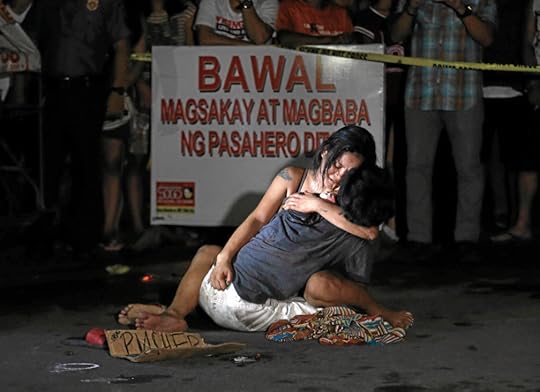
I cannot, with any certainty, report the true toll of Rodrigo Duterte’s war against drugs. Numbers cannot describe the human cost of this war, or adequately measure what happens when individual liberty gives way to state brutality. Even the highest estimate — over 30,000 dead — is likely insufficient to the task.
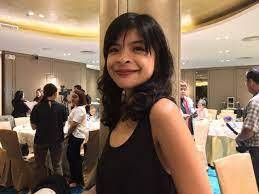
"From the beginning of the Duterte era, recording these deaths became my job. As a field correspondent for Rappler in Manila, I was one of then reporters covering the results of the president’s pledge to destroy anyone— without charge or trial—whom he or the police or any of a number of vigilantes suspected of taking or selling drugs. The volume of Duterte’s dead was at times overwhelming, as was covering the powerful in a country nwhere the powerful refuse to be held to account."
"My job is to go to places where people die. I pack my bags, talk to the survivors, write my stories, then go home to wait for the next catastrophe. I don’t wait very long.
I can tell you about those places. There have been many of them in the last decade. They are the coastal villages after typhoons, where babies were zipped into backpacks after the body bags ran out. They are the hillsides in the south, where journalists were buried alive in a layer cake of cars and corpses. They are the cornfields in rebel country and the tent cities outside blackened villages and the backrooms where mothers whispered about the children that desperation had forced them to abort.
It’s handy to have a small vocabulary in my line of work. The names go first, then the casualty counts. Colors are good to get the description squared away. The hill is green. The sky is black. The backpack is purple, and so is the bruising on the woman’s left cheek.
Small words are precise. They are exactly what they are and are faster to type when the battery is running down..."
"...Kill, for example. It’s a word my president uses often. He said it at least 1,254 times in the first six months of his presidency, in a variety of contexts and against a range of enemies. He said it to four-year-old Boy Scouts, promising to kill people who got in the way of their future. He said it to overseas workers, telling them there were jobs to be had killing drug addicts at home. He told mayors accused of drug dealing to repent, resign, or die.
He threatened to kill human rights activists if the drug problem worsened. He told cops he would give them medals for killing. He told journalists they could be legitimate targets of assassination.
“I’m not kidding,” he said in a campaign rally in 2016. “When I become president, I’ll tell the military, the police, that this is my order: find these people and kill them, period.”
I know only a few dozen of the dead by name. It doesn’t matter to the president. He has enough names for them all. They are addicts, pushers, users, dealers, monsters, madmen."