

What do you think?

ایکیگای
According to the Japanese, everyone has an ikigai—a reason for living. And according to the residents of the Japanese village with the world’s longest-living people, finding it is the key to a happier and longer life. Having a strong sense of ikigai—where what you love, what you’re good at, what you can get paid for, and what the world needs all overlap—means that each day is infused with meaning. It’s the reason we get up in the morning. It’s also the reason many Japanese never really retire (in fact there’s no word in Japanese that means retire in the sense it does in English): They remain active and work at what they enjoy, because they’ve found a real purpose in life—the happiness of always being busy.
In researching this book, the authors interviewed the residents of the Japanese village with the highest percentage of 100-year-olds—one of the world’s Blue Zones. Ikigai reveals the secrets to their longevity and happiness: how they eat, how they move, how they work, how they foster collaboration and community, and—their best-kept secret—how they find the ikigai that brings satisfaction to their lives. And it provides practical tools to help you discover your own ikigai. Because who doesn’t want to find happiness in every day?
In researching this book, the authors interviewed the residents of the Japanese village with the highest percentage of 100-year-olds—one of the world’s Blue Zones. Ikigai reveals the secrets to their longevity and happiness: how they eat, how they move, how they work, how they foster collaboration and community, and—their best-kept secret—how they find the ikigai that brings satisfaction to their lives. And it provides practical tools to help you discover your own ikigai. Because who doesn’t want to find happiness in every day?
128 pages, Paperback
First published March 7, 2016
About the author
Héctor García
30 books1,547 followersI'm the author of several Japanese culture books: The Magic of Japan, Ikigai the Japanese Secret for a Long and Happy Life, The Book of Ichigo Ichie, Shinrinyoku, The Ikigai Journey and A Geek in Japan.
I LOVE reading and writing.
Autor de los libros sobre cultura japonesa: La Magia de Japón, Ikigai, Ichigo Ichie, Shinrinyoku, Un Geek en Japón.
http://amazon.com/author/hectorgarcia
I LOVE reading and writing.
Autor de los libros sobre cultura japonesa: La Magia de Japón, Ikigai, Ichigo Ichie, Shinrinyoku, Un Geek en Japón.
http://amazon.com/author/hectorgarcia
Ratings & Reviews
Friends & Following
Create a free account to discover what your friends think of this book!
Community Reviews
Displaying 1 - 30 of 3,864 reviews

November 8, 2023
"Ikigai" wasn't quite what I expected – it's not spectacular, but it's not terrible either. To be honest, I found value in about 10% of the book. It feels like a collection of Asian lifestyle concepts that the author picked up during his travels, repackaged with a mindfulness twist.
However, I would recommend it to someone looking to dip their toes into the trending practices of self-care and mental wellness. It offers quick overviews of various concepts like Tai Chi, Qigong, mindfulness, Stoicism, and more. While it doesn't delve deep into any one topic, it's a decent starting point for those curious about these practices. It's like a sampler platter of what the world has to offer for body and mind care.
However, I would recommend it to someone looking to dip their toes into the trending practices of self-care and mental wellness. It offers quick overviews of various concepts like Tai Chi, Qigong, mindfulness, Stoicism, and more. While it doesn't delve deep into any one topic, it's a decent starting point for those curious about these practices. It's like a sampler platter of what the world has to offer for body and mind care.

March 27, 2024
Up until the last two chapters, I wanted to give this book five stars. Now, I'm really contemplating to lower my rating to three stars...
All i all it's a really informative and insightful book about people, especially the ones on an island in Japan, who live more than 100 years and what they do to achieve this age. From exercises to food to their jobs and finally communities. I really enjoyed it. And then I got hit with the end of the book.
The detailed descriptions of the exercises were unnecessary. I'd rather watch a youtube video to understand properly what I have to do.
And what the hell was the last chapter? Everything in this book is about living your life stress free while doing something you love and suddenly we're talking about money and how it's better to own two businesses in case one fails? That came out of the blue and didn't fit into the rest of the book at all.
If you skip the last two chapters though, it's quite a good book.
All i all it's a really informative and insightful book about people, especially the ones on an island in Japan, who live more than 100 years and what they do to achieve this age. From exercises to food to their jobs and finally communities. I really enjoyed it. And then I got hit with the end of the book.
The detailed descriptions of the exercises were unnecessary. I'd rather watch a youtube video to understand properly what I have to do.
And what the hell was the last chapter? Everything in this book is about living your life stress free while doing something you love and suddenly we're talking about money and how it's better to own two businesses in case one fails? That came out of the blue and didn't fit into the rest of the book at all.
If you skip the last two chapters though, it's quite a good book.

April 2, 2024
If you have read two or more self-help books then this book wouldn't be of much value to you. It is a collection of the same old concepts that we have been hearing of since middle school. There is no secret to living a good life except living a healthy and balanced one.
Like any other book on self-help or mindfulness, this book mentions yoga, Tai chi, stoic philosophy and Buddhism. I have read enough about Seneca, Marcus Aurelius and Thich Nhat Hanh, and didn't find much of the information valuable.
It seemed like the author was given a task to write a self-help book and this was the work he came up with to fulfill that requirement.
A good book for anyone new to the self-help genre, but not of much value for avid readers. If the author stayed true to the title and explored the concept of Ikigai further and in detail it would have added more value. However, he chose to delve into a bunch of random things which were all over the place.
Like any other book on self-help or mindfulness, this book mentions yoga, Tai chi, stoic philosophy and Buddhism. I have read enough about Seneca, Marcus Aurelius and Thich Nhat Hanh, and didn't find much of the information valuable.
It seemed like the author was given a task to write a self-help book and this was the work he came up with to fulfill that requirement.
A good book for anyone new to the self-help genre, but not of much value for avid readers. If the author stayed true to the title and explored the concept of Ikigai further and in detail it would have added more value. However, he chose to delve into a bunch of random things which were all over the place.

February 28, 2024
I'll be honest, this book reads like a high school senior paper rather than a deep dive into the concept of ikigai. There's a lot of poorly associated quotes to other works, with little connection to the concept of ikigai besides a couple sentences telling you, "If you find your ikigai, the topic of this chapter will help you."
The book is supposed to explain what ikigai is on a deep level and how to obtain it for yourself; at least, that was my first impression. Instead, most of the book wastes time valuing old age, spending so much time on centenarians (people over 100 years old) and how they live so long. They credit this to these people having a strong sense of their ikigai, which is great, but that doesn't explain how to find and maintain your personal ikigai and gain the benefits of old age as a result. There are chapters dedicated to how to eat to gain a centenarian lifetime, which has nothing to do with ikigai at all as far as the book tells you.
The breakdown of the topics for each section is all over the place, and it feels like you either get what you wanted from the whole section in either the first or last paragraph of the section, with nothing useful or actionable in the pages between.
The authors claim they spent over a year in a town in Okinawa whose residents live their ikigai and live longer as a result, but aside from a couple pages of superficial quotes from those residents, there's nothing offered from this year of research and exploration to help the reader further understand ikigai or how to obtain it for themselves. None.
It feels like this book is just a way for the authors to praise Japanese and Okinawan culture without really explaining why their way of life is praiseworthy in a deeper and more meaningful way. There's no elaboration, no analysis by the authors themselves, and their observations from their year living in Japan to back up their praises in an actionable way for the reader. All actionable information is regurgitated information I could find in a minute on Google. I expected some deeper analysis and philosophical discussion, and this just did not deliver. It's fine that all this self-help info is collected in one place, but when I end the book knowing nothing more about ikigai than when I read the summary of the book itself, it just feels like an exhausted waste of time.
The book is supposed to explain what ikigai is on a deep level and how to obtain it for yourself; at least, that was my first impression. Instead, most of the book wastes time valuing old age, spending so much time on centenarians (people over 100 years old) and how they live so long. They credit this to these people having a strong sense of their ikigai, which is great, but that doesn't explain how to find and maintain your personal ikigai and gain the benefits of old age as a result. There are chapters dedicated to how to eat to gain a centenarian lifetime, which has nothing to do with ikigai at all as far as the book tells you.
The breakdown of the topics for each section is all over the place, and it feels like you either get what you wanted from the whole section in either the first or last paragraph of the section, with nothing useful or actionable in the pages between.
The authors claim they spent over a year in a town in Okinawa whose residents live their ikigai and live longer as a result, but aside from a couple pages of superficial quotes from those residents, there's nothing offered from this year of research and exploration to help the reader further understand ikigai or how to obtain it for themselves. None.
It feels like this book is just a way for the authors to praise Japanese and Okinawan culture without really explaining why their way of life is praiseworthy in a deeper and more meaningful way. There's no elaboration, no analysis by the authors themselves, and their observations from their year living in Japan to back up their praises in an actionable way for the reader. All actionable information is regurgitated information I could find in a minute on Google. I expected some deeper analysis and philosophical discussion, and this just did not deliver. It's fine that all this self-help info is collected in one place, but when I end the book knowing nothing more about ikigai than when I read the summary of the book itself, it just feels like an exhausted waste of time.

May 1, 2026
this is what happens when you let a white guy travel to the countryside of Japan once, he decides to write an entire book about how incredible their health and longevity are without taking in consideration things like: access to free health care, cheap housing, community, clean and healthy food. And then he ends the book by saying: you have to not worry, avoid stress, exercise everyday, eat healthy and invest your money to make more money. lmao
Fucking clueless, tone deaf, useless, no information here we wouldn’t already know by just googling Japan once, just a self absorbed ego trip by some dude who’s already got money telling you not to stress too much and you’ll live to see 100.
That doesn’t exist in today’s America bro, barely even still exist in today’s Japan or anywhere else in the world. Not when you don’t take the working class into consideration. Big F you to this guy who tricked me into picking up his book because I thought it’d be inspiring for my birthday month. Just ended up angry instead 🙄

April 15, 2024
This booked summed up how I feel about it in Chapter 4:
“If we already know everything a book has to tell us, we’ll get bored right away”.
Yes 😑
New rule for self help books: they’re not allowed to take direct quotes from more than 3-4 other self help books and still remain in my good graces. If all you’re going to do is summarize a bunch of other self help books… why don’t I just go read those???
Also, Why am I reading about Victor Frankl and every basic psychology 101 study? I’m HERE to learn about Ikigai from the Japanese perspective! I’m not here to explore the concept of “reason for being” from every other perspective, thanks.
Or… no thanks.
“If we already know everything a book has to tell us, we’ll get bored right away”.
Yes 😑
New rule for self help books: they’re not allowed to take direct quotes from more than 3-4 other self help books and still remain in my good graces. If all you’re going to do is summarize a bunch of other self help books… why don’t I just go read those???
Also, Why am I reading about Victor Frankl and every basic psychology 101 study? I’m HERE to learn about Ikigai from the Japanese perspective! I’m not here to explore the concept of “reason for being” from every other perspective, thanks.
Or… no thanks.

April 13, 2024
I am now familiar with the concept of hate reading just to finish the book. Do not read.

May 5, 2026
I did not learn anything new from this short, or maybe I missed the point. I didn’t dislike it but it seemed to rehash the time-honoured advice of get plenty of sleep, eat healthy food, be placid and practice mindfulness. Easy short read, but nothing earth-shattering.

June 20, 2024
Why is no one talking about how misleading the name of the book is? Isn’t a book named Ikigai supposed to be talking about Ikigai (the literal meaning of the word is purpose of life)? Instead, all the book talks about is how to live a long life. I don’t get how people are not seeing this.
July 29, 2024
An interesting concept but it essentially explains you should eat well, sleep a lot and not be stressed 🤷🏼♀️
October 20, 2024
this book reads like a college essay: well-researched yet dry and impersonal, poorly argumented with no coherent red thread.
what I liked: I learned some stuff about Eastern philosophy and Japanese schools of psychology. I had never encountered anything about them and would've loved to learn even more! Also, as a person who takes on many creative projects, it was nice to learn some productivity tips on how I can work on them in a structured way through entering what they call 'flow'.
remarks: this book tries to juggle 200 balls and ends up dropping all of them. they establish why it's important to have a sense of purpose in life (ikigai) - great, promising start - and then go on to talk about the secrets of longevity. Maybe I'm daft but how are these two concepts related? They don't provide a justification about why a long life necessarily = a purposeful life - they expect the reader to take this for granted.
I can't believe two intelligent and accomplished adults sat down, planned and wrote a whole book, interviewed dozens of centennarians, then PUBLISHED said book - and the best advice for a long and healthy life that they came up with was: "just smile and don't worry".
i'm sorry - what???? did I miss something?
There also seems to be a certain critical awareness/clear voice of the author that is missing from the book. They idolize and stereotype Japanese culture - raving about their old population and productive habits without even acknowledging that Japan has the highest rates of burnout and suicide in the whole world. The statistics indicate that the Japanese population is HAUNTED by constantly having to achieve, produce, create - which comes at the expense of their wellbeing.
But hey, let's publish a cute little self-help book about a buddhist population that passionately makes sushi and drinks green tea and turns 120 years old and lives in cute little rural communities and leave all of that other unpleasant stuff out.
what I liked: I learned some stuff about Eastern philosophy and Japanese schools of psychology. I had never encountered anything about them and would've loved to learn even more! Also, as a person who takes on many creative projects, it was nice to learn some productivity tips on how I can work on them in a structured way through entering what they call 'flow'.
remarks: this book tries to juggle 200 balls and ends up dropping all of them. they establish why it's important to have a sense of purpose in life (ikigai) - great, promising start - and then go on to talk about the secrets of longevity. Maybe I'm daft but how are these two concepts related? They don't provide a justification about why a long life necessarily = a purposeful life - they expect the reader to take this for granted.
I can't believe two intelligent and accomplished adults sat down, planned and wrote a whole book, interviewed dozens of centennarians, then PUBLISHED said book - and the best advice for a long and healthy life that they came up with was: "just smile and don't worry".
i'm sorry - what???? did I miss something?
There also seems to be a certain critical awareness/clear voice of the author that is missing from the book. They idolize and stereotype Japanese culture - raving about their old population and productive habits without even acknowledging that Japan has the highest rates of burnout and suicide in the whole world. The statistics indicate that the Japanese population is HAUNTED by constantly having to achieve, produce, create - which comes at the expense of their wellbeing.
But hey, let's publish a cute little self-help book about a buddhist population that passionately makes sushi and drinks green tea and turns 120 years old and lives in cute little rural communities and leave all of that other unpleasant stuff out.

June 17, 2026
Truly problematic, presents how to navigate life in a privileged environment... with the illusion of the economic viability of choice and juggling multiple careers 🙄 this book is also anti retirement... im sure im missing many more but yeah this was eyebrow raising!!!
i mean if I submitted my thesis using the limited methodology of this book (interviewing old people from one Japanese island community) and then tacking on unrelated factoids from other Asian traditions (like from China) and then adding anecdotes from long lived Asians (not necessarily Japanese) my professor would tell me to go back to the drawing board.
Seriously though books like Ikigai need to be subjected to a higher level of scrutiny because this is just a haphazardly assembled magazine.
Rating this 1 star. A true waste of time.
Review posted on June 17, 2026. Ikigai has 39753 ratings, 3.69 average.
i mean if I submitted my thesis using the limited methodology of this book (interviewing old people from one Japanese island community) and then tacking on unrelated factoids from other Asian traditions (like from China) and then adding anecdotes from long lived Asians (not necessarily Japanese) my professor would tell me to go back to the drawing board.
Seriously though books like Ikigai need to be subjected to a higher level of scrutiny because this is just a haphazardly assembled magazine.
Rating this 1 star. A true waste of time.
Review posted on June 17, 2026. Ikigai has 39753 ratings, 3.69 average.
March 30, 2024
Good book to read in a crisis. Moral of the story is we are all going to die from stress :)

April 5, 2025
"IKIGAI" by Hector Garcia is a beautifully insightful exploration of the Japanese concept of 'Ikigai' which loosely translates to "a reason for being." This book is more than just a self-help guide; it's a philosophical journey that blends cultural insights, personal anecdotes, and practical advice to help readers uncover their own purpose in life.
Garcia, along with co-author Francesc Miralles, masterfully breaks down complex ideas into relatable, easy-to-digest concepts. The chapters are filled with fascinating stories from the residents of Okinawa, one of the world’s Blue Zones known for its high longevity, which adds authenticity and depth to the narrative.
What I particularly loved was the blend of practical tips with profound reflections. The exercises and prompts encourage self-reflection without feeling preachy or overwhelming. It's a book that invites you to pause, think, and apply the principles in your own life. In addition, what touched me most was how the book doesn’t just tell you to find your purpose—it shows you how to feel it in your everyday life. The exercises aren’t heavy-handed; they’re little sparks that made me pause and think, “Oh, I’ve been doing that, but I never realized it was meaningful.”
If I had to nitpick, the pacing sometimes feels a bit repetitive, especially when revisiting similar ideas across chapters. However, the core message is strong enough to outweigh this minor flaw. It’s like a friend reminding you of something important over and over until it really sinks in. What I do not like a bit is the deflection from the course and moving more towards Chinese tradition and arts.
In the end, 'IKIGAI' is not just a read—it’s an experience that lingers long after you've turned the last page. A must-read for anyone seeking clarity, purpose or a little inspiration to reignite their passions. It isn’t just about finding purpose—it’s about appreciating the small moments, the quiet joys and the simple truths we often overlook. It’s a book I’ll return to whenever I need a gentle reminder to live with intention and gratitude.
IV: FIND FLOW IN EVERYTHING YOU DO
Strategy 2: Have a clear, concrete objective {Page 44}
According to a study by Boston Consulting Group, when asked about their bosses, the number one complaint of employees at multinational corporations is that they don’t “communicate the team’s mission clearly,” and that, as a result, the employees don’t know what their objectives are.
Strategy 2: Have a clear, concrete objective {Page 45}
What often happens, especially in big companies, is that the executives get lost in the details of obsessive planning, creating strategies to hide the fact that they don’t have a clear objective. It’s like heading out to sea with a map but no destination.
VII: THE IKIGAI DIET
So, eat less to live longer? {Page 84}
The calorie restriction we’ve been discussing is one of the most effective ways to add years to your life. If the body regularly consumes enough, or too many, calories, it gets lethargic and starts to wear down, expending significant energy on digestion alone.
VIII: GENTLE MOVEMENTS, LONGER LIFE
So, eat less to live longer? {Page 90}
“Metabolism slows down 90 percent after 30 minutes of sitting. The enzymes that move the bad fat from your arteries to your muscles, where it can get burned off, slow down. And after two hours, good cholesterol drops 20 percent. Just getting up for five minutes is going to get things going again. These things are so simple they’re almost stupid,”
For me it is ⭐⭐⭐⭐✰ (4.5/5)
Garcia, along with co-author Francesc Miralles, masterfully breaks down complex ideas into relatable, easy-to-digest concepts. The chapters are filled with fascinating stories from the residents of Okinawa, one of the world’s Blue Zones known for its high longevity, which adds authenticity and depth to the narrative.
What I particularly loved was the blend of practical tips with profound reflections. The exercises and prompts encourage self-reflection without feeling preachy or overwhelming. It's a book that invites you to pause, think, and apply the principles in your own life. In addition, what touched me most was how the book doesn’t just tell you to find your purpose—it shows you how to feel it in your everyday life. The exercises aren’t heavy-handed; they’re little sparks that made me pause and think, “Oh, I’ve been doing that, but I never realized it was meaningful.”
If I had to nitpick, the pacing sometimes feels a bit repetitive, especially when revisiting similar ideas across chapters. However, the core message is strong enough to outweigh this minor flaw. It’s like a friend reminding you of something important over and over until it really sinks in. What I do not like a bit is the deflection from the course and moving more towards Chinese tradition and arts.
In the end, 'IKIGAI' is not just a read—it’s an experience that lingers long after you've turned the last page. A must-read for anyone seeking clarity, purpose or a little inspiration to reignite their passions. It isn’t just about finding purpose—it’s about appreciating the small moments, the quiet joys and the simple truths we often overlook. It’s a book I’ll return to whenever I need a gentle reminder to live with intention and gratitude.
Few Major Takeaways from the book are:
IV: FIND FLOW IN EVERYTHING YOU DO
Strategy 2: Have a clear, concrete objective {Page 44}
According to a study by Boston Consulting Group, when asked about their bosses, the number one complaint of employees at multinational corporations is that they don’t “communicate the team’s mission clearly,” and that, as a result, the employees don’t know what their objectives are.
Strategy 2: Have a clear, concrete objective {Page 45}
What often happens, especially in big companies, is that the executives get lost in the details of obsessive planning, creating strategies to hide the fact that they don’t have a clear objective. It’s like heading out to sea with a map but no destination.
VII: THE IKIGAI DIET
So, eat less to live longer? {Page 84}
The calorie restriction we’ve been discussing is one of the most effective ways to add years to your life. If the body regularly consumes enough, or too many, calories, it gets lethargic and starts to wear down, expending significant energy on digestion alone.
VIII: GENTLE MOVEMENTS, LONGER LIFE
So, eat less to live longer? {Page 90}
“Metabolism slows down 90 percent after 30 minutes of sitting. The enzymes that move the bad fat from your arteries to your muscles, where it can get burned off, slow down. And after two hours, good cholesterol drops 20 percent. Just getting up for five minutes is going to get things going again. These things are so simple they’re almost stupid,”
For me it is ⭐⭐⭐⭐✰ (4.5/5)

Read
March 22, 2024Major takeaway: When we spend our days doing something that is meaningful to us, we live more fully. We see how in every moment, an opportunity to live into our purpose. When searching for our purpose, our intuition and curiosity can be very powerful internal compasses. When we find this purpose, our ikigai, pursue and nurture it. Through this, it can be used to bring both beauty and utility to the world around us.
A quote from Mitsuo Aida:
"In the here and the now, everything in your life, is in my life."
"Here. Now."
In a life full of possibilities live into joy and thankfulness.
A quote from Mitsuo Aida:
"In the here and the now, everything in your life, is in my life."
"Here. Now."
In a life full of possibilities live into joy and thankfulness.

March 14, 2024
Do what you love and you'll never work a day in your life the book.
I picked it up because it sounded interesting and was a tiny 3 hour long audiobook.
Unfortunately it could've been 1 hour and still repeated itself too much.
While I understand the core idea of Ikigai being the intersection of
1. What you love
2. What you are good at
3. What the world needs
4. What you can be paid for
It completely ignores the incompatibility of this and the capitalism of today where what you can be paid for that allows you to live is much more limited.
It touted famous artists and their achievements as them following their Ikigai, completely ignoring the confirmation bias of that individual being the one to succeed while 1000's would've attempted the same and been forced to find alternative work despite it being something they love and are good at.
There are no original ideas in this book, which is fine. But it doesn't become anything more than the sum of its parts by collating it. I can tell you this with confidence as the book covered Logotherapy and the entire content relating to that came directly from Mans Search for Meaning with no additional information or any original commentary around it.
I honestly believe each chapter in this book has been an A Current Affair story about a particular way to achieve long life; you won't believe how they do it!
Spoiler Alert:
A good diet, a non sedentary life style and healthy community connections.
Oh try and live a stress free life, get a good amount of sleep too.
Thanks book why hadn't I thought of that yet?
Also the only advice for finding your Ikigai was
- What activity lets you enter your flow state?
- Okay now try activities similar to it
- Okay now try other activities.
I picked it up because it sounded interesting and was a tiny 3 hour long audiobook.
Unfortunately it could've been 1 hour and still repeated itself too much.
While I understand the core idea of Ikigai being the intersection of
1. What you love
2. What you are good at
3. What the world needs
4. What you can be paid for
It completely ignores the incompatibility of this and the capitalism of today where what you can be paid for that allows you to live is much more limited.
It touted famous artists and their achievements as them following their Ikigai, completely ignoring the confirmation bias of that individual being the one to succeed while 1000's would've attempted the same and been forced to find alternative work despite it being something they love and are good at.
There are no original ideas in this book, which is fine. But it doesn't become anything more than the sum of its parts by collating it. I can tell you this with confidence as the book covered Logotherapy and the entire content relating to that came directly from Mans Search for Meaning with no additional information or any original commentary around it.
I honestly believe each chapter in this book has been an A Current Affair story about a particular way to achieve long life; you won't believe how they do it!
Spoiler Alert:
A good diet, a non sedentary life style and healthy community connections.
Oh try and live a stress free life, get a good amount of sleep too.
Thanks book why hadn't I thought of that yet?
Also the only advice for finding your Ikigai was
- What activity lets you enter your flow state?
- Okay now try activities similar to it
- Okay now try other activities.

July 17, 2024
I disliked it at first and fully hated it by the end. What the hell were the descriptions of movements for? And two business thing came out of the left field. This feels like AI who likes making lists wrote this and not a real person, let alone two.

February 24, 2024
This book was a little bit of a letdown for me, because it was marketed largely as a focus on the culture of Ikigai found in many centenarians living in places like Okinawa Japan. However instead it seemed to be several summaries of different schools of philosophy that could contribute to mental well being and thus result in a longer life combined with little diet and exercise guides. A lot of Western and Chinese philosophy was also studied, despite not being the advertised focus of the book and the author also took a concerning stance on modern therapy not being effective because people can be "fixed" almost instantly if they just discover their purpose. Which is of course a dangerous comment to make as someone writing what turned out to essentially be a "self-help" book. Less than 40% of the book actually focused specifically on the philosophy and mindset that contributes to long lives in Okinawa and other parts of Japan. I wish I hadn't purchased the book, but alas it was required reading for a class.

October 1, 2024
After reading this entire book, I am no more educated in Ikigai than I was before reading it. I have been familiar with and employed the concept in my own life for years and was excited to read an entire book on the topic. This book barely touched on it and instead focused on longevity and an overall philosophy for life that was poorly delivered. It presented as a hodgepodge collection of concepts from countless philosophies other than Ikigai. In one section, the authors literally described tai chi moves and chi gong moves as if people would get anything meaningful from a written description of them. It seemed a desperate attempt to add word count rather than an attempt to help anyone.
There was an inordinate amount of time spent on Okinawan lifestyle regarding the foods they eat, the way they exercise, how they engage in social activities, and what old people claim is the reason they live long. Ikigai IS NOT ABOUT LONGEVITY! Perhaps one would enjoy a longer life by living by the ideas of Ikigai but it isn't the primary point of it.
Let me sum up Ikigai for you:
1) Find what you love to do.
2) Find out how that can relate to something the world needs.
3) Find out what you are good at that connects to those two things.
4) Find a vocation that includes the three things above.
The title led me to believe that I would read about those four things in more detail. Instead, I wouldn't have even been able to really define Ikigai at the end of this book except for my previous knowledge of it. That's crazy considering the title.
What a disappointment!
There was an inordinate amount of time spent on Okinawan lifestyle regarding the foods they eat, the way they exercise, how they engage in social activities, and what old people claim is the reason they live long. Ikigai IS NOT ABOUT LONGEVITY! Perhaps one would enjoy a longer life by living by the ideas of Ikigai but it isn't the primary point of it.
Let me sum up Ikigai for you:
1) Find what you love to do.
2) Find out how that can relate to something the world needs.
3) Find out what you are good at that connects to those two things.
4) Find a vocation that includes the three things above.
The title led me to believe that I would read about those four things in more detail. Instead, I wouldn't have even been able to really define Ikigai at the end of this book except for my previous knowledge of it. That's crazy considering the title.
What a disappointment!

April 8, 2024
This book is NOT a book about finding your purpose (ie, Ikigai). It’s a book about living a long life (ie, not Ikigai). More so, it doesn’t provide any structured or practical advice to take away and implement. It’s mostly anecdotes. It’s as helpful as the ramblings of an old man. It spends a lot of time on what old people have done in their lives, and attributes that to their longevity, which is a tenuous connection at best. Not surprising, one thing a lot of notable or notably old people have in common is a purpose! But this book gives no practical or valuable advice on how to work through identifying your own purpose (beyond suggesting that you try doing some art).

March 28, 2025
3 stars 🌟
This was interesting. I read the audiobook and the narration was decent though i was expecting a bit more from the content. I still think its worth the read.
Reviewed on 4th November 2025
DISCLAIMER-All opinions on books I’ve read and reviewed are my own, and are with no intention to offend anyone. If you feel offended by my reviews, let me know how I can fix it.
How I Rate-
1 star- Hardly liked anything/ was disappointed
2 star- Had potential but did not deliver/ was disappointed
3 stars- Was ok but could have been better/ was average / Enjoyed a lot but something was missing
4 stars- Loved a lot but something was missing
5 stars- Loved it/ new favourite
This was interesting. I read the audiobook and the narration was decent though i was expecting a bit more from the content. I still think its worth the read.
Reviewed on 4th November 2025
DISCLAIMER-All opinions on books I’ve read and reviewed are my own, and are with no intention to offend anyone. If you feel offended by my reviews, let me know how I can fix it.
How I Rate-
1 star- Hardly liked anything/ was disappointed
2 star- Had potential but did not deliver/ was disappointed
3 stars- Was ok but could have been better/ was average / Enjoyed a lot but something was missing
4 stars- Loved a lot but something was missing
5 stars- Loved it/ new favourite

August 26, 2024
Verdict: NOT RECOMMENDED
This book is called Ikigai, but mostly spends its time talking about "how to live longer".
Instead you get a book that is basically a high school report on "we went to Okinawa and talked to old people". It's very much written by a japano-phile. It's extremely high level, doesn't go into details on anything and is just a re-hash of things most people already know!
No wonder the guy wrote this is part-time writer, and part time software engineer. (Check his bio)
What's rather more interesting is, how I saw the reviews for this book on the internet and it showed 4.3 on Amazon and 4.8 on Thalia.
Picked it up to TEST my friend's Kindle (there weren't any other good book either), I would say it was satisfactory.
This book is called Ikigai, but mostly spends its time talking about "how to live longer".
Instead you get a book that is basically a high school report on "we went to Okinawa and talked to old people". It's very much written by a japano-phile. It's extremely high level, doesn't go into details on anything and is just a re-hash of things most people already know!
No wonder the guy wrote this is part-time writer, and part time software engineer. (Check his bio)
What's rather more interesting is, how I saw the reviews for this book on the internet and it showed 4.3 on Amazon and 4.8 on Thalia.
Picked it up to TEST my friend's Kindle (there weren't any other good book either), I would say it was satisfactory.

August 28, 2024
While filled with good (but rarely novel) tidbits like "eat until you're full" or "move everyday", this book infuriated me endlessly. That's probably because this book was written for the neurotypical as well as those who don't have to live paycheck to paycheck. The entire chapter on logotherapy was so dismissive of mental illness, literally referring to it as "spiritual anguish" and attributing anxiety and feelings of emptiness to a lack of purpose in life. The advice of slowing down also can be helpful, if you are of a certain socioeconomic status and can afford to slow down. Self help books should always be approached with caution naturally, but I will not be taking advice from a book that tells me to skip dessert, sorry.
On the flip side, it was genuinely lovely to hear about the centenarians in Japan and their communities and the importance of friendship and smiling, so I'll give it that. The anecdotes from 100 year olds about dancing keeping them young are especially close to my heart.
Ultimately(as any conscious consumer should do obviously) I'm only taking the pieces of advice that spoke with me (which, like one reviewer said, was only like 10% of this book). And I'm most definitely not skipping dessert.
On the flip side, it was genuinely lovely to hear about the centenarians in Japan and their communities and the importance of friendship and smiling, so I'll give it that. The anecdotes from 100 year olds about dancing keeping them young are especially close to my heart.
Ultimately(as any conscious consumer should do obviously) I'm only taking the pieces of advice that spoke with me (which, like one reviewer said, was only like 10% of this book). And I'm most definitely not skipping dessert.

April 4, 2024
I needed a book to take with me to London, and didn’t want to start a new series. I needed up finishing it in my four hours of travel. I was a quicker read than I expected. I really want to give a 3.5. but I’ll give it a 4. I think my expectations were too high for this book. With that said, there is still a lot of positives about this book. It’s just a bit strange for me that two non-Japanese humans wrote this book. So I feel like there is less intimacy with the subject than if it were written from the perspective of someone who has lived this way of life since birth.
Self help books like this also make me realize how fucked western civilization is.
Self help books like this also make me realize how fucked western civilization is.

January 14, 2025
Books read & reviewed: 2️⃣1️⃣🥖4️⃣0️⃣0️⃣
╔⏤⏤⏤╝❀╚⏤⏤⏤╗
5️⃣🌟, cozy self help books exist?
——————————————————————
➕➖0️⃣1️⃣2️⃣3️⃣4️⃣5️⃣6️⃣7️⃣8️⃣9️⃣🔟✖️➗
I didn't know but there are actually sofa books that are not really for the self help part but for the aesthetic vibes ✨✨. I always thought suffer books are supposed to be serious and meaningful and such but this one makes it so that it's pretty much just for vibes 😊. Self of books don't have to be THAT serious, it can even only be formed by genuine thoughts and advices that the author would think would be beneficial to people. It may not be that deep and "helpful" but it sure does tray and be unique from all the other self help books that promised you that it will ✨change your life ✨.
✧・゚: *✧・゚:*Pre-Read✧・゚: *✧・゚:
Ok here we go, nother self help book
╔⏤⏤⏤╝❀╚⏤⏤⏤╗
5️⃣🌟, cozy self help books exist?
——————————————————————
➕➖0️⃣1️⃣2️⃣3️⃣4️⃣5️⃣6️⃣7️⃣8️⃣9️⃣🔟✖️➗
I didn't know but there are actually sofa books that are not really for the self help part but for the aesthetic vibes ✨✨. I always thought suffer books are supposed to be serious and meaningful and such but this one makes it so that it's pretty much just for vibes 😊. Self of books don't have to be THAT serious, it can even only be formed by genuine thoughts and advices that the author would think would be beneficial to people. It may not be that deep and "helpful" but it sure does tray and be unique from all the other self help books that promised you that it will ✨change your life ✨.
✧・゚: *✧・゚:*Pre-Read✧・゚: *✧・゚:
Ok here we go, nother self help book

Read
December 27, 2025I don't like self help books 🩵

February 8, 2024
I found this terrible. I listened to the audiobook and after about an hour I gave up. At the beginning it was annoyance and at this point I felt anger and disappointment... It makes it seem as if solving your problems is so easy, and someone can be saved or taken out of hard times by just a simple sentence. If someone had been in a bad state for some time, I'm sure they would have thought of those sentences before too. The story with the old man that was grieving because his wife died and the suicidal mother, two of the dumbest things I've ever heard. I wasted that time of my life by listening to this nutjob of a book!

November 26, 2024
Written like a high school persuasive essay with concepts on how to live longer. Now I’m not here to tell someone what their purpose in life should be but I don’t think it should be living longer. Quality over quantity and whatnot. 2 stars for the lil paragraph on Studio Ghibli and Hayao Miyazaki!!

Read
April 27, 2026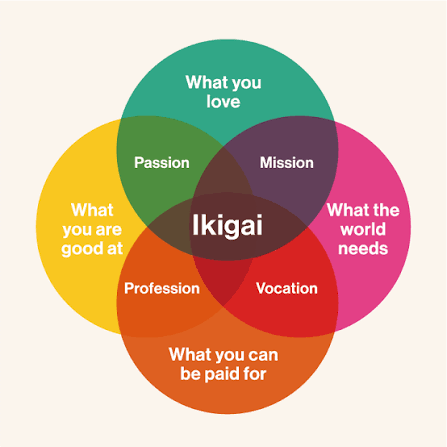
This book was not what I was expecting. Maybe I didn’t read the entire title of the book and missed the “long (and happy) life” part. I think some people are not curious about Ikigai because of the japanese secrets to living a long healthy life but more about using the ideas to finding their passions. And are maybe looking for a way to discover an interesting concept towards tackling their hobbies, goals and dreams. I decided to read this book because I thought ikigai was a concept representing exactly the popular purpose venn diagram. That diagram looks good on paper, but I feel like the ideas have been romanticized into a word. I guess It’s nice that Japanese culture has a word for it.

October 1, 2025
For once the gossips were true
Displaying 1 - 30 of 3,864 reviews