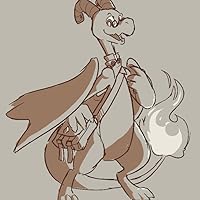
Tales of times long past fill us with wonder, allowing us to envision lives and possibilities far from the worries of our own, very real world.
Echoes is a collection of short stories and poems written with anthropomorphic animals in mind. From tales of magic at the dawn of civilization to historical fiction of the antiquity and beyond, may they inspire you to dream of worlds all your own.
Wow, what a ride this one was. From one story to the next there was hope and heartbreak to be found. Every one of them had lessons to learn about the nature of life and how each protagonist endures the hardships of it for better or worse.
When I went into it, I expected some cute little short stories about characters that had a little character arc to go through. Obviously that was very foolish of me considering the author of these books is a sadist towards his readers, but I’ve learned my lesson now. Hopefully (I haven’t).
What I wasn’t expecting was the existential terrors of growing up, losing yourself, grieving, and the inevitability of decay. Yes, there are very heartfelt stories within these pages, but even those have the undertone of entropy and what it means to live life. What’s more is that this information isn’t spoon fed to you. Each narrative respects the reader enough to come to their own conclusions as to what it’s trying to tell.
One story in particular shows the direct contrast between life and death. It shows how death comes for everything and everyone at some point in time. How running from it will only cause you more pain and anguish. That it’s ok to grieve and accept the pain of loss when it inevitably arrives.
However, it also shows how life springs from death. New growth and change can be made from the ending of one thing, and lead into another. And while it’s ok to miss what’s come before, we should celebrate what comes after. Life goes on and we as transient beings should witness the beauty of that rather than shy away from what the world has to offer.
What these stories remind us is that there’s hope. So much hope. Hope that you’ll get it right next time. Hope that it can get better. Hope that tomorrow will come with so many surprises in store. It’s our responsibility to meet those moments as they come.
I highly recommend Echoes for its beautiful exploration of how we approach the challenges and victories of our lives.
Echoes is an anthology, so you're effectively getting several stories and poems for the price of one. While each narrative is completely independent of each others - with vibrant worldbuilding and magic systems - they all still feel connected by the virtue of their pre-modern settings, varying from prehistoric to medieval fiction. An appreciated touch as well is that the stories have different genres (mystery, adventure, even some thrillers) so there's never any fatigue from reading the same type of story back to back. Additionally each piece is personal to the author with a short preamble before diving in, giving the reader context about how they came about. It's especially meaningful when you get to the poems.
Utunu is in his element with some really beautiful, even visceral imagery in his writing. Now I mentioned this before, the fact that these stories have a completely unique magic system (with some rare exceptions where magic doesn't feature at all) is amazing and compelling. The characters are interesting and engaging, and very much imperfect in their own ways. Some way more than others, no spoilers, but when I say visceral, I really mean it. :)
Echoes is a delight that I highly recommend for anyone interested in historical fiction.
Echoes is a short story collection written by Utunu and published by Mapaku Village.
I’ve been a fan of Utunu’s for a good while so when I heard that he was putting out a collection of his short stories, I jumped at the chance to pick up a copy. The stories vary quite a bit but most have to do with a group of animals who have some kind of magical tradition and how that interacts with their society and traditions.
“Water” is a story that follows a group of jackals that are on the brink of being wiped out by a rival tribe. The journey that Keth goes on while meeting his gods was very interesting. I enjoyed getting to know the belief system of the jackals and the way those beliefs are then woven into the final confrontation was a great way to tie everything together.
“Sehnsucht” is a small poem that muses on the connection and disconnection of having an alternate self that’s an animal. I could feel the longing for a different form strongly in this piece.
“Lids” is the piece that first introduced me to Utunu’s body of work. It follows a hyena that can see but not tap into a source of magic that exists within pots that have immovable lids. Sreki is an amazing character in the way that you can feel his frustration and his reactions are grounded in the immense loss and shame he is put through. Incredible use of description for the ending, almost dreamlike in its fuzziness of what truly happens, which hits all the harder after reading again. And just to tack on at the end, “the cave with no entrance was lit by a light with no source” is a banger of an opening line.
“Choosing” is a lovely little poem about a member of a tribe being chosen by one of their gods during a ritual. Great use of alliteration in the lines that give it a bounciness which complement the shift into the erotic and breathless ending.
“Ka Talu” is a poem that focuses on the lost city of the Mapaku and how a traveler stumbles upon it. Having the god the traveler meets be the same god that was a part of the previous poem, “Choosing”, is cool to see.
“Nudging the Sky” might be my favorite new story I’ve read in the collection. Ia is a delight to read and her character voice was fun to experience. This story focuses on a set of fennec foxes with the ability to nudge what they call sky streams to influence weather, small insects, and generally perform feats of magic. The slow build of this story went a long way to give the viscerally satisfying payoff at the end. Probably my favorite magic system in the book as well since Ia knows to respect how far she pushes herself while using it.
“Rites of Wood and Bone” follows a group of red jackals who are being taught their tribe’s magic system of using inscribed tiles in their rituals. Wood tiles are safer to use than bone tiles and there are reasons as to why that get explained in the story. This story is where I realized that Utunu has an incredible penchant for coming up with magic systems and the rules that govern them. Every piece of the system comes up by the end and while I may have seen the ending coming, it was still a great and uncomforting scene. My biggest complaint with this story is that it felt like it wrapped up too quickly for what it was building up.
“The Price of Copper” follows a fennec fox who is trying to make his fortune by buying up a copper mine. It’s told in snippets throughout the fox’s life and each piece flashes forward in time as a kind of check-up to see where he and his business are at. This one was much more comedic than Utunu’s normal fare, but considering the whole thing is essentially one long pun that is only fully revealed at the end, I have to commend the dedication. I love it personally, but I could see folks who are used to the more dramatic tone being a miss.
“Houses of Stone” follows the reunion of Muvezi the painted wolf and Paru the caracal as they spend time together and trade goods at the Houses of Stone. The gentle way these characters love each other is just a delight every time I read it. I can’t help but tear up because of the way they interact with each other. The use of shifting trade routes and discussions of changing times set against the pressure of religious groups that would see their love as unholy really hit me. No matter the time period, queers are connected. We’ve always been here and we’ll always be here, no matter what.
“Amongst the Upright Ones” follows a set of humans who are just trying to worship their gods in peace as a brash minister comes into their village and starts tearing things down in the name of his god. The least furry of Utunu’s offerings in the collection for sure, but I was impressed. The way the characters speak feels accurate to the time period and I’ll always love a story that criticizes the role of the church. The descriptions at the end were really well done for the specific character’s frame of mind at the time and saying any more than that would be a spoiler.
I’d heartily recommend this book to anyone who loves both short stories and fleshed out magic systems.
Until next time, curl up with a good book and be kind to yourself.
An emotive collection of stories, many of which are based around the traditions and lore of early history. While there is a strong similarity in setting, the topics vary quite widely, ranging from fantasy and slice-of-life through to rituals and horror. This diversity is one of the highlights of the book as Utunu's descriptive writing is what makes each story unique. Despite being set in prehistoric worlds, the characters are also relatable, making the narrative engaging. I'd recommend this book to anyone interested in historical or furry fiction.