

What do you think?
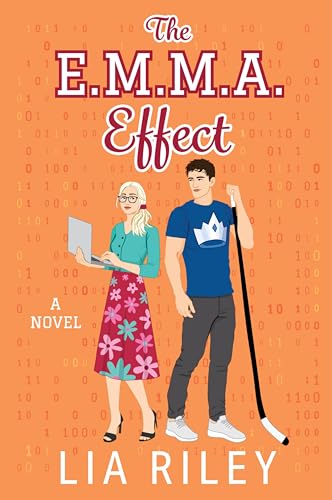
Regals Hockey #2
The E.M.M.A. Effect
Jane Austen meets Ali Hazelwood in this steamy, friends-to-lovers, STEM rom-com! He’s her best friend’s little brother and NHL forward. She’s a computer scientist used to being in control. The E.M.M.A., her elite AI training program, claims optimizing his performance requires one thing: the perfect match. According to its calculations, that’s her… Will Harriet discover that The E.M.M.A. knows best?
Harriet Smythe’s AI was supposed to create sports legends—not encourage her crush on her best friend’s totally off-limits, hot younger brother. But when funding runs dry, she has no choice but to enlist Gale Knight as her test subject. The same Gale she’s been secretly crushing on for years. The player who follows her every instruction with a knowing smirk that threatens to short-circuit her carefully maintained system.
Everything changes when The E.M.M.A. determines that finding Gale’s perfect match is essential to his peak performance. Even worse? According to its data, that match is Harriet.
Determined to keep things professional, she makes it search for new candidates. But as Gale dutifully endures awkward outings with pop stars and athletes, the chemistry between them only intensifies. And his willing cooperation during their sessions definitely isn’t helping her stay focused.
With her deadline approaching and The E.M.M.A. still playing cupid, Harriet must choose: trust in pure logic, or admit that sometimes taking control means letting go.
Maybe The E.M.M.A. knows something they don’t—even if they’re not ready to compute it yet.
Harriet Smythe’s AI was supposed to create sports legends—not encourage her crush on her best friend’s totally off-limits, hot younger brother. But when funding runs dry, she has no choice but to enlist Gale Knight as her test subject. The same Gale she’s been secretly crushing on for years. The player who follows her every instruction with a knowing smirk that threatens to short-circuit her carefully maintained system.
Everything changes when The E.M.M.A. determines that finding Gale’s perfect match is essential to his peak performance. Even worse? According to its data, that match is Harriet.
Determined to keep things professional, she makes it search for new candidates. But as Gale dutifully endures awkward outings with pop stars and athletes, the chemistry between them only intensifies. And his willing cooperation during their sessions definitely isn’t helping her stay focused.
With her deadline approaching and The E.M.M.A. still playing cupid, Harriet must choose: trust in pure logic, or admit that sometimes taking control means letting go.
Maybe The E.M.M.A. knows something they don’t—even if they’re not ready to compute it yet.
304 pages, Paperback
First published December 2, 2025
About the author
Lia Riley
22 books1,043 followersLia Riley is a contemporary romance author. USA Today describes her as "refreshing" and RT Book Reviews calls her books "sizzling and heartfelt." She loves the beach, fresh flowers, foggy redwood forests and a perfect pour over coffee. She is 25% sarcastic, 54% optimistic, and 122% bad at math (good thing she writes happy endings for a living). She and her family live mostly in Northern California.
Visit her at www.liariley.com to learn more.
Visit her at www.liariley.com to learn more.
Ratings & Reviews
Friends & Following
Create a free account to discover what your friends think of this book!
Community Reviews
Displaying 1 - 30 of 366 reviews

December 3, 2025
Bookish Thoughts
Had to DNF at forty percent. The dynamic with her younger brother’s friend gave me the ick and the writing style just was not working for me.
📅 Pub Date: December 2 2025
Thank you to HarperAudio Adult and NetGalley for the advanced listening copy. All thoughts are my own
Had to DNF at forty percent. The dynamic with her younger brother’s friend gave me the ick and the writing style just was not working for me.
📅 Pub Date: December 2 2025
Thank you to HarperAudio Adult and NetGalley for the advanced listening copy. All thoughts are my own

November 30, 2025
3.5⭐️: Grateful to Avon/Harper Voyager for this ARC since I loved book 1 (Puck and Prejudice). This was a super fast read with a lot in it to love, although it may have been a bit too easily resolved for my sake. I think the premise is super interesting: scientist develops an athlete improvement AI technology that she beta tests on her best friend’s brother (that she has crushed on through adulthood). The hockey in this is well written, although I’d like to have seen more regarding the AI’s recommendations for training. Considering the inspiration of Jane Austen’s Emma, the matchmaking function was cute but could have been more involved and a bigger part of the plot. This book absolutely checks the boxes for a satisfying, quick romance read, I think I just wish it had been longer!

December 2, 2025
The E.M.M.A. Effect by Lia Riley
Regals Hockey series #2. Contemporary romance, romantic comedy. Best friend’s brother troupe. Can be read as a stand-alone.
Harriet Smythe has always has a crush on her best friend’s younger brother. Using him to prove her AI program is viable will take a little convincing, but this is her future! Getting a little too close to Gale is just a minor misstep and nothing to worry about. Her AI program will pinpoint what’s needed to improve his game and they will go their separate ways. Nothing to worry about! Until the AI insists they Harriet is the answer to Gale’s regaining peak performance. And wow, does he know it. He’ll follow her every demand.
🎧 I alternated between an ebook and audiobook for this story. The narration is a duet (voices in conversation) by Alexander Cendese, Brittany Pressley, and Samantha Summers. I love duet narration though I know it’s more expensive and difficult for the actors. The simulation of conversations in a duet format brings the characters to life and interacting as if watching a play. All three performers were easy to listen to and brought emotions to the forefront. We heard how much Gale yearned and while knowing Harriet was super smart, we heard her anxiety in being matched with Gale from the AI program. The intimacy scenes were intense hearing the two voices together.
Definitely the choice of format if you love audiobooks. I did listen at 1.5 and slightly higher to be closer to my reading speed.
Smart women know how to handle their own desires. Harriet has created an innovative AI program and she’s going to prove it to the right company. Harriet also likes to be dominant in a relationship and Gale is all in. Harriet needs to realize she can have it all if she wants it.
Shivers and steam, confidence is just a couple steps ahead.
I received a copy of this from NetGalley and publisher HarperAudio Adult.
Regals Hockey series #2. Contemporary romance, romantic comedy. Best friend’s brother troupe. Can be read as a stand-alone.
Harriet Smythe has always has a crush on her best friend’s younger brother. Using him to prove her AI program is viable will take a little convincing, but this is her future! Getting a little too close to Gale is just a minor misstep and nothing to worry about. Her AI program will pinpoint what’s needed to improve his game and they will go their separate ways. Nothing to worry about! Until the AI insists they Harriet is the answer to Gale’s regaining peak performance. And wow, does he know it. He’ll follow her every demand.
🎧 I alternated between an ebook and audiobook for this story. The narration is a duet (voices in conversation) by Alexander Cendese, Brittany Pressley, and Samantha Summers. I love duet narration though I know it’s more expensive and difficult for the actors. The simulation of conversations in a duet format brings the characters to life and interacting as if watching a play. All three performers were easy to listen to and brought emotions to the forefront. We heard how much Gale yearned and while knowing Harriet was super smart, we heard her anxiety in being matched with Gale from the AI program. The intimacy scenes were intense hearing the two voices together.
Definitely the choice of format if you love audiobooks. I did listen at 1.5 and slightly higher to be closer to my reading speed.
Smart women know how to handle their own desires. Harriet has created an innovative AI program and she’s going to prove it to the right company. Harriet also likes to be dominant in a relationship and Gale is all in. Harriet needs to realize she can have it all if she wants it.
Shivers and steam, confidence is just a couple steps ahead.
I received a copy of this from NetGalley and publisher HarperAudio Adult.

May 19, 2025
Maybe I need to referesh myself on Jane Austen, maybe this books just sucks… I don’t see where Jane Austen comes into play other than the fact that Harriet’s AI model is named after one of her novels.
Unlike Ali Hazelwood’s STEM romances, this was incredibly boring. I just do not think it was executed well at all. It should not be marketed as Jane Austen meets Ali Hazelwood!
The point of view is another issue I had with the book. Harriet’s perspective is told through first-person, while Gale’s perspective is third-person. It makes no sense to me, and was honestly confusing to read. Additionally, the chapters stopped stating the POV after chapter 3 (I am aware that this most likely will be fixed prior to publishing).
I just did not enjoy this book. The E.M.M.A Effect did not pull me in (beyond the fact that it’s supposed to be Jane Austen inspired), and at no point while reading this book did I have a hard time putting it down.
Unlike Ali Hazelwood’s STEM romances, this was incredibly boring. I just do not think it was executed well at all. It should not be marketed as Jane Austen meets Ali Hazelwood!
The point of view is another issue I had with the book. Harriet’s perspective is told through first-person, while Gale’s perspective is third-person. It makes no sense to me, and was honestly confusing to read. Additionally, the chapters stopped stating the POV after chapter 3 (I am aware that this most likely will be fixed prior to publishing).
I just did not enjoy this book. The E.M.M.A Effect did not pull me in (beyond the fact that it’s supposed to be Jane Austen inspired), and at no point while reading this book did I have a hard time putting it down.

October 22, 2025
The E.M.M.A. Effect is a funny, creative friends-to-lovers rom-com with a nerdy STEM twist.
Harriet Smythe is a computer scientist whose AI program, E.M.M.A., was supposed to build better athletes—not act as her personal matchmaker. But when she tests it on her best friend’s younger brother, NHL player Gale Knight, things get complicated… especially when the AI decides she’s his perfect match. 😝😝
The back-and-forth between Harriet and E.M.M.A. was absolutely hilarious and easily my favorite part of the book. The banter added so much personality and humor, breaking up the tension perfectly.
Gale completely won me over. His growth, realizing he wasn’t defined by his father and learning to trust himself gave the story real heart. I’ll be honest though, Harriet frustrated me soooo much. She kept pushing Gale away for no real reason and didn’t seem to grow much until the very end.
My biggest issue was the writing style. Harriet’s POV is in first person while Gale’s is in third, which made the switches feel confusing. To make it worse, the chapters weren’t labeled after the first few, so it was hard to tell whose head we were in at times. There were also a few inconsistencies during the more intimate scenes where the sequence of actions didn’t quite line up.
Still, this was a clever, heartfelt, and funny read that mixed tech, tension, and charm in unexpected ways. If you like smart banter, slow-burn chemistry, and a cat-dad hero who’s impossible not to root for, definitely give it a try.
-♡-♡-♡-♡-♡-favorite quotes-♡-♡-♡-♡-♡-
“Simple as he was, he knew this much: seeing her smile made everything make sense, even if he couldn't explain why.”
⸻
“In the warm glow of the bedside lamp, he looks like a mortal touched by divine favor.”
⸻
“Gale doesn't complete me—he shows me I already am complete, just waiting to spread my wings and soar.”
⸻
“Harriet, I love you so much that if I loved you less, I might be able to say more about it. The more I feel, the harder it becomes to put into words."
-♡-♡-♡-♡-♡-♡-♡-♡-♡-♡-♡-♡-♡-♡-♡-♡-
things to know about the book ↓
👩🏼💻 best friend’s brother
👩🏼💻 STEM romance
👩🏼💻 golden retriever/ black cat
👩🏼💻 he falls first
👩🏼💻 friends to lovers
A huge thank you to Netgalley, Avon and Harper Voyager, and Lia Riley for allowing me to read this arc. These are all my honest opinions in this review.
Harriet Smythe is a computer scientist whose AI program, E.M.M.A., was supposed to build better athletes—not act as her personal matchmaker. But when she tests it on her best friend’s younger brother, NHL player Gale Knight, things get complicated… especially when the AI decides she’s his perfect match. 😝😝
The back-and-forth between Harriet and E.M.M.A. was absolutely hilarious and easily my favorite part of the book. The banter added so much personality and humor, breaking up the tension perfectly.
Gale completely won me over. His growth, realizing he wasn’t defined by his father and learning to trust himself gave the story real heart. I’ll be honest though, Harriet frustrated me soooo much. She kept pushing Gale away for no real reason and didn’t seem to grow much until the very end.
My biggest issue was the writing style. Harriet’s POV is in first person while Gale’s is in third, which made the switches feel confusing. To make it worse, the chapters weren’t labeled after the first few, so it was hard to tell whose head we were in at times. There were also a few inconsistencies during the more intimate scenes where the sequence of actions didn’t quite line up.
Still, this was a clever, heartfelt, and funny read that mixed tech, tension, and charm in unexpected ways. If you like smart banter, slow-burn chemistry, and a cat-dad hero who’s impossible not to root for, definitely give it a try.
-♡-♡-♡-♡-♡-favorite quotes-♡-♡-♡-♡-♡-
“Simple as he was, he knew this much: seeing her smile made everything make sense, even if he couldn't explain why.”
⸻
“In the warm glow of the bedside lamp, he looks like a mortal touched by divine favor.”
⸻
“Gale doesn't complete me—he shows me I already am complete, just waiting to spread my wings and soar.”
⸻
“Harriet, I love you so much that if I loved you less, I might be able to say more about it. The more I feel, the harder it becomes to put into words."
-♡-♡-♡-♡-♡-♡-♡-♡-♡-♡-♡-♡-♡-♡-♡-♡-
things to know about the book ↓
👩🏼💻 best friend’s brother
👩🏼💻 STEM romance
👩🏼💻 golden retriever/ black cat
👩🏼💻 he falls first
👩🏼💻 friends to lovers
A huge thank you to Netgalley, Avon and Harper Voyager, and Lia Riley for allowing me to read this arc. These are all my honest opinions in this review.

January 9, 2026
DONT YOU DARE piss me off. I stand here. Shocked. Angry. Taken advantage of. This is not only a disgrace to one, but two beautiful communities. Not only did you slander the name of Jane Austen regency smut, you also slandered the holy name of hockey smut. I’m convinced the author never read Emma and simply could not understand anything Jane Austen has ever done. Like wym you turned EMMA my emma my favorite character in the entire world into a sports AI robot???? I’m sorry for what??? Then you have the complete indecency to make Harriet end up with your lamo fugly excuse for Mr. Knightley. Absolutely not. ALSO her best friends shit ass father dies and she doesn’t at all ask her best friend if she’s okay or reach out all the while standing on some crazy podium about how good of friends they are. ALSO insane I-love-you gate during sexy time when they weren’t even dating and it had been dare I say a month???? ALSO this girl is supposed to be a super genius with her doctorate and then she takes HIS LAST NAME - no. I’m seething. I’m angry.
However. I hate to say it. 2 stars instead of 1 because the smut was awesome. Like okay diva tie him up.
However. I hate to say it. 2 stars instead of 1 because the smut was awesome. Like okay diva tie him up.

June 6, 2025
Thanks to the publisher for the ARC. All thoughts are my own.
This book had potential. A reverse age-gap, sports/tech romance with AI at the center? I was intrigued. Harriet, the FMC, works in tech developing an AI meant to enhance athlete performance and reduce injuries. Gale, the MMC, is a struggling NHL player with a complicated family legacy. They’re childhood friends, now adults navigating emotional wounds and shifting dynamics. Sounds good, right?
But reading it felt like I was constantly waiting for the real story to start. It’s fluffy, trope-heavy, and surface-level. And what frustrates me most is how much potential the core of this story had (if it had actually committed to emotional depth or meaningful accountability).
SPOILERS BELOW
Let me be blunt: Harriet is a poorly written character. Not just in the sense of “unlikable." She’s unoriginal, flat, and filled with every contrived trait that makes modern rom-com heroines feel manufactured. She’s insecure about her work, still hurt from a breakup, vaguely ambitious but not in a way that feels lived-in. She’s supposed to be this brilliant tech lead, but most of her actions are emotionally juvenile and narratively convenient. When she deliberately manipulates the AI’s logic to hide the fact that it matched her with Gale romantically, something that would compromise any real research project, it’s treated like a quirky mistake instead of the massive breach it is. And the ironic part is that she gets validated and supported by the same Tech bro boss that she has been lambasting the entire book. Well okay then.
She’s weak not because she has flaws (flawed women can be great characters), but because she’s written with no real weight. Everything she does, even when it’s objectively wrong, gets framed as brave or forgivable. She has no real arc. Her fears are shallow. Her growth is unearned. And the story bends over backward to protect her from meaningful consequence while still trying to crown her the emotional center of everything.
Meanwhile, Gale is actually written with care and nuance. He’s grieving his father, processing the trauma of being the son of a disgraced star athlete, and trying not to let his anxiety and legacy ruin his career. He has the emotional journey. He is the one dealing with real stakes. And yet, the story sidelines him repeatedly to keep the spotlight on Harriet, a character who doesn’t earn the reader’s trust, respect, or interest.
The ending just seals how shallow this story really is. Gale suddenly has a flawless game (which, good for him. He earned his professional happy ending with all grief he's experienced). Harriet gets an immediate yes from a glamorous French investor (who also happens to be the ex of her ex and now wants to mentor her in girlboss solidarity???), and even the AI itself gets a weird reflective summary chapter. The last chapter? A backyard wedding. Because... sure, why not?
Two more things that really didn’t work for me: First, the pov switching. The book uses first person for Harriet and third person for Gale, which is fine in theory, but the early chapters mark whose POV we're in... and then just stops. It becomes jarring, especially when the voices aren’t distinct enough to carry the change without clear labeling. As it is now, you have to actively read on until you see an "I" or "Gale" to know that this is Harriet's chapter or wait until you see "Harriet" (or something hockey related) to realize we're in Gale's chapter.
Second, this is marketed as a book “inspired by Jane Austen,” and that is just... not accurate. The only real link is the title Emma. The so-called “Duchess mode” of the AI, where it starts speaking in fake Regency language, isn’t clever or immersive. It’s extremely cringey. It reads like an American putting on a bad British accent and calling it Austen.
As I finished the book, I wasn’t even angry (yet), just filled with mild annoyance and disappointment. Harriet is written to be "flawed but perfect," never truly held accountable, and always conveniently uplifted. Brooke, her best friend, is reduced to a frazzled “new mom” stereotype who magically shows up when emotional support is needed. The women in this book are messy in a way that’s supposed to feel empowering, but really just feels self-congratulatory.
If this wasn’t an ARC, I probably would’ve DNF'd it and let it fade. Instead, I kept at it, hoping it would redeem itself. It didn’t. This is a 1-2 star read for me that at least, for now, is not driven by anger. Just a waste of potential.
This book had potential. A reverse age-gap, sports/tech romance with AI at the center? I was intrigued. Harriet, the FMC, works in tech developing an AI meant to enhance athlete performance and reduce injuries. Gale, the MMC, is a struggling NHL player with a complicated family legacy. They’re childhood friends, now adults navigating emotional wounds and shifting dynamics. Sounds good, right?
But reading it felt like I was constantly waiting for the real story to start. It’s fluffy, trope-heavy, and surface-level. And what frustrates me most is how much potential the core of this story had (if it had actually committed to emotional depth or meaningful accountability).
SPOILERS BELOW
Let me be blunt: Harriet is a poorly written character. Not just in the sense of “unlikable." She’s unoriginal, flat, and filled with every contrived trait that makes modern rom-com heroines feel manufactured. She’s insecure about her work, still hurt from a breakup, vaguely ambitious but not in a way that feels lived-in. She’s supposed to be this brilliant tech lead, but most of her actions are emotionally juvenile and narratively convenient. When she deliberately manipulates the AI’s logic to hide the fact that it matched her with Gale romantically, something that would compromise any real research project, it’s treated like a quirky mistake instead of the massive breach it is. And the ironic part is that she gets validated and supported by the same Tech bro boss that she has been lambasting the entire book. Well okay then.
She’s weak not because she has flaws (flawed women can be great characters), but because she’s written with no real weight. Everything she does, even when it’s objectively wrong, gets framed as brave or forgivable. She has no real arc. Her fears are shallow. Her growth is unearned. And the story bends over backward to protect her from meaningful consequence while still trying to crown her the emotional center of everything.
Meanwhile, Gale is actually written with care and nuance. He’s grieving his father, processing the trauma of being the son of a disgraced star athlete, and trying not to let his anxiety and legacy ruin his career. He has the emotional journey. He is the one dealing with real stakes. And yet, the story sidelines him repeatedly to keep the spotlight on Harriet, a character who doesn’t earn the reader’s trust, respect, or interest.
The ending just seals how shallow this story really is. Gale suddenly has a flawless game (which, good for him. He earned his professional happy ending with all grief he's experienced). Harriet gets an immediate yes from a glamorous French investor (who also happens to be the ex of her ex and now wants to mentor her in girlboss solidarity???), and even the AI itself gets a weird reflective summary chapter. The last chapter? A backyard wedding. Because... sure, why not?
Two more things that really didn’t work for me: First, the pov switching. The book uses first person for Harriet and third person for Gale, which is fine in theory, but the early chapters mark whose POV we're in... and then just stops. It becomes jarring, especially when the voices aren’t distinct enough to carry the change without clear labeling. As it is now, you have to actively read on until you see an "I" or "Gale" to know that this is Harriet's chapter or wait until you see "Harriet" (or something hockey related) to realize we're in Gale's chapter.
Second, this is marketed as a book “inspired by Jane Austen,” and that is just... not accurate. The only real link is the title Emma. The so-called “Duchess mode” of the AI, where it starts speaking in fake Regency language, isn’t clever or immersive. It’s extremely cringey. It reads like an American putting on a bad British accent and calling it Austen.
As I finished the book, I wasn’t even angry (yet), just filled with mild annoyance and disappointment. Harriet is written to be "flawed but perfect," never truly held accountable, and always conveniently uplifted. Brooke, her best friend, is reduced to a frazzled “new mom” stereotype who magically shows up when emotional support is needed. The women in this book are messy in a way that’s supposed to feel empowering, but really just feels self-congratulatory.
If this wasn’t an ARC, I probably would’ve DNF'd it and let it fade. Instead, I kept at it, hoping it would redeem itself. It didn’t. This is a 1-2 star read for me that at least, for now, is not driven by anger. Just a waste of potential.

March 11, 2026
This was average.
I really enjoyed the writing style of Lia Riley in this book. The main character, Harriet, is the creator of an AI app, named EMMA, that can pretty much tell an athlete how to become a better athlete. It basically becomes an AI coach in a sense. Harriet's best friend has a younger brother, Gale, who is a hockey player who is going through a rough period in his career (he is NOT playing that great). When Harriet's boss finds this out, he demands that Harriet has Gale be their guinea pig to see if this works. Harriet has had a crush on Gale for years. Really cute premise, right??
Here is where it falls apart. It is obvious that Lia Riley does NOT have a STEM background at all. This app was so incredibly unrealistic in every way. I felt like the author didn't do any research on how to create an app or how AI even works. Here is how the app works in the book, it is hooked up to the athlete pretty much 24/7. It has a microphone on it to pick up what they are saying, it monitors heart rate and body temperature, and all sorts of body statistics. And then it suggests ways to improve their athletic performances. So far it's somewhat feasible. I can believe it. However, EMMA states that the reason Gale's performance is suffering is because he needs a girlfriend and then states that Harriet is pretty much a perfect match and that she should date him. Mind you, the app is literally talking to Harriet as if they are having a conversation--at one point it even changes how it speaks to her (you get to choose what kind of voice and how formal you want it to speak) without any prompting on Harriet's end. This is where all logic and believability goes away. Maybe with some more details it could be more realistic, if the app referenced studies and then Harriet then asked for good matches (though it seems like this app simply uses the internet as it's resource, so again, not really making sense). All in all this is SO far fetched that it's hard to believe in this story at all.
Also, it's obvious right away that both Gale and Harriet really like each other. But the reasons why Harriet, specifically, pulls away is really weak. The whole time Harriet was trying to push other women onto Gale, I kept wondering why. The reasoning was so not logical. It was major miscommunication, but NOT with Gale!
I somewhat think that this being a retelling (or more like a spin off) of Jane Austin's Emma set in modern times is somewhat cute. I understand what the author was going for--the app is Emma, but the story is told through Harriet's POV (the poor friend of Emma's in the novel, Emma). But that is where any similarities end (which is fine! It doesn't have to be completely faithful...but that being the only similarities when it's obvious that the author is pushing on the link between the novel Emma and this novel, makes it weak).
I read this in one sitting, it's a fast book. It is fun in parts. But it's just average. I got this as the Valentine's Day box from Once Upon a Bookclub and the gifts were alright. Not worth the price of the box, though.
2026 Bingo: #6 Valentines Day theme--I got this in a Valentines Day box AND it does take place during Valentine's Day.
I really enjoyed the writing style of Lia Riley in this book. The main character, Harriet, is the creator of an AI app, named EMMA, that can pretty much tell an athlete how to become a better athlete. It basically becomes an AI coach in a sense. Harriet's best friend has a younger brother, Gale, who is a hockey player who is going through a rough period in his career (he is NOT playing that great). When Harriet's boss finds this out, he demands that Harriet has Gale be their guinea pig to see if this works. Harriet has had a crush on Gale for years. Really cute premise, right??
Here is where it falls apart. It is obvious that Lia Riley does NOT have a STEM background at all. This app was so incredibly unrealistic in every way. I felt like the author didn't do any research on how to create an app or how AI even works. Here is how the app works in the book, it is hooked up to the athlete pretty much 24/7. It has a microphone on it to pick up what they are saying, it monitors heart rate and body temperature, and all sorts of body statistics. And then it suggests ways to improve their athletic performances. So far it's somewhat feasible. I can believe it. However, EMMA states that the reason Gale's performance is suffering is because he needs a girlfriend and then states that Harriet is pretty much a perfect match and that she should date him. Mind you, the app is literally talking to Harriet as if they are having a conversation--at one point it even changes how it speaks to her (you get to choose what kind of voice and how formal you want it to speak) without any prompting on Harriet's end. This is where all logic and believability goes away. Maybe with some more details it could be more realistic, if the app referenced studies and then Harriet then asked for good matches (though it seems like this app simply uses the internet as it's resource, so again, not really making sense). All in all this is SO far fetched that it's hard to believe in this story at all.
Also, it's obvious right away that both Gale and Harriet really like each other. But the reasons why Harriet, specifically, pulls away is really weak. The whole time Harriet was trying to push other women onto Gale, I kept wondering why. The reasoning was so not logical. It was major miscommunication, but NOT with Gale!
I somewhat think that this being a retelling (or more like a spin off) of Jane Austin's Emma set in modern times is somewhat cute. I understand what the author was going for--the app is Emma, but the story is told through Harriet's POV (the poor friend of Emma's in the novel, Emma). But that is where any similarities end (which is fine! It doesn't have to be completely faithful...but that being the only similarities when it's obvious that the author is pushing on the link between the novel Emma and this novel, makes it weak).
I read this in one sitting, it's a fast book. It is fun in parts. But it's just average. I got this as the Valentine's Day box from Once Upon a Bookclub and the gifts were alright. Not worth the price of the box, though.
2026 Bingo: #6 Valentines Day theme--I got this in a Valentines Day box AND it does take place during Valentine's Day.

December 9, 2025
3. 5 stars
Harriet’s a computer scientist who has invented an AI program, E.M.M.A. that helps athletes improve their athletic performance. She manages to get hockey star Gale Knight to agree to try the program that’s still in its development stages. Gale is her best friend’s younger brother, and he’s always held a candle for Harriet. E.M.M.A.’s analysis determines that the cure to Gale’s current struggles on the ice is to find the perfect match. Suddenly it turns into a dating app with its algorithms stating that it’s Harriet who would be perfect for him.
Gale and Harriet are great together and I liked the build up of tension. Both of them have backstories that haunt them, especially Gale who struggles to get out from under his father’s shadow. This experiment is the perfect time for Gale and Harriet to explore their feelings for each other, as complicated as they may be. Things get spicy!!!
It’s fun to see a smart woman like Harriet hold her own, and also be taken care of by a guy who sees her brilliance, isn’t intimidated by her genius, and who absolutely adores her. There’s a throw-a-fist-in-the-air triumphant moment when she allows herself to go for it with Gale. There are some triggering subplots which I’ll include at the end of this review. Riley treats those moments delicately and with empathy.
While this is part of an interconnected series (𝗣𝘂𝗰𝗸 𝗮𝗻𝗱 𝗣𝗿𝗲𝗷𝘂𝗱𝗶𝗰𝗲 being the first book), it can be read as a standalone. Check this out if you’re a fan of hockey romances and into Austen-inspired retellings!
Thanks to @avonbooks for my ARC in exchange for an honest review.
.
.
.
⚠️ CW/TW: cancer, alcoholic father, grief
Harriet’s a computer scientist who has invented an AI program, E.M.M.A. that helps athletes improve their athletic performance. She manages to get hockey star Gale Knight to agree to try the program that’s still in its development stages. Gale is her best friend’s younger brother, and he’s always held a candle for Harriet. E.M.M.A.’s analysis determines that the cure to Gale’s current struggles on the ice is to find the perfect match. Suddenly it turns into a dating app with its algorithms stating that it’s Harriet who would be perfect for him.
Gale and Harriet are great together and I liked the build up of tension. Both of them have backstories that haunt them, especially Gale who struggles to get out from under his father’s shadow. This experiment is the perfect time for Gale and Harriet to explore their feelings for each other, as complicated as they may be. Things get spicy!!!
It’s fun to see a smart woman like Harriet hold her own, and also be taken care of by a guy who sees her brilliance, isn’t intimidated by her genius, and who absolutely adores her. There’s a throw-a-fist-in-the-air triumphant moment when she allows herself to go for it with Gale. There are some triggering subplots which I’ll include at the end of this review. Riley treats those moments delicately and with empathy.
While this is part of an interconnected series (𝗣𝘂𝗰𝗸 𝗮𝗻𝗱 𝗣𝗿𝗲𝗷𝘂𝗱𝗶𝗰𝗲 being the first book), it can be read as a standalone. Check this out if you’re a fan of hockey romances and into Austen-inspired retellings!
Thanks to @avonbooks for my ARC in exchange for an honest review.
.
.
.
⚠️ CW/TW: cancer, alcoholic father, grief

November 23, 2025
Very clever and cute romance about STEMinist AI software developer Harriet, and her BFF’s younger brother and hockey heartthrob Gale.
Harriet has developed an AI virtual coach for athletes called E.M.M.A. It’s almost ready to launch, and Gale happens to be in the worst slump of his professional career, so he’s the ideal test subject. The smarter than its own good E.M.M.A. however, has decided to play matchmaker, placing “her” virtual thumb on the scale for Harriet and Gale to connect in more ways than one.
Added to the mix is a group of rival developers set on sabotaging Harriet’s team, the looming legacy of Gale’s father who’s a disgraced hockey legend, bestie guilt, and kittens, making it a fun ride to a HEA.
I was fortunate to have received an advance reader copy from the author and NetGalley, and I’m pleased to share my honest review.
Harriet has developed an AI virtual coach for athletes called E.M.M.A. It’s almost ready to launch, and Gale happens to be in the worst slump of his professional career, so he’s the ideal test subject. The smarter than its own good E.M.M.A. however, has decided to play matchmaker, placing “her” virtual thumb on the scale for Harriet and Gale to connect in more ways than one.
Added to the mix is a group of rival developers set on sabotaging Harriet’s team, the looming legacy of Gale’s father who’s a disgraced hockey legend, bestie guilt, and kittens, making it a fun ride to a HEA.
I was fortunate to have received an advance reader copy from the author and NetGalley, and I’m pleased to share my honest review.

Did Not Finish
May 24, 2026DNF at 12%. i read the other books in the series so wanted to finish it but didn’t read the description before starting. as an AI hater i could not continue

December 17, 2025
Note: Some of my goodreads shelves can be spoilers
Overall: ⭐️⭐️⭐️
Readability: 📖📖📖
Feels: 🦋🦋🦋
Emotional Depth: 💔💔💔💔
Sexual Tension: ⚡⚡⚡
Romance: 💞💞💞
Sensuality: 💋💋💋💋
Sex Scene Length: 🍑🍑🍑🍑
Steam Scale (Number of Sex Scenes): 🔥 I have no idea if I counted this right. I only noted one scene but the last one I read by her had a lot more scenes so I’m probably wrong. Let me know!
Humor: Yes, a bit
Perspective: first person from heroine and third person from hero
More character focused or plot focused? character
How did the speed of the story feel? medium
When mains are first on page together: they talk on the phone very soon in, chapter 1
Cliffhanger: No this ends with a happily ever after
Epilogue: Yes
Format: voluntarily read an advanced reader copy from NetGalley in audiobook form
Why I chose this book: I LOVED book 1 of this series and wanted more
Mains: Gale Knight and Harriet Smythe – This is a M/F relationship between a cishet hero and heroine
(Descriptions found at end of my review)
Should I read in order?
This is book 2 of Riley’s Regals Hockey series and I think it’s really readable alone!
Basic plot:
Harriet is working on an AI program to assist athletes in reaching their full potential – who better for a guinea pig than her best friend’s hockey playing younger brother?
Give this a try if you want:
- contemporary romance
- Texas, US setting
- hockey player hero
- AI developer heroine
- size difference – she’s only 5’
- she’s older by 5 years
- best friend’s sibling
- FemDom
- Okay I am really unsure about the spice level – I have a note for 1 full scene and the last one I read by her was much hotter so maybe I missed some scenes in my notes??
Ages:
- hero is 25, I think heroine is 30?
First line:
Greek mythology was once my obsession.
My thoughts:
I was sadly so disappointed in this one! I loved the first book in this series so much and maybe my expectations were just really high!
Maybe it was hard for me to get into the whole AI plotline with how I already feel like I can’t escape it – so everything that was annoying about it felt doubly so with the real life annoyance.
I liked both mains okay but I just never really loved them. I wanted to care more...about the whole thing.
As for the narration, I really enjoyed the female voices! Looks like Brittany Pressley and Samantha Summers – very happy with those. Alexander Cendese though I will say wasn’t my favorite. I didn’t like his accents he added for different characters (like some sounded like 1920s gangsters to me) and just found him kind of grating overall which was sad and just purely personal preference!
Few random reading stats for this author
# of books read: 2
Average rating from me: 4 stars
Favorite book: Puck and Prejudice
Content warnings: These should be taken as a minimum of what to expect. It’s very possible I have missed some.
Locations of kisses/intimate scenes, safe sex aspects, consent, pregnancy/child in the story: The numbers don’t align with the chapter # title so I might have mislabeled some of these sorry)
Extra stuff like what my review breakdown means, where to find me, and book clubs
Overall: ⭐️⭐️⭐️
Readability: 📖📖📖
Feels: 🦋🦋🦋
Emotional Depth: 💔💔💔💔
Sexual Tension: ⚡⚡⚡
Romance: 💞💞💞
Sensuality: 💋💋💋💋
Sex Scene Length: 🍑🍑🍑🍑
Steam Scale (Number of Sex Scenes): 🔥 I have no idea if I counted this right. I only noted one scene but the last one I read by her had a lot more scenes so I’m probably wrong. Let me know!
Humor: Yes, a bit
Perspective: first person from heroine and third person from hero
More character focused or plot focused? character
How did the speed of the story feel? medium
When mains are first on page together: they talk on the phone very soon in, chapter 1
Cliffhanger: No this ends with a happily ever after
Epilogue: Yes
Format: voluntarily read an advanced reader copy from NetGalley in audiobook form
Why I chose this book: I LOVED book 1 of this series and wanted more
Mains: Gale Knight and Harriet Smythe – This is a M/F relationship between a cishet hero and heroine
(Descriptions found at end of my review)
Should I read in order?
This is book 2 of Riley’s Regals Hockey series and I think it’s really readable alone!
Basic plot:
Harriet is working on an AI program to assist athletes in reaching their full potential – who better for a guinea pig than her best friend’s hockey playing younger brother?
Give this a try if you want:
- contemporary romance
- Texas, US setting
- hockey player hero
- AI developer heroine
- size difference – she’s only 5’
- she’s older by 5 years
- best friend’s sibling
- FemDom
- Okay I am really unsure about the spice level – I have a note for 1 full scene and the last one I read by her was much hotter so maybe I missed some scenes in my notes??
Ages:
- hero is 25, I think heroine is 30?
First line:
Greek mythology was once my obsession.
My thoughts:
I was sadly so disappointed in this one! I loved the first book in this series so much and maybe my expectations were just really high!
Maybe it was hard for me to get into the whole AI plotline with how I already feel like I can’t escape it – so everything that was annoying about it felt doubly so with the real life annoyance.
I liked both mains okay but I just never really loved them. I wanted to care more...about the whole thing.
As for the narration, I really enjoyed the female voices! Looks like Brittany Pressley and Samantha Summers – very happy with those. Alexander Cendese though I will say wasn’t my favorite. I didn’t like his accents he added for different characters (like some sounded like 1920s gangsters to me) and just found him kind of grating overall which was sad and just purely personal preference!
Few random reading stats for this author
# of books read: 2
Average rating from me: 4 stars
Favorite book: Puck and Prejudice
Content warnings: These should be taken as a minimum of what to expect. It’s very possible I have missed some.
Locations of kisses/intimate scenes, safe sex aspects, consent, pregnancy/child in the story: The numbers don’t align with the chapter # title so I might have mislabeled some of these sorry)
Extra stuff like what my review breakdown means, where to find me, and book clubs

January 20, 2026
I don’t even do reviews but this was just…bad and very clearly heavily written, if not fully, by AI. Which I guess is ironic. But never again.

March 17, 2026
horrible writing: inconsistent and repetitive. lia riley please fire your editor. this was painful to get through.

December 21, 2025
⭐️⭐️⭐️
1.5🌶️
The EMMA Effect features Harriet who created and AI system to help athletes. Gale is a hockey player and the younger brother of Harriet’s best friend. When the system she created suggests that her and Gale are a perfect match, Harriet panics.
This book was OK for me. The FMC is 30 and the MMC is 25. However, I felt the whole story read more like a new adult book. The characters definitely seemed younger.
Another thing I found odd in this story is that the FMCs POV was in first person while when you got to the MMC chapters, everything was in third person. I didn’t love this format.
Overall, a cute story.
Thank you to Avon for the gifted copy. All opinions are my own.
1.5🌶️
The EMMA Effect features Harriet who created and AI system to help athletes. Gale is a hockey player and the younger brother of Harriet’s best friend. When the system she created suggests that her and Gale are a perfect match, Harriet panics.
This book was OK for me. The FMC is 30 and the MMC is 25. However, I felt the whole story read more like a new adult book. The characters definitely seemed younger.
Another thing I found odd in this story is that the FMCs POV was in first person while when you got to the MMC chapters, everything was in third person. I didn’t love this format.
Overall, a cute story.
Thank you to Avon for the gifted copy. All opinions are my own.

November 25, 2025
7% into this book and I started telling all my girls about this book! It was exactly what I needed. I absolutely love strong, independent, intelligent women who know what they want and get it. Harriet is a badass! And I love that Gail was not afraid to let her take control. He was down bad for her and it made me swoon. This book is exactly the type of book I love to read! Lia Riley will now be an instant buy for me! Her writing is so smart, witty, and swoony!
#TheEmmaEffect #NetGalley
#TheEmmaEffect #NetGalley
February 16, 2026
I read this book as part of a once upon a Book Club choice. I really enjoyed being able to read a few pages and then open up a corresponding gift to the story. That being said I was generous with the three stars… myself working in the IT field prior to motherhood and also loving ice-skating and a good hockey trope. I definitely think there could’ve been a little bit more substance to the story.

December 12, 2025
Billed as “Jane Austen meets Ali Hazelwood,” this book suffers from the comparison to both. Outside of character names and the vague idea of matchmaking it bears no resemblance to Austen’s masterpiece, and the characters aren’t nearly as entertaining as Hazelwood’s.
Harriet is best friends with Gale’s sister. She is also a PhD working on an AI that will help athletes improve their performance. He just happens to be an NHL player who’s having a rough season. Seeing each other as adults more regularly, sparks fly. Good set up. I just wish the execution worked for me.
First, I’ll say I don’t love age gap romances. And while I don’t consider a five year age gap to be significant, the fact that these two characters grew up together, and one was lusting after the other when she was an adult and he was still a minor makes this a little disconcerting for me. While Harriet does say she wasn’t interested in him until he was 18, I don’t believe her. I wish the timeline had been pushed forward a few years. I could gloss over all this if the characters had any chemistry together. Sadly, they don’t.
Secondly, as an audiobook listener, I found the jumps between first person POV (her) to third person POV (him) very jarring. Moreover, the male narrator sounds like he’s narrating a childrens’ book with the boisterousness of a golden retriever, and not a spicy novel.
I’m DNFed this book at 64%. I simply didn’t find myself wanting to hit play again.
Thank you to HarperAudio Adult, and NetGalley for providing the audiobook to me and exchange for an honest opinion.
Harriet is best friends with Gale’s sister. She is also a PhD working on an AI that will help athletes improve their performance. He just happens to be an NHL player who’s having a rough season. Seeing each other as adults more regularly, sparks fly. Good set up. I just wish the execution worked for me.
First, I’ll say I don’t love age gap romances. And while I don’t consider a five year age gap to be significant, the fact that these two characters grew up together, and one was lusting after the other when she was an adult and he was still a minor makes this a little disconcerting for me. While Harriet does say she wasn’t interested in him until he was 18, I don’t believe her. I wish the timeline had been pushed forward a few years. I could gloss over all this if the characters had any chemistry together. Sadly, they don’t.
Secondly, as an audiobook listener, I found the jumps between first person POV (her) to third person POV (him) very jarring. Moreover, the male narrator sounds like he’s narrating a childrens’ book with the boisterousness of a golden retriever, and not a spicy novel.
I’m DNFed this book at 64%. I simply didn’t find myself wanting to hit play again.
Thank you to HarperAudio Adult, and NetGalley for providing the audiobook to me and exchange for an honest opinion.

December 4, 2025
I was very excited to receive an ARC copy of this book, especially since I had received one for the first book of the series and found that to be a fun read. This book, unfortunately, fell flat for me.
First and foremost, I struggled with the marketing. Ali Hazelwood meets Jane Austin is the last thought I would have about this book. It lacks the sophistication of Austin and the knowledge of Hazelwood. This coupled with the disconnect from the first book of the series left me wondering why this wasn’t a stand alone book left without a buzzword type summary.
Additionally, I found the characters to lack any depth, alone or with one another. The FMC had too many contradictory personalities to seem real. The MMC was so stuck in his head he failed to have any growth as a character. In particular, after his father dies, he has the opportunity for character development which simply doesn’t happen.
The two main characters also fail to have any chemistry with each other. They seem like strangers for the majority of the book, which left me unable to believe that they have any feelings for each other, and certainly not love.
Finally, I really struggled with E.M.M.A.’s dialogue. I understand the purpose, but I found it disruptive to the story itself.
Overall, it was enough to entertain me, but not compelling enough to recommend.
Thank you to Avon and Harper Voyage, and NetGalley for the ARC copy of this book.
First and foremost, I struggled with the marketing. Ali Hazelwood meets Jane Austin is the last thought I would have about this book. It lacks the sophistication of Austin and the knowledge of Hazelwood. This coupled with the disconnect from the first book of the series left me wondering why this wasn’t a stand alone book left without a buzzword type summary.
Additionally, I found the characters to lack any depth, alone or with one another. The FMC had too many contradictory personalities to seem real. The MMC was so stuck in his head he failed to have any growth as a character. In particular, after his father dies, he has the opportunity for character development which simply doesn’t happen.
The two main characters also fail to have any chemistry with each other. They seem like strangers for the majority of the book, which left me unable to believe that they have any feelings for each other, and certainly not love.
Finally, I really struggled with E.M.M.A.’s dialogue. I understand the purpose, but I found it disruptive to the story itself.
Overall, it was enough to entertain me, but not compelling enough to recommend.
Thank you to Avon and Harper Voyage, and NetGalley for the ARC copy of this book.

August 28, 2025
Thank you NetGalley and Avon for the ARC
2 ⭐️ ⭐️
I went into this book really wanting to enjoy it, but unfortunately, it just didn’t work for me. The premise had potential, but the execution fell flat. I found the pacing uneven and struggled to stay invested in the storyline. The characters also felt underdeveloped, which made it difficult to connect with them or care about their journeys.
While I can appreciate the effort put into creating something different, overall this wasn’t a story that kept my attention or delivered what I was hoping for.
Audiobook review 🎧
Thank you NetGalley and Harper Audio and NetGalley for the audio ARC
I originally read E.M.M.A. Effect on my kindle and didn’t enjoy the story, so I decided to try the audiobook to see if the experience improved. While the plot still didn’t work for me, I will say the narration was the highlight this time around. Both the female and male narrators did a really solid job bringing emotion, personality, and energy to the characters. Their performances made the story much more engaging than it was on the page.
Unfortunately, even with great narrators, the story itself still wasn’t for me, and that held my overall rating at 2 stars. But if someone is set on reading this book, I’d definitely recommend the audio format over the physical copy for a better experience.
2 ⭐️ ⭐️
I went into this book really wanting to enjoy it, but unfortunately, it just didn’t work for me. The premise had potential, but the execution fell flat. I found the pacing uneven and struggled to stay invested in the storyline. The characters also felt underdeveloped, which made it difficult to connect with them or care about their journeys.
While I can appreciate the effort put into creating something different, overall this wasn’t a story that kept my attention or delivered what I was hoping for.
Audiobook review 🎧
Thank you NetGalley and Harper Audio and NetGalley for the audio ARC
I originally read E.M.M.A. Effect on my kindle and didn’t enjoy the story, so I decided to try the audiobook to see if the experience improved. While the plot still didn’t work for me, I will say the narration was the highlight this time around. Both the female and male narrators did a really solid job bringing emotion, personality, and energy to the characters. Their performances made the story much more engaging than it was on the page.
Unfortunately, even with great narrators, the story itself still wasn’t for me, and that held my overall rating at 2 stars. But if someone is set on reading this book, I’d definitely recommend the audio format over the physical copy for a better experience.

January 28, 2026
The hero was 18 when the love interest was in junior high. She's had a 'thing' for him like forever. Gross. The boy acts like he is helping the woman to have an awakening by her taking control. No, boy, older people that have a thing for children always liked taking control. This is disgusting. The boy could have easily been written to be 1 year younger. not 16 when she was a college graduate. This was a choice the author made. Creepy

November 28, 2025
This is the first book I have read by this author, and it was a fun time. I loved the MMC Gale and how GAGA he was over the FMC Harriett. Not just because he is a golden retriever but also bc he looooves how smart she is and even he couldn't understand what she sometimes was talking about he just loved to listen to her talk and see how amazing her brain is. It makes me want to explore more like that because a lot of the time in these smart/jock matchups it kinda gives the feel that he loved her even if or in spite of her being so smart and nerdy, but this MMC just loved how smart she was.
I will say with this that cover led me think this was just a cute rom com but I was surprised by the spice in it. With Harriett being the one to take charge and Gale once again loving it. It was a pleasant surprise.
With Harriett I loved how smart and driven she was as well as unapologetic about herself despite being in a male dominated field as well as a loser on again off again BF. She never tried to diminish herself and I loved how that wasn't a factor in why she thought they wouldn't work but more that they are just two very different people as well as not only are they friends, but he is the little brother to her best friend. So those reasons made sense without trying to diminish her and I loved it.
Overall, this was a cute romcom that surprised me with the spice, and the plot was relevant with the AI tech elements that this made for an enjoyable inspired by Jane Austin's Emma story. It makes me curious about other writings by the author. Also, while there are some conflict and drama especially family drama this book didn't feel high stakes so if you're looking for something more chill and cuter this def worth looking into.
---
This book is about Harriet who is trying to develop an AI program to help athletes increase their performance. When there start to become issues with confidence and funding in the project Harriet has no other options than to turn to her best friend's little brother Gale a well-known hockey player that is going through a rough patch. She hopes that enlisting his as a test subject will not only help him through this rough patch but to also prove the efficacy of the program. The only issue is that she has been secretly crushing on him for years and his smirk has a way of short-circuiting her brain. But with his career and her project on the line she is determined to keep things professional and on track. So, when her AI program E.M.M.A. determines the issue with Gale's performance is his lack of an emotional connection to someone in other words his performance would improve if he was in a relationship and the program determined the best match for him is none other than Harriet. While Harriet agrees with the program that Gale could use a GF, she disagrees that she is the perfect match so has the program come up with alternatives that result in matches with a popstar and another athlete. But while Gale dutifully goes on these awkward dates that don't go anywhere things are heating up between the two of them. Which means Harriet will have to make a choice in trusting in pure logic or admit that sometimes you just have to let go and give up control. Even if it's to an AI program with a sassy attitude that might see something that they refuse to.
I received an ARC Copy in exchange for an honest review.
I will say with this that cover led me think this was just a cute rom com but I was surprised by the spice in it. With Harriett being the one to take charge and Gale once again loving it. It was a pleasant surprise.
With Harriett I loved how smart and driven she was as well as unapologetic about herself despite being in a male dominated field as well as a loser on again off again BF. She never tried to diminish herself and I loved how that wasn't a factor in why she thought they wouldn't work but more that they are just two very different people as well as not only are they friends, but he is the little brother to her best friend. So those reasons made sense without trying to diminish her and I loved it.
Overall, this was a cute romcom that surprised me with the spice, and the plot was relevant with the AI tech elements that this made for an enjoyable inspired by Jane Austin's Emma story. It makes me curious about other writings by the author. Also, while there are some conflict and drama especially family drama this book didn't feel high stakes so if you're looking for something more chill and cuter this def worth looking into.
---
This book is about Harriet who is trying to develop an AI program to help athletes increase their performance. When there start to become issues with confidence and funding in the project Harriet has no other options than to turn to her best friend's little brother Gale a well-known hockey player that is going through a rough patch. She hopes that enlisting his as a test subject will not only help him through this rough patch but to also prove the efficacy of the program. The only issue is that she has been secretly crushing on him for years and his smirk has a way of short-circuiting her brain. But with his career and her project on the line she is determined to keep things professional and on track. So, when her AI program E.M.M.A. determines the issue with Gale's performance is his lack of an emotional connection to someone in other words his performance would improve if he was in a relationship and the program determined the best match for him is none other than Harriet. While Harriet agrees with the program that Gale could use a GF, she disagrees that she is the perfect match so has the program come up with alternatives that result in matches with a popstar and another athlete. But while Gale dutifully goes on these awkward dates that don't go anywhere things are heating up between the two of them. Which means Harriet will have to make a choice in trusting in pure logic or admit that sometimes you just have to let go and give up control. Even if it's to an AI program with a sassy attitude that might see something that they refuse to.
I received an ARC Copy in exchange for an honest review.

May 4, 2025
Set in Austin, Texas, Harriet Smythe is a computer scientist that needs a pro-athlete to beta test The E.M.M.A., her AI testing program for elite athletes. Her best friend's younger brother and NHL forward Gale Knight fits the bill. Gale has been struggling recently and could use help with his performance. But when The E.M.M.A suggests the best solution is a romantic relationship with her, Harriet's long crush comes back into play. As she tries to set Gale up with someone else, they find their chemistry more and more difficult to resist.
This is the second in a hockey + Austen rom com series from Lia Riley. I really enjoyed the first and found this one to be even better. It was super quick and fun to read. I definitely see the Ali Hazelwood comparisons (and will through in Susannah Nix's Chemistry Lessons series). I liked seeing her and Gale in each of their elements and how they loved to see the other one succeed.
Read this for:
🏒 PhD x Pro Hockey Player
💻 Sibling's best friend
🏒 Age gap (she's five years older)
💻 Austen references (loved the various nods to Emma without being overwhelming)
🏒 Grief and forgiveness
Open door / spicy!
4.75 / 5 stars
Many thanks to the author, publisher, and Netgalley for this eARC!
This is the second in a hockey + Austen rom com series from Lia Riley. I really enjoyed the first and found this one to be even better. It was super quick and fun to read. I definitely see the Ali Hazelwood comparisons (and will through in Susannah Nix's Chemistry Lessons series). I liked seeing her and Gale in each of their elements and how they loved to see the other one succeed.
Read this for:
🏒 PhD x Pro Hockey Player
💻 Sibling's best friend
🏒 Age gap (she's five years older)
💻 Austen references (loved the various nods to Emma without being overwhelming)
🏒 Grief and forgiveness
Open door / spicy!
4.75 / 5 stars
Many thanks to the author, publisher, and Netgalley for this eARC!

July 19, 2025
Harriet is a computer scientist in the process of making a AI model that would help athletes become better at their sport. Her best friend’s brother just so happens to be a pro athlete who’s currently not performing so well. His name is Gale, the perfect test subject and also the man she’s had a crush on for years. As they try to work together, they find comfort in each other and find it hard to resist the inevitable.
This was cute and interesting enough to keep me going till the end. But something’s fell flat for me. I was really intrigued by their relationship dynamic. The fact that she was older and liked to take charge in the bedroom while he was wanting someone like that. But then we didn’t really get to explore that more than once.
I didn’t really care for the AI aspect. Especially how the AI overrode its own abilities to play matchmaker. And she made no effort to fix it. Also, the fact that the solution to all his problems was getting some kitty cat was kinda crazy to me.
I received an advance review copy for free, and I am leaving this review voluntarily.
This was cute and interesting enough to keep me going till the end. But something’s fell flat for me. I was really intrigued by their relationship dynamic. The fact that she was older and liked to take charge in the bedroom while he was wanting someone like that. But then we didn’t really get to explore that more than once.
I didn’t really care for the AI aspect. Especially how the AI overrode its own abilities to play matchmaker. And she made no effort to fix it. Also, the fact that the solution to all his problems was getting some kitty cat was kinda crazy to me.
I received an advance review copy for free, and I am leaving this review voluntarily.

November 23, 2025
The E.M.M.A Effect was exactly the light hearted, this side of cheesy romance that I had hoped for. Entertaining if surface level - a quick and enjoyable read.
PLOT
I have seen that other readers were disappointed because of the comparison to Ali Hazelwood. Now, Ive only read Bride so I can’t say anything on the women-in-STEM comparison.
That aside, the level of science and professionalism was, truth be told, not as in depth as it could have been. Personally, I didn’t mind though.
Admittedly, the plot that drove the romance felt a bit fabricated in a way that gave me lowkey Hallmark movie vibes. Going in expecting nothing but a lighthearted, possibly cheesy romance, I was ok with that.
The thing I, for one, did happen to take issue with was when the plot was furthered by decisions that didn’t seem to align with the characters. Those moments did indeed feel a bit too forced for my personal taste. I think, for the FMC’s emotional baggage to cause her to make the decisions she does, I’d either have needed more depth to said baggage or additional reasons.
CHARACTERS
Overall, the characters might have profited from a bit more depth in general. I was missing some nuances that would have made them feel more rounded. Again, nothing I minded too much while reading. Both characters delivered exactly what they were supposed to and were lovable enough to be invested. And it sure worked for the tone and vibe of the book.
WRITING
The writing style worked well for me and, in my opinion, matched the story. I particularly enjoyed the narration - Alexander Cendese is a favourite of mine and he did a great job as always. So did Brittany Pressley & Samantha Summers, for that matter.
---
Thank you to NetGalley, HarperAudio Adult and the author for an ALC of this book
PLOT
I have seen that other readers were disappointed because of the comparison to Ali Hazelwood. Now, Ive only read Bride so I can’t say anything on the women-in-STEM comparison.
That aside, the level of science and professionalism was, truth be told, not as in depth as it could have been. Personally, I didn’t mind though.
Admittedly, the plot that drove the romance felt a bit fabricated in a way that gave me lowkey Hallmark movie vibes. Going in expecting nothing but a lighthearted, possibly cheesy romance, I was ok with that.
The thing I, for one, did happen to take issue with was when the plot was furthered by decisions that didn’t seem to align with the characters. Those moments did indeed feel a bit too forced for my personal taste. I think, for the FMC’s emotional baggage to cause her to make the decisions she does, I’d either have needed more depth to said baggage or additional reasons.
CHARACTERS
Overall, the characters might have profited from a bit more depth in general. I was missing some nuances that would have made them feel more rounded. Again, nothing I minded too much while reading. Both characters delivered exactly what they were supposed to and were lovable enough to be invested. And it sure worked for the tone and vibe of the book.
WRITING
The writing style worked well for me and, in my opinion, matched the story. I particularly enjoyed the narration - Alexander Cendese is a favourite of mine and he did a great job as always. So did Brittany Pressley & Samantha Summers, for that matter.
---
Thank you to NetGalley, HarperAudio Adult and the author for an ALC of this book

February 17, 2026
This was the second book in an interconnected series, and I have to say, I had no idea until I finished it. So this can definitely be read as a standalone, I had no problems.
This one was short and cute but the trade off was that it felt rushed and kind of surface level. It’s a best friend’s hot, pro hockey playing brother who she’s known since childhood trope. The book kind of leaned into the fact that they’ve known each other forever and had always had a crush on each other to fast track the story. We didn’t actually see any of that.
The whole premise was Harriet developing AI software to help athletes and Gale is her first test subject. This whole storyline kind of felt entirely under explored.
There were some spicy moments, but it didn’t really work for me. Harriet had some specific desires she wanted met and it felt like it was in there just to be in there, and again, wasn’t fully explained or explored.
Overall, it was a fast and fun read. I didn’t dislike it, but it wasn’t quite what I usually look for in a romance book.
This one was short and cute but the trade off was that it felt rushed and kind of surface level. It’s a best friend’s hot, pro hockey playing brother who she’s known since childhood trope. The book kind of leaned into the fact that they’ve known each other forever and had always had a crush on each other to fast track the story. We didn’t actually see any of that.
The whole premise was Harriet developing AI software to help athletes and Gale is her first test subject. This whole storyline kind of felt entirely under explored.
There were some spicy moments, but it didn’t really work for me. Harriet had some specific desires she wanted met and it felt like it was in there just to be in there, and again, wasn’t fully explained or explored.
Overall, it was a fast and fun read. I didn’t dislike it, but it wasn’t quite what I usually look for in a romance book.

December 3, 2025
Thank you to the publisher for a gifted copy; all thoughts are my own.
📖 Book Review 📖 Sometimes the very things we create to make our lives easier bring a whole new level of unexpected complications that can throw off the balance of even the most perfect equation. Harriet has used her brains and skills to create a device to promote athletes to their fullest potential. But when the E.M.M.A. Effect draws her into close proximity with her best friend’s younger brother, boundaries might just be pushed to the limit. Lia Riley serves us a STEM/hockey hybrid romance that brings a slow burn. The E.M.M.A. Effect has Harriet and Gale as a perfect match. It’s scary how well artificial intelligence tracks your daily moves down to the advertisements you see and this book will have you wondering about the accuracy of matchmaking. But Riley adds the perfect amount of chemistry in this one to have you rooting for this robot to be right.
📖 Book Review 📖 Sometimes the very things we create to make our lives easier bring a whole new level of unexpected complications that can throw off the balance of even the most perfect equation. Harriet has used her brains and skills to create a device to promote athletes to their fullest potential. But when the E.M.M.A. Effect draws her into close proximity with her best friend’s younger brother, boundaries might just be pushed to the limit. Lia Riley serves us a STEM/hockey hybrid romance that brings a slow burn. The E.M.M.A. Effect has Harriet and Gale as a perfect match. It’s scary how well artificial intelligence tracks your daily moves down to the advertisements you see and this book will have you wondering about the accuracy of matchmaking. But Riley adds the perfect amount of chemistry in this one to have you rooting for this robot to be right.

Did Not Finish
May 25, 2026I was really excited about this ALC because I loved the first book in Lia Riley's REGALS HOCKEY series. I remember starting THE E.M.M.A. EFFECT when I first got it and not being able to get into it, so I set it aside. I tried again, and it’s definitely the book ☹️. As I read, I kept thinking I really should just DNF this. I finally gave up at the 68% when I was cringing at the steamy scene.
The narration was good - queen Brittany Pressley, who never lets me down, Alexander Cendese, and Samantha Summers. It was just a poorly executed rom-com that tried to do too much.
Just super bummed I went from a book that is on my favorites list to one that I couldn’t even finish. Here’s hoping the next one is better!
Thanks, Libro.FM for the ALC!
Content warnings: cancer, alcoholism, terminal illness, grief, death of a parent, car accident
The narration was good - queen Brittany Pressley, who never lets me down, Alexander Cendese, and Samantha Summers. It was just a poorly executed rom-com that tried to do too much.
Just super bummed I went from a book that is on my favorites list to one that I couldn’t even finish. Here’s hoping the next one is better!
Thanks, Libro.FM for the ALC!
Content warnings: cancer, alcoholism, terminal illness, grief, death of a parent, car accident
April 22, 2025
First off, thank you to Avon & HarperVoyage for access to the ARC of this novel!
Don’t let the cover decieve you; this book has some incredibly steamy moments and a hell of a story about self exploration. I started this one a bit apprehensive given my distane for AI and it’s use in the world. For anyone who feels the same way, there is an easy way to avoid that part- though it does have a small point in the plot- by just skimming chapters where it exists.
AI aside, GAHHH! These characters go through individual hell and yet somehow make it back to one another, and to themselves become stronger. I appreciated the way hockey, badass women in male-dominated fields, and self discovery were intertwined EFFORTLESSLY throughout. Truly don’t know if I’ve ever seen it done in the way that Lia Riley did it here
Towards the end (i’d say the last 3 chapters), I felt like it was just repetitive and it coulf have easily ended after Chapter 21 or 22. Though that’s the case, I appreciated Riley’s attention to detail in finishing out each of the plotlines to the end.
I also understood E.M.M.A. (The AI) perspective in Chapter 26, but I could have done without it- it felt redundant compared to the storyline and what we learn from the characters.
All in all, I thoroughly enjoyed this book, the characters, and the outcomes. If you pick this up, have fun with it but also be aware of your own biases and feelings about AI because I could see where that could take away from your experience in reading it (just as it happened to me).
(p.s. if you love Ali Hazelwood this book WILL be of interest for you. It’s the perfect blend of science & sports. No notes.)
Don’t let the cover decieve you; this book has some incredibly steamy moments and a hell of a story about self exploration. I started this one a bit apprehensive given my distane for AI and it’s use in the world. For anyone who feels the same way, there is an easy way to avoid that part- though it does have a small point in the plot- by just skimming chapters where it exists.
AI aside, GAHHH! These characters go through individual hell and yet somehow make it back to one another, and to themselves become stronger. I appreciated the way hockey, badass women in male-dominated fields, and self discovery were intertwined EFFORTLESSLY throughout. Truly don’t know if I’ve ever seen it done in the way that Lia Riley did it here
Towards the end (i’d say the last 3 chapters), I felt like it was just repetitive and it coulf have easily ended after Chapter 21 or 22. Though that’s the case, I appreciated Riley’s attention to detail in finishing out each of the plotlines to the end.
I also understood E.M.M.A. (The AI) perspective in Chapter 26, but I could have done without it- it felt redundant compared to the storyline and what we learn from the characters.
All in all, I thoroughly enjoyed this book, the characters, and the outcomes. If you pick this up, have fun with it but also be aware of your own biases and feelings about AI because I could see where that could take away from your experience in reading it (just as it happened to me).
(p.s. if you love Ali Hazelwood this book WILL be of interest for you. It’s the perfect blend of science & sports. No notes.)

September 1, 2025
The Emma Effect is one of those romances that sneaks up on you with heart as much as with heat. At first glance, it’s got all the hallmarks of a fun, contemporary rom-com: a quirky premise involving AI technology, a hockey player in a slump, and a second-chance sort of dynamic rooted in childhood connections. But as the story unfolds, Lia Riley layers in family drama, resilience, and vulnerability that give this book more depth than you might expect.
I was very surprised by how much I enjoyed this book, as romcoms are not my go-to genre. I cannot wait to pick up more books from this author!
I was very surprised by how much I enjoyed this book, as romcoms are not my go-to genre. I cannot wait to pick up more books from this author!
Displaying 1 - 30 of 366 reviews