Jump to ratings and reviews
Rate this book

Dispersals: On Plants, Borders, and Belonging

Rate this book
A prize-winning memoirist and nature writer turns to the lives of plants entangled in our human world to explore belonging, displacement, identity, and the truths of our shared future

A seed slips beyond a garden wall. A tree is planted on a precarious border. A shrub is stolen from its culture and its land. What happens when these plants leave their original homes and put down roots elsewhere?

In fourteen essays, Dispersals explores the entanglements of the plant and human from species considered invasive, like giant hogweed; to those vilified but intimate, like soy; and those like kelp, on which our futures depend. Each of the plants considered in this collection are somehow perceived as being "out of place"—weeds, samples collected through imperial science, crops introduced and transformed by our hand. Combining memoir, history, and scientific research in poetic prose, Jessica J. Lee meditates on the question of how both plants and people come to belong, why both cross borders, and how our futures are more entwined than we might imagine.

Audible Audio

First published March 12, 2024

73 people are currently reading
5594 people want to read

About the author

Jessica J. Lee

9 books173 followers

Ratings & Reviews

What do you think?
Rate this book

Friends & Following

Create a free account to discover what your friends think of this book!

Community Reviews

5 stars
193 (34%)
4 stars
250 (44%)
3 stars
99 (17%)
2 stars
13 (2%)
1 star
4 (<1%)
Displaying 1 - 30 of 102 reviews
Profile Image for Krista.
1,469 reviews855 followers
December 7, 2023
What the records tell us is this: human desire is a powerful thing. It is also ephemeral, lost in the moment it is felt, though its traces remain in the world long after. From a swelled root to a crinkled leaf: in the plants we eat, there are remnants of our search for the medicinal and the palatable, and in their genetic makeup, a record of our movements between places.

As written by the child of immigrants — author Jessica J. Lee has a Taiwanese mother, a Welsh father, and was born and raised in Canada — Dispersals shares a unique view on what it means to be “out of place”; whether considering plants or people, she makes the case that the language we use regarding what is “foreign” is pretty similar. Lee has an impressive educational background (with a Masters in International Development and a PhD in Environmental History and Aesthetics), and has travelled widely — working and living in Germany and England for the past several years — and as she now teaches Creative Writing at the University of Cambridge, she is, from every angle, perfectly experienced to think and write on these themes. Dispersals is a collection of essays that combines Lee’s personal stories with geography, science, and philosophy, and in each one, she displays deep thinking, fascinating facts, and clear writing. I don’t know what I was expecting from this book, but I enjoyed it a lot. (Note: I read an ARC through NetGalley and passages quoted may not be in their final forms.)

I am fascinated by the way words can be bound tight to past places, by the way a simple question can unfold an entire scene, long thought forgotten. The way a fruit — even just its mention — can carry more than its weight in flesh.

This quote is from a section on mangoes, and this plant is one of several that Lee links to the history of empire-building (with the shorthand history being that Portugal first popularised the mango when they brought it out of their colonies in India). Lee quotes from E. M. Forster’s A Passage to India and Arundhati Roy’s The God of Small Things, demonstrating how over the decades, the literary treatment of this fruit has become “extraordinarily fraught…signifying exoticism performed for a white gaze.” Lee has similar treatments for cherry trees — it’s interesting to learn that the corridor formerly occupied by the Berlin Wall is now planted with thousands of cherry trees gifted from Japan after its fall, but also that Japan has a long history of planting cherry trees in countries they have colonised [ie, Korea and Taiwan] in order to transform both landscapes and mindsets — and the history of tea (the secrets of its cultivation and processing were “stolen” from China by a British man disguised as a local), and as Lee grew up with parents who enjoyed two very different tea rituals, hers is an interesting take on how both plants and their related customs are translated across time and space.

In addition to the big and showy, Lee writes about the small: the seaweeds, mosses, and fungi that are (mostly) accidentally transported around the world. And while in some cases these are harmless, she warns that there are always going to be those people wanting to return areas to some impossible-to-determine baseline “natural” state; which in Britain, she subtly links to xenophobia and Brexit; and having lived in Berlin, she makes a more overt link to Aryan notions of purity. Interesting stuff to think about.

Simply through repetition — in storybooks and novels deemed classics, curricula — British landscapes come to signify romance, an ideal in nature. I pay no attention to flora outside my window — in a flat land of canola and corn, where forests are built of sugar maple and pines. I read so little of these plants, and in truth, they hold little interest for me. It will take me years before I realise that I’ve built my notions of beauty from the stories of a distant land.
As I also grew up in the centre of Canada, I share Lee’s experience that the view outside my window doesn’t necessarily jibe with what I’ve been conditioned to consider idyllic beauty; and that’s an interesting effect of technically living in a colony. There’s a lot here on empires (including Lee’s increasing discomfort travelling on her British passport) and how delineating borders exacerbates the us-vs-them attitude (whether discussing people or plants), and for the most part, it’s a fair discussion of ideas I haven’t thought about in this way before. Worth the read.
Profile Image for Shannon.
8,308 reviews424 followers
April 9, 2024
A collection of essays that explores the intersections between the author's personal family history with that of a number of different plant varieties as well as the way these plants can be related to the history of places and their migration patterns (not that dissimilar to human migrants). At times a bit dry while also being interesting for plant lovers. This was a quick read that I found just okay as an audiobook read by the author herself. Sure to be popular for those who enjoy learning about the history of plants.
Profile Image for Stooce.
170 reviews2 followers
May 22, 2024
I wanted to rate this a 5 because I love the seed (lol) of this project! But there was something majorly missing when it came to the heart of these essays. They seemed flat where they could have been bountiful and full of emotion. Maybe that’s just the author’s personal style but i was expecting to be more moved by this writing. The last essay for her daughter was more my speed. Pros: I learned what a Wardian case is, what botanists do, and how fucking integrated all life on this planet is.
Profile Image for Peter Tillman.
4,038 reviews476 followers
September 18, 2024
A first-rate collection of essays by a young environmental historian. This was a chance pickup from the new book shelf at the public library, and I wasn't sure at first if it was going to be my sort of thing. It's something of a layered memoir and exploration of the world of plants and people, and what happens when they move (or get moved) and cause problems. Or conflict. Or both.

Lee writes very well. She has had an interesting career, ancestry, life, and work history. "Interesting" in the sense that she likely wishes it had been less dramatic! But one takes the bad with the good, soldiers on, has a proper cup of boba milk tea, studies the markings on her Mom's koi. The fish endured a yearly migration between their shallow summer pond in the front yard, then inside to a big fish-tank in the living room for the Ontario winters. Eventually, her Dad built a deeper pond, and put in a stock-tank heater for the winter.

Dr. Lee does proper botanical homework. And then riffs on how this ties in to her life, the course of empires, the cruel manipulations by colonizers . . . I liked some essays more than others. One in particular rang all my chimes: “Words for Tea.” The tea plant, Camellia sinensis, grew in the wild from the Himalayan foothills to the southwest of China, and was domesticated long, long ago. This is still the world’s premier tea-growing area.

The English word “tea” came from the Hokkien word “te”: hence thé, tee etc. Tea for England (and Western Europe) was likely first exported by sea from Fujian in the south of China. If you call it something like cha, chai or shay, that’s derived from the standard Mandarin word chá, and it was likely first shipped overland.

Camellia of course is a showy flower too, and in the West there was a good deal of confusion in the early days between plant and flower. A drinkable tea can be made from the leaves of some camellia flowers . . .

Dr. Lee has a long riff on how the English sent a botanist spy to the Chinese tea plantations in 1848, to smuggle out the techniques of growing fine tea, which he did. The English established tea plantations in Assam in the foothills of NE British India, still a big producer, mostly of less-expensive tea. The Chinese empire then exported tea to Britain only for silver, leading the Brits to smuggle opium into China and start a small war over it. Not the British Empire’s finest moment!

Well. Maybe this should be the first essay you read? My favorite, I think. Pretty near perfect.

I spent an hour or so last night, re-browsing the book to pick out my favorites. Not many didn’t make the cut. I expect to reread this sometime down the line. And I’ll be on the lookout for new work from this author. For me this was a strong 4-star read. High marks!
Profile Image for urooba.
15 reviews2 followers
March 8, 2024
a quick read and much more plant history/culture based over storytelling than Unearthing was. so, so incredibly beautiful.
Profile Image for Anne-Marie.
647 reviews5 followers
May 11, 2024
I've been anticipating this book for months and it lived up to expectations for me!

It's a very soothing series of chapter essays, each focusing on a different element of nature - seaweed, moss, pine trees, soybeans, etc. with ruminations on how plants and humans influence each other, the effects of colonialism and globalization, and the beauty in the natural world. She weaves in anecdotes and memories from her own family life and experiences throughout the book. Different chapters have differing blends of nature and memoir, with the final chapter most heavily leaning towards personal reflection and anecdotes.

Lee is one of my favourite nature writers at the moment (check out Two Trees Make a Forest if you haven't already) and I'm so glad I have this book in my life. I always take away from the reading experience a deeper appreciation and love of nature.

The little thematic icons for paragraph breaks were delightful too! I do wish this book had had the budget for photographs (colour or B&W) but I satisfied myself with looking up images of plants myself :)

Overall, this was a calming, informative, and delightful reading experience and I recommend it to anyone seeking out more nature writing in their lives.
Profile Image for Iris.
29 reviews3 followers
November 19, 2024
Maybe a particularly compelling read for a Chinese American girl living in Germany who really likes plants (the author is Taiwanese-Welsh-Canadian and lives in Berlin) but I think would have widespread significance and interest for many (although see that might be the bias). It’s funny how small this world is — almost every citation Lee mentions is something I know, have already read, or cite myself (shout out Banu Subramaniam, a tale for the time being and Alfred Crosby). I really enjoyed how Lee crafted each essay — in part memoir, in part history, in part literary critique, in part naturalism. And I learned a ton about how, plants particularly agricultural ones, have moved through place and time, inflicted with colonial histories and yet defiant. Will found this at a bookstore in Seattle and we were going to read it out loud together but then I found a copy (with the UK cover that I like better) at Toppings in Edinburgh. So we’ve still been reading together but having book club instead. Would recommend!!
Profile Image for Nor.
119 reviews
April 18, 2025
(Bookclub read) HEAVY on the personal memoir, very light on everything else. May have rated this better if I hadn’t gone into it expecting anything resembling a thesis, which I guess is my bad (I do feel slightly mislead by the blurb!! the history in there was very much a light dusting). I don’t think this book was for me…I didn’t vibe with it, and I found the author to just be kind of…uninteresting.
Profile Image for Danee.
672 reviews2 followers
July 25, 2024
3.5 - I loved the connection that was made btw plant history and culture. I had no idea there was xenophobia in agriculture until she pointed it out. Very interesting read
Profile Image for Kaitlyn.
Author 4 books84 followers
December 1, 2024
Such a lovely book. I don’t think this is for everyone (you definitely need to be interested in learning about plants), but I found it to be fascinating and emotional. I love how the author weaved in stories of her own life into each of these essays (the last one almost made me cry). And, of course, loved what it had to say about colonization and what home means.
Profile Image for Audrey.
2,111 reviews121 followers
December 23, 2023
A really wonderful essay collection that combines the author's relationship with nature to her own complicated family experiences. What was fascinating was the discussion as to what is a native plant and what's invasive, when so much of it happens naturally and bringing this discussion to human migration. For readers of Sabrina Imbler, Aimee Nezhukumatathil and Robin Kimmerer.

I received an arc from the publisher but all opinions are my own.
Profile Image for Kathryn.
Author 4 books30 followers
May 24, 2024
I read the first three essays and then decided to stop. Two of the three were interesting and filled with new-to-me information, but none of them grabbed me emotionally. With the way the book was described, I was hoping for a more lyrical and compelling writing style, but I found it to be pretty dry even when she’s making personal statements.
Profile Image for G.
38 reviews1 follower
December 26, 2025
It’s like picking up sunshine in book form. Love the way the author’s words just pull you into her landscape with such rich imagery.
Profile Image for Jess.
193 reviews
August 5, 2024
Enjoyed the chapters about tea and seaweed the most. Ultimately I liked the notion of this book more than the execution.
Profile Image for Mattea Gernentz.
401 reviews44 followers
February 17, 2025
"Though I move... I do not want to live afloat, at home anywhere I go. My friends are buying houses, asking which of my phone numbers are still valid and which they can delete. I am in movement nonetheless. Each time I move I find myself longing for a past place, unable to wash it from me" (16).

She (Jessica Lee) is so me (references the 2005 Pride & Prejudice film, loves the color purple, has lived in too many countries, PhD, fascinated by plants, allergic to mango).

Sometimes books find you in moments of undeniable serendipity, like this one in an unassuming Little Free Library in Old Town. The structure of this memoir, how it acknowledges found patterns and weaves together seemingly disparate threads of information into a cohesive whole, made such sense to me and resonated deeply within my head and heart. If I were to write a (non-poetry) book, I believe it would be like this. A commonplace book, a contemporary herbarium.

So heartfelt and insightful. This was a nice break from my PhD reading, yet it felt enduringly relevant in some ways—including Lee's discussion of women in the 1800s studying algae and kelp and the pioneering cyanotypes of Anna Atkins (which are nodded to in the UK cover).

"A kind of longing, perhaps, or belonging. Can a garden offer a sense of identity? A sense of self in the arrangement of pond and path, plant and person?" (11).
Profile Image for Sophy H.
1,902 reviews110 followers
November 11, 2024
So I'm leaving this one having gone as far I can with it.

The essay format didn't quite work for me if I'm honest. I felt the book and its contents were disjointed, jumping around between place, time and context. There was a heavy emphasis on etymology which again felt thrown in to a set of random ideas.

What I did happen to read didn't blow me away hence the 2 stars; after skim reading then abandoning altogether, I'm glad I didn't waste any more time on this.
Profile Image for Sophie (RedheadReading).
738 reviews76 followers
March 8, 2025
Dreamy writing and gorgeous reflections, I always enjoy Jessica J Lee's work but this really explored the concept of "invasive" plants/the movement of species in a really fascinating way. Some of these essays feel really special (tea, mauve, seaweed) and will definitely stay with me.
72 reviews
December 8, 2024
some of the essays were phenomenal while others were extremely boring
Profile Image for Cheryl.
1,337 reviews122 followers
November 16, 2024
Six springtimes passed with me living there; my life in that time became more joyous than I could have imagined. Walking amongst the cherries was a particular pleasure. Each year, I wanted to drink in their colour and beauty, as if I could carry it through the year.

What is it to be a world citizen amongst species? The sago pondweed lives under a banner of free movement in a world increasingly marked by borders. But the natural world presses against our tendency to lay arbitrary geopolitical boundaries upon it—and we, by our own movements, likewise transgress the borders we apply.


I am also fascinated with travel, migration, borders, and I love this idea, to take some landscapes of the various places the author has lived or visited and examine their history and their green things. It is sometimes the only thing I ever want to read. I love the word dispersal, and it brings to mind cottonwoods releasing their cotton like snow, and a hatch of painted lady butterflies I stumbled onto once, dispersing into the sky. People disperse, as well, although disperse is not a word I often see or think of. I dispersed, in a sense, from my family roots in Europe, and have covered a wide area, as has the author. I wonder if you move once, if you can claim to be dispersed, or if there has to be 2 or more cover the definition. Or if 2 or more people need to be dispersed, meaning, I disperse has no meaning.

I love landscapes more than anything these days, and appreciate the vivid and interesting stories here of landscapes unfamiliar to me.

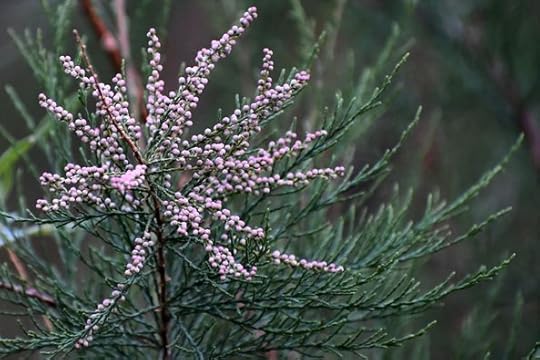
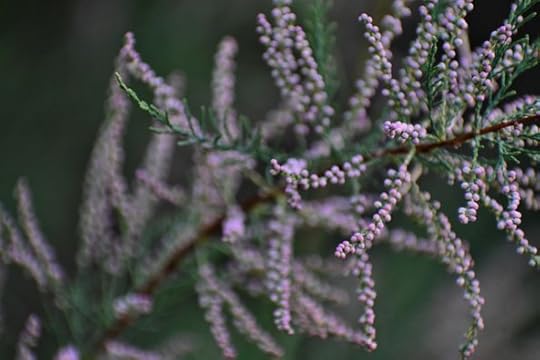
My most relevant contribution to the idea of dispersals over borders, oceans, continents, the introduced tamarisk or saltcedar. It was introduced and planted along the Colorado River to help with erosion and to use up less water and has crowded out the native species. And one night, after a refreshing hike along a creek in Utah, watching the sun set over the Colorado River, the maker of wonders, I was entranced by the beauty of it. I did not know what it was at the time, and may have sensed its oddness in the desert, but still saw its wonder and beauty.


WHAT HAPPENS WHEN A PLANT—OR A PEOPLE—moves from one place to another? We often turn to language to offer a frame. So we have introduced species, invasives, exotics, and weeds. So we have “plant immigrants.” Or indeed, too often when applied to people, just “migrants.” I became preoccupied with this question in 2018, as I wrote of local species I’d met high in the Taiwanese Central Mountain Range, only to learn later that these species, when encountered elsewhere, are considered highly invasive. I’d seen trees whose closest genetic relatives were spread wide across the world, and I began to wonder whether all these plants deserved a bit more thought than I was accustomed to giving them. I’d been in Taiwan examining my own family’s migration story. The parallels felt insistent, if imperfect.

I came to see more clearly that the trees, shrubs, grasses, mosses, algae, and seeds in this book are forces of their own, making worlds far beyond my imagination and interpretation. Our pictures of the world are only ever fragmentary. Our language for plants is much the same.
These are essays written for a world in motion. Plants that, in dispersal, might teach us what it means to live in the wake of change.

To speak of margins is to speak of edges, of borders. A word that tastes of paper, but also of place. Three generations of my family have lived as migrants.

My sister, strangers often point out, looks so much like my Taiwanese mother, and I, like my Welsh father. My sister has stayed in the town we grew up in, and I have not stopped moving. I have made and left homes every few years. Always learning somehow to begin anew.

Plants are often considered static. The word we often use to describe them, “rooted,” is also how we might describe our human belonging to a place. But when I think of seed, of blossom, root, and rhizome, it is movement that I think of. So what does it mean to be a plant out of place?
A map of sago pondweed’s native range shows nearly the entire planet; it lives on every continent except Antarctica. I look at the list of countries it calls home, a paragraph-size blot of places from Afghanistan to Zimbabwe, and a purple highlight over Hawai‘i, the only place it is considered introduced. Sago pondweed’s range is therefore described as “cosmopolitan.”

In conservation, the term “charismatic megafauna” refers to those animals that have widespread appeal to humans, that might capture the care and imagination of the broader public. These are the animals we see in charity appeals: tigers, elephants, pandas, polar bears. It is on their backs that the conservation of a habitat may be seen to rest. In a 2018 study listing the twenty most charismatic species, there are none that live in freshwater. There are no sturgeon or catfish in conservation drives, despite a third of freshwater fish species currently facing extinction. Still less is said of the plants that live in these habitats: water violets and marsh club moss and creeping marshwort and many others.

My mother’s freshwater idyll looked nothing like this stone folly built by a nineteenth-century father so that his daughters could safely swim. But still, I think she might love this place. That each stretch of river, pond, lake from which I swim somehow brings me to Moore’s, to the taste of salt and butterscotch, to the smell of pondweed and the glint of fish scales. To a beauty my mother longed to re-create for herself. My mother found charisma in the margins, and it is from her that I learned to love.

The Mauerweg (Wall Trail) traverses the old borders of the city, tracking along forest roads, city streets, and the depths of lakes. In the city, plaques mark the Wall’s old course. In lakes, I swam across it, marvelling at where an edge had once been written in water. The Mauerweg is a space that could—and in some ways should—devastate us. But in spring, I learned, it is also the ground from which the cherry trees grow.

Upon the fall of the Wall in 1989, ten thousand cherry trees in total were gifted to the city by a donation campaign led by Japanese television station TV Asahi. They were planted in the symbolic space left by the Wall: blossoms meant to unify a severed city once again.

Six springtimes passed with me living there; my life in that time became more joyous than I could have imagined. Walking amongst the cherries was a particular pleasure. Each year, I wanted to drink in their colour and beauty, as if I could carry it through the year. Unimaginably light, they seemed frivolous even, in a city where so much once felt too heavy to hold.

was the second winter in a row I’d left my parka packed in a vacuum-sealed bag under the bed; the second without snow. The trees replied. Autumn-flowering cherries in my local park blossomed more fully than I’d ever seen before. A year earlier, I’d read about cherry trees in Japan that had blossomed in October, a trick of the temperature after a year of extreme weather. I couldn’t stop thinking of the strangeness of their colour in autumn. The trees in my park kept their blooms through the holidays: for ten winter weeks in total. The flowers were smaller than those of springtime—the size of a quarter—but fully formed, the petals tightly stacked and luminescent. Instead of snow, pale petals dusted the ground in January.

This was a land marked by loss. The trees stretched their roots beneath it and scattered the path with petals, indifferent perhaps. That spring, it seemed wondrous to me that cherry blossoms could hold the weight of histories laid upon them, even briefly, before the flowers fell again.
Like cashews, sumac, and pistachios, the mango belongs to the Anacardiaceae family, most notable for its irritant plants, poison ivy and poison oak.

Mangoes—revered and prized by almost every culture in which they are cultivated—are a migrant fruit. I mean this in the obvious way: the story of the fruit speaks of plants spread through human migration from India, Burma, and the Malay Peninsula to China, perhaps by Buddhist monks in the fourth or fifth centuries; by Persian traders to East Africa by the tenth, and the Philippines by the fifteenth. Thereafter, its movements mirror colonisation. Mangoes were cultivated nearly anywhere the trees would survive, from Hawai‘i to West Africa, spread especially along routes traversed by Spanish and Portuguese colonists and through French and English botanical gardens. The mango travelled to Brazil, to the Caribbean, and ultimately to continental North America. Though hundreds of cultivars have been recorded worldwide, today, most commercial varieties of mangoes were developed in Florida. With human help, mangoes circumnavigated the globe.

This story is contained in language, too. Across all the languages I speak, the word for mango is a loanword: “mango” in English, Spanish, and German, “mangue” in French, 芒果 (mángguǒ) in Mandarin. Its name has stayed relatively the same in almost every place it appears. “Mango” comes from the Portuguese “manga,” which comes from Malay, and ultimately from the Malayalam “മാങ്ങ” (maanga). Portugal held colonies in India as early as 1505. That we say “mango” is a trace of this legacy.

I think back to the words I use for tea—both words, “tea” and 茶 (“chá”)—and am struck by my inability to choose. I cannot think of tea without acknowledging the legacies of my own cultures and their empires. By the way I hold the movements of this plant in my bones.

Later in the introduction to Weeds, Mabey offers another framing: a weed is simply “a plant in the wrong place.” This is a common phrasing and one that calls to mind the tidy definition of “dirt” offered by anthropologist Mary Douglas as “matter out of place.” In her 1966 book Purity and Danger, Douglas argues that societies with a ritual of hygiene—that is, those who have a notion of what it means for something to be dirty—are engaging in an effort to organise the environment. It is a creative act, done to create unity and meaning in our experience of the world. Douglas begins by speaking from an anthropological perspective; she contrasts European societal norms with those of other societies in ethnographic terms like “primitive” and “native.” But it becomes clear that the notions of purity and danger underpin all our acts and societal beliefs.
Profile Image for Mary.
879 reviews
August 11, 2024
An absolutely delightful and thought provoking book, the author uses the science, geography and history of plants as a metaphor for humanity.
Profile Image for Vega Rodriguez.
9 reviews
August 22, 2025
I loved the content of this book, I loved the sections on tea and Invasives and soy particularly, but something was seemingly deeply ingenuine about the tone and delivery of these essays- the energy was rich kid pretending to be poor, privilege fronting as something else and it gave me the ick and felt off listening to the audio book read by the author. Good read, but I don't think I'll be back.
Profile Image for alex nantz.
38 reviews
January 29, 2025
Going back and forth on 3 or 4 stars, would currently say 3.5.

This reminded me of Michael Pollan’s Botany of Desire, but I didn’t enjoy the writing quite as much. She brings in an element of information intertwined with story telling that’s fairly poetic, though with a darker tone than Pollan. Some of her points didn’t land for me though I appreciate the sentiment. Overall enjoyable and interesting to explore some of the ways humans have impacted this world from the lens of plants; the last chapter was one of my favorites though and I did particularly enjoy reading about her family’s history.
June 18, 2024
overall i enjoyed the author's narrative style and descriptions of plants. i especially liked the chapters that focused on the author's family history and personal connections to plants.
my main gripe is that some essays felt like they didn't offer a lot of new insight or perspective, were too short to really hammer home any point in particular, or felt like they were cobbled together from other sources of information rather than independent thought on the subject (like the chapter on moss leaning heavily on robin wall kimmerer who i've already read).
Profile Image for Anna Glezina.
155 reviews2 followers
June 2, 2024
Unfortunately, did not finish.
The cover and the reviews were so promising, but I read a few stories randomly, and they all have too much of repeated personal things about author, that I didn't need to hear more than once or twice. I decided to stop torturing myself, and to return this book to the library.
Profile Image for Penny.
961 reviews7 followers
July 28, 2024
Some essays were interesting and others quite dry. Better read occasionally instead of all in a row I think.
Profile Image for Mesut Bostancı.
292 reviews35 followers
August 31, 2024
I very much liked the idea of this book but the writing style overall and the cumulative focus of attention wasn’t for me.
Displaying 1 - 30 of 102 reviews

Can't find what you're looking for?

Get help and learn more about the design.