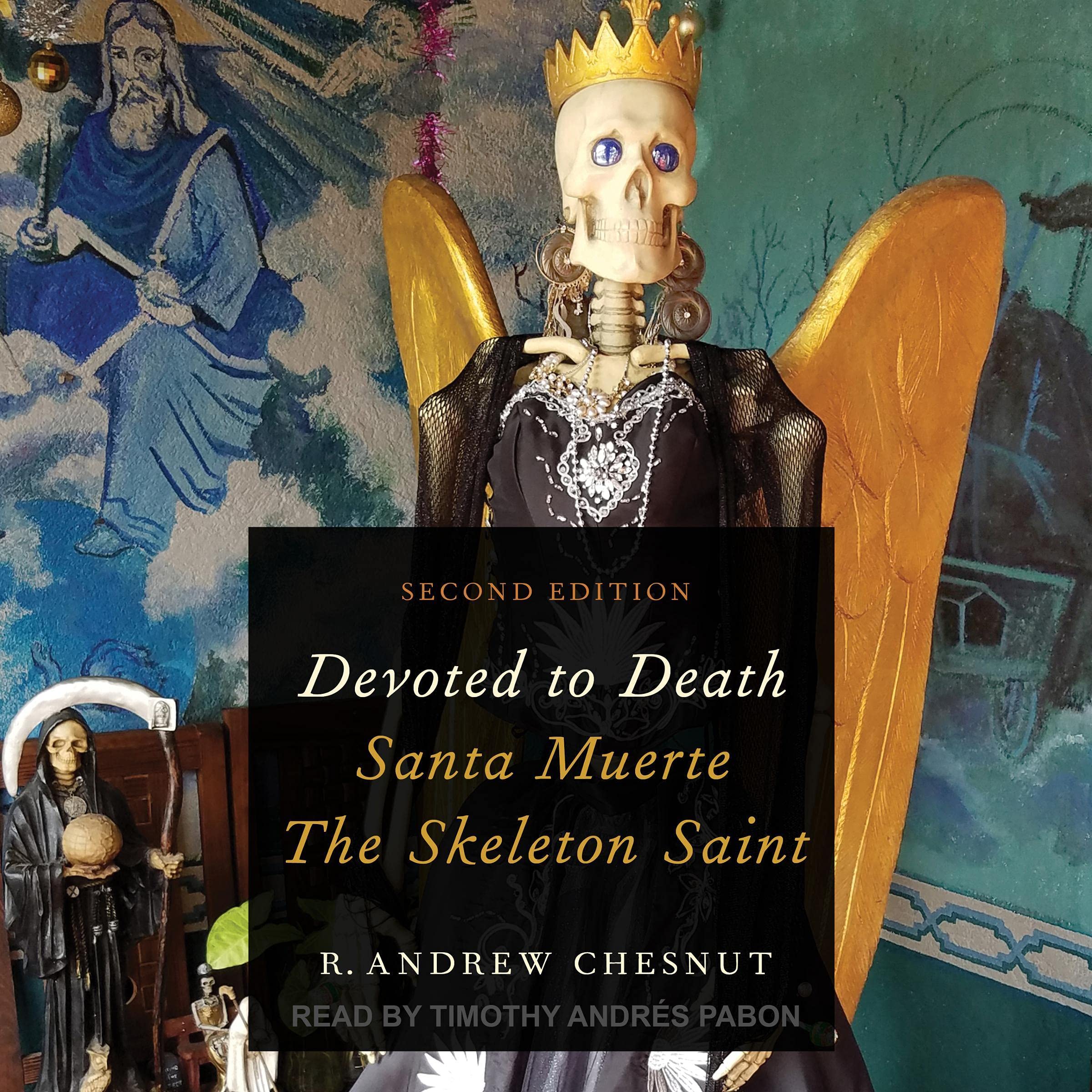
R. Andrew Chesnut offers a fascinating portrayal of Santa Muerte, a skeleton saint whose cult has attracted millions of devotees over the past decade. Although condemned by mainstream churches, this folk saint's supernatural powers appeal to millions of Latin Americans and immigrants in the US. Devotees believe the Bony Lady (as she is affectionately called) to be the fastest and most effective miracle worker, and as such, her statuettes and paraphernalia outsell those of the Virgin of Guadalupe and Saint Jude, two other giants of Mexican religiosity.
In particular, Chesnut shows Santa Muerte has become the patron saint of drug traffickers, playing an important role as protector of peddlers of crystal meth and marijuana; DEA agents and Mexican police often find her altars in the safe houses of drug smugglers. Yet Saint Death plays other important She is a supernatural healer, love doctor, money-maker, lawyer, and angel of death. She has become without doubt one of the most popular and powerful saints on both the Mexican and American religious landscapes.
“A Mexico City street vendor explained the appeal of Santa Muerte to her saying, ‘She understands us, because she is a battle axe, a cabrona, like us.”
——
This book was quite an interesting introduction to Santa Muerte and all her aliases: la hermana blanca, la niña blanca, la flaquita, la madrina, la huesuda
This book seems to be an anthropological look at Santa Muerte, detailing different candle meanings, ritual items, pop-culture, commercialization, villainization, ect. From what I understood is this book is mainly a look at what kind of people are her followers and how they venerate her; however, some of their deeper spiritual philosophies didn’t feel properly explored. For example, I felt like it was meagerly explained that other cultures have folklore of a personalized death being a healer, but I wanted to know more about how her followers held this contradiction in their minds. Perhaps, I missed something, but alas I felt like this was a very “worldly” look at la huesuda and I craved more anecdotes about individual’s personal relationship with her and their deeper spiritual beliefs.
With that said, this book did sow the seed of fascination with Santa Muerte and I’d like to research her more. Perhaps I’ll edit this review if I find her truly to be impossible to pin down in a philosophical sense. But I just really wish I understood more how she makes her followers feel rather than a clinical what socioeconomic statuses cause people to pray to her, what they pray for, what they use to pray, and what miracles they’ve claimed to have received.