A very personal account of an extraordinary period in Australian politics.
Despite the divisions within the Labor Party as the Rudd government fell into disunity and as Julia Gillard was undermined by disloyalty from within, Wayne Swan steered the Australian economy through a time of unprecedented international economic challenges.
He tells how he nurtured an economy that was the envy of the world, standing up to an opposition and a business elite who fought fiercely against Labor's political agenda. In the face of bitter attacks by vested interests - from the miners and big polluters, to the hotels and clubs industry and, of course, sections of the media - much important nation changing legislation was wrangled through the parliament.
This is a story that can only be told from the inside. It provides unique access to the decision making of a government whose legacy of economic management and social change is still to be fully recognised.
Wayne Swan served as the Treasurer of Australia for nearly six years, also serving as Deputy Prime Minister.
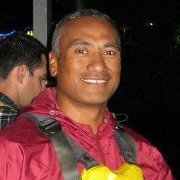
Wayne and his family Wayne and his family He delivered six budgets, the most for a Labor Treasurer after Paul Keating and Ben Chifley. Mr Swan was named Finance Minister of the Year in 2011 by Euromoney Magazine, which noted “his careful stewardship of Australia’s finance and economic performance both during and since the global financial crisis” and that “Australia’s position within the global financial community has never been stronger than it is today.”
His focus as Treasurer of Australia was on strong and secure economic growth, job creation, and maximising the opportunities for Australia in the Asian Century. He was instrumental in the publication of the Asian Century White Paper – a blue print for Australia’s engagement in the region.
During his time as Treasurer, Australia experienced a once-in-a-century terms of trade and business investment boom and came out with contained inflation and low interest rates. He helped formulate Australia’s successful response to the GFC, with the country coming through the global recession with an economy 15 per cent bigger and with nearly one million jobs created.
Mr Swan has been the Member for the Brisbane suburban electorate of Lilley between 1993 and 1996 and from 1998 until the present, and has held senior economic roles in the Labor Party from 1998 to 2013.
He is the author of Postcode: The Splintering of a Nation, a well-received book on the economics of disadvantage, and has lectured in public policy at the Queensland Institute of Technology (now QUT).
As a prostate cancer survivor, he is a vocal and tireless advocate for the early detection of the disease.
Mr Swan was born 30 June 1954 in Nambour and grew up on Queensland’s Sunshine Coast, where he now holidays each year with his wife, two adult daughters and son.
Great to have the public record corrected on so many policy initiatives that were ignored, misreported or straight up lied about in the mainstream press - the mining super profits tax, the carbon pollution reduction scheme, the stimulus packages for the Global Financial Crisis. Wayne Swan writes in a manner that is detailed yet easy to understand, spinning a story while also thoroughly covering each matter in turn.
WS also outlines his concerns on the concentration of political power in a small number of wealthy individuals who believe that their self-interest is Australia's interest. This analysis sets Good Fight apart from many political memoirs, which tend to be an historical account and don't analyse the nation's institutions.
The worst part of this book is realising that:
1) Australia could've had a market-based based carbon reduction scheme years ahead of the rest of the world, but the Australian Greens voted against it (the party of the environment indeed). If we had the scheme in place for several years a campaign to remove it would've been much harder for those in industry who opposed it.
2) The people of this country could benefit from the massive resource wealth our miners dig out of our ground before shipping it overseas. Instead, our own nation's billionaires cried poor and heralded mass mining closures despite record levels of mining investment and profits during the mining boom.
3) Wayne Swan never got the public recognition he so clearly deserved working to keep Australia from going into recession during the GFC. That is a real tragedy.
Well i tried. It starts out well but it goes into so much detail that unless you were following this stuff blow by blow you might be totally lost. I did not finish it but i will someday.
Probably one of my political heroes in my eyes. Many people will have strong opinions with what Swanny did during the Recession of 2008. However, it is evident to me that he made the right call with Kevin Rudd. The fiscal stimulus package gave the Australian economy enough of a multiplier effect to keep it from avoiding a recession and marginally achieving that goal of 0.2% GDP growth.
His relationships with Gillard and other political allies/enemies were clearly shown here. This autobiography is a book I would recommend any aspiring politician to have a read.
It's a very good detailed book. Talking about his life, his journey into politics and playing a critical role in one of the most volatile economic eras of modern time since the Great Depression.
I read Part 1, which provides an overview of the economic crisis of 2007-2009. It's a thorough narrative, telling the story of Australia's impressive response, which contributed to it being one of the few developed countries to avoid recession. A good reminder that responding to the threat of recession requires a sizeable fiscal stimulus that acts over both the short and medium term.
Reading this made me hope that just as much work is currently happening behind the scenes to respond to the challenge of the current recession.
A great insight in the economic events during the GFC and Australia's response to those events from former the Federal Australian Labor Government's Treasurer Swan's perspective.
From a personal perspective, it is a candid if somewhat critical and scathing retrospective look at his former boss and the Former PM Kevin Rudd. A bit too thick on the Springsteen idol worship partly being heavily influenced by the working class themes of most of his lyrics no doubt.
This economic review of the 2007-13 Australian Labor Party (ALP) incumbency at the helm of Australia's economy was, by and large, a good logbook record and is enviable by world standards. The bouquet and brickbats are as to be expected are to heap praise to the Australian Labor Party Administration led by the Rudd-Gillard leadership would reflect a self critical appraisal which in some respects would render the ALP Treasurer as somewhat of an apologist for the whatever shortcomings that were to befall the economic performance of this Treasury Department. The statistics speaks volumes in terms of the buoyant economic performance of Australia in light of the economic paroxysms throughout the world during the Global Financial Crisis.
However, what does not seemed to be emphasised in his recollections of Australia's fortunes was the fact that Australia was also riding the wave of a fortuitous Mining Boom, which was in most was attributed to the GFC within North America and Europe and in, most part, owed our fortunate circumstances to the Chinese economic boom. This mining boom and favourable commodity prices has since then plateaued with the global recovery from the 2008-9 GFC.
Australia, in 2014, is now at a mining commodity trough with the downturn of mineral commodity prices, particularly within the iron ore and coal industry, which is, by and large, Australia's principal economic bread basket.
Most of the media has focused on the parts of the book where Swan has dished the dirt on Kevin Rudd, but I thought that the detailed analysis of how the mining industry defeated the mining tax, the discussion of that now all-but-forgotten episode involving Godwin Grech and Malcolm Turnbull (among others) and the 'what is it all about' statement of principle towards the end were the most interesting parts of this book. The writing, however, is dull and full of political weasel words ('hit-out') and tired metaphors (bolting horses, spearthrowers) - I kept thinking, a ghostwriter, his kingdom for a ghostwriter. I met and interviewed him as a co-host on the Jon Faine show (in person, he was quite amiable) and there were many questions I had but didn't get to ask: was he always happy being 2nd in command? why do both he and Kevin give their pets the name of Jasper? Etc.
You can’t knock Swannie, well, unless you’re a massive silvertail Liberal, or Gina Rinehart. Financial Minister of the Year during the Global Financial Crisis (GFC). I am cynical of those awards (Kissinger's Nobel Peace Prize for example), but that does seem impressive. At least he was a man who believed in the cause before himself. One of the last true Statesmen we’ve had sadly. Love your work Wayne. Thanks comrade.
Good book: delievers what it promises on the cover. A very good overview of politics, particularly the Federal treasury of the Labor's two terms, including as a minority government.
Content is great, but Swan is not a master writer which is why it only gets 3 stars.