

What do you think?
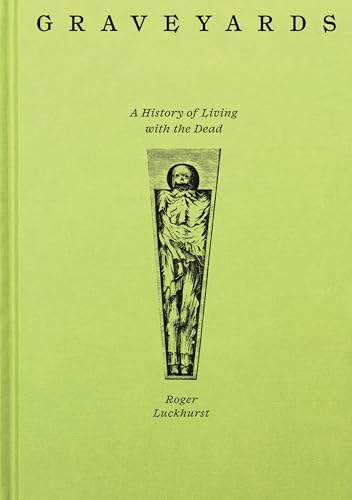
Graveyards: A History of Living with the Dead
From the author of Gothic, a marvelously illustrated cultural history of graves and graveyards, from the earliest known burial sites to today’s green burials
Why, how, and where do we inter our dead? How have people throughout history responded to the problem of laying their dead to rest? Roger Luckhurst sets out in search of answers in this arresting book. Taking readers on an unforgettable tour of the rich and unusual visual culture of the grave, he visits locales such as the pyramids of Giza, the catacombs and columbaria of Rome, and the cenotaphs erected to the world’s war dead. Along the way, he examines the diverse role of graveyards in literature, art, film, and television.
In engaging chapters that look at all aspects of the treatment of the dead, Luckhurst covers topics ranging from early burials and the emergence of necropolises and catacombs to grave robbing, garden cemeteries, the perilous overcrowding of the urban dead, and the emergence of modern funerary culture. Exploring the cultural afterlives of burial and memorial sites in the popular imagination, he shows how graves have served as guides to the underworld, poignant dedications to those we have lost, as reminders of our own mortality, and settings in gothic horror.
Blending lively storytelling with a wealth of stunning illustrations, Graveyards is a lyrical, frequently unexpected account of the grave as a signpost to the afterlife, a site of remembrance and self-reflection, and an object of enduring fascination.
Why, how, and where do we inter our dead? How have people throughout history responded to the problem of laying their dead to rest? Roger Luckhurst sets out in search of answers in this arresting book. Taking readers on an unforgettable tour of the rich and unusual visual culture of the grave, he visits locales such as the pyramids of Giza, the catacombs and columbaria of Rome, and the cenotaphs erected to the world’s war dead. Along the way, he examines the diverse role of graveyards in literature, art, film, and television.
In engaging chapters that look at all aspects of the treatment of the dead, Luckhurst covers topics ranging from early burials and the emergence of necropolises and catacombs to grave robbing, garden cemeteries, the perilous overcrowding of the urban dead, and the emergence of modern funerary culture. Exploring the cultural afterlives of burial and memorial sites in the popular imagination, he shows how graves have served as guides to the underworld, poignant dedications to those we have lost, as reminders of our own mortality, and settings in gothic horror.
Blending lively storytelling with a wealth of stunning illustrations, Graveyards is a lyrical, frequently unexpected account of the grave as a signpost to the afterlife, a site of remembrance and self-reflection, and an object of enduring fascination.
256 pages, Hardcover
First published October 2, 2025
About the author
Roger Luckhurst
54 books47 followersRoger Luckhurst is a British writer and academic. He is Professor in Modern and Contemporary Literature in the Department of English and Humanities at Birkbeck, University of London and was Distinguished Visiting Professor at Columbia University in 2016. He works on Victorian literature, contemporary literature, Gothic and weird fiction, trauma studies, and speculative/science fiction.
Ratings & Reviews
Friends & Following
Create a free account to discover what your friends think of this book!
Community Reviews
Displaying 1 - 12 of 12 reviews

December 21, 2025
This is a beautifully presented and well written exploration of the history and traditions of human burial, from prehistory through to modernity. The book isn’t just a simple history, it also goes into the culture of death and burial over the ages, as well as a comparison of the traditions of the abrahammic religions, as well as Buddhism and Hinduism.
The level of detail is excellent for a coffee table-type book - not as much detail as a genuine reference book, but more than enough for an intriguing read.
The level of detail is excellent for a coffee table-type book - not as much detail as a genuine reference book, but more than enough for an intriguing read.

November 13, 2025
This was a little more historical/academic than I was hoping (I wanted something more focused on the macabre!), but it was well researched and gorgeously designed

May 12, 2026
Interesting book. Agree with some of the comments that it was somewhat more academic than pick up and go kind of non-fiction book. That being said, it was really interesting and fascinating exploring the ways in which different religions choose to remember their dead.

April 12, 2026
This book explores the relationship between us humans and our ancestors with death. It first take a look at how species predating the Homo Sapiens conducted ritualistic practices that were then followed up by our forebears the Neanderthals and then ourselves. It then moves on to look how death related rituals developed among the many religions and geographies of the world (surprisingly for me, the rituals of Zoroastrianism and their Towers of Silence being one of the biggest miss in this book). Finally, the book looks into how our secularized societies started to look at death from a more scientific point of view, meaning that rituals in our day and age are falling out of fashion.
While I think the book does a great job in terms of breadth when it comes to this subject, I can't help but feel that it was, for the most part, a shallow treatment of this subject. Furthermore, even though it is full of colored illustrations, most of them are so small that it's difficult to see what they represent to begin with. I think the editing of the book could have been better for this very reason.
Other than that, a very worthy read and full of notes for the reader to further explore. I really liked how the author added a comment at the very end about the latest breed of AI applications that seek to keep "digital twins" of us alive for as long as possible, hoping to achieve immortality in the digital realm at least.
While I think the book does a great job in terms of breadth when it comes to this subject, I can't help but feel that it was, for the most part, a shallow treatment of this subject. Furthermore, even though it is full of colored illustrations, most of them are so small that it's difficult to see what they represent to begin with. I think the editing of the book could have been better for this very reason.
Other than that, a very worthy read and full of notes for the reader to further explore. I really liked how the author added a comment at the very end about the latest breed of AI applications that seek to keep "digital twins" of us alive for as long as possible, hoping to achieve immortality in the digital realm at least.

April 11, 2026
u know a book is bound to be at least okayish if it starts w a reference to The Smiths's Cemetry Gates. this one turned out so good, that i skimmed through it to reread my highlights and notes right after finishing.
still have questions to find the answers to, like "how did the Trans-Atlantic slave trade w the British Empire at its wheel influence the four-bodies-per-year limit for dissection set in 1540?" cuz i'm pretty sure British colonizers had no qualms about using enslaved ppl for anatomical studies, just like Americans did (i'll dig into this death+colonialism lore for sure).
coming from a culture w an authentic ritual and holiday of remembering the dead, Dziady, it's quite interesting for me to trace how our tradition opposes the idea of "recruiting the dead" for governmental/national purposes (it is instead more of a "recruiting the dead" for family purposes).
overall, it's an informative read that doesn't shy away from the colonial and racist realities of the past and present, will deffo reread it more than once.
still have questions to find the answers to, like "how did the Trans-Atlantic slave trade w the British Empire at its wheel influence the four-bodies-per-year limit for dissection set in 1540?" cuz i'm pretty sure British colonizers had no qualms about using enslaved ppl for anatomical studies, just like Americans did (i'll dig into this death+colonialism lore for sure).
coming from a culture w an authentic ritual and holiday of remembering the dead, Dziady, it's quite interesting for me to trace how our tradition opposes the idea of "recruiting the dead" for governmental/national purposes (it is instead more of a "recruiting the dead" for family purposes).
overall, it's an informative read that doesn't shy away from the colonial and racist realities of the past and present, will deffo reread it more than once.
February 4, 2026
Roger Luckhurst looks at how various culture have dealt with their dead over time, from rock tombs to pyramids, catacombs and cenotaphs, from simple graves to crowded churchyards to the garden cemetery movement. Finally, he looks at the attitude of various religions to death and the after life and the cultural traditions that mark the change from one state to the next. Stunningly illustrated, this is book is interesting and lively full of memorable stories.
October 25, 2025
The book itself is gorgeous! Beautiful inside and out. Really enjoyed learning about different cultural practices and the evolving nature of how people use, think and feel about graveyards. A treasure of a book.

March 22, 2026
A very beautiful and surprising visually asthetic synthase of human funerary practice over the course of human history. I would highly recommend to anyone interested in sociology, anthropology and archaeology.

April 25, 2026
A history with no source citations for the facts provided. Illustration source citations are found in the back. A lot of unsourced information is problematic considering it’s written by an academic. Many images are so small that they are difficult to impossible to make out much of the detail.

July 15, 2026
4.5 stars

July 10, 2026
4.0/5.0
Death is the only inevitable constant for all humans, and yet societal class, religion and politics seek to exert its power on it. Lackhurst's exploration of this history from early humans to present and even future, leaves you thinking of your mortality and that is powerful.
Death is the only inevitable constant for all humans, and yet societal class, religion and politics seek to exert its power on it. Lackhurst's exploration of this history from early humans to present and even future, leaves you thinking of your mortality and that is powerful.

November 14, 2025
Roger Luckhurst here has a wide ranging anthology type non-fiction book which does exactly as it suggests on the tin. His authorial voice is from a perspective similar to art critics, art historians, theorists, anthologists, and literary authors rather than a direct or personal viewpoint, and this serves his subject and scope very well and suits the book and its subject. As he succinctly points out, a book about graveyards is somewhat ghoulish - if there were a personal connection to the topic or the area then perhaps the author would become the main event, when in fact as it is presented this book does a good job of informing and structuring without feeling too cool or impersonal.
Much of the content is around the larger and more complex necropolis structures of civilisation and there is an embedded discussion around the argument from anthropologists that the necropolis and the cultural importance of death rituals are a defining characteristic of humanity. What reply would be made in light of the 'grieving' behaviours made by several animal species is not clear.
There are some arbitrary but enjoyable chapters and categories including the handling of the dead by major world religions, some modern change to urban graveyards and urban dead, and contemporary attitudes to the dead and their handling. There is a very natural first opening chapter on the most ancient evidence of the dead, their rituals, burials, processing etc. including the archaeological record with some breadth that was very enjoyable.
There are many beautiful photos and records displayed here, not least stunning photos of those most famous death monuments, the Taj Mahal and Humayun's Tomb. There was also excellent etymology scattered throughout - the origin of sarcophagus as being understood as a container that ate the flesh of those contained, for instance. In some ways the tone and focus reminded me of other thematically grouped non fiction, like the 'Colour' book released by the folio society.
This was enjoyable and I recommend it to anyone who thinks the title and subject appeals to them. It is not unduly grisly or ghoulish, but informative and varied. Certainly a good one to read adjacent to Halloween.
Much of the content is around the larger and more complex necropolis structures of civilisation and there is an embedded discussion around the argument from anthropologists that the necropolis and the cultural importance of death rituals are a defining characteristic of humanity. What reply would be made in light of the 'grieving' behaviours made by several animal species is not clear.
There are some arbitrary but enjoyable chapters and categories including the handling of the dead by major world religions, some modern change to urban graveyards and urban dead, and contemporary attitudes to the dead and their handling. There is a very natural first opening chapter on the most ancient evidence of the dead, their rituals, burials, processing etc. including the archaeological record with some breadth that was very enjoyable.
There are many beautiful photos and records displayed here, not least stunning photos of those most famous death monuments, the Taj Mahal and Humayun's Tomb. There was also excellent etymology scattered throughout - the origin of sarcophagus as being understood as a container that ate the flesh of those contained, for instance. In some ways the tone and focus reminded me of other thematically grouped non fiction, like the 'Colour' book released by the folio society.
This was enjoyable and I recommend it to anyone who thinks the title and subject appeals to them. It is not unduly grisly or ghoulish, but informative and varied. Certainly a good one to read adjacent to Halloween.
Displaying 1 - 12 of 12 reviews