

What do you think?
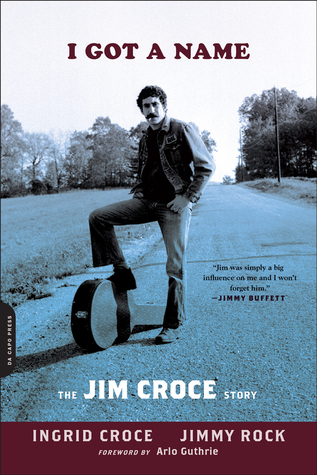
I Got a Name: The Jim Croce Story
Jim Croce, singer-songwriter of the #1 hits Bad Bad Leroy Brown and Time in a Bottle , was at the height of his career when his life was cut short in a plane crash while on tour. Just 30 years old on September 20, 1973, Jim was revered by an adoring audience for his gentle melodies and everyman demeanor.
Now, for the first time, this memoir reveals the man behind the denim jackets and signature mustache, a hard-working, wry charmer who was also beset with exhaustion at the sheer magnitude of his own success. I Got a Name , told with full access to everyone who knew and loved Jim Croce, is at once a revealing portrait of a great artist and a moving love story.
Now, for the first time, this memoir reveals the man behind the denim jackets and signature mustache, a hard-working, wry charmer who was also beset with exhaustion at the sheer magnitude of his own success. I Got a Name , told with full access to everyone who knew and loved Jim Croce, is at once a revealing portrait of a great artist and a moving love story.
336 pages, Paperback
First published June 5, 2012
Ratings & Reviews
Friends & Following
Create a free account to discover what your friends think of this book!
Community Reviews
Displaying 1 - 30 of 93 reviews

January 23, 2021
I grew up such a Jim Croce fan. To this day, he is my all-time favorite. I believe his music is timeless and survives because they were so well written. They told stories.
This book is a good read for any fan of Jim Croce or a fan of music. The story of his passion for music, with his joy and love of family. His struggles to find success, and his realization of what success really was to him, his family. It poignant that Time In A Bottle was released after his death as that song is the message of his story. The book is heartfelt.
This book is a good read for any fan of Jim Croce or a fan of music. The story of his passion for music, with his joy and love of family. His struggles to find success, and his realization of what success really was to him, his family. It poignant that Time In A Bottle was released after his death as that song is the message of his story. The book is heartfelt.

January 24, 2013
This is a tough one for me to review, mainly because I have such mixed feelings about it. The book's greatest strength is its honesty; fortunately for us, Ingrid doesn't seem to spare us any of the seamier details (at least, the ones she was able to find out about...lol).
There are a couple of big things wrong with this book though. The main one is the huge patches of inane synthetic dialogue that you have to wade through. Here's a sample: "You're amazing, Ing! You stand up for the things you believe in, and I'm so proud of you. Besides, I think you're pretty, and I bet none of those girls have an ass like yours!"
Seriously, there's tons of stuff like this. It started sounding after a while like the Gomer Pyle impression that she says Jim used to effect: "Golly goshers, cuddlecakes! That would be swell!" Or like those horrible biographies for young people where they make up dialogue for prominent figures ("Jeepers, General Washington, what'll we do now?" "Anybody got a dollar? I just feel like flinging a coin across this-here river"). And oftentimes you have to wonder on what basis she derived those conversations, especially the ones between Jim and Maury.
Another problem is her frequent (and superfluous) encounter-groupish asides to the audience. Stuff like: "I knew he was processing a lot of anger, and I hoped that somehow he could work it out through his music." And she also came off a bit prissy in places; actually, if it'd been me I probably would've sang her a few bawdy ballads myself (just to get her to unclench her keester a little). Besides which, I liked Bill Reid (and yes, even Crazy Frank).
Anyway, now we get to the strengths. Well, first off I was surprised at how autobiographical his songs were. I had always assumed, for example, that "New York's Not My Home" was like one of his character songs, and that he had probably never set foot in the place (at least, not until he had a major concert there or something). And the story about "I Have To Say I Love You in a Song" was so Hollywoodish it had to be true...lol A truly touching moment.
Those Cashman guys certainly all came off as a bunch of sleazebags. It would've been nice to get their side of the story anyway. Which reminds me of two things:
1) Why the hell isn't there another biography about Croce yet? I mean, like a regular one? I imagine I'd be a lot more accepting of the shortcomings of this one if it was presented as it should be, as "The Jim and Ingrid Croce Love Story" (which is how it really comes across).
2) Jim Croce practically screams Oral Biography! I mean, seriously, what a perfect subject he would be for that approach. And they even had a bunch of interviews with people from 20 years ago which they could've used too (and interspersed interviews with Jim and Maury throughout to flesh the thing out). Boy, would that have been a great read. Incidentally, she sat on this subject for all that time and I still don't really understand why (she never does quite seem to explain it).
The book does get stronger as it goes along, and the last 100 pages or so are very good indeed. Very poignant are her accounts of the miscarriage and their ongoing marital imbroglios, as well as Jim's increasingly erratic behavior (the dead-cat incident, for example, and the frequent blowups, not to mention his relating of the Plaster Caster episode to Ingrid). The guy must've really been losing touch by the time of that last one...I mean, what in the world was he thinking? (Btw it turns out that the lyrics in "Five Short Minutes" are actually, "she casted me in plaster"...I'd always thought he was saying, "she cast at me and blasphemed"...lol. Oh yeah, and "robbing the cradle is worse than robbing the tomb" I thought was "robbing a tune.")
By the end the style has become nicely understated and there are some truly marvelous sad moments: "I held him closely for the last time" and Adrian saying, "Don't cry, Mommy. Don't cry," as she attempts to explain to him that Daddy won't be coming home anymore. And then of course there is Jim's last letter to her (received after his death): "Who knows, I might even get a tan."
Even then though, that gets followed up with the following unnecessary and anticlimactic bit of self-analysis: "When I heard the terrible news that my husband was gone, I felt broken. The thought that our son would grow up and never know his father devastated me."
It's a bit like when Longfellow caps the harrowing end of "The Wreck of the Hesperus" with the following: "Such was the wreck of the Hesperus,/In the midnight and the snow!/Christ save us all from a death like this,/On the reef of Norman's Woe!" Which is rather like watching some truly scarifying segment of a horror movie and then having Count Floyd come on and say: "Wow, that was pretty scar-y, wasn't it, kids?!"
Anyway, despite all that I found this book quite worthwhile. And also--unfortunately--more than a little depressing. I suppose that's hard to avoid, given the subject matter. But a couple days ago I did put on all 3 Jim Croce studio albums (yes, in the original vinyl) and played them back-to-back-to-back. They sounded pretty damn good too, I must say...it proved to be a lot of fun.
I was still just a kid when he died. I had only just gotten into him too (I bought my first album of his, Life & Times, from the market across the street from my house--they had just installed a record rack there). My mom, who'd been reading the paper, said, "That singer you like died." For the longest time, days and days, I simply refused to believe it. It was a sort of state of shock. I mean, I had only just now gotten into the guy--he couldn't possibly be dead! Fortunately I had a neighbor who was also into Jim, and we commiserated. Eventually I guess we both got over it, to the extent that we could. But it is still--and I say this 40 years later--one of the darker moments of my life.
Sure, I know Don McLean wrote "American Pie" about Buddy Holly, but for me "the day the music died" will always be September 20, 1973.
There are a couple of big things wrong with this book though. The main one is the huge patches of inane synthetic dialogue that you have to wade through. Here's a sample: "You're amazing, Ing! You stand up for the things you believe in, and I'm so proud of you. Besides, I think you're pretty, and I bet none of those girls have an ass like yours!"
Seriously, there's tons of stuff like this. It started sounding after a while like the Gomer Pyle impression that she says Jim used to effect: "Golly goshers, cuddlecakes! That would be swell!" Or like those horrible biographies for young people where they make up dialogue for prominent figures ("Jeepers, General Washington, what'll we do now?" "Anybody got a dollar? I just feel like flinging a coin across this-here river"). And oftentimes you have to wonder on what basis she derived those conversations, especially the ones between Jim and Maury.
Another problem is her frequent (and superfluous) encounter-groupish asides to the audience. Stuff like: "I knew he was processing a lot of anger, and I hoped that somehow he could work it out through his music." And she also came off a bit prissy in places; actually, if it'd been me I probably would've sang her a few bawdy ballads myself (just to get her to unclench her keester a little). Besides which, I liked Bill Reid (and yes, even Crazy Frank).
Anyway, now we get to the strengths. Well, first off I was surprised at how autobiographical his songs were. I had always assumed, for example, that "New York's Not My Home" was like one of his character songs, and that he had probably never set foot in the place (at least, not until he had a major concert there or something). And the story about "I Have To Say I Love You in a Song" was so Hollywoodish it had to be true...lol A truly touching moment.
Those Cashman guys certainly all came off as a bunch of sleazebags. It would've been nice to get their side of the story anyway. Which reminds me of two things:
1) Why the hell isn't there another biography about Croce yet? I mean, like a regular one? I imagine I'd be a lot more accepting of the shortcomings of this one if it was presented as it should be, as "The Jim and Ingrid Croce Love Story" (which is how it really comes across).
2) Jim Croce practically screams Oral Biography! I mean, seriously, what a perfect subject he would be for that approach. And they even had a bunch of interviews with people from 20 years ago which they could've used too (and interspersed interviews with Jim and Maury throughout to flesh the thing out). Boy, would that have been a great read. Incidentally, she sat on this subject for all that time and I still don't really understand why (she never does quite seem to explain it).
The book does get stronger as it goes along, and the last 100 pages or so are very good indeed. Very poignant are her accounts of the miscarriage and their ongoing marital imbroglios, as well as Jim's increasingly erratic behavior (the dead-cat incident, for example, and the frequent blowups, not to mention his relating of the Plaster Caster episode to Ingrid). The guy must've really been losing touch by the time of that last one...I mean, what in the world was he thinking? (Btw it turns out that the lyrics in "Five Short Minutes" are actually, "she casted me in plaster"...I'd always thought he was saying, "she cast at me and blasphemed"...lol. Oh yeah, and "robbing the cradle is worse than robbing the tomb" I thought was "robbing a tune.")
By the end the style has become nicely understated and there are some truly marvelous sad moments: "I held him closely for the last time" and Adrian saying, "Don't cry, Mommy. Don't cry," as she attempts to explain to him that Daddy won't be coming home anymore. And then of course there is Jim's last letter to her (received after his death): "Who knows, I might even get a tan."
Even then though, that gets followed up with the following unnecessary and anticlimactic bit of self-analysis: "When I heard the terrible news that my husband was gone, I felt broken. The thought that our son would grow up and never know his father devastated me."
It's a bit like when Longfellow caps the harrowing end of "The Wreck of the Hesperus" with the following: "Such was the wreck of the Hesperus,/In the midnight and the snow!/Christ save us all from a death like this,/On the reef of Norman's Woe!" Which is rather like watching some truly scarifying segment of a horror movie and then having Count Floyd come on and say: "Wow, that was pretty scar-y, wasn't it, kids?!"
Anyway, despite all that I found this book quite worthwhile. And also--unfortunately--more than a little depressing. I suppose that's hard to avoid, given the subject matter. But a couple days ago I did put on all 3 Jim Croce studio albums (yes, in the original vinyl) and played them back-to-back-to-back. They sounded pretty damn good too, I must say...it proved to be a lot of fun.
I was still just a kid when he died. I had only just gotten into him too (I bought my first album of his, Life & Times, from the market across the street from my house--they had just installed a record rack there). My mom, who'd been reading the paper, said, "That singer you like died." For the longest time, days and days, I simply refused to believe it. It was a sort of state of shock. I mean, I had only just now gotten into the guy--he couldn't possibly be dead! Fortunately I had a neighbor who was also into Jim, and we commiserated. Eventually I guess we both got over it, to the extent that we could. But it is still--and I say this 40 years later--one of the darker moments of my life.
Sure, I know Don McLean wrote "American Pie" about Buddy Holly, but for me "the day the music died" will always be September 20, 1973.

January 31, 2016
I'm not sure what to say about this book. Here's some of my thoughts:
1. I've been listening to Jim Croce's live album on my tablet at work. I'm loving it. I'm loving the songs, the dialog - it's great. It put me in the mood to learn about someone who died a tragic death before I was even old enough to know who he was.
2. The writing seems stilted and at times the book is awkward and difficult to get through. (I realize Ingrid Croce is not a professional writer.)
3. There are things in here I didn't really want to know about Jim Croce and about Jim and Ingrid's difficult marriage. It's really, really sad. I feel like I would have left him a thousand times before the end but it's not me and it's not my story. It is what it is and it is what happened.
4. Unfortunately, I like Jim Croce a lot less than I used to. (And I just got to like him!) Sigh. Why did I read this?
5. Another note - I read that A.J. Croce (his son) went blind when he was about 4 and he now has partial sight in one eye. The official record says it was a brain tumor, but in an interview I read online dated 2015 he says it was from physical abuse from his Mom's boyfriend. That's super sad - she put up with Jim and his crap and then she dated someone far worse.
1. I've been listening to Jim Croce's live album on my tablet at work. I'm loving it. I'm loving the songs, the dialog - it's great. It put me in the mood to learn about someone who died a tragic death before I was even old enough to know who he was.
2. The writing seems stilted and at times the book is awkward and difficult to get through. (I realize Ingrid Croce is not a professional writer.)
3. There are things in here I didn't really want to know about Jim Croce and about Jim and Ingrid's difficult marriage. It's really, really sad. I feel like I would have left him a thousand times before the end but it's not me and it's not my story. It is what it is and it is what happened.
4. Unfortunately, I like Jim Croce a lot less than I used to. (And I just got to like him!) Sigh. Why did I read this?
5. Another note - I read that A.J. Croce (his son) went blind when he was about 4 and he now has partial sight in one eye. The official record says it was a brain tumor, but in an interview I read online dated 2015 he says it was from physical abuse from his Mom's boyfriend. That's super sad - she put up with Jim and his crap and then she dated someone far worse.

April 10, 2015
My friend Keith, fellow fan of the late Mr. Croce, loaned me this book, written by his widow, Ingrid, and her (now) husband Jimmy Rock. Keith warned me that “it seems more about her than him,” but knew I’d make my own judgment. And in a way he’s right. This is more a description of the relationship between Jim and Ingrid than a book about Jim himself; as such it’s a quite good chronicle of the ten-or-so-year up-and-down, largely turbulent and often abusive relationship between them. An example is his unempathetic “blaming of the victim” after she had been raped. Mr. Croce was certainly less than perfect, and Ingrid documents his drinking, drug use and extramarital dalliances, a disappointment to his father because of his dedication to being a musician.
All that said, this is also a chronicle of Jim’s “ten year overnight success.” I hadn’t known that Jim and Ingrid were for a number of years a folk-song duo reminiscent of the Canadian duo Ian and Silvia (interesting, though obviously Italian, pictures of his earlier self as one half of the due show him clean-shaven, and actually looking more Hispanic than Italian!) Much of the narrative documents (very well, in my opinion) the grueling routine of “the road,” including desperate financial straits (more about that below), but which also includes the sheer joy of positive audience responses. It also describes friendships gained along the way (notably with Marty Muelheisen, Jim’s long-time lead guitarist - watch any YouTube videos of Jim’s songs and Marty is right there beside him). His concerts were liberally peppered with bawdy songs and a lot of humorous banter with the audience; I certainly do regret not having gotten to see him in concert.
The book’s chapters are all titles of his songs, and they explain, at least in part, the stories behind these songs. Jim was a truck driver and construction worker as a “day job” during most of his life, and many of his songs (“Rapid Roy (that stock car boy)”;” “Bad, Bad Leroy Brown;” “Roller Derby Queen”) reflect his love of the blue-collar co-workers he rubbed elbows with. This wasn’t his entire repertoire, though: “Time in a Bottle” and the title songs, “I got a Name,” for example, are very heartfelt expressions of his emotional side. Complex guy.
Jim and Ingrid’s chronic financial difficulties, which really continued up until his death, largely entail Jim’s being hornswoggled by record executives and publicity men, some of whom were his close friends. It put me in mind of a verse from Don McLean’s “Bronco Bill’s Lament,” about an aging cowboy-movie star:
“You know I'd like to put my finger on that trigger once again,
And point that gun at all the prideful men.
All the voyeurs and the lawyers who can pull a fountain pen,
And put you where they choose,
With the language that they use,
And enslave you till you work your youth away,
Oh god how I worked my youth away.”
Jim died in a small-plane crash shortly after takeoff, shortly before his 30th birthday. Some harrowing previous close calls are described in the book. Jim Croce died too young, was on the cusp of “making it,” and I would certainly liked to have heard some more of his music as he developed and matured as a musician. This book is not the definitive biography of Mr. Croce, but is well worth reading.
All that said, this is also a chronicle of Jim’s “ten year overnight success.” I hadn’t known that Jim and Ingrid were for a number of years a folk-song duo reminiscent of the Canadian duo Ian and Silvia (interesting, though obviously Italian, pictures of his earlier self as one half of the due show him clean-shaven, and actually looking more Hispanic than Italian!) Much of the narrative documents (very well, in my opinion) the grueling routine of “the road,” including desperate financial straits (more about that below), but which also includes the sheer joy of positive audience responses. It also describes friendships gained along the way (notably with Marty Muelheisen, Jim’s long-time lead guitarist - watch any YouTube videos of Jim’s songs and Marty is right there beside him). His concerts were liberally peppered with bawdy songs and a lot of humorous banter with the audience; I certainly do regret not having gotten to see him in concert.
The book’s chapters are all titles of his songs, and they explain, at least in part, the stories behind these songs. Jim was a truck driver and construction worker as a “day job” during most of his life, and many of his songs (“Rapid Roy (that stock car boy)”;” “Bad, Bad Leroy Brown;” “Roller Derby Queen”) reflect his love of the blue-collar co-workers he rubbed elbows with. This wasn’t his entire repertoire, though: “Time in a Bottle” and the title songs, “I got a Name,” for example, are very heartfelt expressions of his emotional side. Complex guy.
Jim and Ingrid’s chronic financial difficulties, which really continued up until his death, largely entail Jim’s being hornswoggled by record executives and publicity men, some of whom were his close friends. It put me in mind of a verse from Don McLean’s “Bronco Bill’s Lament,” about an aging cowboy-movie star:
“You know I'd like to put my finger on that trigger once again,
And point that gun at all the prideful men.
All the voyeurs and the lawyers who can pull a fountain pen,
And put you where they choose,
With the language that they use,
And enslave you till you work your youth away,
Oh god how I worked my youth away.”
Jim died in a small-plane crash shortly after takeoff, shortly before his 30th birthday. Some harrowing previous close calls are described in the book. Jim Croce died too young, was on the cusp of “making it,” and I would certainly liked to have heard some more of his music as he developed and matured as a musician. This book is not the definitive biography of Mr. Croce, but is well worth reading.

October 29, 2012
Ingrid Croce has written a deeply personal and moving memoir of her life with Jim, and his struggles to succeed in an industry that eats its young. She is a good storyteller, and she shares details openly. It is easy to idolize those who die young and tragically. The book presents a balanced view of Jim Croce, the man behind the legend. Ingrid shares her anguish at Jim’s life on the road, and is honest about his shortcomings. She also does a terrific job of showing his deep yearning for recognition.
February 1, 2013
Very disappointing. It is more about Ingrid than Jim. Many of the conversations have to be regarded as suspect as they are re-created almost 40 years after the events. Writing delivery and style are barely passable, often tedious, and almost at a sappy Oprah " Oh wow!" caliber. Although i will not recount them here, a number of knowledgeable Croce followers indicated that the documentation is extremely flawed with errors in chronology and content.
I liked Croce's music but this does nothing to enhance his legacy.
I liked Croce's music but this does nothing to enhance his legacy.

October 20, 2012
Full disclosure: my prejudice may show through, since I chose to walk down the wedding aisle in 1975 to "Time in a Bottle." (And if we renew at our 50th, I'll choose it again.) There is a lot about Jim Croce's life that his wife Ingrid revealed. For example, although he died in the plane crash at the first flush of full success, he had very little money and felt as though the touring was ruining his life. Probably no one will pick up this book unless they already know his songs, which is a shame, because the other type of person who reads it is the one who thinks maybe he or she will "make it big" in music, and that touring is a fabulous way to live. Revealing and interesting.

June 8, 2013
As a huge fan of Jim Croce, I was excited to see this biography written by his widow, Ingrid Croce. What I didn't realize was how much I would come to dislike him as the person he was portrayed to be by his former wife. Croce was a second generation Italian immigrant, Roman Catholic living in Philadelphia, PA. Ingrid Jacobson was a liberal Jew. The two families couldn't have been more different. The only thing they seemed to have in common was a fierce love of family and tradition. Ingrid was very young when they met and they married a couple of years later. They were, essentially, each other's first loves. Their love story was very sweet. Ingrid, as a young girl, was independent, intelligent and Jim's first musical partner. I never knew that they recorded together. I found one of their old videos on YouTube and watched it and it was amazingly good. They were folk singers reminiscent of Ian & Sylvia, a group they were often compared to. The book shares a lot about Jim's struggle to make it in the business while Ingrid desired to further her art education and eventually make a career out of it. During these years, she dropped out of college and became a wife who seemed to be more like a mother to Jim. He was really into partying and she disapproved of it and the wild parties he brought to their home without consulting with her and then expecting her to clean up after.
The pivotal point in this book is Ingrid's horrible rape in Mexico and Jim's reaction to it. Instead of reacting in a concerned, loving way, he actually accused her of leading her rapist on and putting herself in a bad situation. He called her a whore and actually slapped her. It took her quite a while to get over that and in my opinion, the marriage was never the same. Jim refused counseling, preferring to experiment with drugs instead.
Jim cheated on his wife on more than one occasion and apparently felt no guilt or remorse whatsoever. Ingrid; however, the dutiful wife, bore their only child and contemplated leaving Jim, but never did. Life on the road proved to be very stressful for both of them, especially since he wasn't making the kind of money he was promised. Jim refused to leave his tour when Ingrid was hospitalized in serious condition after complications following a miscarriage.
The tragic death of Jim Croce in 1973 was a new beginning for Ingrid, which is a terrible thing to say about such a loss, but she really could have done much better without him. Interestingly; however, she has remarried but kept his last name. Writing this tell-all book might have been cathartic for her, but for Jim's fans, it only sullied his image for an entire generation.
The pivotal point in this book is Ingrid's horrible rape in Mexico and Jim's reaction to it. Instead of reacting in a concerned, loving way, he actually accused her of leading her rapist on and putting herself in a bad situation. He called her a whore and actually slapped her. It took her quite a while to get over that and in my opinion, the marriage was never the same. Jim refused counseling, preferring to experiment with drugs instead.
Jim cheated on his wife on more than one occasion and apparently felt no guilt or remorse whatsoever. Ingrid; however, the dutiful wife, bore their only child and contemplated leaving Jim, but never did. Life on the road proved to be very stressful for both of them, especially since he wasn't making the kind of money he was promised. Jim refused to leave his tour when Ingrid was hospitalized in serious condition after complications following a miscarriage.
The tragic death of Jim Croce in 1973 was a new beginning for Ingrid, which is a terrible thing to say about such a loss, but she really could have done much better without him. Interestingly; however, she has remarried but kept his last name. Writing this tell-all book might have been cathartic for her, but for Jim's fans, it only sullied his image for an entire generation.

August 1, 2012
Was a huge Jim Croce fan in the early 1970's, but I'm kind of regretting that I read this bio of him. Written by his wife Ingrid, she does a good job describing the many years it ook for him to become an "overnight success". He certainly paid his dues and even after he was selling millions of records he was not really making any money, thanks to Cashman and West. As for Jim himself........Ingrid tells the raw truth regarding him. He almost comes off sounding bi-polar the way she describes him. I can't imagine her staying married to him, if hed not have died so unexpectedly when he did. The book just left me feeling kind of "blahh" when I was done. Kind of wish I hadn't read it.

January 19, 2016
I loved this book. Ingrid shares the moments that we all wondered about. When a regular guy becomes an icon there is a price to pay and Ingrid shares it all. The music is special and so was the love story. One of the more fascinating revelations is the music that influenced Jim Croce and the methods of character research. The man knew hundreds of English ballads and old jazz tunes.

September 8, 2012
Good book, but I found out things about his life I'd rather not know. It changed my view of him. Still love his music though.

July 20, 2018
Sort of a strange book. It is supposed to be a biography, written by Croce's wife, Ingrid, with the help of her new husband. There are so many, many conversations between Jim and others with quotes that leave you wondering how Ingrid would know what went on when Jim was on the road and so far away from her. I don't know if she had a source for the quotes or just imagined what went on. The book did take a close look at what happened to Jim's life. You can follow his rise to stardom and success down a very, very difficult road. I love his music. I love his songs. To have his life end so early was truly a shame; a loss for all of us. I heard their son, A.J. Croce, last year in a small theatre. He is a wonderful singer and musician. I truly enjoyed seeing and hearing him. That sparked my interest in reading this book. Jim lives on in A.J. The book is worth reading to see the journey Jim's life took. A lot of insight is given into Jim & Ingrid's life.

February 9, 2026
Never meet your hero’s. Or in this case… their biography’s.
July 25, 2021
Fascinating, sad story of the life of Jim Croce.

June 19, 2012
I Got A Name
The Jim Croce Story
By Ingrid Croce and Jimmy Rock
ISBN: 978-0-306-82121-9, Hardcover, Pages 320,16 black and white photographs, $25.00, Publication Date: July 3, 2012, Music/Memoir, Published by Da Capo Press, a Member of the Perseus Books Group
Fame is fleeting, but stopping at the pinnacle of one’s career, it becomes devastating. Ingrid Croce and Jimmy Rock bring the inside story of the rise and fall of a promising career in “I Got A Name, The Jim Croce Story.”
Jim Croce died on September 20, 1973 at the age of 30. His music lives on and is classic for the era. Songs like “Bad Bad Leroy Brown” and “Time in a Bottle” were two of his #1 hit as a singer-song writer.
He had the good fortune to have albums hit the charts and rise to gold status. Fans adored him and for the last two years of his life, he was on the road more than at home with his son A J Croce and his wife Ingrid. This was very moving period for the marriage relationship, but one that seemed to hold promise of being able to sustain if only he could get off the road for a while. An airplane crashing into trees ended his life.
His beginnings were meager at best; coming from a family, which had deep Italian roots in Philadelphia, Jim was the promising star of the family when he attended Villanova University. However, music was his forte. Jim would play at small clubs, colleges, and any place where he could strum his guitar and sing. Friends gathered around him and encouraged his entertaining. A strained relationship developed between him and his father. His father wanted Jim to get a job with gainful employment where he could earn a respectable living. Jim decided to pursue his writing and performing his music.
Ingrid has written a very skillful book which tells the “inside scoop” about their relationship. How it was difficult to live with him and live without him. During the start of their performing together, Ingrid was a duo singing along with Jim. Well accepted was the duo act that when performing together they entranced audiences with their style.
Insight into his managing by a New York entertainment group throws light on how strained the relationship between Jim and Ingrid became. Ingrid could see that his trusting demeanor was putting Jim at a disadvantage. Only when they had a child did he finally get the message that money was important. From that point on, he kept at trying to get more money so that the child and Ingrid would be able to live a decent life.
Young couples seem to have financial problems all the time. However, in this case, he was selling many records, playing full houses in concert, and traveling from city to city without seeing the fruits of his labors. Conflict ensued between Ingrid and Jim, but he was always the charmer who could convince Ingrid he would change.
Ingrid describes several incidences, which precipitated the ultimate crash. Jim had been traveling in a private plane and his pilot had some near misses due to weather or misjudgment prior to the ending.
“I Got A Name, The Jim Croce Story,” has funny antic dotes which will make you laugh aloud. Additionally, a tear will come to your eye during some of the emotional scenarios. This is a well written, thought out, and moving story, which is well worth reading. A five star book, which includes many lyrics, you can hum as you read them.
The Jim Croce Story
By Ingrid Croce and Jimmy Rock
ISBN: 978-0-306-82121-9, Hardcover, Pages 320,16 black and white photographs, $25.00, Publication Date: July 3, 2012, Music/Memoir, Published by Da Capo Press, a Member of the Perseus Books Group
Fame is fleeting, but stopping at the pinnacle of one’s career, it becomes devastating. Ingrid Croce and Jimmy Rock bring the inside story of the rise and fall of a promising career in “I Got A Name, The Jim Croce Story.”
Jim Croce died on September 20, 1973 at the age of 30. His music lives on and is classic for the era. Songs like “Bad Bad Leroy Brown” and “Time in a Bottle” were two of his #1 hit as a singer-song writer.
He had the good fortune to have albums hit the charts and rise to gold status. Fans adored him and for the last two years of his life, he was on the road more than at home with his son A J Croce and his wife Ingrid. This was very moving period for the marriage relationship, but one that seemed to hold promise of being able to sustain if only he could get off the road for a while. An airplane crashing into trees ended his life.
His beginnings were meager at best; coming from a family, which had deep Italian roots in Philadelphia, Jim was the promising star of the family when he attended Villanova University. However, music was his forte. Jim would play at small clubs, colleges, and any place where he could strum his guitar and sing. Friends gathered around him and encouraged his entertaining. A strained relationship developed between him and his father. His father wanted Jim to get a job with gainful employment where he could earn a respectable living. Jim decided to pursue his writing and performing his music.
Ingrid has written a very skillful book which tells the “inside scoop” about their relationship. How it was difficult to live with him and live without him. During the start of their performing together, Ingrid was a duo singing along with Jim. Well accepted was the duo act that when performing together they entranced audiences with their style.
Insight into his managing by a New York entertainment group throws light on how strained the relationship between Jim and Ingrid became. Ingrid could see that his trusting demeanor was putting Jim at a disadvantage. Only when they had a child did he finally get the message that money was important. From that point on, he kept at trying to get more money so that the child and Ingrid would be able to live a decent life.
Young couples seem to have financial problems all the time. However, in this case, he was selling many records, playing full houses in concert, and traveling from city to city without seeing the fruits of his labors. Conflict ensued between Ingrid and Jim, but he was always the charmer who could convince Ingrid he would change.
Ingrid describes several incidences, which precipitated the ultimate crash. Jim had been traveling in a private plane and his pilot had some near misses due to weather or misjudgment prior to the ending.
“I Got A Name, The Jim Croce Story,” has funny antic dotes which will make you laugh aloud. Additionally, a tear will come to your eye during some of the emotional scenarios. This is a well written, thought out, and moving story, which is well worth reading. A five star book, which includes many lyrics, you can hum as you read them.

January 24, 2013
I still like to hear Croce's great songs once in awhile, so this bio caught my eye on the library's New Book shelf. Had it been written by yet another music journalist, I might have passed it by, but written by Croce's widow--I had to check it out.
I was completely absorbed by Ingrid Croce's honest tone, by her love and understanding, by the struggles the couple endured for years before Jim was an "overnight" success, by their perseverance in the face of parental disapproval, by the challenges of fame, and much more. Jim's parents had encouraged him to study music as a child, then tried mightily to discourage and shame him from making a career in music as an adult. Staunch Catholics, they also tried to break up Jim and Ingrid early on because Ingrid was Jewish. Before marrying Ingrid, Jim converted to Judaism, explaining, "I never was very good at being a Catholic with all the questions I have. And besides, the rabbi had a great record collection."
I enjoyed learning the background to Croce's big hits, such as the real-life inspiration for bad, bad Leroy Brown, Croce's encounter with a mean junkyard dog, what was going on in his life when he wrote other favorites such as "Time in a Bottle" and "Lover's Cross."
This is the bittersweet story of a marriage, of a dream that didn't come easy and then was over so soon.
I was completely absorbed by Ingrid Croce's honest tone, by her love and understanding, by the struggles the couple endured for years before Jim was an "overnight" success, by their perseverance in the face of parental disapproval, by the challenges of fame, and much more. Jim's parents had encouraged him to study music as a child, then tried mightily to discourage and shame him from making a career in music as an adult. Staunch Catholics, they also tried to break up Jim and Ingrid early on because Ingrid was Jewish. Before marrying Ingrid, Jim converted to Judaism, explaining, "I never was very good at being a Catholic with all the questions I have. And besides, the rabbi had a great record collection."
I enjoyed learning the background to Croce's big hits, such as the real-life inspiration for bad, bad Leroy Brown, Croce's encounter with a mean junkyard dog, what was going on in his life when he wrote other favorites such as "Time in a Bottle" and "Lover's Cross."
This is the bittersweet story of a marriage, of a dream that didn't come easy and then was over so soon.

December 18, 2012
This is a very interesting and sad story of the life of Jim and Ingrid Croce. There's a lot of heartbreak here, and I'm amazed at Ingrid's candid honesty of her own pains and difficulties. The dialogue is coarse at times, but honest in telling the story of their life experiences.
I think Ingrid is/was a lovely, loving, patient woman, and I hope her life after Jim died has enabled her to enjoy the fruits and blessings of who she is. As well, I find much to admire in Jim Croce. In some ways, his success is tragedy as it separated him from his family... the overscheduling of concerts he didn't want to do, was particularly devastating in light of his untimely death.
The story definitely make me more interested in Jim Croce's music (Time in a Bottle being the most familiar and favorite to me right now). And I would love to go to Croce's Restaurant and Jazz Bar... also, I will check out Thyme in a Bottle (also by Ingrid).
One side of me felt a little indignant and angry about parts of the story. But when I look at it through my lens of faith, I'm thankful that there's a way ultimately to right all wrongs... in my view, that is, through Jesus Christ and his amazing love and willingness to bear our mistakes, pains, and sins.
I think Ingrid is/was a lovely, loving, patient woman, and I hope her life after Jim died has enabled her to enjoy the fruits and blessings of who she is. As well, I find much to admire in Jim Croce. In some ways, his success is tragedy as it separated him from his family... the overscheduling of concerts he didn't want to do, was particularly devastating in light of his untimely death.
The story definitely make me more interested in Jim Croce's music (Time in a Bottle being the most familiar and favorite to me right now). And I would love to go to Croce's Restaurant and Jazz Bar... also, I will check out Thyme in a Bottle (also by Ingrid).
One side of me felt a little indignant and angry about parts of the story. But when I look at it through my lens of faith, I'm thankful that there's a way ultimately to right all wrongs... in my view, that is, through Jesus Christ and his amazing love and willingness to bear our mistakes, pains, and sins.

December 3, 2012
More about Jim Croce than I wanted know, but not everything that I did want to know.
This memoir/bio/story by his widow is heavy on song lyrics from tunes I don't know, minutiae that is incomplete(such as his time in the military), early history to details of what they ate, and many details that are used to fill up pages.
A better book than one might expect and not quite hagiographic. It is a loving portrait by a woman who still has grief and justly so resulting from his tragic, early, and unnecessary death.
For those of us who discovered Croce just before he died or as a result thereof, this book fills in a lot of his story. Those who were fortunate enough to have seen him perform prior to fame or as he was building it, this is the rest of the story. Except for a half a dozen memorable songs, most of Jim Croce has been wiped away by the passage of time and an early demise. This story may help to give him more of the credit he was undoubtedly due as a great performer.
Folkies, pop music fans, and devotees of singer songwriters will find this a goodread.
This memoir/bio/story by his widow is heavy on song lyrics from tunes I don't know, minutiae that is incomplete(such as his time in the military), early history to details of what they ate, and many details that are used to fill up pages.
A better book than one might expect and not quite hagiographic. It is a loving portrait by a woman who still has grief and justly so resulting from his tragic, early, and unnecessary death.
For those of us who discovered Croce just before he died or as a result thereof, this book fills in a lot of his story. Those who were fortunate enough to have seen him perform prior to fame or as he was building it, this is the rest of the story. Except for a half a dozen memorable songs, most of Jim Croce has been wiped away by the passage of time and an early demise. This story may help to give him more of the credit he was undoubtedly due as a great performer.
Folkies, pop music fans, and devotees of singer songwriters will find this a goodread.

August 21, 2012
"I Got a Name: The Jim Croce Story" is a biography about Jim Croce written by his widow and her second husband. If this book had been listed as fiction, I would have rated it 5 stars because it was very entertaining and it kept my interest throughout the whole book. However, at times the portrayal of Jim Croce and most of the people he associated with seemed biased and harsh. This cast doubt in my mind about the authenticity of some parts of the story. Therefore, I am only rating the book 4 stars.
August 23, 2012
Interesting story that has not been told before. Jim Croce's music was a big part of my childhood. His storytelling ability was incredible. It was music that my parents and I could all listen to and enjoy. His tragic early death was a loss to the world. Ingrid Croce tells of her love and her loss nearly 40 years ago...and yet it is still so raw that anyone who reads the words she writes hurts for her loss.

November 4, 2017
Having just attended an A.J. Croce concert in Galesburg,Illinois, it piqued my curiosity about his legendary father, Jim. Written by Ingrid, Jim's wife, this book is a good depiction of their life together, as short as it was.
I feel compelled to comment on their son. Adrian James is an extraordinary piano player and singer/songwriter. Jim is right up there with the great troubadours, but dare I say his son surpasses him in musical ability.
I feel compelled to comment on their son. Adrian James is an extraordinary piano player and singer/songwriter. Jim is right up there with the great troubadours, but dare I say his son surpasses him in musical ability.

August 27, 2012
Enjoying this book very much. Great reading about Jim's life and his music. Also meeting his wife and his struggles. It is truly amazing in such a short time how many hits he had and still enjoyed to today. His wife gives his memory alive with her jazz bar and their son an accomplished singer too. RIPJim Croce You are greatly missed

May 20, 2016
This book sucked ass! A very one sided story and just doesn't add up. I think his wife was jealous of the fame he achieved in life and after his death. The facts of what is known about his life and what she says are amazingly different vs. the different accounts of people that knew him. I think she was doing this for a quick buck!

January 11, 2017
This should have been called "The Ingrid Croce story." Not a fan of the phony dialogue in the book (I felt like half the conversations in the book were made up), or hearing about all the times Jim "made passionate love" to her. I did enjoy learning about the history behind my favorite Jim Croce songs, which was what saved this book from being returned before finishing it.

December 5, 2012
I enjoyed this book. I appreciated Ingrid Croce's honesty and it reminded me how much I've enjoyed Jim Croce's music. This talented man died too soon.

September 22, 2020
Like the pine trees lining the winding road, I’ve got a name: I’ve got a name.
His name was Jim Croce, an accomplished American folk singer and songwriter. Between 1966 and 1973 Croce released five albums and hit singles like “Bad, Bad Leroy Brown” and “Time in a Bottle,” both of which reached number one on the American Billboard Hot 100 chart.
Croce’s success was cut short on September 20, 1973 when a small Beechcraft plane took off from a tiny airport in Louisiana. When it was less than thirty feet off the ground the plane rammed into a tree ripping the craft apart and killing everyone on board.
Decades later, Ingrid Croce, Jim’s widow, wrote a memoir about her life with her pop-star husband. I Got a Name: The Jim Croce Story provides an honest look into Jim Croce’s life and times.
Jim Croce grew up near Philadelphia, Pennsylvania where his Roman Catholic Italian parents raised him. While in college he met his sweetheart, Ingrid Jacobson, who shows her readers intimate glimpses into their lives from 1963-1973. Her story retells the joys and heartbreak of a couple trying to break into the music business. Along the way they uncover deceit by music business executives and the thrill of entertaining appreciative fans.
Though encouraged by Ingrid’s father, Jim’s dad did not want his son to become a professional musician, and frowned upon his son’s musical endeavors.
But Jim Croce knew what he wanted and pursued his dream with vehemence. The authors, Ingrid Croce and Jimmy Rock, write about Jim’s determination and passion in a 307-page biography. Each chapter is titled with one of Jim’s famous songs. Throughout the book the authors find creative ways to include the lyrics to those songs, so this reviewer found himself singing the tunes he has loved since his twenties.
The Jim Croce Story will pull at heartstrings as we watch Jim hone his craft in small town clubs while trying to support himself and his bride during the day as a teacher, construction worker, and truck driver. This is one biography Croce fans will have trouble laying down on their nightstands.
His name was Jim Croce, an accomplished American folk singer and songwriter. Between 1966 and 1973 Croce released five albums and hit singles like “Bad, Bad Leroy Brown” and “Time in a Bottle,” both of which reached number one on the American Billboard Hot 100 chart.
Croce’s success was cut short on September 20, 1973 when a small Beechcraft plane took off from a tiny airport in Louisiana. When it was less than thirty feet off the ground the plane rammed into a tree ripping the craft apart and killing everyone on board.
Decades later, Ingrid Croce, Jim’s widow, wrote a memoir about her life with her pop-star husband. I Got a Name: The Jim Croce Story provides an honest look into Jim Croce’s life and times.
Jim Croce grew up near Philadelphia, Pennsylvania where his Roman Catholic Italian parents raised him. While in college he met his sweetheart, Ingrid Jacobson, who shows her readers intimate glimpses into their lives from 1963-1973. Her story retells the joys and heartbreak of a couple trying to break into the music business. Along the way they uncover deceit by music business executives and the thrill of entertaining appreciative fans.
Though encouraged by Ingrid’s father, Jim’s dad did not want his son to become a professional musician, and frowned upon his son’s musical endeavors.
But Jim Croce knew what he wanted and pursued his dream with vehemence. The authors, Ingrid Croce and Jimmy Rock, write about Jim’s determination and passion in a 307-page biography. Each chapter is titled with one of Jim’s famous songs. Throughout the book the authors find creative ways to include the lyrics to those songs, so this reviewer found himself singing the tunes he has loved since his twenties.
The Jim Croce Story will pull at heartstrings as we watch Jim hone his craft in small town clubs while trying to support himself and his bride during the day as a teacher, construction worker, and truck driver. This is one biography Croce fans will have trouble laying down on their nightstands.
Read
August 26, 2022First, I've never read this book, and probably won't. I have so many questions, based on the reviews I've read from others who did read it. First, Ingrid states Jim slapped her after she told him she was raped in Mexico. (I'd like to know how she afforded the trip, since he was only making $200 per week, but that is beside the point.) What happened after the slap? Did he break down sobbing? Did he beg forgiveness? Did he go silent? Storm out of the house? Want to kill the first Mexican he saw? Shut down completely? What happened in the aftermath?
Second, she states AJ went blind from a brain tumor, but HE states he lost sight in one eye because of beatings (or a beating) he suffered from his mom's boyfriend. Which is correct? She had no problem with revealing the slap from Jim, but "makes up" a story about Aj's sight??? Why?
Third, the made-up conversations. Again, why? This book is supposed to be about you and him, the beauty and the ugly. Your lives together. What is the purpose of creating out of whole cloth conversations there is no way under God's heaven you could have known what was said? Did your editor, if there was one, agree with this?
I want a biography of this man from an outsider; one who can speak with his friends, her friends, his family, her family without bias or an agenda. Just the truth. I'm not saying Ingrid had an agenda; based on other reviews I'm just confused and horrified over what she has put in writing. I want both sides. I'm also not surprised Jim turned to drugs. 300 shows per year is enough to kill anyone's soul, even though it was clear the audiences loved him. Can't be enough, though, when you are barely surviving on $200 per week and have a wife and baby home alone. Crushed that he had affairs outside of his marriage. He had to have known those women didn't mean anything to him. I still love him though. I still love his music. We'll probably never know what went on between them, and maybe that is only right. It WAS between a husband and a wife. Each could have walked, but didn't.
Second, she states AJ went blind from a brain tumor, but HE states he lost sight in one eye because of beatings (or a beating) he suffered from his mom's boyfriend. Which is correct? She had no problem with revealing the slap from Jim, but "makes up" a story about Aj's sight??? Why?
Third, the made-up conversations. Again, why? This book is supposed to be about you and him, the beauty and the ugly. Your lives together. What is the purpose of creating out of whole cloth conversations there is no way under God's heaven you could have known what was said? Did your editor, if there was one, agree with this?
I want a biography of this man from an outsider; one who can speak with his friends, her friends, his family, her family without bias or an agenda. Just the truth. I'm not saying Ingrid had an agenda; based on other reviews I'm just confused and horrified over what she has put in writing. I want both sides. I'm also not surprised Jim turned to drugs. 300 shows per year is enough to kill anyone's soul, even though it was clear the audiences loved him. Can't be enough, though, when you are barely surviving on $200 per week and have a wife and baby home alone. Crushed that he had affairs outside of his marriage. He had to have known those women didn't mean anything to him. I still love him though. I still love his music. We'll probably never know what went on between them, and maybe that is only right. It WAS between a husband and a wife. Each could have walked, but didn't.

May 10, 2017
An honest and open look into the Croce's lives together; Ingrid certainly didn't sugarcoat this book. When Jim was at the height of his popularity I was in the 12-14 age-range and he was one of my favorites. Since that time, his music has been a part of my life to varying degrees.
I didn't know anything about his personal life before reading this book and I was very surprised by some of his mean and violent behavior. Despite the harsh aspects of his personality, I want to believe that if he hadn't died he would have eventually gotten off the road and adopted a healthier lifestyle. I think he could have turned his life around, faced his demons, and made amends. It would have been difficult, and he would have always had his transgressions to deal with, but he could have come out of it a better man. Jim's behavior deserved criticism at times but most of us are not universally judged based on the worst thing(s) we've ever done so I tend to cut people a little slack with the hope that they are capable of rising above past mistakes.
On a side note; I go to San Diego from time to time and when Croce's restaurant was open (both locations) I used to stop in because I really liked the food and atmosphere a lot. On one of those occasions I met Ingrid and she couldn't have been more gracious. So, I may be a little biased in my review but I thought the book was deep, personal, and very well written.
I didn't know anything about his personal life before reading this book and I was very surprised by some of his mean and violent behavior. Despite the harsh aspects of his personality, I want to believe that if he hadn't died he would have eventually gotten off the road and adopted a healthier lifestyle. I think he could have turned his life around, faced his demons, and made amends. It would have been difficult, and he would have always had his transgressions to deal with, but he could have come out of it a better man. Jim's behavior deserved criticism at times but most of us are not universally judged based on the worst thing(s) we've ever done so I tend to cut people a little slack with the hope that they are capable of rising above past mistakes.
On a side note; I go to San Diego from time to time and when Croce's restaurant was open (both locations) I used to stop in because I really liked the food and atmosphere a lot. On one of those occasions I met Ingrid and she couldn't have been more gracious. So, I may be a little biased in my review but I thought the book was deep, personal, and very well written.

May 31, 2020
I am very upset by this book. I went in being the biggest fan of Jim Croce and wanting to know more- choosing a biography written by his wife, thinking I could handle the down and dirty grit of Jim's home life and wanting to know the inspiration behind the emotion in his music. That being said, I was stunned. Although seemingly giving Jim the benefit of the doubt, Ingrid, believed unintentionally, paints the most negative picture of this man possible. This book is riddled with underlying hatred and honestly broke my heart. I come out of it having the utmost respect for Ingrid and understanding of celebrity status of the early 70s, but I am so saddened by the experience she had and the way Jim never had the chance at fixing his mistakes. Parts of the book were worth0- while, but I was constantly frustrated by the un-noted change of perspective throughout and severe bias. I thought I knew what to expect, but this book left me depressed and took a while to get through when parts were difficult to read. She made me hate him....then she ended the last 10 pages on a good note saying she hopes it brings inspiration to Jim's Fans after 200 pages of him being a complete asshole. Maybe a handful of pages in the whole book painted him in a not so terrible light. MAN you just told me he hit you and cheated and even SHOT HIS FRIENDS CAT, but now I'm just gonna be like "yup, like him more now???" idk I'm glad I learned some stuff but now I'm just super sad and let down by my idol.
This entire review has been hidden because of spoilers.

August 6, 2025
What a disappointment this book was. I'm a huge Jim Croce fan, and this book makes him out to be a villain. At the beginning of the book, I had a lot of sympathy for Ingrid and lost some admiration for Jim Croce. Around the middle of the book, I thought this was a very one sided story of events with Ingrid being the "poor me, always doing the right thing" wife and Jim being the "selfish and taking advantage" boyfriend/ husband. By the end, it read like a bitter wife setting out to make Jim Croce look terrible. It did not feel at all like a love story, and I seriously doubt their marriage could have lasted much longer.
I recently saw AJ Croce in a show titled Croce Singing Croce, which was wonderful. There were lots of stories, songs, and old pictures I. the show. Ingrid Croce even came out and sang with her son at one point. The feel of that show was love and loss. It was a fabulous show telling a beautiful story. It is hard to reconcile the feel of the book and the feel of the show. I'm hopeful Ingrid Croce has made peace with her memories and that she would tell a different tale today.
I came away with a little (very little) less positive view of Jim but still a huge fan. He definitely was a product of the times. I also came away with a much less positive view of Ingrid (too vindictive sounding for me). My final thought - people are people. and we all make mistakes. No one is perfect.
I recently saw AJ Croce in a show titled Croce Singing Croce, which was wonderful. There were lots of stories, songs, and old pictures I. the show. Ingrid Croce even came out and sang with her son at one point. The feel of that show was love and loss. It was a fabulous show telling a beautiful story. It is hard to reconcile the feel of the book and the feel of the show. I'm hopeful Ingrid Croce has made peace with her memories and that she would tell a different tale today.
I came away with a little (very little) less positive view of Jim but still a huge fan. He definitely was a product of the times. I also came away with a much less positive view of Ingrid (too vindictive sounding for me). My final thought - people are people. and we all make mistakes. No one is perfect.
This entire review has been hidden because of spoilers.
Displaying 1 - 30 of 93 reviews