Jump to ratings and reviews
Rate this book

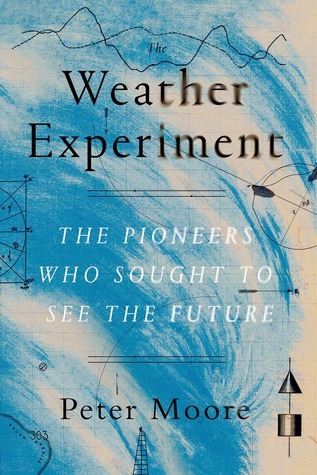
The Weather Experiment: The Pioneers Who Sought to See the Future

Rate this book
In 1865 Admiral Robert FitzRoy locked himself in his dressing room and cut his throat. His grand meteorological project had failed. Yet only a decade later, FitzRoy's storm warning system and "forecasts" would return, the model for what we use today.

In an age when a storm at sea was evidence of God's wrath, nineteenth-century meteorologists had to fight against convention and religious dogma. Buoyed by the achievements of the Enlightenment, a generation of mavericks set out to decipher the secrets of the atmosphere and predict the future. Among them were Luke Howard, the first to classify clouds; Francis Beaufort, who quantified the winds; James Glaisher, who explored the upper atmosphere in a hot-air balloon; Samuel Morse, whose electric telegraph gave scientists the means by which to transmit weather warnings; and FitzRoy himself, master sailor, scientific pioneer, and founder of the U.K.'s national weather service.

Reputations were built and shattered. Fractious debates raged over decades between scientists from London and Galway, Paris and New York. Explaining the atmosphere was one thing, but predicting what it was going to do seemed a step too far. In 1854, when a politician suggested to the Commons that Londoners might soon know the weather twenty-four hours in advance, the House roared with laughter.

Peter Moore's The Weather Experiment navigates treacherous seas and rough winds to uncover the obsession that drove these men to great invention and greater understanding.

416 pages, Hardcover

First published May 7, 2015

60 people are currently reading
939 people want to read

About the author

Peter Moore

5 books36 followers
Peter Moore is an English writer, historian and lecturer. He is the author of Endeavour (2018) and The Weather Experiment (2015), which were both Sunday Times bestsellers in the United Kingdom. The Weather Experiment was also chosen as one of the New York Times 100 Notable Books of 2015. He teaches at the University of Oxford, has lectured internationally on eighteenth century history, and hosts a history podcast called Travels Through Time.

Ratings & Reviews

What do you think?
Rate this book

Friends & Following

Create a free account to discover what your friends think of this book!

Community Reviews

5 stars
93 (23%)
4 stars
166 (41%)
3 stars
107 (26%)
2 stars
25 (6%)
1 star
7 (1%)
Displaying 1 - 30 of 71 reviews
Profile Image for Bettie.
9,979 reviews5 followers
Read
May 16, 2015
BOTW

http://www.bbc.co.uk/programmes/b05tkllh

Description: Peter Moore's lively account tells the story of the adventurous quest to understand the atmosphere. Today we are never far from a weather forecast, but as meteorology evolved as a science in the nineteenth century it was often controversial; reputations were made and destroyed, and bold men driven by their obsession with the laws of nature took death defying risks.

1/5: STORMY WEATHER: In this first episode, the charismatic naval officer, Robert FitzRoy, confronts storms on the high seas. The reader is Tim McMullan.

2/5: THE WEATHER REPORT: Captain FitzRoy's star is in the ascent, and there is innovation at the observatory in Greenwich.

3/5: SHIPWRECKS AND STORM WARNINGS: Peril on the high seas leads Robert FitzRoy to devise an innovative storm warning system.

4/5: A BALLOON ASCENT: Lives are imperilled when scientific enquiry into the upper atmosphere leads to an ascent in a balloon called Mammoth.

5/5: PROGNOSTICATIONS AND FORECASTS: The first forecasts prove controversial among the scientific community, and Robert FitzRoy's reputation is threatened.

Profile Image for Nooilforpacifists.
987 reviews61 followers
December 29, 2015
Light; gaseous, mostly hot air. This is not about the discoveries that enabled weather prediction, but a series of potted bios of those who contributed. Science -- with a long diversion into paintings of clouds -- written by an English major. Put differently, it is a book almost bereft of science.

If there's any central character, it is Admiral FitzRoy, now remembered (if at all) as Captain of Charles Darwin's ship Beagle, but later a founder, of sorts, of British Meteorology. He came up with the idea of nationwide ship warnings and newspaper weather reports, but after he committed suicide, it was discovered that he had no real formula for anything short of storm warnings. In the intervening 150 years, the UK's Met Office, alas, doesn't seem to have changed.

Moreover, Peter Moore writes from such an entirely British perspective (using 'us" at one point as a synonym for "the British"), that there may be over-much rooting for the home team. This is shown most clearly in a teeth-clenching chapter near the end where the author claims that "Democrat-leaning news programmes have been found to use the words 'climate change' while their Republican opponents have preferred 'global warming'." Nope--Dems switched to "climate change" to be able to insist that man was responsible for deviations on either side of the Bell Curve.

Weather enthusiasts should skip this--they'll know it already. It might be a good introductory book for a high schooler (or should I say "Fifth Former"?).
Profile Image for Paul.
2,229 reviews
April 17, 2016
When English people are not sure what to talk about, they discuss the weather. They probably did that 300 odd years ago too, but rather than seeing that the weather was part of a global system, it was assumed that all weather was Gods will, and a storm was evidence of his displeasure. In this book Moore brings to us the men who went against the convention and dogma of the day, with the hope of unlocking the secrets of the skies and understanding what made our weather.

The pioneers of science first sought to quantify and bring order to the atmosphere. There is Luke Howard the man who described and named the different cloud formations, Francis Beaufort who devised a scale so that wind strength could be quantified. James Glaisher started in astronomy but his fascination in the weather meant that he was the ideal man to take measurements in the first trips in hot air balloons to understand the upper atmosphere. Key to it all was Admiral Robert FitzRoy, sailor, explorer, scientist and the founder of what we now know as he Met Office. There were others too; James Epsy who thought he could control the weather, and the American scientists who explained the reason why a hurricane twists. There were others who contributed, in other technologies, such as Samuel Morse who gave us the telegraph, and allowed rapid transmission of the data collected by individuals across the country to the office in Whitehall.

These men were driven by saving lives for the navy and coastal communities. They taught people how to understand the instruments that they were using to take measurements. He describes the fight that they had against the vested interests of the day, as well as they complete disbelief that these men could predict the weather and in particular storms. The first few times that FitzRoy got a storm prediction wrong he was lambasted in the papers, but the men who used these warnings knew that these were vital to their trades.

Moore brings these men together in a narrative that is fascinating and compelling in equal measure. He brings alive the drive and obsession that these men had in understanding how the weather happened, and more importantly what happens on a summer day, compared to another day. The legacy that they have given us is a much better understanding of the atmosphere, weather trends and cycles. It has also given us the Met Office. One of our national sports is slating them when they get something wrong, especially on long term predictions or missing the odd hurricane, but for the day to day forecasts they are normally pretty good. Overall a pretty good book, but I would have preferred a more UK focus as he did head across the Atlantic and Channel fairly often, but still well worth reading.
383 reviews11 followers
December 23, 2015
A mishmash of a book.

Modern meteorology started with the invention of the telegraph in the 1840s and the ability to collect data from across the country. But it takes Moore more than 200 pages to get there, so the reader gets digressions on English naturalist painters, which take up a large early part of this book.

Which is not to say that there isn't fascinating information in the book. Indeed Admiral Robert FitzRoy is an important character in building the modern science and the reader may already know him as the captain of the Beagle, on which Charles Darwin sailed to the Galapagos in the 1830s.
And when John Ball, a new MP, predicts to Parliament in 1854 that "In a few years, notwithstanding the variable climate of this country, we might know in this metropolis the condition of weather 24 hours beforehand," he is greeted by laughter.

As central a position as FitzRoy plays in the debate over weather science, Moore abandons him at his death and then skips 150 years into the future to modern debates over global climate change. There's drama here but Moore missed it entirely.
Profile Image for andrew.
339 reviews3 followers
February 8, 2016
The "weather experiment" in the title refers to the first attempts to forecast the weather in the 19th century. While there are interesting aspects of this account of the accomplishments of early meteorologists (and critically important ancillary contributions - such as Samuel Morse's invention of the telegraph without which there would have been no way to convey the forecasts across a long distance) the story gets bogged down in excessive minutiae.
Profile Image for John Isles.
268 reviews7 followers
June 17, 2018
An interesting account of the characters who advanced the science of meteorology in the 19th century.
Profile Image for Adalwin.
4 reviews
August 22, 2025
Ganz nett, aber ein wenig zu viel englische Gentlemen für etwas wenig Inhalt
Profile Image for Christian Dalton.
35 reviews
March 6, 2025
At first I was concerned that this would focus on endless discussions in wood-lined Admiralty rooms or perhaps a technical, physics-based look at the weather full of equations and theory that I neither have the patience (or faculties!) to appreciate. Thankfully though, the book instead has the perfect pitch at those already slightly interested and knowledgeable in the subject without having to delve too far in.

From the brave eccentrics who jumped into air balloons, to the real-world consequences of shipwrecks due to a lack of scientific understanding, "The Weather Experiment" proves to be a great read. Particular highlight being the squabbles between Espy and Redfield in academic journals (has much changed?).
Profile Image for owlette.
338 reviews5 followers
December 14, 2024
I wanted this book to be about the challenges of doing science about the sky and the atmosphere. How do you formulate a theory about rainfall or storms, let alone test one, when you can only see a small portion of the sky? Relying on observational data without satellite imaging, how did these scientists and researchers settle competing theories?

These were the questions that I hoped the book would be framed around, but it ended up doing what bad history books do, which is threading pieces of gossip. Too many chapters read like the author inserted them because he found some story subjectively interesting but objectively weren't enough to bring out a sense of coherence. I doubt the author had a core narrative in mind while writing this book. Overall, an unsatisfying read.
Profile Image for Laura.
7,129 reviews605 followers
May 15, 2015
From BBc Radio 4 - Book of the Week
Peter Moore's lively account tells the story of the adventurous quest to understand the atmosphere. Today we are never far from a weather forecast, but as meteorology evolved as a science in the nineteenth century it was often controversial; reputations were made and destroyed, and bold men driven by their obsession with the laws of nature took death defying risks. In the first episode, the charismatic naval officer, Robert FitzRoy, confronts storms on the high seas. The reader is Tim McMullan.

Abridged by Sara Davies
Produced by Elizabeth Allard.
Profile Image for Mehtap exotiquetv.
487 reviews261 followers
July 26, 2021
Peter Moore erklärt die Ursprünge der modernen Meteorologie und wie sie sich entwickelt hat.
Von Beauford bis FritzRoys wissenschaftlichen Beobachtungen - sei es mit Wetterballons oder mit mit Beobachtung und Klassifizierung von Wolkengattungen, hat man einen großen Schritt Richtung Wissenschaft gemacht und Aberglaube des Wetters entmystifiziert.

Welche Hindernisse und Schwierigkeiten sie damals hatten wird mit Echtzitaten der Zeit geschmückt.

Sehr spannendes Buch zu den Anfängen der Wettervorhersagen.
Profile Image for Dwain.
57 reviews
October 22, 2015
I really liked this book. I have a degree (BS) in meteorology from the University of Washington. I got interested in this study by reading a book called "Storm". I am glad I did. I also wish The Weather Experiment had been available at the time. I would have had a much greater depth of understanding of my subjects had it been. I recommend this book to anyone interested in the origins of this science but especially to people who will actually study it. Thanks, Peter Moore.
Profile Image for Andy.
133 reviews6 followers
May 28, 2015
A fascinating insight into the history, science and people behind the weather forecast, something which we take for granted but which took hundreds of years to come to its current, pretty accurate, state. A perfect holiday read.
Profile Image for Luis Brudna.
269 reviews16 followers
March 16, 2016
Um bom livro para quem está interessado na biografia daqueles que ajudaram a desenvolver a meteorologia. Boa parte do livro fala sobre Robert FitzRoy, um pioneiro no que hoje conhecemos como 'previsão do tempo'.
Li o livro em inglês.
Profile Image for Roger Boyle.
226 reviews4 followers
November 9, 2016
[Jeff lent me this]

Learned loads with this, and it didn't turn out as I expected. Well written and often rather exciting.

Count the pages that are not about the weather, and are nor wholly relevant to the story - 5 stars if they'd been omitted.
Profile Image for Emma Glaisher.
392 reviews14 followers
September 30, 2017
How could I not read a book in which my ancestor features ?

Finished this ages ago, but remember it as absolutely fascinating, well written and worth returning to.
Profile Image for Fabio De Bernardi.
65 reviews6 followers
July 7, 2021
A fascinating story but I must admit I really struggled to get through this book. Maybe the topic doesn't interest me enough or maybe the story is a bit too drawn out.
Profile Image for Michael.
559 reviews5 followers
August 17, 2017
I heard about this book through The NY Times list of 100 notable books of 2016. I saw in the library just before going on holidays and checked it out. I read most of it on the long flight from Doha to Perth and then on the Alice Springs. This is a must read for anyone interested in the weather and more to point how weather forecasting came to be. The first forecasts were only a little over 100 years ago. The book dives into the work and dedication of the earliest meteorologists with a heavy reliance on the UK contribution (author being British). It was fascinating to learn how doggedly some of these men (and it was all men in the 19th century) especially Robert FitzRoy, who despite being told not to, sent out the first weather forecasts to newspapers every day for several years. When the UK government pulled the plug on his small department, it killed him. We also learn of the contributions of Sir Francis Beaufort (he of the wind force scale) and mentor to FitzRoy, American James Espy, John Daniell (inventor of the Danielle Hygometer and cell battery), Francis Galton (coining the phrase anti-cyclone), James Glaisher, William Redfield, American Elias Loomis, and Frenchman Urbain Le Verrier. There is also a chapter on Samuel Morse. The development of the electric telegraph was a fundamental game changer - news could be transmitted across country in minutes instead of weeks or months. This invention more than any other allowed for modern weather forecasting as it allowed the quick collection of data to interpret. As an aside, there is an illustration and argument to use when you hear of someone deriding government money spent on some scientific research that they deride of what possible good can come of that there is this: in 1843, President Tyler signed a bill that authorized the grant of $30,000 (a sizeable sum in those days) to develope a new machine called The Electo Magnetic Telegraph. Many newspapers of the day derided the grant a chimerical folly, a costly vanity project and worse. The final chapter is a summary of the recent global climate conferences, and references to both climate deniers and scientists working hard to counter these few with the overwhelming evidence. In 1988, even Margaret Thatcher gave an anxious address on global warming cautioning the humanity had "unwittingly begun a massive experiment with the system of the planet itself." There is also nice section in discussion with Dame Julia Slingo, Britain's most visible climate scientist who wonders how anyone can not be concerned about the risk of global warming. I really loved this book.
Profile Image for MS.
400 reviews11 followers
April 23, 2020
4.5 weather starz for this beautiful and sometimes heartbreaking tale of nineteenth century meteorology.

Who would have thought this could be sooo fascinating? Read this book and you will be amazed by the tenacity, creativity, industriousness, rivalry and cooperation within this field often relegated to the "soft sciences". Intellectual giants like Beaufort, FitzRoy, Espy, Reid, Redfield, Galton usw. contributed to the elevation of meteorology from mere observations about temperature, air pressure, wind direction et. al., to weather maps and graphs, forecasts and storm warnings. Attempts at predicting weather (and even making rain, in the case of Espy :D), were not always successful, but they revealed a great deal about a certain scientific mindset that is highly appreciated even today> doing science for the welfare of mankind, in the Baconian vein.

The writing is excellent. The author has a talent for uncovering the fine psychology of the "main characters" (back then, mostly called philosophers), revealing their highs and lows as they tried to comprehend the wondrous complexity of nature. The story of Robert FitzRoy is particularly gripping, but so are the rivalry between Espy and Reid or Glaisher's balloon ascents.

I really enjoyed this book and I will definitely read more about meteorology and more from Peter Moore.
Profile Image for Sarah Sarah Bo Barah.
27 reviews
Read
October 6, 2025
*****QUICK FACTS 4 NERDZ*****
title: The Weather Experiment: The Pioneers Who Sought to See the Future
author(s): Moore, Peter
pages: 395
media type: Hardcover
edition: First American
ISBN: 978-0865-478-091
LC classification: QC 858 .A2 M66 2015
my edition’s publication date: Tuesday, June 2, 2015
my edition’s publisher: Farrar, Straus and Giroux
started reading: Thursday, May 22, 2025
finished reading: Tuesday, September 16, 2025

*****REVIEW*****
A note: this nonfiction book was found in the library of my alma mater (University of Wisconsin-Whitewater).

As one reviewer noted, and I mostly agree with them, this book is more-so about the biographies of notable figures who contributed to the science of weather prediction. Me personally, I’m not a huge fan of biographies, so if you’re looking for a historical book on the discoveries which enabled weather prediction (which I was looking for when I first saw it on the shelf), you probably won’t be satisfied on that account.

Some chapters are very long. However, I admire the way this book was written, which keeps it engaging from cover to cover. It’s a narrative that’s fresh, enlightening, and lively.
799 reviews2 followers
May 22, 2017
"The Weather Experiment" provides a well-researched look at the early history of weather forecasting, primarily in the UK. Today, we take the 7- and 10-day forecasts for granted, but less than 200 years ago the most basic concepts such as a shared vocabulary for cloud types and wind speeds didn't exist. As with the best popular scientific histories, Moore weaves his tale around several key people, beginning with Sir Francis Beaufort, who established a wind speed scale still used (with modifications) today, and mentor to several of the other pioneers. Most of the book focuses on Admiral Robert FitzRoy, who today is perhaps best known as captain of the HMS Beagle, which signed a young Charles Darwin on as naturalist. FitzRoy deserves an equal measure of fame for his painstaking observations during that and other voyages, and his work in producing the first experimental weather forecasts for the UK. Primarily limited to predicting severe storms, over the course of his career he forecast over 400 warnings to ships, of which about 300 were considered accurate, an impressive record for its limited scientific understanding of causes.
Profile Image for Anne.
446 reviews
July 16, 2018
"The Weather Experiment" is an inspiring tale. It chronicles the efforts of private citizens, the learned and the self-taught, to understand the components of weather and to persuade governments to fund their research. Those involved were a diverse lot. They included the painter John Constable, who translated his fascination with clouds into paintings, mariners who wanted safer, more predictable travels for coastal fishermen and those who ventured further and businessmen who wanted to boost profit with shorter journeys and fewer losses. Looming over all their efforts is "science" the topic and methods so much maligned in parts of our modern world. These men, and they were men, believed in gathering data, painstakingly, over time. They were keen observers of their surroundings and understood that better knowledge translates into saved lives and higher profits. What a surprise!! There is always opposition and the introduction of weather forecasting proved divisive. The students of weather pressed on and we are the beneficiaries. Thank you, Peter Moore, for an extensively-researched and well-written book.
Profile Image for Larry Kunz.
102 reviews4 followers
April 15, 2018
Remarkably, weather forecasting dates back only to the middle of the 19th century. Before that, both technology and a surprisingly incurious scientific community meant that no one could tell the weather even for the next day.

The Weather Experiment is the story of the people who changed that, each making his own contribution to the evolving science of meteorology. I emphasize the word story: reading this book is like reading like a novel, delving into the personalities and the day-to-day lives of the protagonists. At times it assumes the pace of a stroll through the English countryside, as when we sit for hours observing cloud formations with John Constable. While I enjoyed reading The Weather Experiment, I read it slowly. I think I wanted a little more science, a little more history, a little less stroll in the countryside. In the end, if you're interested in how the study of weather evolved, you'll find the book informative. But to get that information you'll need to sit down and listen to a story.
Profile Image for Cerebralcortext.
48 reviews2 followers
May 16, 2018
This book is a lovely cavalcade of the pioneers of meteorology in 19th century Great Britain and America. Moore does a good job tying all the various characters together and bringing to life a sense of the excitement of the then-new science of meteorology. He also manages to capture the great passion and ambition belying such endeavours. In the course of his work, one also grapples with the implications raised by new sciences, their duty towards humanity, and the fine line between innovation and madness. This book, is however, more biographical than scientific, and I was a little disappointed with the paucity of scientific explanations and discussions at length throughout the book. I cannot really fault the author for not pursuing a course he never intended to traverse, but it does diminish its re-readability from my point of view.
Profile Image for elipisto.
282 reviews20 followers
May 5, 2020
Godibile saggio su una cosa che è diventata a far parte nella nostra quotidianità: il cielo e le leggi che lo regolano.
Attorno alla metà dell'800 un manipolo di scienziati rivolse gli occhi al cielo o al giardino di casa, per vedere le gocce di rugiada e i cristalli di neve, per trovare una spiegazione razionale e scientifica a quei fenomeni, fino ad allora, considerati espressione di "volontà divina". Si tratta di biografie romanzate e arricchite da una dose di gossip di personaggi quali FitzRoy, Beauford, Dalton, Glaisher che dedicarono la loro vita alla scienza.
Sono d'accordo con il Times quando lo inserisce tra "Best Books of the Summer" che si tratta di una piacevole lettura adatta a giornate un po' lente come quelle estive, o quelle della quarantena.
Profile Image for Isaac Jensen.
258 reviews6 followers
January 25, 2025
I loved the first perhaps 60 or 70% of this book, which tracks the development of meteorology as a science (at least within the 'western world'). I learned a lot, and was fascinated by the huge cast of characters who passed through the story. However, once Moore turns his focus to Robert Fitzroy, it felt like everything bogged down. Instead of surveying a scientific landscape, the book locks in on one individual. This pop science version of the "great man of history" is one I often see repeated, and seems at odds with a central message of the book: that scientific progress is a cumulative effect of many people's disparate efforts, gradually reaching towards something greater than the sum of its parts.
Profile Image for Cass.
57 reviews8 followers
October 12, 2021
I would recommend this book to any other weather/science-history nerds or general history nerds.
I found the whole overview of science developments in regard to weather so fascinated. Moore wove dramatic accounts in with intimate journals from historical figures. There was even a shocking plot twist- which is hard with a historical non-fiction book. I learned so much, and found some of the insights relevant to our current culture's war with science-- a reminder that new knowledge has always been scary.
Profile Image for Roberta Favia.
11 reviews3 followers
December 22, 2022
Un testo che mi ha incredibilmente sorpreso. Moore propone la scienza e i suoi protagonisti da una prospettiva umana, sdoganando la figura mitologica dello scienziato perfetto. Come disse Chiara Valerio in un'intervista per Vice, la scienza (lei si riferiva nello specifico alla matematica) è mal digerita, soprattutto a scuola, poiché viene spiegata e studiata al di fuori del tempo e dello spazio. L'autore in questo testo ci riporta in una dimensione tangibile, raccontando la meteorologia attraverso le vite sfaccettate degli uomini che l'hanno costruita guardando, appunto, al futuro.
Profile Image for Elsbeth Kwant.
459 reviews23 followers
Read
August 26, 2019
Very entertaining and well-written account of the people who turned predicting the weather from a laughing-stock to a well-established science. I particularly liked the two men trying to explain winds, both right, but not exclusively - a fact that was only plain a generation later. Also the awe of the weather that led to wanting to understand it, the stories of discovery and science. A very nice read.
4 reviews
August 30, 2020
The Weather Experiment is a great source of informations about some of the first minds behind meteorology (in particular the English ones), but be aware: the book is more on the biographical side, and less on the scientific one.

I very much liked the artistic references, such as the works by Constable, and the engaging adventures of Admiral Fitzroy. I would have liked this book, but due to the amount of details I found the reading quite heavy.
Displaying 1 - 30 of 71 reviews

Can't find what you're looking for?

Get help and learn more about the design.