

What do you think?

Balladyna. Kordian.
303 pages, Leather Bound
First published January 1, 2009
About the author
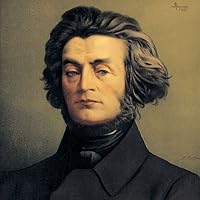
Juliusz Słowacki
174 books120 followersJuliusz Słowacki ['juljuʂ swɔ'vatski] (4 September 1809 in Kremenets, Volhynia, Russian Empire now in Ukraine – 3 April 1849 in Paris) was a noted Polish Romantic poet, considered to be one of the "Three Bards" of Polish literature. His works often feature elements of Slavic pagan traditions, mysticism, and Orientalism.
Life and work
Influenced largely by Byron and Shakespeare, Słowacki's early work was often historical in nature, combining exotic locales (as in Arab) and tragedy (as in Maria Stuart). His work took on a more nationalist tone following the failed November Insurrection of 1830 - 1831. Like many of his countrymen, he decided to emigrate to France as a political refugee. Ironically, the first collections of poems he produced in France were unpopular in his native Poland, as they failed to capture the sentiment of the people living under Russian occupation. It was the French authorities which deemed them too nationalist; following a trip to Geneva in 1832, he was denied the right to return to France as part of a larger program to rid the country of the potentially subversive Polish exiles who had settled there. A third volume of his works, produced in Geneva, was far more nationalist in tone, and he began to win recognition in his homeland.
In 1836, Słowacki embarked on a journey throughout Italy, Greece, Egypt and Palestine, which he described in his epic poem "Podróż do Ziemi Świętej z Neapolu". In 1844, he wrote Genezis z Ducha, an exposition of his philosophical ideas (called genesic idea) according to which the material world is an expression of an ever-improving spirit capable of progression into constantly newer forms.
It was at this time that he attached himself to a group of likeminded young exiles, determined to return to Poland and win its independence. One of his friends was the pianist and composer Frédéric Chopin. The group travelled to Poznań, then under Prussian control. He participated in the Wielkopolska Uprising of 1848, addressing the National Assembly (Komitet Narodowy w Poznaniu) on 27 April. "I tell you," he declared as the rebels faced military confrontation with the Prussian Army, "that the new age has dawned, the age of holy anarchy." By 9 May, the revolt was crushed.
Arrested by the Prussian police, Słowacki was sent back to Paris. On his way there, he passed through Wrocław, where he was reunited with his mother, whom he had not seen for almost twenty years. He died in Paris the following year, and was buried in the Montmartre. In 1927, some eight years after Poland regained her independence, the Polish government requested that Słowacki's remains be moved to Wawel castle in Krakow. He was reinterred near his old rival, Adam Mickiewicz.
Long after his death, Słowacki acquired the reputation of national prophet. His poem "Papież Słowiański" (The Slavic Pope), published in 1848, was believed to foretell the ascension, in 1978, of Karol Wojtyła to the throne of St. Peter as Pope John Paul II. In 2009 Faye Dunaway starred in film "The Bait" by Polish film director and producer Dariusz Zawislak. "The Bait" is a contemporary version of the drama, "Balladyna."
Life and work
Influenced largely by Byron and Shakespeare, Słowacki's early work was often historical in nature, combining exotic locales (as in Arab) and tragedy (as in Maria Stuart). His work took on a more nationalist tone following the failed November Insurrection of 1830 - 1831. Like many of his countrymen, he decided to emigrate to France as a political refugee. Ironically, the first collections of poems he produced in France were unpopular in his native Poland, as they failed to capture the sentiment of the people living under Russian occupation. It was the French authorities which deemed them too nationalist; following a trip to Geneva in 1832, he was denied the right to return to France as part of a larger program to rid the country of the potentially subversive Polish exiles who had settled there. A third volume of his works, produced in Geneva, was far more nationalist in tone, and he began to win recognition in his homeland.
In 1836, Słowacki embarked on a journey throughout Italy, Greece, Egypt and Palestine, which he described in his epic poem "Podróż do Ziemi Świętej z Neapolu". In 1844, he wrote Genezis z Ducha, an exposition of his philosophical ideas (called genesic idea) according to which the material world is an expression of an ever-improving spirit capable of progression into constantly newer forms.
It was at this time that he attached himself to a group of likeminded young exiles, determined to return to Poland and win its independence. One of his friends was the pianist and composer Frédéric Chopin. The group travelled to Poznań, then under Prussian control. He participated in the Wielkopolska Uprising of 1848, addressing the National Assembly (Komitet Narodowy w Poznaniu) on 27 April. "I tell you," he declared as the rebels faced military confrontation with the Prussian Army, "that the new age has dawned, the age of holy anarchy." By 9 May, the revolt was crushed.
Arrested by the Prussian police, Słowacki was sent back to Paris. On his way there, he passed through Wrocław, where he was reunited with his mother, whom he had not seen for almost twenty years. He died in Paris the following year, and was buried in the Montmartre. In 1927, some eight years after Poland regained her independence, the Polish government requested that Słowacki's remains be moved to Wawel castle in Krakow. He was reinterred near his old rival, Adam Mickiewicz.
Long after his death, Słowacki acquired the reputation of national prophet. His poem "Papież Słowiański" (The Slavic Pope), published in 1848, was believed to foretell the ascension, in 1978, of Karol Wojtyła to the throne of St. Peter as Pope John Paul II. In 2009 Faye Dunaway starred in film "The Bait" by Polish film director and producer Dariusz Zawislak. "The Bait" is a contemporary version of the drama, "Balladyna."
Ratings & Reviews
Friends & Following
Create a free account to discover what your friends think of this book!
Community Reviews
Displaying 1 - 16 of 16 reviews

Read
April 8, 2023podobalo mi sie (kordian ma bpd)
April 21, 2023
super kryminał, kibicowałam balladynie ale niestety skończyła jak skończyła… julek, to ci się udało

October 3, 2023
Do tej pory moja ukochana lektura🥰🥰
Kordian jako bohater, wzbudzał moj żal. On był tak zaślepiony odzyskaniem ojczyzny, że było mi aż przykro. Nie rozumiałam braku poparcia ze strony innych spiskowców. Uważam, że gdyby im serio zależało to mogli by obalc cara. Miałam wrażenie, że Kordianowi zależało tylko na odzyskaniu Polski. Może to dziecinne spojrzenie ale moimi oczami, inni ludzie biernie przyjmowali rządy Mikołaja 1. W sensie nie podobało im się, ale jednak nie wszczęli buntu. Może to ze strachu a może było im na rękę. Tego się juz nie dowiemy. Żałuję że nie ma drugiej części. Bo chętnie bym po nią sięgnęła.
#teamSlowacki
Kordian jako bohater, wzbudzał moj żal. On był tak zaślepiony odzyskaniem ojczyzny, że było mi aż przykro. Nie rozumiałam braku poparcia ze strony innych spiskowców. Uważam, że gdyby im serio zależało to mogli by obalc cara. Miałam wrażenie, że Kordianowi zależało tylko na odzyskaniu Polski. Może to dziecinne spojrzenie ale moimi oczami, inni ludzie biernie przyjmowali rządy Mikołaja 1. W sensie nie podobało im się, ale jednak nie wszczęli buntu. Może to ze strachu a może było im na rękę. Tego się juz nie dowiemy. Żałuję że nie ma drugiej części. Bo chętnie bym po nią sięgnęła.
#teamSlowacki
This entire review has been hidden because of spoilers.
August 17, 2025
kordian is my soul in another universe
April 11, 2023
szczerze, chce to co on brał, ale musze przyznać, żę jeśli chodzi o podróże na chmurze to wiem skąd Diseny brał inspiracje

March 24, 2024
Czytałam setki razy, ale w tym tygodniu kolejny raz, bo pisałam własne opracowanie. Ocena na wyrost, bo kocham Juliusza, a za co: za intertekstualność, język, metafory, nawet jeśli odlatuje czasami w grafomanię, to tylko on mnie tak wzrusza. Kordian jest spoko, bo to ironiczny tekst, śmiejący się z postaw romantycznych, a jednocześnie śmiejący się przed lustrem "hehehe lamusie, dobrze cię widzieć. jesteś żałosny, jesteś mną" - coś w tym stylu. Dodatkowo mamy tu mocną krytykę papieża Grzegorza XVI i groteskową scenę z papugą Luterkiem nazywaną przez papieża Szatankiem. Wybornie się bawiłam. A car i jego braciszek, którzy się kłócą i wypominają sobie zbrodnie? Chore to!. Dziki szaleniec z tego Julka. A co do losów Kordiana to dobrze, że ich nie dokończył. Dla tego bohatera nie było już historii. Nie o to przecież w romantyzmie chodzi, by kończyć ;)

March 25, 2023
To chyba nie to, ale nie mogę znaleść Kordiana.
Julek przepraszam bardzo, ale CZEMU TO SIĘ TAK SKOŃCZYŁO?! Gdzie jest druga część?! Trochę mniej mi się podobało niż dziady wiec 2.5/5 Ogólnie słowacki slay, ale w Kordianie czegoś mi brakowało👍
Julek przepraszam bardzo, ale CZEMU TO SIĘ TAK SKOŃCZYŁO?! Gdzie jest druga część?! Trochę mniej mi się podobało niż dziady wiec 2.5/5 Ogólnie słowacki slay, ale w Kordianie czegoś mi brakowało👍

December 24, 2022
Ti chyba nie ro ale still kordian
February 14, 2023
Balladyna slay totalny 4/5
Kordianowi ewidentnie brakowało piątej klepki, szkoda, że nie zginął przy spadaniu z Mont Blanc 2/5
Kordianowi ewidentnie brakowało piątej klepki, szkoda, że nie zginął przy spadaniu z Mont Blanc 2/5


April 20, 2023
Julo jak zwykle slay

May 31, 2023
Słowacki kocham cię za to, ale dlaczego scena zabijania Aliny jest śmieszna??? Oczywiście gratuluję stworzenia z Balladyny girl bossa 🫶, fav postać.
This entire review has been hidden because of spoilers.

June 8, 2024
Damm. Reread bo do wypracowania potrzebowałam. Dalej podtrzymuję że Słowacki dobrze wykreował Balladyne.

April 14, 2025
Kordian. To poważna literatura czy książka pisana przez 4-klasistkę?
January 26, 2026
TO BYŁO NIE TYLKO ZNOŚNE, ALE NAWET ŚMIESZNE
Displaying 1 - 16 of 16 reviews