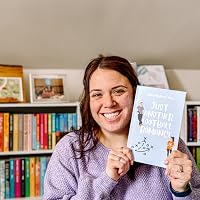
But what do you do when you’ve fallen for your fallback?!
A brilliant new friends to lovers, opposites attract, romcom for fans of Mhairi McFarlane and One Day!
There is no rulebook for secretly falling in love with your best friend. So when Mitch offers Rosie a bargain that secretly gets her what she’s been pining for… Rosie would be a fool to say no, right?
They either find their soulmates by Christmas, or be each other’s fallback. Either way Rosie she finds someone that will finally get her over Mitch, or she can be with him.
What she didn’t bargain for was Mitch falling for someone else…
Rosie have been in love with her best friend for years but believes he doesn’t feel the same for her. He dates different girls often in effort to find ”the one” but always finds a way to make them leave him before it gets serious.
Mitch gets an idea. A fallback plan. If neither of them have found themselves a significant other by Christmas, they’re going to have a baby together.Makes perfect sense, I know.
Nothing happened. The 114 pages I read could easily have been cut down to 60. It might just be me being too impatient for this book, idk. 39% in and Rosie still have not gone on a date. Everything just dragged. I usually don’t have a problem with owd or omd but if one of the mc’s sleep with someone else further into the book? Immediately no. And I’m not sure about this since I didn’t keep reading but it seemed like the mmc had sex with someone else 40% in. If it get’s worse? No idea.
I did not like Mitch at all. He didn’t pay any attention to the fmc, what she wanted or what she said. How she reacted to things he said went completely unnoticed by him. He assumed she wanted a child even though she’d never said she does. He didn’t know things about her he should have known as her best friend of many years. His personality was that of an overeager puppy trying every trick in the book to get the piece of candy.
Rosie was a moron. Like the most insanely stupid and selfish person ever. You’re telling me a grown woman considers having a baby with her best friend just so they’ll always have some sort of relationship? My girl is not even sure she wants kids. EVER. Willingly having a baby you don’t even know whether you want or not is so absurd I don’t even know what to say.
I received an ARC in exchange for an honest review
I think it’s time for me to hang up my friends to lovers coat because every time i try to read one of these it never end well for me Rosie annoyed the hell out pf me she acted irrational and immature every time she talked
And don’t get me started on mitch i hate him
Thank you netgalley and one more chaper for the arc 🫶🏻🫶🏻
I tried so hard to enjoy this but at 8% I had to DNF. I’m not sure this ever went through editing because the writing is not only quite poor, but grammatically incorrect. Things like that being noticeable make it really difficult for me to read so unfortunately, a DNF
When it comes to this one, my heart and head are competing.
It follows friends Rosie and Mitch and their back-up plan: if the two are still unable to find their soulmate in four months, they'll settle down together and have a baby. An absolutely fun premise, but from the get-go I was hesitant of Mitch. And it didn't really improve.
While I did feel their connection, especially with the mix of flashbacks showcasing their friendship, I didn't think this was an especially healthy romantic relationship. Everything seemed to revolve around Mitch and his desires, with Rosie sort of just adjusting her mindset to match. On top of that, their communication was terrible.
Having said that, it was definitely entertaining. I loved the incorporation of Rosie's career—she's a woman in STEM! And the writing was truly wonderful, super fast paced and engaging. Even though this wasn't a total win, I would not hesitate to read from this author again.
(heat level: closed door)
I voluntarily read and reviewed an advanced copy of this book. All thoughts and opinions are my own
Thank you NetGalley and Harper Collins UK for this eARC in exchange for my honest review.
I loved the idea of this story. Girl moves to a different country, has a sweet little meet cute with a boy, falls in love with him on accident, boy propositions girl in an unconventional fallback plan and then they ride off into the sunset living happily ever after. There was a lot of filler in this book and I liked the idea that Rosie has thoughts and depth but I felt like the writing was missing… something. I did enjoy The Fallback but it took me longer than I expected to finish.
Two best friends made an ill fated pact. That if either one of them was not in a happy committed relationship by Christmas they will get together instead. And have a baby! I found the premise somewhat interesting. Friendship pacts can make a nice romance if done right. This one was a bit tiring though. My biggest hmm moment was that Rosie was in her mid thirties and was upset at others for not questioning her on her private life. Her family and friends assumed she didn't want marriage or kids. I didn't understand why she was so upset at them. Mitch's pact made her rethink her future with him. What I liked was Rosie's support system that included her best friend that shared my awesome name. And she was a really good friend. Additionally, Rosie had to make hard and heartbreaking decisions, and being surrounded by her support system was wonderful. I didn't like Mitch. I felt that he made her think that she was his backup plan. And that was not nice. Rosie made several mistakes along the way as well. Both of them were okay together but needed to communicate. The ending was a bit lackluster and I needed more. Overall, the story was a bit underwhelming and pretty predictable. I'm not sure if I would remember this in 6 months time. I received this ARC from the publisher and Netgalley for my honest review.
The Fallback is a cute romance read and perfect for the fans of the friends-to-lovers books and if you're interested about the idea of being someone's "fallback".
I was really curious by the concept of a "fallback" person and it was interesting to read it but I think it needed two stronger characters and maybe there should have been more communication between the two characters!
For me it was a 3 star read overall because it was relatable and at times romantic with great themes but I needed more it was good but it could have been a great read!
Thank you NetGalley and HarperCollin UK and One more chapter for providing me with an eARC of The Fallback in return for my honest opinion.
Very cute rom-com about Rosie and Mitch who become flatmates first as Rosie is beginning a new job and needs a place to stay and Mitch needs a roommate. Each go on dates they meet--often online--but they continue to be friends, until one day Mitch suggests they be each other's "fallbacks" if neither of them are married as he assumes they both want children at some point. She agrees, thinking it's a cute and funny idea. As the reader, we go on several disastrous dates with each of them as they ponder what the other will think, but of course deny their own feelings. It's clever, witty and a good romp through dating in the modern world. Thanks to NetGalley for this ARC!
I really wanted to like this book. The premise is everything I enjoy, women in stem, romance, best friends to lovers. It should check all the boxes. However the rambling inner monologue and too much dialogue had this book dragging for me.
I loved the idea of Rosie, however Rosie fell flat to me. How could this confident woman with a PhD butcher two weeks worth of data? How does she not notice what email she forwarded? Then how does she just sit around refusing to fix it? She makes a feeble attempt with the data but she chooses lunch with her mom, and a drink with Ben? Overall I was very disappointed in her character.
For a leading man, Mitch was very much absent.
I feel like a dual POV would have been beneficial to this story. Having Mitch confront his feelings about Rosie through a dating discovery with the other women would have been a more compelling story than Rosie’s rambling doubt stricken inner monologue.
This entire review has been hidden because of spoilers.
Thank you NetGalley and HarperCollin UK, One more chapter for providing me with an eARC of The Fallback in return for my honest opinion.
I was really fascinated by the concept of a "fallback" person. I've seen it done before in TV shows/movies but had yet to come across it as the plot line for a book! This book focuses on our main FMC Rosie and MMC Mitch, who have been best friends for a long time, with Rosie secretly falling in love with Mitch for a lot of those years! Mitch, who seems to be really unlucky in love is ready to settle down and have kids, so he comes up with a plan for him and Rosie to be each others fallback... It can't go wrong.. Right?
I really liked the idea that it was Mitch who was ready to settle down and have kids, it felt like a bit of a reversal from the "normal" portrayal of this kind of plot that we often see in story's. However, it felt a bit off how pushy he was with this idea when Rosie was at a stage where she wasn't sure if she wanted kids or not. This being said, I can (after reading the ending), understand why he was so pushy, but I was also really happy that Rosie spoke up for herself (eventually) and admitted that she wasn't 100% on having children.
The reason I have given this book a three stars (and this may just be a me problem because I don't believe I've seen this pop up in other reviews) is that I just didn't love the characters in this book, specifically the FMC Rosie, but I struggled with Mitch at times as well. I just felt that Rosie and Mitch both came off a little selfish a lot throughout the book, to the point where I was almost hoping they didn't get a happy ending (this is horrible I know but they were pushing my buttons). There were a couple of smaller story lines with side characters where they were going through some pretty horrible things (reader please be warned this book does have a miscarriage story line, this is not mentioned at the start of the book), and I felt like Rosie just couldn't see passed her own stuff going on to be any sort of decent friend. It just didn't sit right with me.
This book is slow burn, no spice. I enjoyed the flash backs to previous events, but sometimes I felt they were unnecessary because Rosie had basically already told us what happens before the flashback. I would've also liked to maybe see the ex comeback story line play out a little more, it felt like it was crammed into the story to help Mitch and Rosie finally admit their feelings for each other.
3 stars - The Fallback is a cute, easy romance read, great for people who enjoy friends-to-lovers books and exploring the idea of being someone's 'fallback'.
I enjoyed the reversal of the usual tropes, with Rosie being the one who is unsure about settling down and having children. Most of the characters were likeable and I particularly enjoyed reading about Nadia and Jasmine, who are both dealing with their own issues while trying to help Rosie with her situation. I also liked the insight into Rosie's career as a scientist, and the descriptions of London throughout the book really helped to set the scene.
I liked most of the characters, but unfortunately not Rosie, which made it difficult to keep reading as the book is from her point of view. I appreciate that the flashback scenes were added for insight into her history with Mitch, but they were often accompanied by Rosie describing the event in the present timeline too, and this felt repetitive and unnecessary. There was a lot of miscommunication which I found frustrating to read, and a lot of the events in the second half of the book were very predictable.
Thank you to NetGalley & One More Chapter/HarperCollins UK for an ARC in exchange for honest feedback.
Rosie and Mitch have been best friends for years. Now in their 30s, Mitch convinces Rosie to be each other’s fallback if neither of them finds ‘the one’ by Christmas.
For a debut novel this was great, I loved the role reversal the books offered as it examined life in your 30s; it was Rosie who was ambivalent about having children and Mitch the wide-eyed romantic who wanted to settle down. The author does a great job of exploring the societal expectations of coupling up and the hardships of dating in your 30s. I loved the pragmatic and analytical Rosie, but disliked Mitch for the most part (I actually hoped he wasn’t the main love interest) as their relationship seemed a bit toxic at times and most of their problems could be resolved by a simple conversation. All in all it was a fun read. Thank you NetGalley and publishers for this ARC.
Mitch seems like a cool guy. Really liked him as a character. Rosie? Not so much. She was being kinda crazy the whole time. Very often it felt like she was doing things for seemingly no apparent reason. She needed to use her brain more often.
This whole book was just the miscommunication trope which was not fun. I would prefer books to retire the trope altogether. I feel like we went through so much frustrating plot just to get the meekest resolution ever.
This book definitely had potential and had a great premise I just don’t think it was executed as well as it could have been.
ARC from NetGalley, Harper Collins, and One More Chapter
The fallback was okay. It didn’t hit for me like I thought it was going to. The main characters were fine but nothing stood out about them that I liked. The premise of the story was cute which is why I wanted to read it. However the execution of it just wasn’t as great as it could have been. I wanted to fall in love with Mitch like Rosie had and that didn’t happen at all. His plan seemed to be ill thought out and the logic behind it was stupid. Mitch didn’t read as being charming or nice to me at all. I thought he was pushy and really arrogant not really coming across as loving. On the other hand I thought Rosie had no backbone and was written to be too timid and had no backbone. Her whole going off of others advice instead of doing what she thought was best was one of the many reasons I felt this way. She also didn’t put in as much effort with dating like I thought she would which I think could have made the plot lines be stronger than what we got. I loved there was a HEA but it was one of the only good things I got from this story.
Unfortunately this book was a dnf, I did not connect with the characters and I just felt like there was no chemistry between them even though they had been friends for several years.
The first few chapters were difficult to get into and the plot felt like it was dragging which isn’t the style of writing I like, I prefer something that is fast paced and this wasn’t it
2.5 stars I wanted to love this book, but it fell short for me. It progressed too slowly, the characters didn’t have a ton of development, and I just couldn’t get into it.
I received an advanced copy of this book in exchange for an honest review.
"The Fallback" by Eleanor Goymer is a delightful debut that combines a slow-burn romance with a thoughtful exploration of societal expectations around relationships and family. The story revolves around scientist Rosie and her best friend Mitch, who propose to become each other's fallback for having a child if they don't find serious partners by Christmas.
The characters of Rosie and Mitch are endearing, making them relatable and easy to root for. Rosie, a dedicated virologist, is a lover of data, while Mitch is a carefree science journalist who owes his PhD success to Rosie. The dynamics of their friendship add depth to the narrative, especially as Rosie grapples with her hidden feelings for Mitch.
What sets this book apart is its gender reversal, with Mitch desiring a family while Rosie remains ambivalent about having children. The author skillfully weaves the complexities of their relationship, keeping readers engaged with the push and pull of emotions. The stakes are raised when Rosie finally voices her thoughts on the proposed plan, adding tension and depth to the story.
The London setting adds charm to the narrative, making readers nostalgic for the city. The writing captures the essence of the characters' haunts, creating a vivid backdrop for their story.
While the book has strong foundations, there are some quibbles. It could have benefited from Rosie dating a real contender, adding more stakes to the story. Additionally, Rosie's initial reluctance to voice her thoughts might frustrate some readers, but her eventual expression of feelings is a satisfying turn.
Despite these minor issues, the book is engaging and well-crafted. Eleanor Goymer's portrayal of a STEM field protagonist and the friends-to-lovers trope is commendable. The miscommunication and secret pining elements resonate realistically, especially when emotions evolve between friends. The risk of jeopardizing a long-standing friendship is a genuine concern that adds depth to the narrative.
However, there are some character flaws that could be addressed. Rosie's emotional stuntedness and use of the silent treatment may make her less likable. Mitch's demanding and manipulative behavior, especially in the creation of the fallback plan, requires more redemption in the end. The resolution seems to brush off their issues rather than providing a more substantial resolution, hinting at potential challenges in their future.
In conclusion, "The Fallback" is an engaging read with good bones, and Eleanor Goymer's storytelling shows promise. The push and pull of the story, combined with the friends-to-lovers trope, keep readers intrigued. With a focus on character growth, especially in handling emotions and communication, future works by the author could further enhance the storytelling experience.
"The Fallback" by Eleanor Goymer presents an engaging narrative centred around the complexities of friendship, love, and self-discovery. While the initial pacing may require some patience from readers, Goymer's skillful writing ultimately captivates, making it a worthwhile read. The portrayal of Rosie as a female scientist is commendable, echoing the empowerment of women in STEM fields akin to Ali Hazelwood's work.
The dynamic between Rosie and Mitch forms the heart of the story, with Rosie's unrequited love for her best friend adding depth to their relationship. The incorporation of flashbacks enriches the narrative, offering insights into their history and motivations.
The concept of a "fallback" arrangement proposed by Mitch injects an intriguing twist, setting the stage for both internal conflict and external drama. Rosie's contemplation of motherhood and eventual agreement to Mitch's unconventional proposition add layers to her character, allowing readers to empathise with her uncertainty and desires.
The central theme of miscommunication, while typically irksome, is deftly handled, and kept me invested in the unfolding drama. However, Rosie's self-absorption during her turmoil detracts from her likability, leading to missed opportunities for emotional connection with other characters.
The resolution, though satisfying in its reconciliation between Rosie and Mitch, feels somewhat rushed, and left me craving more closure and insight into their future together. An epilogue could have provided a glimpse into their evolving relationship, enhancing the overall satisfaction of the conclusion.
In summary, "The Fallback" offers a compelling narrative despite its flaws, with Goymer's adept storytelling and character development making it a compelling read. While the reliance on miscommunication may test patience, the endearing portrayal of Rosie and Mitch's bond keeps readers rooting for their eventual happiness. A solid 3.5-star rating acknowledges its strengths while acknowledging room for improvement in pacing and resolution.
Thanks to the author, publisher and NetGalley for allowing me to read this in exchange for my honest opinion.
Thank you to HarperCollins UK – One More Chapter and Eleanor for gifting me a Netgalley copy of The Fallback.
The Fallback is a cute, slow-burn rom-com featuring a friend-to-lovers story about two best friends who discuss a pact to be each other's backup option to marry and have kids with if they can't find their soulmate within six months after years of disastrous dating and bad relationships. The story is well-crafted and has plenty of twists and turns. Some plot points are a little predictable, but I loved the STEM vibes and the stereotypical role reversal of having the man want kids and worrying about his biological clock ticking. Eleanor Goymar writes to life a bustle and vibrant summer London – which reminded me of times I worked in the city and got to go out with friends and colleagues during my stays. At times, in my imagination, I felt I could hope on a train and walk into the locations where Rosie and Mitch meet and socialize throughout the book.
Many flashback scenes threaded through the plot give us insights into the friendship between Mitch and Rosie. Tumultuous behaviour throughout the story could have all been easily avoided with some common sense and communication. People are allergic to having conversations about their feelings across the globe. It feels like in the romance genre. I wanted to tell Mitch and Rosie to grow up and pull themselves up by their bootstraps.
I liked Rosie, she was an intelligent, strong career woman with uncertainty about having babies and grappling with the pressure to have them in your mid-30s. It's a very relatable issue in women's lives today for anyone over 30 who is breaking the mold of what society deems a successful life should be and how a particular stage of life should settle us. I actually couldn't like the main male character, Mitch. Throughout the story, I thought he was manipulative, selfish, and a jerk, especially in his interactions with Rosie. He behaved so childish, like that boy who likes the girl in the schoolyard and decides to be mean to her and pull her hair. A different love interest would have gotten another star from me.
Some parts of the plot are far-fetched for The Fallback; however, it was an entertaining, quick read with good chemistry between the love interests. However, I think more development and better traits could have been poured into the characters to make them likable.
This book had so much potential. It was a slow burn, had the friends-to-lovers trope going for it, and Mitch was a solid male lead with his golden retriever adorableness. Rosie was very sweetly and very obviously in love with Mitch but deeply afraid that revealing her feelings would compromise their friendship, and she loved him so much that she preferred to be in love with him from the safety of their secure friendship versus risking ruining their friendship with the revelation of her feelings and losing Mitch forever. This worked. But there were so many parts in the book where it felt like it droned on. Unfortunately, this author was not witty enough to carry an entire book. I honestly barely came across any wit. Rosie eventually became a character who became very difficult to root for. The synopsis shares that Mitch seemingly finds the person who might be the person to take him away from Rosie forever, so I got why she got a little destructive when she revealed details she knew would cause a rift to the new girlfriend. Fine. That made sense to me. I was still Team Rosie. But toward the end of the book, she became UNHINGED. She finds something out about Mitch that makes her feel used, and instead of being an adult - who was apparently intelligent enough to have PhD - and ask her friend of over a decade whether this information is true, she instead decides to just cut him off. WHAT?! Her brattiness is also revealed when she’s speaking to her LOVELY mother, when she snaps at her for no reason. By the end of the book, I was hoping Mitch would realize this human-sized crybaby was not worth it. There was also a very ridiculous mishap at her job , which was very, very, VERY easily avoidable, and the drama it reaped over her mental health was unnecessary. I do not like it when stories are careless with the reasons behind the inevitable “break-ups” or “drama”. It felt like the author could not conjure up a legitimate way to cause a rift, so she spackled this inadequate attempt at it. This book was 2 stars for me, but Mitch was great enough to get an entire extra star just for himself. I'd pass if I were someone who has not read this, yet.
This started with so much promise and I was really enjoying it but the main characters were just so insufferable, especially considering they are mid 30s.
Loved that Rosie was a women in STEM but being inside Rosie’s head was exhausting and very repetitive. She was always always spiralling and making such illogical decisions.her life revolved heavily around Mitch. Like she was willing to have a baby just so he could stay in her life with no regard of if she really wanted kids or even the well being of the child. The way she loved her job but at the same time was so careless with things like sending off data without looking at it or forwarding the wrong email to the press. I feel like with her attitude the logical thing she would have done would be to make a new draft of the email ready to send to the post. I did like that she was friends with Nadia and Jasmine and she at least learned to be less self absorbed.
There was a big miscommunication trope with is one of my top three hated tropes. When they first kiss and Mitch is so drunk and doesn’t say anything the next day, Rosie decides to not say anything either because he never brought it up??? The worst one was when Ben tells her Mitch got a job in NY which he could have applied for anytime during the whole book, instead of speaking to her best friend she just decides to block him and not speak to him for ages. Which makes literally no sense, when has Ben been altruistic? The majority of the issues could be solved by having one adult conversation. Bc proposing having a baby together instead of asking to date is diabolical. Mitch came across as really awful, also hate the name.
I love a friends to lover but this was ten years long and they mostly had fully developed frontal cortexes the whole time. The flashback scenes were cute and added depth since in the present day neither of them seemed to like each other that much. I think I may have tolerated both of their behaviour if they were younger. The way Rosie acted towards Jenny was very childish and for what?
I think when I release myself from the chains for contemporary romance I will be happier 😭
This entire review has been hidden because of spoilers.
I'm fascinated by the concept of a back-up person, so Eleanor Goymer's delightful debut 'The Fallback' was reading catnip for me. At its heart this book both a slow-burn romance, and an exploration of society's expectations that everyone must be partnered up and have kids.
Scientist Rosie's ordered life is thrown into disarray when her best friend Mitch proposes they become in each other's fallback to have a kid if neither of them find a serious partner by Christmas. But what if Rosie is secretly in love with him and is undecided about kids?
Rosie and Mitch are the sorts of characters you'd want to be friends with and would be tempted to lock them in a room to deal with their feelings! Rosie is a dedicated virologist who loves data. Mitch is carefree, working as a science journalist after passing his PhD by the skin of his teeth thanks to Rosie. For Rosie, Mitch is her person, but she's unwilling to risk their decades-long closeness to express how she feels given Mitch dates an assortment of women who are her antithesis.
Despite being 34 she's also ambivalent about having kids. She's not outright childfree but she's in no rush either. In a gender reversal, it's Mitch who wants a family, yet, paradoxically, breaks up with his girlfriends as soon as they get serious (wonder why). Rosie was a bit frustrating by allowing Mitch to steamroll her into the plan, so I was pleased when she finally voiced her thoughts. Given kids are a relationship dealbreaker, I had no idea how this would be resolved so I was pleasantly surprised. If I had any quibbles, I'd have liked to have seen Rosie date someone who'd be a real contender in addition to that return of a blast from her past, just to up the stakes more.
Coupled with descriptions of Rosie and Mitch's London haunts (it made me want to go back!), I was utterly charmed. I am looking forward to reading more of Eleanor Goymer's next books to see how her storytelling develops
Thanks to One More Chapter/Harper Collins UK and NetGalley for the ARC.
‘The Fallback’ by Eleanor Goymer is an interesting romance novel in which academic Rosie, who works in a clinical trials lab at a London university and is in her mid-thirties, agrees with her best friend Mitch that they will be each other’s “fallback” if neither of them meet “The One”. Complications and emotions ensue as Rosie reflects on her ambitions, resurrects her dating app profiles and tries not to let her preoccupation with figuring out her feelings impact her work.
I really enjoyed the fact that Rosie worked in STEM and the realism of the different paths Mitch and Rosie took after their PhDs (industry - journalism - for him and academia for her). Rosie’s colleague Nadia and her family, including her sister-in-law Jasmine, were excellent characters full of compassion, flaws and enthusiasm who provided a wonderful support network for Rosie. I also think the exploration of the disappointments of modern dating and the introspection about the right time to settle down and have children made the novel meaningful and thought-provoking.
I questioned some of Rosie’s decisions and wanted to scream at her near the end of the book when she behaved so passively in a situation that should have sparked quick action! I also wish that we’d heard Mitch’s point of view as without his side of the story, I didn’t warm to him at all and thought he was pretty inconsiderate at times… making it difficult to root for the central couple!
This felt like a three star read for me overall - relatable and at times wonderfully romantic with great themes of the importance of a support network, but without the loveable lead characters that would have elevated the novel and given me butterflies.
I received an advance Digital Review Copy of this book from the publisher Harper Collins, One More Chapter via NetGalley. The opinions expressed in this review are my own.
Rosie and Mitch are in their 30s, have been friends for over a decade and Mitch convinces Rosie to be each other’s “fallbacks” if either of them haven’t “the one” by Christmas…biggest problem? Rosie has been hopelessly in love with Mitch for YEARS!
The ‘fallback’ trope is a very interesting storyline that I’ve seen in movies or in TV shows so exploring it through the lens of a book was great. I enjoyed Eleanor Goymer’s style of writing.
It’s a very sweet rom com. A mix of ‘will they won’t they,’ ‘slow burn’ and ‘friends to lovers.’ It’s a fun and easy read. It was VERY predictable but the author did a great job of inserting some bumps in the road to temporarily throw you off course.
I really appreciated following characters in their 30s who have already established independent and successful lives for themselves, outside of romantic relationships. I also really appreciated the topics of having children and that it’s such an individual choice despite societal standards.
The hardest thing for me about this book was just the lack of communication from Rosie. She spent most of her time complaining to her friends (not Mitch) and not taking their advice?! As such a successful and smart woman I found a lot of her choices to be quite annoying. Her not being able to open up to Mitch about her feelings and, in turn, acting like a bit of a child was the opposite of who were meant to believe she is as a woman. Taking her eye off of work and her friendships because she’s upset about a boy?! But, again, that is just human emotions and who hasn’t been there? It would’t have been much of a story without her refusal to admit her feelings right?!
Thank you to NetGalley & One More Chapter/Harper Collins UK for the ARC.
‘The Fallback introduces readers to a friends-to-lovers romance set in London, marking the debut novel for author Eleanor Goymer. The story revolves around scientist Rosie, whose life takes an unexpected turn when her longtime best friend Mitch ‘suggests they become each other’s "fallback" plan, agreeing to have a baby together if they don't find serious relationships by Christmastime. Unbeknownst to Mitch, Rosie harbors secret feelings for him.
I always enjoy reading a story that showcases a woman in STEM, and virologist Rosie, is a good example of this. However, I found that Rosie's recurring self-involvement and lack of professional confidence became frustrating over time. Conversely, Mitch's role as the one longing for a child provides an interesting twist, although his increasingly pushy behaviour when it came to this raises questions about his character and overall I found him to be quite unlikable.
The love story between Rosie and Mitch kicks off with a charming meet-cute in a London pub. Despite this promising start, the chemistry between them is lacking, leading to a slow-burn romance that feels rushed in its conclusion. Additionally, the abundance of miscommunication and withheld information between the best friends was a consistent theme throughout – this is not a favourite trope for me.
Overall ‘The Fallback’ had a solid premise with the potential to be a compelling story, however the execution falls short of expectations. Despite this, the novel offers a cute and easy read for those seeking a light-hearted romance.
Thank you to NetGalley and HarperCollins UK/One More Chapter for this eARC.