Jump to ratings and reviews
Rate this book

Prosperine:

Rate this book
PROSERPINE. A DRAMA IN TWO ACTS. DRAMATIS PERSONAE Ceres. Proserpine. Ino, Eunoe Nymphs attendant upon Proserpine. Iris. Arethusa, Naiad of a Spring. Shades from Hell, among which Ascalaphus. Scene; the plain of Enna, in Sicily.

28 pages, Paperback

Published August 13, 2014

68 people want to read

About the author

Mary Wollstonecraft Shelley

2,348 books8,649 followers
Mary Shelley (née Mary Wollstonecraft Godwin, often known as Mary Wollstonecraft Shelley) was an English novelist, short story writer, dramatist, essayist, biographer, travel writer, and editor of the works of her husband, Romantic poet and philosopher Percy Bysshe Shelley. She was the daughter of the political philosopher William Godwin and the writer, philosopher, and feminist Mary Wollstonecraft.

Mary Shelley was taken seriously as a writer in her own lifetime, though reviewers often missed the political edge to her novels. After her death, however, she was chiefly remembered only as the wife of Percy Bysshe Shelley and as the author of Frankenstein. It was not until 1989, when Emily Sunstein published her prizewinning biography Mary Shelley: Romance and Reality, that a full-length scholarly biography analyzing all of Shelley's letters, journals, and works within their historical context was published.

The well-meaning attempts of Mary Shelley's son and daughter-in-law to "Victorianise" her memory through the censoring of letters and biographical material contributed to a perception of Mary Shelley as a more conventional, less reformist figure than her works suggest. Her own timid omissions from Percy Shelley's works and her quiet avoidance of public controversy in the later years of her life added to this impression.

The eclipse of Mary Shelley's reputation as a novelist and biographer meant that, until the last thirty years, most of her works remained out of print, obstructing a larger view of her achievement. She was seen as a one-novel author, if that. In recent decades, however, the republication of almost all her writings has stimulated a new recognition of its value. Her voracious reading habits and intensive study, revealed in her journals and letters and reflected in her works, is now better appreciated. Shelley's recognition of herself as an author has also been recognized; after Percy's death, she wrote about her authorial ambitions: "I think that I can maintain myself, and there is something inspiriting in the idea". Scholars now consider Mary Shelley to be a major Romantic figure, significant for her literary achievement and her political voice as a woman and a liberal.

Ratings & Reviews

What do you think?
Rate this book

Friends & Following

Create a free account to discover what your friends think of this book!

Community Reviews

5 stars
7 (25%)
4 stars
9 (32%)
3 stars
8 (28%)
2 stars
3 (10%)
1 star
1 (3%)
Displaying 1 - 7 of 7 reviews
Profile Image for Άννα  Morta ⛧⛧⛧.
96 reviews128 followers
February 1, 2025
'If she has touched the fruits of Erebus, she never may return to upper air, but doomed to dwell amidst the shades of death, the wife of Pluto and the Queen of Hell.' 💀🖤🔥
Profile Image for Keith.
944 reviews13 followers
September 21, 2025
Mary Shelley certainly had an eclectic career as an author. Not long after Frankenstein (1818), she composed Proserpine, a short play intended for children. The piece is a retelling of the ancient Greek myth of Persephone, Demeter, and Hades. It arguably uses a radically feminist perspective. Whereas Ovid’s famous version in The Metamorphoses arguably glorifies the tyrannical behavior of the god Pluto (called Hades by the Romans), Mary Shelley’s version focuses on the goddesses wronged by his actions.
“And with a tone of deepest grief, she cried,
'Oh, Arethuse!' I hastened at her call —
But Pluto when he saw that aid was nigh,
Struck furiously the green earth with his spear,
Which yawned, — and down the deep
Tartarian gulph
His black car rolled — the green earth closed above.”
(Act 2, p. 4177, spoken by Arethuse).
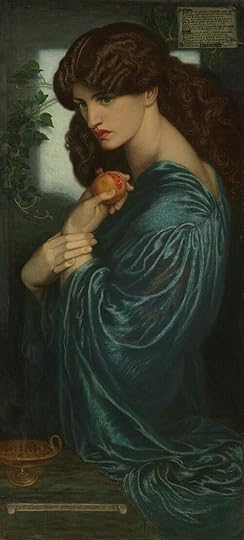
Act 1 focuses on Proserpine (Persephone) before her abduction to the underworld, whereas Act 2 focuses on her mother Ceres (Demeter) and her valiant efforts to save her child. In the end, female solidarity forces a compromise that will allow Proserpine to be on Earth for half the year while remaining in Hell for the other 6 months. Pluto’s aggression is why we have winter—Proserpine is in Hell and Ceres' grief flows. Summer comes when Ceres and Proserpine are together.


[Prosperine (1874) by Dante Gabriel Rossetti]
“And as my tears fall first, so shall the trees
Shed their changed leaves upon your six months tomb:
The clouded air will hide from Phoebus’ eye
The dreadful change your absence operates.
Thus has black Pluto changed the reign of Jove,
He seizes half the Earth when he takes thee.”
(Act 2, p. 4188, spoken by Ceres)
I enjoyed Proserpine for its ethical values and the beauty of its language, although the speeches are rather verbose and drawn out. Mary Shelley wrote all of the blank verse drama, while her husband Percy Shelley penned the two lyric poems that are included in the text.

*******************************************************************************************

[Image: Book Cover]

Citation:
Shelley, M. (2015). Proserpine. In Complete Works of Mary Shelley (Kindle Edition, pp. 4130-4187). Delphi Classics. https://www.amazon.com/gp/product/B00....

Title: Proserpine
Author(s): Mary Shelley (1797-1851) & Percy Bysshe Shelley (1792-1822)
Year: 1820 (written), 1832 (first published)
Genre: Fiction - Stage Play/Verse Drama: Fantasy, Children’s Literature
Page count: 47 pages
Date(s) read: 9/3/25
Book 180 in 2025
*******************************************************************************************
Profile Image for Raül.
691 reviews31 followers
December 2, 2024
Mary Shelley va reinterpretar, des de posicions més feministes del que ho havien fet fins al moment altres autors, el mite de Ceres i Prosèrpina (Dèmeter, la deesa de l'agricultura i la seua filla Persèfone en la tradició grega). Plutó (Ares) déu de l'Infern, segresta a Prosèrpina i la reté com a esposa i Reina de l'Inframon. Júpiter (Zeus) dona per bona aquesta acció -aquí el patriarcat cobrint-se mútuament les esquenes-, però l'ira de Ceres provoca que s'haja d'arribar a un punt mig: Prosèrpina passarà sis mesos en la superfície amb la seua mare i altres sis mesos a l'Infern amb el seu marit. D'aquesta manera queden establertes les estacions: la primavera i l'estiu, quan mare i filla disfruten de la mútua companyia, i la tardor i l'hivern, quan, separada per la força de Prosèrpina, Ceres nega al món els fruits de la terra.

El llibre inclou un extens i interessant assaig de Carme Manuel que repassa la biografia de l'autora i fa una anàlisi detallada de l'obra, encara que de vegades apel·la a explicacions psicoanalítiques, totalment innecessàries per incorrectes, des del meu punt de vista.

Una curiositat literària en una bonica edició il·lustrada per Aitana Carrasco.
Profile Image for El Biblionauta.
605 reviews140 followers
Read
March 20, 2020
Com narra Ovidi, qui alhora rescata el mite grec de Demèter i Persèfone, la deessa Ceres intenta recuperar la seva filla Prosèrpina, qui ha estat raptada per Plutó (la versió llatina d’Hades). De fet, és el pare de la noia, Júpiter, qui permet al seu germà Plutó que es dugui la seva filla al món dels morts per assedegar la seva luxúria, sabent que Ceres no acceptarà mai cap unió entre ell i Prosèrpina. Cal afegir que Júpiter, Plutó i Ceres són tots tres fills de Saturn (juntament amb Neptú i Vesta), situació incestuosa que per molt comú que fos als mites grecs i romans li dona a aquesta terrible història de violència sexual patriarcal un rerefons encara més deplorable, si és que això és possible.

Podeu valorar el llibre i llegir completa la ressenya de Sara Martín a: https://elbiblionauta.com/ca/2020/03/...
Profile Image for laprestatgeria.
34 reviews58 followers
April 8, 2021
Prosèrpina és un text molt curt, en teatre, escrit per Mary Shelley per a infants. L'edició de Vincle m'ha agradat perquè no et quedes amb el text de Shelley i ja està, sinó que hi ha un text introductori de la traductora Carme Manuel en què t'explica tant el significat del mite, altres reescriptures i també el context en què es trobava l'autora per a escriure'l. L'èmfasi en el paper de la maternitat, la separació forçosa entre mares i fills i l'entrada a l'edat adulta em semblaren temes molt interessants per a qualsevol època. Tinc un vídeo parlant-ne!
Profile Image for Roxana.
43 reviews11 followers
Read
July 14, 2021
Six months to light and Earth, —six months to Hell.
La versión sufrida donde Proserpina realmente adora a su mamá y es una summer child que detesta el Hades. Media meh pero igual tierno el vínculo con su mami y sus ninfas.
Profile Image for James.
1,820 reviews18 followers
June 7, 2017
One of her early works, styialistically, it is not her best.
Displaying 1 - 7 of 7 reviews

Can't find what you're looking for?

Get help and learn more about the design.